
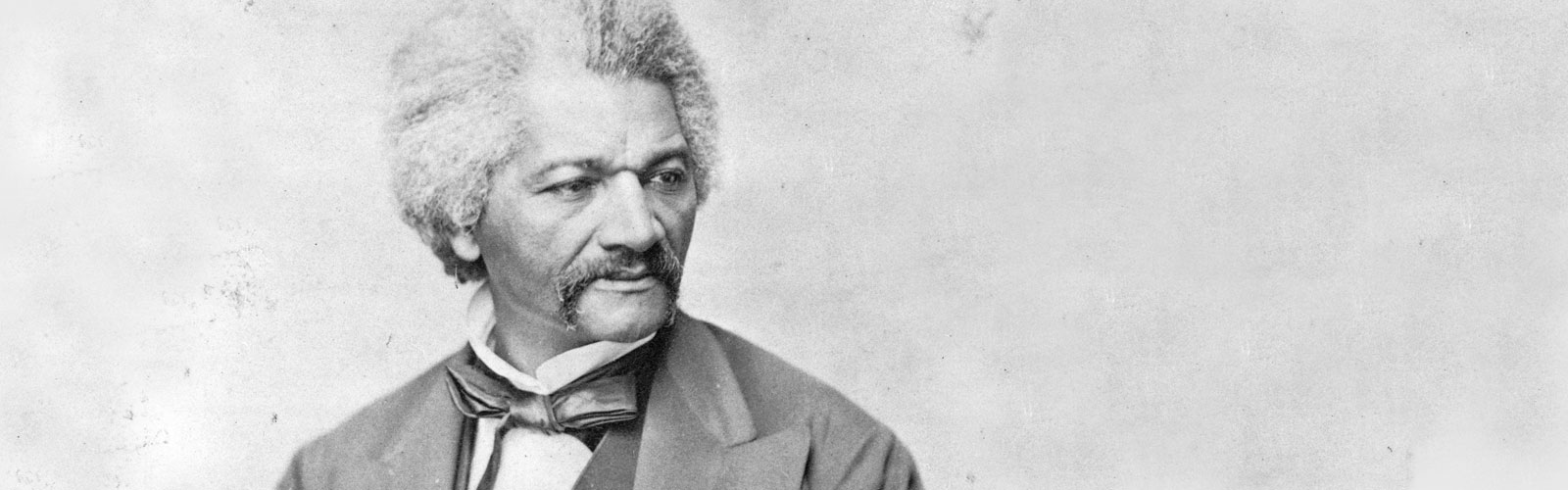
Life and Times, Second Part
SECOND PART.
SECOND PART.
CHAPTER I.
ESCAPE FROM SLAVERY.
CHAPTER I.
ESCAPE FROM SLAVERY.
Reasons for not having revealed the manner of escape — Nothing of romance in the method — Danger — Free Papers — Unjust tax — Protection papers — "Free trade and sailors' rights" — American eagle—- Railroad train — Unobserving conductor — Capt. McGowan — Honest German — Fears— Safe arrival in Philadelphia — Ditto in New York.
In the first narrative of my experience in slavery, written nearly forty years ago, and in various writings since, I have given the public what I considered very good reasons for withholding the manner of my escape. In substance these reasons were, first, that such publication at any time during the existence of slavery might be used by the master against the slave, and prevent the future escape of any who might adopt the same means that I did. The second reason was, if possible, still more binding to silence— for publication of details would certainly have put in peril the persons and property of those who assisted. Murder itself was not more sternly and certainly punished in the State of Maryland, than was aiding†Editorial Emendation: than that of aiding. and abetting the escape of a slave.†Douglass exaggerates. Whereas the crime of murder was subject to a maximum of capital punishment, assisting of fugitive slaves to escape in the state of Maryland was met, according to law, with imprisonment. In 1818 the state of Maryland passed "An act entitled, A further additional supplement to the act entitled, An act concerning Crimes and Punishments," which imposed a penalty of up to six years' imprisonment to any free person in Maryland for the enticing, persuading, or assisting of runaway slaves. Three decades later, in 1849, the state law became more severe, increasing the prison sentence for the assisting of runaway slaves to a span of from six to fifteen years. (1817), chap. 157; (1850), chap. 296. Many colored men, for no other crime than that of giving aid to a fugitive slave, have, like Charles T. Torrey,Torrey, Charles Turner
Charles Turner Torrey (1813-46), born in Massachusetts and educated at Yale, who while a student at Andover Theological Seminary organized an antislavery society there. Later a Congregational minister, Torrey was one of the leaders of the anti-Garrisonian faction in Massachusetts and served as the agent of the Massachusetts Abolition Society and as the first editor of the Massachusetts Abolitionist. Torrey left that paper in 1841 to go to Washington, D.C., as a freelance reporter. In Annapolis, Maryland, the following year, he was arrested as an abolitionist while reporting a "Convention of Slaveholders" and was acquitted after a brief trial. Returning north for a short while to edit the Albany Patriot, Torrey moved to Baltimore around 1843 to engage in business and to carry out his scheme for transporting fugitive slaves to the free states along a prearranged route. It is said that in two years he helped about 400 slaves from Maryland and Virginia to escape. Arrested for this activity in 1844 and defended by Reverdy Johnson, Torrey was convicted and sentenced to six years' hard labor. He died of tuberculosis in a Baltimore prison. J. C. Lovejoy, Memoir of Rev. Charles T. Torrey, Who Died in the Penitentiary of Maryland, Where He Was Confined for Showing Mercy to the Poor (Boston, 1847); Filler, Crusade against Slavery, 163-64; DAB, 18:595-96.
perished in prison. The abolition of slavery in my native State and throughout the country, and the lapse of time, render the caution hitherto observed no longer necessary. But even since the abolition of slavery, I have sometimes thought it well enough to baffle curiosity by saying that while slavery existed there were good reasons for not telling the manner of my escape, and since slavery had ceased to exist there was no reason for telling it. I shall now, however, cease to avail myself of this formula, and, as far as I can, endeavor to satisfy this very natural curiosity. I should perhaps have yielded to that feeling sooner, had there been anything very heroic or thrilling in the incidents connecte with my escape, for I am sorry to say I have nothing of that sort to tell; and yet the courage that could risk betrayal and the bravery which was ready to encounter death if need be, in pursuit of freedom, were essential features in the undertaking. My success was due to address rather than courage; to good luck rather than bravery. My means of escape were provided for me by the very men who were making laws to hold and bind me more securely
in slavery. It was the custom in the State of Maryland to require of the free colored people to have what were called free papers. This instrument they were required to renew very often, and by charging a fee for this writing, considerable sums from time to time were collected by the State. In these papers the name, age, color, height, and form of the free man were described, together with any scars or other marks upon his person, which could assist in his identification. This device of slaveholding ingenuity, like other devices of wickedness, in some measure defeated itself —since more than one man could be found to answer the same general description. Hence many slaves could escape by personating the owner of one set of papers; and this was often done as follows: A slave nearly or sufficiently answering the description set forth in the papers, would borrow or hire them till he could by their means escape to a free State, and then, by mail or otherwise, return them to the owner. The operation was a hazardous one for the lender as well as the borrower. A failure on the part of the fugitive to send back the papers would imperil his benefactor, and the discovery of the papers in possession of the wrong man would imperil both the fugitive and his friend. It was therefore an act of supreme trust on the part of a freeman of color thus to put in jeopardy his own liberty that another might be free. It was, however, not unfrequently bravely done, and was seldom discovered. I was not so fortunate as to sufficiently resemble any of my free acquaintances as to answer the description of their papers. But I had one friend—a sailor—who owned a sailor's protection,†"Seamen's Protection Certificates" were issued to American seamen, both white and black, to protect merchant sailors from being unduly seized when working. A typical certificate identified its holder's name, age, place of birth, height, and any distinguishing physical features, such as tattoos or scars; nonwhites were additionally required to provide a racial designation. The certificate was signed (or marked) by its holder and included the signature of a witness attesting to the truth of the certificate's information. Because the protection granted its holders American citizenship, many blacks applied for the certificates. The advantages of protection became more and more limited for blacks after South Carolina passed its Negro Seamen Acts in 1822, which prohibited black sailors from debarking in the state's ports. Alabama, Louisiana, and the Spanish Caribbean colonies followed suit with their own variations of the law in the 1830s and 1840s. Despite these restrictions, African Americans often invoked the certificates as evidence of their citizenship rights. W. Jeffrey Bolster, (Cambridge, Mass., 1997), 5, 199-200; Ira Dye, "Early American Merchant Seafarers," , 120:332-33 (October 1976). which answered somewhat the purpose of free papers—describing his person, and certifying to the fact that he was a free American sailor. The instrument had at its head the American eagle, which gave it the appearance at once of an authorized document. This protection did not, when in my hands, describe its bearer very accurately. Indeed, it called for a man much darker than myself and close examination of it would have caused my arrest at the start. In order to avoid this fatal scrutiny on the part of the railroad official, I had arranged with Isaac Rolls,Rolls, Isaac
Isaac Rolls (c. 1799-?) was a free black cab driver, or hackman, in Baltimore at the time of Douglass's flight from slavery. Until 1870 the U.S. Census recorded his name as "Isaac Roles." He was married to Lucretia Johnson, 1840 U.S. Census, Maryland, Baltimore County, 13; 1860 U.S. Census, Maryland, Baltimore County, 268; 1870 U.S. Census, Maryland, Baltimore County, 220.
Autobiography, Life and Times, Part 2
a hackman,†Driver of a hackney-carriage; a cabman. to bring my baggage to the train just on the moment of its starting, and jumped upon the car myself when the train was already in motion. Had I gone into the station and offered to purchase a ticket, I should have been instantly and carefully examined, and undoubtedly arrested. In choosing this plan upon which to act, I considered the jostle of the train, and the natural haste of the conductor, in a train crowded with passengers, and relied upon my skill and address in playing the sailor as described in my protection, to do the rest. One element in my favor was the kind feeling which prevailed in Baltimore and other seaports at the
time, towards "those who go down to the sea in ships."†Ps. 107:23. "Free trade and sailors' rights"†"Free trade and sailors' rights" refers to the slogan adopted by America during the War of 1812. "Free trade" refers to the ability of one nation to conduct its commercial affairs without interference by a foreign power, and "sailors' rights" refers to the practice of impressment aboard American and British ships. Before and during the War of 1812, it became a war cry of the Americans and could often be seen on banners flying above American ships. Ransom H. Gillet, (New York, 1868), 41-42; Alfred Thayer Mahan, , 2 vols. (London, 1905), 1:135-36; Donald R. Hickey, (Urbana, Ill., 1989), 156-57. expressed the sentiment of the country just then. In my clothing I was rigged out in sailor style. I had on a red shirt and a tarpaulin hat†Hat worn by sailors, made of canvas impregnated with tar to make it waterproof. and black cravat,†An article of clothing, usually worn by men, tied around the neck. tied in sailor fashion, carelessly and loosely about my neck. My knowledge of ships and sailor's talk came much to my assistance, for I knew a ship from stem to stern,†Fore to aft, or front to back. and from keelson to cross-trees, and could talk sailor like an "old salt."†A common nickname for a well-seasoned sailor. On sped the train, and I was well on the way to Havre de Grace†A community in northeast Maryland on the Chesapeake Bay. Originally settled in 1658, it was incorporated as a town in 1785, burned by the British in the War of 1812, and rebuilt. Seltzer, , 767. before the conductor came into the negro car to collect tickets and examine the papers of his black passengers. This was a critical moment in the drama. My whole future depended upon the decision of this conductor. Agitated I was while this ceremony was proceeding, but still externally, at least, I was apparently calm and self-possessed. He went on with his duty—examining several colored passengers before reaching me. He was somewhat harsh in tone, and peremptory in manner until he reached me, when, strangely enough, and to my surprise and relief, his whole manner changed. Seeing that I did not readily produce my free papers, as the other colored persons in the car had done, he said to me in a friendly contrast with that observed towards the others: "I suppose you have your free papers?" To which I answered: "No. sir; I never carry my free papers to sea with me." "But you have something to show that you are a free man, have you not?" "Yes, sir." I answered; "I have a paper with the American eagle on it, and that will carry me round the world." With this I drew from my deep sailor's pocket my seaman's protection, as before described. The merest glance at the paper satisfied him, and he took my fare and went on about his business. This moment of time was one of the most anxious I ever experienced. Had the conductor looked closely at the paper, he could not have failed to discover that it called for a very different looking person from myself, and in that case it would have been his duty to arrest me on the instant, and send me back to Baltimore from the first station. When he left me with the assurance that I was all right, though much relieved, I realized that I was still in great danger; I was still in Maryland, and subject to arrest at any moment. I saw on the train several persons who would have known me in any other clothes, and I feared they might recognize me, even in my sailor "rig,"†Slang for a nautical uniform. and report me to the conductor, who would then subject me to a closer examination. which I knew well would be fatal to me.
Though I was not a murderer fleeing from justice I felt perhaps quite as miserable as such a criminal. The train was moving at a very high rate of speed for that time of railroad travel, but to my anxious mind, it was moving
far too slowly. Minutes were hours, and hours were days during this part of my flight. After Maryland I was to pass through Delaware—another slave State, where slave catchers generally awaited their prey, for it was not in the interior of the State, but on its borders, that these human hounds were most vigilant and active. The border lines between slavery and freedom were the dangerous ones, for the fugitives. The heart of no fox or deer, with hungry hounds on his trail, in full chase, could have beaten more anxiously or noisily than did mine, from the time I left Baltimore till I reached Philadelphia. The passage of the Susquehanna river†The Susquehanna River originates at Otsego Lake, in central New York, then winds 444 miles south through the Allegheny Mountains in Pennsylvania, emptying into the Chesapeake Bay near Havre de Grace, Maryland. This shallow, rock-filled river is unsuitable for navigation throughout almost its entire length. Cohen, , 3:3060. at Havre de Grace was made by ferry boat at that time, on board of which I met a young colored man by the name of Nichols, who came very near betraying me. He was a "hand" on the boat, but instead of minding his business, he insisted upon knowing me, and asking me dangerous questions as to where I was going, and when I was coming back, etc. I got away from my old and inconvenient acquaintance as soon as I could decently do so, and went to another part of the boat. Once across the river I encountered a new danger. Only a few days before I had been at work on a revenue cutter, in Mr. Price's ship-yard, under the care of Captain McGowan.McGowan, John
Captain John McGowan (1805 -91), a well-known U.S. revenue marine officer, lived in Baltimore at the time of Douglass's escape from slavery; he had recently been promoted to captain. His career included service both as a revenue cutter captain, aboard the Polk, and in the Navy in both the Mexican and Civil Wars. At the outbreak of the Civil War, McGowan gained the national spotlight briefly as the commander of the Star of the West, a merchant steamer. With Fort Sumter under siege, President Buchanan ordered McGowan to resupply the fort but the rebel batteries in Charleston's harbor cut off their progress. His ship was the first to take rebel fire in the war. His son, John. Jr., followed his father into the Navy, advancing to the rank of rear admiral by 1904. Boston Daily Advertiser, 21 January 1891; Ellen McGowan Biddle, Reminiscences of a Soldier's Wife, (1907; Mechanicsburg, Pa., 2002), x, xi, 73; Steven D. Glazer, "John McGowan," in New Jersey Goes to War: Biographies of 150 New Jersyans, ed. Joseph G. Bilby (Hightstown, N.J., 2010), 80.
On the meeting at this point of the two trains, the one going south stopped on the track just opposite to the one going north, and it so happened that this Captain McGowan sat at a window where he could see me very distinctly, and would certainly have recognized me had he looked at me but for a second. Fortunately, in the hurry of the moment, he did not see me; and the trains soon passed each other on their respective ways. But this was not my only hair-breadth escape. A German blacksmith whom I knew well, was on the train with me, and looked at me very intently as if he thought he had seen me somewhere before in his travels. I really believe he knew me, but had no heart to betray me. At any rate he saw me escaping and held his peace.
The last point of imminent danger, and the one I dreaded most, was Wilmington. Here we left the train and took the steamboat for Philadelphia. In making the change here I again apprehended arrest, but no one disturbed me, and I was soon on the broad and beautiful Delaware, speeding away to the Quaker City.†Quaker City is the nickname attributed to Philadelphia. Founded in 1682 by William Penn, Philadelphia, meaning the "City of Brotherly Love," was established as a safe haven for the peace-loving Quakers. Cohen, , 3:2423. On reaching Philadelphia in the afternoon I inquired of a colored man how I could get on to New York. He directed me to the Willow†Editorial Emendation: Second American Edition. First Printing Hartford, Conn.: Park Publishing Co., et al., 1882: William. street depot,†The Willow Street Depot was located in Philadelphia, Pennsylvania. The city's original railroad line traveled through Philadelphia from Eighth Street to Broad, up Broad to Willow, out to Fairmount and the Columbia Railroad Bridge across the Schuylkill, and then up the inclined plane to Belmont and to the West. Francis Burke Brandt and Henry Volkmar Gummere, (Philadelphia, 1925), 206. and thither I went, taking the train that night. I reached New York Tuesday morning, having completed the journey in less than twenty-four hours. Such is briefly the manner of my escape from slavery—and the end of my experience as a slave. Other chapters will tell the story of my life as a freeman.
CHAPTER II.
LIFE AS A FREEMAN.
Loneliness and Insecurity—"Allender's Jake"—Succored by a Sailor—David Ruggles—Marriage—Steamer "J. W. Richmond"—Stage to New Bedford—Arrival There—Driver's Detention of Baggage—Nathan Johnson—Change of Name—Why called "Douglass"†Editorial Emendation: Douglas.—Obtaining Work—The Liberator and its Editor.
CHAPTER II.
LIFE AS A FREEMAN.
My free life began on the third of September, 1838. On the morning of the 4th of that month after an anxious and most perilous but safe journey, I found myself in the big city of New York, a free man; one more added to the mighty throng†At the time of Douglass's arrival in 1838, New York City was America's largest, with a population of approximately 300,000. Burgeoning with new immigrant populations from Germany and Ireland, the city had become home to peoples from across Europe. The Fourth, Fifth, and Sixth Wards, located south of Canal Street, were the city's most densely populated and the homes of the majority of the newly immigrated. Douglass found himself in the midst of this community; Ruggles's home on Lispenard Street was one block south of Canal Street. New York , 17 July 1921; Jay P. Dolan, "Immigrants in the City: New York's Irish and German Catholics," , 41:354-55 (September 1972). which like the confused waves of the troubled sea, surged to and fro between the lofty walls of Broadway.†Central to the culture and business of nineteenth-century New York City, Broadway bustled with activity. The avenue was marked with stores, fancy hotels, and theaters that provided inexpensive entertain-ment to New Yorkers of all social classes. In 1836 John Jacob Astor opened a six-story 300-room hotel on Broadway, just west of City Hall Park. Called first the Park Hotel, and later renamed the Astor House, it would be the most prestigious hotel in the nation for many decades. Broadway was a center of constant activity, and trying to cross the street was considered risky because it was crowded with carriages and omnibuses. The street was home to America's first department stores and gained a reputation as a fashionable shopping district by midcentury. The five-block strip intersected by Canal, Grand, Broome, Spring, Prince, and Houston Streets was an especially popular area for window-shoppers who found Broadway to be the perfect promenade. Broadway became a more serious business district as it reached beyond the City Hall Park area, where publishers, law firms, and newspapers found a fashionable address for their business. Edwin G. Burrows and Mike Wallace, (New York, 1999), 404, 436, 600, 668, 692 . Though dazzled with the wonders which met me on every hand my thoughts could not be much withdrawn from my strange situation. For the moment the dreams of my youth and the hopes of my manhood, were completely fulfilled. The bonds that had held me to "old master" were broken. No man now had a right to call me his slave or assert mastery over me. I was in the rough and tumble of an outdoor world, to take my chance with the rest of its busy number. I have often been asked, how I felt, when first I found myself on free soil. And my readers may share the same curiosity. There is scarcely anything in my experience about which I could not give a more satisfactory answer. A new world had opened upon me. If life is more than breath, and the "quick round or blood,"†Douglass possibly quotes a passage in Philip James Bailey's (1816-1902) epic poem Festus, which first appeared anonymously in 1839; "Life's more than breath, and the quick round of blood./ It is a great spirit and a busy heart./ The coward and the small in soul scarce do live./ One generous feeling--one great thought--one deed/ Of good, ere night, would make life longer seem/ Than if each year might number a thousand days." Philip James Bailey, , 8th ed. (London, 1866), 47. I lived more in one day than in a year of my slave life. It was a time of joyous excitement which words can but tamely describe. In a letter written to a friend soon after reaching New York I said: "I felt as one might feel upon escape from a den of hungry lions."†Douglass alludes to the story of Daniel and the lions' den. Dan. 6:1-28. Anguish and grief, like darkness and rain may be depicted; but gladness and joy, like the rainbow, defy the skill of pen or pencil. During ten or fifteen years I had, as it were, been dragging a heavy chain, which no strength of mine could break; I was not only a slave but a slave, for life. I might become a husband, a father, an aged man, but through all, from birth to death, from the cradle to the grave, I had felt myself doomed. All efforts I had previously made to secure my freedom, had not only failed, but had seemed only to rivet my fetters the more firmly, and to render my escape more difficult. Baffled, entangled, and discouraged, I had at times asked myself the question. May not my condition after all be God's work, and ordered for a wise purpose, and if so, was not submission my duty? A contest had in fact been going on in my mind for a long time, between the clear consciousness of right, and the plausible make-shifts of theology and superstition. The one held me an abject slave—a prisoner
for life, punished for some transgression in which I had no lot or part; and the other counselled me to manly endeavor to secure my freedom. This contest was now ended; my chains were broken, and the victory brought me unspeakable joy. But my gladness was short lived, for I was not yet out of the reach and power of the slaveholders. I soon found that New York was not quite so free, or so safe a refuge as I had supposed, and a sense of loneliness and insecurity again oppressed me most sadly. I chanced to meet on the street a few hours after my landing, a fugitive slave whom I had once known well in slavery. The information received from him alarmed me. The fugitive in question was known in Baltimore as "Allender's Jake," but in New York he wore the more respectable name of ''William Dixon." Jake in law was the property of Doctor Allender,Allender, Joseph
Dr. Joseph Allender lived in Fells Point at Thames and Market Streets at least through the early 1830s. Douglass lived in a house owned by Dr. Allender on Philpot Street when the Aulds moved to it in the late 1820s. Douglass to Benjamin F. Auld, 24 March 1894, SC-163, Mrs. Howard V. Hall Collection of Auld Family Papers, MdAA; Matchett's Baltimore Directory for 1827, 14.
Autobiography, Life and Times, Part 2.
and Tolly Allender, the son of the doctor, had once made an effort to recapture Mr. Dixon, but had failed for want of evidence to support his claim. Jake told me the circumstances of this attempt, and how narrowly he escaped being sent back to slavery and torture. He told me that New York was then full of southerners returning from the watering places north;†Wealthy southerners frequently traveled to fashionable northern watering places, including Saratoga Springs, Balston, Newport, and Cape May. Known for the medicinal qualities of their mineral water, these resort communities promised visitors relief from such ailments and diseases as dyspepsia, constipation, rheumatism, joint ailments, diabetes, and vertigo. But many southern visitors to resorts such as Saratoga Springs did not use the waters as an excuse for vacationing there. The ability to mix with others of high social standing and attend balls and nightly social activities held in the elegant hotels were as much an attraction as the area water cures. John Hope Franklin, (Baton Rouge, La., 1976 ), 26-29; M. L. North, (New York, 1846). that the colored people of New York†New York State's abolition laws came into effect in 1827. Two years after Douglass's arrival there, the 1840 census listed no slaves as residents of New York City. The free black population of the city reached its highest point at 16,358 according to the 1840 census. In 1850 the free black population dropped to 13,815, in part as a result of the federal Fugitive Slave Law enacted that year. Unlike European immigrants, free blacks did not Iive in the relative isolation of their native communities; rather, they were spread out into pockets throughout the city, finding accommodation where white landlords would allow them to rent. Likewise, racism limited their employment opportunities to predominantly menial tasks, many of which were procured daily on the street. Ira Berlin and Leslie M. Harris, eds., (New York, 2005), 144, 282, 298-99; Rhoda G. Freeman, ''The Free Negro in New York City in the Era before the Civil War" ( Ph.D. diss., Columbia University, 1966), 64-100, 267-314. were not to be trusted; that there were hired men of my own color†Free blacks were known to have acted both independently and as decoys for white kidnappers. Perhaps the most successful black kidnapper was John Purnell, who worked with the Cannon-Johnson gang. Purnell was ultimately found guilty on two counts of kidnapping and sentenced to forty-two years in prison. By taking advantage of their race, these kidnappers were able to gain the trust of their victims, creating suspicion and uncertainty among the free black population. Wilson, , 32-37. who would betray me for a few dollars; that there were hired men ever on the lookout for fugitives; that I must trust no man with my secret; that I must not think of going either upon the wharves, or into any colored boarding-house, for all such places were closely watched; that he was himself unable to help me; and, in fact, he seemed while speaking to me to fear lest I myself might be a spy, and a betrayer. Under this apprehension, as I suppose, he showed signs of wishing to be rid of me, and with whitewash†A solution of lime and water or whiting, sizing, and water used to paint walls, ceilings, and other architectural elements. brush in hand, in search of work, he soon disappeared. This picture, given by poor "Jake" of New York, was a damper to my enthusiasm. My little store of money would soon be exhausted, and since it would be unsafe for me to go on the wharves for work, and I had no introductions elsewhere, the prospect for me was far from cheerful. I saw the wisdom of keeping away from the ship-yards, for, if pursued, as I felt certain I would be, Mr. Auld would naturally seek me there among the calkers. Every door seemed closed against me, I was in the midst of an ocean of my fellow-men, and yet a perfect stranger to every one. I was without home, without acquaintance, without money, without credit, without work, and without any definite knowledge as to what course to take, or where to look for succor. In such an extremity, a man has something beside his new-born freedom to think of. While wandering about the streets of New York, and lodging at least one night among the barrels on one of the wharves, I was indeed free—from slavery, but free from food and shelter as well. I kept my
secret to myself as long as I could, but was compelled at last to seek some one who should befriend me, without taking advantage of my destitution to betray me. Such an one I found in a sailor named Stuart,†This individual was referred to as "Stewart" in Douglass's , but he cannot be identified. , ser. 2, 2:196. a warm-hearted and generous fellow, who from his humble home on Centre street, saw me standing on the opposite sidewalk, near "The Tombs."†The Tombs, New York City's first prison. was completed in 1838. Although its formal name was the Halls of Justice, it was more commonly referred to as "the Tombs" because it resembled a mausoleum. The Tombs was infamous for its structural problems, due to its having been built on former marshland. The resultant damp and cold made for unhealthful conditions for prisoners. The prison also became notorious for intentional mistreatment of prisoners, corruption, bribery, and prisoner escapes. Controversy would surround the Tombs until its forced closure in 1902. A second prison at the same location, "the Tombs II," shared many of the same difficulties as its predecessor, causing its closure by a federal justice. Carl Sifakis, (New York, 2003), 260-62. As he approached me I ventured a remark to him which at once enlisted his interest in me. He took me to his home to spend the night, and in the morning went with me to Mr. David Ruggles,Ruggles, David
David Ruggles (1810-49), a free black man, was born and educated in Norwich, Connecticut. In 1827 he moved to New York City, where he worked as a grocer. In 1834 he opened a printing and book shop that specialized in abolitionist literature. Ruggles became active in the New York antislavery movement, serving as a writer, lecturer, and traveling agent for the reform publication Emancipator and Journal of Public Morals. He also was a conductor on the Underground Railroad, editor of the Genius of Freedom and the Mirror of Liberty, and secretary to the New York Vigilance Committee. His career in the antislavery movement ended abruptly in 1842 when temporary blindness, an illness that would plague him for the remainder of his life, forced him to curtail his activities and seek medical attention. At the Northampton Association of Education and Industry in Florence, Massachusetts, he underwent hydrotherapy, which temporarily relieved his blindness. Soon thereatler he began a new career as a hydrotherapist in Northampton, Massachusetts, treating such celebrated individuals as Sojourner Truth and William Lloyd Garrison. His reputation as a hydrotherapist gave him a prominence that rivaled his stature as an abolitionist. NASS, 20 December 1849; Lib., 21 December 1849; New York Evangelist, 27 December 1849; Salem (Ohio) Anti-Slavery Bugle, 29 December 1849; NS, 1 February 1850; I. Garland Penn, The Afro-American Press and Its Editors (1891; New York, 1969), 118; DANB, 536-38.
Autobiography, My Life and Times, part 2.
the secretary of the New York vigilance committee,†Northern blacks along with some sympathetic white supporters maintained a loose, clandestine system to clothe, feed, and shelter fugitive slaves from the South. These vigilance committees also operated to expose the presence of slave hunters and, on occasion, to rescue fugitives in the process of rendition to their masters. The New York City Vigilance Committee was founded in November 1835 with David Ruggles serving as its secretary. Ruggles's penchant for aggressive and even extralegal activities to protect fugitives led other members of the committee to force his resignation in 1839. Without Ruggles's leadership, the organization languished for a decade until it became the nucleus for a statewide vigilance society in 1848. Jane H. Pease and William H. Pease, (New York, 1974), 207-12; Gara, , 101, 104-09; Freeman, "The Free Negro in New York City," 68-72, 203-04. a co-worker with Isaac T. Hopper,Hopper, Isaac Tatem
Isaac Tatem Hopper (1771-1852) was a New York bookseller and, with Lydia Maria Child, editor of the National Anti-Slavery Standard from 1841 to 1845. His involvement with abolitionism began before 1800 when, while living in Pennsylvania, he aided fugitive slaves in their escape. He belonged to the Pennsylvania Abolition Society until his relocation to New York City in 1829. There he became active in the American Anti-Slavery Society. Douglass first met Hopper in "the Tombs" in New York City, where Hopper was incarcerated for helping a fugitive escape to Boston. Hopper had become a Quaker in 1793, but the sect disowned him in 1841 for his abolitionist activities. Lib., 14 May 1852; NASS, 21 May 1852; Lydia Maria Child, Isaac T. Hopper: A True Life (Boston, 1853); ANB, 11:202-03; NCAB, 2:330.
LewisTappan, Lewis
The Tappan brothers were two of the most prominent opponents of William Lloyd Garrison inside the abolitionist movement. Lewis Tappan (1788-1873), an affluent New York City merchant and abolitionist, devoted much of his considerable wealth and energy to religious and reform causes such as abolitionism. Tappan was an early supporter of the American Board of Commissioners for Foreign Missions and the American Bible Society, a founder of the New York Evangelist, and a patron of Oberlin College, Tappan helped organize the New York Anti-Slavery Society and the American Anti-Slavery Society in 1833. In 1840 he broke with Garrison over the issue of political action and the advisability of linking abolitionism to other reforms. He was a founder and leading figure in the American and Foreign Anti-Slavery Society and maintained close ties with British abolitionists opposed to Garrison. Tappan played a leading part in securing the freedom of the African captives on the slave ship Amistad in 1841. Tappan abandoned efforts to convert older benevolent societies to abolitionism in 1846 and founded the American Missionary Association. Focused mainly on the religious sphere, Tappan gave only a lukewarm endorsement to political abolitionism. Lewis Tappan, The Life of Arthur Tappan (New York, 1870); Bertram Wyatt-Brown, Lewis Tappan and the Evangelical War against Slavery (Cleveland, 1969); ACAB, 6:33; NCAB, 2:320-21; DAB, 18:298-300, 303-04.
and Arthur Tappan,Tappan, Arthur
Arthur and Lewis Tappan were two of the most prominent opponents of William Lloyd Garrison inside the abolitionist movement. Arthur Tappan (1786- 865) began work as a dry-goods clerk in Boston but by the age of fifty had become a prosperous silk-jobbing merchant in New York City. Believing that his wealth obligated him to be "a STEWARD of the Lord," Tappan gave generously of his time and money to such reform organizations as the American Bible Society, the American Tract Society, the American Home Missionary Society, and various efforts to root out moral vice of every sort, including intemperance. Oberlin College was founded largely through his financial contributions. He contributed at an early period to Garrison's Liberator. After renouncing his membership in the American Colonization Society, Tappan devoted most of his philanthropic energies to the antislavery movement. In 1833 he helped found the American Anti-Slavery Society. Seven years later he seceded from it because of tactical disagreements with the Garrisonians and helped to organize the American and Foreign Anti-Slavery Society. Tappan served as the first president of both these major antislavery organizations and was an early supporter of the Liberty party. When various missionary societies with which he had been affiliated failed to adhere to his antislavery principles, he cut his connection with them and, in 1846, helped to establish the American Missionary Association. Tappan tried to promote schools and colleges for free blacks in the North, but local racist feeling frustrated his efforts. Lewis Tappan, The Life of Arthur Tappan (New York, 1870); Bertram Wyatt-Brown, Lewis Tappan and the Evangelical War against Slavery (Cleveland, 1969); ACAB, 6:33; NCAB, 2:320-21; DAB, 18:298-300, 303-04.
Theodore S. Wright,Wright, Theodore Sedgwick
Theodore Sedgwick Wright (1797-1847)--clergyman, abolitionist, and reformer--worked tirelessly to aid fellow African Americans. He was a graduate of the Princeton Theological Seminary, and succeeded Henry Highland Garnet as pastor of Shiloh Presbyterian \ Church in New York City and later served as moderator of the Third Presbytery of New York. Wright was a founder of the American Anti-Slavery Society in 1833 and the anti-Garrisonian American and Foreign Anti-Slavery Society in 1840. In the 1830s Wright lectured for the New England Anti-Slavery Society, and he made important speeches against prejudice and colonization in front of the New York State Anti-Slavery Society in 1837. Wright also served on the executive committees of the Union Missionary Association and the American Missionary Association, organizations that sent missionaries to Africa. In 1844 Wright supported the Liberty party and served on the committee to choose its presidential and vice-presidential candidates. A dedicated reformer, Wright pursued temperance, sought voting rights for African Americans in New York, supported education for blacks, and chaired the New York Vigilance Committee, a group organized to aid fugitive slaves and protect free blacks from kidnapping. New York Evangelist, 1 April 1847; Washington (D.C.) National Era, 8 April 1848; Benjamin Quarles, Black Abolitionists (New York, 1969), 45-46, 68, 80, 171-72, 184-85; Sterling, Speak Out in Thunder Tones, 383; DANB, 675-76.
Samuel Cornish,Cornish, Samuel Eli
Samuel Cornish (c. 1795-1859), a black Presbyterian minister, helped to found the First Colored Presbyterian Church of New York City in 1822. In 1827 Cornish was coeditor, with John Russwurm, of Freedom's Journal, the first black newspaper in the United States. Resigning the editorship after only six months, Cornish then served as an agent for the New York Manumission Society's African Free Schools. In 1829 he started his own abolitionist newspaper, Rights of All, which failed in less than a year. From 1837 to 1839 Cornish edited The Colored American and later served as pastor of the black Presbyterian Church in Newark, New Jersey. Walter M. Merrill and Louis Ruchames, eds., The Letters of William Lloyd Garrison, 6 vols. (Cambridge, Mass., 1971-81), 6:328n; Frankie Hutton, The Early Black Press in America, 1827 to 1860 (Westport, Conn., 1993), 6-9.
Autobiography. Life and Times, part 2
Thomas Downing,Downing, Thomas
Thomas Downing (1791-1866), a New York City restaurant owner. was born enslaved in Accomac County, Virginia, but was manumitted at an early age. To escape attempts to reenslave him, he moved north in 1812, fighting in the War of 1812 before settling in Philadelphia. In 1819 he moved to New York City and worked as a caterer until he established his own restaurant in the financial district. The Oyster House became a favorite eatery among New York merchants and politicians. Downing's business success enabled him to afford European educations for several of his children and to support benevolent causes, including abolition and civil rights for African Americans. In 1837 Downing helped draft a petition seeking repeal of property qualifications for black voters in New York. He also served on the New York Vigilance Committee and was a member of the Committee of Thirteen, a group that opposed the Fugitive Slave Law and was dedicated to assisting those who broke it. New York Times, 12 April 1866; New York Herald, 12 April 1866; NASS, 21 April 1866; New York Colored American, 16 January, 20 February 1841; Quarles, Black Abolitionists, 107, 171; Freeman, "'Free Negro in New York City," 35, 46, 128, 138, 197, 236, 285, 295, 394; ANB, 6:846-47.
Autobiography, Life and Times, Part 2.
Philip A. BellBell, Philip A.
Philip A. Bell (1808-89) was educated at the New York City Free School and worked as an agent for the Liberator and at a variety of occupations in his youth. He was secretary of a January 1831 public meeting of New York blacks that protested against the colonization movement. In 1837 Bell helped found and edit the Weekly Advocate, later renamed the New York Colored American, which was an important forum for black opinion until its demise in 1842. In the 1850s he operated an employment agency for New York City blacks and was active in literary, temperance, and mutual relief societies as well as the antislavery movement. Bell attended many of the antebellum National Negro Conventions and lectured for equal suffrage for blacks. Moving to California in 1860, Bell briefly ran a real estate agency before returning to journalism, first as associate editor of the San Francisco Pacific Appeal, and later as owner and editor of the San Francisco Elevator. In the 1870s Bell was president of the Equal Rights League of California, a politically independent group that lobbied Republican politicians for better treatment of blacks. While still in New York, Bell wrote to the North Star under the pseudonym "Cosmopolite." New York Colored American, 8 December 1838; San Francisco Elevator, 12 June 1868, 11 January, 15 November 1873; William Lloyd Garrison, Thoughts on African Colonization: or; an Impartial Exhibition of the Doctrines, Principles and Purposes of the American Colonization Society (New York, 1832), 13- 17; Penn, Afro-American Press, 32-34, 94-98; Robert C. Dick, Black Protest: Issues and Tactics (Westport, Conn., 1974), 84, 173-77, 267; Quarles, Black Abolitionists, 20, 31, 95; Pease and Pease, They Who Would Be Free, 113-14, 175, 195, 210; James A. Fisher, "A History of the Political and Social Development of the Black Community in California, 1850-1950" (Ph.D. diss., State University of New York at Stony Brook, 1971), 72-75, 97-100, 140-46; Freeman, "Free Negro in New York City," 35, 46, 128, 175-76, 237, 299; "Black Elites and the Draft Riots," New York Times, July 13, 2013.
Autobiography, My Life and Times, Part 2
†Editorial Emendation: Phillip. and other true men of their time. All these (save Mr. Bell. who still lives, and is editor and publisher of a paper called the Elevator,† The was an African American newspaper edited in San Francisco by Philip A. Bell beginning 18 April 1865. The newspaper consisted of four seven-column pages and was published every Friday, with the cost per issue at 15 cents. The newspaper was established for the promotion of blacks advocating inclusion within, not separation from, the American citizenry. In addition to civil liberties and political discussion, the Elevator was also widely known as forwarding science, drama, and literature. Bell had already had twenty-five years of editorial experience at the time he founded the Elevator, including editorial stints on the Colored American and the Pacific Appeal. By the 1880s the Elevator was the longest-running black newspaper in the nineteenth century. It ceased with Bell's death on 24 April 1889. Penn, , 94, 95; , 1:123-24. in San Francisco) have finished their work on earth. Once in the hands of these brave and wise men, I felt comparatively safe. With Mr. Ruggles, on the corner of Lispenard and Church streets,†After arriving in New York. Douglass stayed at 36 Lispenard Street on the comer of Church Street, a boardinghouse operated by David Ruggles. The building also housed an abolitionist newspaper and served as a stop along the Underground Railroad, sheltering more than 600 fugitives during their escape from slavery. Ruggles himself lived at 67 Lispenard Street, where he ran an African American bookstore, probably the first of its kind. Although fire destroyed that bookstore in September 1835, he maintained his residence there. Hutton, Early Black Press in America, 152; Dorothy Porter, "David Ruggles, an Apostle of Human Rights," JNH, 28:23-50 (January 1943). I was hidden several days, during which time my intended wifeDouglass, Anna Murray
Anna Murray Douglass (c. 1813-82), Douglass’s first wife, was born free in Denton, Maryland. She was the eighth child of Bambarra and Mary Murray, slaves who had been manumitted shortly before her birth. At seventeen she moved to Baltimore, where she worked as a domestic and met Douglass at meetings of the East Baltimore Mental Improvement Society. In 1838, Murray helped Douglass finance his escape, and she joined him in New York City, where they were married on 15 September 1838. During Douglass’s first tour of the British Isles (1845-47), she remained in Lynn, Massachusetts, where she supported the family by binding shoes. She gained a reputation for frugality and skillful household management, qualities that would contribute greatly to her family’s financial prosperity over the years. A member of the Lynn Ladies’ Anti-Slavery Society and a regular participant in the annual antislavery bazaars in Boston, she continued her antislavery activities after moving to Rochester in 1847. Unlettered, reserved, and, according to her husband, never completely at ease in white company, she seldom appeared at public functions with Douglass. She was nevertheless affectionately remembered by her husband’s associates as a “warm” and “hospitable” hostess at their home. On 9 July 1882, Anna Douglass suffered an attack of paralysis in Washington, D.C., and died there on 4 August. Lib., 18 November, 2 December 1853; Philadelphia Christian Recorder, 20 July 1882; Washington (D.C.) Post, 5 August 1882; Rosetta Douglass Sprague, My Mother as I Recall Her: A Paper Delivered before the Anna Murray Douglass Union, W.C.T.U., May 10, 1900 (1900; Washington, D.C., 1923); Jane Marsh Parker, “Reminiscences of Frederick Douglass,” Outlook, 51:552-53 (6 April 1895); Dorothy Sterling, ed., We Are Your Sisters: Black Women in the Nineteenth Century (New York, 1984), 132-37; Julie R. Nelson, “The Best of Intentions: Anna Murray Douglass, Helen Pitts Douglass, and the Challenge of Social Equality,’ Proteus: A Journal of Ideas, 12:39-42 (Spring 1995); Sylvia Lyons Render, “Afro-American Women: The Outstanding and the Obscure,” Quarterly Journal of the Library of Congress, 32:306-10 (October 1975).
came on from Baltimore at my call, to share the burdens of life with me. She was a free woman, and came at once on getting the good news of my safety. We were married by Rev. J. W. C. PenningtonPennington, James William Charles
Born Jim Pembroke, James William Charles Pennington (1809-71) had been a slave on the Eastern Shore of Maryland and trained as a blacksmith. His flight north at the age of twenty-one led him to the home of a Pennsylvania Quaker who taught him to read and write. Later Pennington found work and began teaching black children in Newtown, Long Island, and then in New Haven, Connecticut, where he also studied theology. Pennington's ministerial career began in 1838 in Newtown, and in 1840 he entered the Congregational ministry in Hartford, Connecticut, where he preached until 1847, later serving as a pastor (1848-55) of Shiloh Presbyterian Church in New York City. In 1843 Pennington traveled to England as a delegate-at-large to the World's Anti-Slavery Convention in London and then lectured in London, France, and Belgium. He so impressed his European audiences that the University of Heidelberg awarded him an honorary doctor of divinity degree. Fearing recapture after the passage of the Fugitive Slave Law, Pennington again traveled abroad, but abolitionist friends bought his freedom in 1851 for $150.
He was an active member of both abolitionist and black self-improvement organizations. In addition to many sermons, addresses, and regular contributions to the Anglo-African Magazine, Pennington wrote A Text Book of the Origins and History, etc., etc., of the Colored People (1841), a query, based on biblical references, into the negro's ancestry and character; and an autobiography, The Fugitive Blacksmith (1849). Carter G. Woodson, ed., The Mind of the Negro as Reflected in Letters Written during the Crisis, 1800-1860 (Washington, D.C., 1926), 642-51; Martin Robison Delany, The Condition. Elevation, Emigration, and Destiny of the Colored People of the United States, Politically Considered (1852; New York, 1968), 113; William Wells Brown, The Rising Son; or, The Antecedents and Advancement of the Colored Race (Boston, 1874), 461-63; Freeman, "Free Negro in New York City," 49-51, 53, 88-89, 108-10, 418; NCAB, 14:307; DAB, 14:441-42.
, then a well-known and respected Presbyterian minister. I had no money with which to pay the marriage fee, but he seemed well pleased with our thanks.
Mr. Ruggles was the first officer on the underground railroad with whom I met after coming North; and was indeed the only one with whom I had anything to do, till I became such an officer myself. Learning that my trade was that of a calker, he promptly decided that the best place for me was in New Bedford, Mass. He told me that many ships for whaling voyages were fitted out there, and that I might there find work at my trade, and make a good living. So on the day of the marriage ceremony, we took our little luggage to the steamer "John W. Richmond," which at that time was one of the line running between New York and Newport, R. I.†A major colonial-era seaport located on Aquidneck Island in Newport County, Rhode Island, thirty miles south of Providence. By the mid-nineteenth century, the small city was being transformed into a resort for the wealthy, including southern slaveholders, seeking a respite from the summer heat. Franklin, , 26-29.
Forty-three years ago colored travelers were not permitted in the cabin, nor allowed abaft†Behind, in the rear. the paddle-wheels of a steam vessel.†Many historians point out that legalized segregation on public transportation was not widespread until the Jim Crow era, beginning in the late nineteenth century. And although the term "segregation" did not specifically denote "racial separation" until around the beginning of the twentieth century, exclusionary practices aboard all manner of public conveyances, including steamboats, were commonplace, for blacks as well as for women. As with northern railroads, these practices varied greatly aboard steamboats. Douglass's own experiences traveling on vessels between northern coastal cities before the Civil War indicate that he was sometimes excluded by the will of white passengers, and on other occasions by that of the crew, ranging from exclusion from a dinner table to exclusion from first-class accommodations. ., 1 October 1841; Alfred Avins, ed., (Richmond, Va., 1967), 204, 431, 482, 554, 576-77, 632-33; George M. Fredrickson, (New York, 1995), 94-98. They were compelled, whatever the weather might be, whether cold or hot, wet or dry, to spend the night on deck. Unjust as this regulation was, it did not trouble us much. We had fared much harder before. We arrived at Newport the next morning, and soon after an old-fashioned stage-coach with "New Bedford" in large, yellow letters on its sides, came down to the wharf. I had not money enough to pay our fare, and stood hesitating to know what to do. Fortunately for us, there were two QuakerQuakers
The Religious Society of Friends was founded by George Fox in Great Britain during the mid-seventeenth century. Fox emphasized the immediacy of Christ's teachings and therefore found ordained ministers, a set liturgy, or consecrated buildings to be irrelevant. Central to the sect's teachings is the "Inner Light,'' an innate sense of the divine and direct working of Christ in the human soul that results in the moral attributes of simplicity, purity, and truthfulness, as its central doctrine. During their early history Quakers faced persecution, mostly due to their refusal to take oaths, pay tithes, or enlist in military service. As a result, the colony of Pennsylvania in North America was founded in 1682 as a refuge for Quakers. In 1743 the Society of Friends became the first religious denomination to condemn slavery as morally evil and to require its members to free their slaves. The Quakers were strong adherents of gradual emancipation, and they dominated the ranks of Revolutionary-era abolition societies that persuaded the northern states to end slavery. Three basic Quaker tenets led to support for abolition. First, the belief that all people are equal in the sight of God led to concerns that through forced slavery, masters were denying their slaves the chance to reach God. Second, Quakers held to a tradition of nonviolence and pacifism that did not agree with the constant threat of violence and force that kept people in bondage. Finally, Quaker abhorrence of ostentation or sloth in their daily lives led to dismissal of slavery on grounds that slaves were used as symbols of conspicuous consumption. Although the public controversy stirred up by abolitionism caused many Quakers to turn away from participation in the post-1831 antislavery movement, such prominent abolitionists as Benjamin Lundy and Angelina and Sarah Grimke were members of the Quaker sect. Jean R. Soderlund, Quakers and Slavery: A Divided Spirit (Princeton, N.J., 1985), 17-18; F. L. Cross, ed., The Oxford Dictionary of the Christian Church (London, 1974), 538-39; McKivigan, War against Proslavery Religion, 22, 28, 37; Miller and Smith, Dictionary of Afro- American Slavery, 303, 607-13.
gentlemen who were about to take passage on the stage,—Friends William C. TaberTaber, William C.
A descendant of one of the earliest settlers of New Bedford, Massachusetts, William C. Taber (1797-1886) operated a profitable store that sold books, stationery, charts, and engravings. In the 1850s Taber led local businessmen in converting from whale oil for illumination to gas, coal oil, and kerosene and was the first president of the New Bedford Gas-Light Company. He was long active in the city's financial institutions, having served at different times as a director of both the Marine Bank and the New Bedford Institution for Savings. Taber also represented New Bedford at one point in the Massachusetts senate. An ardent Quaker, Taber held the post of first clerk at the New Bedford Monthly Meeting for nineteen years. He married Hannah Shearman of the same town. Henry H. Crapo, ed., The New Bedford Directory [for 1836] (New Bedford, 1836), 84; idem, The New Bedford Directory [for 1841] (New Bedford, 1841), 19; idem, The New Bedford Directory [for 1845] (New Bedford, 1845), 14; idem, The New Bedford Directory [for 1856] (New Bedford, 1856), 164; D. Hamilton Hurd, comp., History of Bristol County, Massachusetts, with Biographical Sketches of Many of Its Pioneers and Prominent Men (Philadelphia, 1883), 91-92, 105, 148; Leonard Bolles Ellis, History of New Bedford and Its Vicinity, 1602-1892 (Syracuse, N.Y., 1892), 422, 469, 475, 517, 566, 638, 721; Alanson Borden, ed., Our Country and Its People: Descriptive and Biographical Record of Bristol County, Massachusetts (Boston, 1899), 353-54, 372-73, 416-17, 343.
and Joseph RicketsonRicketson, Joseph
Joseph Ricketson (1771-1841) was the owner of a candle factory and oil refinery in New Bedford, Massachusetts. He also helped form the Bedford Fire Society in 1807, served as a cashier and a director of the New Bedford Commercial Bank, and was a trustee of the New Bedford Lyceum and Atheneum. Ricketson was a Quaker and committed to various reform and antislavery endeavors. In 1834 he was one of the founders of the Anti-Slavery Society of [New Bedford. Although he was a scrupulously honest and hard-working businessman, Ricketson's last years were spent close to poverty because of several serious business reversals. Crapo, New Bedford Directory [for 1836], 18; idem, New Bedford Directory [for 1841], 30; Daniel Ricketson, The History of New Bedford, Bristol County, Massachusetts (New Bedford, 1858), 232- 34; Leonard Bolles Ellis, History of the Fire Department of the City of New Bedford, Massachusetts, 1772-1890 (New Bedford, 1890), 10; idem, New Bedford, 252, 509, 516-17, 629; Borden, Our County, 351, 353, 406; Hurd, Bristol County, 92, 105, 111; Vital Records of New Bedford, Massachusetts, to the Year 1850, 3 vols. (Boston, 1932), 1:386, 3:138; Grover, Fugitive's Gibraltar, 123-24, 144, 146.
,—who at once discerned our true
situation, and in a peculiarly quiet way, addressing me, Mr. Taber said: "Thee get in." I never obeyed an order with more alacrity, and we were soon on our way to our new home. When we reached "Stone Bridge"†Stone Bridge Village is a district in the northern end of the town of Tiverton, Rhode Island. Activity in the area began when a ferry service was established in 1640. The ferry changed hands but continued to operate until about 1794. In that year the first stone bridge was built, connecting Aquidneck Island and Tiverton and allowing for faster communication and transportation. Settlement subse-quently grew, and the area quickly established several cottages and public facilities near the stone bridge. Nancy Jensen Devin and Richard V. Simpson, (Charleston, S.C., 1997), 9-11. the passengers alighted for breakfast, and paid their fares to the driver. We took no breakfast, and when asked for our fares I told the driver I would make it right with him when we reached New Bedford. I expected some objection to this on his part, but he made none. When, however, we reached New Bedford he took our baggage, including three music books,—two of them collections by Dyer,Dyer, Samuel
Samuel Dyer (1785-1835) was a native Englishman and the seventh child of James Dyer and Sarah Barton. Before leaving England, he married Sarah Owen in 1807; they had four children. Dyer arrived in New York City in 1811, where he became a music teacher and composer. In 1812 he moved to Philadelphia, and after a visit to England in 1815, he moved to Baltimore where he published a few volumes of songs, including Anthems (1817) and New Selection of Sacred Music (1817), both published in Baltimore. He is most widely known for introducing the sacred tune "Mendon" or "German Air" to congregations in the United States. Frank J. Metcalf, American Writers and Compilers of Sacred Music (New York, 1925), 205-10.
and one by ShawShaw, Oliver
Oliver Shaw (1779-1848) was one of eight siblings born to John Shaw and Hannah Heath in Middleboro, Massachusetts. As a result of accident and illness, he became completely blind by twenty-one. After moving to Providence, Rhode Island, he became a church organist and piano and voice teacher. He published several music books mostly of his own compositions, including Providence Selection of Psalms and Hymns (1815), The Melodia Sacra (1819), Original Melodies (1832), and The Social Sacred Melodist (1835). Metcalf, American Writers and Compilers of Sacred Music, 179-84.
,—and held them until I was able to redeem them by paying to him the sums due for our rides. This was soon done, for Mr. Nathan Johnson not only received me kindly, and hospitably, but, on being informed about our baggage, at once loaned me the two dollars with which to square accounts with the stage-driver. Mr.Johnson, Nathan
Owners of a confectionery shop and a thriving catering business, Nathan Johnson (?-1880) and Mary Page Johnson (?-c. 1870) were two of the most prominent blacks in New Bedford, Massachusetts. They had helped and housed black fugitives on many occasions, and Nathan had long been an active abolitionist, serving as a manager of the American Anti-Slavery Society at one point. In 1832 Nathan represented New Bedford at the National Negro Convention in Philadelphia, and in 1837 he was one of three local African Americans chosen to question all county political candidates as to their views on slavery and the slave trade. Johnson left New Bedford for California in 1849 and did not return until 1871 after his wife, who had remained behind, died. New York Colored American, 18 November 1837; Henry H. Crapo, ed., The New Bedford Directory [for 1838] (New Bedford, 1838), 77; Vital Records of New Bedford, 2:309, 396; Barbara Clayton and Kathleen Whitley, Guide to New Bedford (Chester, Conn., 1979), 134-35; Merrill and Ruchames, Garrison Letters, 2:712.
and Mrs. Nathan JohnsonJohnson, Mary Page
Owners of a confectionery shop and a thriving catering business, Nathan Johnson (?-1880) and Mary Page Johnson (?-c. 1870) were two of the most prominent blacks in New Bedford, Massachusetts. They had helped and housed black fugitives on many occasions, and Nathan had long been an active abolitionist, serving as a manager of the American Anti-Slavery Society at one point. In 1832 Nathan represented New Bedford at the National Negro Convention in Philadelphia, and in 1837 he was one of three local African Americans chosen to question all county political candidates as to their views on slavery and the slave trade. Johnson left New Bedford for California in 1849 and did not return until 1871 after his wife, who had remained behind, died. New York Colored American, 18 November 1837; Henry H. Crapo, ed., The New Bedford Directory [for 1838] (New Bedford, 1838), 77; Vital Records of New Bedford, 2:309, 396; Barbara Clayton and Kathleen Whitley, Guide to New Bedford (Chester, Conn., 1979), 134-35; Merrill and Ruchames, Garrison Letters, 2:712.
reached a good old age, and now rest from their labors. 1 am under many grateful obligations to them. They not only "took me in when a stranger,"†A paraphrase of Matt. 25:35 and "fed me when hungry,"†Matt. 25:35. but taught me how to make an honest living.
Thus, in a fortnight after my flight from Maryland, I was safe in New Bedford,—a citizen of the grand old commonwealth of Massachusetts.
Once initiated into my new life of freedom, and assured by Mr. Johnson that I need not fear recapture in that city, a comparatively unimportant question arose, as to the name by which I should be known thereafter, in my new relation as a free man. The name given me by my dear mother was no less pretentious and long than Frederick Augustus Washington Bailey. I had, however, while living in Maryland disposed with the Augustus Washington, and retained only Frederick Bailey. Between Baltimore and New Bedford, the better to conceal myself from the slave-hunters, I had parted with Bailey and called myself Johnson; but finding that in New Bedford the Johnson family was already so numerous†According to the 1840 population census, there were eleven black families in New Bedford with the surname Johnson, with a total of forty-one household members. A historian of New Bedford's black community dismisses the census recordkeeping of that group as "next to worthless." 1840 U.S. Census, Massachusetts, Bristol County, 357-465; Grover, , 310n. as to cause some confusion in distinguishing one from another, a change in this name seemed desirable. Nathan Johnson, mine host, was emphatic as to this necessity, and wished me to allow him to select a name for me. I consented, and he called me by my present name,—the one by which I have been known for three and forty years,—Frederick Douglass. Mr. Johnson had just been reading "The Lady of the Lake," and so pleased was he with its great character that he wished me to bear his name. Since reading that charming poem myself, I have often thought that, considering the noble hospitality and manly character of Nathan Johnson, black man though he was, he, far more than I, illustrated the virtues of the Douglas of Scotland. Sure am I that if any slave-catcher had entered his domicile with a view to my recapture, Johnson would have been like him of the "stalwart hand."Lady of the Lake (Scott
†Probably a reference to Canto I, stanza XXVIII, lines 565-67 in Sir Walter Scott's , "'I never knew but one,' he said,/ 'Whose stalwart arm might brook to wield/ A blade like this in battle-field."' Scott, , 162.
The reader may be surprised, that living in Baltimore as I had done for many years, when I tell the honest truth of the impressions I had in some way conceived of the social and material condition of the people at the north. I had no proper idea of the wealth, refinement, enterprise, and high civilization of this section of the country. My "Columbian Orator," almost my only book, had done nothing to enlighten me concerning northern society. I had been taught that slavery was the bottom-fact of all wealth. With this foundation idea, I came naturally to the conclusion that poverty must be the general condition of the people of the free States. A white man holding no slaves in the country from which I came, was usually an ignorant and poverty-stricken man. Men of this class were contemptuously called "poor white trash."†Derogatory term pertaining to the poor white population of the South. Mathews, , 2:1283. Hence I supposed that since the non-slaveholders at the south were ignorant, poor, and degraded as a class, the non-slaveholders at the north must be in a similar condition. New Bedford therefore, which at that time was really the richest city in the Union, in proportion to its population, took me greatly by surprise, in the evidences it gave of its solid wealth and grandeur. I found that even the laboring classes lived in better houses,†The living conditions of laborers, and especially of free blacks, were only marginally better in northern states than in the South. Blacks living in northern cities were just a bit more likely to own property than their southern counterparts but were more likely to have difficulty finding a job that suited their occupation, if skilled. In some southern cities, free blacks lived in deplorable conditions, but others lived quite well. What Douglass must have noticed was the marked difference that freedom of self-expression brought to individuals. The churches, educational opportunities, newspapers, and abolitionist societies in the North helped to widen the contrast between the two regions. Luther Porter Jackson, (New York, 1942), 168-70; Curry, , 16-18, 267-69; Berlin, , 168. that their houses were more elegantly furnished, and were more abundantly supplied with conveniences and comforts, than the houses of many who owned slaves on the Eastern Shore of Maryland. This was true not only of the white people of that city, but it was so of my friend, Mr. Johnson. He lived in a nicer house, dined at a more ample board, was the owner of more books, the reader of more newspapers, was more conversant with the moral, social, and political condition of the country and the world than nine-tenths of the slaveholders in all Talbot county. I was not long in finding the cause of the difference in these respects, between the people of the north and south. It was the superiority of educated mind over mere brute force. I will not detain the reader by extended illustrations as to how my understanding was enlightened on this subject. On the wharves of New Bedford I received my first light. I saw there industry without bustle, labor without noise, toil—honest, earnest, and exhaustive, without the whip. There was no loud singing or hallooing, as at the wharves or southern ports when ships were loading or unloading; no loud cursing or quarreling; everything went on as smoothly as well-oiled machinery. One of the first incidents which impressed me with the superior mental character of labor in the north over that of the south, was in the manner of loading and unloading vessels. In a southern port twenty or thirty hands would be employed to do what five or six men, with the help of one ox, would do at the wharf in New Bedford. Main strength—human muscle—unassisted by intelligent skill, was slavery's method of labor. With a capital of about sixty
dollars in the shape of a good-natured old ox, attached to the end of a stout rope, New Bedford did the work of ten or twelve thousand dollars, represented in the bones and muscles of slaves, and did it far better. In a word, I found everything managed with a much more scrupulous regard to economy, both of men and things, time and strength, than in the country from which I had come. Instead of going a hundred yards to the spring, the maid-servant had a well or pump at her elbow. The wood used for fuel was kept dry and snugly piled away for winter. Here were sinks, drains, self-shutting gates, pounding-barrels, washing-machines, wringing-machines, and a hundred other contrivances for saving time and money. The ship-repairing docks showed the same thoughtful wisdom as seen elsewhere. Everybody seemed in earnest. The carpenter struck the nail on its head, and the calkers wasted no strength in idle flourishes of their mallets. Ships brought here for repairs were made stronger and better than when new. I could have landed in no part of the United States where I should have found a more striking and gratifying contrast, not only to life generally in the South, but in the condition of the colored people there than in New Bedford. No colored man was really free while residing in a slave State. He was ever more or less subject to the condition of his slave brother. In his color was his badge of bondage, I saw in New Bedford the nearest approach to freedom and equality that I had ever seen. I was amazed when Mr. Johnson told me that there was nothing in the laws or constitution of Massachusetts, that would prevent a colored man from being governor of the State, if the people should see fit to elect him.†Adopted in 1780, the Massachusetts state constitution makes no reference to a color bar for elected officials. As first written, the constitution made no provision for amendment, but when Maine was separated from Massachusetts in 1820, reformers held a constitutional convention, approving nine amendments, but none of those limited black participation in government. A second convention in 1853 attempted a complete revision of the constitution, but failed. Robert J. Taylor, ed., (Chapel Hill, N.C., 1961), 127-46; (Cambridge, Mass., 1970), 51-52. There too the black man's children attended the same public schools with the white man's children, and apparently without objection from any quarter.†Although Douglass occasionally encountered racial discrimination in New Bedford, the Massachusetts seaport had a long history of a stable and moderately prosperous black community in its midst. Among principal cities in Massachusetts, only Boston operated a segregated public school system after the mid-1840s. Leon F. Litwack, (Chicago, 1961), 153; Grover, , 180-81, 230-31. To impress me with my security from recapture, and return to slavery, Mr. Johnson assured me that no slaveholder could take a slave out of New Bedford; that there were men there who would lay down their lives to save me from such a fate. A threat was once made by a colored man to inform a southern master where his runaway slave could be found.†It is unclear whether this incident actually occurred in the manner reported to Douglass. However, Nathan Johnson was undoubtedly a participant in an incident involving about twenty other people who went to the home of John Howard with stones and clubs, causing Howard some physical harm. Witnesses at Johnson's trial indicated that Howard had come from New York or somewhere farther south and that his purpose in New Bedford was to gain information about runaway slaves. Johnson and the others were charged with assault and battery, but were subsequently acquitted and released. Kathryn Grover, (New Bedford, 1998), 9-10, 30; idem. , 112-13, 148. As soon as this threat became known to the colored people they were furious. A notice was read from the pulpit of the Third Christian churchThird Christian Church (New Bedford)
The African (Third) Christian Church in New Bedford, which also served as a meeting place for local abolitionist activities. Located on the west side of New Bedford, the church was founded in 1830. Lib., 11 June 1841; Charles Cook, A Brief Account of the African Christian Church, in New-Bedford (New Bedford, 1834), 3-12.
(colored) for a public meeting, when important business would be transacted (not stating what the important business was). In the meantime special measures had been taken to secure the attendance of the would-be Judas,†That is, comparing the man with Judas Iscariot, disciple and later betrayer of Jesus Christ. J. D. Douglas, ed., , 3 vols. (Wheaton, Ill., 1980), 2:830-31. and these had proved successful, for when the hour of meeting arrived, ignorant of the object for which it was called,†Editorial Emendation: Expanded Second American Edition, First Printing Boston: De Wolfe, Fiske & Co., 1893: which they were called together. the offender was promptly in attendance. All the usual formalities were gone through with, the prayer, appointments of president, secretaries, etc. Then the president, with an air of great solemnity, rose and
said: "Well, friends and brethren, we have got him here, and I would recommend that you, young men, should take him outside the door and kill him." This was enough; there was a rush for the villain, who would probably have been killed but for his escape by an open window. He was never seen again in New Bedford.
The fifth day after my arrival I put on the clothes of a common laborer, and went upon the wharves in search of work. On my way down Union street I saw a large pile of coal in front of the house of Rev. Ephraim Peabody,Peabody, Ephraim
Ephraim Peabody (1807-56) was born in Wilton, New Hampshire. After college at Bowdoin and seminary at the Harvard Divinity School, he began his pastoral career at Meadville, Pennsylvania, in 1830. A minister for four years in Cincinnati, Peabody became the Unitarian minister in New Bedford, Massachusetts, in 1838, a position he held for the next eight years. His congregation was located on the comer of Union and Eighth Streets. In 1846 Peabody became the minister at King's Chapel in Boston, where he remained until his death. ACAB, 4:688.
the Unitarian minister. I went to the kitchen door and asked the privilege of bringing in and putting away this coal. "What will you charge?" said the lady. "l will leave that to you, madam." "You may put it away," she said. I was not long in accomplishing the job, when the dear lady put into my hand two silver half dollars. To understand the emotion which swelled my heart as I clasped this money, realizing that I had no master who could take it from me—that it was mine—that my hands were my own, and could earn more of the precious coin—one must have been in some sense himself a slave. My next job was stowing a sloop†Stowing is the nautical term for placing cargo or provisions in proper order on a ship; a sloop is a single-masted sailing vessel. at Uncle Gid. Howland'sHowland, Gideon, Jr.
Gideon Howland, Jr. (1770-1847), known to fellow townsmen as "Uncle Gid," was a partner in the prosperous shipping and whaling firm of Isaac Howland, Jr., and Company, which maintained offices at No. 3 Commercial Wharf in New Bedford. Douglass probably found day-laborer's work at Gideon Howland 's wharf located at the foot of North Street near the Fairhaven bridge. Crapo, New Bedford Directory [for 1845], 46; Ellis, New Bedford, 249, 509, 516; William M. Emery, The Howland Heirs (New Bedford, 1919), 61-63 , 116; Grover, Fugitive's Gibraltar, 146.
wharf†Gideon Howland, Jr. (1770-1847), known to fellow townsmen as "Uncle Gid," was a partner in the prosperous shipping and whaling firm of Isaac Howland, Jr., and Company, which maintained offices at No. 3 Commercial Wharf in New Bedford. Douglass probably found day-laborer's work at Gideon Howland 's wharf located at the foot of North Street near the Fairhaven bridge. with a cargo of oil for New York. I was not only a freeman but a free-working man, and no Master Hugh stood ready at the end of the week to seize my hard earnings.
The season was growing late and work was plenty. Ships were being fitted out for whaling, and much wood was used in storing them. The sawing of this wood was considered a good job. With the help of old Friend Johnson (blessings on his memory) I got a "saw" and "buck"†A buck, or frame composed of two supports and a crossbar, holds wood to be cut. It is usually used in conjunction with a heavy saw, sometimes called a bucksaw. and went at it. When I went into a store to buy a cord with which to brace up my saw in the frame, I asked for a "fip's" worth of cord. The man behind the counter looked rather sharply at me and said with equal sharpness. "You don't belong about here." I was alarmed, and thought I had betrayed myself. A fip†A fip, or five-penny bit, was a small-value coin. in Maryland was six and a quarter cents, called fourpence in Massachusetts. But no harm came, except my fear, from the "fipenny-bit'' blunder, and I confidently and cheerfully went to work with my saw and buck. It was new business to me, but I never did better work, or more of it in the same space of time for Covey, the negro-breaker, than I did for myself in these earliest years of my freedom.
Notwithstanding the just and humane sentiment of New Bedford three and forty years ago, the place was not entirely free from race and color prejudice. The good influence of the RotchesRotch, William
William Rotch (1734-1828) was a whaling merchant in New Bedford, Massachusetts. A Quaker, he and his son, William, Jr. (1759-1850), were well-known abolitionists. William, Sr., periodically bought slaves' indentures to help them pay for their freedom. William, Jr., was one of the founding members of the Providence Society for Promoting the Abolition of Slavery, for the Relief of Persons Unlawfully Held in Bondage, and for Improving the Condition of the African Race. Along with this, he was responsible for obtaining information on incidents of cruelty afflicted on slaves and the crews on board New England ships. Grover, Fugitive's Gibraltar, 35-36; DAB, 8:186-87.
,†Editorial Emendation: Roaches. Rodmans,Rodman, Samuel Sr.
This wealthy New Bedford Quaker family was closely allied with the city's Rotch family through ties of marriage and business. Orphaned in Newport, Rhode Island, Samuel Rodman, Sr. (1753-1835), was apprenticed with a whaling and mercantile firm there, which also engaged in the slave trade. He married Elizabeth Rotch (1785-1856), daughter of the wealthy merchant and whaler William Rotch, Sr. Rodman took over Rotch's Nantucket whaling business and relocated it to New Bedford in 1798. Though a critic of slavery, Rodman was condescending in his attitudes toward New Bedford's blacks. Elizabeth Rodman lent her social prominence to antislavery activities of New Bedford women; hers was the first signature on a petition requesting Congress to repeal the Fugitive Slave Law of 1850. Their son, Samuel Rodman, Jr. (1792-1876), was devoted to the temperance as well as antislavery causes. In 1831 the younger Rodman hosted such early abolitionists as Benjamin Lundy and Arnold Buffum when they lectured in New Bedford. Samuel Rodman, Jr., ran the family whaling firm, but he also owned a cotton mill in Fall River. He left abolitionist ranks after passage of the Fugitive Slave Law, when he sided with Daniel Webster on the need to obey congressional legislation as the price of union. Charles Henry Jones, Geneology of the Rodman Family, 1620-1886 (Philadelphia, 1886), 39-41,70-71; Grover, Fugitive's Gibraltar, 6, 20-21, 36, 44, 123, 220-21, 284-85.
ArnoldsArnold, James
James Arnold (1781-1868) had moved to New Bedford from Providence in the early years of the century, married William Rotch, Jr.'s daughter Sarah (?-1860), and became a wealthy merchant and whale ship owner. He opened the extensive pastoral gardens of his Country Street residence to the public on Sundays and later gave a donation to Harvard University to found the Arnold Arboretum. Arnold was known to hire fugitive slaves and along with his wife gave generously to abolitionist causes and to the care of infirm sailors. The Arnolds left their original Quaker affiliation to become Unitarians in the 1820s Grover, Fugitive's Gibraltar, 22, 104, 230, 255-56, 285.
, GrinnellsGrinnell, Joseph
Joseph Grinnell (1788-1885) was a New Bedford merchant. In 1815 he established the "Fish and Grinnell" firm with the purpose of acting as agents for the New Bedford whaling and oil merchants. By 1825 his brothers, Henry (1799-1874) and Moses (1803-77), had joined the firm. Moses would go on to be an ardent supporter of the Union during the Civil War and joined the Union Defense Committee. Joseph built a cotton factory in New Bedford to reduce its reliance on the whaling trade, became president of the Marine Bank in 1832 and president of the Boston and Providence Railroad in 1841, and represented Massachusetts in Congress from 1843 to 1851. DAB, 8:3-4; BDUSC (online).
, and RobesonsRobeson, Andrew
Born in Philadelphia, Andrew Robeson (1787-1862) married into the wealthy Rodman family and relocated to New Bedford, where he prospered in the whaling and later the textile industries. The city's Quaker meeting denied him membership in 1825 for unspecified reasons. Robeson was a vice president of the New Bedford Anti-Slavery Society in the 1830s and later a staunch Garrisonian abolitionist and active Underground Railroad conductor. Kate Hamilton Osborne, An Historical and Genealogical Account of Andrew Robeson of Scotland, New Jersey, and Pennsvlvania and of His Descendants from 1653 to 1916 (Philadelphia, 1916), 144-45; Grover, Fugitive's Gibraltar, 13, 22, 124, 158, 172, 181, 240, 281.
did not pervade all classes of its people. The test of the real civilization of the community came when I applied for work at my trade, and then my repulse was emphatic and decisive. It so happened that Mr. Rodney FrenchFrench, Rodney
Rodney French (c. 1802-82) was a successful shipbuilder in New Bedford and a prominent public official. In 1841 he was the chairman of the Board of Selectmen and later served as mayor. French reputedly once constructed ships for the slave trade but gradually developed antislavery sentiments. He vehemently opposed the Fugitive Slave Act of 1850 and appeared publicly with Douglass in 1853. Early in the Civil War, Douglass proudly reported that "our old friend" French commanded a Union navy blockading squadron against southern ports. FDP, 12 August 1853; DM, 4:561 (December 1861); New York Daily Times, 1 May 1882; Crapo, New Bedford Directory [for 1841], 70: Ellis, New Bedford, 306.
,
a wealthy and enterprising citizen, distinguished as an anti-slavery man, was fitting out a vessel for a whaling voyage, upon which there was a heavy job of calking and coppering†Covering the bottom and sides of a ship with copper. to be done. I had some skill in both branches, and applied to Mr. French for work. He, generous man that he was, told me he would employ me, and I might go at once to the vessel. I obeyed him, but upon reaching the float-stage, where other calkers were at work, I was told that every white man would leave the ship in her unfinished condition, if I struck a blow at my trade upon her. This uncivil, inhuman, and selfish treatment was not so shocking and scandalous in my eyes at the time as it now appears to me. Slavery had inured me to hardships that made ordinary trouble sit lightly upon me. Could I have worked at my trade I could have earned two dollars a day, but as a common laborer I received but one dollar. The difference was of great importance to me, but if I could not get two dollars, I was glad to get one; and so I went to work for Mr. French as a common laborer. The consciousness that I was free—no longer a slave kept me cheerful under this, and many similar proscriptions, which I was destined to meet in New Bedford, and elsewhere on the free soil of Massachusetts. For instance, though white and colored children attended the same schools, and were treated kindly by their teachers, the New Bedford LyceumNew Bedford Lyceum
Founded in 1828 by the city's elite. the New Bedford Lyceum functioned as a source of public education by providing lectures on literary, philosophical, and scientific topics. A widely publicized controversy arose in the mid-1840s, when abolitionists protested against the segregated seating of blacks at the lyceum's lectures. In response to appeals from abolitionists both Ralph Waldo Emerson and Charles Sumner canceled lectures at the New Bedford Lyceum in 1846. Local abolitionists then formed the rival New Bedford Lyceum Lecture Association and sponsored their own ticket of lecturers appearing before integrated audiences. Ricketson, History of New Bedford, 324-25; Grover, Fugitive's Gibraltar, 176-80.
refused till several years after my residence in that city to allow any colored person to attend the lectures delivered in its hall. Not until such men as Hon. Chas. Sumner, Theodore Parker,Parker, Theodore
Theodore Parker (1810-60), Harvard-educated Unitarian clergyman and reformer, was among the most erudite of all New England transcendentalists. Born in Lexington, Massachusetts, he taught at Boston-area private schools from 1831 until 1842 and graduated from Harvard Divinity School in 1836. After his ordination in 1837, Parker preached mainly at his West Roxbury church until 1845, when he resigned and accepted the pastorate of the new Twenty- Eighth Congregational Society of Boston. There he attracted a large, socially diverse and racially integrated following. The author of numerous tracts, sermons, and published addresses, he also edited the Massachusetts Quarterly Review throughout its three-year existence. Although he criticized some Garrisonian positions, Parker joined in the antislavery cause after 1845, attacking slavery on moral and economic grounds but basing his most militant abolitionism on the belief that black emancipation would prepare the way for further Anglo-Saxon dominance. As a member of the Boston Vigilance Committee he gave frequent aid to escaped bondsmen, actively resisted the Fugitive Slave Law of 1850, and was indicted for his role in the Anthony Burns case. An outspoken proponent of the admission of Kansas as a free state, Parker hosted a meeting in 1858 at which John Brown disclosed his plans for a raid on Harpers Ferry, Virginia. Parker was among the "Secret Six" who supported John Brown's raid on the federal arsenal at Harpers Ferry, Virginia, in 1859. Suffering from declining health, Parker traveled to the Caribbean and then Europe, where he hoped to improve his condition. Instead he died of tuberculosis in Florence, Italy, on 10 May 1860, where he was buried. Renehan, Secret Six, 37-46; Henry Steele Commager, Theodore Parker (Boston, 1960); C. Peter Ripley, ed., The Black Abolitionist Papers, 5 vols. (Chapel Hill, N.C., 1985- 92), 4:52; Fredrickson, Black Image in the White Mind, 119-21, 157-58; ACAB, 4:654-56; DAB, 14:38-41; ANB, 17:43-44.
Ralph W. EmersonEmerson, Ralph Waldo
Ralph Waldo Emerson (1803-82), essayist, philosopher, and poet, was born to a promment family in Boston, Massachusetts. After retiring from pastoral duties in 1832, Emerson relocated to Concord, where he lived out the rest of his years. His eight-chapter essay, Nature (1836), reflects the Transcendentalist philosophies of commodity, beauty, language, and discipline. These principles appear throughout Emerson's works, in particular his poetry. His best-known works include Poems (1847), Representative Men (1850), English Traits (1856), and the essays "Self-Reliance" (1841) and "The American Scholar" (1837). Emerson also published regularly with the Dial and the Atlantic Monthly. Although he never identified himself with them fully, Emerson embraced the sentiments of abolitionists, frequently opening the doors of his pastorate to them. Emerson preached once at New Bedford in 1834, but he refrained from doing so again because of the growing controversy surrounding the lyceum's refusal to sell lecture tickets to blacks. In a letter published in both the Liberator and the National Anti-Slavery Standard, Emerson condemned their exclusionist practices. Grover, Fugitive's Gibraltar, 176-80; ACAB, 2:34348; NCAB, 3:416-18; DAB, 6:132-41.
, and Horace MannMann, Horace
Noted American education reformer Horace Mann (1796-1859) was the youngest son of a yeoman farmer from Franklin, Massachusetts. Admitted to the Massachusetts bar in 1823, Mann practiced law in Dedham and Boston until 1833 and was elected to the Massachusetts General Court (1827-33). From 1833 to 1837 he served in the state senate, advocating state care for the insane and manifest-ing an interest in educational reform. As secretary (1837-48) of the first state Board of Education and as editor (1838-48) of his semimonthly Common School Journal, Mann promoted a tax-supported system of public school education, seeing a nonsectarian common school education as an economic leveler and the foundation of democratic government. In 1848 Mann succeeded John Quincy Adams as Whig representative for Massachusetts's eighth congressional district, and two years later he was reelected as a Free Soiler. In the U.S. Congress, Mann was an outspoken opponent of the extension of slavery in the territories and thus opposed the 1850 compromise measures. During the last years of his life, Mann acted as the first president (1852-59) of Antioch College in Yellow Springs, Ohio. Horace Mann, Slavery: Letters and Speeches (Boston, 1853), 225, 324; Jonathan Miserly, Horace Mann: A Biography (New York, 1972); Ernest Cassara, "Reformer as Politician: Horace Mann and the Anti-Slavery Struggle in Congress, 1848-1853," Journal of American Studies, 5:247-63 (December 1971); Larry Gara, "Horace Mann: Antislavery Congressman," The Historian, 32:19-33 (November 1969);ACAB, 4:190-91; NCAB, 3:78-79; DAB, 12:240-43.
refused to lecture in their course while there was such a restriction, was it abandoned.
Becoming satisfied that I could not rely on my trade in New Bedford to give me a living, I prepared myself to do any kind of work that came to hand. I sawed wood, shoveled coal, dug cellars, moved rubbish from back-yards. worked on the wharves, loaded and unloaded vessels, and scoured their cabins.
This was an uncertain and unsatisfactory mode of life, for it kept me too much of the time in search of work. Fortunately it was not to last long. One of the gentlemen of whom I have spoken as being in company with Mr. Taber on the Newport wharf, when he said to me "Thee†Editorial Emendation: "thee. get in," was Mr. Joseph RicketsonRicketson, Joseph
Joseph Ricketson (1771-1841) was the owner of a candle factory and oil refinery in New Bedford, Massachusetts. He also helped form the Bedford Fire Society in 1807, served as a cashier and a director of the New Bedford Commercial Bank, and was a trustee of the New Bedford Lyceum and Atheneum. Ricketson was a Quaker and committed to various reform and antislavery endeavors. In 1834 he was one of the founders of the Anti-Slavery Society of [New Bedford. Although he was a scrupulously honest and hard-working businessman, Ricketson's last years were spent close to poverty because of several serious business reversals. Crapo, New Bedford Directory [for 1836], 18; idem, New Bedford Directory [for 1841], 30; Daniel Ricketson, The History of New Bedford, Bristol County, Massachusetts (New Bedford, 1858), 232- 34; Leonard Bolles Ellis, History of the Fire Department of the City of New Bedford, Massachusetts, 1772-1890 (New Bedford, 1890), 10; idem, New Bedford, 252, 509, 516-17, 629; Borden, Our County, 351, 353, 406; Hurd, Bristol County, 92, 105, 111; Vital Records of New Bedford, Massachusetts, to the Year 1850, 3 vols. (Boston, 1932), 1:386, 3:138; Grover, Fugitive's Gibraltar, 123-24, 144, 146.
; and he was the proprietor of a large candle works in the south part of the city. In this "candle works" as it was called, though no candles were manufactured there, by the kindness of Mr. Ricketson, I found what is of the utmost importance to a young man just starting in life—constant employment and regular wages. My work in this oil refinery required good wind and muscle. Large casks of oil were to be moved from place to place, and much heavy lifting to be done. Happily I was not deficient in the
requisite qualities. Young (21 years), strong, and active, and ambitious to do my full share, I soon made myself useful, and I think liked by the men who worked with me, though they were all white. I was retained here as long as there was anything for me to do, when I went again to the wharves and obtained work as a laborer on two vessels which belonged to Mr. George HowlandHowland, George
George Howland (1781-1852), a prominent banker and one of the New Bedford whaling industry's richest businessmen, owned and operated a wharf just south of Union Street. Howland gave work to Douglass and many other of the city's black population. His son, George Howland, Jr., won election as New Bedford mayor. The senior Howland, a Quaker elder, gave generously to his denomination's Haverford College. Crapo, New Bedford Directory [ for 1845], 106; Ellis, New Bedford, 249, 509, 616; Emery, Howland Heirs, 191-92; Grover, Fugitive's Gibraltar, 105, 122, 146, 284.
, and which were being repaired and fitted up for whaling. My employer was a man of great industry; a hard driver, but a good paymaster, and I got on well with him. I was not only fortunate in finding work with Mr. Howland, but in my work-fellows. I have seldom met three working men more intelligent than were John BriggsBriggs, John C.
Born in Tiverton, Rhode Island, John C. Briggs spent his boyhood in the New Bedford home of George Howland, Sr., and then worked for him as a laborer. Briggs was an officer of the city's black antislavery New-Bedford Union Society. Grover, Fugitive's Gibraltar, 122, 137, 146-47, 172.
, Abraham RodmanRodman, Abraham
In the 1840s Abraham Rodman was a black stevedore who resided on North Water Street in New Bedford. He also was part-owner of the small sloop Rising States. Rodman probably was a descendant of slaves from South Kingston, Rhode Island. Crapo, New Bedford Directory [for 1815], 138; Grover, Fugitives Gibraltar, 136, 146-47.
, and Solomon PenningtonPeneton, Solomon
Probably Solomon Peneton, a Maryland-born fugitive slave who arrived in New Bedford in the early 1830s. He was primarily a sailor and laborer when Douglass met him, but later worked as a waiter for George Howland, Jr., in New Bedford. Peneton was a leader of New Bedford's black antislavery activities before moving to California during the Civil War. Crapo, New Bedford Directory [for 1845], 794; idem, New Bedford Directory [for 1856], 797; Grover, Fugitive's Gibraltar, 146-47, 255, 276, 278.
, who labored with me on the "Java" and "Golconda."†These were two whaling vessels built at the shipyard of George Howland. The Java sailed in May 1839 and the Golconda in December of that year. Grover, , 146. They were sober, thoughtful, and upright, thoroughly imbued with the spirit of liberty, and I am much indebted to them for many valuable ideas and impressions. They taught me that all colored men were not light-hearted triflers, incapable of serious thought or effort. My next place of work was at the brass foundry owned by Mr. Richmond.†The A. D. Richmond and Company brass foundry and coppersmiths shop was located at 103 North Water Street in New Bedford. The proprietors of the operation were Anthony D. Richmond and Andrew Cragie, both of New Bedford. According to an 1865 advertisement, the shop produced a variety of bolts, spikes, nails, and eyebolts, as well as such plumbing supplies as water closets, shower baths, and bathtubs. The establishment also specialized in the custom production of '"Richmond's Patent Composition Head and Brass Tipped Candle Moulds." Henry H. Crapo, ed., The New Bedford Directory [for 1865] (New Bedford, 1865), 118. My duty here was to blow the bellows,†In a foundry bellows are an instrument used to grow a fire. The large, diaphragmlike device is pulled apart to take air in, then pushed together, expelling air directly onto the fire. Operating bellows was considered necessary and suitable work for an apprentice. S. A. Espy, "Successful Teaching," Pennsylvania School Journal, 21:280-83 (March 1873). swing the crane, and empty the flasks†In the creation of castings, metal is poured into a flask, which consists of the cope and drag, or respectively upper and lower halves. To be used again, the flask must be cleaned of all excess metals, sand, and debris. Richard W. Heine, Carl R. Loper. Jr., and Philip C. Rosenthal, Principles of Metal Casting, 2d ed. (New York, 1967), 71-72, 664. in which castings were made; and at times this was hot and heavy work. The articles produced here were mostly for ship work, and in the busy season the foundry was in operation night and day. I have often worked two nights and each working day of the week. My foreman, Mr. Cobb, was a good man, and more than once protected me from abuse that one or more of the hands was disposed to throw upon me. While in this situation I had little time for mental improvement. Hard work, night and day, over a furnace hot enough to keep the metal running like water, was more favorable to action than thought; yet here I often nailed a newspaper to the post near my bellows, and read while I was performing the up and down motion of the heavy beam by which the bellows was inflated and discharged. It was the pursuit of knowledge under difficulties, and I look back to it now after so many years with some complacency and a little wonder that I could have been so earnest and persevering in any pursuit other than for my daily bread. I certainly saw nothing in the conduct of those around to inspire me with such interest; they were all devoted exclusively to what their hands found to do. I am glad to be able to say that during my engagement in this foundry, no complaint was ever made against me, that I did not do my work, and do it well. The bellows which I worked by main strength was after I left moved by a steam engine.
I had been living four or five months in New Bedford when there came a young man to me with a copy of the Liberator,†Pioneer abolitionist William Lloyd Garrison published the weekly Boston newspaper the Liberator from 1831 to 1865. The paper advocated women's rights, temperance, pacifism, and a variety of other reforms in addition to immediate emancipation. Thomas, Liberator, 127-28, 436; , 7:168-72. the paper edited by William Lloyd Garrison, and published by Isaac KnappKnapp, Isaac
Isaac Knapp (1804-43), a longtime friend of William Lloyd Garrison, copublished the Liberator with him from its inception in 1831 until 1835. After 1835 Knapp handled the publishing and financial end of the paper. With his health and his own finances failing, he gave up control of the business management of the Liberator in 1838. Knapp and Garrison parted ways in 1841, with Knapp trying to start his own newspaper, Knapp's Liberator, but this attempt failed after only one issue. Like Garrison, Knapp was an avid abolitionist. One of his most significant accomplishments was his role in helping to found the New England Anti-Slavery Society in 1832. Ripley, Black Abolitionist Papers, 3:309; Merrill and Ruchames, Garrison Letters, 1:81, 2:xxvi.
, and asked me to subscribe
for it. I told him I had but just escaped from slavery, and was of course very poor, and had no money then to pay for it. He was very willing to take me as a subscriber, notwithstanding, and from this time I was brought into contact with the mind of Mr. GarrisonGarrison, William Lloyd
William Lloyd Garrison (1805-79) was the foremost white abolitionist of the nineteenth century and was credited with the discovery of Douglass as a speaker at an antislavery meeting in Nantucket in 1841. He began his career as an apprentice printer on the Newburyport (Mass.) Herald at the age of thirteen. Garrison became editor of the Newburyport Free Press in 1826, but the paper closed within a year. He was then associated with a series of periodicals in Boston that advocated reform before Benjamin Lundy offered the young journalist the opportunity to write for his antislavery newspaper. Garrison joined Lundy in editing the Genius of Universal Emancipation in Baltimore, Maryland, in 1829, during the last year of the paper's 1821-1830 run. In 1830 a libel suit against the editors forced the paper to close and landed Garrison in jail. After his release, he courted the wealthy merchants of New York and Boston in order to start the Liberator (1831-65), a weekly journal based in Boston in which he advocated an immediate end to slavery. Garrison's brand of abolition condemned any institution that would tolerate the existence of slavery, including churches, political parties. and even the United States itself and any scheme aimed at removing black people from the country. Instead, Garrison hoped to raise the public's awareness that slavery was morally wrong and thereby force its end in an almost millennial moment of emancipation. His approach appealed to both white and black antislavery advocates but earned him many enemies among those only moderately opposed to slavery and slaveholders alike. Seeing the need for greater action and organization beyond the pages of the Liberator; Garrison joined with other abolitionists to form the New England Anti-Slavery Society in 1831. Two years later he helped found the larger American Anti-Slavery Society. In 1833 he established ties with English abolitionists after a trip to Great Britain, and he later brought the noted and notorious speaker George Thompson to the United States for a tour. Garrison also dedicated himself to women's rights, encouraging women to enter the public sphere by inviting them, via the Liberator, to form female antislavery societies. In addition to the thirty-three women's antislavery societies that flourished by 1838, Garrison's American Anti-Slavery Society welcomed women as well as blacks into its ranks. However, female delegates were excluded from the World's Anti-Slavery Convention of 1840 in London. The issue of women's participation in the antislavery movement and Garrison's absolute refusal to turn to politics to end slavery caused a division in the American Anti-Slavery Society. Brothers Lewis and Arthur Tappan, who opposed women's acting as speakers and who hoped to use politics toward abolition, broke with Garrison's American Anti-Slavery Society, forming the American and Foreign Anti-Slavery Society, or the "New Organization" in 1841. Garrison's ideas were so closely associated with the "Old Organization" that the American Anti-Slavery Society became known simply as the "Garrisonians." With the passage of the Thirteenth Amendment in 1865, Garrison believed that he had accomplished his life's work and that of the antislavery movement. He then resigned from the presidency of the American Anti-Slavery Society and closed the Liberator. Wendell Phillips Garrison and Francis Jackson Garrison, William Lloyd Garrison, 1805-1879: The Story of His Life Told by His Children, 4 vols. (New York, 188589); Henry Mayer, All on Fire: William Lloyd Garrison and the Abolition of Slavery (New York, 1998); James Brewer Stewart, William Lloyd Garrison and the Challenge of Emancipation (Arlington Heights, Ill., 1992); John L. Thomas, The Liberator: William Lloyd Garrison (Boston, 1963); Dictionary of American Biography, 20 vols. (New York, 1928-36), 7:168-72.
, and his paper took a place in my heart second only to the Bible. It detested slavery, and made no truce with the traffickers in the bodies and souls of men. It preached human brotherhood; it exposed hypocrisy and wickedness in high places; it denounced oppression, and with all the solemnity of "Thus saith the Lord," demanded the complete emancipation of my race. I loved this paper and its editor. He seemed to me an all-sufficient match to every opponent, whether they spoke in the name of the law or the gospel. His words were full of holy fire, and straight to the point. Something of a hero-worshiper by nature, here was one to excite my admiration and reverence.
Soon after becoming a reader of the Liberator it was my privilege to listen to a lecture in Liberty HallLiberty Hall, New Bedford, Mass.
New Bedford's Liberty Hall was built upon land donated by William Rotch, located on the northwest corner of Purchase and Williams Streets, and was completed in 1797. Liberty Hall served as a center for lectures, entertainment, and political meetings; it also housed the New Bedford Lyceum. On 6 November 1854, Liberty Hall burned to the ground; the cause of the fire was most likely accidental. The bell of Liberty Hall had held great significance to the town; it was rung to alert fugitive slaves that slave catchers were nearby. After Liberty Hall's destruction, the famous bell was reconstituted into smaller tea-bells and other ornaments for the townsfolk. Liberty Hall itself was the location of many meetings, speeches. and lectures given by many famous abolitionists. William Lloyd Garrison, Douglass, Stephen S. Foster, Theodore Parker, and Henry Ward Beecher, were among the most notable guest speakers; in fact, it was at Liberty Hall that Douglass heard Garrison lecture for the first time, on 13 April 1839. Ellis, New Bedford, 305-07, 720; Grover, Fugitive's Gibraltar, 148.
, by Mr. Garrison, its editor. He was then a young man, of a singularly pleasing countenance, and earnest and impressive manner. On this occasion he announced nearly all his heresies. His Bible was his text book—held sacred as the very word of the Eternal Father. He believed in sinless perfection, complete submission to insults and injuries, and literal obedience to the injunction if smitten "on one cheek to turn the other also."†Douglass adapts Luke 6:29. Not only was Sunday a Sabbath, but all days were Sabbaths, and to be kept holy. All sectarianism was false and mischievious—the regenerated throughout the world being members of one body, and the head Christ Jesus. Prejudice against color was rebellion against God. Of all men beneath the sky, the slaves because most neglected and despised, were nearest and dearest to his great heart. Those ministers who defended slavery from the Bible were of their "father the devil";†John 8:44. and those churches which fellowshiped slaveholders as Christians, were synagogues of Satan, and our nation was a nation of liars. He was never loud and noisy, but calm and serene as a summer sky, and as pure. "You are the man—the Moses, raised up by God, to deliver his modem Israel from bondage," was the spontaneous feeling of my heart, as I sat away back in the hall and listened to his mighty words,—mighty in truth,—mighty in their simple earnestness. I had not long been a reader of the Liberator, and a listener to its editor, before I got a clear comprehension of the principles of the anti-slavery movement. I had already its spirit, and only needed to understand its principles and measures, and as I became acquainted with these my hope for the ultimate freedom of my race increased. Every week the Liberator came, and every week I made myself master of its contents. All the anti-slavery meetings held in New Bedford I
promptly attended, my heart bounding at every true utterance against the slave system, and every rebuke of its friends†Editorial Emendation: Second American Edition. First Printing Hartford, Conn.: Park Publishing Co., et al., 1882: of it by its friends. and supporters. Thus passed the first three years of my free life. I had not then dreamed of the possibility of my becoming a public advocate of the cause so deeply imbedded in my heart. It was enough for me to listen, to receive, and applaud the great words of others, and only whisper in private, among the white laborers on the wharves and elsewhere, the truths which burned in my heart.
CHAPTER III.
INTRODUCED TO THE ABOLITIONISTS.
CHAPTER III.
INTRODUCED TO THE ABOLITIONISTS.
Anti-Slavery Convention at Nantucket—First Speech—Much Sensation—Extraordinary Speech of Mr. Garrison—Anti-Slavery Agency—Youthful Enthusiasm—Fugitive Slaveship Doubted—Experience in Slavery Written—Danger of Recapture
In the summer of 1841 a grand anti-slavery convention was held in Nantucket, under the auspices of Mr. Garrison and his friends. I had taken no holiday since establishing myself in New Bedford, and feeling the need of a little rest, I determined on attending the meeting, though I had no thought of taking part in any of its proceedings. Indeed, I was not aware that any one connected with the convention so much as knew my name. Mr. William C. CoffinCoffin, William C.
William C. Coffin (1816-?) was a resident of New Bedford who in 1845 was an accountant for the local Mechanics Bank. An ardent abolitionist, Coffin was a good friend of William Lloyd Garrison and served as recording secretary of the Bristol County Anti-Slavery Society from the 1830s. Coffin, a Quaker, also advocated the doctrine of nonresistance and was jailed briefly in 1845 in New Bedford for refusing to swear an oath to the authority of a local judge. Lib., 3 September 1841, 18 April, 23 May 1845; Crapo, New Bedford Directory [for 1845], 794; Hurd, Bristol County, 105; Merrill and Ruchames, Garrison Letters, 2:712.
, a prominent abolitionist in those days of trial, had heard me speaking to my colored friends in the little school house on Second street,†Douglass refers to the meetinghouse of the African American Zion Methodist Church on Elm Street in New Bedford. Elm Street intersects with Second Street, so it is probable that the building was located near that intersection. Crapo, New Bedford Directory [for 1841], 17, 24; Ellis, New Bedford, 1. where we worshiped. He sought me out in the crowd and invited me to say a few words to the convention. Thus sought out, and thus invited, I was induced to express the feelings inspired by the occasion, and the fresh recollection of the scenes through which I had passed as a slave. It was with the utmost difficulty that I could stand erect, or that I could command and articulate two words without hesitation and stammering. I trembled in every limb. I am not sure that my embarrassment was not the most effective part of my speech, if speech it could be called. At any rate, this is about the only part of my performance that I now distinctly remember. The audience sympathized with me at once, and from having been remarkably quiet, became much excited, Mr. Garrison followed me, taking me as his text, and now, whether I had made an eloquent plea in behalf of freedom, or not, his was one, never to be forgotten. Those who had heard him oftenest, and had known him longest were astonished at his masterly effort. For the time he possessed that almost fabulous inspiration, often referred to but seldom attained, by†Editorial emendation: in. which a public meeting is transformed, as it were, into a single individuality, the orator swaying a thousand heads and
hearts at once, and by the simple majesty of his all-controlling thought, converting his hearers into the express image of his own soul. That night there were at least a thousand Garrisonians in Nantucket!
At the close of this great meeting I was duly waited on by Mr. John A. CollinsCollins, John Anderson
John Anderson Collins (1810-c. 1879) of Manchester, Vermont, trained for the Congregational ministry at Middlebury College and Andover Theological Seminary before becoming a general agent for the Massachusetts Anti-Slavery Society in 1837. In 1840 he toured England, where he became interested in the utopian economic reform plans of Charles Fourier and Robert Owen, which included the abolition of all private property. From 1840 to 1841 Collins edited the Monthly Garland and compiled a book of antislavery songs, Anti-Slavery Pic-Nic. After leading the One Hundred Conventions tour in 1843, he resigned from the Massachusetts Anti-Slavery Society and founded a short-lived communal farm near Skaneateles, New York. During the 1849 gold rush, Collins migrated to California, where he attempted journalistic and mining enterprises but found little success. Carleton Mabee, Black Freedom: The Nonviolent Abolitionists from 1830 through the Civil War (London, 1970), 76, 80- 82, 88, 112-25, 212, 264, 394; Dorothy Sterling, Ahead of Her Time: Abby Kelley and the Politics of Antislavery (New York, 1991), 103, 136, 158, 177-79; Merrill and Ruchames, Garrison Letters, 2:453-54n; DAB, 4:307-08.
, then the general agent of the Massachusetts Anti-Slavery Society,†In late fall 1831, William Lloyd Garrison convened a series of meetings to advance support in the Boston area for the principles of immediate emancipation. Out of these meetings emerged the New England Anti-Slavery Society in early 1832. As abolitionist strength grew in the region, state-level societies were formed, and in 1835 the group renamed itself the Massachusetts Anti-Slavery Society. Dwight Lowell Dumond, Antislavery: The Crusade for Freedom in America (New York, 1961), 172-73 . and urgently solicited by him to become an agent of that society, and publicly advocate its principles. I was reluctant to take the proffered position. I had not been quite three years from slavery and was honestly distrustful of my ability, and I wished to be excused. Besides, publicity might discover me to my master, and many other objections presented themselves. But Mr. Collins was not to be refused, and I finally consented to go out for three months, supposing I should in that length of time come to the end of my story and my consequent usefulness.
Here opened for me a new life—a life for which I had had no preparation. Mr. Collins used to say when introducing me to an audience, I was a "graduate from the peculiar institution, with my diploma written on my back." The three years of my freedom had been spent in the hard school of adversity. My hands seemed to be furnished with something like a leather coating, and I had marked out for myself a life of rough labor, suited to the hardness of my hands, as a means of supporting my family and rearing my children.
Young, ardent, and hopeful, I entered upon this new life in the full gush of unsuspecting enthusiasm. The cause was good, the men engaged in it were good, the means to attain its triumph, good. Heaven's blessing must attend all, and freedom must soon be given to the millions pining under a ruthless bondage. My whole heart went with the holy cause, and my most fervent prayer to the Almighty Disposer of the hearts of men, was continually offered for its early triumph. In this enthusiastic spirit I dropped into the ranks of freedom's friends and went forth to the battle. For a time I was made to forget that my skin was dark and my hair crisped. For a time I regretted that I could not have shared the hardships and dangers endured by the earlier workers for the slave's release. I found, however, full soon that my enthusiasm had been extravagant,†Editorial Emendation: Second American Edition. First Printing Hartford, Conn.: Park Publishing Co., et al., 1882: entravagant. that hardships and dangers were not all over, and that the life now before me had its shadows also, as well as its sunbeams.
Among the first duties assigned me on entering the ranks was to travel in company with Mr. George FosterFoster, George
George Foster (c . 1811-?), a Quaker, lived in Andover, Massachusetts, and often worked in New England in the 1830s and 1840s as a traveling agent for the National Anti-Slavery Standard and the Liberator, promoting abolitionism and seeking subscribers to the newspapers. In the early 1840s Frederick Douglass often accompanied him and gave lectures. Foster was with Douglass in December 1841 when he was forced to ride a Jim Crow railroad car in Rhode Island. Lib., 12 November 1841, 3 June 1842; NASS, 6 January, 23 June, 7 July 1842; 1850 U.S. Census, Massachusetts, Essex County, 236.
to secure subscribers to the Anti-Slavery Standard†The National Anti-Slavery Standard, published in New York City from 11 June 1840 to December 1872, was the official organ or the American Anti-Slavery Society. Early editors included Lydia Maria Child, Sydney Howard Gay, and Maria Western Chapman. John W. Blassingame, ed., Antislavery Newspapers and Periodicals, 5 vols. (Boston, 1980-84), 4:7-8. and the Liberator. With him I traveled and lectured through the eastern counties of Massachusetts. Much interest was awakened—large meetings assembled. Many came, no doubt from curiosity to hear what a
negro could say in his own cause. I was generally introduced as a "chattel,"—a "thing"—a piece of southern property—the chairman assuring the audience that it could speak. Fugitive slaves were rare then, and as a fugitive slave lecturer, I had the advantage of being a "brand†Editorial Emendation: bran. new fact"†The original term for "brand new," occurring in Love's Labour Lost, Twelfth Night, King Lear, and Richard III, was "fire-new," meaning something metallic and shiny, and was later applied to simply mean something quite new. Douglass also describes himself as a "bran new article" when meeting a woman who had never before heard of him. FDP, 15 October 1851; Brewer, Dictionary of Phrase and Fable, 186.—the first one out. Up to that time, a colored man was deemed a fool who confessed himself a runaway slave, not only because of the danger to which he exposed himself of being retaken, but because it was a confession of a very low origin. Some of my colored friends in New Bedford thought very badly of my wisdom in thus exposing and degrading myself. The only precaution I took at the beginning, to prevent Master Thomas from knowing where I was and what I was about, was the withholding†Editorial Emendation: withholding my. of my former name, my master's name, and the name of the State and county from which I came. During the first three or four months my speeches were almost exclusively made up of narrations of my own personal experience as a slave. "Let us have the facts," said the people. So also said Friend George Foster, who always wished to pin me down to a†Editorial Emendation: Second American Edition. First Printing Hartford, Conn.: Park Publishing Co., et al., 1882: my. simple narrative. "Give us the facts," said Collins, "we will take care of the philosophy." Just here arose some embarrassment. It was impossible for me to repeat the same old story, month after month, and to keep up my interest in it. It was new to the people, it is true, but it was an old story to me; and to go through with it night after night, was a task altogether too mechanical for my nature. "Tell your story, Frederick," would whisper my revered friend, Mr. Garrison, as I stepped upon the platform. I could not always follow the injunction, for I was now reading and thinking. New views of the subject were being presented to my mind. It did not entirely satisfy me to narrate wrongs; I felt like denouncing them. I could not always curb my moral indignation for the perpetrators of slaveholding villainy, long enough for a circumstantial statement of the facts which I felt almost sure everybody must know. Besides, I was growing, and needed room. "People won't believe you ever were†Editorial Emendation: Expanded Second American Edition, First Printing Boston: De Wolfe, Fiske & Co., 1893: was. a slave, Frederick, if you keep on this way," said Friend†Editorial Emendation: friend. Foster. "Be yourself," said Collins, "and tell your story." "Better have a little of the plantation speech than not," it was said to me; "it is not best that you seem too learned." These excellent friends were actuated by the best of motives, and were not altogether wrong in their advice; and still I must speak just the word that seemed to me the word to be spoken by me.
At last the apprehended trouble came. People doubted if I had ever been a slave. They said I did not talk like a slave, look like a slave, nor act like a slave, and that they believed I had never been south of Mason and Dixon's line. "He don't tell us where he came from—what his master's name was,
nor how he got away; besides he is educated, and is, in this, a contradiction of all the facts we have concerning the ignorance of the slaves." Thus I was in a pretty fair way to be denounced as an impostor. The committee of the Massachusetts Anti-Slavery Society knew all the facts in my case, and agreed with me thus far in the prudence of keeping them private; but going down the aisles of the churches in which my meetings were held, and hearing the out-spoken Yankees repeatedly saying, "He's never been a slave, I'II warrant you," I resolved to dispel all doubt at no distant day, by such a revelation of facts as could not be made by any other than a genuine fugitive. In a little less than four years, therefore, after becoming a public lecturer, I was induced to write out the leading facts connected with my experience in slavery, giving names of persons, places, and dates—thus putting it in the power of any who doubted to ascertain the truth or falsehood of my story. This statement soon became known in Maryland, and I had reason to believe that an effort would be made to recapture me.
It is not probable that any open attempt to secure me as a slave could have succeeded, further than the obtainment, by my master, of the money value of my bones and sinews. Fortunately for me, in the four years of my labors in the abolition cause, I had gained many friends who would have suffered themselves to be taxed to almost any extent to save me from slavery. It was felt that I had committed the double offense of running away and exposing the secrets and crimes of slavery and slaveholders. There was a double motive for seeking my re-enslavement—avarice and vengeance; and while, as I have said, there was little probability of successful recapture, if attempted openly, I was constantly in danger of being spirited away at a moment when my friends could render me no assistance. In traveling about from place to place, often alone, I was much exposed to this sort of attack. Any one cherishing the design to betray me, could easily do so by simply tracing my whereabouts through the anti-slavery journals, for my movements and meetings were made known through†Editorial Emendation: made through. these in advance. My friends, Mr. Garrison and Mr. PhillipsPhillips, Wendell
Boston-born and Harvard-educated Wendell Phillips (1811-84) ranked second only to Garrison in influence in the American Anti-Slavery Society in the 1840s and 1850s. Bored with the legal profession and influenced by his antislavery fiancee, Ann Terry Greene, Phillips dedicated himself to abolitionism beginning in 1837. A highly gifted orator, Phillips was in demand as a lecturer even in nonabolitionist circles. Besides abolition, Phillips championed woman suffrage, prohibition, penal reform, Indian rights, and legislative protection for workers. When Garrison retired from the presidency of the American Anti-Slavery Society in 1865, Phillips assumed the post and led abolitionists until passage of the Fifteenth Amendment in 1870. James Brewer Stewart, Wendell Phillips: Liberty's Hero (Baton Rouge, La., 1986); Irving H. Bartlett, Wendell Phillips: Brahmin Radical (Boston, 1961); DAB, 14:546-47.
, had no faith in the power of Massachusetts to protect me in my right to liberty. Public sentiment and the law, in their opinion, would hand me over to the tormentors. Mr. Phillips especially considered me in danger, and said when I showed him the manuscript of my story, if in my place, he would "throw it into the fire." Thus the reader will observe that the overcoming of one†Editorial Emendation: Second American Edition. First Printing Hartford, Conn.: Park Publishing Co., et al., 1882: overcoming one. difficulty only opened the way for another; and that though I had reached a free State, and had attained a position for public usefulness, I was still under the liability of losing all I had gained.
CHAPTER IV.
RECOLLECTIONS OF OLD FRIENDS.
CHAPTER IV.
RECOLLECTIONS OF OLD FRIENDS.
Work in Rhode lsland—Dorr War—Recollections of old friends—Further labors in Rhode Island and elsewhere in New England.
In the State of Rhode Island, under the leadership of Thomas W. Dorr, an effort was made in 1841 to set aside the old colonial charter, under which that State had lived and flourished since the Revolution, and to replace it with a new constitution having such improvements as it was thought that time and experience had shown to be wise and necessary. This new constitution was especially framed to enlarge the bases of representation so far as the white people of the State were concerned—to abolish an odious property qualification, and to confine the right of suffrage to white male citizens only. Mr. DorrDorr, Thomas Wilson
Rhode Island politician and social reformer Thomas Wilson Dorr (1805-54) was born into a prominent Providence family. Dorr served as a Whig state legislator in 1834-37 but switched to the Democratic party before the end of the decade. He acted as chair of the state Democratic party (1840-41) and was considered leader of the Equal Rights faction of the Rhode Island Democratic party (1842-54). His political goals included free white suffrage, "one man one vote," an independent judiciary, a more powerful state executive, and the secret ballot. To accomplish these aims, Dorr led a movement to replace the colonial charter of 1633 with the so-called People's Constitution. The constitution was intended to increase democracy and weaken the power of the wealthy. The People's Constitution received approval in 1841, and Dorr was elected governor the following year; however, conservative urban Whigs and rural Democrats coalesced in the Law and Order party and ousted him from the governorship. Dorr was subsequently charged, tried, and convicted of treason against the state. He served twenty months in state prison, winning release in June 1845 and a pardon in 1851 after his uncle, Philip Allen, became governor. Marvin E. Gettleman, The Dorr Rebellion: A Study in American Radicalism, 1833-1849 (New York, 1973), 81-83, 200-205; George M. Dennison, The Dorr War: Republicanism on Trial, 1831-61 (Lexington, Ky., 1976), 14-24; ANB, 6:759-61.
was himself a well-meaning man, and, after his fashion, a man of broad and progressive views, quite in advance of the party with which he acted. To gain their support, he consented to this restriction to a class, a right which ought to be enjoyed by all citizens.†The reluctance of Dorr and others to include suffrage for African American men created a controversy during the People's Convention, called to draft a constitution in October 1841. Originally, Rhode Island reformers vowed to avoid making distinctions among citizens based on color, property, or ethnic background, but most failed to support the rights of black men. Instead of addressing the issue, reformers chose to allow popular sovereignty to decide the issue. The voters of Rhode Island ratified the People's Constitution in late 1841. Article II of the document specifically limited suffrage to white males twenty-one years or older who had attained one year's residence in the state and six months' residence in the same town or district. Gettleman, , 44, 47, 209-10; Dennison, , 43-46. In this he consulted policy rather than right, and at last shared the fate of all compromisers and trimmers, for he was disastrously defeated. The proscriptive features of his constitution shocked the sense of right and roused the moral indignation of the abolitionists of the State, a class which would otherwise have gladly co-operated with him, at the same time that it did nothing to win support from the conservative class which clung to the old charter. Anti-slavery men wanted a new constitution, but they did not want a defective instrument which required reform at the start. The result was that such men as William M. ChaceChace, William M.
William M. Chace (?-1862 ), a Rhode Island reformer, was active in the Providence Anti-Slavery Society and served on the executive committee of the Rhode Island Anti-Slavery Society in the late 1840s. In 1835 he was among the Rhode Island abolitionists who sought the aid of the American Anti-Slavery Society in spreading the antislavery cause across the state. As a result of Chace's request, the AASS sent Henry B. Stanton to Rhode Island as a lecturing agent. NS, 30 November 1849; John L. Myers, "Antislavery Agents in Rhode Island, 1835-1837," Rhode lsland History, 30:21-32 (Winter 1971).
,†Editorial Emendation: Chace. Thomas DavisDavis, Thomas
Thomas Davis (1806-95), a jeweler, immigrated to the United States from Ireland in 1817. He represented Providence in the Rhode Island senate as a Democrat from 1845 until 1853, and served on the executive committee of the Rhode Island State Anti-Slavery Society in 1849. In November 1852 Davis was elected to the U.S. House of Representatives, where he served one term. Following a failed attempt at reelection in 1855, he returned to his jewelry business in Providence. After losing three additional bids for a congressional seat, Davis returned to state politics, where he had more success. He served in the Rhode Island senate again in 1877 and 1878, and in the state house of representatives from 1887 until 1890. His wife, Paulina Kellogg Wright Davis, whom he married in 1849, was also a well-known abolitionist and women's-rights activist. NS, 30 November 1849; Washington (D.C.) National Era, 7 April 1853; Benjamin F. Moore, Providence Almanac and Business Directory for the Year 1843 (Providence, 1843 ), 46; BDUSC (online).
, George L. ClarkeClarke, George Leonard
Born in Norton, Massachusetts, George L. Clarke (1813-90) was reported in attendance at an abolitionists' meeting in Providence, Rhode Island, with Douglass in 1841. In 1843 Clarke worked with Douglass to prevent the closing of the Rhode Island State Anti-Slavery Society by holding a meeting in April to raise funds. He served as vice president of the Rhode Island State Anti-Slavery Society in 1849. A strongly antislavery Republican, Clarke served in the state legislature in the 1860s and as mayor of Providence in 1869-70. Concord (N.H.) Herald of Freedom, 3 December 1841; NASS, 30 March 1843; NS, 30 November 1849; Richard M. Bayles, ed., History of Providence County, Rhode Island, 2 vols. (New York,1891), 1:313-45.
, Asa FairbanksFairbanks, Asa
Asa Fairbanks (1795-1876) was active in Rhode Island and national reform circles. He served as a vice president for the American Anti-Slavery Society from 1846 to 1864 and as a delegate to the national Free Democrat convention held in Pittsburgh in 1852. In 1853 he represented Rhode Island at the Whole World's Temperance Convention held in New York City. Fairbanks drew criticism from some in abolitionist circles when he refused to allow African American abolitionists to speak at a meeting held in Providence in January 1855. Washington (D.C.) National Era, 5 August 1852; FDP, 27 May 1852, 9 September 1853, 19 May 1854, 23 February, 2 March 1855.
His wife, Anna Fairbanks (1797-1870), was a hardworking abolitionist organizer in the city. Both were agents for the Underground Railroad. American Anti-Slavery Society, Platform of the American Anti-Slavery Society and Its Auxiliaries (New York, 1855), 6; idem, Platform of the American Anti-Slavery Society and Its Auxiliaries (New York, 1860), 6; Lorenzo Sayles Fairbanks, Genealogy of the Fairbanks Family in America, 1633-1897 (Boston, 1897), 491; Van Broekhoven, Devotion of These Women, 174.
, Alphonso JanesJanes, Alphonso R.
Possibly Alphonso R. Janes (c. 1805-?), a tin-plate worker, and his wife Sophia T. Janes. Janes donated an early portrait of Douglass to the Rhode Island Historical Society. Proceedings of the Rhode Island Historical Society, 1902-1903, (Providence, 1904), 34; Hugh H. Brown, The Providence Directory, 1836-7 (Providence, 1836), 68.
, and others of Providence the Perry brothers of WesterlyPerry, Charles
Charles Perry (1809-?), was born in Westerly, Rhode Island. Upon his father's death, Charles Perry at age sixteen replaced him as cashier of Westerly's Washington Bank. Charles also assumed responsibility for his three younger brothers and two sisters. In 1848 he married Temperance Foster, the granddaughter of Quaker preacher John Wilbur. Perry, an earnest abolitionist, provided shelter not only to antislavery speakers, such as Benjamin Lundy, an outspoken abolitionist on his way to see the then-unknown William Lloyd Garrison, but also protected fugitive slaves as they made their journey northward. In 1881, at the age of seventy-two, he turned over his cashier's job at the bank to his eldest son, and shortly thereafter was elected the bank's president. Perry was a temperance supporter and a practicing Quaker, who wrote the "True Principles of the Society of Friends" (1884). J. R. Cole, History of Washington and Kent Counties, Rhode Island (New York, 1889), 351-52, 354.
, John BrownBrown, John Carter
John Carter Brown (1797-1874), Rhode Island philanthropist and bibliophile, was active in antislavery and reform activities. Educated at Brown University, he was the son of the university's namesake, Providence merchant Nicholas Brown. Brown used his family connections and fortune to indulge his appetite for book collecting and for funding important social causes. In the late 1840s and early 1850s he was active in antislavery activities, serving at least one term as president of the Rhode Island State Anti-Slavery Society. In the 1850s Brown became active in the Free Soil movement and was an early member and later president of Eli Thayer's New England Emigrant Aid Company, which sent more than 2,000 free-state settlers to counter proslavery activity in Kansas. Brown died in Providence in 1874. His library was eventually donated to Brown University. NASS, 30 Sept. 1847; NS, 24 October 1850; ANB, 3: 695-97.
and C. C. Eldridge of East GreenwichEldredge, Charles Child
Charles Child Eldredge (1812-45), Rhode Island farmer, was a member of the prominent Eldredge family of East Greenwich. Thomas Williams Bicknell, The History of the State of Rhode Island and Providence Plantations (New York, 1920), 109-10.
The Eldredge family settled in East Greenwich, Rhode Island, in 1810. The patriarch of the family, Dr. Charles Eldredge (1784-1838), trained in medicine under Benjamin Rush at the University of Pennsylvania and moved to East Greenwich temporarily to treat patients during an epidemic in 1810. His medical practice quickly became permanent, and the Eldredge family was soon counted among the town's elite. Eldridge's two sons remained in East Greenwich; the eldest, Charles Child, was a successful farmer; the younger, James Henry, studied medicine, then formed his own successful medical practice. 0.
,†Editorial Emendation: Eldridge. Daniel MitchellMitchell, Daniel
Daniel Mitchell (c. 1808-?), a Quaker abolitionist from Pawtucket, Providence County, Rhode Island, corresponded with William Lloyd Garrison and often hosted visiting abolitionist speakers. Mitchell ran a tannery in Pawtucket. He also attended the 1850 Woman's Rights Convention in Worcester, Massachusetts. Proceedings of the Woman's Rights Convention, Held at Worcester, October 23d and 24th, 1850 (Boston, 1851), 82; 1850 U.S. Census, Rhode Island, Providence County, 336; Rufus M. Jones, The Later Period of Quakerism, 2 vols. (London, 1921), 2:580; Deborah Bingham Van Broekhoven, The Devotion of These Women: Rhode Island in the Antislavery Network (Boston, 2002), 27-28, 48-50, 105, 220.
, William AdamsAdams, William
William Adams (1790-1868) a Scotch-born Quaker of Pawtucket, Rhode Island, was a middle-class grocer and a member of both the Pawtucket Anti-Slavery Society and the Rhode Island State Anti-Slavery Society. He raised funds, distributed pamphlets, and invited famous antislavery lecturers, such as William Lloyd Garrison, Samuel J. May, Charles Stuart, and George Thompson, to make addresses in the state. The Scottish origins of Adam's free produce--goods not grown manufactured through slavery--at his grocery store attracted both abolitionist and Quaker patrons, and brought attention to the antislavery cause in wider circles. Adams often sold his wares at the Pawtucket antislavery fairs organized by his wife, Janette Adams, and other abolitionist women. He attended the 1840 World's Anti-Slavery Convention in London as a state delegate along with Rhode Island's only other delegate, Charles L. Redmond, a close friend. His wife not only hosted abolitionist visitors, such as Redmond, but also was a member of the Pawtucket Juvenile Society, and, along with local abolitionists Susan Sisson and Cynthia Potter Bliss, founded and built the Pawtucket fairs into a strong communal network of antislavery support, whose influence reached into neighboring cities and towns. Van Broekhoven, Devotion of These Women, 102-03, 192-93.
, and Robert Shrove of PawtucketShrove, Robert
Robert Shrove of Pawtucket, Rhode Island, was an active supporter of Douglass's newspapers, subscribing first to the North Star and later to Frederick Douglass' Paper. NS, 14 December 1849; FDP, 22 June 1852, 11 February 1853, 9 February 1855.
,†Editorial Emendation: Shove. Peleg ClarkeClarke, Peleg
Peleg Clarke (1784-1875), a physician from Coventry, Rhode Island, was active in various reform movements, including temperance and abolitionism. The longtime president of the Rhode Island State Anti-Slavery Society, Clarke left the Quaker church to protest the denomination's lack of support of anti-slavery activities. His daughter, Lydia Clarke, was the president of the Coventry Anti-Slavery Society. Clarke was also nationally known as a leader of the Associationist movement, which located socialist "Phalanxes" or communities in New York, Pennsyhania, and areas of the Midwest. Most were tied to the philosophies of the French socialist Charles Fourier. Clarke served as a vice president of the New England Fourier Society in the 1840s and represented Rhode Island at the first convention of the American Union of Associationists in 1844. Clarke was also among the individuals responsible for the creation of the Providence Affiliated Union in 1847. The Rhode Island Fourierists had close ties with the abolitionist community, and many members were also active in antislavery reform. Although the group managed to open a Fourierist-inspired retail cooperative, no Phalanxes were established in Rhode Island. Clarke practiced homeopathic medicine in the state for over sixty years and championed temperance as well as abolitionism. William Harvey King, History of Homeopathy and Its Institutions in America, 4 vols. (New York, 1905), 1:181; Van Broekhoven, Devotion of These Women, 65-67, 69, 97, 101-02; Charles R. Crowe, "Utopian Socialism in Rhode Island," Rhode Island History, 18:20-26 (January 1959).
,†Editorial Emendation: Clark. Caleb KeltonKelton, Caleb
Caleb Kelton (c. 1782-?), a close friend of Peleg Clarke and a farmer from near Coventry in Kent County, Rhode Island. Transactions of the Rhode Island Society for the Encouragement of Domestic Industry in the Year 1862 (Providence, 1863), 132; 1850 U.S. Census, Rhode Island, Kent County, 268.
, G. J. Adams,†The identity of this individual remains unclear. Possibly Douglass refers to the Rhode Island businessman George James Adams, best known for his purchase and manumission of Bethany Veney, a Virginia slave, in 1858. Bethany Veney, (Worcester, Mass., 1889), 34-40. and the AnthonysAnthony, Hezekiah
The Anthonys were prominent residents of Providence, Rhode Island. In the early nineteenth century Hezekiah Anthony (c. 1788-?) operated a prosperous grocery business, and became a leader among the Methodist community of the city at a time when few small shopkeepers were so distinguished. The reputation and influence of the Anthony family grew during the middle of the century, when Henry Bowen Anthony (1815-84), a former owner and editor of the Providence Journal, became a force to he reckoned with in the Rhode Island Republican party. Anthony was elected governor of Rhode Island in 1849 and 1850, and was elected as a Republican to the U.S. Senate in 1858. Anthony, whose faction in the state Republican party became known as the "Journal Ring," became the state's senior senator in 1868. He served in Congress until his death in 1884. U.S. Bureau of the Census, Compendium of the Tenth Census (Washington, D.C., 1883), 238.2000; William G. Mcloughlin, Rhode Island: A Bicentennial History (New York, 1978), 150-55; Mark S. Schantz, Piety in Providence: Class Dimensions of Religious Experience in Antebellum Rhode Island (Ithaca, N.Y., 2000), 86-94; BDUSC (online ).
and Goulds†Members of the Gould family of Cranston, Rhode Island, were praised by William Lloyd Garrison as avid abolitionists in the 1830s. Sarah Gould traveled with Abby Kelley on a lecture tour through the state in 1841. In the mid-1840s a theological quarrel among New England Quakers led Gould family members to withdraw from public antislavery activities. Van Broekhoven, , 64-65, 210, 270. of Coventry and vicinity, Edward HarrisHarris, Edward
Rhode Island industrialist Edward Harris (1801-72) was one of the largest manufacturers of woolen textiles the in mid-nineteenth century. He founded and operated the Harris Woolen Mills in Woonsocket, beginning construction on the first mill site in 1831. By the late 1840s Harris owned four textile mills producing as many as 250 varieties of wool fabric. Harris gave back to the community, funding the Harris Institute, a library and community center dedicated to the moral and social improvement of local residents. He was also active in local reform movements, including temperance and antislavery. Harris reportedly wrote to John Brown after his capture at Harpers Ferry in 1859, enclosing a check for $100 for the aid of Brown's family. Bayles, History of Providence County, 2:311-14. 397-99.
†Editorial Emendation: Norris. of Woonsocket, and other abolitionists of the State, decided that the time had come when the people of Rhode Island might be taught a more comprehensive gospel of human rights than had gotten itself into this Dorr constitution. The public mind was awake, and one class of its people at least was ready to work with us to the extent of seeking to defeat the proposed constitution, though their reasons for such work were far different from ours. Stephen S. FosterFoster, Stephen Symonds
Born in Canterbury, New Hampshire, radical abolitionist Stephen Symonds Foster (1809-81) studied at Dartmouth College. In 1837, a year before his graduation, he helped to organize the New Hampshire Young Men's Anti-Slavery Society. Foster briefly attended Union Theological Seminary in New York, but by 1839 he had repudiated the ministry. He developed his criticisms of American churches most fully in The Brotherhood of Thieves; or, A True Picture of the American Church Clergy (1843). His practice of interrupting a church service to speak out against complicity with slavery frequently provoked violent reaction. While Foster and his wife, Abby Kelley, whom he married in 1815, were agents for the American Anti-Slavery Society for nearly twenty years, their relationship with the Garrisonians was at best one of strained cooperation. Although Foster believed that the Constitution was a proslavery document, he periodically dabbled in politics. In 1843-44 he endorsed the Liberty party. In the late 1850s, having altered his view of the nature of the Constitution, Foster sought to establish a disunion party "whose avowed aim. . .[would] be the overthrow of the government. . .& whose will. . .[would] be expressed through the ballot box." In the mid-1850s he also argued in favor of slave rebellion in his Revolution the Only Remedy for Slavery (1855). A proponent of distributing land to the freedmen, Foster was disappointed with federal Reconstruction policies. He devoted the last years of his life to agitating on behalf of temperance and women's rights. Parker Pillsbury, Acts of the Anti-Slavery Apostles (Concord, N.H., 1883), 123-55; Lillie B. Chace Wyman, "Reminiscences of Two Abolitionists," New England Magazine, 27:536-50 (January 1903); Parker Pillsbury, "Stephen Symonds Foster,'' Granite Monthly, 5:369-75 (August 1882); Jane H. Pease and William H. Pease, Bound with Them in Chains: A Biographical History of the Antislavery Movement (Westport, Conn., 1972), 191-217; Louis Filler, "Parker Pillsbury: An Anti-Slavery Apostle," NEQ, 19:315-37 (September 1946); ACAB, 2:514-15; NCAB, 2:328-29; DAB, 6:558-59.
, Parker PillsburyPillsbury, Parker
The outspoken abolitionist orator, editor, and author Parker Pillsbury (1809-98) was born in Massachusetts but moved to Henniker, New Hampshire, where he farmed and worked as a wagoner until 1835. The local Congregational church there encouraged him to pursue the ministry. Pillsbury graduated from New Hampshire's Gilmanton Theological Seminary in 1838 and studied an additional year at Andover before accepting a church in Loudon, New Hampshire. Converted to abolitionism in Andover, Pillsbury incurred the displeasure of his congregation with sharp attacks on the churches' complicity with slavery. After his license to preach was revoked in 1840, he became lecturing agent for the New Hampshire, Massachusetts, and American antislavery societies, posts he held for over two decades. He edited the Concord (N.H.) Herald of Freedom in 1840 and again in 1845 and 1846 and the National Anti-Slavery Standard in 1866. He lectured widely, often in the company of Stephen S. Foster, and earned a reputation for his successful use of nonresistance in dealing with hostile crowds. Although he served on the executive committee of the New Hampshire Non-Resistance Society, he was among the strongest defenders of John Brown after the Harpers Ferry raid. During the Civil War, Pillsbury criticized Union war aims, especially before the Emancipation Proclamation, and in 1865 broke with Garrison over the necessity for continued activity by the American Anti-Slavery Society. Pillsbury helped to draft the constitution of the feminist American Equal Rights Association in 1865, served as vice president of the New Hampshire Woman Suffrage Association, and in 1868 and 1869 edited a weekly, Revolution, with Elizabeth Cady Stanton. Pillsbury completed his abolition memoirs, Acts of the Anti-Slavery Apostles, in 1883. Stacey M. Robertson, Parker Pillsbury: Radical Abolitionist, Male Feminist (Ithaca, N.Y., 2000); James M. McPherson, The Struggle for Equality: Abolitionists and the Negro in the Civil War and Reconstruction (Princeton, N.J., 1964), 59-60, 100-102, 305-07; Mabee, Black Freedom, 112, 221-23, 329; Filler, "Parker Pillsbury," 315-37; DAB, 14:608-09.
, Abby KelleyFoster, Abigail Kelley
Perhaps the best known female American abolitionist. Abigail Kelley Foster (1810-87) was born in Pelham, Massachusetts. She was educated at the Friends School, Providence, Rhode Island, and later taught at a similar establishment in Lynn, Massachusetts. In 1837 she joined the antislavery movement and two years later, following the path blazed by Angelina Grimké, embarked on a career as an abolitionist lecturer. In 1838 Kelley spoke at Pennsylvania Hall in Philadelphia as it was being attacked by an angry protesting mob. Her talents led Garrisonian abolitionists to choose her as an officer of the American Anti-Slavery Society in 1840, provoking antifeminist abolitionists to bolt the organization. She continued to lecture and raise funds for the Garrisonians and in 1845 married Stephen Symonds Foster, another prominent abolitionist lecturer. In the 1850s both Fosters became outspoken advocates for women's rights in addition to abolition. Quarrels with Garrison over political action led Abby Foster and her husband to become inactive in the American Anti-Slavery Society in the late 1850s. Ill health forced her to be less active as a reformer after the Civil War, but in 1873 she attracted considerable publicity for woman suffrage by refusing to pay taxes on the family farm in protest against her disenfranchisement. The Fosters and Douglass had lectured together in Rhode Island in November and December 1841. Jane Hanna Pease, “The Freshness of Fanaticism: Abby Kelley Foster: An Essay in Reform" (PhD. diss., Univ. of Rochester, 1969); C. B. Galbreath, “Anti-Slavery Movement in Columbiana County," Ohio Archaeological and Historical Publications, 30: 391-92 (1921); DAB, 6: 542-43; Sterling, Ahead of Her Time; EAAH, 2:39-40.
, James MonroeMonroe, James (abolitionist)
James Monroe (1821-98), a young Connecticut Quaker, abandoned plans to attend college in 1839 in order to lecture for the American Anti-Slavery Society. After three years he resumed his education, first attending Yale, then transferring to Oberlin. He began teaching at Oberlin while still an undergraduate and earned a theology degree from the institution in 1849. Monroe's continued activism on behalf of African Americans led to a political career. He served in the Ohio legislature (1856-62), acted as diplomat to Brazil during the Civil War, and won a seat in Congress during Reconstruction. Catherine Rokicky, "A Life of Public Service: James Monroe of Oberlin, 1821-1898" paper delivered at the annual meeting of the Oberlin Historical and Improvement Organization, 25 April 2001; Ripley, Black Abolitionist Papers, 3:422-23.
, and myself, were called into the State to advocate equal rights as against this narrow and proscriptive constitution. The work to which we were invited was not free from difficulty. The
majority of the people were evidently with the new constitution; even the word white in it chimed well with the popular prejudice against the colored race, and at the first helped to make the movement popular. On the other hand, all the arguments which the Dorr men could urge against a property qualification for suffrage were equally cogent against a color qualification, and this was our advantage. But the contest was intensely bitter and exciting. We were as usual denounced as intermeddlers (carpet-bagger†The term carpetbagger was generally applied to northerners who traveled south after the Civil War to profit from the social, economic, and political disorder then prevailing there. The label derived from the style of suitcase in which these northerners placed their meager belongings and also suggested their mobility and lack of rootedness. Although some of these northerners were unscrupulous adventurers seeking political or economic profit, many more came to initiate legitimate business enterprises or to serve as administrators, teachers, clergymen, and doctors for either the Freedmen's Bureau or the various benevolent societies organized to aid the blacks. Carpetbaggers usually received their opprobrious title because of their frequent willingness to aid the freedmen with material sustenance and to organize them politically. Kenneth M. Stampp, (New York, 1965), 156-59; Mathews, , 1:273 had not come into use at that time) and were told to mind our own business, and the like, a mode of defense common to men when called to account for mean and discreditable conduct. Stephen S. Foster, Parker Pillsbury, and the rest of us were not the kind of men to be ordered off by that sort of opposition. We cared nothing for the Dorr party†The advocates of suffrage and democratic reform in Rhode Island led by Thomas Wilson Dorr have been variously labeled the Suffrage party, reform Democrats, Dorrites, and Suffragists. They supported the broadening of suffrage for white men, including recently naturalized U.S. citizens, and they endorsed replacement of the colonial charter of 1633 by the People's Constitution. A coalition of urban Whigs and rural Democrats, who promoted the status quo, formed the Law and Order party to oppose Dorr and his supporters. Gettleman, , 80-83. on the one hand, nor the "law and order party" on the other. What we wanted, and what we labored to obtain, was a constitution free from the narrow, selfish, and senseless limitation of the word white. Naturally enough when we said a strong and striking word against the Dorr Constitution the conservatives were pleased and applauded, while the Dorr men were disgusted and indignant. Foster and Pillsbury were like the rest of us, young, strong, and at their best in this contest. The splendid vehemence of the one, and the weird and terrible denunciations of the other, never failed to stir up mobocratic wrath wherever they spoke. Foster especially, was effective in this line. His theory was that he must make converts or mobs. If neither came he charged it either to his want of skill or his unfaithfulness. I was much with Mr. Foster during the tour in Rhode Island, and though at times he seemed to me extravagant and needlessly offensive in his manner of presenting his ideas, yet take him for all in all, he was one of the most impressive advocates the cause of the American slave ever had. No white man ever made the black man's cause more completely his own. Abby Kelley, since Abby Kelley Foster, was perhaps the most successful of any of us. Her youth and simple Quaker beauty combined with her wonderful earnestness, her large knowledge and great logical power, bore down all opposition to the end, wherever she spoke, though she was before pelted with foul eggs, and no less foul words from the noisy mobs which attended us.
Monroe and I were less aggressive than either of our co-workers, and of course did not provoke the same resistance. He at least, had the eloquence that charms, and the skill that disarms. I think that our labors in Rhode Island during this Dorr excitement did more to abolitionize the State, than any previous, or subsequent work. It was the "tide," "taken at the flood."†A garbled variant of Julius Caesar, sc. 12, lines 2009-10. One effect of those labors was to induce the old "Law and Order" party, when it set
about making its new constitution, to avoid the narrow folly of the Dorrites, and make a constitution which should not abridge any man's rights on account of race or color. Such a constitution was finally adopted.†Following the Dorrites' defeat and Dorr's imprisonment in 1842, the conservative Law and Order coalition in Rhode Island drafted a constitution that included the right of suffrage for African American men. Black males were also granted the right to vote for convention delegates in exchange for their support for local authorities and agreement to join local militia units loyal to the Law and Order party. The new constitution was ratified in November 1842. Gettleman, , 129-30, 144-48.
Owing perhaps to my efficiency in this campaign I was for a while employed in further†Editorial Emendation: farther. labors in Rhode Island by the State Anti-Slavery Society,†Local and county organizations of immediate abolitionists began forming across Rhode Island in 1832 to support William Lloyd Garrison's publication of his in Boston. For several years such groups of both male and female Rhode Islanders functioned as auxiliaries to the New England Anti-Slavery Society. In February 1836 representatives from many of these groups held a three-day convention and formed the Rhode Island State Anti-Slavery Society. Two years later the state society opened an office in downtown Providence from which abolitionist lecturing, fundraising, and petition circulating were coordinated. The Rhode Island State Anti-Slavery Society was practically unique in maintaining cooperation among adherents of both the Garrisonians and their abolitionist opponents after the fractious quarrels of the late 1830s and early 1840s. A dedicated band of women deserves credit for keeping the organization functioning until the Civil War. Van Broeckhoven, , 4-5, 13, 17-18, 124-25, 218-19; Roman J. Zorn, "The New England Anti-Slavery Society: Pioneer Abolition Organization," , 42:163-64, 175-76 (July 1957). and made there many friends to my cause as well as to myself. As a class the abolitionists of this State partook of the spirit of its founder.†Douglass projects the independent character of Rhode Island's founder, the dissenting minister Roger Williams (1603-83), onto the nineteenth-century state. Williams's theological disputes with the Puritan leaders of Massachusetts in the mid-1630s caused him to remove to the nearby unsettled Rhode Island to start his own colony with a strict separation of church and state spheres and a high degree of religious toleration. Edmund S. Morgan, (New York, 1967); , 20:286-89. They had their own opinions, were independent, and called no man master. I have reason to remember them most gratefully. They received me as a man and a brother, when I was new from the house of bondage, and had few of the graces derived from free and refined society. They took me with earnest hand to their homes and hearths, and made me feel that though I wore the burnished livery of the sun I was still a countryman and kinsman of whom they were never ashamed. I can never forget the Clarkes,†Editorial Emendation: Clarks. Keltons,†Probably the family of Caleb Kelton. Chaces, Browns, Adamses,†Editorial Emendation: Adams. GreenesGreene, John
The Greene family were among the earliest settlers in what became the state of Rhode Island. John Greene came to Narragansett from England as early as 1639 and gained title to considerable land holdings. His descendants were among the most prominent residents of East Greenwich and Warwick, Rhode Island. The most famous of the Greenes was the Revolutionary War general, Nathanael Greene, who was a member of the Warwick branch of the family. [Bicknell], Rhode Island, 181-82; McLoughlin, Rhode Island, 99-100.
, SissonsSisson, Joseph T.
The antebellum Sisson family was an extended clan of Rhode Island Quakers with branches in both Kent and Providence Counties. The Sissons of Pawtucket, in Providence County, included Joseph T. Sisson (1808-?), who was an attorney and a postmaster, and his five older sisters. In 1834 Joseph helped found the all-male Pawtucket Anti-Slavery Society. In the 1840s Joseph was a manager of the Garrisonian American Anti-Slavery Society. His sisters organized a juvenile and a female antislavery society in Pawtucket in 1835. Sisters Anna (1806-40) and Susan (1800-?) contributed goods to an annual fair to support abolitionist activities. Susan was a seamstress who worked with Elizabeth Buffum Chace to increase the contributions of local antislavery sewing circles to the antislavery fairs in Pawtucket. She chaired the Pawtucket Fair Committee between 1843 and 1857. Susan also arranged for visiting lectures for the Rhode Island State Anti-Slavery Society after 1842 as more women began taking a more active role in the society following political fallout from the Dorr War for its male leaders. The Kent County Sissons were first cousins to the Pawtucket County Sissons. Asa Sisson (1815-93) was a machinist who worked in the textile industries of Kent County, Rhode Island, and participated in the state antislavery meetings. Asa's sisters, Hannah (1799- ?), Lydia (1813- 83), and Sarah (1819-93), were founding members of the Kent County women's antislavery auxiliary. In 1845 the sisters unsuccessfully petitioned for the state legislature to repeal discriminatory laws based on skin color and end segregation in railway cars. Asa married Mary Ann Peck from another abolitionist family who under pressure from their Quaker meeting abandoned immediatism in favor of the Free Produce Movement, boycotting the sale of slave-produced items. However, the Kent County Sissons continued to contribute goods to the Pawtucket antislavery fairs, organized by their cousins. History of the State of Rhode Island (Philadelphia, 1878), 230; Cole, History of Washington and Kent Counties, Rhode Island, 1243; Van Broekhoven, Devotion of These Women, 37, 46-49, 65, 99-105, 184, 191-93, 197, 201, 221-22.
, EldredgesEldredge, Charles Child
Charles Child Eldredge (1812-45), Rhode Island farmer, was a member of the prominent Eldredge family of East Greenwich. Thomas Williams Bicknell, The History of the State of Rhode Island and Providence Plantations (New York, 1920), 109-10.
The Eldredge family settled in East Greenwich, Rhode Island, in 1810. The patriarch of the family, Dr. Charles Eldredge (1784-1838), trained in medicine under Benjamin Rush at the University of Pennsylvania and moved to East Greenwich temporarily to treat patients during an epidemic in 1810. His medical practice quickly became permanent, and the Eldredge family was soon counted among the town's elite. Eldridge's two sons remained in East Greenwich; the eldest, Charles Child, was a successful farmer; the younger, James Henry, studied medicine, then formed his own successful medical practice. 0.
, Mitchells,†Probably the family of Daniel Mitchell. Shroves,†Editorial Emendation: Shoves Anthonys, AplinsAplin, William
Judge William Aplin had been the Rhode Island State Anti-Slavery Society's state office agent but was removed in 1843 as a result of allegations of poor management. Aplin is recorded in attendance at an abolitionist meeting in Providence, Rhode Island, with Douglass in 1841. Concord (N .H.) Herald of Freedom, 3 December 1841; Van Broekhoven, Devotion of These Women, 51, 106.
,†Editorial Emendation: Applins. Janeses,†Editorial Emendation: Janes. Goulds, and FairbanksesFairbanks, Asa
Asa Fairbanks (1795-1876) was active in Rhode Island and national reform circles. He served as a vice president for the American Anti-Slavery Society from 1846 to 1864 and as a delegate to the national Free Democrat convention held in Pittsburgh in 1852. In 1853 he represented Rhode Island at the Whole World's Temperance Convention held in New York City. Fairbanks drew criticism from some in abolitionist circles when he refused to allow African American abolitionists to speak at a meeting held in Providence in January 1855. Washington (D.C.) National Era, 5 August 1852; FDP, 27 May 1852, 9 September 1853, 19 May 1854, 23 February, 2 March 1855.
His wife, Anna Fairbanks (1797-1870), was a hardworking abolitionist organizer in the city. Both were agents for the Underground Railroad. American Anti-Slavery Society, Platform of the American Anti-Slavery Society and Its Auxiliaries (New York, 1855), 6; idem, Platform of the American Anti-Slavery Society and Its Auxiliaries (New York, 1860), 6; Lorenzo Sayles Fairbanks, Genealogy of the Fairbanks Family in America, 1633-1897 (Boston, 1897), 491; Van Broekhoven, Devotion of These Women, 174.
,†Editorial Emendation: Fairbanks. and many others.
While thus remembering the noble anti-slavery men and women of Rhode Island, I do not forget that I suffered much rough usage within her borders. It was like all the northern States at that time, under the influence of slave power, and often showed a proscriptive†Editorial Emendation: Second American Edition. First Printing Hartford, Conn.: Park Publishing Co., et al., 1882: proscription. and persecuting spirit, especially upon its railways and steamboats,†Editorial Emendation: railways, steamboats and in its public†Editorial Emendation: Second American Edition. First Printing Hartford, Conn.: Park Publishing Co., et al., 1882: and public. houses. The Stonington route was a "hard road" for a colored man "to travel" in that day. I was several times dragged from the cars for the crime of being colored. On the Sound between New York and Stonington,†The Long Island Sound separates Long Island, New York, and the southeast shore of New York from the East River to Upper New York Bay and connects with the northern Block Island Sound, located southwest of New London, Connecticut. It is ninety miles in length and three to twenty miles in width and is fed by the northern Housatonic, Connecticut, and Thames Rivers. Its major port cities are New Haven, New London, and Bridgeport, Connecticut. It is a primary shipping route along the Atlantic coast and a popular residential boating center. Seltzer, , 1079; Cohen, , 2:1774. there were the same proscriptions which I have before named as enforced on the steamboats running between New York and Newport. No colored man was allowed abaft the wheel, and in all seasons of the year, in heat or cold, wet or dry, the deck was his only place. If I would lie down at night I must do so upon the freight on deck, and this in cold weather was not a very comfortable bed. When traveling in company with my white friends I always urged them to leave me and go into the cabin and take their comfortable berths. I saw no reason why they should be miserable because I was. Some of them took my advice very readily. I confess, however, that while I was entirely honest in urging them to go, and saw no principle that should bind them to stay and suffer with me, I always felt a little nearer to those who did not take my advice and persisted in sharing my hardships with me.
There is something in the world above fixed rules and the logic of right and wrong, and there is some foundation for recognizing works, which may be called works of supererogation. Wendell Phillips, James Monroe, and
William WhiteWhite, William Abijah
Born into a prominent family in Watertown, Massachusetts, William Abijah White (1818-56) graduated from Harvard University in 1838, then studied law. He abandoned a legal career to advocate such reforms as abolition and temperance. In 1843 Douglass, club in hand, charged the platform at Pendleton, Indiana, when a mob assaulted his speaking companion, White, and lacerated his scalp. On behalf of the temperance cause, White owned and edited the New Englander, the Excelsior, and the Washingtonian. In 1854 White migrated to Wisconsin, where he became an ardent Republican party leader. Lib., 5 June 1857; Garrison and Garrison, William Lloyd Garrison, 3:101; Ripley, Black Abolitionist Papers, 3:422n.
, were always dear to me for their nice feeling at this point. I have known James Monroe to pull his coat about him and crawl upon the cotton bales between decks and pass the night with me, without a murmur. Wendell Phillips would never go into a first-class car while I was forced into what was called the "Jim Crow" car.†The term Jim Crow derives from the refrain of a popular nineteenth-century plantation song, "Wheel about and turn about and jump Jim Crow." The term refers to a stage presentation of a song and dance first performed by Thomas D. Rice and later used in minstrel shows. A "Jim Crow car" was a railroad car for the exclusive use of African Americans, and seems to have first been used in Massachusetts in 1841. Mathews, , 1:907. True men they were, who could accept welcome at no man's table where I was refused. I speak of these gentlemen, not as singular or exceptional cases, but as representatives of a large class of the early workers for the abolition of slavery. As a general rule there was little difficulty in obtaining suitable places in New England after 1840, where I could plead the cause of my people. The abolitionists had passed the Red Sea of mobs, and had conquered the right to a respectful hearing.†Douglass refers to the parting of the Red Sea in Exodus 15:1-4. When Moses led his people out of Egypt, Pharaoh attempted to thwart their passage, but God intervened, drowning the Egyptian chariots and soldiers. Douglass links this story to the burgeoning abolitionist movement, which had frequently been the target of mob attacks in the 1830s. I, however, found several towns in which the people closed their doors and refused to entertain the subject. Notable†Editorial Emendation: Notably. among these were†Editorial Emendation: was. Hartford, Conn., and Grafton, Mass.†Hartford is a city in central Connecticut on the Connecticut River. Grafton is a town in south-central Massachusetts. Surprisingly, Connecticut and Massachusetts were the most hostile of the New England states to abolitionists, even though they had numerous antislavery societies. Connecticut had sixteen antiabolition mobbings from 1833 to 1837, while Massachusetts surpassed that number with seventeen. Leonard L. Richards, (New York, 1970), 40; Seltzer,, 703, 761. In the former place Messrs. Garrison, HudsonHudson, Erasmus Darwin
Erasmus Darwin Hudson (1805- 80), a surgeon, was born in Torringford, Connecticut. He graduated from Berkshire Medical College in 1827, then went on to practice in Bloomfield, Connecticut. Hudson began lecturing on temperance the next year, and from 1837 to 1849 was a lecturing agent of the Connecticut Anti-Slavery Society and general agent of the American Anti-Slavery Society. He also wrote several articles for the Liberator and National Anti-Slavery Standard while an agent, and coedited the Charter Oak from 1838 to 1841. Hudson met Douglass in New York in August 1842, and the two became friends, speaking together on a number of occasions, including in Hartford, Connecticut, in the spring of 1843. During the Civil War Hudson was appointed a surgeon in charge of specialty-case gunshot and amputee injuries. The inventor of prosthetic and orthopedic appendages, Hudson won several awards for his pioneering work in the field. In 1850 Hudson removed to New York, where he wrote articles about prosthestics. McFeely, Frederick Douglass, 98-99, 103; ACAB, 3:296.
, Foster,†In 1843 Stephen Symonds Foster joined Douglass, Garrison, Abigail Kelley, and others in Hartford, Connecticut, where they were barred from speaking in any building. ., 26 May 1843. Abby Kelley, and myself determined to hold our meetings under the open sky, which we did in a little court under the eaves of the "sanctuary" ministered unto by the Rev. Dr. HawesHawes, Joel
The Reverend Joel Hawes, D.D. (1789-1867), graduated from Brown University in 1813, then continued his education at Andover Theological Seminary. On 4 March 1818 he was ordained and called to service as pastor of the First Church in Hartford, Connecticut. He served as its pastor until his death in 1867 in Gilead, Connecticut. E. O. Jameson, The Biographical Sketches of Prominent Persons, and the Genealogical Records of Many Early and Other Families in Medway, Mass., 1713-1886 (Millis, Mass., 1886), 52-54.
, with much satisfaction to ourselves, and I think with advantage to our cause. In Grafton I was alone, and there was neither house, hall, church, nor market-place in which I could speak to the people, but determined to speak I went to the hotel and borrowed a dinner bell with which in hand I passed through the principal streets, ringing the bell and crying out, "Notice! Frederick Douglass, recently a slave, will lecture on American Slavery, on Grafton Common,†Douglass recalls his speech at Grafton, Massachusetts. Although a precise date cannot he determined, Douglass spoke there in mid-August 1842. Theron E. Hall wrote a letter dated 18 August 1842 to William Lloyd Garrison, describing Douglass's lectures at Sutton and Grafton, Massachusetts, which was published in the Liberator. Additionally, a firsthand report of the events in Grafton was printed in the on 19 August 1842. The account notes that Douglass was there a "few days since," making the most likely dates either 15 or 16 August, putting Douglass at Sutton on 16 or 17 August. Concord (N.H.) , 19 August 1842; ., 9 September 1842. this evening at 7 o'clock. Those who would like to hear of the workings of slavery by one of the slaves are respectfully invited to attend." This notice brought out a large audience, after which the largest church in town was open to me. Only in one instance was I compelled to pursue this course thereafter, and that was in Manchester, N.H.,†Douglass, along with Charles Remond, Henry Clapp, Jr., and James Buffum, spoke in Dodge Hall at the Essex County Anti-Slavery Society quarterly meeting on 19 April 1845. , 18 April 1845. and my labors there were followed by similar results. When people found that I would be heard, they saw it was the part of wisdom to open the way for me.
My treatment in the use of public conveyances about these times was extremely rough, especially on the "Eastern Railroad,†The Eastern Railroad extended from East Boston through the Massachusetts towns of Lynn, Salem, and Newburyport, connecting with the Portland, Saco, and Portsmouth Railroad at Portsmouth, New Hampshire. In 1842 the line merged with the larger Boston and Maine Railroad. George Pierce Baker, (Cambridge, Mass., 1949), 147-49. from Boston to Portland." On that road, as on many others, there was a mean, dirty, and uncomfortable car set apart for colored travelers, called the "Jim Crow" car. Regarding this as the fruit of slaveholding prejudice, and being determined to fight the spirit of slavery wherever I might find it, I resolved to avoid this car, though it sometimes required some courage to do so. The colored people generally accepted the situation, and complained of me as making matters worse rather than better by refusing to submit to this proscription. I, however, persisted, and sometimes was soundly beaten by conductor and brakeman. On
one occasion six of these "fellows of the baser sort,"Acts
†Acts 17:5. under the direction of the conductor, set out to eject me from my seat. As usual, I had purchased a first-class ticket, and paid the required sum for it, and on the requirement of the conductor to leave refused to do so, when he called on these men "to snake me out."†As a verb, "to snake'' may carry the meaning of dragging along. The men sent to remove Douglass were told to drag him out of the train car. They attempted to obey with an air which plainly told me they relished the job. They, however, found me much attached to my seat, and in removing me I tore away two or three of the surrounding ones, on which I held with a firm grasp, and did the car no service in some other respects. I was strong and muscular, and the seats were not then so firmly attached or of as solid make as now. The result was that Stephen A. ChaseChase, Stephen A.
Stephen A. Chase (c. 1797-?) was superintendent of the Eastern Railroad. Though a Quaker, he had a reputation for enforcing segregation policies on the railroad. 1850 U.S. Census, Massachusetts, Essex County, 96; Mabee, Black Freedom, 120.
, superintendent of the road, ordered all passenger trains to pass through Lynn (where I then lived) without stopping.†The incident Douglass describes was a combination of two events. The first took place on 8 September 1841 as he traveled to an antislavery meeting in Dover, New Hampshire, with John A. Collins, the general agent of the Massachusetts Anti-Slavery Society. According to one report, Douglass was forcibly removed to the segregated "Jim Crow" car. Later the same month Douglass challenged this policy of the Eastern Railroad at Lynn, Massachusetts, and, when asked to move to the segregated car, he refused, holding tightly to the bench seat. The incident led to outrage among the citizens of Lynn and a call to boycott the Eastern Railroad. Dover (N.H.) , 15 September 1841; Lynn , 29 September 6, 27 October 1841. This was a great inconvenience to the people, large numbers of whom did business in Boston, and at other points of the road. Led on, however, by James N. BuffumBuffum, James Needham
James Needham Buffum (1802—82), born of Quaker parents in North Berwick, Maine, spent most of his life in Lynn, Massachusetts, where he amassed considerable wealth as a carpenter, house contractor, real estate speculator, and financier. Dissatisfied with Quaker passivity on reform issues, Buffum was an early convert to Garrisonianism and participated in the campaign to desegregate New England’s public transportation during the early 1840s. From 1845 through 1847 Buffum accompanied Douglass on a lecture tour of Great Britain. He served as treasurer of the Essex County Anti-Slavery Society and vice-president of a Fourierist organization called the Friends of Social Reform. During Reconstruction he was director of Charles Steams’s Laborers’ Homestead and Southern Emigration Society, which bought land in Virginia for resale to freedmen. Chosen a presidential elector in 1868, Buffum served as mayor of Lynn from 1869 to 1825 and was elected to the Massachusetts legislature in 1.873. Garrison and Garrison, Garrison Life, 3 : 324 45. 4: 358; Mabee, Black Freedom, 114, 119—21, 125, 210—11, 221, 225, 250, 342; Merrill and Ruchames, Garrison Letters, 3 : 138n.; Douglass, Life and Times, 251, 259; James M. McPherson, The Struggle for Equality: Abolitionists and the Negro in the Civil War and Reconstruction Princeton, N.J., 1964), 415; Clarence W. Hobbs, Lynn and Surroundings (Lynn, 1886), 141—42; James R. Newhall, Lynn: Her First 250 Years (Lynn, 1880), 133—34; James R. Newhall, History of Lynn, 1864-1893 (Lynn, 1897), 337; Renfrewshire (Scot.) Advertiser, 11 April 1846; Concord (N.H.) Herald of Freedom, 28 November 1845.James Needham Buffum (1807- 87), born of Quaker parents in North Berwick, Maine, spent most of his life in Lynn, Massachusetts, where he amassed considerable wealth as a carpenter, house contractor, real estate speculator, and financier. Dissatisfied with Quaker passivity on reform issues, Buffum was an early convert to Garrisonianism and participated in the campaign to desegregate New England's public transportation during the early 1840s. From 1845 through 1847 Buffum accompanied Douglass on a lecture tour of Great Britain. He served as treasurer of the Essex County Anti-Slavery Society and vice president of a Fourierist organization called Friends of Social Reform. During Reconstruction he was director of Charles Stearns's Laborers' Homestead and Southern Emigration Society, which bought land in Virginia for resale to freedmen. Chosen a presidential elector in 1868, Buffum served as mayor of Lynn from 1869 to 1875 and was elected to the Massachusetts legislature in 1873. Clarence W. Hobbs, Lynn and Surroundings (Lynn, Mass., 1886), 141-42; Garrison and Garrison, William Lloyd Garrison, 3:324- 25, 4:358; Merrill and Ruchames, Garrison Letters, 3:138n; Mabee, Black Freedom, 114, 119- 21, 125, 210-11, 221, 225, 250, 342.
, Jonathan BuffumBuffum, Jonathan
Jonathan Buffum (1793-1868) was a shoemaker, house painter, and merchant in Lynn, Massachusetts. Born and raised a Quaker, he later devoted his religious interests to spiritualism. Buffum was also involved with the public affairs of Lynn; he was the president of the town's first antislavery society and held several town offices. In 1816 he married Hannah Breed, and together they had five children. William Richard Cutter, ed., Genealogical and Personal Memoirs Relating to the Families of Boston and Eastern Massachusetts, 4 vols. (New York, 1908), 3:1616-17.
, Christopher RobinsonRobinson, Christopher
Christopher Robinson (1799-1876), of Lynn, Massachusetts, was a prominent shoe manufacturer and owner of two Lynn newspapers, the Essex County Washingtonian, a temperance paper, and the Lynn Pioneer, which merged with Nathaniel P. Rogers's paper to become the Pioneer and Herald of Freedom. He married Eliza Spinney in 1820. Lynn Historical Society, The Register of the Lynn Historical Society for the Year 1897 (Lynn, Mass., 1898), 32-33; Merrill and Ruchames, Garrison Letters, 3:270.
, William Bassett, and others, the people of Lynn stood bravely by me, and denounced the railroad management in emphatic terms. Mr. Chase made reply that a railroad corporation was neither a religious nor reformatory body; that the road was run for the accommodation of the public, and that it required the exclusion of colored people from its cars. With an air of triumph he told us that we ought not to expect a railroad company to be better than the evangelical church, and that until the churches abolished the "negro pew,"†Throughout much of the antebellum North, many denominations practiced segregation in their churches. Only whites could lease or purchase pews and sit in the front of church. Separate pews in the back of the church or in a balcony were designated for African American parishioners. In this way whites could ensure that blacks stayed in an inferior social status. Litwack, , 196-97; Curry, , 174-75, 180-83. we ought not to expect the railroad company to abolish the negro car. This argument was certainly good enough as against the church, but good for nothing as against the demands of justice and equality. My old and dear friend, J. N. Buffum, made a point against the company that they "often allowed dogs and monkeys to ride in first-class cars, and yet excluded a man like Frederick Douglass!" In a very few years this barbarous practice was put away, and I think there have been no instances of such exclusion during the past thirty years; and colored people now, everywhere in New England, ride upon equal terms with other passengers.
CHAPTER V.
ONE HUNDRED CONVENTIONS.
CHAPTER V.
ONE HUNDRED CONVENTIONS.
Anti-slavery conventions held in parts of New England, and in some of the Middle and Western States—Mobs—Incidents, etc.
The year 1843 was one of remarkable anti-slavery activity. The New England
Anti-Slavery Society at its annual meeting, held in the spring of that year,†After several preliminary meetings in late 1831, a small band of twelve immediate abolitionists met at Boston's African Baptist Church on 6 January 1832 and approved a constitution to launch the New England Anti-Slavery Society. Arnold Buffum was elected the group's president. Lecturing by Buffum, William Lloyd Garrison, and others motivated the formation of large numbers of local auxiliaries to the society across the region in the next few years. The society opened an office in Boston in early 1834 to coordinate distribution of antislavery publications and lecturing by its several full-time field agents. Immediate abolitionists formed a national organization, the American Anti-Slavery Society, at a convention in Philadelphia in December 1833. The New England society made itself an auxiliary of the national group in Fehruary 1834 but in the fall of the same year abolitionists in New Hampshire and Maine met and formed state auxiliaries of the American Anti-Slavery Society. In February 1835 the New England Anti-Slavery Society renamed itself the Massachusetts Anti-Slavery Society and narrowed its operations to the one state. The region's abolitionists, however, continued to meet together in the early spring of each year at a "New England Anti-Slavery Convention," which in some form perpetuated the pioneer abolitionist group. At that convention in 1843, now controlled by supporters of Garrison, the idea of a national speaking tour of "'One Hundred Conventions," conceived by the American Anti-Slavery Society's general agent John A. Collins, was endorsed to stimulate the formation of new local auxiliaries. NASS. 2 March I 843: Thomas D. Hamm, God's Government Begun: The Society for Universal Inquiry and Reform, 1842-1846 (Bloomington, Ind., 1995), 88 90: Stanley Harrold, American Abolitionists (New York, 2001), 32- 34; Zorn, "New England Anti-Slavery Society," 159-60. 163-64, 173-76. resolved, under the auspices of Mr. Garrison and his friends, to hold a series of one hundred conventions.†As part of a Garrisonian lecturing campaign known as the "One Hundred Conventions," Douglass traveled extensively in July, August, and September 1843. He usually spoke in the company of George Bradburn and John A. Collins, but Sydney Howard Gay, Charles Lenox Remond, William A. White, Abby Kelley, and other abolitionists sometimes joined him. After speaking in Vermont in mid-July, Douglass and his companions lectured in central and western New York in August. and in Ohio and Indiana in September. Lib., 23 June, 21 July, 11 August, 8, 22 September, 13 October 1843: NASS, 22 June 3, 10, 31 August, 14 September, 19 October 1843. The territory embraced in this plan for creating anti-slavery sentiment included New Hampshire, Vermont, New York, Ohio, Indiana, and Pennsylvania. I had the honor to be chosen one of the agents to assist in these proposed conventions, and I never entered upon any work with more heart and hope. All that the American people needed, I thought, was light. Could they know slavery as I knew it, they would hasten to the work of its extinction. The corps of speakers who were to be associated with me in carrying on these conventions were Messrs. George BradburnBradburn, George
Son of a woolens manufacturer in Attleboro, Massachusetts. George Bradburn (1806-80) trained for the Unitarian ministry, but subsequently devoted his energies to championing numerous secular reforms. Bradburn also acted as an agent for the American Anti-Slavery Society in 1839, and he attended the World's Anti-Slavery Convention in 1840. He was not a strict Garrisonian however, opposing all propositions in favor of dissolving the Union and favoring political means to accomplish the abolition of slavery. Bradburn represented Nantucket as a Whig in the state legislature (1839- 42), where he led the successful effort to repeal Massachusetts's antimiscegenation law. In the 1840s he lectured for the (Garrisonians and traveled with Douglass on many occasions. He later joined the Free Soil party and edited two Free Soil newspapers, the Pioneer and Herald of Freedom and the True Democrat. In addition to abolitionism. Bradburn supported women 's rights, temperance, pacifism, and an end to capital punishment. Massachusetts Anti-Slavery Society, Eleventh Annual Report: Presented to the Massachusetts Anti-Slavery Society by its Board of Directors (Boston, 1843 ), 44, 90-91; idem. Twelfth Annual Report: Presented to the Massachusetts Anti-Slavery Society (Boston. 1844), 34; George Bradburn, A Memorial of George Bradburn, comp. Frances H. Bradburn (Boston, 1883).
, John A. CollinsCollins, John Anderson
John Anderson Collins (1810-c. 1879) of Manchester, Vermont, trained for the Congregational ministry at Middlebury College and Andover Theological Seminary before becoming a general agent for the Massachusetts Anti-Slavery Society in 1837. In 1840 he toured England, where he became interested in the utopian economic reform plans of Charles Fourier and Robert Owen, which included the abolition of all private property. From 1840 to 1841 Collins edited the Monthly Garland and compiled a book of antislavery songs, Anti-Slavery Pic-Nic. After leading the One Hundred Conventions tour in 1843, he resigned from the Massachusetts Anti-Slavery Society and founded a short-lived communal farm near Skaneateles, New York. During the 1849 gold rush, Collins migrated to California, where he attempted journalistic and mining enterprises but found little success. Carleton Mabee, Black Freedom: The Nonviolent Abolitionists from 1830 through the Civil War (London, 1970), 76, 80- 82, 88, 112-25, 212, 264, 394; Dorothy Sterling, Ahead of Her Time: Abby Kelley and the Politics of Antislavery (New York, 1991), 103, 136, 158, 177-79; Merrill and Ruchames, Garrison Letters, 2:453-54n; DAB, 4:307-08.
, James MonroeMonroe, James (abolitionist)
James Monroe (1821-98), a young Connecticut Quaker, abandoned plans to attend college in 1839 in order to lecture for the American Anti-Slavery Society. After three years he resumed his education, first attending Yale, then transferring to Oberlin. He began teaching at Oberlin while still an undergraduate and earned a theology degree from the institution in 1849. Monroe's continued activism on behalf of African Americans led to a political career. He served in the Ohio legislature (1856-62), acted as diplomat to Brazil during the Civil War, and won a seat in Congress during Reconstruction. Catherine Rokicky, "A Life of Public Service: James Monroe of Oberlin, 1821-1898" paper delivered at the annual meeting of the Oberlin Historical and Improvement Organization, 25 April 2001; Ripley, Black Abolitionist Papers, 3:422-23.
, William A. WhiteWhite, William Abijah
Born into a prominent family in Watertown, Massachusetts, William Abijah White (1818-56) graduated from Harvard University in 1838, then studied law. He abandoned a legal career to advocate such reforms as abolition and temperance. In 1843 Douglass, club in hand, charged the platform at Pendleton, Indiana, when a mob assaulted his speaking companion, White, and lacerated his scalp. On behalf of the temperance cause, White owned and edited the New Englander, the Excelsior, and the Washingtonian. In 1854 White migrated to Wisconsin, where he became an ardent Republican party leader. Lib., 5 June 1857; Garrison and Garrison, William Lloyd Garrison, 3:101; Ripley, Black Abolitionist Papers, 3:422n.
, Charles L. RemondRemond, Charles Lenox
Charles Lenox Remond (1810-73), the first black lecturer hired by any antislavery society, was born in Salem, Massachusetts, to the daughter of a black hero of the American Revolution and a former slave from Curaçao. In his youth, he learned about the horrors of slavery from his father and experienced the segregation and discrimination practiced by Northern whites. In the late 1820s and early 1830s, Remond read David Walker’s Appeal and became acquainted with William Lloyd Garrison, which led him to dedicate his life to abolitionism. Remond became active in reform movements at an early age. A member of the Colored Association of Massachusetts when it merged with the New England Anti-Slavery Society in 1833, he became an officer in the latter organization. He became an agent for the Liberator and joined the Massachusetts Anti-Slavery Society shortly thereafter. In 1838 he began lecturing for the American Anti-Slavery Society. Both his color and his ability made him a very popular speaker in both the United States and Great Britain, where he attended the World’s Anti-Slavery Convention as a delegate in 1840 in London. Remond was the sole black lecturer for antislavery societies until Frederick Douglass began speaking in 1842. For a time, Remond and Douglass worked the lecture circuit together. Douglass admired Remond, the more experienced speaker, and named a son for him. Remond traveled and lectured in the British Isles for some sixteen months. Upon his return, Remond was employed as a lecture agent by the Massachusetts Anti-Slavery Society.
Through the 1840s, however, Remond remained a steadfast Garrisonian while Douglass began to favor political action to end slavery, and their friendship suffered. Their close association was troubled as a rift between Douglass and Garrison threatened, and in 1852 Remond announced his intention to cancel his subscription to Frederick Douglass' Paper in protest against Douglass's adoption of non-Garrisonian views of the U.S. Constitution. Their goals, however, remained the same, and like Douglass, Remond recruited black soldiers for the Massachusetts Fifty-fourth Infantry Regiment during the Civil War. After the war, just before his death, Remond urged abolitionists to continue their fight by combatting the racial prejudice that persisted in both the North and South after the end of slavery. Illness curtailed his reform activities after the war. Les Wallace, "Charles Lenox Remond: The Lost Prince of Abolitionism," NHB, 40:696-701 (May-June 1977); William E. Ward, "Charles Lenox Remond: Black Abolitionist, 1838-1873" (Ph.D. diss., Clark University, 1977); FDP, 20 May 1852; New York Daily Times, 26 December 1873; NNE, 8 January 1874; Pease and Pease, They Who Would Be Free, 46; NCAB, 2:303; DAB, 15:499-500.
, and Sydney Howard GayGay, Sydney Howard
Born in Hingham, Massachusetts, Sydney Howard Gay (1814-88) abandoned the study of law in his father's office to embrace the non-violent principles of Garrisonian abolitionists. After lecturing for the American Anti-Slavery Society in the early 1840s, Gay edited its official New York City-based newspaper, the National Anti-Slavery Standard, from 1844 to 1858. From there he went to work for the New York Tribune, serving as that Republican party paper's managing editor during the Civil War. Gay held the same position at the Chicago Tribune (1868-71) and then devoted most of his energies to writing popular histories and biographies. Raimund Erhard Goerler, "Family, Self, and Anti-Slavery: Sydney Howard Gay and the Abolitionist Commitment" (Ph.D. diss., Case Western Reserve University, 1975); ACAB, 2:618; NCAB, 2:494; DAB, 7:195.
. They were all masters of the subject, and some of them able and eloquent orators. It was a piece of great good fortune to me, only a few years from slavery as I was, to be brought into contact with such men. It was a real campaign, and required nearly six months for its accomplishment.
Those who only know the State of Vermont as it is to-day,†In the years following the Civil War, Vermont proudly celebrated its reputation as the "most outspoken antislavery state in the Union." Residents pointed to the Vermont Constitution of 1777, which was the first in the new nation to prohibit slavery, and to the numerous legislative resolutions and petitions Vermonters submitted during the Missouri crisis in 1819-20. Vermont also had many buildings claiming heritage as stops on the Underground Railroad. Bennington was the location of a short-lived abolitionist newspaper published by William Lloyd Garrison in 1828. J. Kevin Graffagnino, "Vermont Attitudes toward Slavery: The Need for a Closer Look," , 45:31-32 (Winter 1977). can hardly understand, and must wonder that there was need for anti-slavery effort within its borders forty years ago. Our first convention was held in Middlebury,†Located in western Vermont's Addison County, Middlebury is approximately thirty-two miles south of the state's largest city, Burlington. The first of the "One Hundred Conventions" was held there on 13 and 14 July 1843, with Douglass and John A. Collins among the featured speakers. While in Vermont, Collins fell ill and stayed for several days at the home of Rowland T. Robinson, a prominent local abolitionist. ., 21 July, 25 August 1843; Cohen, , 2:1972. its chief seat of learning, and the home of William SladeSlade, William (1786-1859)
Vermont Whig attorney William Slade (1786-1859), founding editor of the weekly Democratic newspaper the Columbian Patriot, entered Vermont politics as secretary of state in 1815. Slade held that post until 1822 while simultaneously serving as judge of the Addison County Court. He moved to Washington, D.C., in 1824, when he accepted a position in the Department of State. He returned to Vermont in 1829 and was appointed to the position of state attorney general until elected to the U.S. House of Representatives as an Anti-Mason. During his twelve years in the House, both as an Anti-Mason and as a Whig, Slade was an outspoken critic of slavery and fought against the gag rules that prevented petitions of abolitionists from appearing before Congress. Slade left Congress in 1843 and in 1844 was elected governor of Vermont for one term. He later served as secretary for the Board of National Popular Education and recruited teachers for service in western states. DAB, 17:203-04; BDUSC (online).
, who was for years the co-worker with John Quincy AdamsAdams, John Quincy
The eldest son of John Adams, John Quincy Adams (1767-1848) served as the American ambassador to the Netherlands, Berlin, Russia, and England during the early years of the Republic. He also held office as U.S. senator from Massachusetts (1803-08), secretary of state in James Monroe's cabinet (1817-25), and president of the United States (1825-29). From 1831 until his death, Adams sat in the U.S. House of Representatives, where he opposed slavery and its extension and fought the gag rule on abolitionist petitions. In late 1831 he made his first anti-slavery speech on the floor of Congress when he introduced fifteen petitions from Pennsylvania Quakers praying for the abolition of slavery and the slave trade in the District of Columbia. Adams also defended a band of captured Africans before the Supreme Court in the Amistad case in 1841. Despite his association with the aboli-tionist cause, Adams said that he personally favored ending only the slave trade. Samuel F. Bemis, John Quincy Adams and the Union (New York, 1956); Leonard L. Richards, The Life and Times of Congressman John Quincy Adams (New York, 1986); Paul C. Nagel, John Quincy Adams: A Public Life, a Private Life (New York, 1997).
in Congress; and yet in this town the opposition to our anti-slavery convention was intensely bitter and violent. The only man of note in the town whom I now remember as giving us sympathy or welcome was Mr. Edward BarberBarber, Edward Downing
Edward D. Barber (c. 1806-55) was a prominent citizen of Middlebury, Vermont. He graduated from Middlebury College in 1829, and then became the editor of the Anti-Masonic Republican, which he helped to found. Afterward Barber edited the Middlebury Free Press, and in 1834 he was licensed as a lawyer. Also an active politician, Barber represented Middlebury in the state house of representatives in 1832-33 and held other community offices thereafter. He was a lifelong advocate for social reform in Middlebury and was frequently called for public speaking engagements there. Samuel Swift, History of the Town of Middlebury in the County of Addison, Vermont (Middlebury, 1859), 347-48.
, who was a man of courage as well as ability, and did his best to make our convention a success. In advance of our arrival, the college students had very industriously and mischievously placarded the town with violent aspersions of our characters, and the grossest misrepresentations of our principles, measures, and objects. I was described as an escaped convict from the State Prison, and the other speakers were assailed not less slanderously. Few people attended our meeting, and apparently little was accomplished by it. In the neighboring town of Ferrisburgh†Ferrisburgh, Vermont, lies on Lake Champlain, approximately forty-five miles north of Middlebury. Cohen, , 1:996-97. the case was different and more favorable. The way had been prepared for us by such stalwart anti-slavery workers as Orson S. MurrayMurray, Orson S.
Beginning in 1833, Orson S. Murray (1806-85) organized twenty local antislavery societies in Vermont as an agent for the New England Anti-Slavery Society and served as secretary for the Vermont Anti-Slavery Society. Following his ordination as a Baptist minister in 1837, he expanded the agenda of the state's Baptist newspaper, the Vermont Telegraph, to include abolition. In early 1844 he abandoned his Baptist ministry and moved to New York City to publish the Regenerator, a reform journal. The journal soon ceased publication, and Murray planned to move to the utopian Society for Universal Enquiry and Reform in Ohio. Although the society failed before Murray arrived at its settlement, he purchased a farm and resumed publication of the Regenerator there from 1845 to 1856. ANB, 16:166-7.
, Charles C. BurleighBurleigh, Charles Calistus
Charles Calistus Burleigh (1810-78) was born in Plainfield, Connecticut, and received his early schooling at Plainfield Academy. He had begun to study the law when an attack he published on the Connecticut "Black Law" attracted the attention of abolitionist Samuel J. May. Through May, Burleigh was offered the editorship of the Unionist, a new antislavery paper financed by Arthur Tappan. Burleigh was instrumental in protecting William Lloyd Garrison from a mob in Boston in October 1835, and shortly thereatler became a regular contributor to the Liberator. In the late 1830s Burleigh became one of the editors of the Pennsylvania Freeman, later the organ of the Eastern Pennsylvania Anti-Slavery Society. Active in a number of reform movements, Burleigh plunged into the antisabbatarian campaign after he was arrested in West Chester, Pennsylvania, in 1847 for selling antislavery literature on Sunday. In 1845 he published a pamphlet, Thoughts on the Death Penalty, condemning capital punishment. He participated in the woman suffrage conventions in Cleveland and New York City in 1854, and the American Equal Rights Association meeting in 1867. In the 1870s he joined his brother, William Henry, in the campaign for temperance reform. Elizabeth Cady Stanton, Susan B. Anthony, and Matilda Joslyn Gage, eds., History of Woman Suffrage, 6 vols. (Rochester, 1881-1922), 1:148-51; C. B. Galbreath, "Anti-Slavery Movement in Columbiana County," Ohio State Archaeological and Historical Quarterly, 30: 389-91 (October 1921); ACAB, 1:455; DAB, 3:284-85.
, Rowland T. RobinsonRobinson, Rowland Thomas
Rowland Thomas Robinson (1796-1879) and his parents, Thomas and Jemima, Hicksite Quakers, were at the center of the Ferrisburgh, Vermont, antislavery community. They were known to aid fugitives on the Underground Railroad and encouraged boycotts of goods made with slave labor. Rowland founded the Ferrisburgh Anti-Slavery Society in 1833, became an agent of the Vermont Anti-Slavery Society in 1834, and served as an agent for Frederick Douglass's North Star from 1847 to 1849. In 1850 Robinson raised money for the defense of William L. Chaplin, who was being held in Washington, D.C., under the charge of aiding fugitive slaves. Also a temperance advocate, he was elected as the sole Vermont delegate to the World's Temperance Convention in New York in 1853. NS, 3 December 1847, 5 January 1849, 5 September 1850; FDP, 2 September 1853; Wilbur H. Siebert, The Underground Railroad: From Slavery to Freedom (1898; New York, 1967), 130; Ronald Saloman, "Being Good: An Abolitionist Family Attempts to Live Up to Its Own Standard," Vermont History, 69:32-47 (Winter 2001); ANB, 18:674.
, and others. Upon the whole, however, the several towns visited showed that Vermont was surprisingly under the influence of the slave power. Her proud boast that no slave had ever been delivered up to his master within her borders did not hinder her hatred of anti-slavery.†Before and during the Civil War, a segment of Vermont society was hostile to the abolition movement. In the 1830s and 1840s, antislavery organizing was difficult in Vermont commercial towns, and the state's Democratic press tended to denounce antislavery activities. During an 1835 lecture tour on behalf of the Vermont Anti-Slavery Society, Connecticut Unitarian minister Samuel J. May was mobbed on at least five occasions, and his speeches in Rutland and Montpelier were cut short because of hostility from the audience. The Reverend Joshua Young of the Burlington Congregational Unitarian Church was denounced in the Burlington for delivering the oration at the funeral of John Brown in North Elba, New York, in 1859. The bishop of Vermont's Protestant Episcopal Church condemned the antislavery movement in several publications, and continued his opposition after the announcement of the Emancipation Proclamation in 1862. Graffagnino, "Vermont Attitudes toward Slavery," 31-34. What was true of†Editorial Emendation: to. the Green Mountain State†Vermont takes its nickname, "the Green Mountain State," from the range of the Appalachian Mountains that stretches from north to south, beginning in southern Quebec and running through the state. The Green Mountains are heavily forested, with low rounded peaks, the highest of which is Mount Mansfield (4,393 ft.). W. Storrs Lee, (New York, 1955), 9-12; Cohen, , 1:1167. in this respect, was most discouragingly true of New York, the State next visited.
All along the Erie canal,†In the nineteenth century, the Erie Canal was the most important waterway in the United States. The state of New York had authorized funds for the project's construction in 1817. When completed in 1825, the 360-mile-long canal ran from Lake Erie, at Tonawanda, to Cohes, on the Hudson River near Albany. Traffic on the narrow channel of water was heavy. Nearly 7,000 boats arrived in Albany from western New York in 1826 alone. In 1836 New York began widening and reinforcing the canal, and construction on this enlargement continued intermittently until 1862. As the sole waterway linking New York City to the Great Lakes, the Erie Canal was responsible for the rapid economic growth of New York during the antebellum era. Some middle-class reformers, however, believed the Erie Canal responsible for attracting boat hands, horse drivers, and laborers whose behavior the reformers criticized as immoral and lewd. Ronald E. Shaw, Erie Water West: (Lexington, Ky., 1966), 239-42; Carol Sheriff, (New York, 1996), 138-71; Cohen, , 1:949-50.
from Albany to Buffalo, there was apathy, indifference, aversion, and sometimes mobocratic†Pertaining to rule by mob, usually connoting violence. spirit evinced. Even Syracuse, afterwards the home of the humane Samuel J. MayMay, Samuel Joseph
Samuel Joseph May (1797-1871) mixed abolitionism with a variety of other humanitarian concerns during his long career as a Unitarian clergyman. Boston-born and Harvard-educated, May studied theology at Harvard Divinity School and was ordained in 1822. During his forty-year ministry he championed such causes as temperance, women's rights, pacifism, universal education, and abolitionism. Originally a supporter of African colonization, May joined the abolitionist ranks in 1830, supported Prudence Crandall's efforts to establish a school for black youths in 1833, and enjoyed a long tenure as an agent of the New England Anti-Slavery Society. During the 1840s and 1850s he helped many fugitive slaves reach Canada; in 1851 he helped rescue Jerry McHenry from slave catchers in Syracuse, New York. After the Civil War he worked with black colleagues such as Jermain W. Loguen and Douglass to fight racial segregation in New York schools.
Donald Yacovone, Samuel Joseph May and the Dilemmas of the Liberal Persuasion, 1797-1871 (Philadelphia, 1991); Pease and Pease, Bound with Them in Chains, 276-307; NCAB, 2:313; DAB, 12:447-48.
, and the scene of the "Jerry rescue,"†Douglass alludes to New Yorkers' resistance to enforcement of the Fugitive Slave Law, especially the famous "Jerry Rescue" at Syracuse on 1 October 1851. William Henry, commonly known as Jerry, a runaway from Missouri residing in Syracuse, was arrested and brought before the local fugitive slave commis-sioner. However, abolitionists attending a Liberty party convention rescued Jerry from his captors and spirited him off to Canada. Although several of the rescuers, including Gerrit Smith, Samuel J. May, and Charles A. Wheaton, were indicted, only one was found guilty, and the rest of the cases were dropped. Abolitionists considered the Jerry Rescue a great victory and commemorated its anniversary with public speeches and festivals until the Civil War. Earl E. Sperry, (Syracuse, N.Y., 1924); Campbell, , 101, 154-57; Gara, , 42, 111-12, 128, 132. where Gerrit Smith, Beriah GreeneGreen, Beriah
Congregational minister and abolitionist Beriah Green (1795-1874) was a graduate of Middlebury College and Andover Seminary. He served as a professor at Western Reserve College, becoming active in antislavery agitation during his tenure there Western Reserve College (1830-33). He presided at the organization of the American Anti-Slavery Society in Philadelphia in December 1833 and was president (1833-43) of the racially integrated manual-labor school, Oneida Institute, near Whitesboro, New York. A founding member of the Liberty party, Green held back from the Free Soil fusion of 1848, fearing a dilution of antislavery principles. In 1843 he headed a secession from the Whitesboro Presbyterian Church to serve as pastor of the abolitionist Congregational Church in Whitesboro until 1867. Beriah Green, Sermons and Discourses with Brief Biographical Hints (New York, 1860), 165-67, 231-41; Garrison and Garrison, William Lloyd Garrison, 3:211; Sewell, Ballots for Freedom, 98n, 107; Milton C. Sernett, Abolition’s Axe: Beriah Green, Oneida Institute, and the Black Freedom Struggle (Syracuse, N.Y., 1986); John R. McKivigan, War against Proslavery Religion: Abolitionism and the Northern Churches, 1830-1865 (Ithaca, N.Y., 1984), 147; NCAB, 2:326; DAB, 7:539-40.
, William GoodellGoodell, William
William Goodell (1792-1878), a New York abolitionist and newspaper editor, helped to form both the American Anti-Slavery Society and the Liberty party. As a writer and editor, Goodell contributed to a number of reform and antislavery publications, including the Genius of Temperance, the Emancipator, the Friend of Man, the American Jubilee, the Radical Abolitionist, and Principia. Goodell's abolitionist ideals did not always fall in line with the Garrisonians. On religion, Goodell agreed wholeheartedly that established churches supported proslavery ideology, and he went so far as to establish his own nonsectarian church in Honeoye, New York, on the principles of temperance and antislavery. In contrast, Goodell broke with the Garrisonians on the issue of politics. He helped found the Liberty party, looking to use political means in the fight against slavery. Sorin, New York Abolitionists, 57-62; Perry, Radical Abolitionism, 46-48, 180-83; DAB, 7:384-85.
, Alvan StewartStewart, Alvan
Alvan Stewart (1790-1849) was a lawyer and abolitionist born in Granville, New York. In 1834 he joined the American Anti-Slavery Society and began establishing abolitionist organizations in New York. The following year the New York State Anti-Slavery Society was founded with Stewart as the president. Stewart also helped to form the Liberty party in 1840 and was its gubernatorial candidate in 1842 and 1844. Along with Lysander Spooner, Stewart pioneered the abolitionist argument that slavery was not protected by the U.S. Constitution. William M. Wiecek, The Sources of Antislavery Constitutionalism in America, 1760-1848 (Ithaca, N.Y., 1977), 154, 205, 218, 254-57, 265-66; Sorin, New York Abolitionists, 47-52; ACAB, 5:683; NCAB, 2:331-32; DAB, 18:5-6.
,†Editorial Emendation: Alvin. and other able men taught†Editorial Emendation: Expanded Second American Edition, First Printing Boston: De Wolfe, Fiske & Co., 1893: men since taught. their noblest lessons, would not at that time furnish us with church, market, house, or hall in which to hold our meetings. Discovering this state of things, some of our number were disposed to turn our backs upon the town, and shake its dust from our feet, but of these, I am glad to say, I was not one. I had somewhere read of a command to go into the hedges and highways and compel men to come in. Mr. Stephen SmithSmith, Stephen (c. 1776-1854)
Douglass probably refers to Stephen Smith (c. 1776-1854), a Syracuse businessman known for his support of reform causes. Born in New Bedford, Massachusetts, Smith moved to New York in 1797 to work for a ship chandlery business, which took him on trips to England, France, India, China, Italy, Spain, and Portugal. After the War of 1812 forced him to return to the United States, Smith helped establish Syracuse's Onondaga Salt Company in 1821, acting as the corporation's controlling partner until his death. Gurney S. Strong, Early Landmarks of Syracuse (Syracuse, N.Y., 1894), 205-06, 208; Dennis J. Connors, Crossroads in Time: An Illustrated History of Syracuse (Syracuse, N.Y., 2006), 38; Carol Lasser and Marlene Deahl Merrill, eds., Friends and Sisters: Letters between Lucy Stone and Antoinette Brown Blackwell, 1846-93 (Urbana, Ill., 1987), 126n.
, under whose hospitable roof we were made at home, thought as I did. It would be easy to silence anti-slavery agitation if refusing its agents the use of halls and churches could effect that result. The house of our friend Smith stood on the southwest corner of the park,†Syracuse's Fayette Park was originally a swamp and a hotbed of malaria. In 1821 Judge Joshua Forman, a Syracuse resident since 1800, initiated the passage of an act to lower Onondaga Lake, which rid the area of unsanitary conditions and allowed the park to be built. Known as Centre Square during its preliminary phase, the area was eventually named Fayette Park in honor of General Marquis de Lafayette, the hero of the American Revolution. By the late 1830s the park had become a wealthy residential area, housing many of Syracuse's leading businessmen. In the decades following the turn of the century, Fayette Park lost a majority of its surrounding residents and was no longer the thrilling social center it had been during its early years. In 1972 the park was remodeled into a decorative estate and renamed the Fayette-Firefighters' Memorial Park. Dwight H. Bruce, ed., Memorial History of Syracuse, N.Y. (Syracuse, 1891), 130; Strong, Landmarks of Syracuse, 68, 157-58; Franklin H. Chase, Syracuse and its Environs: A History, 3 vols. (New York, 1924), 1:173; Evamaria Hardin, Syracuse Landmarks: An AIA Guide to Downtown and Historic Neighborhoods, (Syracuse, N.Y., 1993), 117-18, 137; Lilian Steele Munson, (New York, 1969), 121, 192-93; Connors, , 43, 75; , 6:525-26; , 13:37-38. which was well covered with young trees, too small to furnish shade or shelter, but better than none. Taking my stand under a small tree, in the southeast comer of this park, I began to speak in the morning to an audience of five persons, and before the close of my afternoon meeting I had before me not less than five hundred. In the evening I was waited upon by officers of the Congregational church,†The First Congregational Church in Syracuse, N.Y., known as the "Cradle of Liberty," was founded by a group of abolitionists who seceded from the Syracuse First Presbyterian Church in 1838. Because of its widely known antislavery reputation, the church was frequently visited by abolitionists like Douglass and Gerrit Smith. Douglass spoke in Syracuse several times from 30 July to 1 August 1843 as part of the "One Hundred Conventions" campaign of the American Anti-Slavery Society. After experiencing disputes among its members about the manner in which the church should express its abolitionist stance, the First Congregational Church closed its doors in 1850. , ser. 1, 1:xci; Milton C. Sernett, (Syracuse, N.Y., 2002), 92. and tendered the use of an old wooden building, which they had deserted for a better, but still owned; and here our convention was continued during three days. I believe there was†Editorial Emendation: there has been. no trouble to find places in Syracuse in which to hold anti-slavery meetings thereafter.†Editorial Emendation: since. I never go there without endeavoring to see that tree, which, like the cause it sheltered, has grown large and strong and imposing.
I believe my first offence against our Anti-Slavery Israel was committed during these Syracuse meetings. It was on this wise: Our general agent, John A. Collins, had recently returned from England full of communistic ideas, which ideas would do away with individual property, and have all things in common. He had arranged a corps of speakers of his communistic persuasion, consisting of John O. WattlesWattles, John Otis
John Otis Wattles (1809-59) was born in Goshen, Connecticut. Wattles's mother and grandfather were evangelical Christians, and in 1830 Wattles experienced a conversion, which led him into a missionary life. In June 1833 Wattles began his education at the Oneida Institute in Whitestown, New York, where abolitionist Beriah Green had recently become president. In 1836 Wattles followed his brother, Augustus, to Lane Seminary in Cincinnati, Ohio. Augustus, however, left Lane to devote his energies to running a school for blacks, and John joined him in this endeavor as well. By the summer of 1840 Wattles had returned to New England and was lecturing on nonresistance; there he met John A. Collins and Orson S. Murray, who along with Abram Brooke, Valentine Nicholson, and Hiram Mendenhall formed the Society for Universal Inquiry and Reform in the winter of 1842. Beginning in Vermont in the summer of 1843, Wattles, Nathaniel Whiting, John Orvis, Douglass, and Charles Remond began their trip west for the Hundred Conventions tour. Douglass and Remond spoke for the Garrisonian antislavery position, while the rest advocated universal reform. The group had met resistance from mobs on multiple occasions by the time they met with Collins in Buffalo in August. Wattles along with the other universal reformers, known as "ultraists," went on to participate in the communes they believed would prove the truth of their reform message to the world. Despite the failures of the reform communities like Skaneateles, New York, Wattles remained an active participant in the reform movement and moved himself and his family across the country from New England to Kansas, where he died of "brain fever." Hamm, God's Government Begun, 1-8, 88-91, 147-49, 218-24.
, Nathaniel WhitingWhiting, Nathaniel H.
Nathaniel H. Whiting (c. 1806-?) was a shoemaker from Marshfield, Plymouth County, Massachusetts. Elected to the Massachusetts senate, Whiting advocated the establishment of the State Metropolitan Police. During the Hundred Conventions tour in summer 1843, Whiting, John Orvis, and John O. Wattles were scheduled to meet Douglass, Charles Remond, and John A. Collins in Syracuse. Whiting, Orvis, and Wattles were members of the Society fix Universal Inquiry and Reform, led by John A. Collins, whose purpose was advocating reform of the entire economic system. Whiting also joined the utopian community in Skaneateles, New York, established by Collins to demonstrate that their theories of social reform could be put into practice. Whiting, however, left the Skaneateles commune in winter 1843, returning to his home in Marshfield. He remained active in the abolitionist cause into the 1850s. 1850 U.S. Census, Massachusetts, Plymouth County, 159; Massachusetts Anti-Slavery Society, Nineteenth Annual Report: Presented to the Massachusetts Anti-Slavery Society (Boston, 1851), 61; Lib., 16 June 1843; Lysander Salmon Richards, History of Marshfield, 2 vols. (Plymouth, Mass., 1901-05), 2:176; Hamm, God's Government Begun, 88-90, 147-49.
, and John OrvisOrvis, John
John Orvis (1816-97) was born into a Hicksite Quaker family in Ferrisburgh, Vermont. He attended Oberlin College and then became involved with antislavery groups in Boston in the 1830s. Thereafter Orvis became a close friend to John A. Collins, who attracted him to the cause of universal reform and Fourierism. Orvis participated in the Hundred Conventions tour with John Wattles and Nathaniel Whiting, where he became a well-respected lecturer. He joined the utopian community of Brook Farm in 1844, where he met Marianne Dwight, whom he married in 1846. Brook Farm closed that year, and Orvis sold insurance for a time, but his interest in reform was renewed when he traveled to England in 1862. Upon his return, he worked with the Sovereigns of Industry, a labor reform group, and was elected president in 1873. Orvis published writings in The Harbinger and the Sovereigns of Industry Bulletin. He remained involved with labor reform for the rest of his life. Lindsay Swift, Brook Farm: Its Members, Scholars, and Visitors (New York, 1900), 174-81; Hamm, God's Government Begun, 89-94, 154-56; Robert S. Fogarty, Dictionary of American Communal and Utopian History (Westport, Conn., 1980), 86-7.
, to follow our anti-slavery conventions, and while our meeting was in progress in Syracuse, a meeting, as the reader will observe, obtained under much difficulty, Mr. Collins came in with his new friends and doctrines, and proposed to adjourn our anti-slavery discussions and take up the subject of communism. To this I ventured to object. I held that it was imposing an additional burden of unpopularity on our cause, and an act of bad faith with the people, who paid the salary of Mr. Collins, and were responsible for these hundred conventions. Strange to say, my course in this matter did not meet the
approval of Mrs. M. W. ChapmanChapman, Maria Weston
Maria Weston Chapman (1806-85), known as "Garrison's Lieutenant," was a forceful writer and editor of several antistavery periodicals. From a family of wealthy Bostonians who educated their daughters in Europe, she briefly supervised one of the nation's first female high schools. After marrying merchant [Henry Grafton Chapman]] in 1830, she became active in the abolitionist movement. When her husband died in 1842, abolition became the consuming work of her life. Chapman was a driving force in both the Massachusetts Anti-Slavery Society and the American Anti-Slavery Society. Although she shunned public speaking, she served on committees and organized bazaars and other fundraising events for the Garrisonians. She also edited the annual report of the Boston Female Anti-Slavery Society, and she assisted in editing both the Liberator and the National Anti-Slavery Standard. Clare Taylor, Women of the Anti-Slavery Movement: The Weston Sisters (New York, 1995); Catherine Clinton, "Maria Weston Chapman," in Portraits of American Women, comp. G. J. Barker-Benfield and Catherine Clinton, 2, vols. (New York, 1991), 1:147-67; Jane H. Pease and William H. Pease, Bound with Them in Chains: A Biographical History of the Antislavery Movement (Westport, Conn., 1972), 28–59; Edward T. James et al., eds., Notable American Women, 1607-1950: A Biographical Dictionary, 3 vols. (Cambridge, Mass., 1971), 1:324-25; DAB, 4:19.
, an influential member of the board of managers of the Massachusetts Anti-Slavery Society, and called out a sharp reprimand from her, for insubordination†Editorial Emendation: Expanded Second American Edition, First Printing Boston: De Wolfe, Fiske & Co., 1893: for my insubordination. to my superiors. This was a strange and distressing revelation to me, and one of which I was not soon relieved. I thought I had only done my duty, and I think so still. The chief reason for the reprimand was the use which the Liberty party papersLiberty Party
The Liberty party was organized on 1 April 1840 in Albany, New York. The central principle of this third party was the abolition of slavery. Specific proposals included abolishing slavery in the District of Columbia, ending Jim Crow practices, and opposing the colonization movement. Whereas prominent antislavery figures such as Myron Holley, Gerrit Smith, Joshua Leavitt, and William Goodell all supported the creation of a political party dedicated to antislavery principles, some abolitionists--most notably William Lloyd Garrison and his followers--disapproved of the move to political action. Garrisonians argued that a separate party would divide rather than unite abolitionists. Drawing a large portion of its support from New York, the Liberty party nonetheless persevered for several years. By the 1848 presidential election, however, most Liberty party members had moved to the newly formed Free Soil party. A small faction led by Gerrit Smith retained much of the Liberty party's platform under the name of the Radical Abolition party. Alan M. Kraut, "The Forgotten Reformers: A Profile of Third Party Abolitionists in Antebellum New York," in Antislavery Reconsidered: New Perspectives on the Abolitionists, ed. Lewis Perry and Michael Fellman (Baton Rouge, La., 1979), 119-45; Sewell, Ballots for Freedom, 43-47, 152-69, 285-87.
†Editorial Emendation: liberty. would make of my seeming rebellion against the commanders of our Anti-Slavery Army.
In the growing city of Rochester we had in every way a better reception. Abolitionists of all shades of opinion were broad enough to give the Garrisonians (for such we were) a hearing. Samuel D. PorterPorter, Samuel D.
Samuel D. Porter (1808-81), a prosperous land agent, moved to Rochester, New York, from Waldoborough, Maine, in 1835. His wife, Susan Farley Porter, founded and belonged to several reform organizations, and he served as the first president of the Western New York Anti-Slavery Society. The Porters aided fugitive slaves in crossing the border into Canada, and their barn was reputed to be a common hiding place. In the 1840s Samuel joined the Liberty party and supported the Free Soil party while attempting to mediate between Garrisonian abolitionists and those who, like himself. sought the end of slavery through political agitation. Additionally, he was a perennial candidate for mayor, running on an antislavery plat-form. Although he became a Republican in the late 1850s, he broke with that party in the 1870s, charging that it had abandoned reform and the plight of the freedmen. 1850 U.S. Census, New York, Monroe County, 92; Nancy A. Hewitt, Women's Activism and Social Change: Rochester, New York, 1822-1872 (Ithaca, N.Y., 1984), 60, 120, 149, 180, 206; Dexter Perkins, "Rochester One Hundred Years Ago," RH, 1:1-24 (July 1939).
and the Avery familyAvery, George Anson
Born in Groton, Connecticut, George Anson Avery (1802-56) had been one of Charles G. Finney 's early converts in Rochester, N.Y., and became an elder in the city's Presbyterian church. A wealthy wholesale grocer, he made large contributions to Lane Seminary in the 1830s, but resigned from its board to protest the school's censure of antislavery students, including his brother Courtland Avery (1807-66). Courtland later moved to Rochester and assisted George's grocery business. George later served as an officer in both the Rochester and Monroe County antislavery societies. In his youth, Avery had lived for several years in Virginia, and Harriet Beecher Stowe referenced his antislavery testimony in her Key to Uncle Tom's Cabin. Frances Mehitable Stanton Avery (1807-70) supported temperance as well as abolitionism, and was a vice president of the Women's State Temperance Society in the 1840s. Harriet Beecher Stowe, A Key to Uncle Tom's Cabin; Presenting the Original Facts and Documents upon Which the Story Is Founded (London, 1853), 43-44; Henry O'Reilly, Settlement in the West: Sketches of Rochester with Incidental Notice of Western New-York (Rochester, 1838), 368; Anne C. Coon, "The Magnetic Circle: Stanton, Anthony, Bloomer, and Douglass," RH, 57:9 (Summer 1995).
, though they belonged to the Gerrit SmithSmith, Gerrit
Gerrit Smith (1797– 1874), a New York businessman and land speculator, became best known for his philanthropic work for such reform causes as temperance and abolition. Between 1828 and 1835, he donated large sums of money to the American Colonization Society, but abandoned that movement in 1835 when his sympathies shifted to the immediate abolitionists. In the 1840s, he gave approximately 140,000 acres of land in upstate New York to three thousand black settlers, thus qualifying them to vote. Smith was a founder and frequent candidate of the Liberty party, running for governor of New York on that ticket in 1840 and winning a seat in Congress in 1852. When the Free Soil merger with moderate antislavery Democrats and Whigs lured away many Liberty party supporters, Smith helped bankroll that organization until 1860. Smith befriended Douglass when the latter moved to Rochester, and Smith frequently helped finance Frederick Douglass’ Paper. Like Douglass, Smith supported John Brown, but psychological stress caused by the failure at Harpers Ferry brought on the first of a series of bipolar episodes that greatly reduced his subsequent reform activities. Ralph Volney Harlow, Gerrit Smith: Philanthropist and Reformer (1939; New York, 1972); Gerald Sorin, The New York Abolitionists: A Case Study of Political Radicalism (Westport, Conn., 1971), 269– 87; Lewis Perry, Radical Abolitionism: Anarchy and the Government of God in Antislavery Thought (Ithaca, N.Y., 1973), 170– 80; John R. McKivigan and Madeleine Leveille, “The ‘Black Dream’ of Gerrit Smith, New York Abolitionist,” Syracuse University Library Associates Courier, 20:61– 76 (Fall 1985); NCAB , 2:322– 23; DAB, 17:270– 71.
, Myron HollyHolley, Myron
Myron Holley (1779- 1841), one of the founders of the Liberty party, was born in Salisbury, Connecticut and educated at Williams College. After practicing law briefly in his native state, he moved to Canandaigua, New York, where he operated a bookstore, served as county clerk, and won election to the New York General Assembly. An early supporter of the Erie Canal, Holley was appointed a member and treasurer of the canal commission in 1816 and successfully supervised the project until 1824, when he resigned after the discovery of a deficiency in his accounts. Though later found blameless of any crime, he reimbursed the state from his own funds. A leading Anti-Mason, Holley attended that party's 1830 national convention in Philadelphia and authored its Address. . .to the People of the United States. Between 1831 and 1835 he edited two party organs, the Lyons (N.Y.) Countryman and the Hartford (Conn.) Free Elector. Relocating in Rochester, New York, Holley delivered his first antislavery speech in February 1838 and the following winter served as an antislavery lecturer. In June 1839 he began publication of the Rochester Freeman. Disenchanted with both the Whigs and Democrats, Holley urged the organization of a separate antislavery party, winning support for that position at various county and state abolitionist conventions in 1839. At the national antislavery convention held in Albany in April 1840 he successfully introduced a resolution calling for the nomination of a slate of anti-slavery candidates for national office. Holley actively campaigned for James G. Birney, the presidential nominee of the new Liberty party. [Elizur Wright, Jr.], Myron Holley: What He Did for Liberty and True Religion (Boston, 1882); Sewell, Ballots for Freedom, 54, 58, 61, 66, 71; Alice Hatcher Henderson, "The History of the New York State Anti-Slavery Society" (Ph.D. diss., University of Michigan, 1963), 234-43, 296-31; ACAB, 3; DAB 9:150-51.
, and William Goodell school,†All three men were active in New York state's Liberty party in its early years. Myron Holley died in 1841, but the other two led the small antislavery political faction that eventually became the Radical Abolition party, with which Douglass later affiliated. John Stauffer, The Black Hearts of Men: Radical Abolitionists and the Transformation of Race (Cambridge, Mass., 2001), 12, 117; Wiecek, Sources of Antislavery Constitutionalism, 205, 218. were not so narrow as to refuse us the use of their church for the convention. They heard our moral suasion arguments, and in a manly way met us in debate. We were opposed to carrying the anti-slavery cause to the ballot-box, and they believed in carrying it there. They looked at slavery as a creature of law; we regarded it as a creature of public opinion. It is surprising how small the difference appears as I look back to it, over the space of forty years; yet at the time of it this difference was immense.
During our stay at Rochester we were hospitably entertained by IsaacPost, Isaac
The Posts, Isaac (1798-1872) and Amy Kirby (1802-89), were prominent abolitionists who spent their most active years in Rochester, New York. Isaac was born on Long Island but moved to Scipio, New York, in 1823 with his first wife Hannah Kirby. After Hannah's death in 1827, he married her younger sister, Amy, a native of Jericho, New York. In 1836 the Posts moved to Rochester, where they became involved with Garrisonian abolitionism. The Posts often hid fugitive slaves, and Amy acted as vice president of the American Anti-Slavery Society in the 1850s and 1860s. In addition to abolitionism, Amy was active in the women's movement, including the seminal 1848 Seneca Falls Convention, a meeting that she helped to organize. In 1848 the Posts also numbered among the first converts to spiritualism in Rochester, and Isaac soon attracted fame as a writing medium. Douglass first met the couple in 1842 when he stayed at their home during a lecture tour, and their friendship influenced his choice of Rochester as the base for his newspaper, the North Star. Hewitt, Women's Activism and Social Change, 61, 93, 107, 118, 131-34, 142-43, 169; Blake McKelvey, "Civic Medal Awarded Posthumously," RH, 22:10-11 (April 1960); DAB, 15:117.
and Amy PostPost, Amy Kirby
The Posts, Isaac (1798-1872) and Amy Kirby (1802-89), were prominent abolitionists who spent their most active years in Rochester, New York. Isaac was born on Long Island but moved to Scipio, New York, in 1823 with his first wife Hannah Kirby. After Hannah's death in 1827, he married her younger sister, Amy, a native of Jericho, New York. In 1836 the Posts moved to Rochester, where they became involved with Garrisonian abolitionism. The Posts often hid fugitive slaves, and Amy acted as vice president of the American Anti-Slavery Society in the 1850s and 1860s. In addition to abolitionism, Amy was active in the women's movement, including the seminal 1848 Seneca Falls Convention, a meeting that she helped to organize. In 1848 the Posts also numbered among the first converts to spiritualism in Rochester, and Isaac soon attracted fame as a writing medium. Douglass first met the couple in 1842 when he stayed at their home during a lecture tour, and their friendship influenced his choice of Rochester as the base for his newspaper, the North Star. Hewitt, Women's Activism and Social Change, 61, 93, 107, 118, 131-34, 142-43, 169; Blake McKelvey, "Civic Medal Awarded Posthumously," RH, 22:10-11 (April 1960); DAB, 15:117.
, two people of all-abounding benevolence, the truest and best of Long Island and Elias HicksHicks, Elias
Members of the Society of Friends, or Quakers, had a long history of support for gradualist methods to end slavery across the United States. After the Revolution, many Quakers abandoned their traditional avoidance of worldly affairs and enlisted with evangelical Christians in many of the era's benevolence campaigns. In 1827-28 the denomination suffered a wrenching schism, or "Great Separation," when a faction led by Long Island minister Elias Hicks (1748-1830) withdrew from fellowship with "Orthodox" Friends and created their own separate meetings across the nation. While many of the theologically more liberal Hicksite Quakers, such as Amy and Isaac Post of Rochester, became active abolitionists, disputes over appropriate antislavery tactics caused some meetings to expel abolitionist members. In the 1840s and 1850s some of these displaced Hicksite Quaker abolitionists created their own Congregational or Progressive Friends meetings. The Garrisonians found strong support among this latter dissident sect of Quakers. Hamm, God's Government Begun, xvii, xxi-xxiii, 201-02, 216-17; McKivigan, War against Proslavery Religion, 28, 44, 106; Hewitt, Women's Activism and Social Change, 115-16.
Quakers.†Members of the Society of Friends, or Quakers, had a long history of support for gradualist methods to end slavery across the United States. After the Revolution, many Quakers abandoned their traditional avoidance of worldly affairs and enlisted with evangelical Christians in many of the era's benevolence campaigns. In 1827-28 the denomination suffered a wrenching schism, or "Great Separation," when a faction led by Long Island minister Elias Hicks (1748-1830) withdrew from fellowship with "Orthodox" Friends and created their own separate meetings across the nation. While many of the theologically more liberal Hicksite Quakers, such as Amy and Isaac Post of Rochester, became active abolitionists, disputes over appropriate antislavery tactics caused some meetings to expel abolitionist members. In the 1840s and 1850s some of these displaced Hicksite Quaker abolitionists created their own Congregational or Progressive Friends meetings. The Garrisonians found strong support among this latter dissident sect of Quakers. Hamm,, xvii, xxi-xxiii, 201-02, 216-17; McKivigan, , 28, 44, 106; Hewitt, , 115-16. They were not more amiable than brave, for they never seemed to ask. What will the world say? but walked straight forward in what seemed to them the line of duty, please or offend whomsoever it might. Many a poor fugitive slave found shelter under their roof when such shelter was hard to find elsewhere, and I mention them here in the warmth and fullness of earnest gratitude.
Pleased with our success in Rochester, we—that is Mr. BradburnBradburn, George
Son of a woolens manufacturer in Attleboro, Massachusetts. George Bradburn (1806-80) trained for the Unitarian ministry, but subsequently devoted his energies to championing numerous secular reforms. Bradburn also acted as an agent for the American Anti-Slavery Society in 1839, and he attended the World's Anti-Slavery Convention in 1840. He was not a strict Garrisonian however, opposing all propositions in favor of dissolving the Union and favoring political means to accomplish the abolition of slavery. Bradburn represented Nantucket as a Whig in the state legislature (1839- 42), where he led the successful effort to repeal Massachusetts's antimiscegenation law. In the 1840s he lectured for the (Garrisonians and traveled with Douglass on many occasions. He later joined the Free Soil party and edited two Free Soil newspapers, the Pioneer and Herald of Freedom and the True Democrat. In addition to abolitionism. Bradburn supported women 's rights, temperance, pacifism, and an end to capital punishment. Massachusetts Anti-Slavery Society, Eleventh Annual Report: Presented to the Massachusetts Anti-Slavery Society by its Board of Directors (Boston, 1843 ), 44, 90-91; idem. Twelfth Annual Report: Presented to the Massachusetts Anti-Slavery Society (Boston. 1844), 34; George Bradburn, A Memorial of George Bradburn, comp. Frances H. Bradburn (Boston, 1883).
and myself—made our way to Buffalo, then a rising city of steamboats, hustle, and business. Buffalo was too busy to attend to such matters as we had in hand. Our friend, Mr. Marsh, had been able to secure for our convention only an old dilapidated†Editorial Emendation: delapidated. and deserted room, formerly used as a post-office. We went at the time appointed, and found seated a few cab-men in their coarse, every-day clothes, whips in hand, while their teams were standing on the street waiting for a job. Friend Bradburn looked around upon this unpromising audience, and turned upon his heel, saying he would not speak to "such a set of ragamuffins," and took the first steamer to Cleveland, the home of his brother CharlesBradburn, Charles
Charles Bradburn (1808-72), "father of the Cleveland public schools," was born in Attleboro, Massachusetts, when his brother George was two. In 1836 he moved to Cleveland and began a grocery and retail business that prospered. He was elected to the city council in 1839 and became the chairman of the Board of Education. He ran an unsuccessful mayoral campaign as the Whig candidate in 1853, but that year he became a member and chair of Cleveland's United School Council, and under his supervision Central High School was built along with three new grammar schools. William Joseph Akers, Cleveland Schools in the Nineteenth Century (Cleveland, 1901), 356-59.
, and left me to "do" Buffalo alone. For nearly a week I spoke every day in this old post-office†The earliest U.S. Post Office in Buffalo, New York, was located on Main and South Division Streets, in Ellicott Square. In 1842 a new, fireproof Post Office building was erected on the corner of Seneca and Washington Streets. Douglass seems to be referring to the Ellicott Square building. (Buffalo, N.Y., 1832), 96, 103; (Buffalo, N.Y., 1842), 26. to audiences constantly increasing in numbers and respectability, till the Baptist churchMichigan Street Baptist Church
In the early 1830s African American Baptists in Buffalo formed a congregation and by 1836 met regularly at a building on Michigan Street. In 1845 the Michigan Street Baptist Church established itself at a permanent site on 511 Michigan Avenue. Douglass probably used the Michigan Street location when he spoke in Buffalo from 10 to 15 August 1843. The church played a central role in the Underground Railroad, often serving as the final stop for fugitive slaves heading to Canada. Following Reconstruction, the Michigan Street Baptist Church was an integral factor in Buffalo's civil rights movement, with Reverend Dr. J. Edward Nash (1868-1957), the church's pastor for sixty-one years, becoming one of the city's key advocates for black citizens' rights. The church was later renamed Macedonia Baptist Church. Douglass Papers, ser. 1, 1:xci; Nancy C. Curtis, Black Heritage Sites: An African American Odyssey and Finder's Guide (Chicago, 1996), 331; Beth L. Savage, ed., African American Historic Places (Washington, D.C., 1994), 346-47; Sernett, North Star Country, 67, 185; Monroe Fordham, "Origins of the Michigan Street Baptist Church, Buffalo, New York," Afro-Americans in New York Life and History, 21:7 (January 1997).
was thrown open to me;
and when this became too small I went on Sunday into the open Park and addressed an assembly of four or five thousand persons. After this my colored friends, Charles L. Remond, Henry Highland GarnetGarnet, Henry Highland
Born a slave in Kent County, Maryland, Henry Highland Garnet (1815-82) fled north with his parents in 1824. He attended the African Free School in New York City, the Noyes Academy in Canaan, New Hampshire, and the Oneida Institute in Whitesboro, New York. Garnet was one of the founders of the American and Foreign Anti-Slavery Society and a stump speaker for the Liberty party. Licensed to preach by the Presbytery of Troy in 1842, Garnet went to Jamaica in 1852 as a missionary of the United Presbyterian Church of Scotland. An early proponent of black emigration to Africa and founder of the African Civilization Society, Garnet, in his appeal sanctioning slave uprisings before a National Negro Convention in Buffalo, New York, in August 1843, praised the slave rebel Madison Washington. After the Civil War, Garnet was president of Avery College in Pittsburgh and the U.S. minister to Liberia (1881-82). Joel Schor, Henry Highland Garnet: A Voice of Black Radicalism in the Nineteenth Century (Westport, Conn., 1977); Dorothy Sterling, ed., Speak Out in Thunder Tones: Letters and Other Writings by Black Northerners, 1787-1865 (Garden City, N.Y., 1973), 376; Quarles, Black Abolitionists, 68, 185, 216-17, 226-27; ANB, 8:735-36.
,†Editorial Emendation: Garnett Theodore S. Wright, Amos G. BemanBeman, Amos Gerry
Denied regular admission to Wesleyan University in Middletown, Connecticut, Amos Gerry Beman (1812-74) studied privately with a white student until, threatened with physical violence, he left for Hartford, where he taught briefly in a black school. In 1835 he studied at Oneida Institute. Three years later the Congregational Hartford North association accepted him as a licensed candidate for the ministry, and in 1841 Beman became the first settled black pastor of the Temple Street African Church in New Haven, Connecticut. Like his father, Jehiel C. Beman, he combined preaching with active participation in several reform movements. At the founding convention of the American and Foreign Anti-Slavery Society in 1840, Beman filled the post of assistant secretary, and in 1844 and 1845 he served as president of Connecticut's black temperance society. In 1843 he presided at the National Council of Colored Citizens in Buffalo; twelve years later, at the Philadelphia convention, he was again in the chair. In the interim he led an unsuccessful campaign for black suffrage in Connecticut and held numerous convention offices. The Rochester convention of 1853 named Beman as an original delegate to the National Council. In 1858 Beman resigned his New Haven pulpit, partly in response to pressures generated by his marriage to a white woman after the death of his first wife in 1856. A succession of scattered and briefly held jobs in New England and on Long Island followed. After the Civil War he engaged in Presbyterian mission work among Tennessee freedmen and served short ministries in Baltimore, Maryland, and Pittsfield, Massachusetts. Throughout his later career, Beman maintained a New Haven residence, and in 1872 he served as chaplain of the Connecticut senate. Proceedings of the Colored National Convention, Held in Rochester, July 6th, 7th, and 8th, 1853 (Rochester, 1853), 46; Cleveland Gazette, 2 February 1884; New Haven (Conn.) Palladium, 15, 16 May 1888; Quarles, Black Abolitionists, 46, 68, 79, 112; Robert A. Warner, "Amos Gerry Beman--1812-1874, A Memoir on a Forgotten Leader," JNH, 22:200-21 (April 1937); David O. White, "Hartford's African Schools, 1830-1868," Connecticut Historical Society Bulletin, 39:47-53 (April 1974); Patrick C. Kennicott, "Negro Antislavery Speakers in America" (Ph.D. diss., Florida State University, 1967), 58-61.
,†Editorial Emendation: Beaman. Charles B. RayRay, Charles Bennett
Born in Falmouth, Massachusetts, Charles Bennett Ray (1807-86) had studied theology at Wesleyan University before a protest by white students forced him to leave in 1832. He operated a boot and shoe business in New York City in partnership with Samuel Cornish in the 1830s. When Cornish was chosen to be the primary editor of the newly formed black Colored American in 1837, Ray became a traveling reporter and subscription agent for the newspaper. For two years, Ray's reports on black education, businesses, and church life were a regular feature of the paper. His endorsement of the Colored American in speeches and sermons boosted the circulation that helped to maintain the publication as a black-funded enterprise. In 1839 Ray took over as owner and chief editor following Cornish's resignation, but the venture collapsed and ceased publication at the end of 1841. Ray remained an active reformer, supporting the Liberty party in the early 1840s and both the New York City and state vigilance committees. After 1841 Ray also devoted himself to improving black education, serving as president of the New York Society for the Promotion of Education among Colored Children from 1851 to 1865. After giving up his editing post, Ray returned to the pulpit, holding weekly worship meetings for the poor, handicapped, and elderly. In 1845 he was installed as minister of the Bethesda Congregational church in lower Manhattan, where he remained as pastor until 1868. Charlotte Augusta Burrough Ray, Sketch of the Life of Rev. Charles B. Ray (New York, 1887); Monroe N. Work, "The Life of Charles B. Ray," JNH, 4:361-71 (October 1919); DAB, 15:403-04; DANB, 515-16; ANB, 18:201-02.
,†Editorial Emendation: Charles M. Ray. and other well-known colored men, held a convention here,† National Convention of Colored Men began in Buffalo on 15 August 1843, consisting of about seventy-five delegates. The president pro tem, Samuel H. Davis of Buffalo, gave the opening speech. The subjects of temperance, self-improvement, education, plans for a national Negro press, and especially abolition received the most attention. Howard Holman Bell, , 1830-1861 (New York, 1969), 70, 76. and then Remond and myself left for our next meeting in Clinton†Editorial Emendation: Second American Edition. First Printing Hartford, Conn.: Park Publishing Co., et al., 1882: Chester. county, Ohio.†As part of the One Hundred Conventions tour of the western states by Garrisonian abolitionists, Douglass and Charles L. Remond addressed the annual meeting of the Ohio American Anti-Slavery Society on 4 September 1843 at Oakland, Clinton County, Ohio. The easterners arrived after the formal meeting had concluded, but an audience of nearly a thousand was gathered in only two hours to hear Douglass and Remond. Hamm, , 96; Douglas A. Gamble, "Moral Suasion in the West: Garrisonian Abolitionism, 1831-1861" (Ph.D. diss., Ohio State University, 1973), 278-81. This was held under a great shed, built by the abolitionists, of whom Dr. Abram BrookeBrooke, Abram
Abram Brooke (1806-67) was the U.S. postmaster of Oakland in Clinton County, Ohio. Brooke, with Joseph Dugdale, a Hicksite Quaker, led the secession from the Ohio Anti-Slavery Society in 1842. Brooke, Dugdale, and their supporters were frustrated by the society's refusal to align with Garrison's American Anti-Slavery Society. They objected to the group's increasing emphasis on politics, preferring the primacy of moral suasion as an instrument of social change. Based in Salem, Ohio, the group changed its name to the Western Anti-Slavery Society in 1846. The group was strongly disunionist and beginning with Brooke's leadership included women on its executive committee. Brooke also participated in the Underground Railroad and built a structure on his property with the function of housing antislavery meetings. Douglas A. Gamble, "Garrisonian Abolitionists in the West: Some Suggestions for Study," CWH, 23:52-68 (March 1977); Ripley, Black Abolitionist Papers, 3:422.
†Editorial Emendation: Brook. and Valentine NicholsonNicholson, Valentine
Valentine Nicholson (1809–1904) was born in Clinton County, Ohio, to a Quaker family. As a boy, he attended a few Shaker meetings and grew interested in their denomination, although in 1827 he joined the Hicksite splinter of the Quaker faith. Nicholson married Jane Finley Wales in 1830 and, in 1835, they moved to LaPorte County, Indiana, but returned to Warren County, Ohio, in 1837. While in LaPorte, Nicholson read Thomas Paine's The Age of Reason, which inspired his doubts about orthodox religions. As early as the 1820s, Nicholson was interested in abolition and reform; he aided fugitive slaves while living in Warren and Clinton Counties, Ohio. Not only did he assist fugitive slaves, but he also tried to bring a sense of equality by establishing a town hall and academy in Harveysburg, Ohio. He was said to have been friends with several notable individuals, including Edwin M. Stanton, Salmon P. Chase, and Lucretia Mott. It is unknown what drew him to the Garrisonian wing of the antislavery movement, but he admired Arnold Buffum and appreciated the broad palette of reforms akin to those of the Garrisonian wing: women's rights, nonresistance, and religious "come-outerism." Nicholson's friend, Abram Brooke, also drew him into the communitarian movement. Nicholson and his family experimented with communal living as well, founding “Prairie Home” in Urbana, Ohio, encouraging immigrants from Europe and the Northern United States to join them. There they encouraged Spiritualism and seances. Later in life he moved to Indianapolis.
Indianapolis Journal, 12 March 1904; Thomas D. Hamm, God's Government Begun: The Society for Universal Inquiry and Reform, 1842–1846 (Bloomington: Indiana University Press, 1995) , 32–40, 226–31; “Valentine Nicholson Papers, 1841–1915 (Bulk 1841–1890),” Manuscript and Visual Collections Department William Henry Smith Memorial Library, Indiana Historical Society.
were the most noted, for this special purpose. Thousands gathered here and were addressed by Bradburn, White, Monroe, Remond, Gay, and myself. The influence of this meeting was deep and wide-spread. It would be tedious to tell of all, or a small part of all that was interesting and illustrative of the difficulties encountered by the early advocates of anti-slavery in connection with this campaign, and hence I leave this part of it at once.
From Ohio we divided our forces and went into Indiana. At our first meeting we were mobbed, and some of us got our good clothes spoiled by evil-smelling eggs. This was at Richmond,†After the end of the Ohio State Anti-Slavery Society convention in Oakland, Ohio, the touring Garrisonians split into two groups to lecture in more Indiana communities during mid-September 1843. The team of Douglass, George Bradburn, and William A. White was scheduled to hold antislavery meetings in Cambridge City, New Castle, Liberty, Pendleton, Jonesboro, and Richmond, all in east-central Indiana, where large numbers of Quakers had settled. Douglass misremembers the itinerary, having his famous confrontation with a violent antiabolitionist mob in Pendleton on 16 September and getting egged in Richmond on 28 September 1843. Hamm, , 96-101; Gamble, "Moral Suasion in the West," 278-81. where Henry Clay had been recently invited to the high seat of the Quaker meeting-house just after his gross abuse of Mr. Mendenhall,†During a 1 October 1842 political visit to Richmond, Indiana, the prominent Kentucky Whig Henry Clay had been embarrassed before an audience of several thousand supporters when a small group of local Quakers led by Hiram Mendenhall (1801-52) presented him a petition signed by over 2,000, asking him to denounce slavery and colonization. Clay responded by admonishing Mendenhall and the Friends with him "to go home and mind their own business." This incident outraged Clay's political allies, including many prominent Quakers, who had Mendenhall and several others expelled from leadership positions in their local meetings. Mendenhall had migrated from North Carolina with his family in childhood and settled in southwestern Ohio. A farmer, Mendenhall moved farther west into Indiana in the mid-1830s and prospered. He was originally a Whig in politics, but his abolitionist principles led him to the Liberty party by the time of his confrontation with Clay. Hamm, , 50-56; Ryan Jordan, "The Indiana Separation of 1842 and the Limits of Quaker Anti-Slavery," , 89:2-3 (Spring 2000); Gamble, "Moral Suasion in the West," 221-24. because of his presenting him a respectful petition, asking him to emancipate his slaves. At Pendleton this mobocratic spirit was even more pronounced.†A mob attacked Douglass in Pendleton, Madison County, Indiana, on the morning of 16 September 1843. The previous day, Douglass, William A. White, and George Bradburn had spoken at Pendleton's Baptist church, despite rumors and threats from an excited "mob of thirty or more people," many of whom were "very much intoxicated." The next morning, with law-and-order resolutions posted prominently throughout the town, Douglass and his colleagues addressed an outdoor meeting on the wooded banks of nearby Fall Creek, where local Quakers had set up makeshift seats and stands. Menacing hecklers set upon the abolitionist trio, demolishing the speakers' platform and attacking its occupants. The mob then focused its wrath on Douglass, pursuing and severely beating him. The bleeding and unconscious Douglass was taken to the farm of Mr. and Mrs. Neal Hardy, a Quaker couple, who treated Douglass's broken right hand and other injuries. Because the bones were not properly set, the hand never regained its "natural strength and dexterity." , 18 September, 19 October 1843; ., 13 October 1843; Mary Howitt, "Memoir of Frederick Douglass," , 2:302 -05 (November 1846); R[obert] C.Smedley, History of the Underground Railroad (1883; New York, 1969), 187-88; Samuel Harden, comp., (Markleville, Ind., 1874), 203-05; John L. Forkner and Byron H. Dyson, eds., (Anderson, Ind., 1897), 749-53; J. J. Netterville, , 2 vols. (Anderson, Ind., 1925), 1:321-22; Lloyd Lewis, "Quaker Memories of Frederick Douglass," , 5:37-41 (September 1947). It was found impossible to obtain a building in which to hold our convention, and our friends, Dr. Fussell†On his way to the Diennial Convention of the American Anti-Slavery Society, held in Philadelphia on 4-7 December 1843, Douglass lectured in Pittsburgh and several other Pennsylvania towns. No record exists of the warnings that Douglass remembers having received while on this tour. His reference to a Dr. Fussell is probably to either Bartholomew Fussell of York, Pennsylvania, or Edwin Fussell of Pendleton, Indiana, both Hicksite Quakers and physicians. Bartholomew Fussell was one of the founders of the American Anti-Slavery Society in 1833. His nephew Edwin (?-1882) was a Garrisonian abolitionist who had braved a mob in Pendleton when he had hosted Douglass in his home the previous September. In 1844 Edwin moved to the Philadelphia area, where he continued to practice medicine. , 14 December 1843; ., 15, 22 December 1843; Frederic May Holland, (New York, 1891), 95-96. and others, erected a platform in the woods, where quite a large audience assembled. Mr. Bradburn, Mr. White, and myself were in attendance. As soon as we began to speak a mob of about sixty of the roughest characters I ever looked upon ordered us, through its leaders, to "be silent," threatening us, if we were not, with violence. We attempted to dissuade them, but they had not come to parley but to fight, and were well armed. They tore down the platform on which we stood, assaulted Mr. White and, knocking out several of his teeth, dealt a heavy blow on the back†Editorial Emendation: blow on William A. White, striking him on the back part of the head, badly cutting his scalp and felling him to the ground. Undertaking to fight my way through the crowd with a stick which I caught up in the mélée,†Editorial Emendation: mêlee I attracted the fury of the mob, which laid me prostrate on the ground under a torrent of blows. Leaving me thus, with my right hand hroken, and in a state of unconsciousness, the mobocrats hastily mounted their horses and rode to Andersonville,†Douglass misidentifies Anderson, Indiana, the county seat of Madison County, located twelve miles northeast of Pendleton. Despite the presence of several Quaker settlements, Madison County had a strong antiabolitionist reputation in the early 1840s. Hamm, , 97-98. where most of them resided. I was soon raised up and revived by Neal HardyHardy, Neal
Neal Hardy (1802-69) was born in Chester County, Pennsylvania. He and his wife, Elizabeth Frissel, were both educated and raised in that area and were married in Philadelphia. They had relocated to Fall Creek Township, near Anderson, Indiana, prior to 1840, when their son Thomas was born. Hardy was both a merchant and homesteader, and he had particular interest in the improvement of the educational system, serving as township school trustee for nearly twelve years. His wife, Elizabeth, was a member of the Society of Friends, and Neal Hardy also attended, but his religious views were rather liberal, and he supported several church communities during his life. 1840 U.S. Census, Indiana, Madison County, 211; Douglass Papers, ser. 1, 1:88-89n; John L. Forkner, ed., History of Madison County, Indiana: A Narrative Account of its Historical Progress, Its People, and Its Principal Interests, 2 vols. (Chicago, 1914), 2:457.
, a kind-hearted member of the Society of FriendsQuakers
The Religious Society of Friends was founded by George Fox in Great Britain during the mid-seventeenth century. Fox emphasized the immediacy of Christ's teachings and therefore found ordained ministers, a set liturgy, or consecrated buildings to be irrelevant. Central to the sect's teachings is the "Inner Light,'' an innate sense of the divine and direct working of Christ in the human soul that results in the moral attributes of simplicity, purity, and truthfulness, as its central doctrine. During their early history Quakers faced persecution, mostly due to their refusal to take oaths, pay tithes, or enlist in military service. As a result, the colony of Pennsylvania in North America was founded in 1682 as a refuge for Quakers. In 1743 the Society of Friends became the first religious denomination to condemn slavery as morally evil and to require its members to free their slaves. The Quakers were strong adherents of gradual emancipation, and they dominated the ranks of Revolutionary-era abolition societies that persuaded the northern states to end slavery. Three basic Quaker tenets led to support for abolition. First, the belief that all people are equal in the sight of God led to concerns that through forced slavery, masters were denying their slaves the chance to reach God. Second, Quakers held to a tradition of nonviolence and pacifism that did not agree with the constant threat of violence and force that kept people in bondage. Finally, Quaker abhorrence of ostentation or sloth in their daily lives led to dismissal of slavery on grounds that slaves were used as symbols of conspicuous consumption. Although the public controversy stirred up by abolitionism caused many Quakers to turn away from participation in the post-1831 antislavery movement, such prominent abolitionists as Benjamin Lundy and Angelina and Sarah Grimke were members of the Quaker sect. Jean R. Soderlund, Quakers and Slavery: A Divided Spirit (Princeton, N.J., 1985), 17-18; F. L. Cross, ed., The Oxford Dictionary of the Christian Church (London, 1974), 538-39; McKivigan, War against Proslavery Religion, 22, 28, 37; Miller and Smith, Dictionary of Afro- American Slavery, 303, 607-13.
, and carried by him in his wagon about three miles in the country to his home, where I was tenderly nursed and bandaged by good Mrs. HardyHardy, Elizabeth Frissel
Elizabeth Frissel and her husband Neal Hardy (1802-69) were both educated and raised in Chester County, Pennsylvania and were married in Philadelphia. They had relocated to Fall Creek Township, near Anderson, Indiana, prior to 1840, when their son Thomas was born. Hardy was both a merchant and homesteader, and he had particular interest in the improvement of the educational system, serving as township school trustee for nearly twelve years. His wife, Elizabeth, was a member of the Society of Friends, and Neal Hardy also attended, but his religious views were rather liberal, and he supported several church communities during his life. 1840 U.S. Census, Indiana, Madison County, 211; Douglass Papers, ser. 1, 1:88-89n; John L. Forkner, ed., History of Madison County, Indiana: A Narrative Account of its Historical Progress, Its People, and Its Principal Interests, 2 vols. (Chicago, 1914), 2:457.
till I was again on my feet, but as the bones broken were not properly set my hand has never recovered its natural
strength and dexterity. We lingered long in Indiana, and the good effects of our labors there are felt at this day. I have lately visited Pendleton, now one of the best republican towns in the State, and looked again upon the spot where I was beaten down, and have again taken by the hand some of the witnesses of that scene, amongst whom was the kind, good lady—Mrs. HardyHardy, Elizabeth Frissel
Elizabeth Frissel and her husband Neal Hardy (1802-69) were both educated and raised in Chester County, Pennsylvania and were married in Philadelphia. They had relocated to Fall Creek Township, near Anderson, Indiana, prior to 1840, when their son Thomas was born. Hardy was both a merchant and homesteader, and he had particular interest in the improvement of the educational system, serving as township school trustee for nearly twelve years. His wife, Elizabeth, was a member of the Society of Friends, and Neal Hardy also attended, but his religious views were rather liberal, and he supported several church communities during his life. 1840 U.S. Census, Indiana, Madison County, 211; Douglass Papers, ser. 1, 1:88-89n; John L. Forkner, ed., History of Madison County, Indiana: A Narrative Account of its Historical Progress, Its People, and Its Principal Interests, 2 vols. (Chicago, 1914), 2:457.
—who, so like the good Samaritan of old, bound up my wounds, and cared for me so kindly. A complete history of these hundred conventions would fill a volume far larger than the one in which this simple reference is to find a place. It would be a grateful duty to speak of the noble young men, who forsook ease and pleasure, as did White, Gay, and Monroe, and endured all manner of privations in the cause of the enslaved and down-trodden of my race. Gay, Monroe, and myself are the only ones who participated as agents in the one hundred conventions who now survive. Mr. Monroe was for many years consul to Brazil, and has since been a faithful member of Congress from the Oberlin District, Ohio, and has filled other important positions in his State. Mr. Gay was managing editor of the National Anti-Slavery Standard and afterwards of the New York Tribune,†Horace Greeley founded the New York in 1841. Following stints editing small campaign papers, the Log Cabin and the Jeffersonian, Greeley printed the first four-page, five-column issue of the on 10 April 1841. Conceived as a "cheap" political paper that honest workingmen could turn to for moral direction and nonpartisan political analysis, the was to be antislavery, anti-rum, anti-tobacco, anti-seduction, anti-grogshops, anti-brothels, and anti-gambling houses, among other things. With the financial talents of Whig lawyer Thomas McElrath, Greeley built the into a profitable enterprise, printing a daily morning edition as well as a weekly edition, which sold mainly by $2 yearly subscription. The weekly was the nation's first national newspaper, circulating around the country to general stores, offices, and legislative chambers in the East and West. Within only a few years, the became the leader in national news, and Greeley was the best-known newspaperman in the country. Among the editors was the abolitionist Sydney Howard Gay. Gay arrived at the Tribune in 1857, and for five years churned out editorials that earned him a reputation for thoroughness and competence. In April 1862 Gay succeeded Charles Anderson Dana as managing editor. Under Gay's management, Edward Dicey of the London proclaimed the paper "better printed, more thoughtfully written, and more carefully got up than any of its contemporaries." Because of ill health, Gay resigned as managing editor in the summer of 1865. George H. Douglas, (Westport, Conn., 1999), 39-43; Louis M. Starr, (New York, 1954), 98-116; , 8:806-08. and still later of the New York Evening Post.†Sydney Howard Gay had resigned from the New York for health reasons in 1865. Gay had later worked as managing editor of the Chicago from 1867 to 1871. Shortly after that city's infamous fire, Gay returned to New York City to join the editorial staff of William Cullen Bryant's New York , where he stayed until 1874. The New York had been founded by Alexander Hamilton in 1800. In addition to Gay and Bryant, the staff has featured such luminaries as E. L. Godkin, Lincoln Steffins, and James Thurber. Goerler, "Family, Self, and Anti-Slavery," 270-76.
CHAPTER VI.
IMPRESSIONS ABROAD.
CHAPTER VI.
IMPRESSIONS ABROAD.
Danger to be averted —A refuge sought abroad—Voyage on the steamship "Cambria"—Refusal of first-class passage—Attractions of the forecastle-deck—Hutchinson family—Invited to make a speech—Southerners feel insulted—Captain threatens to put them in irons—Experiences abroad—Attentions received—Impressions of different members of Parliament, and of other public men—Contrast with life in America—Kindness of friends —Their purchase of my person, and the gift of the same to myself—My return.
As I have before intimated, the publishing of my "Narrative" was regarded by my friends with mingled feelings of satisfaction and apprehension. They were glad to have the doubts and insinuations which the advocates and apologists of slavery had made against me proved to the world to be false, but they had many fears lest this very proof would endanger my safety, and make it necessary for me to leave a position which in a signal manner had opened before me, and one in which I had thus far been efficient in assisting to arouse the moral sentiment of the community against a system which had deprived me, in common with my fellow-slaves, of all the attributes of manhood.
I became myself painfully alive to the liability which surrounded me, and which might at any moment scatter all my proud hopes, and return me to a doom worse than death. It was thus I was led to seek a refuge in monarchial England, from the dangers of republican slavery. A rude, uncultivated fugitive slave, I was driven to that country to which American young gentlemen go to increase their stock of knowledge—to seek pleasure, and to have their rough democratic manners softened by contact with English aristocratic refinement.
My friend, James N. Buffum of Lynn, Mass., who was to accompany me, applied on board the steamer "Cambria,"†This 1,800-ton steamer of the Cunard Line made her maiden voyage from Liverpool to Halifax on 4 January 1845 and was the first ship to make this journey in less than ten days. The Cambria ran the transatlantic route for the Cunard Line until the British Admiralty converted her to a troopship in 1854. J. C. Amell, (Toronto, 1986), 114, 182, 199. of the Cunard line,†The Cunard Line, a British cruise ship line, was founded by shipping magnate Samuel Cunard and several partners on 23 July 1839. Formerly known as the North American Royal Mail Steam Packet Company, the Cunard Steam Ship Company, Ltd. won a coveted contract to act as a Royal Mail Ship, transporting mail, coin money, passengers, and goods from Britain to North America. Eighty ships were built for the Cunard Line in the nineteenth century, including the , which carried Douglass to Great Britain in 1845. Francis L. Hyde, (London, 1975), 1, 11, 326-30; F. Lawrence Babcock, (New York, 1931), 1-135; , 5:300. for tickets, and was told that I could not be received as a cabin passenger. American prejudice against color had triumphed over British liberality and civilization, and had erected a color test as condition for crossing the sea in the cabin of a British vessel.
The insult was keenly felt by my white friends, but to me such insults were so frequent, and expected, that it was of no great consequence whether I went in the cabin or in the steerage.†On transatlantic journeys in the nineteenth century, ships provided separate accommodations for the affluent. Cabins were private apartments equipped with all the amenities of home. Travelers in these compartments dined separately from the rest of the passengers and were attended by a private cook and servants. Steerage was the most common accommodation for most travelers. Steerage was located below deck above the ship's propellers and was lined with wooden bunks. Passengers in steerage were expected to bring their own bed linens and food. A stove was provided for cooking on deck. I. C. B. Dear and Peter Kemp, eds., , 2d ed. (New York, 2005), 79, 561. Moreover, I felt that if I could not go in the first cabin, first cabin passengers could come in the second cabin, and in this thought I was not mistaken, as I soon found myself an object of more general interest than I wished to be, and, so far from being degraded by being placed in the second cabin, that part of the ship became the scene of as much pleasure and refinement as the cabin itself. The Hutchinson family†Although Jesse and Polly Hutchinson had no fewer than thirteen children, the family name was identified primarily with the musical quartet composed of Judson (Adroniram Judson Joseph, 1817-59), John (John Wallace, 1821-1908), Asa (1823-84), and Abby (Abigail Jemina, 1829-92). This group traveled with Douglass to England aboard the in 1845 and occasionally performed at meetings where Douglass spoke. One of the Hutchinson brothers, Jesse, was the first to be identified publicly with the earliest antislavery agitation. Judson, John, and Asa Hutchinson joined the abolitionists only after meeting Frederick Douglass, who lived near their store in Lynn, Massachusetts. John W. Hutchinson, , 2 vols. (Boston, 1896), 1:6, 40, 70-71, 142-46, 187-89; Carol Brink, (New York, 1947); Merrill and Ruchames, , 3:158n. from New Hampshire—sweet singers of anti-slavery and the "good time coming"†Originally a poem by Charles Mackay, "The Good Time Coming" became popular in antislavery circles when set to music by composers like Henry Russell and Stephen C. Foster. The Hutchinsons made the song a standard in their performance repertoire. Charles Mackay, (New York, 1876), 209-10; William W. Austin, "Susanna," "Jeanie," and "The Old Folks at Home": (New York, 1975), 18-19, 34-35.—were fellow-passengers, and often came to my rude forecastle-deck†A short raised deck at the fore end of a vessel. and sang their sweetest songs, making the place eloquent with music and alive with spirited conversation. They not only visited me, but invited me to visit them; and in two or three days†Editorial Emendation: Second American Edition. First Printing Hartford, Conn.: Park Publishing Co., et al., 1882: two days. after leaving Boston one part of the ship was about as free to me as another. My visits there, however, were but seldom. I preferred to live within my privileges, and keep upon my own premises. This course was quite as much in accord with good policy as with my own feelings. The effect was that with the majority of the passengers all color distinctions were flung to the winds, and I found myself treated with every mark of respect from the beginning to the end of the voyage, except in one single instance; and in that I came near being mobbed for complying with an invitation given me by the passengers and the captain of the "'Cambria'" to deliver a lecture on slavery. There were several young men—passengers from Georgia and New Orleans; and they were pleased to regard my lecture as an insult offered to them, and swore I should not speak. They went so far as to threaten to throw me overboard, and but for the firmness of
Captain JudkinsJudkins, Charles H. E. (captain of the Cambria)
The captain of the Cambria was Charles H. E. Judkins (1811-76), who was the first commodore of the Cunard Line and among the first civilian pilots to be awarded a commission in the Royal Navy Reserve. By the time he retired in 1871 he had commanded many of the Cunard Line's record-breaking steamers and had made more than five hundred transatlantic voyages without serious mishap. James Croil, Steam Navigation and Its Relation to the Commerce of Canada and the United States (Toronto, 1898), 86-87; Henry Fry, The History of North Atlantic Steam Navigation (London, 1896), 105, 126; Frank C. Bowen, A Century of Atlantic Travel, 1830-1930 (London, [1932]), 60, 85-86, 103-06; Babcock, Spanning the Atlantic, 84-85, 103, 121.
, they would probably, under the inspiration of slavery and brandy, have attempted to put their threats into execution. I have no space to describe this scene, although its tragic and comic features are well worth description.†This incident occurred on 27 August 1845, following the celebratory dinner on board the , a tradition at the conclusion of transatlantic voyages. Douglass spoke at the invitation of Captain Judkins, who had earlier been approached by Buffum, the Hutchinsons, and some English passengers recently made familiar with Douglass's Narrative. Judkins had the steward ring the bell on the promenade deck, told the passengers that Douglass was going to make a few remarks on American slavery, and advised those who did not wish to hear him to go below. A few of the American passengers retired to the saloon in order "to take into consideration the propriety of expressing our feelings in some proper way, that the public might know the respect, or want of respect, paid to Americans on board this steamer." Apparently a number of American passengers remained on deck and threatened to break up the meeting, so that, in the eyes of one observer, "it was fully expected we should have had a general and bloody row." Judkins threatened to use irons to halt the attackers and suggested that Douglass leave the deck. Thus a riot was avoided. The incident, however, became a frequent reference point in the abolitionist press and in Douglass's later speeches. Douglass to Garrison, 1 September 1845, in ., 26 September 1845; , 25 September 1845; New York , 26 September 1845; New York Herald, 1 December 1845; , 18 December 1845; Hutchinson, , 1:145.- An end was put to the †Editorial Emendation: by the captain's call to the ship's company to put the salt-water mobocrats in irons, at which determined order the gentlemen†Editorial Emendation: Second American Edition. First Printing Hartford, Conn.: Park Publishing Co., et al., 1882: gentleman. of the lash scampered, and for the remainder of the voyage conducted themselves very decorously.
This incident of the voyage brought me, within two days after landing at Liverpool,†Located in northwestern England on the Mersey River, Liverpool was the second-largest city in England in this period and its most active port. Douglass arrived in Liverpool aboard the on 28 August 1845, ., 26 September 1845; Cohen, , 1:683. before the British public. The gentlemen so promptly withheld in their attempted violence toward me flew to the press to justify their conduct, and to denounce me as a worthless and insolent negro. This course was even less wise than the conduct it was intended to sustain; for, besides awakening something like a national interest in me, and securing me an audience, it brought out counter statements, and threw the blame upon themselves which they had sought to fasten upon me and the gallant captain of the ship.
My visit to England did much for me every way. Not the least among the many advantages derived from it was in the opportunity it afforded me of becoming acquainted with educated people, and of seeing and hearing many of the most distinguished men of that country. My friend, Mr. Wendell Phillips, knowing something of my appreciation of orators and oratory, had said to me before leaving Boston: "Although Americans are generally better speakers than Englishmen, you will find in England individual orators superior to the best of ours." I do not know that Mr. Phillips was quite just to himself in this remark, for I found few,†Editorial Emendation: Second American Edition. First Printing Hartford, Conn.: Park Publishing Co., et al., 1882: found few in England. if any, superior to him in the gift of speech. When I went to England that country was in the midst of a tremendous agitation. The people were divided by two great questions of "Repeal;"—the repeal of the corn laws,†Douglass refers to the controversial measures of agricultural protection enacted in Britain during the first half of the nineteenth century. In 1815 Britain's growing population was turning the country into a food importer rather than an exporter. As a result Parliament passed a Corn Law that prohibited the importation of wheat until the domestic price reached 80 shillings a quarter. Similar provisions were also placed on other cereals. The Corn Laws remained a center of Parliamentary debate during Douglass's first visit to England in 1845. Sir Robert Peel, fearing the conjunction of high food prices with Anti-Corn Law League agitation and mass unemployment, realized that political stability required the repeal of the Corn Laws. The Irish potato famine of 1845 provided an excuse for Peel to propose total repeal. Although he carried repeal in 1846, with full effect in 1849. Peel's decision brought havoc on his party, the Tories. Long the representatives of the pro-protectionist, landed aristocracy of England, the Tories viewed Peel's decision to repeal the Corn Laws as a betrayal of traditional party commitments. Peel's action split the Tories into a free-trading minority and a protectionist majority By 1851, however, even the Tory majority abandoned the idea of protection, and the death of the Corn Laws came to symbolize the triumph of liberal and free-trading ideas. Norman McCord, (London, 1958), 15-16, 96-103, 111-16, 188-207; John Cannon, ed., (Oxford, Eng., 1997), 245. and the repeal of the union between England and Ireland.†Douglass refers to the movement by "Repealers," Irish nationalists who, as early as 1810, began agitation for repeal of the Act of Union between Great Britain and Ireland of 1800. The Act of Union had disbanded Ireland's Parliament, giving Ireland representation along with Scotland and England in the centralized London Parliament. Irish abolitionist Daniel O'Connell, having achieved Catholic Emancipation in 1829, founded the Precursor Society in 1838 and organized the Loyal National Repeal Association two years later. By the end of 1842, largely as a result of economic problems, the Repeal Association's activities had intensified, and during 1843 O'Connell held "monster meetings"--rallies for the masses--to garner popular support for the restoration of the Irish Parliament. While in theory the Repeal Association agitated for a complete restoration of the pre-1800 Irish Parliament, O'Connell's willingness to compromise with the British ultimately led to the rise of Young Ireland, a nationalist organization that advocated violence in pursuit of repeal, and a widespread contemporary view among the Irish that O'Connell had failed, despite his many accomplishments in bettering the condition of the Irish people. Alfred Webb, (1878; New York, 1970), 374-82; W. Caleb McDaniel, "Repealing Unions: American Abolitionists, Irish Repeal, and the Origins of Garrisonian Disunionism," , 28:243-69 (Summer 2008); S. J. Connolly, ed., (1998; Oxford, Eng., 2007), 507.
Debate ran high in Parliament, and among the people everywhere, especially concerning the corn laws. Two powerful interests of the country confronted each other: one venerable from age, and the other young, stalwart, and growing. Both strove for ascendancy. Conservatism united for retaining the corn laws, while the rising power of commerce and manufacturers demanded repeal. It was interest against interest, but something more and deeper; for, while there was aggrandizement of the landed aristocracy on the one side, there was famine and pestilence on the other. Of the anti-corn law movement, Richard CobdenCobden, Richard
In 1849 M.P. Richard Cobden (1804-65) introduced an unsuccessful motion in the House of Commons in support of arbitration treaties. Known primarily as a free-trade advocate and founder of the Anti-Corn Law League, Cobden joined the peace movement in 1842 after concluding that war was a natural consequence of economic competition. Christina Phelps, The Anglo-American Peace Movement in the Mid-Nineteenth Century (New York, 1930), 36-37, 61, 150-64; DNB, 4:604-10.
and John BrightBright, John
John Bright (1811- 89), a member of the House of Commons and known for great oratory, supported free trade and repeal of the Corn Laws. Although his radical stands on church disestablishment, parliamentary reform, and foreign nonintervention prevented him from rising to leadership of the Liberal party, he held his seat for many years. During the American Civil War, Bright favored the North and brought the opinion of the British middle and working classes to his side. Late in Bright's career, his opposition to Irish home rule and to most factory legislation led to a growing political isolation from younger Liberal reformers. George Macaulay Trevelyan, The Life of John Bright (Boston, 1913); Ephraim D. Adams, Great Britain and the American Civil War, 2 vols. (New York, 1925), 1:58, 108-10, 221-22, 2:132-34; Keith Robbins, John Bright (London, 1979); Herman Ausubel, John Bright: Victorian Reformer (New York, 1966); DNB, 22:273-91.
, both then members of Parliament, were the leaders. They were the rising statesmen of England, and possessed a very friendly disposition toward America. Mr. Bright, who is
now Right Honorable John Bright, and occupies a high place in the British Cabinet, was friendly to the loyal and progressive spirit which abolished our slavery and saved our country from dismemberment. I have seen and heard both of these great men, and, if I may be allowed so much egotism, I may say I was acquainted with both of them. I was, besides, a welcome guest at the house of Mr. Bright, in RochdaleRochdale, Great Britain
The town of Rochdale, a center of the textile industry, lies just northeast of Manchester and had heen the home of the Bright family since 1802. Cohen, Columbia Gazetteer, 3:2627; DNB, 22:273.
, and treated as a friend and brother among his brothers and sisters. Messrs. CobdenCobden, Richard
In 1849 M.P. Richard Cobden (1804-65) introduced an unsuccessful motion in the House of Commons in support of arbitration treaties. Known primarily as a free-trade advocate and founder of the Anti-Corn Law League, Cobden joined the peace movement in 1842 after concluding that war was a natural consequence of economic competition. Christina Phelps, The Anglo-American Peace Movement in the Mid-Nineteenth Century (New York, 1930), 36-37, 61, 150-64; DNB, 4:604-10.
and BrightBright, John
John Bright (1811- 89), a member of the House of Commons and known for great oratory, supported free trade and repeal of the Corn Laws. Although his radical stands on church disestablishment, parliamentary reform, and foreign nonintervention prevented him from rising to leadership of the Liberal party, he held his seat for many years. During the American Civil War, Bright favored the North and brought the opinion of the British middle and working classes to his side. Late in Bright's career, his opposition to Irish home rule and to most factory legislation led to a growing political isolation from younger Liberal reformers. George Macaulay Trevelyan, The Life of John Bright (Boston, 1913); Ephraim D. Adams, Great Britain and the American Civil War, 2 vols. (New York, 1925), 1:58, 108-10, 221-22, 2:132-34; Keith Robbins, John Bright (London, 1979); Herman Ausubel, John Bright: Victorian Reformer (New York, 1966); DNB, 22:273-91.
were well-matched leaders. One was in large measure the complement of the other. They were spoken of usually as Cobden and Bright, but there was no reason, except that Cobden was the elder of the two, why their names might not have been reversed.
They were about equally fitted for their respective parts in the great movement of which they were the distinguished leaders, and neither was likely to encroach upon the work of the other. The contrast was quite marked in their persons as well as in their oratory. The powerful speeches of the one, as they traveled together over the country, heightened the effect of the speeches of the other, so that their difference was about as effective for good as was their agreement. Mr. Cobden—for an Englishman—was lean, tall, and slightly sallow, and might have been taken for an American or Frenchman. Mr. Bright was, in the broadest sense, an Englishman, abounding in all the physical perfections peculiar to his countrymen—full, round, and ruddy. Cobden had dark eyes and hair, a well-formed head, high above his shoulders, and, when sitting quiet, had a look of sadness and fatigue. In the House of Commons, he often sat with one hand supporting his head. Bright appeared the very opposite in this and other respects. His eyes were blue, his hair light, his head massive, and firmly set upon his shoulders, suggesting immense energy and determination. In his oratory Mr. Cobden was cool, candid, deliberate, straight-forward, yet at times slightly hesitating. Bright, on the other hand, was fervid, fluent, rapid; always ready in thought or word. Mr. Cobden was full of facts and figures, dealing in statistics by the hour. Mr. Bright was full of wit, knowledge, and pathos, and possessed amazing power of expression. One spoke to the cold, calculating side of the British nation, which asks "if the new idea will pay." The other spoke to the infinite side of human nature—the side which asks, first of all, "Is†Editorial Emendation: Second American Edition. First Printing Hartford, Conn.: Park Publishing Co., et al., 1882: "is. it right'? is it just? is it humane?" Wherever these two great men appeared, the people assembled in thousands. They could, at an hour's notice, pack the town hall of BirminghamBirmingham Town Hall
Designed by Joseph Hansom and Edward Welch, the Birmingham Town Hall was completed in 1834. The building was used for public meetings and music festivals and could hold 3,000 people. Andy Foster, Birmingham (New Haven, Conn., 2005), 57.
, which would hold seven thousand persons, or the Free Trade Hall in ManchesterFree Trade Hall, Manchester, England
Douglass attended a meeting of the Anti-Corn Law League at Free Trade Hall in Manchester on 2 July 1846. The hall was built in 1853-56 to commemorate the repeal of the Corn Laws in 1846. Edinburgh Scotsman, 8 July 1846.
, and Covent Garden theaterCovent Garden Theatre, London, England
The first World's Temperance Convention was held at Covent Garden Theatre, London, during 4-8 August 1846. Douglass refers to the second theater, which occupied the northeast comer of the Covent Garden district in Bow Street. The original theater, erected by John Rich in 1731-32 and designed by Edward Shepherd, was destroyed by fire in 1808; the second theater, designed by Sir Robert Smirke in 1808-09, burnt to the ground in 1856. Smirke's design enlarged the first theater's footprint, incorporating buildings on the west side of Bow Street and the south side of Hart Street, and boasted a seating capacity of 2,800 persons in addition to those occupying private boxes. A third theater, designed by E. M. Barry, was erected in 1857-58. F. H. W. Sheppard, ed., Survey of London: The Theatre Royal, Drury Lane, and the Royal Opera House, Covent Garden, 49 vols. (London, 1970), 35:71-80.
, London, each of which was capable of holding eight thousand.
One of the first attentions shown me by these gentlemen was to make me welcome at the Free Trade club in London.
I was not long in England before a crisis was reached in the anti-corn law movement. The announcement that Sir Robert Peel, then prime minister of England, had become a convert to the views of Messrs. CobdenCobden, Richard
In 1849 M.P. Richard Cobden (1804-65) introduced an unsuccessful motion in the House of Commons in support of arbitration treaties. Known primarily as a free-trade advocate and founder of the Anti-Corn Law League, Cobden joined the peace movement in 1842 after concluding that war was a natural consequence of economic competition. Christina Phelps, The Anglo-American Peace Movement in the Mid-Nineteenth Century (New York, 1930), 36-37, 61, 150-64; DNB, 4:604-10.
and Bright, came upon the country with startling effect, and formed the turning-point in the anti-corn law question. Sir Robert had been the strong defense of the landed aristocracy of England, and his defection left them without a competent leader, and just here came the opportunity for Mr. Benjamin DisraeliDisraeli, Benjamin
Benjamin Disraeli (1804-81), first earl of Beaconsfield, was born the son of a Jewish literary antiquarian. Baptized in 1817, Disraeli entered Lincoln's Inn in 1825. Between 1826 and 1833 he published a number of novels that illustrated his political principles; in 1835 he stated his conservative stance explicitly in A Vindication of the English Constitution. He began his parliamentary career in 1837 as a Tory representing Maidstone. Disraeli maintained that the novel form was the best way to mold public sentiment, and published his best known novels--Coningsby (1844), Sybil (1845), and Tancred (1847)--while he opposed his party leader Robert Peel on the issue of Corn Law repeal. Disraeli served three times as chancellor of the Exchequer (1852, 1858-59, and 1866-67) and was responsible for the 1867 Reform Act, which enfranchised the urban working classes in England and Wales; a policy change that ultimately benefited the conservatives. Disraeli served twice as Conservative prime minister of Great Britain (1868, 1874-80), supporting moderate social reform and an activist foreign policy. Jonathan Bate, ed., The Oxford English Literary History, 1830-1880: The Victorians, 13 vols. (Oxford, Eng., 2002-06), 8:574-75; Christopher High, ed., The Cambridge Historical Encyclopedia of Great Britain and Ireland (Cambridge, Eng., 1985), 349; DNB, 5:1006-22.
, the Hebrew—since Lord Beaconsfield. To him it was in public affairs, the "tide which led on to fortune."†Paraphrases Brutus in Julius Caesar, sc. 12, lines 2009-10: "There is a tide in the affaires of men, / Which taken at the flood, leads on to fortune." With a bitterness unsurpassed, he had been denounced by reason of his being a Jew, as a lineal descendant of the thief on the cross.†Douglass alludes to the execution of Jesus and the two thieves at Calvary. During the crucifixion, two malefactors were placed on either side of Jesus. One mocked Jesus, while the second reproached the first. Jesus told the second malefactor that they would meet in paradise, while the first received no good news. Douglass may not have been aware that Daniel O'Connell was the source of this insult to Disraeli, who had in 1832 secured from "the Liberator" a letter of recommendation to the electors of Wycombe as a Radical candidate. Three years later, Disraeli stood as Tory candidate for Taunton, attacking his former supporter as an "incendiary traitor." Angered by this betrayal, O'Connell retaliated publicly, denouncing Disraeli as a "liar in action and words"--an anti-Semitic attack that was ironic given that O'Connell strongly supported Jewish emancipation. Benjamin Disraeli's Jewish ancestry was well known, but his family removed him from the boarding school at which he had received lessons in Hebrew, baptized him, and transferred him to a new school. Having been baptized, Disraeli was able to be elected to Parliament in 1837, rather than having to wait until after the emancipation in 1858, allowing him to begin his political ascent two decades earlier. Despite frequent personal attacks leveled against his ethnic background, Disraeli persisted in his political career. He did not hide his Jewish background; rather, he proudly proclaimed it; but by taking an evangelical stance toward Judaism, he focused on Jewish conversion and the inclusion of Jews in politics on the basis of their historical commonalities with Protestants. Luke 23:32-43; London , 3 May 1835; Wales) , 12 May 1835; Moses Coit Tyler, (New York, 1898), 130-31; Denis Gwynn, , rev. ed. (Oxford, Eng., 1947), 209-11; David S. Katz, (New York, 1994), 330-34, 387-88; Abraham Gilam, "Anglo-Jewish Attitudes toward Benjamin Disraeli during the Era of Emancipation," , 42:313-22 (Summer-Fall 1980). But now his time had come, and he was not the man to permit it to pass unimproved. For the first time, it seems, he conceived the idea of placing himself at the head of a great party, and thus become the chief defender of the landed aristocracy. The way was plain. He was to transcend all others in effective denunciation of Sir Robert Peel, and surpass all others in zeal. His ability was equal to the situation, and the world knows the result of his ambition. I watched him narrowly when I saw him in the House of Commons, but I saw and heard nothing there that foreshadowed the immense space he at last came to fill in the mind of his country and the world. He had nothing of the grace and warmth of Peel in debate, and his speeches were better in print than when listened to,—yet when he spoke, all eyes were fixed, and all ears attent. Despite all his ability and power, however, as the defender of the landed interests of England, his cause was already lost. The increasing power of the anti-corn law league—the burden of the tax upon bread, the cry of distress coming from famine-stricken Ireland, and the adhesion of Peel to the views of Cobden and Bright made the repeal of the corn laws speedy and certain.
The repeal of the union between England and Ireland was not so fortunate. It is still, under one name or another, the cherished hope and inspiration of her sons. It stands little better or stronger than it did six and thirty years ago, when its greatest advocate, Daniel O'ConnellO'Connell, Daniel
Daniel O'Connell (1775-1847), Irish lawyer and member of Parliament, played a major role in both the British and American antislavery movements. Converted to abolitionism in 1824 after hearing English abolitionist James Cropper, O'Connell balanced conflicting commitments to black freedom and Irish independence throughout his career. A leader of the movement to repeal the Act of Union between England and Ireland, as well as a participant in the related campaign to remove the civil restrictions imposed upon Catholics, O'Connell saw the bill for Catholic Emancipation pass Parliament in 1829 with strong support from antislavery politicians. Four years later he marshaled crucial Irish votes needed for passage of the Emancipation Act of 1833, inaugurating gradual abolition in the British West Indies. On 1838 he narrowly averted a duel with U.S. Ambassador Andrew Stevenson, whom he accused of being a slave breeder. Identified with William Lloyd Garrison throughout the 1830s, O'Connell supported the seating of women delegates at the World's Anti-Slavery Convention of 1840 and made numerous attempts to rally abolitionist sentiment among Irish Americans in the years immediately following. O'Connell often suffered high political costs as a result of such activities, particularly in light of diminished U.S. support for the Irish repeal movement. Although some Garrisonians criticized O'Connell for vacillation and political expediency, American reformers of all persuasions lavished praise on the "Irish Liberator" during the post- Civil War era. Oliver MacDonagh, The Emancipationist: Daniel O'Connell, 1830-47 (New York, 1989); Gilbert Osofsky, "Abolitionists, Irish Immigrants, and the Dilemmas of Romantic Nationalism," AHR, 80:889-912 (October 1975); Douglas C. Riach, "Daniel O'Connell and American Anti-Slavery," Irish Historical Studies, 20:3-25 (March 1976); Howard Temperley, "The O'Connell-Stevenson Contretemps: A Reflection of the Anglo-American Slavery Issue," JNH, 47:217-33 (October 1962); Henry Boylan, A Dictionary of Irish Biography, 3d ed. (Niwot, Colo., 1998), 306-08; DNB, 14:816-34.
, welcomed me to Ireland, and to "Conciliation Hall,"†Douglass addressed a meeting of the Loyal National Repeal Association in Dublin's Conciliation Hall on 29 September 1845, ., 24, 31 October 1845. and where I first had a specimen of his truly wondrous eloquence. Until I heard this man, I had thought that the story of his oratory and power was†Editorial Emendation: were. greatly exaggerated. I did not see how a man could speak to twenty or thirty thousand people at one time, and be heard by any considerable number of them; but the mystery was solved when I saw his ample†Editorial Emendation: Expanded Second American Edition, First Printing Boston: De Wolfe, Fiske & Co., 1893: vast. person, and heard his musical voice. His eloquence came down
upon the vast assembly like a summer thunder-shower upon a dusty road. He could stir the multitude at will, to a tempest of wrath, or reduce it to the silence with which a mother leaves the cradle-side of her sleeping babe. Such tenderness—such pathos—such world-embracing love! and, on the other hand, such indignation—such fiery and thunderous denunciation, and such wit and humor, I never heard surpassed, if equaled, at home or abroad. He held Ireland within the grasp of his strong hand, and could lead it whithersoever†Editorial Emendation: Second American Edition. First Printing Hartford, Conn.: Park Publishing Co., et al., 1882: withersoever. he would, for Ireland believed in him and loved him, as she has loved and believed in no leader since. In Dublin, when he had been absent from that city a few weeks, I saw him followed through Sackville†Editorial Emendation: Second American Edition. First Printing Hartford, Conn.: Park Publishing Co., et al., 1882: Sackwell. street†The main street of Dublin, later renamed O'Connell Street. by a multitude of little boys and girls. shouting in loving accents: "There goes Dan! there goes Dan!" while he looked at the ragged and shoeless crowd with the kindly air of a loving parent returning to his gleeful children. He was called "The Liberator." and not without cause; for, though he failed to effect the repeal of the union between England and Ireland. he fought out the battle of Catholic emancipation. and was clearly the friend of liberty the world over. In introducing me to an immense audience in Conciliation Hall, he playfully called me the "Black O'Connell of the United States;"†Douglass heard Daniel O'Connell speak at a meeting of the Loyal National Repeal Association at Conciliation Hall, Dublin, on 29 September 1845. Near the conclusion of the rally, O'Connell introduced Douglass to the audience and asked him to say a few words. Long an abolitionist, O'Connell had in 1835 expressed the need for a "Black O'Connell" to inspire African American slaves to protest for their freedom. While some scholars refer to Douglass's autobiographical writings as evidence of this introduction, contemporary newspapers covering the event do not confirm that O'Connell introduced Douglass as the ''Black O'Connell" on this particular occasion. Dublin , 30 September 1845; ., 24, 31 October 1845; Fionnghuala Sweeney, (Liverpool, Eng., 2007), 29n; Lee Jenkins, " 'The Black O'Connell': Frederick Douglass and Ireland," (1999), 13:24-26. nor did he let the occasion pass without his usual word of denunciation of our slave system. O. A. BrownsonBrownson, Orestes Augustus
Born in Stockbridge, Vermont, Orestes A. Brownson (1803-76) was a clergyman affiliated with three denominations, an editor of four papers, and the author of numerous books. After joining the Presbyterian Church in 1822, Brownson was ordained in the Universalist Church two years later. In 1832 Brownson founded his own church, the Society for Christian Union and Progress. In 1844 Brownson converted to Roman Catholicism. Brownson's literary endeavors include founding the Boston Quarterly Review in 1836 and merging it with the Democratic Review, editing Gospel Advocate from 1825 to 1832 and Brownson's Quarterly Review from 1844 to 1865 and again from 1872 to 1875, and writing such books as New Views of Christianity, Society and the Church (1836), Charles Elwood; or, The Infidel Converted (1840), and The Convert; or, Leaves from My Experience (1857). ACAB, 1:417-18; DAB, 3:178-79.
had then recently become a Catholic, and taking advantage of his new Catholic audience, in Brownson's Quarterly Review,†Editorial Emendation: "Brownson's ." had charged O'Connell with attacking American institutions. In reply, Mr. O'Connell said: "I am charged with attacking American institutions, as slavery is called; I am not ashamed of this attack. My sympathy is not confined to the narrow limits of my own green Ireland; my spirit walks abroad upon sea and land, and wherever there is oppression. I hate the oppressor, and wherever the tyrant rears his head, I will deal my bolts upon it; and wherever there is sorrow and suffering, there is my spirit to succor and relieve."†In the summer of 1845 Orestes Brownson published an article critical of Daniel O' Connell in his . Douglass paraphrases O'Connell 's reply, which was made at a meeting of the Loyal National Repeal Association in Conciliation Hall, Dublin, on 29 September 1845. Daniel O'Connell, (New York, 1860), 31; Wendell Phillips, (Boston, 1884), 28; "Ireland, O'Connell, &c.," , 2:398-408 (July 1845). No trans-atlantic statesman bore a testimony more marked and telling against the crime and curse of slavery than did Daniel O'Connell. He would shake the hand of no slaveholder, nor allow himself to be introduced to one, if he knew him to be such. When the friends of repeal in the Southern States sent him money with which to carry on his work, he, with ineffable scorn, refused the bribe, and sent back what he considered the blood-stained offering, saying he would "never purchase the freedom of Ireland with the price of slaves."†Daniel O 'Connell voiced such sentiments in a speech given at the Loyal National Repeal Association held in the Great Room of the Corn Exchange in Dublin, Ireland, 9 May 1843. The Irish who immigrated to the United States retained a deep interest in Ireland's political woes and directed their hostility toward the British and Anglo-Irish who exercised control over Ireland. Newspapers in the southern states provided extensive coverage of Irish politics, and southern Hibernian associations hailed Daniel O'Connell as a hero. When O'Connell's Loyal National Repeal Association in Dublin raised funds to pursue the repeal of union hetween Great Britain and Ireland, Irish immigrants in the United States formed local Irish repeal associations, which sent money to the parent organization in Ireland. O'Connell, who supported the antislavery cause, pressured Irish American repeal organizations to do the same; however, his antislavery rhetoric alienated many Irish Americans. All Irish repeal associations in the United States had dissolved by the mid-1840s. O'Connell, , 27-30; David T. Gleeson, (Chapel Hill, N.C., 2001), 67-71, 213n; Maurice R. O'Connell, "O'Connell, Young Ireland, and Negro Slavery: An Exercise in Romantic Nationalism," , 64:130-36 (June 1989); Osofsky, "Abolitionists, Irish Immigrants," 901-06; Riach, " Daniel O'Connell,'' 20-25; Connolly, , 507.
It was not long after my seeing Mr. O'Connell that his health broke down, and his career ended in death. I felt that a great champion of freedom had fallen, and that the cause of the American slave, not less than the cause
of his country, had met with a great loss. All the more was this felt when I saw the kind of men who came to the front when the voice of O'Connell was no longer heard in Ireland. He was succeeded by the DuffysDuffy, Charles Gavan
Charles Gavan Duffy (1816-1903) was born in Monaghan, Ireland, of a middle-class Catholic family. Though trained in the law, he turned to Journalism in 1836, becoming editor of the Belfast Vindicator in 1839 and in 1842 founded the Nation along with T. O. Davis and John Blake Dillon. First a member of Daniel O'Connell's Loyal National Repeal Association, Duffy was imprisoned for sedition in 1844, and in 1846 joined Young Ireland's secession from the Repeal Association. Duffy immigrated to Australia in 1855, where he served as premier of Victoria and later as speaker of its Parliament. He was knighted, and returned to Ireland, where he wrote the history of Young Ireland. James Duffy (1809-71), also born in County Monaghan, began his career peddling cheap Catholic literature in Dublin. By 1830 he had established his own business, employing the new invention of stereotyping to produce inexpensive popular books and pamphlets. In cooperation with Charles Gavan Duffy and Young Ireland, he published the shilling "Library of Ireland" series and in 1854 became publisher to the Catholic University. Steven R. Knowlton, "The Quarrel between Gavan Duffy and John Mitchel: Implications for Ireland," Albion, 21:581-90 (Winter 1989); Brian Lalor, ed., The Encyclopedia of Ireland (New Haven, Conn., 2003), 325; Connolly, Oxford Companion to Irish History, 173.
, MitchelsMitchel, John
Son of a New Light Presbyterian clergyman descended from Scottish Covenanters, Irish nationalist John Mitchel (1815-75) was horn in Dungiven, County Derry, Ireland, and graduated from Trinity College, Dublin, in 1834. He studied law and in 1840 began a promising career as a solicitor in Bannbridge. Personal friendships and political sympathy soon attracted him to the Young Ireland circle, a youthful group of nationalist reformers active in Daniel O'Connell's Loyal National Repeal Association. He settled in Dublin in 1845 and for three years served as the chief political editor of the Young lrelanders' periodical, the Nation. In July 1846 he and other Young Irelanders, restive under the O'Connellite emphasis on parliamentary agitation and moral suasion, refused to repudiate physical force as an instrument of social change and left the Repeal Association. Inspired by the February Revolution in Paris in 1848, Mitchel launched his United Irishman the same month, urging that popular resistance to English rule and to Irish landlordism begin, thereby paving the way for an independent Irish republic. In May he was convicted under the recent Treason and Felony Act and was sent in 1850 to a convict colony in Van Diemen's Land (later Tasmania). He escaped three years later and by early 1854 was in New York City publishing a weekly, the Citizen, whose proslavery sympathies were scorned in Frederick Douglass' Paper and by British and American abolitionists. Losing hope for armed assistance to overthrow English rule in Ireland during the Crimean War and becoming alarmed by the surge of Know-Nothingism in the North, Mitchel accepted an invitation to conduct a southern lecture tour in the spring of 1854. He moved to Knoxville, Tennessee, took up farming, and began the Southern Citizen (1857-59), which he later moved to Washington, D.C. During the Civil War he edited the Richmond Enquirer (1862) and the Richmond Examiner (1863-65). After his release from a federal prison in 1866, he moved to New York City and continued his career in journalism. He returned to Ireland in 1874 and was elected to Parliament from Tipperary in 1875, but died before he could take his seat. John Mitchel, Jail Journal (1876; Washington, D.C., 1996); William Dillon, Life of John Mitchel, 2 vols. (London, 1888); Webb, Compendium of Irish Biography, 340-42; Priscilla Robertson, Revolutions of 1848: A Social History (1952; Princeton, N .J., 1967), 407-11; Denis Gwynn, Young Ireland and 1848 (Cork, Ire., 1949), 49-78, 98, 198, 272; Ella Lonn, Foreigners in the Confederacy (Chapel Hill, N.C., 1940), 155; ACAB, 4:341.
,ƒEditorial Emendation: Mitchells. MeaghersMeagher, Thomas Francis
Thomas Francis Meagher (1823-67), Irish nationalist and brigadier general in the Union army during the Civil War, was the son of a prosperous merchant of Waterford, Ireland. Meagher was a leader of the Young Ireland movement, which advocated the use of violence to regain Irish independence. In July 1848 he participated in an abortive uprising led by William Smith O'Brien. Meagher was captured by the British and deported for life to the penal settlement of Tasmania. In 1852 he escaped from the colony and fled to the United States, where he became a popular lecturer and later a lawyer in New York City. While living in the North, Meagher repudiated the proslavery views of his friend and fellow Young lrelander John Mitchel. When the Civil War began, Meagher wrote public letters to the Dublin Nation in wholehearted support of the Union cause and raised a company of Irish Zouaves. After the Battle of Bull Run, he formed and commanded the Army of the Potomac's famed Irish Brigade. He later commanded a division in Tennessee. After the war Meagher served as the acting governor of Montana Territory. Webb, Compendium of Irish Biography, 338-39; Robert G. Athearn , Thomas Francis Meagher: An Irish Revolutionary in America (Boulder, Colo., 1949); John S. Crone, A Concise Dictionary of Irish Biography (1937; Nendeln, Ire., 1970), 154.
,†Editorial Emendation: Expanded Second American Edition, First Printing Boston: De Wolfe, Fiske & Co., 1893: Meagher. and others,—men who loved liberty for themselves and their country, but were utterly destitute of sympathy with the cause of liberty in countries other than their own. One of the first utterances of John Mitchel†Editorial Emendation: Mitchell. on reaching this country, from his exile and bondage, was a wish for a "slave plantation, well stocked with slaves."†After his escape from the British penal colony in Van Diemen's Land, Mitchel came to New York City in January 1854 and began publishing the Citizen, a weekly proslavery newspaper. In the second issue he published a response to a letter from James Haugthton, the Irish antislavery leader, who encouraged Young lrelanders exiled in America to espouse the abolitionists' cause. In reply to Haughton's warning that silence would make each man a "participator" in the "wrongs" of slaveholding, Mitchel defiantly declared that "we will not be silent when occasion calls for speech; and as for being a participator in the wrongs, we, for our part, wish we had a good plantation, well stocked with healthy negroes, in Alabama." , 20, 27 January, 2, 10 February, 31 March, 7 April 1854; New York , 14 January 1854; Dillon, , 2:44-55; , new ser., 2:82-83 (1 April 1854 ); Crone, , 246, 340-42.
Besides hearing Cobden, Bright, Peel, Disraeli, O'Connell, Lord John RussellRussell, John Russell, Earl
Lord John Russell (1792-1878), first Earl Russell, was a Whig-Liberal statesman. A champion of political and social reforms during his lengthy career, he served as British prime minister from 1846 to 1852 and from 1865 to 1866. He also held office as home secretary (1835-39), colonial secretary (1839-41, 1855), and foreign secretary (1852-53, 1859-65). Cannon, Oxford Companion to British History, 828-29; DNB, 17:454-65.
, and other Parliamentary debaters, it was my good fortune to hear Lord BroughamBrougham, Henry Peter, first Baron Brougham and Vaux
Henry Peter Brougham (1778-1868), first Baron Brougham and Vaux, rose from advocate in the Scottish southern circuit to become lord high chancellor in the ministry of Lord Charles Grey in the early 1830s and a prominent leader of the Whig party in Parliament. Founder of the Edinburgh Review, Brougham is chiefly remembered for his efforts on behalf of legal, educational, and electoral reform, and for the role he played in the parliamentary struggle to abolish slavery. Arthur Aspinall, Lord Brougham and the Whig Party (1927; Manchester, Eng., 1972); Chester W. New, The Life of Henry Brougham to 1830 (Oxford, Eng., 1961); DNB, 2:1356-66.
when nearly at his best. He was then a little over sixty, and that for a British statesman is not considered old; and in his case there were thirty years of life still before him. He struck me as the most wonderful speaker of them all. How he was ever reported I cannot imagine. Listening to him was like standing near the track of a railway train, drawn by a locomotive at the rate of forty miles an hour. You are riveted to the spot, charmed with the sublime spectacle of speed and power, but could give no description of the carriages, nor of the passengers at the windows. There was so much to see and hear, and so little time left the beholder and hearer to note particulars, that when this strange man sat down you felt like one who had hastily passed through the wildering wonders of a world's exhibition. On the occasion of my listening to him, his speech was on the postal relations of England with the outside world,†Douglass most likely visited Parliament for the first time during one of his two visits to London in either May or August 1846. Extant parliamentary records of that time provide no indication of a speech by Lord Brougham on the topic of postal relations in England or elsewhere. Other speeches, however, reveal Brougham's wide grasp of international affairs. Hansard's Parliamentary Debates (online).
and he seemed to have a perfect knowledge of the postal arrangements of every nation in Europe, and, indeed, in the whole universe. He possessed the great advantage so valuable to a Parliamentary debater, of being able to make all interruptions serve the purposes of his thought and speech, and carry on a dialogue with several persons without interrupting the rapid current of his reasoning. I had more curiosity to see and hear this man than any other in England, and he more than fulfilled my expectations.
While in England, I saw few literary celebrities, except WilliamHowitt, William
William Howitt (1792-1879) and Mary Botham Howitt (1799-1888) were among the foremost authors and publishers in Victorian Britain. From a partnership that began with their marriage in 1821, the Howitts produced several jointly authored books and the short-lived Howitt's Journal (1847-48). Both also continued to write separately, with selections of their poetry appearing in various antislavery newspapers. Mary in particular became known for her translations of the works of Hans Christian Andersen and Frederika Bremer. Throughout their careers, the Howitts supported radical movements in both politics and literature, including abolition, women's rights, and the Romantic poets. Their daughter, Anna Mary Howitt Watts, became a Pre-Raphaelite artist and writer in the latter half of the nineteenth century. Barbara Onslow, Women of the Press in Nineteenth-Century Britain (New York, 2000), 228; Mitchell, Victorian Britain, 145, 382, 848; DNB, 10:122-25.
and Mary HowittHowitt, Mary Botham
Mary Botham Howitt (1799-1888) and her husband William Howitt (1792-1879) were among the foremost authors and publishers in Victorian Britain. From a partnership that began with their marriage in 1821, the Howitts produced several jointly authored books and the short-lived Howitt's Journal (1847-48). Both also continued to write separately, with selections of their poetry appearing in various antislavery newspapers. Mary in particular became known for her translations of the works of Hans Christian Andersen and Frederika Bremer. Throughout their careers. the Howitts supported radical movements in both politics and literature, including abolition, women's rights, and the Romantic poets. Their daughter, Anna Mary Howitt Watts, became a Pre-Raphaelite artist and writer in the latter half of the nineteenth century. Barbara Onslow, Women of the Press in Nineteenth-Century Britain (New York, 2000), 228; Mitchell, Victorian Britain, 145, 382, 848; DNB, 10:122-25.
, and Sir John BowringBowring, Sir John
Sir John Bowring (1792-1872) was the eldest son of Charles Bowring, a wool merchant. He first worked for a London firm that supplied the duke of Wellington's forces in the Iberian Peninsula; by 1816 he had been to Spain, France, and Portugal. His natural aptitude for languages was exercised during business travel across Europe. In 1820 Bowring was introduced to Jeremy Bentham, and in 1824 he was appointed political editor of Bentham's Westminster Review. When Bentham died in 1832 he left his disciple all of his manuscripts and money to finance their publication; Bowring's edition of the Collected Works of Jeremy Bentham was published between 1838 and 1843. He served twice in Parliament and was instrumental in forming the Anti-Corn Law League. In October 1848 he assumed the consulship at Canton and later served as plenipotentiary and chief superintendent of trade in the Far East and governor, commander-in-chief, and vice-admiral of Hong Kong. In 1856, when the British vessel Arrow was boarded by Chinese soldiers, Bowring authorized an aggressive military response, a decision that led to Chinese attacks on the British in Canton and later to his removal from his post. In a letter of 14 August 1846, William Lloyd Garrison reports that he "took breakfast with our friend Dr. John Bowring, M.P., accompanied by George Thompson and Frederick Douglass." Douglass's recounting of the conversation appears to conflate Bowring's discussion of China during this meeting with what he later knew about Bowring in China; Bowring did not serve in China until two years after the breakfast with Garrison and Douglass. John Bowring and Lewin B. Bowring, Autobiographical Recollections of Sir John Bowring (London. 1877), 216-27; Merrill and Ruchames, Garrison Letters, 3:372; DNB, 2:984-88.
.†Editorial Emendation: Bowering. I was invited to breakfast by the latter in company with Wm. Lloyd Garrison, and spent a delightful morning with him, chiefly as a listener to their conversation. Sir John was a poet, a statesman, and a diplomat, and had represented England as minister to China. He was full of interesting information, and had a charming way of imparting his knowledge. The conversation was about slavery, and about China, and as my knowledge was very slender about the "Flowery Kingdom,"†The Chinese people do not refer to their country as China or to themselves as Chinese. However, several names exist that its people use in writing and speech. Among others, the land is called both Chung Kwoh, the "Middle Kingdom," and Chung Hwa Kwoh, the "Middle Flowery Kingdom." The term Hwa carries the sense that its people are civilized and refined. G. W. Peck, "China," , 1:231-39 (March 1848).and its people, I was greatly interested in Sir John's description of the ideas and manners prevailing
among them. According to him, the doctrine of substitution†In nineteenth-century China, as in Europe, the foundational Christian doctrine of substitution had its secular equivalent in the person of the "whipping boy" (hahachutez), usually an individual of noble birth who was educated with and served as a companion to the prince. The whipping boy suffered corporal punishment for the prince's transgressions in the latter's place. T. F. Thiselton-Dyer, (London, 1903), 310; Brewer, , 1481. was carried so far in that country that men sometimes procured others to suffer even the penalty of death in their stead. Justice seemed not intent upon the punishment of the actual criminal, if only somebody was punished when the law was violated.
William and Mary Howitt were among the kindliest people I ever met. Their interest in America, and their well-known testimonies against slavery, made me feel much at home with them at their house in that part of London known as Clapton.†When the Howitts returned to England from Germany in 1843, they resided at "The Elms," Clapton, London, until 1848. Located in the northeastern quadrant of the borough of Hackney, the area was first recorded by name in 1339 as "Clopton," meaning "farmstead on a hill." Clapton was a rural district until the latter half of the nineteenth century, but the introduction of railway and tram service in the 1870s transformed the neighborhood into a bustling commuter suburb by the century's end. Margaret Howitt, ed., , 2 vols. (London, 1899), 2:11-44; Russ Willey, (Edinburgh, Scot., 2007), 105; , 10:124. Editorial Emendation: Clapham. Whilst stopping here, I met the Swedish poet and author—Hans Christian AndersenAndersen, Hans Christian
Hans Christian Andersen (1805-75), the famous Danish writer, was born in Odense, Denmark. At fourteen Andersen moved to Copenhagen and pursued his ambition to become a playwright. The author of thirty plays, six novels, three autobiographies, and numerous essays, Andersen gained international renown for his fairy tales, and by 1872 he had published a total of 168 stories, "The Little Mermaid" being perhaps his most famous. Stanley J. Kunitz and Vineta Colby, eds., European Authors, 1000-1900: A Biographical Dictionary of European Literature (New York, 1967), 26-28; Barzun, European Writers, 6:863-81.
.†Editorial Emendation: Second American Edition. First Printing Hartford, Conn.: Park Publishing Co., et al., 1882: Anderson. He, like myself, was a guest, spending a few days. I saw but little of him, though under the same roof. He was singular in his appearance, and equally singular in his silence. His mind seemed to me all the while turned inwardly. He walked about the beautiful garden as one might in a dream. The Howitts had translated his works into English, and could of course address him in his own language. Possibly his bad English and my destitution of Swedish, may account for the fact of our mutual silence, and yet I observed he was much the same towards every one. Mr. and Mrs. Howitt were indefatigable writers. Two more industrious and kind-hearted people did not breathe. With all their literary work, they always had time to devote to strangers, and to all benevolent efforts, to ameliorate the condition of the poor and needy. Quakers though they were, they took deep interest in the Hutchinsons—Judson, John, Asa, and Abby, who were much at their house during my stay there. Mrs. Howitt not inaptly styled them a "Band of young apostles." They sang for the oppressed and the poor—for liberty and humanity.
Whilst in Edinburgh, so famous for its beauty, its educational institutions, its literary men, and its history, I had a very intense desire gratified—and that was to see and converse with George CombeCombe, George
Writings on moral education by Scottish phrenologist George Combe (1788-1858) enjoyed a wide circulation on both sides of the Atlantic. Combe argued that happiness resulted from relentless efforts at moral, mental, and physical self-improvement, and it advanced in proportion to the increase in knowledge. The American antislavery community esteemed Combe because '"he put himself in communication with the American abolitionists, and ever afterwards kept the channel open." NASS, 11 September 1858; Washington (D.C.) National Era, 30 September 1858; George Combe, The Constitution of Man Considered in Relation to External Objects (1834; New York, 1974); George Shepperson, "Frederick Douglass and Scotland," JNH, 38:307-21 (July 1953); DNB, 4:883-85.
, the eminent mental philosopher, and author of "The Constitution of Man,"†Editorial Emendation: "Combe's Constitution. a book which had been placed in my hands a few years before, by Doctor Peleg Clarke of Rhode IslandClarke, Peleg
Peleg Clarke (1784-1875), a physician from Coventry, Rhode Island, was active in various reform movements, including temperance and abolitionism. The longtime president of the Rhode Island State Anti-Slavery Society, Clarke left the Quaker church to protest the denomination's lack of support of anti-slavery activities. His daughter, Lydia Clarke, was the president of the Coventry Anti-Slavery Society. Clarke was also nationally known as a leader of the Associationist movement, which located socialist "Phalanxes" or communities in New York, Pennsyhania, and areas of the Midwest. Most were tied to the philosophies of the French socialist Charles Fourier. Clarke served as a vice president of the New England Fourier Society in the 1840s and represented Rhode Island at the first convention of the American Union of Associationists in 1844. Clarke was also among the individuals responsible for the creation of the Providence Affiliated Union in 1847. The Rhode Island Fourierists had close ties with the abolitionist community, and many members were also active in antislavery reform. Although the group managed to open a Fourierist-inspired retail cooperative, no Phalanxes were established in Rhode Island. Clarke practiced homeopathic medicine in the state for over sixty years and championed temperance as well as abolitionism. William Harvey King, History of Homeopathy and Its Institutions in America, 4 vols. (New York, 1905), 1:181; Van Broekhoven, Devotion of These Women, 65-67, 69, 97, 101-02; Charles R. Crowe, "Utopian Socialism in Rhode Island," Rhode Island History, 18:20-26 (January 1959).
,†Editorial Emendation: Clark. the reading of which had relieved my path of many shadows. In company with George ThompsonThompson, George
George Thompson (1804-78), originally from Liverpool, was an early advocate of slave emancipation in the British colonies and was an influential British ally of William Lloyd Garrison. Thompson lectured for the Agency Committee, a group that helped force passage of the West Indian Emancipation Act of 1833. That same year, he was among the founders of the Edinburgh Society for the Abolition of Slavery throughout the World. As a member of Parliament from 1847 to 1852, Thompson was a member of the Parliamentary Reform Association and the Anti-Corn Law League, and promoted the production of East Indian cotton in order to undermine American slavery. Thompson also promoted the antislavery cause during trips to the United States during the 1830s, 1850s, and 1860s. Lib., 29 May 1846; Garrison and Garrison, William Lloyd Garrison, 1:434-522, 2:1-72; Howard Temperley, British Antislavery, 1833-1870 (Columbia, S.C., 1972), 23-29; C. Duncan Rice, "The Anti-Slavery Mission of George Thompson to the United States, 1834-1835," Journal of American Studies, 2:13-41 (April 1968); DNB, 19:691.
, James N. Buffum, and William L. Garrison, I had the honor to be invited by Mr. Combe to breakfast, and the occasion was one of the most delightful I met in dear old Scotland. Of course in the presence of such men, my part was a very subordinate one. I was a listener. Mr. Combe did the most of the talking, and did it so well that nobody felt like interposing a word, except so far as to draw him on. He discussed the corn laws, and the proposal to reduce the hours of labor. He looked at all political and social questions through his peculiar mental science. His manner was remarkably quiet, and he spoke as not expecting
opposition to his views. Phrenology†Phrenology, or "the science of the mind," was developed by German physician Franz Josef Gall and his student Johannes C. Spurzheim. Phrenologists gathered data by external examination of the skull and portions of the eye and nose area in forty-two separate zones identified with particular mental functions, personality traits, or feelings. Practitioners of this pseudoscience were among the first to attempt to study the brain without invasive procedures. O[rson] S[quire] and L[orenzo] N[iles] Fowler, (1969; New York, 1980), vi-xviii. explained everything to him, from the finite to the infinite. I look back to the morning spent with this singularly clear-headed man with much satisfaction.
It would detain the reader too long, and make this volume too large, to tell of the many kindnesses shown me while abroad, or even to mention all the great and noteworthy persons who gave me a friendly hand and a cordial welcome; but there is one other, now long gone to his rest, of whom a few words must be spoken, and that one was Thomas ClarksonClarkson, Thomas
For Thomas Clarkson (1760-1846), the struggle against slavery was a lifelong concern. Beginning with an antislavery dissertation at Cambridge in 1785, Clarkson wrote more than a dozen antislavery tracts. He toured England repeatedly, holding public meetings and collecting evidence on the brutality of the Atlantic slave trade. Clarkson worked unsuccessfully in Paris for the abolition of the French slave trade in 1789 and suffered a similar disappointment three decades later, when the Congress of Aix-la-Chapelle refused to declare the slave trade piracy. In 1823 he became a vice president of the newly formed Society for the Mitigation and Gradual Abolition of Slavery, which spearheaded the drive for West Indian emancipation. After 1833 Clarkson turned his attention to American slavery, frequently meeting and corresponding with William Lloyd Garrison, Lewis Tappan, and other American abolitionists. Among the last of Clarkson's American guests was twenty-eight-year-old Frederick Douglass, who dined with him 9 August 1846. Garrison to Clarkson, 19, 26 August 1846, in Merrill and Ruchames, Garrison Letters, 2:380-81, 385-86; Alexander Crummell and Charles L. Reason, The Man, the Hero, the Christian! A Eulogy on the Life and Character of Thomas Clarkson, Delivered in the City of New-York, Dec. 1846 (New York, 1847); Earl Leslie Griggs, Thomas Clarkson: The Friend of the Slaves (London, 1938); DNB, 4:454-57.
—the last of the noble line of Englishmen who inaugurated the anti-slavery movement for England and the civilized world—the life-long friend and co-worker with Granville SharpeSharp, Granville
Granville Sharp (1735-1813) is commonly regarded as the father of the British antislavery movement. In 1765, while a clerk in the Ordnance Department, he aided slave Jonathan Strong, who had been abandoned by his owner on the streets of London. Two years later, when Strong's owner, a Barbadian lawyer, attempted to ship Strong to Jamaica, Sharp began to search English constitutional and common law for precedents outlawing slavery. He published the results of his studies in a 1769 pamphlet, On the Injustice and Dangerous Tendency of Tolerating Slavery in England. Three years later Sharp aided lawyers representing James Somerset, a fugitive slave whose owner recaptured him and sought to send him to the West Indies. Abolitionists hailed Sharp's influence on the Somerset decision, which declared that slavery could exist in England only by "positive law" and limited the authority of masters over their slaves in England. Later active in the campaigns against the African slave trade and slavery in the colonies. Sharp frequently communicated with abolitionists on both sides of the Atlantic. An energetic pamphleteer, Sharp fought for Irish home rule and parliamentary reform and denounced the impressment of seamen. He resigned his position in the Ordnance Department to protest British efforts to subdue the colonies during the American Revolution. Prince Hoare, The Memoirs of Granville Sharp, 2 vols. (London, 1828); Frank Joseph Klingberg, The Anti-Slavery Movement in England: A Study in English Humanitarianism (New Haven, Conn., 1926), 35-41; Reginald Coupland, The British Anti-Slavery Movement (1933; London, 1964), 45-65; Roger Anstey, The Atlantic Slave Trade and British Abolition, 1760-1810 (Atlantic Highlands, N.J., 1975), 244-46; David Brion Davis, The Problem of Slavery in the Age of Revolution, 1770-1823 (Ithaca, N.Y., 1975), 387- 98, 479-501; DNB, 17:1339-42.
, William WilberforceWilberforce, William
William Wilberforce (1759-1833), British reformer, author, and member of Parliament, joined the antislavery movement in 1787 at the urging of Thomas Clarkson and others. Over the next two decades, Wilberforce led the parliamentary campaign that culminated in the law of 1807 banning the Atlantic slave trade and establishing the African Institution. In 1823 Wilberforce joined other prominent abolitionists to organize the Society for the Mitigation and Gradual Abolition of Slavery. That same year he published An Appeal to the Religion, Justice, and Humanity of the Inhabitants of the British Empire in behalf of the Slaves of the West Indies and inaugurated the emancipation struggle in Parliament by presenting a Quaker abolitionist petition. Wilberforce's sympathy for the plight of West Indian bondsmen seldom extended to the poor of his own country. On domestic issues he frequently aided government attempts to crush political dissent and control the labor force, supporting the Sedition Act of 1795, the Combination Law of 1799, and the suspension of habeas corpus in 1818. Reginald Coupland, Wilberforce: A Narrative (Oxford, Eng., 1923); Davis, Problem of Slavery in the Age of Revolution, 460-61; DNB, 21:208-17.
, Thomas Fowell BuxtonBuxton, Thomas Fowell
Thomas Fowell Buxton (1786-1845), politician, philanthropist, and successor to Wilberforce in the parliamentary struggle to end British slavery and the slave trade, was born in Essex County, England, and educated at Trinity College, Dublin. Buxton entered Parliament in 1818 and achieved prominence for his support of various reform measures, including education of the poor and equitable criminal laws. In the late 1820s he exposed the practice of slave trading in Mauritius, Trinidad, and Jamaica, and between 1831 and 1833 led the abolition campaign in Parliament. Buxton wrote The African Slave Trade and Its Remedy (London, 1839) and supported several unsuccessful explorations of the Niger River. William Law Mathieson, British Slavery and Its Abolition, 1823-1838 (1926; New York, 1967), 115-27, 194-98, 222-24; Clare Taylor, British and American Abolitionists: An Episode in Transatlantic Understanding (Edinburgh, Scot., 1974), 33-34, 73-74; Klingberg, Anti-Slavery Movement in England, 187-212; DNB, 3:559-61.
, and other leaders in that great reform which has nearly put an end to slavery in all parts of the globe. As in the case of George Combe, I went to see Mr. Clarkson in company with Messrs. Garrison and Thompson. They had by note advised him of our coming, and had received one in reply, bidding us welcome. We found the venerable object of our visit seated at a table, where he had been busily writing a letter to America against slavery; for, though in his eighty-seventh year, he continued to write. When we were presented to him, he rose to receive us. The scene was impressive. It was the meeting of two centuries. Garrison, Thompson, and myself were young men. After shaking hands with my two distinguished friends, and giving them welcome, he took one of my hands in both of his, and, in a tremulous voice, said, "God bless you, Frederick Douglass! I have given sixty years of my life to the emancipation of your people, and if I had sixty years more they should all be given to the same cause." Our stay was short with this great-hearted old man. He was feeble, and our presence greatly excited him, and we left the house with something of the feeling with which a man takes final leave of a beloved friend at the edge of the grave.
Some notion may be formed of the difference in my feelings and circumstances while abroad, from an extract from one of a series of letters addressed by me to Mr. Garrison, and published in the Liberator. It was written on the 1st day of January, 1846.†After arriving in Dublin, Ireland, on 31 August 1845, Douglass began a series of correspondence with Garrison, which was printed in the latter's Boston newspaper, ., 1, 16, 29 September, 28 October 1845, 1, 27 January, 26 February, 16 April, 23 May 1846, 2 January 1847; , ser. 3, 1:vii-ix.
"My Dear Friend Garrison:
"Up to this time, I have given no direct expression of the views, feelings, and opinions which I have formed respecting the character and condition of the people of this land. I have refrained thus purposely. I wish to speak advisedly, and, in order to do this, I have waited till, I trust, experience has brought my opinion to an intelligent maturity. I have been thus careful, not
because I think what I say will have much effect in shaping the opinions of the world, but because what influence I may possess, whether little or much, I wish to go in the right direction, and according to truth. I hardly need say that in speaking of Ireland, I shall be influenced by no prejudices in favor of America. I think my circumstances all forbid that, I have no end to serve, no creed to uphold, no government to defend; and as to nation, I belong to none. I have no protection at home, or resting-place abroad. The land of my birth welcomes me to her shores only as a slave, and spurns with contempt the idea of treating me differently; so that I am an outcast from the society of my childhood, and an outlaw in the land of my birth. 'I am a stranger with thee and a sojourner, as all my fathers were.'†Ps. 39:12. That men should be patriotic, is to me perfectly natural; and as a philosophical fact, I am able to give it an intellectual recognition. But no further can I go. If ever I had any patriotism, or any capacity ltn the feeling, it was whipped out of me long since by the lash of the American soul-drivers. In thinking of America, I sometimes find myself admiring her bright blue sky, her grand old woods, her fertile fields, her beautiful rivers, her mighty lakes, and star-crowned mountains. But my rapture is soon checked—my joy is soon turned to mourning. When I remember that all is cursed with the infernal spirit of slaveholding, robbery, and wrong; when I remember that with the waters of her noblest rivers, the tears of my brethren are borne to the ocean, disregarded and forgotten, and that her most fertile fields drink daily of the warm, blood of my outraged sisters. I am filled with unutterable loathing, and led to reproach myself that anything could fall from my lips in praise of such a land. America will not allow her children to love her. She seems bent on compelling those who would be her warmest friends, to be her worst enemies. May God give her repentance before it is too late, is the ardent prayer of my heart. I will continue to pray, labor, and wait, believing that she cannot always be insensible to the dictates of justice, or deaf to the voice of humanity. My opportunities for learning the character and condition of the people of this land have been very great. I have traveled from the Hill of Howth†A five-mile-long and two-mile-wide hill on a peninsula in the Irish Sea in County Dublin, forming the north shore of Dublin Bay. Seltzer, , 806.
to the Giant's Causeway, and from the Giant's Causeway†A geological formation on the north coast of County Antrim in Northern Ireland, extending three miles along the coast consisting of thousands of basaltic columns of volcanic origin with several caves, platforms, and picturesque rocks. Seltzer, , 679. to Cape Clear.†Cape Clear is the southernmost point in Cork. J. Thomas and T. Baldwin, eds., , new ed. (Philadelphia, 1883), 373.
During these travels I have met with much in the character and condition of the people to approve, and much to condemn; much that has thrilled me with pleasure, and much that has filled me with pain. I will not, in this letter, attempt to give any description of those scenes which give me pain. This I will do hereafter. I have said enough,†Editorial Emendation: Second American Edition. First Printing Hartford, Conn.: Park Publishing Co., et al., 1882: have enough. and more than your subscribers will be disposed to read at one time, of the bright side of the picture. I can truly say I have spent some of the happiest days of my life since landing in this country. I seem to have undergone
a transformation. I live a new life. The warm and generous coöperation extended to me by the friends of my despised race; the prompt and liberal manner with which the press has rendered me its aid; the glorious enthusiasm with which thousands have flocked to hear the cruel wrongs of my down-trodden and long-enslaved fellow-countrymen portrayed; the deep sympathy for the slave, and the strong abhorrence of the slaveholder everywhere evinced; the cordiality with which members and ministers of various religious†Editorial Emendation: Second American Edition. First Printing Hartford, Conn.: Park Publishing Co., et al., 1882: religous. bodies, and of various shades of religious opinion have embraced me†Douglass received a warm welcome from Britain's religious reformers, especially the Unitarian community. His speeches were reprinted and commented upon favorably by journals with a religious affiliation such as the London Inquirer and the monthly magazine Christian Reformer. However, at the time that Douglass wrote this letter to Garrison, he began to receive criticism for taking an uncompromising stand on some of the British clergy's unwillingness to condemn strongly American slavery. , 19 December 1845; David Turley, " British Unitarian Abolitionists, Frederick Douglass and Racial Equality," in , ed. Rice and Crawford, 59-70; McFeely, , 127-30. and lent me their aid; the kind hospitality constantly proffered me by persons of the highest rank in society; the spirit of freedom that seems to animate all with whom I come in contact, and the entire absence of everything that looks like prejudice against me, on account of the color of my skin, contrasts so strongly with my long and bitter experience in the United States, that I look with wonder and amazement on the transition. In the southern part of the United States. I was a slave—thought of and spoken of as property; in the language of law, 'held, taken, reputed, and adjudged to be a chattel in the hands of my owners and possessors, and their executors, administrators, and assigns, to all intents, constructions, and purposes, whatsoever.' (Brev., "Digest," vol. II, 229.)†The digest of judicial decisions from the state of South Carolina was often called "Brevard's Digest," after the author, Associate Judge Joseph Brevard. Contemporary authors of abolitionist tracts often cited this three-volume compilation of decisions. The passage Douglass quotes, however, has not been located in any of these volumes. Joseph Brevard, , 3 vols. (Charleston, S.C., 1839-40). Editorial Emendation: Brev. Digest., 224. In the Northern States, a fugitive slave, liable to be hunted at any moment like a felon, and to be hurled into the terrible jaws of slavery—doomed by an inveterate prejudice against color, to insult and outrage on every hand (Massachusetts out of the question)†Douglass probably refers to the personal liberty law of Massachusetts, passed in 1788, which prohibits "peaceable inhabitants of this Commonwealth" from being "privately carried off by force, or decoyed away under various pretences, by evil-minded persons," with the probable intention of being sold into slavery. This de jure prohibition upon kidnapping fugitive slaves combined with a de facto refusal of Massachusetts's African American community to allow the recapture of former slaves. Hurd, , 2:29-31.—denied the privileges and courtesies common to others in the use of the most humble means of conveyance—shut out from the cabins on steamboats, refused admission to respectable hotels, caricatured, scorned, scoffed, mocked, and maltreated with impunity by any one (no matter how black his heart), so he has a white skin. But now behold the change! Eleven days and a half gone, and I have crossed three thousand miles of perilous deep. Instead of a democratic government, I am under a monarchial government. Instead of the bright, blue sky of America, I am covered with the soft, gray fog of the Emerald Isle.†A nickname given to Ireland around 1795 by Dr. William Drennen, on account of its prevailing lush green fields. William Morris and Mary Morris, eds., (New York, 1977), 201. I breathe, and lo! the chattel becomes a man! I gaze around in vain for one who will question my equal humanity, claim me as a slave, or offer me an insult. I employ a cab—I am seated beside white people—I reach the hotel—I enter the same door—I am shown into the same parlor—I dine at the same table—and no one is offended. No delicate nose grows deformed in my presence. I find no difficulty here in obtaining admission into any place of worship, instruction, or amusement, on equal terms, with people as white as any I ever saw in the United States. I meet nothing to remind me of my complexion. I find myself regarded and treated at every
turn with the kindness and deference paid to white people. When I go to church I am met by no upturned nose and scornful lip, to tell me— 'We don't allow niggers in here.'
"I remember about two years ago there was in Boston, near the southwest corner of Boston Common, a menagerie.†Boston Common is a park in downtown Boston. There was no regularly functioning menagerie but a deer park was added after the Civil War. M. A. DeWolfe Howe, (New York, 1946), 100-02. I had long desired to see such a collection as I understood was being exhibited there. Never having had an opportunity while a slave, I resolved to seize this, and as I approached the entrance to gain admission, I was told by the door-keeper, in a harsh and contemptuous tone, 'We don't allow niggers in here.' I also remember attending a revival meeting in the Rev. Henry Jackson'sJackson, Henry
Henry Jackson (1798-1863) was born in Providence, Rhode Island. He graduated from Brown University in 1817, studied for one term at Andover Theological Seminary, and in 1822 was ordained the minister of the First Baptist Church in Charlestown, Massachusetts, where Jackson remained for the next fourteen years. Between 1837 and 1845 he pastored at churches in Hartford and New Bedford. Although he assisted efforts to block the rendition of slaves resettled in Massachusetts to southern owners in the 1830s, New Bedford abolitionists criticized him as proslavery in the next decade. Jackson's last ministry was in Newport, Rhode Island, where he remained until his death. Crapo, New Bedford Directory [for 1845], 10; Grover, Fugitive's Gibraltar, 151-52, 313n; ACAB, 3:387.
meeting-house, at New Bedford, and going up the broad aisle for a seat. I was met by a good deacon, who told me, in a pious tone, 'We don't allow niggers in here.' Soon after my arrival in New Bedford, from the South, I had a strong desire to attend the lyceum, but was told, 'They don't allow niggers there.' While passing from New York to Boston on the steamer 'Massachusetts,'†The 353-ton was built in 1841 and owned by Nathaniel Rand and George C. Gardner of Nantucket, Massachusetts. It sank in August 1853 off Sable Island, just southeast of Halifax, Nova Scotia. The island was considered a major hazard to navigation and was the site of numerous shipwrecks. John Robinson and George Francis Dow, (Salem, Mass., 1922), 30; Cohen, , 3:2678. on the night of the 9th of December, 1843, when chilled almost through with the cold, I went into the cabin to get a little warm. I was soon touched upon the shoulder, and told, 'We don't allow niggers in here.' A week or two before leaving the United States, I had a meeting appointed at Weymouth,†Douglass made a final speaking tour of New York and Massachusetts before departing for Great Britain on 16 August 1845. Douglass spoke at a meeting in Weymouth, Massachusetts, on 7 August. , 31 July 1845; , 1, 22 August, 5 September 1845; , 14, 21 August 1845. the house of that glorious band of true abolitionists—the Weston family†Six daughters of Warren Weston and his first wife, Ann[e] Bates Weston of Weymouth, Massachusetts, were active in abolitionist circles and associates of William Lloyd Garrison. The most prominent, Maria Weston Chapman, along with two of her sisters, was an active force behind the Boston Female Anti-Slavery Society. The others, who all remained unmarried, were Caroline (1808-82), Anne Warren (1812-c. 1890), Deborah (1814-c. 1886), Lucia (1822-c. 1864 ), and Emma (1825-c. 1890). Shy about public speaking, the Westons expressed their anti-slavery sentiments through poems and articles published in abolitionist newspapers, and operated a school on Boyd Street in Boston. Deborah Gold Hansen, "The Boston Female Anti-Slavery Society and the Limits of Gender Politics," in , ed. Jean Fagan Yellin and John C. Van Home (Ithaca, N.Y., 1994), 45-46, 56, 61-02; Carolyn Williams, "The Female Antislavery Movement: Fighting against Racial Prejudice and Promoting Women's Rights in Antebellum America," in ibid., 171-73; Merrill and Ruchames, , 1:550, 2:xxiv-xxv, 57; Taylor, , xii-xvi, 1-2, 7, 11-12, 13, 14-18, 21-22, 25-26, 27, 43, 57-58, 99-108, 115-120. and others. On attempting to take a seat in the omnibus to that place. I was told by the driver (and I never shall forget his fiendish hate). 'I don't allow niggers in here.' Thank heaven for the respite I now enjoy! I had been in Dublin but a few days when a gentleman of great respectability kindly offered to conduct me through all the public buildings of that beautiful city, and soon afterward I was invited by the lord mayor†During Douglass's visit to Ireland the lord mayors of Dublin were John L. Arabin (1845) and John Keshan (1846): the city's lord mayor was appointed annually. It is most likely that Douglass refers to Arabin, as he is speaking about his earliest days in Ireland. N. C. Fleming and Alan O'Day, eds., (New York, 2005), 299. to dine with him. What a pity there was not some democratic Christian at the door of his splendid mansion to bark out at my approach, 'They don't allow niggers in here!' The truth is, the people here know nothing of the republican negro-hate prevalent in our glorious land. They measure and esteem men according to their moral and intellectual worth, and not according to the color of their skin. Whatever may be said of the aristocracies here, there is none based on the color of a man's skin. This species of aristocracy belongs preeminently to 'the land of the free, and the home of the brave.'†Douglass quotes the last line of the first stanza of the "Star-Spangled Banner," by Francis Scott Key (1779-1843), set to the British tune by John Stafford Smith (1750-1836), "To Anacreon in Heaven." Penned by Key during the War of 1812, following the Battle of Baltimore on 14 September 1814, the poem originally entitled "The Defence of Fort McHenry" became the U.S. national anthem by congressional resolution on 3 March 1931. The poem describes Key's account of the morning after the battle, and it was a popular patriotic song in Douglass's time. Theron Brown and Hezekiah Butterworth, (New York, 1906), 333-35; 46 (1931): 1508, codified at 36 (1931), sec. 301; Walter Lord, (New York, 1972), 291-93, 296-98. I have never found it abroad in any but Americans. It sticks to them wherever they go. They find it almost as hard to get rid of as to get rid of their skins.
"The second day after my arrival in Liverpool, in company with my friend Buffum, and several other friends, I went to Eaton Hall,†Eaton Hall, located in Chester County in western England, is the estate of the marquess of Westminster. At the time of Douglass's visit the estate was occupied by Richard Grosvenor (1795-1869), the second marquess of Westminster. Bernard Burke and John Burke, , ed. Peter Townsend (1826; London, 1970), 2797. the residence of the Marquis of Westminster, one of the most splendid buildings in
England. On approaching the door, I found several of our American passengers who came out with us in the 'Cambria,' waiting for admission, as but one party was allowed in the house at a time. We all had to wait till the company within came out, and of all the faces expressive of chagrin, those of the Americans were preeminent. They looked as sour as vinegar, and as bitter as gall, when they found I was to be admitted on equal terms with themselves. When the door was opened, I walked in on a footing with my white fellow-citizens, and, from all I could see, I had as much attention paid me by the servants who showed us through the house, as any with a paler skin. As I walked through the building, the statuary did not fall down, the pictures did not leap from their places, the doors did not refuse to open, and the servants did not say, 'We don't allow niggers in here.'"
My time and labors while abroad were divided between England, Ireland, Scotland, and Wales. Upon this experience alone I might fill a volume. Amongst the few incidents which space will permit me to mention, and one which attracted much attention and provoked much discussion in America, was a brief statement made by me in the World's Temperance Convention,†Douglass attended the World's Temperance Convention, which met in London from 4-8 August 1846 at Covent Garden Theatre, but not as an official delegate. On 7 August he nonetheless addressed the convention after "loud and repeated calls from the audience, and a very pressing invitation from the chairman." Most of the English, Scottish, Irish, and American delegates in attendance restricted their remarks to the progress of the temperance movement, but Douglass introduced the question of the American temperance movement's relationship to slavery and free blacks. Many of the delegates were not pleased with the speech. The Reverend Edward Norris Kirk of Boston, who followed Douglass on the podium, suggested that Douglass had "left an impression on the minds of those present that the temperance advocates in America had sanctioned or supported slavery." Following the convention, a few American temperance reformers rushed to the defense of their movement. Samuel L. Cox reported to the New York Evangelist: "The moral scene was superb and glorious--when Frederick Douglass the coloured abolition agitator and ultraist, came to the platform, and so spake a la mode, as to ruin the influence, almost, of all that preceded! He lugged in anti-slavery. . .no doubt prompted to it by some of the politic ones, who can use him to do what they would not themselves adventure to do in person." Douglass eventually responded to Cox's allegations in a letter that included the full text of his Covent Garden speech. ., 27 November 1846; London , 10 August 1846; Samuel H. Cox and Frederick Douglass, (New York, 1846), 13-14; Daniel Dorchester, (1884; New York, 1981), 280, 330. held in Covent GardenCovent Garden Theatre, London, England
The first World's Temperance Convention was held at Covent Garden Theatre, London, during 4-8 August 1846. Douglass refers to the second theater, which occupied the northeast comer of the Covent Garden district in Bow Street. The original theater, erected by John Rich in 1731-32 and designed by Edward Shepherd, was destroyed by fire in 1808; the second theater, designed by Sir Robert Smirke in 1808-09, burnt to the ground in 1856. Smirke's design enlarged the first theater's footprint, incorporating buildings on the west side of Bow Street and the south side of Hart Street, and boasted a seating capacity of 2,800 persons in addition to those occupying private boxes. A third theater, designed by E. M. Barry, was erected in 1857-58. F. H. W. Sheppard, ed., Survey of London: The Theatre Royal, Drury Lane, and the Royal Opera House, Covent Garden, 49 vols. (London, 1970), 35:71-80.
theater, London, August 7, 1846. The United States was largely represented in this convention by eminent divines, mostly doctors of divinity. They had come to England for the double purpose of attending the World's Evangelical Alliance,†In August 1846, over nine hundred delegates from Great Britain, Europe, and the United States met in London in the hope of forming an organization uniting evangelical Protestants of the Western Hemisphere. The Evangelical Alliance, as this organization was called, was extremely short-lived. On the ninth day of the conference, the Reverend J. Howard Hinton, a London Baptist, moved that the organization exclude all slaveholders. Almost immediately, members of the American delegation, led by conservative Presbyterians, protested that they could not exclude such a large number of American evangelicals. No compromise could be reached before the conference adjourned, and the 922 delegates left London resolving to form their separate national alliances. Ernest R. Sandeen, "The Distinctiveness of American Denominationalism: A Case Study of the 1846 Evangelical Alliance," , 45:222-34 (June 1976). and the World's Temperance Convention. In the former these ministers were endeavoring to procure endorsement for the Christian character of slaveholders; and, naturally enough, they were adverse to the exposure of slaveholding practices. It was not pleasant to them to see one of the slaves running at large in England, and telling the other side of the story. The Rev. Samuel Hanson Cox, D. D.,Cox, Samuel Hanson
The Reverend Dr. Samuel Hanson Cox (1793-1880) was born into a New Jersey Quaker family that traced its lineage to Talbot County, Maryland. Cox left the Society of Friends in 1813 and was licensed to preach by the presbytery of New York] three years later. Cox joined his brother Abraham L. Cox on the executive committee of the American Anti-Slavery Society in 1834. He actively denounced Jim Crow pews and called for racial integration in the church. His tactics left him open to attack during the New York antiabolitionist riots of July 1834. He later moderated his views and at the World's Temperance Convention held in London in August 1846, Cox defended the American temperance movement against charges of racial prejudice leveled by Douglass. Cox was accused of compromising his abolitionist principles to gain church offices alter he helped block attempts to exclude slaveholders from the Evangelical Alliance. American Anti-Slavery Society, First Annual Report (New York, 1834), 15-16, 28-31, 61; London Morning Chronicle, 10 August 1846; London National Temperance Chronicle and Recorder, September 1846; London Patriot, 17 September 1846; Cox and Douglass Correspondence, 5, 10; George Lewis Prentiss, The Union Theological Seminary in the City of New York (Asbury Park, N.J., 1899), 156-63; Wyatt-Brown, Lewis Tappan, 114-18; Linda K. Kerber, "Abolitionists and Amalgamators: The New York City Race Riots of 1834," New York History, 48:28-39 (January 1967); NCAB, 7:557; DAB, 4:481-82.
of Brooklyn, N. Y., was especially disturbed at my presence and speech in the Temperance Convention. I will give here, first, the reverend gentleman's version of the occasion in a letter from him as it appeared in the New York Evangelist,†The New York Evangelist was a Presbyterian weekly devoted to missionary work, revivalism, and social reforms such as temperance and antislavery. It was published in New York City from 1830 to 1902. In the mid-1840s it was edited by two Presbyterian ministers, George B. Cheever and W. H. Bidwell. In a letter published 10 September 1846, Samuel H. Cox called Douglass an "abolition agitator and ultraist," and claimed the speech that Douglass gave before the World's Temperance Convention had been offensive to the American delegation to that gathering. According to Cox, Douglass "allowed himself to denounce America and all of its temperance societies together, as a grinding community of enemies of his people; said evil, with no alloy of good" because they did not necessarily endorse radical abolitionism. Douglass replied to the attack in a letter of 30 October 1846, reproducing Cox's charges and refuting each in turn. Douglass's letter from Edinburgh was first printed in the on 27 November 1846. "Letter from Dr. Cox," New York , 10 September 1846; ., 27 November 1846; Cox and Douglass, , 5-16. the organ of his denomination. After a description of the place (Covent Garden theater) and the speakers, he says:
"They all advocated the same cause, showed a glorious unity of thought and feeling, and the effect was constantly raised—the moral scene was superb and glorious—when Frederick Douglass, the colored abolition agitator and ultraist, came to the platform, and so spake, à la mode, as to ruin the influence almost of all that preceded! He lugged in anti-slavery, or abolition, no doubt prompted to it by some of the politic ones, who can use him to do
what they would not themselves adventure to do in person. He is supposed to have been well paid for the abomination.
"What a perversion, an abuse, an iniquity against the law of reciprocal righteousness, to call thousands together, and get them, some certain ones, to seem conspicuous and devoted for one sole and grand object, and then all at once, with obliquity, open an avalanche on them for some imputed evil or monstrosity, for which, whatever be the wound or injury inflicted, they were both too fatigued and hurried with surprise, and too straightened for time, to he properly prepared. I say it is a streak of meanness! It is abominable! On this occasion Mr. Douglass allowed himself to denounce America and all its temperance societies, together as a grinding community of the enemies of his people; said evil, with no alloy of good, concerning the whole of us; was perfectly indiscriminate in his severities; talked of the American delegates, and to them, as if he had been our school-master, and we his docile and devoted pupils: and launched his revengeful missiles at our country without one pallative, and as if not a Christian or a true anti-slavery man lived in the whole of the United States. The fact is, the man has been petted, and flattered, and used, and paid by certain abolitionists, not unknown to us, of the ne plus ultra†Originally from the Latin for "no more beyond (this point)". The phrase carries the meaning of the highest point or ultimate achievement. stamp, till he forgets himself; and, though he may gratify his own impulses, and those of old Adam in others, yet sure I am that all this is just the way to ruin his own influence, to defeat his own object, and to do mischief—not good—to the very cause he professes to love. With the single exception of one cold-hearted parricide,† The act of killing one's close relative, especially one's father or mother. Also, one who commits such a murder. whose character I abhor, and whom I will not name, and who has, I fear, no feeling of true patriotism or piety within him, all the delegates from our country were together wounded and indigniant. No wonder at it. I write freely. It was not done in a corner. It was inspired, I believe from beneath, and not from above. It was adapted to rekindle on both sides of the Atlantic the flames of national exasperation and war. And this is the game which Mr. Frederick Douglass and his silly patrons are playing in England and in Scotland, and wherever they can find 'some mischief still for idle hands to do,' I came here his sympathizing friend; I am such no more, as I know him. My own opinion is increasingly that this spirit must be exorcised out of England and America before any substantial good can be effected for the cause of the slave. It is adapted only to make bad worse, and to inflame the passions of indignant millions to an incurable resentment. None but an ignoramus or a madman could think that this way was that of the inspired apostles of the Son of God. It may gratify the feelings of a self-deceived and malignant few, but it will do no good in any direction—least of all to the poor slave! It is short-sighted, impulsive, partisan
reckless, and tending only to sanguinary ends. None of this with men of sense and principle.
"We all wanted to reply, but it was too late; the whole theater seemed taken with the spirit of the Ephesian†Referring to Ephesus, a former city in Asia Minor, once under Greek rule. A church council was held in Ephesus in 431 CE while the area was occupied by the Romans. Also referring to "a boon companion," or very intimate friend. Cohen, , 2:945. uproar; they were furious and boisterous in the extreme, and Mr. Kirk could hardly obtain a moment, though many were desirous in his behalf to say a few words, as he did, very calmly†Editorial Emendation: calm. and properly, that the cause of temperance was not at all responsible for slavery, and had no connection with it."
Now, to show the reader what ground there was for this tirade from the pen of this eminent divine, and how easily Americans parted with their candor and self-possession when slavery was mentioned adversely. I will give here the head and front of my offence. Let it be borne in mind that this was a world's convention of the friends of temperance. It was not an American or a white man's convention, but one composed of men of all nations and races; and as such, the convention had the right to know all about the temperance cause in every part of the world, and especially to know what hindrances were interposed in any part of the world, to its progress. I was perfectly in order in speaking precisely as I did. I was neither an "intruder," nor "out of order." I had been invited and advertised to speak by the same committee that invited Doctors BeecherBeecher, Lyman
American Presbyterian minister Lyman Beecher (1775-1863) graduated from Yale College in 1797 and received a doctor of divinity degree from Middlebury College in 1818. Famous for his tempestuous crusades against Unitarianism and his enthusiastic support of the temperance movement, the rabidly anti-Catholic Beecher was one of the preeminent evangelistic reformers of his day. In 1832 Beecher was selected as the first president of Lane Theological Seminary, where he remained until 1850. During Beecher's tenure, Theodore Dwight Weld conducted the 1834 "Lane Debates" on slavery despite Beecher's protests. Beecher pleaded lack of time when Garrison sought his help in the antislavery crusade in the 1830s. In 1833 he lukewarmly endorsed the abolitionists but strongly supported African colonization because it offered those slave owners shaken by Garrisonian agitation "an easy, practicable way of doing their duty." During the summer of 1846, Beecher traveled to London to attend both the World's Temperance Convention and the Evangelical Alliance. He addressed the temperance delegates on 7 August and was praised as "one of the fathers, if not the father, of this movement in the United States, and the world at large." Beecher was equally prominent in the Evangelical Alliance convention, which he described on 1 September as "the most glorious measure which the Providence of God, under the administration of Jesus Christ, has produced." Evangelical Alliance, Report of the Proceedings of the Conference, Held at Freemasons' Hall, London, 1846 (London, 1847), 450-51; Lyman Beecher and Charles Beecher, eds., Autobiography, Correspondence, etc., of Lyman Beecher, 2 vols. (New York, 1865), 2:320-32, 345, 426, 519-23, 541; John Ross Dix, Pulpit Portraits: or, Pen-Pictures of Distinguished American Divines (Boston, 1854), 150-69; Constance M. Rourke, Trumpets of Jubilee (New York, 1927), 3-86; Bernard A. Weisberger, They Gathered at the River: The Story of the Great Revivalists and Their Impact upon Religion in America (1958; Chicago, 1966), 69-86; Charles C. Cole, Jr., The Social Ideas of the Northern Evangelists, 1826-1860 (1954; New York, 1977), 24-30, 117-19, 197-200; Henry, Unvanquished Puritan; ACAB, 1:216-17; NCAB, 3:126-28; DAB, 2:135-36.
, Cox, PattonPatton, William
American temperance advocate and religious educator William Patton (1798-1879) graduated from Middlebury College in 1818, attended Princeton Theological Seminary, and later received the doctor of divinity degree from the City University of New York. Licensed to preach in 1819 and ordained in 1820 by the Addison Congregational Association of Vermont, he moved to New York City and organized the Central Presbyterian Church. From 1833 to 1837 Patton directed the Presbyterian Education Society. Patton did not Join the American Anti-Slavery Society "lest he should seem to identity himself with the objectionable sentiments and measures of some its leading advocates." He preferred to attack slavery from his pulpit, through regular prayer for abolition, and by voting "in the way which he judged to be most antagonistic to the system." In several published writings, including The American Crisis; or The True Issue, Slavery or Liberty (New York, 1861), he emphasized the role abolitionists played in the outbreak of the Civil War. An early proponent of an alliance of evangelical churches, Patton argued against John H. Hinton's motion to exclude slaveholders at the 27 August session of the Evangelical Alliance. He warned that the introduction of what was essentially "a politicul question. . .will give birth to a series of national agitations, which will prove exceedingly painful, and adverse to the cause of Christian Union." Evangelical Alliance, Proceedings, 1846, 311-17; London Patriot, 31 August 1846; New Haven Evening Register, 10 September 1879; William Weston Patton, A Filial Tribute to the Memory of Rev. William Patton (Washington, D.C., 1880), 10-40; Prentiss, Union Theological Seminary, 9, 12, 121-10; "Correspondence of Rev. William Patton, with the Secretaries of the Evangelical Alliance on the Subject of the American War," New Englander, 22:288-315 (April 1863); Robert H. Nichols and James H. Nichols, Presbyterianism in New York State (Philadelphia, 1963), 106; ACAB, 4:677; DAB, 14:317-18.
, KirkKirk, Edward Norris
Edward Norris Kirk (1802-74) was pastor at Mount Vernon Congregational Church in Boston when Douglass met him in 1846. Kirk served both Congregational and New School Presbyterian congregations after studying at Princeton Theological Seminary and attaining his doctor of divinity degree from Amherst College. After serving as an agent for the American Board of Commissioners for Foreign Missions from 1826 until 1828, Kirk spent nine years preaching in Albany, New York, where Charles G. Finney and Gerrit Smith numbered among his guest lecturers. Kirk supported a number of reform causes, including temperance and public schooling. Although Kirk generally supported abolition, Douglass and Garrison condemned him because he did not denounce slavery. Between 1837 and 1842 he traveled widely in Europe and the United States as a revivalist. In 1846 he was in London to help organize the Evangelical Alliance. American Missionary, 49:4-6 (January 1895); David O. Mears, Life of Edward Norris Kirk (Boston, 1877); Dix, Pulpit Portraits, 237-45; Taylor, British and American Abolitionists, 277; ACAB, 3:553-54; NCAB, 6:194; DAB, 10:427-28.
, MarshMarsh, John
Reverend John Marsh, D.D. (1788-1868), was a Congregational minister and leading American temperance reformer. The son of a Wethersfield, Connecticut, clergyman, Marsh graduated from Yale in 1804 and was licensed to preach five years later. After his ordination in 1818, Marsh joined America's embryonic temperance movement. Appointed secretary and general agent of the Connecticut Temperance Society in 1829, he resigned his Haddam, Connecticut, pastorate in 1833 to devote full time to the temperance cause. In 1836 Marsh became corresponding secretary of the American Temperance Union and editor of its monthly Journal, posts that he retained for almost three decades. Marsh was in England in the summer of 1846 to attend the World's Temperance Convention and the Evangelical Alliance. At the World's Temperance Convention on 10 August he "rose to deny in toto'' Douglass's early allegations that the American temperance movement excluded blacks. As a delegate to the Evangelical Alliance, Marsh consistently voted with other American representatives to prevent the Alliance from excluding slaveholders or condemning slavery. The published summary of Marsh's temperance address in Newcastle on 1 September contains no reference to legal barriers against emancipation in the United States. Marsh admitted that slavery posed a problem for American temperance advocates, but "he felt proud to say that, as a body, the teetotalers of America were strong anti-slavery men.'' London Morning Chronicle, 10 August 1846; Newcastle Guardian, 5 September 1846; John Marsh, Temperance Recollections, Labors, Defeats, Triumphs, An Autobiography (New York, 1866), 150-59, 358-60; Congregational Quarterly, 11:66-68 (January 1869); DAB, 12:300-01.
, and others, and my speech was perfectly within the limits of good order, as the following report will show:
"Mr. Chairman—Ladies and Gentlemen:—†Douglass delivered this speech on 7 August 1846 at the World's Temperance Convention at Covent Garden in London. Its text was reprinted in the within Douglass's epistolary response to Reverend Samuel H. Cox. ., 27 November 1846.
"I am not a delegate to this convention. Those who would have been most likely to elect me as a delegate, could not, because they are to-night held in abject slavery in the United States. Sir, I regret that I cannot fully unite with the American delegates in their patriotic eulogies of America, and American temperance societies. I cannot do so for this good reason: there are at this moment three millions†According to the 1830 census there were 2,009,043 black slaves in the United States. By 1840 the figure had reached 2,487,355. In 1850 there were 3,204,313 slaves living in the United States--an increase of 716,858. Therefore, in 1846 the slave population was probably around 2.9 million. U.S. Bureau of the Census, (Washington, D.C., 1832), 163; idem, (Washington, D.C., 1841), 363-64; idem, , 2 vols. (Washington, D.C., 1975), 1:18. of the American population, by slavery and prejudice, placed entirely beyond the pale of American temperance societies. The three million slaves are completely excluded by slavery, and four hundred thousand free colored people†The U.S. Census of 1840 reports a total of 386,293 free blacks living in the country. U.S. Bureau of the Census, (1918; New York, 1968), 57. are almost as completely excluded by an inveterate prejudice against them, on account of their color. [Cries of "Shame! shame!"]†Editorial Emendation: shame!
"I do not say these things to wound the feelings of the American delegates. I simply mention them in their presence and before this audience, that, seeing how you regard this hatred and neglect of the colored people, they may be inclined on their return home to enlarge the field of their temperance
operations, and embrace within the scope of their influence, my long-neglected race. [Great cheering, and some confusion on the platform.] Sir, to give you some idea of the difficulties and obstacles in the way of the temperance reformation of the colored population in the United States, allow me to state a few facts.
"About the year 1840, a few intelligent, sober, and benevolent colored gentlemen in Philadelphia, being acquainted with the appalling ravages of intemperance among a numerous class of colored people in that city, and, finding themselves neglected and excluded from white societies, organized societies among themselves, appointed committees, sent out agents, built temperance halls, and were earnestly and successfully rescuing many from the fangs of intemperance.†Following recommendations from the 1832 National Negro Convention in Philadelphia, black abolitionists in the city began to form local and regional temperance societies in order to improve the social and economic conditions of blacks. These societies, as William Whipper asserted in a speech given to the Colored Temperance Society of Philadelphia on 8 January 1834, would consequently serve to weaken whites' rationale for discrimination and racism. The Young Men's Vigilant Association, one such temperance society that Douglass refers to here, was founded on 23 July 1841 and was based in the city's township of Moyamensing. ., 12 August 1842; Ripley, , 3:119, 391.
"The cause went nobly on till August 1, 1842, the day when England gave liberty to eight hundred thousand souls in the West Indies. The colored temperance societies selected this day to march in procession through the city, in the hope that such a demonstration would have the effect of bringing others into their ranks. They formed their procession, unfurled their teetotal banners, and proceeded to the accomplishment of their purpose. It was a delightful sight. But, sir, they had not proceeded down two streets before they were brutally assailed by a ruthless mob; their banner was torn down, and trampled in the dust, their ranks broken up, their persons beaten and pelted with stones and brickbats. One of their churches was burned to the ground, and their best temperance hall utterly demolished."†Following vigorous agitation by abolitionists, the British Parliament enacted the Emancipation Act of 1833, which began the gradual abolition of slavery in the colonies of the West Indies. For many years thereafter British and American abolitionists celebrated West Indian Emancipation Day on 1 August. On that day in 1842 in Philadelphia, a white mob attacked blacks during a procession of the Young Men's Vigilant Association, a black temperance society. Two days of rioting resulted in the beating of many blacks, looting and destruction of black-owned structures, and the burning of the African Beneficial Hall and the Second African Presbyterian Church. The Pennsylvania militia intervened to restore order, and although a local jury blamed the Vigilant Association for provoking the violence, the Pennsylvania Supreme Court ultimately awarded damages to the owners of the church and hall. William A. Green, (Oxford, Eng., 1976), Litwack, , 102, 129-75; Ripley, , 1:39-40n, 391n. ["Shame! shame! shame!" from the audience—great confusion, and cries of "Sit down" from the American delegates on the platform.]
In the midst of this commotion, the chairman tapped me on the shoulder, and whispering, informed me that the fifteen minutes allotted to each speaker had expired; whereupon the vast audience simultaneously shouted: "Don't interrupt!" "Don't dictate!" "Go on!" "Go on!"†Editorial Emendation: Second American Edition. First Printing Hartford, Conn.: Park Publishing Co., et al., 1882: don't and go are lowercase. "Douglass!" "Douglass!" This continued several minutes. When I proceeded as follows: "Kind friends, I beg to assure you that the chairman has not in the slightest degree sought to alter any sentiment which I am anxious to express on this occasion. He was simply reminding me that the time allotted for me to speak had expired. I do not wish to occupy one moment more than is allotted to other speakers. Thanking you for your kind indulgence. I will take my seat." Proceeding to do so again, there were loud cries of "Go on!" "Go on!" with which I complied for a few moments. but without saying anything more that particularly related to the colored people of America. I did not allow the letter
of Dr. Cox to go unanswered through the American journals, but promptly exposed its unfairness. That letter is too long for insertion here. A part of it was published in the Evangelist, and in many other papers, both in this country and in England. Our eminent divine made no rejoinder, and his silence was regarded at the time as an admission of defeat.
Another interesting circumstance connected with my visit to England, was the position of the Free church of Scotland†The Free Church Anti-Slavery Society was a small dissident organization from the Free Church of Scotland that criticized the church's acceptance of donations from American slave states. The organization was closely associated with the Glasgow Emancipation Society, with which it shared many members. In the early 1840s the president of the Free Church Anti-Slavery Society was Michael Willis, and the vice president was James MacBeth, both of whom immigrated to Canada in the early 1850s. There Willis formed the Canadian Anti-Slavery Society in 1851, and MacBeth joined the faculty of Knox College. William Ewing, , 2 vols. (Edinburgh, Scot., 1914), 1:357; George Shepperson, "The Free Church and American Slavery," , 30:140-41 (October 1951). with the great Doctors ChalmersChalmers, Thomas
Thomas Chalmers (1780-1847), son of a Scots merchant, was an evangelical minister and university professor who tried to combat poverty among residents of his Glasgow parish--a problem he described as "home heathenism"--by using parish lay agents to administer poor relief. A prolific writer with a longstanding interest in social economy, natural science, and moral philosophy, Chalmers is best remembered for his role in the controversy over church self-government and lay patronage that split the established Church of Scotland in the 1840s. Protesting civil interference in church affairs, Chalmers led the secession in 1843 of the 474 ministers who founded the Free Church of Scotland and elected Chalmers its first moderator. To provide salaries for Free Church clergymen, Chalmers proposed to collect a penny a week from each church member. A deputation from the Free Church visited the United States in 1844 and returned home with approximately £3,000 contributed by American slaveholders. When abolitionists urged Chalmers to return this money, he defended his refusal to excommunicate slaveholders. John Smith, Our Scottish Clergy: Fifty-two Sketches, Biographical, Theological, and Critical, Including Clergymen of All Denominations, 3 vols. (Edinburgh, Scot., 1848), 1:149-60; Thomas Chalmers, Memoirs of the Life and Writings of Thomas Chalmers, ed. William Hanna, 4 vols. (Edinburgh, Scot., 1849), 4:581-91; George Shepperson, "Notes and Documents: Thomas Chalmers, the Free Church of Scotland, and the South," JSH, 17:517- 37 (November 1951 ): idem. "The Free Church and American Slavery." 126-42; DNB, 3:1358-63.
, CunninghamCunningham, William
Dr. William Cunningham (1805-61), a graduate of the University of Edinburgh and a minister of the Trinity College Church of the same city, early distinguished himself as one of the ablest advocates of the "non-intrusionist" point of view. In 1843 the Free Church sent him to the United States to explain its position to American Presbyterians. In 1844, while still in the United States, he joined the Free Church deputation which raised the controversial donations from American slave-holders. As late as 1847 he felt that the "Send Back the Money " campaign had been "an ingenious device of Satan to injure the Church." In 1847 he became principal of New College, where he had held a chair of theology since 1843, and in 1859 he was appointed moderator of the church's General Assembly. Robert Rainy and James Mackenzie, Life of William Cunningham, D.D.(London, 1871), 213-21; Shepperson, "Thomas Chalmers, the Free Church, and the South," 518, 526; Rice, "Scottish Factor," 316, 393; DNB, 5 : 321-23.
, and CandlishCandlish, Robert Smith
The son of a medical teacher and a graduate of the University of Glasgow, the Reverend Robert Smith Candlish (1806-73) was one of the Free Church's most effective publicists and administrators. Candlish played a leading role in the "non-intrusion" controversy, strongly denying the right of civil courts to intervene in matters of church governance. He chaired the Free Church's Committee on Slavery, helped organize the Evangelical Alliance, and served as moderator of the church's General Assembly in 1861. In late May 1846 at the General Assembly of the Free Church in Edinburgh, Candlish defended the Free Church's decision to admit slaveholders to fellowship. After the "Send Back the Money" campaign died down, Candlish sharpened his criticism of American slaveholders. He was an outspoken critic of the Kansas-Nebraska bill and defended the aims of John Brown's raid. William Wilson, Memorials of Robert Smith Candlish, D.D. (Edinburgh, 1880), 381; Shepperson, "Thomas Chalmers, the Free Church, and the South," 523-24; C. Duncan Rice, "Scottish Factor," 191; DNB, 3 : 857-60 .
at its head. That church had settled for itself the question which was frequently asked by the opponents of abolition at home—"What have we to do with slavery?" by accepting contributions from slaveholders; i.e., receiving the price of blood into its treasury, with which to build churches and pay ministers for preaching the gospel; and worse than this, when honest John MurrayMurray, John
Scottish abolitionist John Murray (?-1849) of Bowling Bay, near Glasgow, was among the founders of the Glasgow Emancipation Society in 1833. While working as a carpenter and builder of houses in St. Kitts, where he had taken up residence to recover from a pulmonary infection, Murray became an outspoken critic of slavery. Upon returning to Glasgow in the mid-1820s, Murray opened a spirit shop but abandoned the business when he became a temperance advocate. As cosecretary (1833-49) of the Glasgow Emancipation Society, Murray organized anti-slavery lecture series in Scotland, attacked proslavery advocates in the articles that he regularly contributed to several Glasgow papers, and played a major role in maintaining the Glasgow Emancipation Society's ties with Garrisonian abolitionists in the United States. A garbled text of Garrison's eulogy of Murray, in which Garrison is mistakenly reported as having informed the meeting of "the death of a colored friend and coadjutor on the other side of the Atlantic," appears in NS, 15 June 1849. R[ichard] D. Webb to [Sidney Howard] Gay, 8 April 1849, in NASS, 24 May 1849; Henry C. Wright to Garrison, 1, 7, 29 June 1849 in Lib.; James McCune Smith, "John Murray of Glasgow)," in Autographs for Freedom, ed. Julia Griffiths, 2 vols. (Rochester, 1853-54), 1:62-67.
of Bowlein Bay, with William SmealSmeal, William
William Smeal (1793-1877) was a Glasgow Quaker and a successful tea merchant. He was a leading member of the Glasgow Emancipation Society and often served in its powerful position of secretary. He and his brother, Robert, also edited and published the British Friend, a monthly Quaker journal, in 1843. A friend and devoted supporter of William Lloyd Garrison, Smeal believed with Garrison that abolitionism could be achieved only under a program that pursued such related reforms as peace, temperance, and women's rights with equal fervor. A strong Union supporter during the Civil War, Smeal and Andrew Paton prevented some clippers bound for the Confederacy from leaving Glasgow. Garrison and Garrison, William Lloyd Garrison, 2:398, 402; 4:67, 222-23, 283; C. Duncan Rice, The Scots Abolitionists, 1833-1861 (Baton Rouge, La., 1981), 37, 41-44; Temperley, British Antislavery, 210-13.
, Andrew PatonPaton, Andrew
Andrew Paton (1805-84) was a leading member of the Glasgow Emancipation Society in the 1840s and 1850s. A loyal friend and supporter of William Lloyd Garrison and his doctrine of nonresistance, Paton aided numerous American abolitionists who visited Scotland, including Douglass, Garrison, Wendell Phillips, and Henry Clarke Wright. Paton ardently endorsed the North during the Civil
War and on at least one occasion prevented a clipper built for the Confederacy from leaving the Glasgow docks. Paton was a successful local businessman involved in the processing of malt. Garrison and Garrison, William Lloyd Garrison, 3:175; 4:67, 223, 283, 402; Rice, Scots Abolitionists, 53, 88, 130, 135, 158, 162, 199, 213.
, Frederick Card,†Douglass might have been mistaken about this Glasgow abolitionist's name; records of his identity and activities could not be located. and other sterling anti-slavery men in Glasgow, denounced the transaction as disgraceful, and shocking to the religious sentiment of Scotland, this church, through its leading divines, instead of repenting and seeking to amend the mistake into which it had fallen, caused that mistake to become a flagrant sin by undertaking to defend, in the name of God and the Bible, the principle not only of taking the money of slave-dealers to build churches and thus extend the gospel, but of holding fellowship with the traffickers in human flesh. This, the reader will see, brought up the whole question of slavery, and opened the way to its full discussion. I have never seen a people more deeply moved than were the people of Scotland on this very question. Public meeting succeeded public meeting, speech after speech, pamphlet after pamphlet, editorial after editorial, sermon after sermon, lashed the conscientious Scotch people into a perfect furore.†Uproar, disturbance. "SEND BACK THE MONEY!"†The British and Foreign Anti-Slavery Society convention unanimously passed a resolution that deemed it the duty of the Free Church of Scotland to send back donations received from American slaveholders. A month later the society published a letter to the general assembly of the Free Church outlining the evils of slavery and urging that the money he returned. Both American and British Garrisonians, however, protested more hotly against the Free Church of Scotland for accepting money from American slaveholders than did the members of the British and Foreign Anti-Slavery Society. In this case, the American and Foreign Anti-Slavery Society joined the Garrisonians in denouncing the actions of the Free Church, as did abolitionists in Glasgow. , new ser., 1:81-112 (1 June, 1 July 1846); David Turley, (London, 1991), 78-79, 100-103, 210. was indignantly shouted from Greenock†A major Scottish port in the burgh of Renfrew, on the Clyde estuary at the head of Firth of Clyde. Seltzer, , 718.
to Edinburgh,†Editorial Emendation: Second American Edition. First Printing Hartford, Conn.: Park Publishing Co., et al., 1882: Edinbugh. and from Edinburgh to Aberdeen.†A small city and district constituting the chief port and commercial center in northeastern Scotland. Aberdeen is located on the North Sea, ninety-five miles northeast of Edinburgh. Cohen, , 1:4-5. George Thompson of London, Henry C. WrightWright, Henry Clarke
Abolitionist and pacifist Henry Clarke Wright (1797-1870) was one of Garrison's close associates. Reared in central New York, Wright served an apprenticeship as a hatmaker before studying at Andover Theological Seminary. In 1835 he joined the American Anti-Slavery Society and served as one of Theodore Dwight Weld's "seventy agents" until the executive board of the American Anti-Slavery Society removed him in 1837 because of his ultraist opinions. At about the same time he gave up his lecturing agency in the American Peace Society, which was also discomfited by his radicalism, and in 1838 helped found the New England Non-Resistance Society. Nonresistance, the foundation of Wright's reform philosophy, proclaimed the sovereignty of individual conscience and opposed all forms of coercion, violence, and the dominion of man over man. In theory Wright condoned violent resistance to slavery, though he personally eschewed violence. From 1842 to 1847 he traveled in Europe, lecturing on nonresistance and abolitionism. His avowal of antisabbatarian views in Scotland and his accusations (later retracted) that Free Churchmen were "drunkards" made Douglass chary of him. "Friend Wright has created against himself prejudices which I as an abolitionist do not feel myself called upon to withstand," Douglass wrote. Wright later turned to spiritualism and helped organize the Universal Peace Union in 1867. He died in Pawtucket, Rhode Island. Douglass to Richard D. Webb, 10 November 1845, Anti-Slavery Collection, MB; Henry C. Wright to Douglass, 12 December 1846, in Lib., 29 January 1847; Henry C. Wright, Human Life: Illustrated in My Individual Experience as a Child, a Youth, and a Man (Boston, 1849); Peter Brock, Pacifism in the United Stales: From the Colonial Era to the First World War (Princeton, N.J., 1968), 516-18, 532-600, 926-27; Perry, Radical Abolitionism, 18-22, 60-61, 89-90, 159, 222-29, 234-38, 262, 278-82; ACAB, 6:623; NCAB, 2:232.
, J. N. Buffum and myself from America, were of course on the anti-slavery side, and Chalmers, Cunningham, and Candlish on the other. Dr. Cunningham was the most powerful debater on the slavery side of the question, Mr. Thompson the ablest on the anti-slavery side. A scene occurred between these two men, a parallel to which I think I have never witnessed before or since. It was caused by a single exclamation on the part of Mr. Thompson, and was in†Editorial Emendation: was on. this wise:
The general assembly of the Free Church was in progress at Cannon Mills,†Douglass is referring to Tanfield Hall, the assembly hall of the Free Church of Scotland, which was in a section of Edinburgh known as Canonmills. Theo Lang, ed., (London, 1952), 59; Stewart J. Brown, (London, 1982), 334. Edinburgh. The building would hold twenty-five hundred persons, and on this occasion was densely packed, notice having been given that Doctors Cunningham and Candlish would speak that day in defense of the
relations of the Free Church of Scotland to slavery in America. Messrs. Thompson, Buffum, myself and a few other anti-slavery friends attended, but sat at such distance and in such position as not to be observed from the platform. The excitement was intense, having been greatly increased by a series of meetings held by myself and friends, in the most splendid hall in that most beautiful city, just previous to this meeting of the general assembly. "SEND BACK THE MONEY!" in large capitals stared from every street corner; "SEND BACK THE MONEY!" adorned the broad flags of the pavement; "SEND BACK THE MONEY!" was the chorus of the popular street-song; "SEND BACK THE MONEY!" was the heading of leading editorials in the daily newspapers. This day, at Cannon Mills, the great doctors of the church were to give an answer to this loud and stern demand. Men of all parties and sects were most eager to hear. Something great was expected. The occasion was great, the men were great, and great speeches were expected from them.
In addition to the outward pressure there was wavering within. The conscience of the church itself was not at ease. A dissatisfaction with the position of the church touching slavery was sensibly manifest among the members, and something must he done to counteract this untoward influence. The great Dr. Chalmers was in feeble health at the time, so his most potent eloquence could not now he summoned to Cannon Mills, as formerly. He whose voice had been so powerful as to rend asunder and dash down the granite walls of the Established Church of Scotland,†The First Book of Discipline of the Church of Scotland dates from August 1560, when the Scottish Parliament decided that the Protestant Confession of Faith should be established as the only authorized creed of the kingdom. The Union of England and Scotland into one kingdom in 1707 was resisted by many Scottish Presbyterians, who were relieved when Parliament made continuance of the Confession of Faith and the Presbyterian form of church government a fundamental condition of the Treaty of Union. Many believed that this condition ensured the security of the Established Church, but the British Parliament soon restored the right of private patronage that the treaty had abolished, a reversal of policy that led to a series of schisms within the body of the church. By the earlier half of the nineteenth century, church unity had been fractured by debates over doctrine; as a result, the Established Church was opposed openly by nonconforming groups that organized together as the United Seceders. The conflict became known as the "Disruption" of 1843, during which more than a third of congregants and clergy left the Established Church, founding the Free Church of Scotland. , 2d ed., 15 vols. (Detroit, 2003), 12:828-29. and to lead a host in solemn procession from it as from a doomed city, was now old and enfeebled. Besides he had said his word on this very question, and it had not silenced the clamor without nor stilled the anxious heavings within. The occasion was momentous, and felt to be so. The church was in a perilous condition. A change of some sort must take place, or she must go to pieces. To stand where she did was impossible. The whole weight of the matter fell on Cunningham and Candlish. No shoulders in the church were broader than theirs; and I must say, badly as I detested the principles laid down and defended by them, I was compelled to acknowledge the vast mental endowments of the men.
Cunningham rose, and his rising was the signal for tumultuous applause. It may he said that this was scarcely in keeping with the solemnity of the occasion, but to me it served to increase its grandeur and gravity. The applause, though tumultuous, was not joyous. It seemed to me, as it thundered up from the vast audience, like the fall of an immense shaft, flung from shoulders already galled by its crushing weight. It was like saying "Doctor, we have borne this burden long enough, and willingly fling it upon you.
Since it was you who brought it upon us, take it now and do what you will with it, for we are too weary to bear it."
The Doctor proceeded with his speech—abounding in logic, learning, and eloquence, and apparently bearing down all opposition; but at the moment—the fatal moment—when he was just bringing all his arguments to a point, and that point being that "neither Jesus Christ nor his holy apostles regarded slaveholding as a sin," George Thompson, in a clear, sonorous, but rebuking voice, broke the deep stillness of the audience, exclaiming "'HEAR! HEAR! HEAR!" The effect of this simple and common exclamation was†Editorial Emendation: is. almost incredible. It was as if a granite wall had been suddenly flung up against the advancing current of a mighty river. For a moment speaker and audience were brought to a dead silence. Both the Doctor and his hearers seemed appalled by the audacity, as well as the fitness of the rebuke. At length a shout went up to the cry of "Put him out!" Happily no one attempted to execute this cowardly order, and the discourse went on; but not as before. The exclamation of Thompson must have re-echoed a thousand times in his memory, for the Doctor, during the remainder of his speech. was utterly unable to recover from the blow. The deed was done, however; the pillars of the church—the proud Free Church of Scotland—were committed, and the humility of repentance was absent. The Free Church held on to the blood-stained money, and continued to justify itself in its position.
One good result followed the conduct of the Free Church: it furnished an occasion for making the people thoroughly acquainted with the character of slavery and for arraying against it the moral and religious sentiment of that country; therefore, while we did not procure the sending back of the money, we were amply justified by the good which really did result from our labors.
I must add one word in regard to the Evangelical Alliance. This was an attempt to form a union of all Evangelical Christians throughout the world. and which held its first session in London, in the year 1846, at the time of the World's Temperance Convention there. Some sixty or seventy ministers from America attended this convention, the object of some of them being to weave a world-wide garment with which to clothe evangelical slaveholders; and in this they partially succeeded. But the question of slavery was too large a question to be finally disposed of by the Evangelical Alliance, and from its judgment we appealed to the judgment of the people of Great Britain, with the happiest effect—this effort of our countrymen to shield the character of slaveholders serving to open a way to the British ear for anti-slavery discussion.
I may mention here an incident somewhat amusing and instructive, as it
serves to illustrate how easily Americans could set aside their notoriously inveterate prejudice against color, when it stood in the way of their wishes, or when in an atmosphere which made that prejudice unpopular and unchristian.
At the entrance to the House of Commons†The House of Commons was housed in the Victoria Tower in the Palace of Westminster. Charles Barry was commissioned to design the Palace in 1836, after the existing Houses of Parliament had been destroyed by fire in 1834. The Victoria Tower was built to he as fireproof as possible. In addition to housing the House of Commons, it served as a storage place for state documents. Christopher Jones, (London, 1983), 108-14. I had one day been conversing for a few moments with Lord MorpethHoward, George William Frederick, 7th Earl of Carlisle
George William Frederick Howard, seventh earl of Carlisle, or Lord Morpeth (1802-64), died at Castle Howard. Before succeeding his father as earl, Howard held the family seat of Morpeth in the House of Commons. The chief secretary for Ireland between 1835 and 1841, Howard became the viceroy in 1855. A supporter of abolition, he wrote the preface for an English edition of Stowe's Uncle Tom's Cabin. Ripley, Back Abolitionist Papers, 1:129, 133n; DNB, 28:19-21.
, and just as I was parting from him I felt an emphatic push against my arm, and, looking around, I saw at my elbow Rev. Dr. KirkKirk, Edward Norris
Edward Norris Kirk (1802-74) was pastor at Mount Vernon Congregational Church in Boston when Douglass met him in 1846. Kirk served both Congregational and New School Presbyterian congregations after studying at Princeton Theological Seminary and attaining his doctor of divinity degree from Amherst College. After serving as an agent for the American Board of Commissioners for Foreign Missions from 1826 until 1828, Kirk spent nine years preaching in Albany, New York, where Charles G. Finney and Gerrit Smith numbered among his guest lecturers. Kirk supported a number of reform causes, including temperance and public schooling. Although Kirk generally supported abolition, Douglass and Garrison condemned him because he did not denounce slavery. Between 1837 and 1842 he traveled widely in Europe and the United States as a revivalist. In 1846 he was in London to help organize the Evangelical Alliance. American Missionary, 49:4-6 (January 1895); David O. Mears, Life of Edward Norris Kirk (Boston, 1877); Dix, Pulpit Portraits, 237-45; Taylor, British and American Abolitionists, 277; ACAB, 3:553-54; NCAB, 6:194; DAB, 10:427-28.
of Boston. "Introduce me to Lord Morpeth," he said. "Certainly," said I, and introduced him: not without remembering, however, that the amiable Doctor would scarcely have asked such a favor of a colored man at home.
The object of my labors in Great Britain was the concentration of the moral and religious sentiment of its people against American slavery. To this end. I visited and lectured in nearly all the large towns and cities in the United Kingdom, and enjoyed many favorable opportunities for observation and information. I should like to write a book on those countries, if for nothing else, to make grateful mention of the many dear friends whose benevolent actions towards me are ineffaceably stamped upon my memory, and warmly treasured in my heart. To these friends, I owe my freedom in the United States.
Miss Ellen RichardsonRichardson, Ellen
Ellen Richardson (1808—96) was born in Newcastle-upon-Tyne. She dedicated herself to the education of working-class girls, holding supervisory posts at both the Royal Jubilee School for Girls and St. Mary’s School. In 1846, she joined her sister-in-law Anna Atkins Richardson in providing the money to purchase Douglass’s freedom from Thomas Auld. Anna Atkins Richardson (1806-92) of Newcastle-upon-Tyne married Ellen Richardson’s brother, Henry Richardson, in 1833. A Quaker, she was active in several reform causes but was particularly dedicated to antislavery activism. A member of the British and Foreign Anti-Slavery Society, she alienated British Garrisonians by continuing to support Douglass after he had severed ties with Garrison. With her husband, she helped lead the free produce movement (a boycott of goods derived from slave labor) of the 1850s in England; she was responsible for securing the black lecturers Henry Bibb and Henry Highland Garnet to publicize the cause. From 1851 to 1854, the Richardsons published The Slave, a penny newssheet promoting the free produce movement. [Mary C. Pumphrey], Ellen Richardson: In Memoriam, 1808-1896 (Newcastle-upon-Tyne, 1896); R. J. M. Blackett, Building an Antislavery Wall: Black Americans in the Atlantic Abolitionist Movement, 1830-1860 (Baton Rouge, La., 1983), 120, 122, 134; Temperley, British Antislavery, 245.
,†Editorial Emendation: Mrs. an excellent member of the Society of Friends,Quakers
The Religious Society of Friends was founded by George Fox in Great Britain during the mid-seventeenth century. Fox emphasized the immediacy of Christ's teachings and therefore found ordained ministers, a set liturgy, or consecrated buildings to be irrelevant. Central to the sect's teachings is the "Inner Light,'' an innate sense of the divine and direct working of Christ in the human soul that results in the moral attributes of simplicity, purity, and truthfulness, as its central doctrine. During their early history Quakers faced persecution, mostly due to their refusal to take oaths, pay tithes, or enlist in military service. As a result, the colony of Pennsylvania in North America was founded in 1682 as a refuge for Quakers. In 1743 the Society of Friends became the first religious denomination to condemn slavery as morally evil and to require its members to free their slaves. The Quakers were strong adherents of gradual emancipation, and they dominated the ranks of Revolutionary-era abolition societies that persuaded the northern states to end slavery. Three basic Quaker tenets led to support for abolition. First, the belief that all people are equal in the sight of God led to concerns that through forced slavery, masters were denying their slaves the chance to reach God. Second, Quakers held to a tradition of nonviolence and pacifism that did not agree with the constant threat of violence and force that kept people in bondage. Finally, Quaker abhorrence of ostentation or sloth in their daily lives led to dismissal of slavery on grounds that slaves were used as symbols of conspicuous consumption. Although the public controversy stirred up by abolitionism caused many Quakers to turn away from participation in the post-1831 antislavery movement, such prominent abolitionists as Benjamin Lundy and Angelina and Sarah Grimke were members of the Quaker sect. Jean R. Soderlund, Quakers and Slavery: A Divided Spirit (Princeton, N.J., 1985), 17-18; F. L. Cross, ed., The Oxford Dictionary of the Christian Church (London, 1974), 538-39; McKivigan, War against Proslavery Religion, 22, 28, 37; Miller and Smith, Dictionary of Afro- American Slavery, 303, 607-13.
†Editorial Emendation: society of friends. assisted by her sister-in-law Mrs. Henry RichardsonRichardson, Anna Atkins
Anna Atkins Richardson (1806-92) of Newcastle-upon-Tyne married Ellen Richardson’s brother, Henry Richardson, in 1833. A Quaker, she was active in several reform causes but was particularly dedicated to antislavery activism. A member of the British and Foreign Anti-Slavery Society, she alienated British Garrisonians by continuing to support Douglass after he had severed ties with Garrison. With her husband, she helped lead the free produce movement (a boycott of goods derived from slave labor) of the 1850s in England; she was responsible for securing the black lecturers Henry Bibb and Henry Highland Garnet to publicize the cause. From 1851 to 1854, the Richardsons published The Slave, a penny newssheet promoting the free produce movement. [Mary C. Pumphrey], Ellen Richardson: In Memoriam, 1808-1896 (Newcastle-upon-Tyne, 1896); R. J. M. Blackett, Building an Antislavery Wall: Black Americans in the Atlantic Abolitionist Movement, 1830-1860 (Baton Rouge, La., 1983), 120, 122, 134; Temperley, British Antislavery, 245.
,—a lady devoted to every good word and work the friend of the Indian and the African, conceived the plan of raising a fund to effect my ransom from slavery.†In August 1846 Anna Richardson wrote Hugh Auld asking him whether Douglass's freedom had a price. Auld replied in October that he would manumit Douglass for £150 sterling. At that time, if not before, Anna, together with her sister-in-law, Ellen Richardson, took steps to raise the purchase money and made arrangements with American abolitionists, Ellis Gray Loring of Boston in particular, to handle the details of the negotiation. On 24 November 1846, Walter Lowrie of New York City, whom Loring had apparently deputed to carry on the negotiations, notified Hugh Auld that the £150 had arrived in New York and directed him to produce proof of legal ownership of Douglass. At about this time, Lowrie also engaged the services of J. Meredith, a prominent Baltimore attorney, to act as go-between and to take care that the papers were in order. Less than a week later Thomas Auld filed a bill of sale in Talbot County signifying the transfer of Douglass to Hugh Auld, and on 5 December 1846, Hugh Auld filed Douglass's manumission papers in Baltimore County. Exactly one week afterward the transaction was consummated, Hugh Auld handing over to Lowrie via Meredith a copy of the bill of sale from Thomas Auld, a deed of manumission for Douglass, and a receipt showing he had received $711.66 for Douglass's freedom. All these papers were placed in Douglass's hands shortly thereafter. Douglass to the Editor, Belfast , in ., 28 August 1846; Walter Lowrie to Ellis Gray Loring, 15 December 1846; Talbot County Records, V.60, 35-36, 30 November 1846. MdTCH: Deed of Manumission for "Frederick Bailey, otherwise called Frederick Douglass." 12 December 1846, Hugh Auld's Receipt of Payment, 12 December 1846, all on reel 1, frames 637-43, FD Papers, DLC; , 11 November 1847; , 3 December 1847; Glasgow , 23 December 1847. They corresponded with Hon. Walter Forward of Pennsylvania, and through him, ascertained that Captain Auld would take one hundred and fifty pounds sterling for me; and this sum they promptly raised, and paid for my liberation; placing the papers of my manumission into my hands, before they would tolerate the idea of my return to this my native land. To this commercial transaction, to this blood-money I owe my immunity from the operation of the fugitive slave law of 1793, and also from that of 1850.†The Fugitive Slave Law of 1793 stated that in the case of the escape of any person held to the service of labor under the law (slaves), the person who owned such laborers might seize the fugitive and bring him or her before any United States judge or magistrate. The judge or magistrate, upon determining the validity of the slave's fugitive status, could issue a warrant for the removal of the slave from the state where he or she had fled. Any person obstructing the removal of or harboring a fugitive slave was liable to pay a penalty of $500. Replacing the 1793 law, the Fugitive Slave Law of 1850, part of that year's infamous sectional compromise, created a federal position of "commissioner" authorized to issue warrants for the arrest of fugitives and to certify removal of captives to the South. The law stimulated a growth in antislavery sentiment in the North, where opposition centered on the inherent bias of the commissioners, who were paid a fee of $10 each time they ordered the removal of a fugitive, but only $5 if they judged that the captive was not a fugitive slave. Many also objected to the creation of a bureau of federal officials to enforce the property rights of slave owners in the South. Campbell, , 23-25; C. W. A. David, "The Fugitive Slave Law of 1793," , 9:18-25 (January 1924); Paul Finkelman, "The Kidnapping of John Davis and the Adoption of the Fugitive Slave Law of 1793," , 56:397-422 (August 1990); Miller and Smith, , 275-76.
The whole affair speaks for itself and needs no comment now that slavery has ceased to exist in this country, and is not likely ever again to be revived.
Some of my uncompromising anti-slavery friends in this country failed to see the wisdom of this commercial transaction, and were not pleased that I consented to it, even by my silence. They thought it a violation of anti-slavery principles,†Following the purchase of his freedom from Thomas Auld, Douglass was criticized by some abolitionists. Douglass's critics believed that entering into this transaction constituted trafficking with slaveholders on their terms; they held that the purchase undermined the natural right of men to be free. Henry C. Wright presented this argument in a letter to Douglass dated 12 December 1847. Douglass replied to Wright and others, arguing that practical considerations necessitated this course; that he must allow Auld to rob him of money in order to secure peace of mind for himself and his family upon his return to the United States, where he could continue his work without the fear of recapture. ., 29 January 1847; Durham (N.C.) , 5 February 1847; , ser. 3, 1:179-200. conceding the right of property in man, and a wasteful expenditure of money. For myself, viewing it simply in the light of a ransom, or as money extorted by a robber, and my liberty of more value than one
hundred and fifty pounds sterling, I could not see either a violation of the laws of morality or of economy. It is true I was not in the possession of my claimants, and could have remained in England, for my friends would have generously assisted me in establishing myself there. To this I could not consent. I felt it my duty to labor and suffer with my oppressed people in my native land. Considering all the circumstances, the fugitive bill included, I think now as then, that the very best thing was done in letting Master Hugh have the money, and thus leave me free to return to my appropriate field of labor. Had I been a private person, with no relations or duties other than those of a personal and family nature, I should not have consented to the payment of so large a sum, for the privilege of living securely under our glorious republican(?) form of government. I could have lived elsewhere, or perhaps might have been unobserved even here, but I had become somewhat notorious, and withal quite as unpopular in some directions as notorious, and I was therefore much exposed to arrest and capture.*
Having remained abroad nearly two years, and being about to return to
*The following is a copy of these curious papers, both of my transfer from Thomas Auld, and from Hugh to myself:
"Know all men, by these presents: that I, Thomas Auld of Talbot county and state of Maryland, for an in consideration of the sume of one hundred dollars, current money, to me paid by Hugh Auld, of the city of Baltimore, in the said state, at and before the sealing and delivery of these presents, the receipt whereof, I the said Thomas Auld, do hereby acknowledge, have granted, bargained, and sold, and by these presents do grant, bargain, and sell unto the said Hugh Auld, his executors, administrators, and assigns, ONE NEGRO MAN, by the name of FREDERICK BAILEY†Editorial Emendation: Second American Edition. First Printing Hartford, Conn.: Park Publishing Co., et al., 1882: Baily or DOUGLASS as he calls himself, he is now about twenty-eight years of age—to have and to hold the said negro man for life. And I the said Thomas Auld, for myself, my heirs, executors, and administrators, all and singular, the said FREDERICK BAILEY alias DOUGLASS unto the said Hugh Auld, his executors, and administrators, and against all and every other person or persons whatsoever, shall and will warrant and forever defend by these presents. In witness whereof, I set my hand and seal, this thirteenth day of November, eighteen hundred and forty-six (1846).
THOMAS AULD.
"Signed, sealed, and delivered, in the presence of Wrightson JonesJones, Wrightson
Wrightson Jones (1828-29-?) was a merchant in the town of St. Michaels in Talbot County, where he was born and raised. His father was an important artillerist in the battle against the British at St. Michaels in August 1813. In 1850 Jones was married, had two children, owned two slaves, and had real estate valued at $1,000. 1850 U.S. Census, Maryland, Talbot County, 79 ( free schedule), 39 (slave schedule); Tilghman, Talbot County, 2:157, 164.
, John L. SearsSears, John L.
John L. Sears, the twenty-three-year-old husband of Auld's daughter Arianna Amanda Auld; the two were married in 1843. The 1850 U.S. Census for Talbot County, Maryland, lists Sears as a twenty-seven-year-old schoolteacher in St. Michaels, sharing a residence with his twenty-four-year-old wife and five-year-old daughter, Anna. Sears and Douglass were unknown to each other until nearly thirty years later, when the latter located Sears in order to request a meeting with Amanda Auld Sears, whom Douglass had last seen when both were children. John L. Sears to Douglass, General Correspondence File, 21, 24 May 1877, 18 February 1885, reel 3, frames 129-30, reel 4, frames 139-140, FD Papers, DLC; Walter Lowrie to Ellis Gray Loring, 15 December 1846; Hugh Auld's Receipt of Payment, 12 December 1846, Deed of Manumission for "Frederick Bailey, otherwise called Frederick Douglass," 12 December 1846, all on reel 1, frames 637-43, FD Papers, DLC; 1850 U.S. Census, Maryland, Talbot County, 1 (free schedule); Douglass Papers, ser. 2, 2:215-17.
."†All editions and impressions of include a transcription of his manumission papers signed by Thomas Auld and witnessed by an individual identified as "John C. Lear." While the signature or this witness on the manuscript of Douglass's manumission document is not entirely legible, evidence from Sears's letters to Douglass suggests that the witness was most likely John L. Sears, the twenty-three-year-old husband of Auld's daughter Arianna Amanda Auld; the two were married in 1843. The 1850 U.S. Census for Talbot County, Maryland, lists Sears as a twenty-seven-year-old schoolteacher in St. Michaels, sharing a residence with his twenty-four-year-old wife and five-year-old daughter, Anna. Sears and Douglass were unknown to each other until nearly thirty years later, when the latter located Sears in order to request a meeting with Amanda Auld Sears, whom Douglass had last seen when both were children. John L. Sears to Douglass, General Correspondence File, 21, 24 May 1877, 18 February 1885, reel 3, frames 129-30, reel 4, frames 139-140, FD Papers, DLC; Walter Lowrie to Ellis Gray Loring, 15 December 1846; Hugh Auld's Receipt of Payment, 12 December 1846, Deed of Manumission for "Frederick Bailey, otherwise called Frederick Douglass," 12 December 1846, all on reel 1, frames 637-43, FD Papers, DLC; 1850 U.S. Census, Maryland, Talbot County, 1 (free schedule); , ser. 2, 2:215-17. Editorial Emendation: C. Lear.
The authenticity of this bill of sale is attested by N. HarringtonHarrington, Nathan
Nathan Harrington (1808/09-?) was a prominent merchant in the town of St. Michaels in Talbot County and also served as the local justice of the peace. His father also resided in St. Michaels and had been a vocal proponent of war against Britain in 1812. In 1850 Harrington was married, had four children, owned three slaves, and held real estate valued at $1,500. 1850 U.S Census, Maryland, Talbot County, 79 (free schedule), 39 (slave schedule); Tilghman, Talbot County, 2:406.
, a justice of the peace of the state of Maryland, and for the county of Talbot, dated same as above.
"To all whom it may concern: Be it known that I, Hugh Auld, of the city of Baltimore, in Baltimore county in the state of Maryland, for divers good causes and considerations, me thereunto moving, have released from slavery, liberated, manumitted, and set free, and by these presents do hereby release from slavery, liberate, manumit, and set free, MY NEGRO MAN, named FREDERICK BAILEY,†Editorial Emendation: Second American Edition. First Printing Hartford, Conn.: Park Publishing Co., et al., 1882: Baily. otherwise called DOUGLASS, being of the age of twenty-eight years, or thereabouts, and able to work and gain a sufficient livelihood and maintenance; and him the said negro man, named FREDERICK DOUGLASS, I do declare to be henceforth free, manumitted, and discharged from all manner of servitude to me, my executors and administrators forever.
"In witness whereof, I the said Hugh Auld, have hereunto set my hand and seal the fifth of December, in the year one thousand eight hundred and forty-six.
HUGH AULD
"Sealed and delivered in presence of T. Hanson BeltBelt, Thomas Hanson
Thomas Hanson Belt (c. 1800-?) was a judge in Baltimore in 1845 and lived at 121 N. Charles Street. Matchett's Baltimore Directory for 1845, 16; 1850 U.S. Census, Maryland, Baltimore County, 210.
, James N. S. T. Wright.Wright, James N. S. T.
James N. S. T. Wright (c. 1801-?) was a member of an old Eastern Shore family whose roots in Queen Anne's County stretch back at least to the latter half of the seventeenth century. The Wrights intermarried with the Tilghmans, Lloyds, DeCourcys, and other prominent local families. Many of them served in both the colonial and state legislatures. Frederic Emory, Queen Anne's County, Maryland: Its Early History and Development (1886-87; Baltimore, 1950), 120, 129, 219; 1850 U.S. Census, Maryland, Queen Anne's County, 224; J. Hall Pleasants, ed., "Letters of Molly and Hefty Tilghman: Eighteenth Century Gossip of Two Maryland Girls," MdHM, 21:33-34 (March 1926); Papenfuse, Biographical Dictionary of the Maryland Legislature, 2:918-27.
"
America, not as I left it — a slave, but a freeman, prominent friends of the cause of emancipation intimated their intention to make me a testimonial both on grounds of personal regard to me, and also to the cause to which they were so ardently devoted. How such a project would have succeeded I do not know, but many reasons led me to prefer that my friends should simply give me the means of obtaining a printing press and materials, to enable me to start a paper, advocating the interests of my enslaved and oppressed people. I told them that perhaps the greatest hindrance to the adoption of abolition principles by the people of the United States, was the low estimate everywhere in that country placed upon the negro as a man: that because of his assumed natural inferiority, people reconciled themselves to his enslavement and oppression, as being inevitable if not desirable. The grand thing to be done, therefore, was to change this estimation, by disproving his inferiority and demonstrating his capacity for a more exalted civilization than slavery and prejudice had assigned him. In my judgment a tolerably well conducted press in the hands of persons of the despised race, would by calling out and making them acquainted with their own latent powers, by enkindling their hope of a future, and developing their moral force, prove a most powerful means of removing prejudice and awakening an interest in them. At that time there was not a single newspaper regularly published by the colored people†Douglass was mistaken. There had been at least nine newspapers edited by blacks by the time Douglass started the in 1847. These included six published in New York City: (1827-29), published by Samuel Cornish and John Russwurm; (1829), published by Samuel Cornish; (1837) and (1837-41), both published by Samuel Cornish, Phillip Bell, and Charles Ray; (1838-40), published by David Ruggles; and , published by Thomas Van Rensselaer. Newspapers published by African Americans in other cities included (1838-39), published in Philadelphia by William Whipper; (1843-47), published in Pittsburgh by Martin Delany; and (1842), published in Albany by Stephen Myers. In 1847 Delany was still sporadically publishing In January 1848 the African Methodist Episcopal church bought the out, renamed it the , and moved it to Philadelphia, where it operated as the official organ of the denomination until 1860. Van Rensselaer's also was still in publication when Douglass began the It failed in July 1848. Hutton, , 16-17, 165-66; Ripley, , 3:483, 4:128. in the country, though many attempts had been made to establish such, and had from one cause or another failed. These views I laid before my friends. The result was, that nearly two thousand five hundred dollars were speedily raised towards my establishing such a paper†Douglass's British colleagues were enthusiastic supporters of his plans to publish an antislavery newspaper. Fundraising campaigns in England collected $2,175, and solicitations from other areas of Britain brought the total contribution of his overseas friends to more than $4,000. One fundraising campaign specifically aimed to purchase a steam-powered printing press for the venture. Another hoped that their efforts would allow Douglass to "return home with a sum in his pocket which will secure to him and his family a comfortable and handsome support for the future," , 1 April, 10 June 1847; Temperley, , 219. as I had indicated. For this prompt and generous assistance, rendered upon my bare suggestion, without any personal effort on my part. I shall never cease to feel deeply grateful, and the thought of fulfilling the expectations of the dear friends who had given me this evidence of their confidence, was an abiding inspiration for persevering exertion.
Proposing to leave England and turning my face toward America†Douglass left Liverpool aboard the on 4 April 1847 and landed in Boston, Massachusetts, on 20 April 1847. Liverpool , 6 April 1847; Manchester , 7 April 1847; ., 23 April 1847. in the spring of 1847, 1 was painfully reminded of the kind of life which awaited me on my arrival. For the first time in the many months spent abroad, I was met with proscription on account of my color.†Douglass had been denied first-class passage aboard the during his initial voyage in 1845, and when he booked passage for his return in the spring of 1847, he voluntarily sought second-class accommodations as an economy measure. However, an agent of the Cunard Line informed him that second-class passage was no longer offered, so Douglass paid the flat rate of £40 19s. required of all passengers and received a ticket to berth 72 aboard the . Douglass claimed that, when paying the fare, he specifically asked whether "my color would prove any barrier to my enjoying all the rights and privilege enjoyed by other passengers" and that the ticket agent responded, "No." When he boarded the ship on the morning of 3 April, Douglass learned that his berth had been assigned to another passenger. Captain Charles H. E. Judkins, who had befriended Douglass on the 1845 voyage, accompanied Douglass to the Cunard Line's Liverpool office, where officials informed him that the London agent had acted without authority in selling Douglass the original ticket. Douglass reluctantly made a bargain, agreeing to give up his berth, to dine alone, and to make no attempt to mix with the "saloon company." In return he was assigned the choice quarters recently occupied by the governor-general of Canada. Douglass charged that Charles McIver, the company's Liverpool agent, and Samuel Cunard in particular, proposed this arrangement, but McIver claimed that Douglass had agreed to the plan before coming to talk with him. McIver nevertheless noted that the Cunard Line was "not a reformatory society," and argued that Douglass's forced isolation was necessary in order to prevent a recurrence of the "serious disturbances" ignited by Douglass's speech on the in 1845. The voyage to Boston passed uneventfully. Douglass remained in the designated portion of the ship, contenting himself with visits from sympathetic passengers and willingly shunning "a band of wild, uproarious, gambling tipplers" who frequently gave vent to "foul-mouthed utterances" on the upper decks. Douglass's acquiescence to segregation in 1847 provoked more public discussion than had his stormy confrontations with proslavery Cambria passengers twenty months earlier. Garrison gave over eleven columns of the Liberator of 14 May 1847 to extracts from the British press condemning Douglass's treatment. Douglass to the Editor, 3 April 1847, in London , 6 April 1847; Charles McIver to the Editor, 12 Apri 1847, in London , 13 April 1847; William Bevan to the Editor of the Liverpool n.d., in ., 14 May 1847; Douglass to Garrison, 21 April 1847; Douglass to [Anna] Richardson, 29 April 1847, in Newcastle-upon-Tyne , 3:518-22 (1 June 1847); Douglass to "My Dear Friend," 29 April 1847, in , 5:116-17 (May 1847); London , 8 April 1847; Fry, , 56-57. While in London I had purchased a ticket, and secured a berth, for returning home in the "Cambria"—the steamer in which I had come from thence—and paid therefor the round sum of forty pounds, nineteen shillings sterling. This was first cabin fare: but on going on board I found that the Liverpool agent had ordered my berth to be given to another, and forbidden my entering the saloon. It was rather hard after having enjoyed for so long a time equal social privileges, after dining
with persons of great literary, social, political, and religious eminence, and never, during the whole time, having met with a single word, look, or gesture, which gave me the slightest reason to think my color was an offense to anybody—now to be cooped up in the stem of the "Cambria," and denied the right to enter the saloon, lest my presence should disturb some democratic fellow-passenger. The reader can easily imagine what must have been my feelings under such an indignity.
This contemptible conduct met with stem rebuke from the British press.†Douglass's letter to the editor of the London describing his problems securing a berth aboard the was intended to "lay these facts before" the British public so that they might "pronounce a just verdict on such proceedings." It first appeared in the London on 6 April 1847 and was widely reprinted in both Great Britain and the United States. "I have traveled in this country nineteen months, and have always enjoyed equal rights and privilege with other passengers," Douglass wrote, "and it was not until I turned my face towards America, that I met with anything like proscription on account of my colour." The responded favorably to Douglass's plea for justice. In addition to labeling the Cunard Line's actions as "ignorant and contemptible," the editors argued, "Common decency should have taught the agents of the not to offend our notions of justice and common sense for the sake of truckling to an unworthy prejudice of our transatlantic neighbors." London , 6 April 1847; Bristol , 10 April 1847; Bristol , 8 April 1847; London , 8 April 1847; , 13 May 1847. The London Times,†The London was begun by John Walters as the on 1 January 1785, and it became the three years later. In the 1840s John Delane served as editor. 4 vols. (1935-52; Millwood, N.Y., 1985), 1:26-29, 2:92. and other leading journals throughout the United Kingdom, held up the outrage to unmitigated condemnation. So good an opportunity for calling out British sentiment on the subject had not before occurred, and it was fully embraced. The result was that Mr. CunardCunard, Samuel, Sir
Samuel Cunard (1787-1865), merchant and owner of the steamship line. Born in Halifax, Nova Scotia, Cunard began his career as a merchant involved in the whaling trade. But in the early 1830s, spurred by the British government's call for an advance in shipping to expedite the movement of mail in the North Atlantic between England, Canada, and the United States, Cunard envisioned a line of the recently developed steam-driven ships to move between these points. Securing additional capital from two Scottish investors, Cunard established the British and North American Royal Mail Steam Packet Company and initiated the building of some of the world's largest steam-driven ships. The first voyage was successfully completed in July 1840, and over the ensuing years, Cunard had more than ten new ships built. Cunard's ships also carried passengers, and by the 1840s his steamship line was one of the most important means of transporting immigrants to North America as well as carrying American visitors to Europe. The inhospitable yet inexpensive steerage class made possible the immigration of tens of thousands of impoverished Irish during the Great Famine in the second half of the 1840s. T[homas] W[illiam] E[dgar] Roche, Samuel Cunard and the North Atlantic (London, 1971); Kay Grant, Samuel Cunard: Pioneer of the Atlantic Steamship (London, 1967); Babcock, Spanning the Atlantic, 1-135; DNB, 5:300.
came out in a letter expressive of his regret, and promising that the like indignity should never occur again on his steamers, which promise I believe has been faithfully kept.
CHAPTER VII.
TRIUMPHS AND TRIALS.
CHAPTER VII.
TRIUMPHS AND TRIALS.
New Experiences—Painful Disagreement of Opinion with old Friends—Final Decision to Publish my Paper in Rochester—Its Fortunes and its Friends—Change in my own Views Regarding the Constitution of the United States — Fidelity to Conviction Loss of Old Friends Support of New Ones—Loss of House, etc., by Fire —Triumphs and Trials Underground Railroad—Incidents.
Prepared as I was to meet with many trials and perplexities on reaching home, one of which I little dreamed was awaiting me. My plans for future usefulness, as indicated in the last chapter, were all settled, and in imagination I already saw myself wielding my pen as well as my voice in the great work of renovating the public mind, and building up a public sentiment, which should send slavery to the grave, and restore to "liberty and the pursuit of happiness"†A paraphrase of the Declaration of Independence: "Certain unalienable Rights, that among these are Life, Liberty and the pursuit of Happiness." the people with whom I had suffered.
My friends in Boston†Many Garrisonian abolitionists opposed Douglass in starting his own antislavery newspaper. They argued that numerous black newspapers already existed and that Douglass's paper would duplicate those efforts and fail financially as a result. Just as likely, they feared that a paper published by Douglass would hurt those published by white abolitionist editors, including Garrison. Moreover, the Garrisonians believed that Douglass was betraying those who had helped him establish his public career. Chapman, in particular, resented any divisions within the abo1itionist movement, believing that they hurt the antislavery cause as a whole. All implied that Douglass did not have the ability to edit a newspaper and urged him to continue lecturing. Mayer, , 371-75; McKivigan, "Frederick Douglass Gerrit Smith Friendship." 207-08. had been informed of what I was intending, and I expected to find them favorably disposed toward my cherished enterprise. In this I was mistaken. They had many reasons against it. First, no such paper was needed; secondly, it would interfere with my usefulness as a lecturer; thirdly, l was better fitted to speak than to write; fourthly, the paper could not succeed. This opposition from a quarter so highly esteemed, and to which I had been accustomed to look for advice and direction, caused me not only to
hesitate, but inclined me to abandon the undertaking. All previous attempts to establish such a journal having failed, I feared lest I should but add another to the list, and thus contribute another proof of the mental deficiencies of my race. Very much that was said to me in respect to my imperfect literary attainments, I felt to be most painfully true. The unsuccessful projectors of all former attempts had been my superiors in point of education, and if they had failed how could I hope for success? Yet I did hope for success, and persisted in the undertaking, encouraged by my English friends to go forward.
I can easily pardon those who saw in my persistence an unwarrantable ambition and presumption. I was but nine years from slavery. In many phases of mental experience I was but nine years old. That one under such circumstances should aspire to establish a printing press, surrounded by an educated people, might well be considered unpractical if not ambitious. My American friends looked at me with astonishment. "A wood-sawyer'' offering himself to the public as an editor! A slave, brought up in the depths of ignorance, assuming to instruct the highly civilized people of the north in the principles of liberty, justice, and humanity! The thing looked absurd. Nevertheless I persevered. I felt that the want of education, great as it was, could be overcome by study, and that wisdom would come by experience; and further (which was perhaps the most controlling consideration) I thought that an intelligent public, knowing my early history, would easily pardon the many deficiencies which I well knew that my paper must exhibit. The most distressing part of it all was the offense which I saw I must give my friends of the old Anti-Slavery organization,†After the American Anti-Slavery Society selected a woman as an officer in May 1840, some members quit in protest and founded the American and Foreign Anti-Slavery Society. Afterward abolitionists often referred to the American Anti-Slavery Society and the American and Foreign Anti-Slavery Society as the "Old Organization" and "New Organization," respectively. By the time of this letter, the American Anti-Slavery Society had relocated its executive committee from New York to Boston. The prominent role played by William Lloyd Garrison in the Old Organization caused both friends and foes to identify the group as "Garrisonians." While some difference of opinion existed among Garrisonians, most clung to the original abolitionist commitment to moral suasion to end slavery and eschewed political action or the use of violence, even in self-defense. The Garrisonians also welcomed women as equal participants in all their activities. The American and Foreign Anti-Slavery Society, based in New York City, focused on antislavery agitation inside both religious and political circles and did not allow women to hold elected leadership posts in their organization. McKivigan, , 56-84; Mayer, , 261-84. by what seemed to them a reckless disregard of their opinion and advice. I am not sure that I was not under the influence of something like a slavish adoration of these good people, and I labored hard to convince them that my way of thinking about the matter was the right one, but without success.
From motives of peace, instead of issuing my paper in Boston, among New England friends, I went to Rochester, N. Y.,†In November 1847, after completing his speaking tour of the western states, Douglass moved to Rochester, New York, to prepare publication of the . By locating his newspaper in Rochester, Douglass established his independence from William Lloyd Garrison and the New England Garrisonian abolitionists. The Rochester region of western New York was known as a hotbed of reform and as the final stop on the Underground Railroad. The political abolitionists and other reformers in the area offered significant encouragement and support for Douglass's publication. The first issue of the appeared on 3 December 1847. In February 1848 Douglass returned to Lynn, Massachusetts, to retrieve his family, who boarded in Rochester until Douglass could purchase a house. Two months later the Douglass family moved into their home at 4 Alexander Street, in the midst of white neighbors. Rochester society at first gave Douglass and his family a less than enthusiastic welcome, but the rave reception of his paper by other printers and journalists in the city soon smoothed the way for their acceptance. , 21 January, 5 February 1848; James Oliver Horton and Lois E. Horton, (New York, 1997), 250-51. among strangers, where the local circulation of my paper—THE NORTH STAR†Douglass's name for his journal was undoubtedly attributed to the star that served as a polar guide for fugitive slaves fleeing north. At the time the began publication on 3 December 1847, newspapers published by blacks were relatively new in the United States. The first black periodical, New York City's , was first published in July 1838; it was followed by Philadelphia's in September of the same year. Douglass's paper was not the first to reference the North Star; Stephen Myers (1800-70), a key agent for the Underground Railroad in Albany, established the in 1842, which, after merging with the in 1849, was renamed . Douglass had previously contributed to the a New York newspaper established in 1847 by black abolitionist Willis A. Hodges. In 1851 the merged with the and was renamed . Glasgow , 23 March 1848; Penelope L. Bullock, T (Baton Rouge, La., 1981), 1; Roland E. Wolseley, (Ames, Iowa, 1971), 20; Ripley, , 3:378-79; Appiah and Gates, , 1916; Hinks and McKivigan, , 2:486-87.—would not interfere with that of the Liberator or the Anti-Slavery Standard,† Editorial Emendation: "The North Star." for I was then a faithful disciple of Wm. Lloyd Garrison, and fully committed to his doctrine touching the pro-slavery character of the Constitution of the United States, also the non-voting principle†In 1844 the American Anti-Slavery Society called on abolitionists to support disunion and asked them not to vote for or support a political party that favored preserving the Union. William Lloyd Garrison and his followers believed that the Constitution was an immoral covenant that allowed compromise with the South, thus perpetuating slavery. Harrold, , 35-36; Merrill, , 204-06. of which he was the known and distinguished advocate. With him, I held it to be the first duty of the non-slaveholding States to dissolve the union with the slaveholding States, and hence my cry, like his, was "No union with slaveholders."†On May 1844 the American Anti-Slavery Society, under the control of followers of William Lloyd Garrison since 1840, adopted a resolution calling for northern secession from the Union as a means of depriving the institution of slavery of outside support. Garrisonians found their disunionist position an extremely effective propaganda device to castigate northerners for their complicity with slavery stemming from cooperation with the South under what they deemed the "proslavery" U.S. Constitution. Perry, , 161-66; Harrold, , 35-36. With these views I came into western
New York, and during the first four years of my labors here I advocated them with pen and tongue, to the best of my ability. After a time, a careful reconsideration of the subject convinced me that there was no necessity for dissolving the "union between the northern and southern States;"†Through the late 1840s, Douglass's views on the Constitution coincided with the Garrisonian belief that the U.S. Constitution supported proslavery interests. In a March 1849 editorial in the North Star, Douglass outlined his position and concluded that the Constitution was "radically and essentially pro-slavery." Following his move to Rochester and close association with political abolitionists such as Gerrit Smith, Douglass began to reevaluate his position on the Constitution. Douglass came to believe that those sections of the Constitution that excluded the sanction of "property in man" offered evidence that the founding fathers in fact viewed slavery as evil and even planned for its eventual abolition. He also observed that those clauses that the Garrisonians and slaveholders used to justify the pros1avery nature of the document did not explicitly mention slavery at all . Coming to a more literal interpretation as held by political abolitionists, by 1851 Douglass began instead to interpret those clauses dealing with the basic freedoms as expressly antislavery statements. His political abolitionist colleagues praised the change and congratulated him "upon the change of sentiment" he now expressed. Gerrit Smith even remarked that "I have observed for years, that you were coming to this conclusion," Gerrit Smith to Douglass, in Salem (Ohio) 2 August 1851; Bob Markle to Douglass, , 28 August 1851; , 16 March 1849; , 24 July 1851; Martin, , 31, 37-38. that to seek this dissolution was no part of my duty as an abolitionist; that to abstain from voting was to refuse to exercise a legitimate and powerful means for abolishing slavery; and that the Constitution of the United States not only contained no guarantees in favor of slavery, but on the contrary, was in its letter and spirit an anti-slavery instrument, demanding the abolition of slavery as a condition of its own existence, as the supreme law of the land.
This radical change in my opinions produced a corresponding change in my action. To those with whom I had been in agreement and in sympathy, I came to be in opposition. What they held to be a great and important truth I now looked upon as a dangerous error. A very natural, but to me a very painful thing, now happened. Those who could not see any honest reasons for changing their views, as I had done, could not easily see any such reasons for my change, and the common punishment of apostates was mine.
My first opinions were naturally derived and honestly entertained. Brought directly, when I escaped from slavery, into contact with abolitionists who regarded the Constitution as a slaveholding instrument, and finding their views supported by the united and entire history of every department of the government, it is not strange that I assumed the Constitution to be just what these friends made it seem to be. I was bound not only by their superior knowledge to take their opinions in respect to this subject, as the true ones, but also because I had no means of showing their unsoundness. But for the responsibility of conducting a public journal, and the necessity imposed upon me of meeting opposite views from abolitionists outside of New England, I should in all probability have remained firm in my disunion views. My new circumstances compelled me to re-think the whole subject, and study with some care not only the just and proper rules of legal interpretation, but the origin, design, nature, rights, powers, and duties of civil governments, and also the relations which human beings sustain to it. By such a course of thought and reading I was conducted to the conclusion that the Constitution of the United States—inaugurated "to form a more perfect union, establish justice, insure domestic tranquility, provide for the common defense, promote the general welfare, and secure the blessings of liberty"† quotation from the preamble to the U.S. Constitution.—could not well have been designed at the same time to maintain and perpetuate a system of rapine and murder like slavery, especially as not one word can be found in the Constitution to authorize such a belief. Then, again, if
the declared purposes of an instrument are to govern the meaning of all its parts and details, as they clearly should, the Constitution of our country is our warrant for the abolition of slavery in every State of the Union. It would require much time and space to set forth the arguments which demonstrated to my mind the unconstitutionality of slavery: but being convinced of the fact my duty was plain upon this point in the further†Editorial Emendation: Second American Edition. First Printing Hartford, Conn.: Park Publishing Co., et al., 1882: farther. conduct of my paper. The North Star was a large sheet, published weekly,†The large sheet was a standard format for nineteenth-century newspapers, which allowed them to be easily folded, carried, and stored. Douglass published the first issue of the on 3 December 1847, changing the name to in 1851. He continued to publish the journal under that name until 1860. ser. 1, 1:ixi, 5:26; Shannon E. Martin, "Newspaper History Traditions," in ed. Shannon E. Martin and David A. Copeland (Westport, Conn., 2003), 1-11.
at a cost of $80 per week, and an average circulation of 3,000 subscribers. There were many times, when in my experience as editor and publisher, I was very hard pressed for money, but by one means or another I succeeded so well as to keep my pecuniary engagements, and to keep my anti-slavery banner steadily flying during all the conflict from the autumn of 1847 till the union of the States was assured and emancipation was a fact accomplished. I had friends abroad as well as at home who helped me liberally. I can never be too grateful to Rev. Russell Lant CarpenterCarpenter, Russell Lant
The Reverend Russell Lant Carpenter (1816-92), a Unitarian minister, spent his childhood in Bristol, England. He attended Bristol College in preparation for a life of ministry, continued his studies at Manchester and York Colleges and was one of the first to graduate from London University in 1840. Carpenter became intensely involved in the temperance movement and subsequently quit his pastorate at Bridgwater, England, since part of the church's endowment came from taverns selling liquors. In August 18-19 he journeyed to the United States, where he spent a full year preaching from Montreal to St. Louis to Boston. His father, Dr. Lant Carpenter, was a well-known teacher whose Unitarian writings were already known to the antislavery men of the day. Thus, Carpenter became acquainted with Garrison, Douglass, and others. Having returned to England, he married in 1853 and continued his ministerial work there until his death. His works include Memoirs of Lant Carpenter (1842), Discourses and Devotional Services (1849), A Monotessaron (1851), and a biography about his brother, Philip, Memoirs of the Life and Work of Philip Pearsall Carpenter (1880). Carpenter also contributed frequently to the Inquirer and to other periodicals. London Inquirer, 30 January 1892.
†Editorial Emendation: Expanded Second American Edition, First Printing Boston: De Wolfe, Fiske & Co., 1893: Lunt. and to Mrs. CarpenterCarpenter, Mary Browne
Mary Browne Carpenter (c. 1824–98) was the wife of the prominent Unitarian minister Russell Lant Carpenter (1819–92). They were married in Bridgwater, Somersetshire, in 1853. She was one of four daughters born to William Browne, a wealthy Unitarian merchant, and his wife, Mary. William Browne served as mayor of Bridgwater in 1854. In addition to her support of the antislavery effort, Mary Browne Carpenter was also deeply involved in the woman suffrage movement, belonging to one of the more radical suffrage societies in Bridport. She also supported the animal rights and temperance movements. 1841 England Census, Gloucestershire, Bristol, 22; “England and Wales, Christening Records, 1530–1906,” FamilySearch.org; “England and Wales, Death Index, 1837–1915,” FamilySearch.org; “England and Wales, Marriage Index, 1837–1915,” FamilySearch. org; “England and Wales, Non-Conformist Records Indexes, 1588–1977,” FamilySearch.org; Elizabeth Crawford, The Women’s Suffrage Movement in Britain and Ireland: A Regional Survey (New York, 2006), 161, 169.She has not been identified by name.
, for the moral and material aid they tendered me through all the vicissitudes of my paper enterprise. But to no one person was I more indebted for substantial assistance than to Mrs. Julia Griffiths CroftsCrofts, Julia Griffiths
A native of London, Julia Griffiths (1811–95) was the oldest of seven children born to Thomas Griffiths, a onetime stationer turned publisher and bookseller, and his wife Charlotte Powis. She first met Douglass during the latter half of 1846 when he lectured in Newcastle-upon-Tyne, where she was visiting with friends. Her mother had been a friend of William Wilberforce, who had advocated for the abolition of slavery in England, and she herself was active in the British antislavery movement. Charmed by the American, Griffiths followed Douglass back to the United States with her younger sister, Eliza, in 1848. In 1850, Eliza married John Dick, one of Douglass’s printers for the North Star, and the couple moved to Toronto. Julia became a constant companion and partner to Douglass and a leading antislavery organizer in Rochester for the next five years. She contributed to the North Star as copy editor and journalist, and saved the paper from financial ruin by organizing its books and by aggressively pursuing subscribers and donations. She helped found the Western New York Anti-Slavery Society, acting as its secretary, and organized the Rochester Anti-Slavery Fair. Initially, she lived with the Douglass family, which led to tension in the household and to unsubstantiated rumors that Douglass and Griffiths shared more than a business relationship. In 1853, the vicious attacks upon her in abolitionist newspapers drove her from the Douglass home and finally forced her to return to England in 1855, ostensibly to raise funds for the North Star. In 1859 she married a Methodist minister from Halifax, Henry O. Crofts (1814–80), who acted as an agent for Frederick Douglass’ Paper. Through the Civil War, she continued to organize and revitalize ladies’ antislavery societies and to lecture against slavery. After the war and her husband’s death, she ran a boarding school and worked as a governess. Her friendship with Douglass continued in frequent correspondence, and she welcomed him and his second wife, Helen Pitts Douglass, when they visited England in 1886. British and Foreign Anti-Slavery Reporter, new ser., 5:82 (1 April 1857); 1871 England Census, Durham County, Gateshead, 41; London, England: Baptisms, Marriages and Burials, 1538–1812, Ancestry.com; Maria Diedrich, Love Across Color Lines: Ottilie Assing and Frederick Douglass (New York, 1999), 179–84; Waldo E. Martin, Jr., The Mind of Frederick Douglass (Chapel Hill, N.C., 1984), 40–41; Janet Douglas, “A Cherished Friendship: Julia Griffiths Crofts and Frederick Douglass,” Slavery and Abolition, 33:265–74 (June 2012); Erwin Palmer, “A Partnership in the Abolition Movement,” University of Rochester Library Bulletin, 26:1–17 (Autumn/Winter 1970–71).
. She came to my relief when my paper had nearly absorbed all my means, and was heavily in debt, and when I had mortgaged my house to raise money to meet current expenses: and by her energetic and effective management, in a single year enabled me to extend the circulation of my paper from 2,000 to 4,000 copies, pay off the debts and lift the mortgage from my house. Her industry was equal to her devotion. She seemed to rise with every emergency, and her resources appeared inexhaustible. I shall never cease to remember with sincere gratitude the assistance rendered me by this noble lady, and I mention her here in the desire in some humble measure to "give honor to whom honor is due."†A paraphrase of Rom. 13:7. During the first three or four years my paper was published under the name of The North Star.†Editorial Emendation: the. It was subsequently changed to Frederick Douglass' Paper†In spring 1851 New York's leading political abolitionist, Gerrit Smith, approached Douglass with a proposal to merge the latter's financially struggling with the official organ of the New York State Liberty party. Smith promised Douglass the editorship of the new journal along with a monthly subsidy for two years. Douglass accepted, and the new periodical, , prospered moderately thanks to Smith's generosity and the energetic fundraising of Julia Griffiths. McKivigan, "Frederick Douglass-Gerrit Smith Friendship," 214-19. in order to distinguish it from the many papers with "Stars" in their titles. There were "North Stars," "Morning Stars," "Evening Stars," and I know not how many other stars in the newspaper firmament, and some confusion arose naturally enough in distinguishing between them; for this reason, and also because some of these stars were older than my star I felt that mine, not theirs, ought to be the one to "go out."
Among my friends in this country, who helped me in my earlier efforts to maintain my paper, I may proudly count such men as the late Hon. Gerrit Smith, and Chief Justice ChaseChase, Salmon Portland
Salmon Portland Chase (1808-73) served as a U.S. senator, cabinet officer, and chief justice of the U.S. Supreme Court. He taught school briefly in Washington, D.C., before settling in Cincinnati and beginning a legal career. There he defended a number of fugitive slaves and acted as legal counsel for the abolitionist James G. Birney. Initially a Whig, Chase joined the Liberty party in 1840, and presided at the Buffalo Convention of the Free Soil party in 1848. A coalition of Free Soilers and Democrats in the Ohio legislature sent Chase to the U.S. Senate in 1849, where he remained until 1854. He strongly opposed the Compromise of 1850 and favored the restriction of slavery by federal law. In the wake of the Kansas-Nebraska Act, Chase joined the Republican party and won the governorship of Ohio in 1855. After resuming his U.S. Senate seat in 1861, he resigned to become Abraham Lincoln’s secretary of the treasury. Closely aligned with radical Republicans in Congress, Chase became the focus of opposition to Lincoln within the Republican party. Although he resigned from his cabinet post and challenged Lincoln for the 1864 presidential nomination, the latter appointed him chief justice of the U.S. Supreme Court. Throughout his political career, Chase was a strong proponent of black suffrage and the radical program of Reconstruction. In 1868, Chase again sought the Democratic presidential nomination as a Democrat, but attracted little support. Frederick J. Blue, Salmon P. Chase: A Life in Politics (Kent, Ohio, 1987); James Brewer Stewart, Joshua R. Giddings and the Tactics of Radical Politics (Cleveland, 1970), 116-18, 153-54; Richard H. Sewell, Ballots for Freedom: Antislavery Politics in the United States, 1837-1860 (New York, 1976), 90; Reinhard H. Luthin, “Salmon P. Chase’s Political Career before the Civil War,” Mississippi Valley Historical Review, 29:517-40 (March 1943); DAB,4:27-34.
, Hon. Horace Mann, Hon. Joshua R. Giddings, Hon. Charles Sumner, Hon. John G. PalfryPalfrey, John Gorham
John Gorham Palfrey (1796-1881), Unitarian minister, Whig politician, and noted historian, was born in Boston, Massachusetts, and educated at Phillips Academy in Exeter, New Hampshire, and at Harvard College. From 1818 to 1831 he served as pastor of Boston's Brattle Street Unitarian Church, after which he was professor of sacred literature at Harvard until 1839. A longtime contributor to the North American Review, he was at various times its editor and owner. During the 1840s Palfrey devoted himself to Whig politics, being elected state legislator (1842-3), secretary of the commonwealth (1844-47), and U.S. representative (1847-49). After joining the Free Soil party in 1848, he was defeated for reelection and never again held elective office, although President Abraham Lincoln appointed him postmaster of Boston (1861-67). Palfrey's abolitionist activities included attendance at an antislavery convention in Paris in 1857; earlier he had emancipated the few slaves he inherited from his father, who had established a plantation in Louisiana in 1804. Palfrey's lasting fame derives from his writings, particularly History of New England,, 5 vols. (Boston, 1858-90). Frank Otto Gatell, John Gorham Palfrey and the New England Conscience (Cambridge, Mass., 1963); NCAB, 7:199; DAB, 14:69-70; BDSC (online).
, Hon. Wm. H. SewardSeward, William Henry
William Henry Seward (1801-72) was a New York state senator (1830-32) and governor (1839-43) before serving as a U.S. senator (1849-61). He originally belonged to the Anti-Mason party, but became a leader of the Whig party during the 1830s and 1840s. By 1855 Seward had moved his allegiance to the Republican party. During the Compromise of 1850, he first invoked the concept of "a higher law than the Constitution" to support abolition. As the decade progressed, Seward became more outspoken against slavery. characterizing the struggle as an "irrepressible conflict" between opposing forces. In 1856 and 1860 he unsuccessfully sought the Republican presidential nomination. Instead, he became Abraham Lincoln's secretary of state in 1861. Seward's influence prevented European recognition of the Confederacy during the Civil War. In 1867 he negotiated the U.S. purchase of the Alaska territory, known as "Seward's Folly." Frederic Bancroft, The Life of William H. Seward, 2 vols. (1899-1900; Gloucester, Mass., 1967); ACAB, 5:470-73; DAB, 16:615-21.
,
Rev. Samuel J. May, and many others, who though of lesser note were equally devoted to my cause. Among these latter ones were Isaac and Amy Post, WilliamHallowell, William R.
Arriving in Rochester in 1841, William R. Hallowell (1816-82) ran a woolen mill and leather business. The husband of Mary Hallowell, he was a member of the Western New York Anti-Slavery Society, and of the board of education in Rochester. William F. Peck, History of Rochester and Monroe County, New York, New York, 2 vols., 2:1243-44; Hewitt, Women’s Activism and Social Change, 61.
and Mary HallowellHallowell, Mary
Mary Hallowell (1823-1913) was the daughter of Isaac Post and his first wife, Hannah. Mary and her husband, William, were numbered among Douglass’s circle of friends in Rochester and actively participated in the Western New York Anti-Slavery Society. She was also a member of local temperance and women’s rights organizations, and she acted as an agent for the National Anti-Slavery Standard in 1865. Hewitt, Women’s Activism and Social Change, 61, 131, 163, 209-10.
, AsaAnthony, Asa
Asa Anthony (1800-72) married Huldah Griffin (c. 1808-90) in 1830. They lived in Greenfield, New York, until 1842, when the Quaker couple settled on a farm outside Rochester, New York, which became a stop along the Underground Railroad. The Anthonys later left the Society of Friends because of their antislavery views. Asa Anthony was a distant cousin of Susan B. Anthony. Like her husband, Huldah Anthony was an antislavery activist; she served as the president pro-tem of the Western New York Anti-Slavery Society and on its executive committee. 1870 U.S. Census, New York, Monroe County, 117; The Rochester Directory Containing a General Directory of the Citizens, a Business Directory, and the City and County Register for the Year Beginning July 1, 1891 (Rochester, 1891), 58; Lib., 5 January 1844; NNE, 23 May 1872; Elizabeth Cady Stanton and Susan B. Anthony, The Selected Papers of Elizabeth Cady Stanton and Susan B. Anthony, ed. Ann D. Gordon, 4 vols. (New Brunswick, N.J., 1997-2006), 2:495.
and Huldah AnthonyAnthony, Huldah Griffin
Asa Anthony (1800-72) married Huldah Griffin (c. 1808-90) in 1830. They lived in Greenfield, New York, until 1842, when the Quaker couple settled on a farm outside Rochester, New York, which became a stop along the Underground Railroad. The Anthonys later left the Society of Friends because of their antislavery views. Asa Anthony was a distant cousin of Susan B. Anthony. Like her husband, Huldah Anthony was an antislavery activist; she served as the president pro-tem of the Western New York Anti-Slavery Society and on its executive committee. 1870 U.S. Census, New York, Monroe County, 117; The Rochester Directory Containing a General Directory of the Citizens, a Business Directory, and the City and County Register for the Year Beginning July 1, 1891 (Rochester, 1891), 58; Lib., 5 January 1844; NNE, 23 May 1872; Elizabeth Cady Stanton and Susan B. Anthony, The Selected Papers of Elizabeth Cady Stanton and Susan B. Anthony, ed. Ann D. Gordon, 4 vols. (New Brunswick, N.J., 1997-2006), 2:495.
,†Editorial Emendation: Hulda. and indeed all the committee of the Western New York Anti-Slavery SocietyWestern New York Anti-Slavery Society
The Western New York Anti-Slavery Society was founded in November 1842 at a meeting held in Rochester's Washington Street Presbyterian Church. Leading local Presbyterian abolitionist Samuel Porter served as its first president, but in latter years the organization was dominated by pro-Garrison abolitionists from the city's Hicksite Quaker community, especially members of the extend Post family. The group met most Tuesday evenings and sponsored an annual convention each December, which in some years drew major luminaries from the antislavery movement as speakers. Women played a prominent role among the society's leadership throughout its history. The Western New York Anti-Slavery Society provided both encouragement and tangible support to Douglass and his newspaper until he broke with the Garrisonians in the early 1850s. Hewitt, Women's Activism and Social Change, 60-61, 106-07, 116-17, 140-41, 166-68, 235; Sernett, North Star Country, 58-62.
. They held festivals and fairs to raise money, and assisted me in every other possible way to keep my paper in circulation, while I was a non-voting abolitionist, but withdrew from me when I became a voting abolitionist. For a time the withdrawal of their cooperation embarrassed me very much, but soon another class of friends were raised up for me, chief amongst whom were the Porter family of Rochester. The late Samuel D. PorterPorter, Samuel D.
Samuel D. Porter (1808-81), a prosperous land agent, moved to Rochester, New York, from Waldoborough, Maine, in 1835. His wife, Susan Farley Porter, founded and belonged to several reform organizations, and he served as the first president of the Western New York Anti-Slavery Society. The Porters aided fugitive slaves in crossing the border into Canada, and their barn was reputed to be a common hiding place. In the 1840s Samuel joined the Liberty party and supported the Free Soil party while attempting to mediate between Garrisonian abolitionists and those who, like himself. sought the end of slavery through political agitation. Additionally, he was a perennial candidate for mayor, running on an antislavery plat-form. Although he became a Republican in the late 1850s, he broke with that party in the 1870s, charging that it had abandoned reform and the plight of the freedmen. 1850 U.S. Census, New York, Monroe County, 92; Nancy A. Hewitt, Women's Activism and Social Change: Rochester, New York, 1822-1872 (Ithaca, N.Y., 1984), 60, 120, 149, 180, 206; Dexter Perkins, "Rochester One Hundred Years Ago," RH, 1:1-24 (July 1939).
and his wife Susan F. PorterPorter, Susan Farley
After her marriage to land agent Samuel D. Porter in 1835, Susan Farley Porter (1812–80) moved from Waldoboro, Maine, to Rochester, New York, where she became one of the city’s most active reformers. Among the founders of the Bethel Free Church and Rochester Orphan Asylum Association, she was also a member of the Rochester Female Charitable Society, an author of the constitution for the Home for Friendless and Virtuous Females, and president of the Rochester Ladies’ Anti-Slavery Society. The Porters aided fugitive slaves in crossing the border into Canada, and their barn was reputed to be a common hiding place. FDP, 11 March 1852; 1850 U.S. Census, New York, Monroe County, Rochester, 3rd Ward, 92; Nancy Hewitt, Women’s Activism and Social Change: Rochester, New York, 1822-1872, (Ithaca, N.Y., 1984), 55-56, 59-60, 111, 119-20, 149, 180, 206; Dexter Perkins, "Rochester One Hundred Years Ago," RH, 1:1-24 (July 1939).
, and his sisters, MariaPorter, Maria G.
Maria G. Porter (1805–96), social activist, was born in Bristol, Maine. At twenty years of age, she moved with her family, to Rochester, New York, where she remained until her death. Maria helped to found the Rochester Ladies Anti-Slavery Sewing Society and served as its treasurer for many years. She ran a boardinghouse in Rochester, which was a stop on the Underground Railroad from which she helped many fugitive slaves escape to freedom. 1850 U.S. Census, New York, Monroe County, 57; The Rochester Directory, Containing a General Directory of the Citizens, a Business Directory, and the City and County Register for the Year Beginning July, 1[,] 1880 (Rochester, 1880), 58; FDP, 26 February 1852; Rochester Herald, 14 December 1896; New York Times, 15 December 1896; (Bangor, Me.) Daily Whig & Courier, 17 December 1896; William F. Peck, History of Rochester and Monroe County, New York, 2 vols. (New York, 1908), 1:243.
and Almira PorterPorter, Almira
Almira B. Porter (1825-79) served on the Rochester Ladies' Anti-Slavery Society's executive board. Her sister Maria G. Porter (1805-96), social activist, helped to found the society and served as its treasurer for many years. Almira taught young women at school in Rochester. 1850 U.S. Census, New York, Monroe County, 57; The Rochester Directory, Containing a General Directory of the Citizens, a Business Directory, and the City and County Register for the Year Beginning July 1, 1880 (Rochester, 1880), 58; FDP, 26 February 1852; Rochester Herald, 14 December 1896; New York Times, 15 December 1896; (Bangor, Me.) Daily Whig & Courier, 17 December 1896; Peck, History of Rochester, 1:243.
,†Editorial Emendation: Elmira. deserve grateful mention as among my steadfast friends, who did much in the way of supplying pecuniary aid.
Of course there were moral forces operating against me in Rochester, as well as material ones. There were those who regarded the publication of a "Negro paper" in that beautiful city as a blemish and a misfortune. The New York Herald,†Founded in 1835, the New York was owned and edited by James Gordon Bennett. In 1850 the newspaper nominally supported the Whig party, but had a reputation for balanced reporting of news events. Richard Kluger and Phyllis Kluger, (New York, 1986), 44-46, 63-64. true to the spirit of the times, counselled the people of the place to throw my printing press into Lake Ontario and to banish me to Canada, and while they were not quite prepared for this violence, it was plain that many of them did not well relish my presence amongst them. This feeling, however, wore away gradually, as the people knew more of me and my works. I lectured every Sunday evening during an entire winter in the beautiful Corinthian Hall,†Douglass's Sunday evening lecture series in Rochester began on 1 December 1850, with lectures each week until the eighth given on 26 January 1851; Douglass did not lecture on 19 January 1851. , 5 December 1850, 23 January 1851. then owned by Wm. A. Reynolds. Esq.,Reynolds, William Abelard
William Abelard Reynolds (1810-72) was born in Pittsfield, Massachusetts, and moved to Rochester, New York, with his parents in 1813. Reynolds's first business was in the seed trade, and he went on to own a flour factory in nearby Penfield. In 1845 he became manager and custodian of "The Arcade," a business emporium built in 1829 by his father, Abelard Reynolds. Rochester at that time had two libraries, one housed in part of the Arcade used by the Rochester Athenaeum, and one in a nearby building for the Mechanics' Association. Two years after Reynolds took over operations at the Arcade, the two libraries decided to merge, and in 1848 Reynolds oversaw the erection of a new wing of the building, known in Rochester as Corinthian Hall. Reynolds donated frequently and generously to benevolent organizations and served in many public offices during his lifetime. Martin B. Anderson and Dwight K. Bartlett, Address and Sermon on the Death of William Abelard Reynolds (Rochester, 1872), 5-6; Blake McKelvey, ed., The History of Rochester Libraries (Rochester, 1937), 39-41.
†Editorial Emendation: middle initial was R. who though he was not an abolitionist, was a lover of fair-play and was willing to allow me to be heard. If in these lectures I did not make abolitionists I did succeed in making tolerant the moral atmosphere in Rochester; so much so, indeed, that I came to feel as much at home there as I had ever done in the most friendly parts of New England. I had been at work there with my paper but a few years before colored travelers told me that they felt the influence of my labors when they came within fifty miles. I did not rely alone upon what I could do by the paper, but would write all day, then take a train to Victor,†Victor is a village in Ontario County, located in west-central New
York. Seltzer, , 2022. Farmington,†Also in Ontario County, Farmington is a town located near the Cocheco River in west-central New York. Seltzer, , 604. Canandaigua,†Canandaigua is a city in Ontario County located on the north end of Canandaigua Lake in west-central New York. Seltzer, , 322. Geneva,†Spanning the border between Ontario and Seneca Counties, Geneva is a small city on the north side of Seneca Lake in west-central New York. Seltzer, , 671. Waterloo,†Waterloo is a village in west-central New York. It is located on the Seneca River between the Seneca and Cayuga lakes. Seltzer, , 2067. Batavia,†Found in Genesee County, Batavia is a small city in western New York on Tonawanda Creek. Seltzer, , 173. or Buffalo, or elsewhere, and speak in the evening, returning home afterwards or early in the morning, to be again at my desk writing or mailing papers. There were times when I almost thought my Boston friends were right in dissuading†Editorial Emendation: Second American Edition. First Printing Hartford, Conn.: Park Publishing Co., et al., 1882: dissauding. me from my newspaper project. But looking back to those nights and days of toil and thought, compelled often to do work for which I had no educational preparation, I have come to think that, under the circumstances it was the best school possible for me. It obliged me to think and read, it taught me to express my
thoughts clearly, and was perhaps better than any other course I could have adopted. Besides it made it necessary for me to lean upon myself, and not upon the heads of our Anti-Slavery church. To be a principal, and not an agent. I had an audience to speak to every week, and must say something worth their hearing, or cease to speak altogether. There is nothing like the lash and sting of necessity to make a man work, and my paper furnished this motive power. More than one gentleman from the south, when stopping at Niagara, came to see me,†By the 1840s, a stop at Niagara Falls in western New York was part of the informal "Grand Tour," taken by many wealthy southerners in the summer to escape their home region's unhealthy climate. Franklin, , 8-9, 15, 38-39, 161, 207. that they might know for themselves if I could indeed write, having as they said believed it impossible that an uneducated fugitive slave could write the articles attributed to me. I found it hard to get credit in some quarters either for what I wrote or what I said. While there was nothing very profound or learned in either, the low estimate of Negro possibilities induced the belief that both my editorials and my speeches were written by white persons. I doubt if this scepticism does not still linger in the minds of some of my democratic fellow-citizens.
The 2d of June, 1872, brought me a very grievous loss. My house in Rochester was burnt to the ground,†Douglass's house. which had stood on South Avenue in Rochester for twenty-one years. burned to the ground on 2 June 1872. Although Douglass was at the time in Washington, D.C., his wife and the family of his son-in-law, Nathan Sprague, were residing at the house when the event occurred. Douglass's family became aware of the fire in the early hours of the morning, and all managed to escape without harm. Attributed to arson, the fire began in Douglass's barn and from there spread to his house. In addition to the twelve volumes of his newspaper that he mentions, Douglass lost an estimated $7,000 in property, as well as $11,000 in U.S. bonds that he kept at the estate; only some pieces of furniture, a piano, and a portion of Douglass's library were saved. Rochester , 3 June 1872; , 6 June 1872; Quarles, , 268. and among other things of value, twelve volumes of my paper, covering the period from 1848 to 1860, were devoured by the flames. I have never been able to replace them, and the loss is immeasurable. Only a few weeks before, I had been invited to send these bound volumes to the library of Harvard University where they would have been preserved in a fire-proof building, and the result of my procrastination attests the wisdom of more than one proverb. Outside the years embraced in the late tremendous war, there has been no period, more pregnant with great events, or better suited to call out the best mental and moral energies of men, than that covered by these lost volumes. If I have at any time said or written that which is worth remembering or repeating, I must have said such things between the years 1848 and 1860, and my paper was a chronicle of most of what I said during that time. Within that space we had the great Free Soil Convention at Buffalo,†The massive convention that created the Free Soil party drew between 10,000 and 20,000 participants and observers, including Douglass, to Buffalo, New York, during the second week of August 1848. A conference committee of ex-Whigs, ex-Democrats, and Liberty party supporters hammered out positions at the city's Universalist Church that were later considered at a mass meeting in a nearby park. The approved platform opposed expansion of slavery and the use of federal power to protect slavery. The conference committee also nominated former president Martin Van Buren for president and Charles Francis Adams for vice president. Michael F. Holt, (New York, 2004), 44; Joseph G. Rayback, F (Lexington, Ky., 1970), 223-30; Sewell, , 156-58. the Nomination of Martin Van BurenVan Buren, Martin
Martin Van Buren (1782-1862), eighth president of the United States, began his career as a lawyer in New York. Van Buren represented Columbia County in the New York senate in 1812, where he developed a political rivalry with DeWitt Clinton. In 1815 he was appointed state attorney general, but Clinton supporters removed him in 1819 because he opposed funding the Erie Canal. Van Buren challenged his rivals by building a Democratic-Republican organization known as the Bucktails. During Clinton's second term as governor, the Bucktails gained control of the state legislature and appointed Van Buren to the U.S. Senate in 1821. Van Buren's rise to power earned him the nickname "Little Magician" among his admirers. With his own designs on national politics, Van Buren campaigned on behalf of Andrew Jackson in 1828. Elected governor of New York that same year, Van Buren resigned when Jackson appointed him U.S. attorney general in 1829. In his new cabinet post, Van Buren developed an intense rivalry with Vice President John C. Calhoun. In 1832 Van Buren became Jackson's running mate for vice president as a reward for his loyalty and political skill. Van Buren then gained the President's support to succeed him in the Oval Office in 1836. Although Van Buren tried to continue Jackson's policies, he lost popularity following the Panic of 1837, when his enemies dubbed him Martin "Van Ruin" and blamed him for the country's economic woes. Failing to be reelected, Van Buren retired to New York in 1841. In 1848 his opposition to the extension of slavery in the territories gained in the Mexican-American War returned him to politics as the Free Soil candidate for president, but he received a mere 10 percent of the vote. In the 1850s, once more a Democrat, he endorsed the Compromise of 1850 and gave uneasy support to the Kansas-Nebraska Act in 1854. He died in 1862, dismayed at the dissolution of the Union. Donald B. Cole, Martin Van Buren and the American Political System (Princeton, N.J., 1984); ANB, 22:159-62 .
, the Fugitive Slave Law, the 7th of March Speech by Daniel Webster,†Known formally as "The Constitution and the Union," the "Seventh of March" speech is considered among Webster's most important. In the speech Webster supported fugitive slave laws and spoke out against abolitionist groups. He argued on behalf of the historicity of slavery, feeding public sentiment in favor of secession. The concluding remarks of the speech indicate that Webster wanted the Union to remain intact, but some contemporary critics believed that those remarks concealed opposite motives. Following its delivery, Webster drew criticism from his fellow Whigs for supporting fugitive slave legislation, and abolitionist Theodore Parker even compared him to Benedict Arnold. Boston newspapers published the speech with a caveat explaining that Webster's beliefs were no longer those of his constituents. Many of Webster's critics viewed the speech as an attempt to garner southern support for a possible presidential nomination in 1852. Webster's friends, however, believed the speech was a genuine attempt to assuage southerners in order to ultimately prevent secession. Nevertheless, the speech proved both inflammatory and prophetic as Webster warned that secession would not end peacefully were it to occur. Charles M. Wiltse, ed., The Papers of Daniel Webster, Series Four; Speeches and Formal Writings, 2 vols. (Hanover, N.H., 1979- 89), 2:513-51; Robert F. Dalzell, Jr., Daniel Webster and the Trial of American Nationalism (Boston, 1973 ), 190-92; Remini, Daniel Webster, 662-81. the Dred ScottScott, Dred
Dred Scott (c. 1795-1858), a Missouri slave, was taken by his master in the 1830s into Illinois and Wisconsin, where slavery had been prohibited by both the Northwest Ordinance and the Missouri Compromise. In 1846 Scott sued for his liberty, arguing that his four-year stay on free soil had given him freedom. When the Missouri Supreme Court overturned a lower court ruling in favor of Scott, the case was appealed to the U.S. Supreme Court. After much bargaining among the justices and controversial outside intermeddling by President-elect James Buchanan, the Court handed down a complicated decision on 6 March 1857. The majority opinion, written by Chief Justice Roger B. Taney, held that: (1) as a black, Scott was not a citizen and therefore not entitled to sue in a federal court; (2) Scott's previous residence in free territory had not made him free upon his return to Missouri, since his status was determined by the laws of the state in which he resided when the case was raised; and (3) the Missouri Compromise was unconstitutional, since it violated the Fifth Amendment's prohibition against Congress's depriving persons of their property without the due pro-cess of law. Don E. Fehrenbacher, The Dred Scott Case: Its Signifcance in American Law and Politics (New York, 1978), 242-47, 252-53, 261-65, 279-80, 305-24; Carl B. Swisher, Roger B. Taney (1935; Hamden, Conn., 1961), 35, 121-26, 139-40, 158-59, 234, 317; ACAB, 6:28-31; DAB, 18:289-94; DANB, 548-49.
decision, the repeal of the Missouri Compromise,†The much-amended bill to organize the territories of Kansas and Nebraska was originally introduced into Congress by Senator Stephen A. Douglas of Illinois. The measure allowed residents of those territories to decide whether or not they would permit slavery on the "popular sovereignty" principle. In the final version, passed on 30 May 1854. the Kansas-Nebraska Act voided the provision of the Missouri Compromise of 1820 that forbade slavery in the old Louisiana Purchase north of 36' 30" and established the doctrine of congressional nonintervention with slavery in the territories. P. Orman Ray, The Repeal of the Missouri Compromise: Its Origin and Authorship (Cleveland, 1909), 16, 182-87; David M. Potter, The Impending Crisis, 1848-1861 (New York, 1976), 55, 160-77; Holt, Fate of Their Country, 103-05. the Kansas-Nebraska bill, the Border war in Kansas,†The injection of the slavery issue into the process of organizing a territorial government for Kansas intensified the friction commonly found on the frontier when individuals competed for possession of newly opened lands. Encouraged by Senator David R. Atchison and other proslavery leaders, approximately 1,700 Missouri speculators, settlers, and frontiersmen who considered neighboring Kansas rightfully theirs crossed the border and voted in the election creating the territorial government in March 1854. Through intimidation, force, and illegal ballot counting, the proslavery men carried the election. Most northern settlers protested the fraud, but Governor Andrew H. Reeder, in the presence of armed slavery men, validated the election certificates of most proslavery candidates. The defeated antislavery majority of settlers set up a rival "free state" territorial government. For the next two years federal authorities struggled to quell a series of assassinations, guerrilla skirmishes, and small-scale battles between the two settler factions, each receiving aid from outside sympathizers. Reports of fighting in "Bleeding Kansas" inflamed political sectionalism. Only after free staters gained control of the territorial legislature in fall 1857 did the violence over the slavery question diminish in Kansas. Allan Nevins, , 2 vols. (New York, 1947), 2:306-11, 384-90; Potter, , 199-204; Holt, , 117-18, 120. the John Brown raid upon Harper's Ferry, and a part of the War against the Rebellion,†From the point of view of many northerners, the Civil War was an instance of southern rebellion, rather than secession, against the Union. By using the term rebellion, the North was able to emphasize the unconstitutional nature of the South's appeal for "states' rights" and to deny any legal grounds for its secession. Abraham Lincoln addressed the difference between the terms secesion and rebellion in his message to Congress on 4 July 1861, where he deemed secession a "sugar-coated" term employed by the South to disguise a rebellion that would eventually lead to "the complete destruction of the Union." Southerners responded with their own nationalistic rhetoric for the war, including "War for Southern Independence" and the "War of Northern Aggression." L. E. Chittenden, comp., (1895; New York, 1908), 249-58; Hugh Tulloch, (Manchester, Eng., 1999), 104; Hans Sperber and Travis Trittschuh, (Detroit, 1962), 360. with much else, well calculated to fire the souls of men having one spark of Liberty and Patriotism within them. I have only fragments now, of all the work accomplished during these twelve years, and must cover this chasm, as best I can from memory and the incidental items, which I am able to glean from various sources. Two volumes of The North Star†Editorial Emendation: the have been kindly supplied me, by my friend, Marshall PiercePierce, Marshall
Maine businessman Marshall Pierce (c. 1824-1900) was an avid collector of newspapers. After Douglass's home was destroyed in a fire, Pierce donated his two bound volumes of the North Star to Douglass. Around 1880 Pierce removed to Oakland, California, where his business engagements made him wealthy. Biddeford Daily Journal, 26 March 1900; Amy Hammer-Croughton, "Anti-Slavery Days in Rochester," Publications of the Rochester Historical Society, 16:153-55 (1936).
of
Saco, Me. He had these carefully preserved and bound in one cover and sent to me in Washington. He was one of the most systematically careful men of all my anti-slavery friends, for I doubt if another entire volume of the paper exists.
One important branch of my anti-slavery work in Rochester, in addition to that of speaking and writing against slavery, must not be forgotten or omitted. My position gave me the chance of hitting that old enemy some telling blows, in another direction than these. I was on the southern border of Lake Ontario,†Lake Ontario, bordering the United States and Canada, is the smallest and most easterly of all the Great Lakes. The city of Rochester is located on the mouth of the Genesee River on the southern shore of Lake Ontario. R. Kay Creswell and Anthony Huxley, eds., (New York, 1965), 197; Seltzer, , 1383. and the Queen's Dominions†North across Lake Ontario lay the province of Ontario, since 1840 part of the United Province of Canada, under the dominion of the British Empire, ruled by Queen Victoria I. Seltzer, , 1383. were right over the way—and my prominence as an abolitionist, and as the editor of an anti-slavery paper, naturally made me the station master and conductor of the underground railroad†The Rochester region of western New York, close to the Canadian border, was known as a hotbed of anti-slavery and reformist activity and as the final stop on the Underground Railroad. Both local free blacks, including the barber Jacob P. Morris, and white abolitionists, such as Douglass's good friends the Quaker couple Amy and Isaac Post, sheltered runaways reaching Rochester until they could be safely shipped, often by boat, on to Canada. Douglass possibly selected his residence at 25 Buffalo Street in Rochester in part because its relatively secluded surroundings in the 1850s provided more security to runaways hiding in the house or the stable. The Douglass household became a busy Underground Railroad station, according to the recollections of Douglass's daughter Rosetta, sometimes temporarily sheltering as many as forty runaways in a single month. In 1851 Douglass took an especially grave risk when he briefly hid William Parker, leader of the Christiana blacks, being sought by authorities for killing a slaveholder, during his clandestine flight to Canada. McFeely, , 172. passing through this goodly city. Secrecy and concealment were necessary conditions to the successful operation of this railroad, and hence its prefix "underground." My agency was all the more exciting and interesting, because not altogether free from danger. I could take no step in it without exposing myself to fine and imprisonment, for these were the penalties imposed by the fugitive slave law, for feeding, harboring, or otherwise assisting a slave to escape from his master; but in face of this fact, can say. I never did more congenial, attractive, fascinating, and satisfactory work. True, as a means of destroying slavery, it was like an attempt to bail out the ocean with a teaspoon, but the thought that there was one less slave, and one more freeman,—having myself been a slave, and a fugitive slave—brought to my heart unspeakable joy. On one occasion I had eleven fugitives at the same time under my roof, and it was necessary for them to remain with me, until I could collect sufficient money to get them on to Canada. It was the largest number I ever had at any one time, and I had some difficulty in providing so many with food and shelter, but as may well be imagined, they were not very fastidious in either direction, and were well content with very plain food, and a strip of carpet on the floor for a bed, or a place on the straw in the barn loft.
The underground railroad had many branches: but that one with which I was connected had its main stations in Baltimore, Wilmington, Philadelphia, New York, Albany,†Editorial Emendation: Second American Edition. First Printing Hartford, Conn.: Park Publishing Co., et al., 1882: Vlbany. Syracuse, Rochester, and St. Catharines (Canada).†Saint Catharines is a city in southern Ontario, Canada, near Lake Ontario. Seltzer, , 1628. It is not necessary to tell who were the principal agents in Baltimore; Thomas GarrettGarrett, Thomas
Thomas Garrett (1789-1871) was a prominent Quaker abolitionist born near Upper Darby, Pennsylvania. He moved to Wilmington, Delaware, with his wife, Mary Sharpless, and their children and became a wealthy iron merchant. After helping recover a free black woman from kidnapping, Garrett became a staunch abolitionist, joining the Pennsylvania Abolition Society around 1818. Fugitive slaves knew his home as a refuge from pursuit until 1848, when he was charged with assisting seven slaves to escape, which resulted in the loss of his property. Garrett, with the help of his friends, rebuilt his business and continued his role in the Underground Railroad, helping an estimated 2,700 slaves to escape. ACAB, 2:609; DAB, 7:164-65.
was the agent in Wilmington; Melloe McKimMcKim, James Miller
James Miller McKim (1810-74) was born in Carlisle, Pennsylvania, and graduated from Dickinson College in 1828. After beginning the study of medicine, McKim decided to enter the Presbyterian ministry and attended both Princeton and the Andover Theological Seminary. He was ordained and assigned his first parish in Womelsdorf, Pennsylvania. After reading William Lloyd Garrison's Thoughts on African Colonization, McKim converted to the abolitionist cause. In 1836 he became a lecturer for the American Anti-Slavery Society and an ardent supporter of Garrison, whom he followed after the 1840 abolitionist rupture. In that year he settled in Philadelphia in order to serve as the editor of the Pennsylvania Freeman, the voice of the Pennsylvania Anti-Slavery Society. McKim continued as editor of the Freeman until it merged with the National Anti-Slavery Standard in 1854. He was also very active in the Pennsylvania Underground Railroad. McKim welcomed the Civil War and promoted the use of black troops. He supported aid to southern freedmen in Port Royal during and after the war through his membership in the American Freedman's Union Commission. William Still, The Underground Railroad (1872; Chicago, 1970), 654-59; William Cohen, "James Miller McKim: Pennsylvania Abolitionist" (Ph.D. diss., New York University, 1968); ANB, 15:115-16.
, William StillStill, William
William Still (1821-1902) was born a free black to parents Levin and Charity Still, who were escaped slaves. He left home at the age of twenty and worked his way up through the ranks at the Pennsylvania Anti-Slavery Society in Philadelphia. He became chair of the Philadelphia Vigilance Committee after the passage of the Fugitive Slave Law in 1850. His office functioned as a social services station where he provided food and clothing to impoverished fugitives. A major abolitionist figure in Philadelphia, he published a masterful work, The Underground Rail Road, in 1872. The book was very successful and well received by both white and black audiences for its authenticity in portraying the real-life experiences of escaped slaves as well as heralding both the men and women of the black community for their involvement in the emancipation effort. It remains one of the most significant firsthand accounts of activity on the Underground Railroad. Still also owned a small coal and ice yard with which he supplied small stores and grocers in local communities, as well as for Camp William Penn during the Civil War. He remained active in the abolitionist community throughout his life and in social services for the poor and the aged. Still, Underground Rail Road; Stephen G. Hall, "To Render the Private Public: William Still and the Selling of the Underground Rail Road," Pennsylvania Magazine of History and Biography, 127:35-55 (January 2003); ANB, 20:775.
, Robert PurvisPurvis, Robert
Robert Purvis (1810-98) was a prominent leader of antebellum Philadelphia's black community and one of the most influential African Americans in the Garrisonian wing of the abolitionist movement. He was the son of Harriet Juda, a free black woman, and William Purvis, a white cotton broker of Charleston, South Carolina. In 1819 Robert moved north with his family to be educated. Upon his father's death in the mid-1820s, Purvis inherited a substantial fortune, which he used to support a wide array of benevolent causes, including temperance, women's rights, penal reform, and integrated education. He helped launch the Liberator in 1831, became a charter member of the American Anti-Slavery Society in 1833, and served as both president and vice president of the Pennsylvania Anti- Slavery Society. From the 1830s onward, he actively assisted fugitives to escape slavery. Still, Underground Rail Road, 711; Quarles, Black Abolitionists, 24-25, 55-56; Joseph A. Borome, "Robert Purvis and His Early Challenge to American Racism," NHB, 30:8-10 (May 1967); Pauline C. Johnson, "Robert Purvis," NHB, 5:65-66 (December 1941); NCAB, 1:413.
, Edward M. DavisDavis, Edward Morris
Edward M. Davis (1811-91) was born to a prosperous Quaker family in Philadelphia. An importer of foreign goods, Davis journeyed across the Atlantic on the Sirius, the first steamship to make the journey, in 1838. Davis joined the American Anti-Slavery Society in 1834, although his abolitionist activities hurt his business. In 1841 Davis reported one of Douglass's very first public antislavery lectures while visiting Lynn, Massachusetts. In 1861 he served as personal aide to Union General John C. Fremont in St. Louis, causing the Society of Friends to expel him from their meetings. Davis also became president of the Radical Club, which advocated abolition, equal voting rights for all, and other controversial issues. He married Maria, the daughter of abolitionists James and Lucretia Mott, in October 1836, and they had three children. PaF, 20 October 1841; Leavenworth (Kans.) Advocate, 18 April 1891; Douglass Papers, ser. 1, 1:3-5.
, and others did the work in Philadelphia; David Ruggles, Isaac T. Hopper, NapoleonNapoleon, Louis
Native Virginian Louis Napoleon (?-1881), was a black abolitionist who agitated for civil rights and acted as an agent for New York's Underground Railroad. Napoleon helped to emancipate a fugitive slave from Georgia named George Kirk in 1846 and, six years later, famously aided in the liberation of eight slaves from Virginia who were traveling through New York with their masters Jonathan and Juliet Lemmon. Upon discovering the Lemmons at a boardinghouse on Carlisle Street, Napoleon obtained a writ of habeas corpus on behalf of the couple's slaves from Judge Elijah Paine of the New York Superior Court on 6 November 1852. Paine emancipated the slaves within a week, citing an 1841 act that repealed any exceptions to the legal right of freedom for any slave brought into New York. The Lemmons pursued a suit against the city until 1860, when their case was dismissed. Report of the Lemmon Slave Case (New York, 1861); Washington (D.C.) People's Advocate, 2 April 1881; Graham Russell Hodges, Root and Branch: African Americans in New York and East Jersey, 1613-1863 (Chapel Hill, N.C., 1999), 247-48; Paul Finkelman, Slavery in the Courtroom: An Annotated Bibliography of American Cases (Washington, D.C., 1985), 56, 76.
,†Editorial Emendation: Napolian. and others, in New York city; the Misses MottMott, Abigail
Abigail Mott (1803–50), lived in Albany, New York, and was a cousin to Lucretia Mott’s husband, James. Little is known of Abigail other than that she was a domestic companion to her sister, Lydia (1807–75), whom she assisted in antislavery activities. Lydia taught school in Philadelphia, where Susan B. Anthony was among her students, before moving to Albany in 1824. For several years she ran a “gentleman’s furnishing store” or shirtmaking business with her sister. Their home served as a waystation for fugitive slaves and a boardinghouse for itinerant lecturers on abolitionism and women’s rights. From 1845 to 1848, Douglass sent his daughter Rosetta to Albany to live and study with the Mott sisters. Although the two sisters supported Douglass early in his career, being among the first subscribers to the North Star, a quarrel whose source remains unknown alienated them from him sometime before the death of Abigail on 5 September 1850. Elizabeth Cady Stanton and Susan B. Anthony, The Selected Papers of Elizabeth Cody Stanton and Susan B. Anthony, ed. Ann D. Gordon, 3 vols. (New Brunswick, N.J., 1997–2003), 1:28; Lewis G. Hoffman, Hoffman’s Albany Directory, and City Register, for 1844–45 (Albany, N.Y., 1844), 255; idem, Hoffman’s Albany Directory, and City Register for 1848–49 (Albany, N.Y., 1848), 291; Thomas Clapp Cornell, Adam and Anne Mott, Their Ancestors and Descendants (Poughkeepsie, N.Y., 1890), 218–19, 283, 321; Merrill and Ruchames, Garrison Letters, 4:272n; Sterling, Ahead of Her Time, 159.
and Stephen MyersMyers, Stephen A.
Stephen A. Myers (1800-?), an African American journalist and reformer from Albany, New York, edited the Northern Star and Freeman's Advocate. Myers was born enslaved in New York, but received his freedom at age eighteen. He founded his first abolitionist newspaper in 1842, then merged it with Samuel Ringgold Ward's True American in 1849 to create the Impartial Citizen. Myers relinquished his editing post to Ward, but acted as a general agent and business partner in the venture. In addition to abolition, Myers was a strong advocate of temperance, and on at least two occasions published short-lived newspapers dedicated to that cause. In Albany, Myers operated a temperance boardinghouse and acted as president of the Delevan State Temperance Union of New York. He also operated a station on the Underground Railroad, sheltered many fugitives in his home, and worked to raise funds for the Albany Vigilance Committee. Myers participated in the New York and National Negro Convention movements and supported the Liberty party in the early 1850s. His ties to the Florence Settlement grew out of his advocacy of agrarian life as a means toward black elevation. Myers acted as president and general agent of the Florence Farming Association, which encouraged blacks to occupy and farm land owned by Gerrit Smith. New York Colored American, 17 October 1840; NS, 30 June 1848, 31 January, 2, 16 February, 4 May, 29 June 1849; FDP, 10 September, 1 October 1852; Toronto Provincial Freeman, 6 December 1856; Phillip S. Foner and George E. Walker, Black State Conventions, 1840-1865, 2 vols. (Philadelphia, 1979-80), 1:76; Ripley, Black Abolitionist Papers, 3:378-79n.
, were forwarders from Albany:†Editorial Emendation: Second American Edition. First Printing Hartford, Conn.: Park Publishing Co., et al., 1882: Vlbany. Revs. Samuel J. May and J. W. LoguenLoguen, Jermain Wesley
Jermain Wesley Loguen (c. 1810-72), son of a slave mother and his Tennessee owner, escaped to freedom in Canada in 1835. After working as a farm laborer and a hotel porter, he attended the Oneida Institute in Whitesboro, New York. Loguen taught school in several New York communities and then became a minister in the African Methodist Episcopal Zion Church. After passage of the Fugitive Slave Law of 1850, Loguen moved to the comparative safety of Syracuse, where he was active in the Underground Railroad. In 1851, when indicted for his part in the Jerry Rescue, Loguen briefly fled to Canada. He later supported Gerrit Smith's Radical Abolition party and aided John Brown to recruit men for the Harpers Ferry raid. After the Civil War Loguen was elected a bishop of his denomination and championed missionary work among the freedmen. New York Daily Tribune, 1 October 1872; San Francisco Elevator, 5 October 1872; Quarles, Allies for Freedom, 39-44, 65-66, 73-75; idem. Black Abolitionists, 66-67, 154, 188; DAB, 11:368-69.
, were the agents in Syracuse: and J. P. MorrisMorris, Jacob P.
Jacob P. Morris (1820-?), a barber in Rochester, helped direct fugitive slaves along the Rochester station of the Underground Railroad. Along with Douglass and other area abolitionists, Morris provided care and transportation for fugitive slaves arriving in Rochester. He participated in several national and local black conventions, including the 1843 National Negro Convention in Buffalo, where he voted against Henry Highland Garnet's "Appeal to the Slaves," a proposition endorsing slave violence. He also assisted in the preparation of Rochester for the 1853 black national convention. 1840 U.S. Census, New York, Ulster County, 350; 1860 U.S. Census, New York, Ulster County, 496; FDP, 10, 17 June 1853; Siebert, Underground Railroad, 414; "Minutes of the National Convention of Colored Citizens: Held at Buffalo, on the 15th, 16th, 17th, 18th, and 19th of August, 1843," in Minutes of the Proceedings of the National Negro Conventions, 1830-1864, ed. Howard Holman Bell (New York, 1969), 1-26; Ripley, Black Abolitionist Papers, 4:98-100.
and myself received and dispatched passengers from Rochester to
Canada, where they were received by Rev. Hiram WilsonWilson, Hiram
Born in Acworth, New Hampshire, Hiram Wilson (1803-64) studied at Oneida Institute and then Lane Seminary, where he was one of the abolitionist "Rebels." He completed his religious studies at Oberlin under Charles Finney. Together with ex-slave Josiah Henson and Quaker James C. Fuller, in 1841 Wilson cofounded the British-American Institute, a manual labor school for fugitive slaves at Dawn, near Chatham, Canada West. Wilson traveled to England and across the North fundraising, but financial problems plagued the institute, and he resigned as its head in 1849. In the 1850s he headed another school for fugitive slave refugees in St. Catherines, Canada West, supported by the American Missionary Association. Harriet Tubman brought slaves whom she rescued to Wilson's St. Catherine's school. Lawrence Thomas Lesick, The Lane Rebels: Evangelicalism and Antislavery in Antebellum America (Metuchen, N.J., 1980), 168, 181, 191; Jason H. Silverman, Unwelcome Guests: Canada West's Response to American Fugitive Slaves, 1800-1865 (Millwood, N.Y., 1985), 30, 54-56, 116; William H. Pease and Jane H. Pease, Black Utopia: Negro Communal Experiments in America (Madison, Wis., 1963), 64, 68; idem, Bound with Them in Chains, 115-39.
. When a party arrived in Rochester, it was the business of Mr. Morris and myself to raise funds with which to pay their passages to St. Catharines, and it is due to truth to state, that we seldom called in vain upon whig or democrat for help. Men were better than their theology,†Paraphrase of Ralph Waldo Emerson from his essay "Compensation." Douglass acknowledges that individuals, regardless of political persuasion, helped fund the work of the Underground Railroad, echoing Emerson's point that daily behavior defines persons more accurately than the ideologies they may embrace publicly. Emerson, , 6:95. and truer to humanity, than to their politics, or their offices.
On one occasion while a slave master was in the office of a United States commissioner, procuring the papers necessary for the arrest and rendition of three young men who had escaped from Maryland, (one of whom was under my roof at the time, another at Farmington, and the other at work on the farm of Asa AnthonyAnthony, Asa
Asa Anthony (1800-72) married Huldah Griffin (c. 1808-90) in 1830. They lived in Greenfield, New York, until 1842, when the Quaker couple settled on a farm outside Rochester, New York, which became a stop along the Underground Railroad. The Anthonys later left the Society of Friends because of their antislavery views. Asa Anthony was a distant cousin of Susan B. Anthony. Like her husband, Huldah Anthony was an antislavery activist; she served as the president pro-tem of the Western New York Anti-Slavery Society and on its executive committee. 1870 U.S. Census, New York, Monroe County, 117; The Rochester Directory Containing a General Directory of the Citizens, a Business Directory, and the City and County Register for the Year Beginning July 1, 1891 (Rochester, 1891), 58; Lib., 5 January 1844; NNE, 23 May 1872; Elizabeth Cady Stanton and Susan B. Anthony, The Selected Papers of Elizabeth Cady Stanton and Susan B. Anthony, ed. Ann D. Gordon, 4 vols. (New Brunswick, N.J., 1997-2006), 2:495.
just a little outside the city limits,) the law partner of the commissioner, then a distinguished democrat, sought me out, and told me what was going on in his office, and urged me by all means to get these young men out of the way of their pursuers and claimants. Of course no time was to be lost. A swift horseman was dispatched to Farmington, eighteen miles distant, another to Asa Anthony's farm about three miles, and another to my house on the south side of the city, and before the papers could be served, all three of the young men were on the free waves of Lake Ontario, bound to Canada. In writing to their old master, they had dated their letter at Rochester, though they had taken the precaution to send it to Canada to be mailed, but this blunder in the date had betrayed their whereabouts, so that the hunters were at once on their tracks.
So numerous were the fugitives passing through Rochester that I was obliged at last to appeal to my British friends for the means of sending them on their way, and when Mr. and Mrs. Carpenter and Mrs. CroftsCrofts, Julia Griffiths
A native of London, Julia Griffiths (1811–95) was the oldest of seven children born to Thomas Griffiths, a onetime stationer turned publisher and bookseller, and his wife Charlotte Powis. She first met Douglass during the latter half of 1846 when he lectured in Newcastle-upon-Tyne, where she was visiting with friends. Her mother had been a friend of William Wilberforce, who had advocated for the abolition of slavery in England, and she herself was active in the British antislavery movement. Charmed by the American, Griffiths followed Douglass back to the United States with her younger sister, Eliza, in 1848. In 1850, Eliza married John Dick, one of Douglass’s printers for the North Star, and the couple moved to Toronto. Julia became a constant companion and partner to Douglass and a leading antislavery organizer in Rochester for the next five years. She contributed to the North Star as copy editor and journalist, and saved the paper from financial ruin by organizing its books and by aggressively pursuing subscribers and donations. She helped found the Western New York Anti-Slavery Society, acting as its secretary, and organized the Rochester Anti-Slavery Fair. Initially, she lived with the Douglass family, which led to tension in the household and to unsubstantiated rumors that Douglass and Griffiths shared more than a business relationship. In 1853, the vicious attacks upon her in abolitionist newspapers drove her from the Douglass home and finally forced her to return to England in 1855, ostensibly to raise funds for the North Star. In 1859 she married a Methodist minister from Halifax, Henry O. Crofts (1814–80), who acted as an agent for Frederick Douglass’ Paper. Through the Civil War, she continued to organize and revitalize ladies’ antislavery societies and to lecture against slavery. After the war and her husband’s death, she ran a boarding school and worked as a governess. Her friendship with Douglass continued in frequent correspondence, and she welcomed him and his second wife, Helen Pitts Douglass, when they visited England in 1886. British and Foreign Anti-Slavery Reporter, new ser., 5:82 (1 April 1857); 1871 England Census, Durham County, Gateshead, 41; London, England: Baptisms, Marriages and Burials, 1538–1812, Ancestry.com; Maria Diedrich, Love Across Color Lines: Ottilie Assing and Frederick Douglass (New York, 1999), 179–84; Waldo E. Martin, Jr., The Mind of Frederick Douglass (Chapel Hill, N.C., 1984), 40–41; Janet Douglas, “A Cherished Friendship: Julia Griffiths Crofts and Frederick Douglass,” Slavery and Abolition, 33:265–74 (June 2012); Erwin Palmer, “A Partnership in the Abolition Movement,” University of Rochester Library Bulletin, 26:1–17 (Autumn/Winter 1970–71).
†Editorial Emendation: Croffts. took the matter in hand, I had never any further trouble in that respect. When slavery was abolished I wrote to Mrs. Carpenter, congratulating her that she was relieved of the work of raising funds for such purposes, and the characteristic reply of that lady was that she had been very glad to do what she had done, and had no wish for relief.
My pathway was not entirely free from thorns in Rochester, and the wounds and pains inflicted by them were perhaps much less easily borne, because of my exemption from such annoyances while in England. Men can in time become accustomed to almost anything, even to being insulted and ostracised, but such treatment comes hard at first, and when to some extent unlooked for. The vulgar prejudice against color, so common to Americans, met me in several disagreeable forms. A seminary for young ladies and misses, under the auspices of Miss TracyTracy, Lucilia
, was near my house on Alexander street,†Rochester's Tracy Female Institute, also known as the Seward Seminary, was located on four acres of land at 45 Alexander Street, just down the block from Douglass's home. Seward Seminary was a private institution that annually enrolled seventy-five to one hundred female students between the ages of ten and seventeen. Under the direction of Lucilia Tracy, pupils studied botany, physics, moral philosophy, history, and rhetoric. (Rochester, 1851), 18; Blake McKelvey, (Syracuse, N.Y., 1973), 54; idem. Rochester: (Cambridge, Mass., 1949), 38; Mary L. McMillan, "Mr. Editor If You Please: Frederick Douglass in Rochester, 1847-1852" (Honors paper, Mount Holyoke College, 1985), 51.
and desirous of having my daughter educated like the daughters of
other men, I applied to Miss Tracy for her admission to her school. All seemed fair, and the child was duly sent to "Tracy Seminary," and I went about my business happy in the thought that she was in the way of a refined and Christian education. Several weeks elapsed before I knew how completely I was mistaken. The little girl came home to me one day and told me she was lonely in that school; that she was in fact kept in solitary confinement; that she was not allowed in the room with the other girls, nor to go into the yard when they went out; that she was kept in a room by herself and not permitted to be seen or heard by the others. No man with the feeling of a parent could be less than moved by such a revelation, and I confess that I was shocked, grieved,and indignant. I went at once to Miss Tracy to ascertain if what I had heard was true, and was coolly told it was, and the miserable plea was offered that it would have injured her school if she had done otherwise. I told her she should have told me so at the beginning, but I did not believe that any girl in the school would be opposed to the presence of my daughter, and that I should be glad to have the question submitted to them. She consented to this, and to the credit of the young ladies, not one made objection. Not satistied with this verdict of the natural and uncorrupted sense of justice and humanity of these young ladies, Miss Tracy insisted that the parents must be consulted, and if one of them objected she should not admit my child to the same apartment and privileges of the other pupils. One parent only had the cruelty to object, and he was Mr. Horatio G. WarnerWarner, Horatio Gates
Horatio Gates Warner (1801-76), an attorney from Madison County, New York, moved to Rochester in 1840. There he assumed the editorial chair of the Rochester Courier while continuing to practice law. He later served as president of the Bank of Rochester and in 1869 as regent of the State University of New York. William F. Peck, Landmarks of Monroe County, New York: Containing an Historical Sketch of Monroe County and the City of Rochester (Boston, 1895), 113; ACAB, 2:433-34.
, a democratic editor, and upon his adverse conclusion, my daughter was excluded from "Tracy Seminary." Of course Miss Tracy was a devout Christian lady after the fashion of the time and locality, in good and regular standing in the church.
My troubles attending the education of my children were not to end here. They were not allowed in the public school in the district in which I lived, owned property, and paid taxes, but were compelled, if they went to a public school, to go over to the other side of the city, to an inferior colored school.†The public school for black students in Rochester, New York, was located on North Washington Street and existed from 1832 to 1856 in the cellar of the Zion Methodist Church on the west side of the Genesee River. Douglass became one of the most outspoken opponents of the segregated school system in early 1848. Douglass's leadership changed the nature of the "colored school" issue in Rochester, and by 1854 his children were attending the nearby white district school. This did not signal the end of the colored school. The fact that Douglass's papers indicate no discussion of the colored school issue after 1849 has led some scholars to suggest that he prematurely believed the issue resolved. In fact, in 1850 only twenty-four of the seventy-three colored students, aged five to sixteen, attended the district schools of their white counterparts. The final closing of the colored school occurred as a result of a combination of activism and economic influences. By 1854 attendance at the colored school had fallen to only twenty-six students, thus increasing the average cost per student to a rate far above that of the average white public school attendee. The hiring of veteran abolitionist Lucy N. Colman in 1855 contributed the fatal blow. Colman advised the parents of her few remaining pupils to send their children to their respective district schools, and she recommended that the Zion Methodist Church withdraw its permission for use of the building; thus, the next year there were neither pupils nor a place for them to meet. While this ended the use of the colored school in Rochester, the city school board never took a definitive stand against segregation. , 10 August 1849; , 8 September 1854; Judith Polgar Ruchkin, "The Abolition of 'Colored Schools' in Rochester, New York, 1832-1856," , 51:377-95 (July 1970). I hardly need say that I was not prepared to submit tamely to this proscription, any more than I had been to submit to slavery, so I had them taught at home for a while, by Miss Thayer. Meanwhile I went to the people with the question and created considerable agitation. I sought and obtained a hearing before the Board of Education, and after repeated efforts with voice and pen, the doors of the public schools were opened and colored children were permitted to attend them in common with others.
There were barriers erected against colored people in most other places of instruction and amusements in the city, and until I went there they were imposed without any apparent sense of injustice or wrong, and submitted to
in silence; but one by one they have gradually been removed and colored people now enter freely all places of public resort without hindrance or observation. This change has not been wholly effected by me. From the first I was cheered on and supported in my demands for equal rights by such respectable citizens as Isaac Post, Wm. Hallowell, Samuel D. Porter, Wm. C. BlossBloss, William Clough
William Clough Bloss (1795–1863) was born in West Stockbridge, Massachusetts. A committed abolitionist, Bloss was also an advocate for reforms in temperance laws, capital punishment, and woman suffrage. In 1833, Bloss promoted a series of antislavery meetings and helped organize the first abolitionist convention in Monroe County, New York. Active in the Underground Railroad, Bloss sheltered fugitive slaves in his home. Along with other members of the Rochester Anti-Slavery Society, he began publishing the Rights of Man, an abolitionist newspaper, in 1834. Ten years later the Whig party elected Bloss to the state assembly, where he unsuccessfully fought for a state amendment banning discrimination in voting rights based on race. Bloss was also active in the Underground Railroad, and sheltered fugitive slaves in his homeANB, 3:54–55.
, Benj. FishFish, Benjamin
Douglass considered Benjamin Fish (1797-1882), a gardener or nurseryman, one of his best and earliest supporters in Rochester. During the 1840s Fish and his wife, Sarah, lived in the utopian Fourierist Phalanx at Sodus Bay, near Rochester, where their daughter Catherine married abolitionist Giles B. Stebbins in 1846. Fish and his wife continued their reform activities after moving into Rochester, and, as ultraists, the couple was expelled from the Genesee Yearly Meeting of Hicksite Friends in 1849. 1850 U.S. Census, New York, Monroe County, 244; Daily American Directory for the City of Rochester [for 1850-51] (Rochester, 1850), 125; Hewitt, Women's Activism and Social Change, 61, 118-19, 131, 143.
, Asa Anthony, and many other good and true men of Rochester.
Notwithstanding what I have said of the adverse feeling exhibited by some of its citizens at my selection of Rochester as the place to establish my paper, and the trouble in educational matters just referred to, that selection was in many respects very fortunate. The city was, and still is, the center of a virtuous, intelligent, enterprising, liberal, and growing population. The surrounding country is remarkable for its fertility; and the city itself possesses one of the finest water-powers in the world. It is on the line of the New York Central†The New York Central Railroad was formed in 1853 following the consolidation of twelve smaller railroad companies in that state. There were thirteen directors of this railroad, with Erastus Coming serving as president. The New York Central initially ran from Albany to Buffalo, and included stops in cities such as Syracuse and Rochester. Alvin F. Harlow, (New York, 1947), 75-78. railroad—a line that with its connections, spans the whole country. Its people were industrious and in comfortable circumstances; not so rich as to be indifferent to the claims of humanity, and not so poor as to be unable to help any good cause which commanded the approval of their judgment.
The ground had been measurably prepared for me by the labors of others notably by Hon. Myron HolleyHolley, Myron
Myron Holley (1779- 1841), one of the founders of the Liberty party, was born in Salisbury, Connecticut and educated at Williams College. After practicing law briefly in his native state, he moved to Canandaigua, New York, where he operated a bookstore, served as county clerk, and won election to the New York General Assembly. An early supporter of the Erie Canal, Holley was appointed a member and treasurer of the canal commission in 1816 and successfully supervised the project until 1824, when he resigned after the discovery of a deficiency in his accounts. Though later found blameless of any crime, he reimbursed the state from his own funds. A leading Anti-Mason, Holley attended that party's 1830 national convention in Philadelphia and authored its Address. . .to the People of the United States. Between 1831 and 1835 he edited two party organs, the Lyons (N.Y.) Countryman and the Hartford (Conn.) Free Elector. Relocating in Rochester, New York, Holley delivered his first antislavery speech in February 1838 and the following winter served as an antislavery lecturer. In June 1839 he began publication of the Rochester Freeman. Disenchanted with both the Whigs and Democrats, Holley urged the organization of a separate antislavery party, winning support for that position at various county and state abolitionist conventions in 1839. At the national antislavery convention held in Albany in April 1840 he successfully introduced a resolution calling for the nomination of a slate of anti-slavery candidates for national office. Holley actively campaigned for James G. Birney, the presidential nominee of the new Liberty party. [Elizur Wright, Jr.], Myron Holley: What He Did for Liberty and True Religion (Boston, 1882); Sewell, Ballots for Freedom, 54, 58, 61, 66, 71; Alice Hatcher Henderson, "The History of the New York State Anti-Slavery Society" (Ph.D. diss., University of Michigan, 1963), 234-43, 296-31; ACAB, 3; DAB 9:150-51.
, whose monument of enduring marble now stands in the beautiful cemetery at Mount HopeMount Hope Cemetery
Mount Hope Cemetery, located in Rochester, New York, was established in 1838. With its rural, gardenlike design, it is considered the first Victorian-style cemetery in America. Some of the notable people interred there include Susan B. Anthony, women's rights activist; Myron Holley, abolitionist and proponent of the Erie Canal; and eventually Frederick Douglass. Richard O. Reisem, Mount Hope, Rochester, New York: America's First Municipal Victorian Cemetery (Rochester, 1994), 4, 15.
, upon an eminence befitting his noble character. I know of no place in the Union where I could have located at the time with less resistance, or received a larger measure of sympathy and cooperation, and I now look back to my life and labors there with unalloyed satisfaction, and having spent a quarter of a century among its people, I shall always feel more at home there than anywhere†Editorial Emendation: Expanded Second American Edition, First Printing Boston: De Wolfe, Fiske & Co., 1893: any where. else in this country.
CHAPTER VIII.
JOHN BROWN AND MRS. STOWE.
CHAPTER VIII.
JOHN BROWN AND MRS. STOWE.
My First Meeting with Capt. John Brown—The Free Soil Movement—Colored Convention—"Uncle Tom's Cabin"—Industrial School for Colored Pepole—Letter to Mrs. H. B. Stowe.
About the time I began my enterprise in Rochester I chanced to spend a night and a day under the roof of a manBrown, John
John Brown (1800-1859). Born in Torrington, Connecticut, Brown grew up in Hudson, Ohio. After receiving a rudimentary education, he attempted, but failed at, careers as a tanner, wool dealer, and farmer. Long a supporter of emancipation, Brown became more militant in his antislavery activities after passage of the Fugitive Slave Law of 1850. In 1855 Brown followed four of his sons to Kansas, where he became a leader of the armed opposition to the admission of the territory as a slave state. His participation in the massacre of proslavery settlers at Pottawatomie Creek in May 1856 made him a nationally known figure. In 1857 Brown secretly began to recruit men and raise funds for a plan to establish a base in the southern Appalachian Mountains from which to raid plantations and free slaves. Brown's plotting culminated in the unsuccessful attack by a small band on the federal armory at Harpers Ferry, Virginia, in October 1859. Captured and tried for treason under Virginia law, he was executed on 2 December 1859 and immediately became a martyr to many northerners. Stephen Oates, To Purge This land with Blood: A Biography of John Brown (New York, 1970); Richard O. Boyer, The Legend of John Brown: A Biography and a History (New York, 1973); ACAB, 1:404-07; NCAB, 2:307-08; DAB, 3:131-34.
whose character and conversation, and whose objects and aims in life made a very deep impression upon my mind and heart. His name had been mentioned to me by several prominent
colored men, among whom were the Rev. Henry Highland GarnetGarnet, Henry Highland
Born a slave in Kent County, Maryland, Henry Highland Garnet (1815-82) fled north with his parents in 1824. He attended the African Free School in New York City, the Noyes Academy in Canaan, New Hampshire, and the Oneida Institute in Whitesboro, New York. Garnet was one of the founders of the American and Foreign Anti-Slavery Society and a stump speaker for the Liberty party. Licensed to preach by the Presbytery of Troy in 1842, Garnet went to Jamaica in 1852 as a missionary of the United Presbyterian Church of Scotland. An early proponent of black emigration to Africa and founder of the African Civilization Society, Garnet, in his appeal sanctioning slave uprisings before a National Negro Convention in Buffalo, New York, in August 1843, praised the slave rebel Madison Washington. After the Civil War, Garnet was president of Avery College in Pittsburgh and the U.S. minister to Liberia (1881-82). Joel Schor, Henry Highland Garnet: A Voice of Black Radicalism in the Nineteenth Century (Westport, Conn., 1977); Dorothy Sterling, ed., Speak Out in Thunder Tones: Letters and Other Writings by Black Northerners, 1787-1865 (Garden City, N.Y., 1973), 376; Quarles, Black Abolitionists, 68, 185, 216-17, 226-27; ANB, 8:735-36.
and J. W. Loguen. In speaking of him their voices would drop to a whisper, and what they said of him made me very eager to see and know him. Fortunately I was invited to see him in his own house. At the time to which I now refer this man was a respectable merchant in a populous and thriving city, and our first place of meeting was at his store. This was a substantial brick building, on a prominent, busy street.†John Brown ran a wool commission business while living in Springfield, Massachusetts. He initially operated it from an old warehouseon Water and Railroad Streets. From there he moved into a larger building on North Main Street that included stores and apartments. Brown's business failed in 1849. David S. Reynolds, (New York], 2005), 81. A glance at the interior, as well as at the massive walls without, gave me the impression that the owner must be a man of considerable wealth. From this store I was conducted to his house, where I was kindly received as an expected guest. My welcome was all I could have asked. Every member of the family, young and old, seemed glad to see me, and I was made much at home in a very little while. I was, however, a little disappointed with the appearance of the house and with its location. After seeing the fine store I was prepared to see a fine residence, in an eligible locality, but this conclusion was completely dispelled by actual observation. In fact, the house was neither commodious nor elegant, nor its situation desirable. It was a small wooden building, on a back street, in a neighborhood chiefly occupied by laboring men and mechanics;†John Brown moved his family from Ohio to Springfield, Massachusetts, in 1847. They eventually settled into a house on Hastings Street, which would later become 51 Franklin Street. The house was around the comer from his store, in a working-class neighborhood. Reynolds, , 85. respectable enough to be sure, but not quite the place, I thought, where one would look for the residence of a flourishing and successful merchant. Plain as was the outside of this man's house, the inside was plainer. Its furniture would have satisfied a Spartan.†During the classical period of Greece, the Spartan people were known for their austerity and discipline in their homes, education, and lifestyles. Michael Whitby, ed., (New York, 2002), 104-24. It would take longer to tell what was not in this house than what was in it. There was an air of plainness about it which almost suggested destitution. My first meal passed under the misnomer of tea, though there was nothing about it resembling the usual significance of that term. It consisted of beef soup, cabbage, and potatoes; a meal such as a man might relish after following the plow all day, or performing a forced march of a dozen miles over a rough road in frosty weather. Innocent of paint, veneering,†Editorial Emendation: Second American Edition. First Printing Hartford, Conn.: Park Publishing Co., et al., 1882: vaneering. varnish, or table-cloth, the table announced itself unmistakably of pine and of the plainest workmanship. There was no hired help visible. The mother, daughters, and sons did the serving and did it well. They were evidently used to it, and had no thought of any impropriety or degradation in being their own servants. It is said that a house in some measure reflects the character of its occupants; this one certainly did. In it there were no disguises, no illusions, no make believes. Everything implied stern truth, solid purpose, and rigid economy. I was not long in company with the master of this house before I discovered that he was indeed the master of it, and was likely to become mine too if I stayed long enough with him. He fulfilled St. Paul's idea of the head of the family.†The Pauline epistles of the New Testament offer ethical suggestions on household roles and duties, including those of the father or husband, advising Christian husbands to love their wives as they love themselves and for husbands to avoid provoking their children to anger. Eph. 5:23-33; Col. 3:19-21; 1 Cor. 7:3. His wife believed in him, and his children
observed him with reverence. Whenever he spoke his words commanded earnest attention. His arguments, which I ventured at some points to oppose, seemed to convince all; his appeals touched all, and his will impressed all. Certainly I never felt myself in the presence of a stronger religious influence than while in this man's house.
In person he was lean, strong, and sinewy, of the best New England mould, built for times of trouble, fitted to grapple with the flintiest hardships. Clad in plain American woolen, shod in boots of cowhide leather, and wearing a cravat of the same substantial material, under six feet high, less than 150 pounds in weight, aged about fifty, he presented a figure, straight and symmetrical as a mountain pine. His bearing was singularly impressive. His head was not large, but compact and high. His hair was coarse, strong, slightly gray and closely trimmed, and grew low on his forehead. His face was smoothly shaved, and revealed a strong square mouth, supported by a broad and prominent chin. His eyes were bluish gray, and in conversation they were full of light and fire. When on the street, he moved with a long, springing race horse step, absorbed by his own reflections, neither seeking nor†Editorial Emendation: or. shunning observation. Such was the man, whose name I had heard in whispers, such was the spirit of his house and family, such was the house in which he lived, and such was Captain John Brown, whose name has now passed into history, as one of the most marked characters, and greatest heroes known to American fame.
After the strong meal already described, Captain Brown cautiously approached the subject which he wished to bring to my attention; for he seemed to apprehend opposition to his views. He denounced slavery in look and language fierce and bitter, thought that slaveholders had forfeited their right to live, that the slaves had the right to gain their liberty in any way they could, did not believe that moral suasion would ever liberate the slave, or that political action would abolish the system. He said that he had long had a plan which could accomplish this end, and he had invited me to his house to lay that plan before me. He said he had been for some time looking for colored men to whom he could safely reveal his secret, and at times he had almost despaired of finding such men, but that now he was encouraged, for he saw heads of such rising up in all directions. He had observed my course at home and abroad, and he wanted my cooperation. His plan as it then lay in his mind, had much to commend it. It did not, as some suppose, contemplate a general rising among the slaves, and a general slaughter of the slave masters.†While still residing in Springfield, Massachusetts, in the 1840s, John Brown had begun formulating his "Subterranean Pass Way" plan to establish bases in the southern Appalachian Mountains from which to raid plantations, free slaves, and assist them to reach freedom in the North. For years Brown studied maps of the South and histories of guerrilla activities during the Napoleonic Wars. While originally conceptualized as an extension of existing Underground Railroad activities, Brown secretly recruited men and raised funds for an ill-fated October 1859 attack on the Harpers Ferry arsenal. Oates, , 61, 64, 86; Boyer, , 40-41, 87-88. An insurrection he thought would only defeat the object, but his plan did contemplate the creating of an armed force which should act in the
very heart of the south. He was not averse to the shedding of blood, and thought the practice of carrying arms would be a good one for the colored people to adopt, as it would give them a sense of their manhood. No people he said could have self respect, or be respected, who would not fight for their freedom. He called my attention to a map of the United States, and pointed out to me the far-reaching Alleghenies,†Editorial Emendation: Alleghanies. which stretch away from the borders of New York, into the Southern States. "These mountains." he said. "'are the basis of my plan. God has given the strength of the hills to freedom, they were placed here for the emancipation of the negro race: they are full of natural forts, where one man for defense will be equal to a hundred for attack; they are full also of good hiding places, where large numbers of brave men could be concealed, and baffle and elude pursuit for a long time. I know these mountains well, and could take a body of men into them and keep them there despite of all the efforts of Virginia to dislodge them. The true object to be sought is first of all to destroy the money value of slave property; and that can only be done by rendering such property insecure. My plan then is to take at first about twenty-five picked men, and begin on a small scale; supply them arms and ammunition, post them in squads of five†Editorial Emendation: fives. on a line of twenty-five miles, the most persuasive and judicious of whom shall go down to the fields from time to time, as opportunity offers. and induce the slaves to join them, seeking and selecting the most restless and daring."
He saw that in this part of the work the utmost care must be used to avoid treachery and disclosure. Only the most conscientious and skillful should be sent on this perilous duty; with care and enterprise he thought he could soon gather a force of one hundred hardy men, men who would be content to lead the free and adventurous life to which he proposed to train them; when these were properly drilled, and each man had found the place for which he was best suited, they would begin work in earnest; they would run off the slaves in large numbers, retain the brave and strong ones in the mountains, and send the weak and timid to the north by the underground railroad; his operations would be enlarged with increasing numbers, and would not be confined to one locality.
When I asked him, how he would support these men, he said emphatically, he would subsist them upon the enemy. Slavery was a state of war, and the slave had a right to anything necessary to his freedom. But said I, "'suppose you succeed in running off a few slaves, and thus impress the Virginia slaveholders†Editorial Emendations: Second American Edition. First Printing Hartford, Conn.: Park Publishing Co., et al., 1882: slaveholder. with a sense of insecurity in their slaves, the effect will be only to make them sell their slaves further south." "That," said he, "'will be first what I want to do; then I would follow them up. If we could drive slavery
out of one county, it would be a great gain; it would weaken the system throughout the state." "But they would employ bloodhounds to hunt you out of the mountains." "That they might attempt," said he, "but the chances are, we should whip them, and when we should have whipt one squad, they would be careful how they pursued." "But you might be surrounded and cut off from your provisions or means of subsistence." He thought that could not be done so they could not cut their way out, but even if the worst came, he could but be killed, and he had no better use for his life than to lay it down in the cause of the slave. When I suggested that we might convert the slaveholders, he became much excited, and said that could never be, "he knew their proud hearts and that they would never be induced to give up their slaves, until they felt a big stick about their heads." He observed that I might have noticed the simple manner in which he lived, adding that he had adopted this method in order to save money to carry out his purposes. This was said in no boastful tone, for he felt that he had delayed already too long and had no room to boast either his zeal or his self denial. Had some men made such display of rigid virtue, I should have rejected it, as affected, false and hypocritical, but in John Brown, I felt it to be real as iron or granite. From this night spent with John Brown in Springfield, Mass., 1847, while I continued to write and speak against slavery. I became all the same less hopeful of its peaceful abolition. My utterances became more and more tinged by the color of this man's strong impressions. Speaking at an antislavery convention in Salem, Ohio.†Douglass spoke at a Quaker meetinghouse in Salem, Ohio, on 23 August 1852. Also present were Parker Pillsbury, Joseph Barker, and Sojourner Truth, with nearly a thousand spectators in attendance. Douglass's speech covered the unconstitutionality of slavery, but shied away from the position of the disunion-leaning Garrisonians. He cautiously endorsed the use of force as a means to end slavery, what his critics called a "political" position, in contrast to the abolitionists' original moral suasion stance of promoting emancipation through appeals to the conscience. , 3 September 1852; ., 10 September 1852; Carleton Mabee, (New York, 1993), 83-86; Nell Irvin Painter, (New York, 1996), 160-63. I expressed his†Editorial Emendation: this. apprehension that slavery could only be destroyed by blood-shed, when I was suddenly and sharply interrupted by my good old friend Sojourner TruthTruth, Sojourner
Sojourner Truth (1797-1883) was born a slave in Ulster County, New York. Named Isabella at birth, she passed through a number of owners before achieving freedom in 1827 and acquiring the surname Van Wagener from Quaker friends. A deeply religious woman, she claimed to see visions and hear the voice of God, renaming herself Sojourner Truth after receiving a vision to evangelize in the eastern states. Her involvement with the Northampton Association of Education and Industry, a communal farm in Massachusetts run by George W. Benson, William Lloyd Garrison's brother-in-law, first brought her into contact with Frederick Douglass. Over the years, the two frequently shared the speaker's platform at antislavery and women's rights meetings. With Olive Gilbert, a white woman, as her amanuensis, Truth produced an autobiography in 1850. That book, her association with such prominent people as Harriet Beecher Stowe, Elizabeth Cady Stanton, and Abraham Lincoln, and her sometimes flamboyant speeches and behavior gave rise to many apocryphal stories about her. From 1850 until her death, she lived in Battle Creek, Michigan. Sojourner Truth, The Narrative of Sojourner Truth: A Northern Slave, ed. Olive Gilbert (Boston, 1850); Arthur Huff Fauset, Sojourner Truth: God's Faithful Pilgrim (Chapel Hill, N.C., 1938); Hertha Pauli, Her Name Was Sojourner Truth (New York, 1962); Painter, Sojourner Truth, 160-63; NAW, 3:2.
with the question, "Frederick, is God dead?" "No," I answered, "and because God is not dead slavery can only end in blood."†The now-famous quotation has been preserved in multiple forms. Harriet Beecher Stowe originally published the story with this language in 1860 as a critique of President Buchanan's proposal to legalize slavery in the Constitution. Douglass reports the quotation verbatim from the 1878 compilation of Sojourner Truth's writings; however, other sources vary. Truth's writings were published in several forms during the author's life, originally with variations introduced by her amanuensis, Olive Gilbert. The work "as later republished and expanded while Truth lived in Battle Creek, Michigan, with Frances Titus as editor. Today the text exists in several forms; however, her interjection during Douglass's speech is recorded only in the portion of the text called "The Book of Life." Margaret Washington's introduction to Truth's Narrative quotes her as having said, "Be careful, Frederick. Is God Almighty dead!?'' Truth, , ed. Gilbert, x, 168; Mabee, , 83-86. My quaint old sister was of the Garrison school of non-resistants, and was shocked at my sanguinary doctrine, but she too became an advocate of the sword, when the war for the maintenance of the Union was declared.†Sojourner Truth's deep, millenarian religious convictions did not endear her to pacifism. With the passing of the Fugitive Slave Law in 1850, her anger toward whites increased. In her speeches during this period she made no distinction between slaveholders and nonslaveholders. She fiercely condemned "white people" in general, and spoke of the time when blacks would rise up and take revenge against their white oppressors. Because she spoke to mostly white audiences, Truth masked her anger by talking in biblical code and lacing her harsh remarks with humor, making it easy for white listeners to gloss over her most venomous pronouncements. Amidst her anger over the Fugitive Slave Law, Truth generally maintained an apolitical stance, preferring instead to frame her denunciations of slavery and women's inequality in religious terms. When the Civil War broke out in 1861, however, she championed the Union cause even before it openly challenged slavery or allowed black men to serve in the military. She spoke at numerous pro-Union meetings and rallies, but as a black woman she often ran afoul of the law. At a rally at the courthouse in Steuben County, Indiana, Truth incensed the locals by calling for the enlistment of blacks into the Union army, after which a mob erupted and she was detained for ten days. When black men, including her grandson, James Caldwell, were accepted into the army in 1863, Truth worked in volunteer service for black regiments until the end of the war. Painter, , 132-34, 179-82.
In 1848 it was my privilege to attend, and in some measure to participate in the famous Free-Soil Convention held in Buffalo, New York. It was a vast and variegated assemblage, composed of persons from all sections of the North, and may be said to have formed a new departure in the history of forces organized to resist the growing and aggressive demands of slavery and the slave power. Until this Buffalo convention anti-slavery agencies had been mainly directed to the work of changing public sentiment by exposing through the press and on the platform the nature of the slave system. Anti-slavery thus far had only been sheet lightning;†A reference to a type of lightning in which the electrical discharge does not reach the earth but instead bounces from cloud to cloud. The channel and branches of the lightning are not visible; the discharge instead appears as a white sheet against the clouds. Douglass compares the fleeting nature of sheet lightning to antislavery societies that did not devote the full extent of their energies to the antislavery cause. Just as sheet lightning reveals only the flash, not the lightning bolt itself, Douglass criticized certain antislavery societies for spouting rhetoric without substantial action. John E. Oliver, ed., (Dordrecht, Netherlands, 2005), 451-53. the Buffalo convention sought
to make it a thunderbolt. It is true the Liberty partyLiberty Party
The Liberty party was organized on 1 April 1840 in Albany, New York. The central principle of this third party was the abolition of slavery. Specific proposals included abolishing slavery in the District of Columbia, ending Jim Crow practices, and opposing the colonization movement. Whereas prominent antislavery figures such as Myron Holley, Gerrit Smith, Joshua Leavitt, and William Goodell all supported the creation of a political party dedicated to antislavery principles, some abolitionists--most notably William Lloyd Garrison and his followers--disapproved of the move to political action. Garrisonians argued that a separate party would divide rather than unite abolitionists. Drawing a large portion of its support from New York, the Liberty party nonetheless persevered for several years. By the 1848 presidential election, however, most Liberty party members had moved to the newly formed Free Soil party. A small faction led by Gerrit Smith retained much of the Liberty party's platform under the name of the Radical Abolition party. Alan M. Kraut, "The Forgotten Reformers: A Profile of Third Party Abolitionists in Antebellum New York," in Antislavery Reconsidered: New Perspectives on the Abolitionists, ed. Lewis Perry and Michael Fellman (Baton Rouge, La., 1979), 119-45; Sewell, Ballots for Freedom, 43-47, 152-69, 285-87.
, a political organization, had been in existence since 1840, when it cast seven thousand votes†In April 1840 many Whigs' fears came to fruition in the form of the antislavery splinter group, the Liberty party. With ex-slaveholding Kentuckian James G. Birney as their candidate, the Liberty men attempted to make a dent in the 1840 presidential election. They fared poorly, winning only 7,000 votes (0.3 percent of the total), the bulk coming from Massachusetts and New York. Yet amidst this failure, the Liberty party's presence laid the foundation for antislavery forces in national politics. Arthur M. Schlesinger, Jr., ed., , 2 vols. (New York, 1994), 153. for James G. BirneyBirney, James Gillespie
Son of a wealthy Kentucky slaveowner, James Gillespie Birney (1792-1857) moved to Alabama in 1818. There he helped shape the antislavery features of the state's new constitution and served one term in the state legislature. Birney was a leading colonizationist and advocate of gradual emancipation from the mid-1820s to 1834, when he publicly endorsed immediate emancipation and freed his six slaves. He published the antislavery newspaper the Philanthropist, first in Kentucky and then in Ohio. Birney served as executive secretary of the American Anti-Slavery Society in the late 1830s and as the Liberty party's presidential candidate in 1840 and 1844. Betty Fladeland, James Gillespie Birney: Slaveholder to Abolitionist (1955; New York, 1969); NCAB, 2:312-13; DAB, 2:291-94.
, a former slaveholder, but who in obedience to an enlightened conscience, had nobly emancipated his slaves, and was now devoting his time and talents to the overthrow of slavery. It is true that this little party of brave men had increased their numbers at one time to sixty thousand voters.†The Liberty party reached its apex in 1844, when its presidential candidate, James G. Birney, garnered 62,197 ballots, or 2.3 percent of the total popular vote. Hinks and McKivigan, , 2:430-32. It, however, had now apparently reached its culminating point, and was no longer able to attract to itself and combine all the available elements at the North, capable of being marshaled against the growing and aggressive measures and aims of the slave power. There were many in the old Whig party known as Conscience-Whigs, and in the Democratic party known as Barnburners†The term "Barnburner" broadly refers to persons demonstrating uncompromising, unrelenting determination, even at the risk of total loss. Barnburners are often described as practitioners of the art of the impossible. The term can be traced to a 1629 sermon by Thomas Adams: "The empiric to cure the fever, destroys the patient: so the wise man, to burn the mice, set fire to his barn." In political terms, the word originally designated Martin Van Buren's antislavery wing of the Democratic party in New York in the 1840s. The term was used by the "Hunkers," the Democratic opposition faction, who ridiculed Van Buren's radical approach as akin to "the manner of the Dutch farmer who burned his barn to destroy the rats." In the 1848 presidential election the Barnburners bolted from the Democratic national convention and allied with the Free Soilers. The combined vote swung the election to Whig Zachary Taylor. By the mid-1850s the Barnburners' antislavery views led most of them into the Republican party. William Safire, (New York, 1993), 45. and Free Democrats,†At its 1852 national convention in Pittsburgh, Pennsylvania, the Free Soil party renamed itself the Free Democratic party, as part of an effort to retain northern Democrats who had supported its 1848 nomination of Martin Van Buren, the ex-Democratic president. The Free Democrats' platform also endorsed traditionally Democratic positions on federal banking practices and the strict interpretation of the Constitution. The capstone of the party's strategy was its nomination of former Democratic Senator John P. Hale of New Hampshire for president. Sean Wilentz, (New York, 2005), 663-64; Sewell, , 243-46. who were anti-slavery in sentiment and utterly opposed to the extension of the slave system to territory hitherto uncursed by its presence, but who nevertheless were not willing to join the Liberty party. It was held to be deficient in numbers and wanting in prestige. Its fate was the fate of all pioneers. The work it had been required to perfom had exposed it to assaults from all sides, and it wore on its front the ugly marks of conflict. It was unpopular for its very fidelity to the cause of liberty and justice. No wonder that some of its members. such as Gerrit Smith, William Goodell, Beriah Green, and Julius LeMoyneLeMoyne, Francis Julius
Francis Julius LeMoyne (1798-1879), a leading political abolitionist, was born in Washington, Pennsylvania. He graduated from Washington College in 1815 and went on to study medicine with his father, John Julius LeMoyne, and at Jefferson Medical College in Philadelphia. Later LeMoyne became a vocal opponent of the American Colonization Society, and he was the Liberty party's candidate for vice president in 1840 and for governor of Pennsylvania in 1841, 1844, and 1847. His house in Washington, Pennsylvania, was a station along the Underground Railroad. Dumond, Antislavery, 186-87; DAB, 11:163-64.
†Editorial Emendation: Lemoyne. refused to quit the old for the new. They felt that the Free-Soil party†The Free Soil party, a coalition of political abolitionists, Whigs, and Democrats, formed in response to the controversy over admitting slavery to the territories acquired in the war with Mexico. The party also called for federal funding of internal improvements, which attracted former Whigs; endorsed tariffs for revenue only and the election of civil officials, which appealed to Democrats; and opposed the extension of slavery and the slave trade in Washington, D.C., which satisfied former Liberty party members. In August 1848 the party held its first convention, adopted the slogan "Free soil, free speech, free labor, free men," and nominated former president Martin Van Buren as its presidential candidate. Frederick J. Blue, (Urbana, Ill., 1973), 70-71, 74-75; Eric Foner, (1970; New York , 1995), 124-25; Sewell, , 153-58. was a step backward, a lowering of the standard, that the people should come to them, not they to the people. The party which had been good enough for them ought to be good enough for all others. Events, however, over-ruled this reasoning. The conviction became general that the time had come for a new organization, which should embrace all who were in any manner opposed to slavery and the slave power, and this Buffalo Free-Soil convention was the result of that conviction. It is easy to say that this or that measure would have been wiser and better than the one adopted.†On 9 August 1848, in Buffalo, New York, some 20,000 people gathered under a massive tent to witness the creation of the Free Soil party and nominate a presidential candidate. Frederick Douglass and several other free blacks were present. Every northern state, three slave states (Delaware, Maryland, Virginia), and British Columbia were represented. The sundry assortment of egos and politics necessitated that a "Committee of Conference," composed equally of Whigs, Democrats, and Liberty party men, be delegated to frame an acceptable platform and nominate a candidate. The finalized platform, summed up in the concluding slogan, "Free soil, free speech, free labor, free men," offered something for everyone. For the Liberty men, it endorsed the Wilmot Proviso by declaring that Congress had no power to extend slavery, and should prohibit its extension. For the Whigs, the platform called for federal funds for internal improvements. For Democrats, it demanded the election of civil officials and tariff reform. To placate the large contingent of farmers, eastern workers, and land reformers, the platform suggested a homestead bill with a free land grant to settlers. The convention nominated Martin Van Buren for president. Van Buren's selection resulted from a mutual swap between the New York Barnburners, who wanted the candidate, and Liberty men, who wanted the platform. To satisfy the Whigs, the committee nominated Charles Francis Adams for vice president. While the Buffalo convention was a landmark in the political war against slavery, contemporaries and historians alike criticized its embracing a platform of nonextension over direct abolition. Blue, , 70-80; Sewell, , 156-59. But any measure is vindicated by its necessity and its results. It was impossible for the mountain to go to Mahomet,†An allusion to the proverb "If the mountain will not come to Mahomet, Mahomet must go to the mountain." It refers to the founding prophet of the Islamic faith. Legend has it that when the Arabs asked Mohammed to provide miracles as proof of his teachings, the prophet ordered Mount Safa to come to him. When the mountain did not budge, Mohammed said, "God is merciful. Had it obeyed my words, it would have fallen on us to our destruction. I will therefore go to the mountain and thank God that He has had mercy on a stiff-necked generation." Douglass uses the phrase to express the mindset of a person who, unable to get his way, accepts the inevitable. Brewer, , 937. or for the Free-Soil element to go to the old Liberty party, so the latter went to the former. "All is well that ends well."†The title of Shakespeare's 1602 play is actually derived from the line "all ends well," in , a play by the Greek author Euripides, believed written in 410 BCE. Burton Stevenson, ed., (New York, 1966), 678-79.
This Buffalo convention of free-soilers. however low was their standard, did lay the foundation of a grand superstructure. It was a powerful link in the chain of events by which the slave system has been abolished, the slave emancipated, and the country saved from dismemberment.
It is nothing against the actors in this new movement that they did not see the end from the beginning; that they did not at first take the high ground that further on in the conflict their successors felt themselves called upon to
take, or that their free-soil party, like the old liberty partyLiberty Party
The Liberty party was organized on 1 April 1840 in Albany, New York. The central principle of this third party was the abolition of slavery. Specific proposals included abolishing slavery in the District of Columbia, ending Jim Crow practices, and opposing the colonization movement. Whereas prominent antislavery figures such as Myron Holley, Gerrit Smith, Joshua Leavitt, and William Goodell all supported the creation of a political party dedicated to antislavery principles, some abolitionists--most notably William Lloyd Garrison and his followers--disapproved of the move to political action. Garrisonians argued that a separate party would divide rather than unite abolitionists. Drawing a large portion of its support from New York, the Liberty party nonetheless persevered for several years. By the 1848 presidential election, however, most Liberty party members had moved to the newly formed Free Soil party. A small faction led by Gerrit Smith retained much of the Liberty party's platform under the name of the Radical Abolition party. Alan M. Kraut, "The Forgotten Reformers: A Profile of Third Party Abolitionists in Antebellum New York," in Antislavery Reconsidered: New Perspectives on the Abolitionists, ed. Lewis Perry and Michael Fellman (Baton Rouge, La., 1979), 119-45; Sewell, Ballots for Freedom, 43-47, 152-69, 285-87.
, was ultimately required to step aside and make room for the great Republican party.†As Douglass recounts, a majority of Liberty party supporters had merged their organization with antiextensionist Democrats and Whigs in the presidential campaign of 1848. After experiencing declining vote totals in most subsequent elections, Free Soil leaders forged new electoral alliances in various northern states with other antiextensionist northerners opposed to passage of the Kansas-Nebraska Act of 1854. After a few years, this new coalition became known nationally as the Republican party, running its first presidential candidate in 1856. L. Sandy Maisel, ed., , 2 vols. (New York, 1991), 1:290-91, 409-10, 585-86. In all this and more it illustrates the experience of reform in all ages, and conforms to the laws of human progress. Measures change, principles never.
I was not the only colored man well known to the country who was present at this convention. Samuel Ringgold WardWard, Samuel Ringgold
Samuel Ringgold Ward (1817-c. 1866) was a Congregational minister, abolitionist, editor, and orator. His parents carried him along on their escape from slavery on Maryland's Eastern Shore in about 1820. The family settled six years later in New York City, where young Ward received an elementary education. In 1833 he embraced religion and received ordination in 1839. His two New York congregations, at South Butler (1841-43) and Courtland (1846-51), consisted mostly of whites, but Ward vigorously agitated for the rights of both slaves and free blacks. The American Anti-Slavery Society appointed Ward a lecturing agent in 1839. As one of the earliest black supporters of political abolitionism, Ward acted as spokesman for the Liberty party after 1844. Ward studied law and medicine briefly, and also tried his hand at editing during the late 1840s. His Impartial Citizen, published from Syracuse, and another newspaper venture both failed financially. In 1851 Ward's leading role in the Jerry Rescue caused him to fear arrest and to emigrate to Canada. There he launched the Provincial Freeman in 1853 and acted as agent for the Anti-Slavery Society of Canada. In the latter capacity, Ward journeyed to Britain in 1853 on a fundraising tour. In 1855 Ward published his Autobiography of a Fugitive Negro and accepted a British Quaker's gift of fifty acres of land in Jamaica. He lived his last decade on that island, farming, writing, and ministering to a small Baptist congregation. Ward’s involvement in abolitionist activities necessarily brought him into close contact with Douglass, who remarked that “as an orator and thinker he [Ward] was vastly superior . . . to any of us,” and that “the splendors of his intellect went directly to the glory of his race.” Douglass, Life and Times (1881), 284; Samuel Ringgold Ward, Autobiography of a Fugitive Negro: His Anti-Slavery Labours in the United States, Canada and England (1855; New York, 1968); NS, 2 February 1849; Robin W. Winks, The Blacks in Canada: A History, 2d ed. (New Haven, Conn., 1997), 206-08, 227, 265-66, 361,395; Quarles, Black Abolitionists, 79, 98, 133, 138, 210.
, Henry Highland GarnetGarnet, Henry Highland
Born a slave in Kent County, Maryland, Henry Highland Garnet (1815-82) fled north with his parents in 1824. He attended the African Free School in New York City, the Noyes Academy in Canaan, New Hampshire, and the Oneida Institute in Whitesboro, New York. Garnet was one of the founders of the American and Foreign Anti-Slavery Society and a stump speaker for the Liberty party. Licensed to preach by the Presbytery of Troy in 1842, Garnet went to Jamaica in 1852 as a missionary of the United Presbyterian Church of Scotland. An early proponent of black emigration to Africa and founder of the African Civilization Society, Garnet, in his appeal sanctioning slave uprisings before a National Negro Convention in Buffalo, New York, in August 1843, praised the slave rebel Madison Washington. After the Civil War, Garnet was president of Avery College in Pittsburgh and the U.S. minister to Liberia (1881-82). Joel Schor, Henry Highland Garnet: A Voice of Black Radicalism in the Nineteenth Century (Westport, Conn., 1977); Dorothy Sterling, ed., Speak Out in Thunder Tones: Letters and Other Writings by Black Northerners, 1787-1865 (Garden City, N.Y., 1973), 376; Quarles, Black Abolitionists, 68, 185, 216-17, 226-27; ANB, 8:735-36.
, Charles L. Remond, and Henry BibbBibb, Henry
Henry Bibb (1815-54), born a slave in Shelby County, Kentucky, escaped in 1837, only to be recaptured in his unsuccessful attempt to rescue his wife and child. By 1842 he had escaped once again and settled in Detroit, Michigan, his residence until 1850. Immediately plunging into political and antislavery work, Bibb was hired as a lecturer by the Michigan Anti-Slavery Society and spoke on behalf of Liberty party candidates. Although Bibb planned to visit England in 1848, he was advised against making such a tour because the bigamous implications of his marriage to a free woman, Mary E. Miles, might limit his antislavery appeal. He toured the East in 1849, at one point acting as an agent for the North Star, and published his Narrative of the Life and Adventures of Henry Bibb (1849). After the passage of the 1850 Fugitive Slave Law, Bibb settled in Windsor, Canada West, where he published the Voice of the Fugitive (1851-53). In January 1852 the Refugee Home Society was founded to assist American blacks to migrate to Canada and chose Bibb as a trustee. Bibb was also active in the Anti-Slavery Society of Canada, serving as one of its vice presidents in 1852. NS, 24 March 1848; Henry Bibb, Narrative of the life and Adventures of Henry Bibb: An American Slave (New York, 1850); Floyd J. Miller, The Search for a Black Nationality: Black Emigration and Colonization, 1787-1863 (London, 1975), 106-07, 110-15, 149; Winks, Blacks in Canada, 204-08, 254-55, 396-97; Quarles, Black Abolitionists, 61-62, 185, 218-19; Pease and Pease, Black Utopia, 109-22; idem. They Who Would Be Free, 65, 252-53; Fred Landon, "Henry Bibb: A Colonizer," JNH, 5:437-47 (October 1920).
, were there and made speeches which were received with surprise and gratification by the thousands there assembled. As a colored man I felt greatly encouraged and strengthened for my cause while listening to these men—in the presence of the ablest men of the Caucasian race.†Johann Friedrich Blumenbach (1752-1840), a German philosopher and physiologist, was one of the first scientists to study comparative anatomy. His research led to the conclusion that there existed "varieties" of human beings. Although he used the term "race" to identify five types of humans, it was not until the nineteenth century that the "Caucasian race" became associated with explicitly racist usage. While Blumenbach's view was racially equitable, notable European and American scientists, including Georges Cuvier, William Lawrence, and Samuel George Morton, believed that "race" was a set of defining characteristics, identifiable through scientific investigation. These differences led these white scientists to conclude that the "Caucasian race" was superior to all others. Public perception of race in the first half of the nineteenth century, especially in the United States, solidified around this view as public scrutiny of slavery intensified. Bruce Baum, (New York, 2006), 95-101. Mr. Ward especially attracted attention at that convention. As an orator and thinker he was vastly superior, I thought, to any of us, and being perfectly black and of unmixed African descent, the splendors of his intellect went directly to the glory of his race. In depth of thought, fluency of speech, readiness of wit, logical exactness, and general intelligence, Samuel R. Ward has left no successor among the colored men amongst us, and it was a sad day for our cause when he was laid low in the soil of a foreign country.
After the Free Soil party, with "Free Soil," "Free Labor," "Free States," "Free Speech," and "Free Men," on its banner,†Douglass closely paraphrases the platform adopted by the Free Soil party at its founding convention in Buffalo in August 1848: "[W]e inscribe on our banner, 'FREE SOIL, FREE SPEECH, FREE LABOR and FREE MEN,' and under it we will fight on and fight ever, until a triumphant victory shall reward our exertions." Donald Bruce Johnson, comp., , 2 vols. (Urbana, Ill., 1978), 1:13-14.
had defeated the almost permanently victorious Democratic party†The Democratic party dominated most electoral contests from 1828 to 1859. Democrats lost presidential elections only twice in that period: to Whig nominees William Henry Harrison in 1840 and Zachary Tyler in 1848. Congressional Democrats also faired well, controlling the Senate for all but four years from 1836 to 1860, and House Democrats won a majority in almost every year during the same time. Arthur M. Schlesinger, Jr., ed., , 4 vols. (New York, 1971), 1:581; , 4th ed., 2 vols. (Washington, D.C., 2001), 2:849-91, 1235-66; Maisel, , 1:251. under the leadership of so able and popular a standard-bearer as General Lewis CassCass, Lewis
Lewis Cass (1782-1866), Democratic politician and onetime presidential candidate, served in the Ohio legislature, held a series of federal administrative appointments, and attained the rank of major general of volunteers for Ohio during the War of 1812. For his distinguished service during the war, he was appointed governor of Michigan territory in 1813. Additional federal appointments by Andrew Jackson included secretary of war in 1831 and minister to France in 1836. Cass served six years as minister beginning 4 October 1836. During his tenure in France, Cass penned a series of articles published collectively as France, Its King, Court, and Government; and Three Hours at St. Cloud (1841). In one of the articles he criticized the British government for stopping American ships suspected of illegally transporting African slaves. Cass argued that the British practice of impressment was a greater evil than the slave trade. He warned that the United States would be prepared to defend its maritime rights by military means if necessary.
Upon his return to the United States, Cass was elected to the Senate by the Michigan legislature in 1845. Considered a party regular, he advocated a strong nationalism, supported Jacksonian policies in the West, and believed in limiting the use of federal power in domestic matters. Following the conservative line, Cass opposed limiting the spread of slavery through the Wilmot Proviso, and instead supported popular sovereignty as a solution to sectional tensions. At the Democratic national convention held in Baltimore in 1848, Cass received his party's presidential nomination on the fourth ballot. Campaigning on a conservative platform of limited government, acceptance of slavery and its possible expansion, and resistance to centralization, he lost to Whig challenger Zachary Taylor. Andrew C. McLaughlin, Lewis Cass (Boston, 1892); Frank B. Woodford, Lewis Cass: The Last Jeffersonian (New Brunswick, N.J., 1950); Willard Carl Klunder, Lewis Cass and the Politics of Moderation (Kent, Ohio, 1996), 94-95, 100-101; ACAB 1:551-53; NCAB, 5:3-5; DAB, 3:562-64; ANB, 4:546-547.
. Mr. CalhounCalhoun, John Caldwell
John Caldwell Calhoun (1782-1850), a prominent politician from South Carolina, is best known for his advocacy of states' rights. He appeared on the national political scene in 1812 as one of the "war hawks." Calhoun quickly rose to prominence and was appointed secretary of war under James Monroe. In 1824 and 1828 he was elected vice president under Andrew Jackson, but he resigned and returned to South Carolina to defend the rights of his home state during the Nullification Controversy of 1831-32. Election to the U.S. Senate from South Carolina ensured that Calhoun would remain on the national political scene, and he returned to a cabinet post as secretary of state under John Tyler. Irving H. Bartlett, John C. Calhoun: A Biography (New York, 1993); DAB, 2:411-19.
and other southern statesmen were more than ever alarmed at the rapid increase of anti-slavery feeling in the North, and devoted their energies more and more to the work of devising means to stay the torrents and tie up the storm. They were not ignorant of whereunto this sentiment would grow if unsubjected and unextinguished. Hence they became fierce and furious in debate, and more extravagant than ever in their demands for additional safeguards for their system of robbery and murder. Assuming that the Constitution guaranteed their rights of property in their fellowmen, they held it to be in open violation of the Constitution for any American citizen in any part of the United States to speak, write, or act against this right. But this shallow logic they plainly saw could do them no good unless they could obtain further safeguards for slavery. In order to effect this, the idea of so changing the Constitution was suggested, that there should be two instead of one President of the United States†John C. Calhoun wrote two theoretical treatises, which he finished shortly before his death: (1851) and (1851). Both were published posthumously. had already been copied from his handwritten manuscript, though he had no chance to correct it, and existed only as a holograph. The former established Calhoun's theoretical bases of political thought, with an emphasis on his concept of the "concurrent majority." This political theory advocated a system by which a minority group could veto laws created by a majority; this plan, Calhoun believed, would prevent a tyranny of the majority and strengthen the political position of the southern states. In Calhoun developed practical ways to implement his theories. Among these was a plan to elect two presidents of the United States. One would be from the North and one the South. Both would have veto powers, thereby providing concurrent majority status to both free and slave states. This plan, Calhoun hoped, would preserve the Union. John C. Calhoun, , ed. Richard K. Cralle, 6 vols. (New York, 1851-55), 1:392; J, ed. Ross M. Lence (Indianapolis, 1992), xvii-xx.—one from the North and the other from the South—and that no measure should become a law without the assent of both. But this device was so utterly impracticable that it soon dropped out of sight, and it is mentioned here only to show the desperation of slaveholders to prop up their system of barbarism against which the sentiment of the North was
being directed with destructive skill and effect. They clamored for more slave States, more power in the Senate and House of Representatives, and insisted upon the suppression of free speech. At the end of two years, in 1850, when Clay and Calhoun, two of the ablest leaders the South ever had, were still in the Senate, we had an attempt at a settlement of differences between the North and South which our legislators meant to be final. What those measures were I need not here enumerate except to say that chief among them was the Fugitive Slave Bill, framed by James M. Mason of Virginia, and supported by Daniel Webster of Massachusetts; a bill undoubtedly more designed to involve the North in complicity with slavery and deaden its moral sentiment than to procure the return of fugitives to their so-called owners. For a time this design did not altogether fail. Letters, speeches, and pamphlets literally rained down upon the people of the North, reminding them of their constitutional duty to hunt down and return to bondage runaway slaves. In this the preachers were not much behind the press and the politicians, especially that class of preachers known as Doctors of Divinity.†A number of prominent northern ministers such as John Chase Lord of Central Presbyterian Church, Buffalo, New York, delivered widely publicized sermons counseling obedience to the Fugitive Slave Law. Douglass was highly critical of such political preaching in speeches and editorials he offered during 1851 and 1852. For example, in a speech at Rochester's Corinthian Hall on 12 January 1851, Douglass characterized Lord's teaching as a "bold and blasphemous theory." He went on to describe Lord and other clergy with similar opinions as "hypocritical Doctors of Divinity" and "'wolves in sheep's clothing--thieves and liars," whose ability to preach such ideas "'with impunity from Northern pulpits, implies a depth of moral debasement and blindness in the community beyond the power of human language to describe." , 16 January 1851; , ser. 1, 2:285; Philip S. Foner, (Chapel Hill, N.C., 1941), 42. A long list of these came forward with their Bibles to show that neither Christ nor his holy apostles objected to returning fugitives to slavery. Now that that evil day is past a sight of those sermons would. I doubt not, bring the red blush of shame to the cheeks of many.
Living as I then did in Rochester, on the border of Canada. I was compelled to see the terribly distressing effects of this cruel enactment. Fugitive slaves, who had lived for many years safely and securely in Western New York and elsewhere, some of whom had by industry and economy saved money and bought little homes for themselves and their children, were suddenly alarmed and compelled to flee to Canada for safety as from an enemy's land—a doomed city—and take up a dismal march to a new abode, empty-handed, among strangers. My old friend Ward, of whom I have just now spoken, found it necessary to give up the contest and flee to Canada, and thousands followed his example.†Within weeks after President Millard Fillmore signed the Fugitive Slave Law on 18 September 1850, reports circulated that an unprecedented number of frightened fugitives and free blacks were leaving northern states for Canada. Pittsburgh hotels lost most of their waiters; one Baptist church in Buffalo counted 130 fewer members; traffic allegedly peaked on the escape routes through Vermont. Governor-General James Bryce believed Canada was "'likely to he flooded by blackies." By year's end abolitionists reported that at least 3,000 fugitives had already found refuge under the British flag. Estimates of the total number of American-born blacks fleeing to Canada between 1850 and 1860 range from 15,000 to 75,000, the lower figure apparently being a more reasonable one. Many fugitives reported as "passing through" northern communities "on their way to Canada" probably halted their flight somewhere short of the border. Even at the height of emigration immediately following passage of the Fugitive Slave Law only 800 blacks were in Amherstburg, the principal entry to Canada for fugitives. Wilbur H. Siebert, (Columbus, Ohio, 1937), 101; Winks, , 233-37; Pease and Pease, , 256; Fred Landon, "The Negro Migration to Canada after the Passing of the Fugitive Slave Act," , 5:22-27 (January 1920); Jason H. Silverman, "The American Fugitive Slave in Canada: Myths and Realities," , 19:215-27 (Fall 1980). Bishop Daniel A. PaynePayne, Daniel Alexander
Daniel Alexander Payne (1811-93) began a career that emphasized educational and cultural uplift in his native Charleston, South Carolina, where he initiated a school for fellow blacks in 1828. After legislative restrictions spelled the school's demise, the freeborn Payne moved to Pennsylvania, where he received Lutheran seminary training before his 1841 association with the African Methodist Episcopal church. His 1848 appointment as church historian preceded by four years his election as bishop. In 1863 he seized an opportunity to purchase Wilberforce University, in Greene County, Ohio, and became the nation's first black president of a black institution of higher education. The incident referred to by Douglass occurred on 25 February 1882, when Payne, who had purchased a first-class ticket on a train from Jacksonville to Fernandina, Florida, encountered a conductor who ordered him to move to a car reserved for blacks. The septuagenarian refused and returned to Jacksonville on foot. ChR, 3 August 1882; William J. Simmons, Men of Mark: Eminent, Progressive and Rising (1887; New York, 1970), 1078-85; Payne, Recollections of Seventy Years; ACAB, 4:685; NCAB, 4:188; DANB, 484.
, of the African Methodist Episcopal church,†The founders of the African Methodist Episcopal Zion church began to meet in 1795. Dissatisfaction by black members of New York City's John Street Methodist Episcopal Church resulted in black members' meeting to worship amongst themselves in 1795. The group officially requested to meet as a separate group in August 1796, with permission being granted that year. The A.M.E. Zion church opposed racism but did not openly attack the pro- slavery attitudes of white Methodists. The church also held back from abolitionist religious principles, a stand exemplified by its rejection of legislation aimed at barring slaveholding members. Blight, , 6-8; Pease and Pease, , 20; Preston, , 92-104; McKivigan, , 93, 107-09. came to me about this time to consult me as to whether it was best to stand our ground or flee to Canada. When I told him I could not desert my post until I saw I could not hold it, adding that I did not wish to leave while Garnet and Ward remained. "Why," said he, "Ward? Ward, he is already gone. I saw him crossing from Detroit to Windsor.†Detroit is a city in southeastern Michigan, on the Detroit River. Windsor is found in southern Ontario, Canada, across the river from Detroit. Fugitive slaves frequently used the Detroit-to-Windsor route on the Underground Railroad, as both the local newspapers and police well knew. The fugitive slaves caused an increase in the black population in both areas, with Detroit's growing to 4,000 by 1852, and to 200 in Windsor by 1854. Many former slaves fled further into Canada to prevent their discovery and return to captivity. Winks, , 233, 245; Seltzer, , 507, 2096. I asked him if he was going to stay, and he answered. 'Yes; we are whipped, we are whipped! and we might as well retreat in order."' This was indeed a stunning blow. This man had power to do more to defeat this inhuman enactment than any other colored man in the land, for no other could bring such
brain power to bear against it. I felt like a besieged†Second American Edition. First Printing Hartford, Conn.: Park Publishing Co., et al., 1882: beseiged. city at news that its defenders had fallen at its gates.
The hardships imposed by this atrocious and shameless law were cruel and shocking, and yet only a few of all the fugitives†One modern authority estimates that only a "few hundred" fugitive slaves were returned to their owners between 1850 and 1860. Approximately 332 cases were brought to court under the Fugitive Slave Law of 1850, only of 11 of whom were released, and 141 fugitive slaves were returned to their owners without due process. Campbell, , 196-207. of the Northern States were returned to slavery under its infamously wicked provisions. As a means of recapturing their runaway property in human flesh the law was an utter failure. Its efficiency was destroyed by its enormity. Its chief effect was to produce alarm and terror among the class subject to its operation, and this it did most effectually and distressingly. Even colored people who had been free all their lives felt themselves very insecure in their freedom, for under this law the oaths of any two villains were sufficient to consign a free man to slavery for life. While the law was a terror to the free, it was a still greater terror to the escaped bondman. To him there was no peace. Asleep or awake, at work or at rest, in church or market, he was liable to surprise and capture. By the law the judge got ten dollars a head for all he could consign to slavery, and only five dollars apiece for any which he might adjudge free. Although I was now myself free, I was not without apprehension. My purchase was of doubtful validity, having been bought when out of the possession of my owner and when he must take what was given or take nothing. It was a question whether my claimant could be estopped by such a sale from asserting certain or supposable equitable rights in my body and soul. From rumors that reached me my house was guarded by my friends several nights, when kidnappers, had they come, would have got anything but a cool reception, for there would have been "blows to take as well as blows to give."†This quotation is from a speech titled "Second Speech on Foot's Resolution," which Daniel Webster delivered on 26 January 1830. The passage in full reads as follows: "Sir, I shall not allow myself on this occasion, I hope on no occasion, to be betrayed into any loss of temper; but if provoked, as I trust I never shall be, into crimination and recrimination, the honorable member may perhaps find that, in that contest, there will be blows to take as well as blows to give; that others can state comparisons as significant, at least, as his own, and that his impunity may possibly demand of him whatever powers of taunt and sarcasm he may possess." , ser. 4, 1:291. Happily this reign of terror did not continue long. Despite the efforts of Daniel Webster and Millard FillmoreFillmore, Millard
Millard Fillmore (1800-74), thirteenth president of the United States, represented the Buffalo region in the New York state legislature (1828-32) and in the U.S. House of Representatives (1833-35, 1837-43), where he generally voted with the Henry Clay wing of the Whig party. Defeated in the 1844 New York governor's race, Fillmore secured the Whig vice-presidential nomination in 1848 and assumed the presidency upon Zachary Taylor's death in July 1850. Fillmore vigorously advocated passage of the Compromise of 1850 and signed each of its measures into law. Denied his party's nomination in 1852, Fillmore ran for president on the American party ticket in 1856 and supported John Bell and the Constitutional Union party in 1860. NCAB, 6:177-78; DAB, 6:380-82.
and our Doctors of Divinity, the law fell rapidly into disrepute. The rescue of Shadrach†One of the most famous of all fugitive-slave "rescues" was the case of Frederick Wilkins, popularly called Shadrach. An escaped slave from Virginia, Shadrach was working as a waiter in a Boston restaurant when arrested by a U.S. deputy marshal on 15 February 1851. The captive was taken directly to a hearing before Fugitive Slave Commissioner George Ticknor Curtis. While Shadrach's lawyers motioned for a delay to prepare a defense, a crowd of blacks gathered in the courthouse. Without warning, the crowd broke into the hearing room and spirited Shadrach away before the court officers could react. Shadrach successfully reached Canada, and none of his rescuers was ever punished. Marion Gleason McDougall and Albert Bushnell Hart, , 1619-1865 (1891; New York, [1967]), 47-48; Gary Collison, (Cambridge, Mass., 1997); Campbell, , 148-51; Quarles, , 205-06. resulting in the death of one of the kidnappers, in Boston, the cases of Sims†Editorial Emendation: Simms. and Anthony Burns,†On 3 April 1851 an escaped slave named Thomas M. Sims was apprehended in Boston. Because another fugitive slave, Shadrach, had been rescued from custody in that city the previous February, special precautions were taken by authorities to prevent a recurrence. Barriers were erected around the Boston courthouse to control crowds, and Sims was constantly kept under armed guard. Legal efforts by Robert Rantoul, Jr., Charles Greely Loring, and Samuel E. Sewall failed to prevent Fugitive Slave Commissioner George Ticknor Curtis from ordering Sims's rendition to his master, James Potter of Chatham County, Georgia. Three hundred armed men escorted the fugitive to the Boston docks, whence he was transported to Georgia aboard the U.S. brig Acorn. Sims was later sold to a new master in Vicksburg, Mississippi. After the war he moved to Washington, D.C. Fugitive slave Anthony Burns (1834-62) precipitated one of the most dramatic incidents connected with enforcement of the 1850 Fugitive Slave Law. Born in Stafford County, Virginia, Burns was hired out from age seven onward. Upon reaching his late teens he was sent to Richmond, where he soon began working under the nominal supervision of a local druggist who allowed Burns to find his own employment and report back every two weeks with his earnings. Aided by a sympathetic seaman, Burns stowed away on a northern merchant ship in February 1854 and reached Boston early the next month. He remained there until 24 May 1854, when he was arrested on a warrant from Fugitive Slave Commissioner Edward G. Loring. Fearful of his fate and apparently intimidated by the presence of his master and other hostile whites, Burns initially wanted to return south voluntarily and had to he persuaded even to accept legal counsel. Coinciding as it did with congressional passage of the Kansas-Nebraska Act, Burns's arrest and confinement caused intense excitement among antislavery Bostonians. An emotion-charged evening rally at Faneuil Hall ended in violence when Thomas Wentworth Higginson led an unsuccessful mob attack on the court-house where Burns was being held. Efforts to purchase Burns's freedom were thwarted, and Richard Henry Dana's able but hastily contrived legal defense also proved futile. President Franklin Pierce, anxious to appease southern supporters, sent federal troops to Boston to assist in the fugitive's rendition. On 2 June 1854, Boston police, together with 1,500 volunteer militiamen and military detachments from Rhode Island and New Hampshire, escorted Burns through crowds of would-be rescuers and saw him safely aboard the U.S. revenue cutter Morris bound for Norfolk. Virginia. After several months' confinement in Richmond, Burns was sold at auction for $910 to a North Carolina slave trader. In February 1855, northern sympathizers led by black Boston clergyman Leonard A. Grimes purchased Burns's freedom for $1,300. As a slave, Burns had been a devout Christian and had functioned as a Baptist lay preacher. He continued his ministerial career as a free man and, after studying at Oberlin College and Fairmont Theological Seminary in Cincinnati, Ohio, assumed the pastorate of Zion Church in St. Catharines, Canada West. Anthony Burns to Richard Henry Dana, 23 August 1854, in , ed. John W. Blassingame (Baton Rouge, La., 1977), 109; ., 13 August 1858, 22 August 1862; Charles Emery Stevens, (1856; New York, 1969); Albert J. Von Frank, (Cambridge, Mass., 1998); Jane H. Pease and William H. Pease, (Philadelphia, 1975); McDougall and Hart, , 44-45; Campbell, , 31, 99-100, 106, 117-21; Quarles, , 207-09; Samuel Shapiro, "The Rendition of Anthony Burns," , 44:34-51 (January 1959); Donald M. Jacobs, "A History of the Boston Negro from the Revolution to the Civil War" (Ph.D. diss., Boston University, 1968), 286-91; , 80-81. Editorial Emendation: Shadrack. in the same place, created the deepest feeling against the law and its up-holders. But the thing which more than all else destroyed the fugitive slave law was the resistance made to it by the fugitives themselves. A decided check was given to the execution of the law at Christiana, Penn.,†On 11 September 1851 Maryland planter Edward Gorsuch, accompanied by a party of neighbors, attempted to recover two of his runaway slaves in Christiana, Pennsylvania. The fugitives had found refuge in the home of William Parker (1822-?), who himself had escaped slavery in 1839. Parker refused to turn over the fugitives to Gorsuch, and the predominantly black community rallied against the slave catchers. A fight broke out during which Gorsuch was killed and the other whites driven off. Parker and several other black participants in the affair fled to Canada, where they settled permanently. Douglass himself assisted Parker during his secret passage through Rochester. Thirty-six blacks and five whites were eventually indicted for treason, but none was successfully prosecuted. William Parker, "The Freedman's Story," , 17:152-06 (February 1866), 17:276-95 (March 1866); Jonathan Katz, (New York, 1974), 18-21, 27, 74-80, 92-103, 169-70, 234-35, 260-61, 279; Campbell, , 99-101, 151-54. where three colored men, being pursued by Mr. GorsuchGorsuch, Edward
Edward Gorsuch (1795-1851), a prosperous grain farmer from Baltimore County, Maryland, owned twelve slaves in 1851. Gorsuch came into his own in 1845 when he inherited "Retreat," a substantial part of the family's original tract in the northern end of Baltimore County. In 1849 his operation consisted of seventy cows and sheep, a dozen horses, and six plows. Although he owned slaves and used their labor on his farm, Gorsuch was known to be a fair master, even making provisions for his slaves to be freed at age twenty-eight. When four of his slaves ran away in 1851, Gorsuch pursued them under the Fugitive Slave Law of 1850. He followed them to Pennsylvania and was shot and killed trying to secure their return. Thomas P. Slaughter, Bloody Dawn: The Christiana Riot and Racial Violence in the Antebellum North (New York, 1991), 3-15.
and his son, slew the father, wounded the son, and drove away the officers, and made their escape to my house in Rochester. The work of getting these men safely into Canada was a delicate one. They were not only fugitives from slavery but charged with murder, and officers were in pursuit of them. There was no time for delay. I could not look upon them as murderers. To me, they were heroic defenders of the just rights of man against manstealers and murderers. So I fed them, and sheltered them in my house. Had they been pursued
then and there, my home would have been stained with blood, for these men who had already tasted blood were well armed and prepared to sell their lives at any expense to the lives and limbs of their probable assailants. What they had already done at Christiana and the cool determination which showed very plainly especially in Parker, (for that was the name of the leader,) left no doubt on my mind that their courage was genuine and that their deeds would equal their words. The situation was critical and dangerous. The telegraph had that day announced their deeds at Christiana, their escape, and that the mountains of Pennsylvania were being searched for the murderers. These men had reached me simultaneously with this news in the New York papers.†On 13 September 1851 the morning edition of the New York reported on the events at Christiana, Pennsylvania, where two days previously Maryland planter Edward Gorsuch had been killed while attempting to recover two of his runaway slaves. New York , 13 September 1851. Immediately after the occurrence at Christiana, they, instead of going into the mountains, were placed on a train which brought them to Rochester. They were thus almost in advance of the lightning, and much in advance of probable pursuit, unless the telegraph had raised agents already here. The hours they spent at my house were therefore hours of anxiety as well as activity. I dispatched my friend Miss Julia Griffiths to the landing three miles away on the Genesee River†The Genesee River lies in western New York. It flows northward from just south of the town of Genesee, Pennsylvania, to Lake Ontario. The Genesee bisects the city of Rochester at a location where the river drops over 200 feet in a series of falls, providing the energy for numerous water-powered industries. Henry W. Clune, (New York, 1963), 24-26; Seltzer, , 671. to ascertain if a steamer would leave that night for any port in Canada, and remained at home myself to guard my tired, dust-covered, and sleeping guests, for they had been harassed and traveling for two days and nights, and needed rest. Happily for us the suspense was not long, for it turned out, that that very night a steamer was to leave for Toronto, Canada.
This fact, however, did not end my anxiety. There was danger that between my house and the landing or at the landing itself we might meet with trouble. Indeed the landing was the place where trouble was likely to occur if at all. As patiently as I could, I waited for the shades of night to come on, and then put the men in my "Democrat carriage," and started for the landing on the Genesee. It was an exciting ride, and somewhat speedy withal. We reached the boat at least fifteen minutes before the time of its departure, and that without remark or molestation. But those fifteen minutes seemed much longer than usual. I remained on board till the order to haul in the gang-way was given; I shook hands with my friends, received from Parker the revolver that fell from the hand of Gorsuch when he died, presented now as a token of gratitude and a memento of the battle for Liberty at Christiana, and I returned to my home with a sense of relief which I cannot stop here to describe. This affair, at Christiana, and the Jerry Rescue at Syracuse, inflicted fatal wounds on the fugitive slave bill. It became thereafter almost a dead letter, for slaveholders found that not only did it fail to put them in possession of their slaves, but that the attempt to enforce it brought odium upon themselves and weakened the slave system.
In the midst of these fugitive slave troubles came the book known as "Uncle Tom's Cabin,"†Harriet Beecher Stowe began writing the first installments of what was to become in March 1851. The fictionalized account of slavery and the Underground Railroad was initially serialized in the Washington (D.C.) from June 1851 through April 1852. Appearing in book form the next year, , the novel quickly achieved international success. About 300,000 copies sold in America during the first year, and English sales ultimately exceeded 1.5 million. was the first American novel to sell more than a million copies. Its success generated further interest in the antislavery movement in the North, while it deepened alienation in the South. Many blacks and abolitionists qualified their praise for the book on account of their disapproval of Stowe's advocacy of colonization. Forrest Wilson, Crusader in Crinoline: The Life of Harriet Beecher Stowe (New York] 1941), 283-98; Claire Parfait, The Publishing History of Uncle Tom's Cabin, 1852-2002 (Aldershot, Hampshire, Eng., 2007), 67-89, 203-06; Marie Caskey, Chariot of Fire: Religion and the Beecher Family (New Haven, Conn., 1978), 3-33, 169-207. a work of marvelous depth and power. Nothing could have better suited the moral and humane requirements of the hour. Its effect was amazing, instantaneous, and universal. No book on the subject of slavery had so generally and favorably touched the American heart. It combined all the power and pathos of preceding publications of the kind, and was hailed by many as an inspired production. Mrs. Stowe at once became an object of interest and admiration. She had made fortune and fame at home, and had awakened a deep interest abroad. Eminent persons in England mused to anti-slavery enthusiasm by her "Uncle Tom's Cabin," invited her to visit that country, and promised to give her a testimonial.†In the nineteenth century testimonials were sometimes given by individuals or groups of persons to acknowledge services rendered or merit; in particular, they were given as a show of respect or admiration. The testimonials given to Harriet Beecher Stowe on her first trip to England in 1853 were of the latter variety. In practically every town she visited, huge crowds awaited her, and when she left England, she had collected around $20,000 in testimonials. These monies usually had been donated without preconditions for their use, but occasionally donors would direct that the money he used for a specific purpose. Some of the testimonials Stowe received on her trip included £130 from the women of Liverpool; a sum from the Negroes' Friend Society Meeting to be used in benefit of slaves; £150 from Aberdeen for the Underground Railroad; and at a famous Edinburgh soiree, Stowe took home £1,000 collected on a silver salver. More significantly, Stowe's audience in the British Isles, realizing that she would receive no English royalties for her book, took up a donation of a penny per copy of Uncle Tom's Cabin sold, which they called the "Penny Offering." Hedrick, Harriet Beecher Stowe, 240. Mrs. Stowe accepted the invitation and the proffered testimonial. Before sailing for England, however, she invited me from Rochester, N. Y., to spend a day at her house in Andover, Mass.†Stowe interviewed Douglass at her home in Andover, Massachusetts, in February 1853. In a letter dated 8 March 1853, Douglass wrote, "You kindly informed me, when at your house a fortnight ago. . . ." Douglass to Harriet Beecher Stowe, 8 March 1853, in FDP, 2 December 1853. Delighted with an opportunity to become personally acquainted with the gifted authoress. I lost no time in making my way to Andover. I was received at her home with genuine cordiality. There was no contradiction between the author and her book. Mrs. Stowe appeared in conversation equally as well as she appeared in her writing. She made to me a nice little speech in announcing her object in sending for me. "I have invited you here," she said. "because I wish to confer with you as to what can be done for the free colored people of the country. I am going to England and expect to have a considerable sum of money placed in my hands, and I intend to use it in some way, for the pennanent improvement of the free colored people, and especially for that class which has become free by their own exertions. In what way I can do this most successfully is the subject I wish to talk with you about. In any event I desire to have some monument rise after 'Uncle Tom's Cabin,' which shall show that it produced more than a transient influence." She said several plans had been suggested, among others an educational institution pure and simple, but that she thought favorably of the establishment of an industrial school;†At the first meeting of the National Council of the Colored People, held in July 1853, Douglass defined the concept of and defended the need for an industrial and agricultural school for young blacks. The council passed the plan for a manual labor school, arguing that freedmen could not allow their children merely to replace them in their own menial occupations; such a course would result in stasis or downward mobility. In the midst of the Industrial Revolution, the council reasoned that mechanical trades could provide an opportunity for better incomes and advancement for future generations. Douglass was appointed the key solicitor of funds for this institution. However, by the time of the council's meeting in May 1855, Douglass had yet to generate any funding for the school. When the council disbanded in the mid- to late 1850s, its plan for an industrial school remained unfulfilled. , 15, 22 July 1853; , ser. 1, 3:51-85; Henry Allen Bullock, (Cambridge, Mass., 1967), 13, 48, 84-89, 112-14. and she desired me to express my views as to what I thought would be the best plan to help the free colored people. I was not slow to tell Mrs. Stowe all I knew and had thought on the subject. As to a purely educational institution, I agreed with her that it did not meet our necessities. I argued against expending money in that way. I was also opposed to an ordinary industrial school where pupils should merely earn the means of obtaining an education in books. There were such schools, already. What I thought of as best was rather a series of workshops, where colored people could learn some of the handicrafts, learn to work in iron, wood, and leather, and where a plain English education could also be
taught. I argued that the want of money was the root of all evil to the colored people.†A paraphrase of 1 Tim. 6:10. They were shut out from all lucrative employments and compelled to be merely barbers, waiters, coachmen and the like at wages so low that they could lay up little or nothing. Their poverty kept them ignorant and their ignorance kept them degraded. We needed more to learn how to make a good living than to learn Latin and Greek. After listening to me at considerable length, she was good enough to tell me that she favored my views, and would devote the money she expected to receive abroad to meeting the want I had described as the most important; by establishing an institution in which colored youth should learn trades as well as to read, write, and count. When about to leave Andover, Mrs. Stowe asked me to put my views on the subject in the form of a letter, so that she could take it to England with her and show it to her friends there, that they might see to what their contributions were to be devoted. I acceded to her request and wrote her the following letter for the purpose named.
''ROCHESTER, March 8, 1853.†Douglass accurately reports both the date and content of his letter to Mrs. Stowe. , 2 December 1853; Woodson, , 654-59.
"My DEAR MRS. STOWE:
"You kindly informed me, when at your house a fortnight ago, that you designed to do something which should permanently contribute to the improvement and elevation of the free colored people in the United States. You especially expressed an interest in such of this class as had become free by their own exertions, and desired most of all to be of sen ice to them. In what manner, and by what means you can assist this class most successfully, is the subject upon which you have done me the honor to ask my opinion.... I assert then that poverty, ignorance, and degradation are the combined evils; or in other words, these constitute the social disease of the free colored people of the United States.
"To deliver them from this triple malady, is to improve and elevate them, by which I mean simply to put them on an equal footing with their white fellow countrymen in the sacred right to 'Life, Liberty, and the pursuit of happiness.' I am for no fancied or artificial elevation, but only ask fair play. How shall this be obtained? I answer, first, not by establishing for our use high schools and colleges. Such institutions are, in my judgment, beyond our immediate occasions and are not adapted to our present most pressing wants. High schools and colleges are excellent institutions, and will in due season be greatly subservient to our progress; but they are the result, as well as they are the demand of a point of progress, which we as a people have not yet attained. Accustomed as we have been, to the rougher
and harder modes of living, and of gaining a livelihood, we cannot, and we ought not to hope that in a single leap from our low condition, we can reach that of Ministers, Lawyers, Doctors, Editors, Merchants, etc. These will doubtless be attained by us; but this will only be, when we have patiently and laboriously, and I may add successfully, mastered and passed through the intermediate gradations of agriculture and the mechanic arts. Besides, there are (and perhaps this is a better reason for my view of the case) numerous institutions of learning in this country, already thrown open to colored youth. To my thinking, there are quite as many facilities now afforded to the colored people, as they can spare the time, from the sterner duties of life, to avail themselves of. In their present condition of poverty, they cannot spare their sons and daughters two or three years at boarding-schools or colleges, to say nothing of finding the means to sustain them while at such institutions. I take it, therefore, that we are well provided for in this respect; and that it may be fairly inferred from the fact, that the facilities for our education, so for as schools and colleges in the Free States are concerned, will increase quite in proportion with our future wants. Colleges have been open to colored youth in this country during the last dozen years. Yet few comparatively, have acquired a classical education; and even this few have found themselves educated far above a living condition, there being no methods by which they could turn their learning to account. Several of this latter class have entered the ministry; but you need not be told that an educated people is needed to sustain an educated ministry. There must be a certain amount of cultivation among the people, to sustain such a ministry, At present we have not that cultivation amongst us; and therefore, we value in the preacher, strong lungs, rather than high learning. I do not say, that educated ministers are not needed amongst us, far from it! I wish there were more of them! But†Editorial Emendation: but. to increase their number, is not the largest benefit you can bestow upon us.
"We have two or three colored lawyers in this country;†A small number of blacks had been admitted to the legal bar in the United States around the time of Douglass's 1853 letter to Harriet Beecher Stowe. Douglass was probably aware of Macon Bolling Allen (1816-94), the first black lawyer in the United States, who was admitted to the state bar of Maine in 1844 and moved the next year to Boston, Massachusetts, to practice law in Suffolk County. Robert Morris (1823-85), mentioned in Fredrick Douglass' Paper, was admitted to the Massachusetts bar in 1847 and worked for thirty-five years as a lawyer in Suffolk County, where he became well known as a representative for local blacks and Irish immigrants. Douglass was also fami1iar with John Mercer Langston (1829-97). The son of a white slaveholding planter and an emancipated black Native American, Langston entered the state bar of Ohio in 1854 and spent much of his life advocating for civil rights, notably during Reconstruction. Two other black lawyers, Jonathan Jasper Wright (1840-85) and Edward Garrison Draper (1834-58), also practiced before the Civil War; Wright, who studied law before the Civil War in Montrose, Pennsylvania, was not officially admitted to the state's bar until 1865, primarily because of racial reasons; Draper worked as a teacher in Baltimore and then was admitted to the Maryland bar in 1857, albeit with the understanding that he would practice law only in Liberia. New York , 17 May 1838; ., 9 May 1845; , 13 May 1852; J. Clay Smith, Jr., (Philadelphia, 1993), 152-53, 163-64, 407-09; Walter J. Leonard, "The Development of the Black Bar," , 407:134-43 (May 1973); , 1:335-36; 13:164-66; 15:913-14; 24:34-35. and I rejoice in the fact; for it affords very gratifying evidence of our progress. Yet it must be confessed, that in point of success, our lawyers are as great failures as our ministers. White people will not employ them to the obvious embarrassment of their causes, and the blacks, taking their cue from the whites, have not sufficient confidence in their abilities to employ them. Hence educated colored men, among the colored people, are at a very great discount. It would seem that education and emigration go together with us, for as soon as a man
rises amongst us, capable, by his genius and learning, to do us great service,
just so soon he finds that he can serve himself better by going elsewhere. In
proof of this, I might instance the RusswurmsRusswurm, John Brown
John Brown Russwurm (1799-1851) was the coeditor of Freedom's Journal, the first black-owned and -operated newspaper in the United States. After graduating in 1826 from Bowdoin College in Maine, he met Samuel Cornish and began Freedom's Journal. In his native New York City, Russwurm was highly regarded within his community. While working as coeditor, he also taught at a free evening school in New York City. Believing that blacks should take the lead in the uplift of their own people, Russwurm saw colonization to Liberia as the best option for blacks to improve their status. In 1829 he left the Freedom's Journal and migrated to the colony of Liberia. Hutton, Early Black Press in America, 4-7, 123-24; ANB, 19:117-18.
, the Garnets,†Editorial Emendation: Garnetts. the Wards, the CrummellsCrummell, Alexander
Raised and educated in New York, Alexander Crummell (1819-98) became an Episcopal priest, an active member of the American Anti-Slavery Society, and a contributor to the Colored American. He believed that black people should develop and support separate organizations that focused on the specific interests of African Americans. Although Crummell opposed the American Colonization Society, for which Douglass praised him, he later supported black immigration to Africa after spending twenty years in Liberia from 1850 to 1870. He and Douglass differed on various issues, including the type of education most useful for black people, the importance of racial difference, and the legacy of slavery in the years after the Civil War. Wilson Jeremiah Moses, Alexander Crummell: A Study of Civilization and Discontent(New York, 1989); William H. Ferris, Alexander Crummell: An Apostle of Negro Culture ( 1920; New York, 1969); DANB, 145-47; ANB, 5:820-22.
and others, all men of superior ability and attainments, and capable of removing mountains of prejudice against their race, by their simple presence in the country; but these gentlemen, finding themselves embarrassed here by the peculiar disadvantages to which I have referred, disadvantages in part growing out of their education, being repelled by ignorance on the one hand, and prejudice on the other, and having no taste to continue a contest against such odds, they have sought more congenial climes, where they can live more peaceable and quiet lives. I regret their election, but I cannot blame them; for with an equal amount of education and the hard lot which was theirs, I might follow their example ....
"There is little reason to hope that any considerable number of the free colored people will ever be induced to leave this country, even if such a thing were desirable. The black man (unlike the Indian) loves civilization. He does not make very great progress in civilization himself but he likes to be in the midst of it, and prefers to share its most galling evils, to encountering barbarism. Then the love of country, the dread of isolation, the lack of adventurous spirit, and the thought of seeming to desert their 'brethren in bonds,'†Possibly Heb. 13:3. are a powerful check upon all schemes of colonization, which look to the removal of the colored people, without the slaves. The truth is, dear madam, we are here, and here we are likely to remain. Individuals emigrate—nations never. We have grown up with this republic, and I see nothing in her character, or even in the character of the American people, as yet which compels the belief that we must leave the United States. If then, we are to remain here the question for the wise and good is precisely that you have submitted to me—namely: What can be done to improve the condition of the free people of color in the United States? The plan which I humbly submit in answer to this inquiry (and in the hope that it may find favor with you, and with the many friends of humanity who honor, love, and cooperate with you) is the establishment in Rochester, N. Y., or in some other part of the United States equally favorable to such an enterprise, of an INDUSTRIAL COLLEGE in which shall be taught several important branches of the mechanic arts. This college to be open to colored youth. I will pass over the details of such an institution as I propose.... Never having had a day's schooling in all my life I may not be expected to map out the details of a plan so comprehensive as that involved in the idea of a college. I repeat, then, I leave the organization and administration to the superior wisdom of yourself and the friends who second your noble efforts. The argument in favor of an Industrial College (a college to be conducted by the best men, and the best
workmen which the mechanic arts can afford; a college where colored youth can be instructed to use their hands, as well as their heads; where they can be put in possession of the means of getting a living whether their lot in after life may be cast among civilized or uncivilized men; whether they choose to stay here, or prefer to return to the land of their fathers) is briefly this: Prejudice against the free colored people in the United States has shown itself nowhere so invincible as among mechanics. The farmer and the professional man cherish no feeling so bitter as that cherished by these. The latter would starve us out of the country entirely. At this moment I can more easily get my son into a lawyer's office to study law than I can into a blacksmith's shop to blow the bellows and to wield the sledge-hammer. Denied the means of learning useful trades we are pressed into the narrowest limits to obtain a livelihood. In times past we have been the hewers of wood and drawers of water†Josh. 9:21. for American society, and we once enjoyed a monopoly in menial employments, but this is so no longer. Even these employments are rapidly passing away out of our hands. The fact is (every day begins with the lesson, and ends with the lesson) that colored men must learn trades; must find new employments; new modes of usefulness to society, or that they must decay under the pressing wants to which their condition is rapidly bringing them.
"We must become mechanics; we must build as well as live in houses; we must make as well as use furniture; we must construct bridges as well as pass over them, before we can properly live or be respected by our fellow men. We need mechanics as well as ministers. We need workers in iron, clay, and leather. We have orators, authors, and other professional men, but these reach only a certain class, and get respect for our race in certain select circles. To live here as we ought we must fasten ourselves to our countrymen through their every-day†Editorial Emendation: Second American Edition. First Printing Hartford, Conn.: Park Publishing Co., et al., 1882: every day. cardinal wants. We must not only be able to black boots, but to make them. At present we are unknown in the northern States as mechanics. We give no proof of genius or skill at the county, State, or national fairs. We are unknown at any of the great exhibitions of the industry or our fellow-citizens, and being unknown we are unconsidered.
"The fact that we make no show of our ability is held conclusive of our inability to make any, hence all the indifference and contempt with which incapacity is regarded fall upon us, and that too when we have had no means or disproving the infamous opinion of our natural inferiority. I have during the last dozen years denied before the Americans that we are an inferior race; but this has been done by arguments based upon admitted principles rather than by the presentation of facts. Now firmly believing, as I do, that
there are skill, invention, power, industry, and real mechanical genius, among the colored people, which will bear favorable testimony for them, and which only need the means to develop them, I am decidedly in favor of the establishment of such a college as I have mentioned. The benefits of such an institution would not be confined to the Northern States, nor to the free colored people. They would extend over the whole Union. The slave not less than the freeman would be benefited by such an institution. It must be confessed that the most powerful argument now used by the southern slaveholder, and the one most soothing to his conscience, is that derived from the low condition of the free colored people of the north. I have long felt that too little attention has been given by our truest friends in this country to removing this stumbling block out of the way of the slave's liberation.
"The most telling, the most killing refutation of slavery, is the presentation of an industrious, enterprising, thrifty, and intelligent free black population. Such a population I believe would rise in the Nothern States under the fostering care of such a college as that supposed.
"To show that we are capable of becoming mechanics I might adduce any amount of testimony; but, dear madam, I need not ring the changes on such a proposition. There is no question in the mind of any unprejudiced person that the Negro is capable of making a good mechanic. Indeed, even those who cherish the bitterest feelings towards us have admitted that the apprehension that negroes might be employed in their stead, dictated the policy of excluding them from trades altogether. But I will not dwell upon this point as I fear I have already trespassed too long upon your precious time, and written more than I ought to expect you to read. Allow me to say in conclusion, that I believe every intelligent colored man in America will approve and rejoice at the establishment of some such institution as that now suggested. There are many respectable colored men, fathers of large families, having boys nearly grown up, whose minds are tossed by day and by night with the anxious inquiry, what shall I do with my boys? Such an institution would meet the wants of such persons. Then, too, the establishment of such an institution would be in character with the eminently practical philanthropy of your trans-Atlantic friends. America could scarcely object to it as an attempt to agitate the public mind on the subject of slavery, or to dissolve the Union. It could not be tortured into a cause for hard words by the American people, but the noble and good of all classes would see in the effort an excellent motive, a benevolent object, temperately, wisely, and practically manifested.
"Wishing you, dear madam, renewed health, a pleasant passage and safe return to your native land,
"I am most truly, your grateful friend,
"FREDERICK DOUGLASS.
"Mrs. H. B. Stowe."
I was not only requested to write the foregoing letter for the purpose indicated, but I was also asked, with admirable foresight, to see and ascertain, as far as possible, the views of the free colored people themselves in respect to the proposed measure for their benefit. This I was able to do in July, 1853, at the largest and most enlightened colored convention that, up to that time, had ever assembled in this country.†The Colored National Convention held in Rochester from 6 to 8 July 1853 resulted in the creation of the short-lived National Council of the Colored People, and a proposal to establish an industrial college for blacks. The convention was held in Rochester's Corinthian Hall; James W. C. Pennington of New York was elected its president, and it consisted of 114 delegates. Douglass served as chair of the Committee on Declaration of Sentiments, and he presented his letter to Harriet Beecher Stowe regarding the creation of an industrial college for blacks. , 6, 18-20, 26, 30-33, 35; , ser. 1, 3:448. This convention warmly approved the plan of a manual labor school, as already described, and expressed high appreciation of the wisdom and benevolence of Mrs. Stowe. This convention was held in Rochester, N. Y., and will long be remembered there for the surprise and gratification it caused our friends in that city. They were not looking for such exhibition of enlightened zeal and ability as were there displayed in speeches, addresses, and resolutions; and in the conduct of the business for which it had assembled. Its proceedings attracted widespread attention at home and abroad.
While Mrs. Stowe was abroad, she was attacked by the pro-slavery press of our country so persistently and vigorously, for receiving money for her own private use, that the Rev. Henry Ward BeecherBeecher, Henry Ward
Henry Ward Beecher (1813-87), the fourth son of Presbyterian clergyman Lyman Beecher and brother of antislavery novelist Harriet Beecher Stowe, was the noted pastor of Brooklyn's Plymouth Church for forty years. After his graduation from Amherst College in 1834, Beecher studied at Lane Theological Seminary and served as pastor of Presbyterian churches in Lawrenceburg and Indianapolis, Indiana, before becoming minister at Plymouth Church in 1847. Committed to making the church an active instrument of social reform, Beecher in his sermons addressed the major social and political issues of his time with a force and drama that established him as one of the century's major orators. Although he denounced the evil of slavery, he denied that a constitutional basis existed for interfering with the institution in states where it already existed. Instead, Beecher urged that its exclusion from the territories would achieve abolition gradually and peacefully. His theology, minimizing doctrinal differences, stressed the religious worth of personal loyalty to Christ, and in 1882 he led his church out of the Congregational denomination. In addition to writing extensively for the secular press, Beecher edited the widely read religious journals New York Independent(1861-63) and Christian Union (1870-81). His reputation survived five years of public discussion that preceded the 1875 court trial and subsequent Congregational council's examination of New York Congregational journalist Theodore Tilton's charge that an adulterous relation existed between his wife and Beecher. Caskey, Chariot of Fire, 208-48; NCAB, 3:129-30; DAB, 2:129-35.
felt called upon to notice and reply to them in the columns of the New York Independent,†Henry Ward Beecher's letter appeared on 2 June 1853. In it Beecher defended Harriet Beecher Stowe's use of funds collected in England, pointed out ironies of racial prejudice in both northern and southern America, and advocated placing blacks on the same footing as other immigrants, providing them with equal opportunities. Douglass, however, mistakenly identifies Henry Ward Beecher as the then editor of the Independent. Beecher edited the religious paper from 1864 to 1870. New York , 2 June 1853. of which he was then the editor. He denied that Mrs. Stowe was gathering British gold for herself, and referred her assailants to me, if they would learn what she intended to do with the money. In answer to her maligners, I denounced their accusations as groundless, and assured the public through the columns of my paper,†Douglass's defense of Harriet Beecher Stowe appeared in , 6 May 1853. that the testimonial then being raised in England by Mrs. Stowe, would be sacredly devoted to the establishment of an industrial school for colored youth. This announcement was circulated by other journals, and the attacks ceased. Nobody could well object to such application of money, received from any source, at home or abroad. After her return to this country, I called again on Mrs. Stowe, and was much disappointed to learn from he that she had reconsidered her plan for the industrial school.†Before her departure for England in 1853, Harriet Beecher Stowe had consented to raise funds for the creation of an industrial school for students of any sex, religion, or color. The school was to be located about 100 miles from Erie, Pennsylvania. Upon her return, however, she had lost interest in the project. Although no record exists of Stowe's exact reasons for her reconsideration, two factors may have played key roles: public sentiment and her experiences growing up at Lane Theological Seminary. First, as Stowe's reputation for accepting testimonials grew, so too did the public's annoyance regarding her dispersal of said funds. Many African American advocates of the school felt that monies she acquired from England should be used for the new school; however, Stowe rejected these arguments, insisting that if they wanted a school, there were blacks wealthier than she, and they should contribute the funds. Second, her father, Lyman Beecher, the first president of Lane Seminary in Cincinnati, Ohio, had long struggled to garner the necessary donations to keep that manual labor school open. Thus, supporting a school fighting to open its doors might be money invested in vain. , 24 March 1854; Quarles, , 129-131; Hedrick, , 112, 159-60, 247. I have never been able to see any force in the reasons for this change. It is enough, however, to say that they were sufficient for her, and that she no doubt acted conscientiously, though her change of purpose was a great disappointment, and placed me in an awkward position before the colored people of this country,
as well as to friends abroad, to whom I had given assurances that the money would be appropriated in the manner I have described.
CHAPTER IX.
INCREASING DEMANDS OF THE SLAVE POWER.
CHAPTER IX.
INCREASING DEMANDS OF THE SLAVE POWER.
Increased demands of slavery—War in Kansas—John Brown's raid—His capture and execution—My escape to England from United States marshals.
Nothwithstanding the natural tendency of the human mind to weary of an old story, and to turn away from chronic abuses for which it sees no remedy, the anti-slavery agitation for thirty long years—from 1830 to 1860—was sustained with ever increasing intensity and power. This was not entirely due to the extraordinary zeal and ability of the anti-slavery agitators themselves; for with all their admitted ardor and eloquence, they could have done very little without the aid rendered them, unwittingly, by the aggressive character of slavery itself. It was in the nature of the system never to rest in obscurity, although that condition was in a high degree essential to its security. It was forever forcing itself into prominence. Unconscious, apparently, of its own deformity, it omitted no occasion fix inviting disgust by seeking approval and admiration. It was noisiest when it should have been most silent and unobtrusive. One of its defenders, when asked what would satisfy him as a slaveholder, said "he never would be satisfied until he could call the roll of his slaves in the shadow of Bunker Hill monument."†These remarks were attributed by New Hampshire Senator Daniel Clark to his Georgia colleague Robert Toombs in a congressional debate on 27 February 1860. Toombs immediately interrupted his colleague to state that he had published several denials of the claim that he had boasted that someday he would call the roll of his slaves before the Bunker Hill Monument. Toombs attributed the source of the apocryphal story to reports in the New York Tribune and other Republican papers in the 1860 election campaign, but it probably stemmed from hostile accounts of a proslavery lecture delivered by Toombs at Tremont Temple in Boston on 26 January 1860. Douglass had carried reports of Toombs's original remarks in his own newspaper and subsequently repeated the disputed account in his public lectures. , 2 May 1856, 24 February 1860; , 36th Cong., 1st sess., 1860, 838; , ser. 1, 4:229; Ulrich Bonnell Phillips, (New York, 1913), 184. Every effort made to put down agitation only served to impart to it new strength and vigor. Of this class was the ''gag rule,"†John Quincy Adams, who served in the House of Representatives from 1831 to 1848, led the resistance to the infamous "gag rule" that automatically tabled all antislavery petitions to that body. On the day the gag was first adopted in 1836, he denounced the action as an unconstitutional violation of the freedom of speech. For more than seven years he and a growing number of antislavery Whigs tried to circumvent the gag by various parliamentary stratagems. Despite two unsuccessful attempts by southern members to censure him for violation of House rules, the former president remained determined in his opposition. Each year his resolution to repeal the gag gained more support, until it finally passed by a vote of 105 to 80 on 3 December 1843. Marie B. Hecht, (New York, 1972), 545-51, 584-85, 590-95, 609-10, 613-15; Bemis, , 337-47, 371-72, 379, 420-22, 446-48; Leonard L. Richards, "The Jacksonians and Slavery," in , ed. Perry and Fellman, 109-15. attempted and partially enforced in Congress—the attempted suppression of the right of petition—the mobocratic demonstrations against the exercise of free speech—the display of pistols, bludgeons, and plantation manners in the Congress of the nation—the demand, shamelessly made by our government upon England, for the return of slaves who had won their liberty by their valor on the high seas†Douglass undoubtedly refers to the Creole incident of 1841. The Creole was carrying 135 slaves, eight crewmen, five sailors, six white passengers, and a shipment of tobacco from Hampton Roads, Virginia, to New Orleans when, on 7 November 1841, a mutiny led by Madison Washington erupted during the eleventh, not the ninth, day of her voyage. Though only 19 slaves followed Washington's lead, they wounded the captain, killed one white man, and easily overpowered the crew, who ran for the rigging when the battle intensified. The crew convinced the mutineers that the ship lacked sufficient provisions for a voyage to Liberia. The new command, aware that British authorities had freed a cargo of slaves that had shipwrecked near Abaco Island in the Bahamas the year before, agreed to make the two-day sail to Nassau. On 12 November the British government, ignoring the recommendation of the American consul, freed all the slaves not involved in the mutiny and jailed the nineteen mutineers. Southern congressmen, fearful for the security of the coastal slave trade, demanded either the return or the mutineers or reparations. In 1842 disagreement over the Creole incident not only threatened an Anglo-American settlement of Oregon and Maine boundary disputes but also hindered agreement on measures for the joint suppression of the Atlantic slave trade. The Webster-Ashburton treaty of 1842 did not resolve the Creole controversy or the problem of slave mutinies. The Nassau attorney awarded $110,330 to the owners of the freed slaves. After his emancipation, Madison Washington dropped out of recorded history. Washington's role in the mutiny aboard the Creole inspired Douglass's novella "The Heroic Slave," written in 1853. , 27th Cong., 2d sess., ser. 396, 2 (no. 51): 1-46; , 10 June 1842; Frederick Douglass, "The Heroic Slave," in , ed. Griffiths, 1:174-238; , ser. 1, 1:68n; Howard Jones, "The Peculiar Institution and National Honor: The Case of the Creole Slave Revolt," , 21:28-50 (March 1975); Wilbur Devereux Jones, "The Influence of Slavery on the Webster-Ashburton Negotiations," , 20:48-58 (February 1956); , 1:110-11.—the bill for the recapture of runaway slaves—the annexation of Texas†In early 1845 the U.S. Congress voted by a simple majority vote to annex Texas. Texas became the twenty-eighth state in December of that year with the agreement it could split into five separate states at any point in the future. Texas, originally part of Mexico, was populated with slaveholding Americans who had settled with the permission of the Mexican government on the condition that they relinquish their slaves. The reluctance of the American settlers to assimilate into Mexican social and political life. in large part due to their dependence on slave labor, resulted in revolution and the creation of the Republic of Texas in 1836. From the beginning of the republic, Texans had always intended to annex themselves to the United States, but concern over the extension of slavery and application of the gag rule in Congress delayed the request for a number of years. In 1844 annexation became a central issue in the presidential election. Randolph Campbell, (Baton Rouge, La., 1989), 12-53; Thomas R. Hietala, (Ithaca, N.Y., 1985), 217-20; Paul R. Bergeron, (Lawrence, Kans., 1987), 51-60. for the avowed purpose of increasing the number of slave States, and thus increasing the power of slavery in the union—the war with Mexico†The Mexican-American War (1846-48) occurred as the result of a border dispute between the United States and Mexico but had its roots deep in the issue of slavery. When Texas was annexed in 1845, tensions with Mexico blossomed when the United States declared the boundary of the new state to extend to the Rio Grande, much farther south than the Nueces River border recognized by the Mexican government. An American army led by General Zachary Taylor set out to enforce this proclamation, resulting in skirmishes with Mexican troops. In May 1846 Congress declared war on Mexico. After a series of successful campaigns by American troops, Mexico surrendered in February 1848. The Treaty of Guadalupe Hidalgo formally ended the war and gave the United States not only the disputed territory in Texas but also land extending to the Pacific Ocean. The discussion over the existence of slavery in the massive amount of territory formed the crux of national political debate during the following decade. Many abolitionists believed that the Mexican-American War was nothing less than an attempt by Southern politicians to acquire more area for the expansion of slavery. K. Jack Bauer, (New York, 1974); Campbell, , 35-36, 48-49.—the filibustering†Editorial Emendation: Second American Edition. First Printing Hartford, Conn.: Park Publishing Co., et al., 1882: fillibustering. expeditions against Cuba and Central America†The term "filibuster" entered the English language as a derivation of the Spanish and the French , both of which came from the Dutch , a term known in English as "freebooter," a synonym of filibuster in Douglass's time. Following the highly publicized failure in 1850 of one of the most famous filibusters, Nariciso Lopez (1797-1851), American journalists began using the term to describe individuals attempting to subvert or gain control over a sovereign country without their government's consent. In Douglass's time, many Americans believed in "Manifest Destiny," which advocated the spread of American sovereignty throughout the North American continent, and even beyond. Prior to Lopez's attempts to capture Cuba and annex it to the United States as a new slave state, other filibusters had attempted to capture the Yucatan, Venezuela, Canada, and elsewhere. Lopez, a Venezuelan-born Spanish army officer and functionary, attempted twice to liberate Cuba from Spanish colonial rule. Engaging the support of John Quitman, then governor of Mississippi, Lopez landed some 600 filibusters in Cuba in May 1850 but soon had to evacuate to Key West, Florida. The next year, Lopez, accompanied by Colonel William Crittenden, nephew of Kentucky's famed Whig politician John J. Crittenden, disembarked on Cuba's shores about sixty miles west of Havana. Spanish troops crushed the filibusters and Crittenden, and his men were publicly executed on 17 August. On 1 September 1851 Lopez was garroted in a plaza. The other famous filibuster was William Walker (1824-60); in 1853 he attempted to capture and annex Baja California, but was soon forced back into the United States. Turning farther south, Walker filibustered in Nicaragua, a nation in the midst of a civil war. Walker captured the capital, Granada, and installed a puppet government that received official recognition from U.S. President Franklin Pierce. A feud between Walker and the shipping magnate Cornelius Vanderbilt in 1857 forced Walker to abandon Nicaragua. Walker returned to Latin America in 1860 to the Republic of Honduras, but the British Navy captured Walker and turned him over to Honduran authorities. On 12 September 1860 Walker was shot by firing squad. Tom Chaflin, (Charlottesville, Va., 1996), 1- 10; Robert E. May, (Chapel Hill, N.C., 2002), 1-18, 40-52.—the cold-blooded decision of Chief Justice TaneyTaney, Roger Brooke
Roger Brooke Taney (1777-1864), second son of a Calvert County, Maryland, plantation owner, was admitted to the Maryland bar in 1799. He maintained a lucrative private practice and a sporadic political career despite his tendency to support unpopular causes. He defended Jacob Gruber, a Methodist preacher accused in 1819 of inciting slave revolt. At that time Taney spoke of slavery as a "blot on our national character" and expressed hopes for its extinction. Taney served as attorney general of Maryland from 1827 to 1831, at which point he became attorney general of the United States. A Federalist turned Democrat, Taney supported President Andrew Jackson's revocation of the charter of and removal of the government deposits from the United States bank, and, as ad interim secretary of the Treasury, issued the order for removal in 1833. The Senate rejected Taney's permanent cabinet appointment, as it later did his first nomination by Jackson to the U.S. Supreme Court. His second nomination, following the death of Chief Justice John Marshall, was confirmed in 1836. Unlike Marshall, he emphasized state sovereignty rather than federal powers, a stance that alienated several of his fellow justices. He remained infamous for his 1857 Dred Scott decision, which was credited with having deepened the hostilities between the North and South. Taney's actions as a private citizen sometimes belied public perception of his character; he emancipated his own slaves and provided for those too elderly to care for themselves during his lifetime. Samuel Tyler, Memoir of Roger Brook Taney (Baltimore, 1872); ACAB, 6:28-31; NCAB, 1:27-28.
in the Dred Scott case, wherein he states, as it were, a historical fact, that "negroes are deemed to have no rights which white men are bound to respect"†Douglass paraphrases Taney's decision in : "They had for more than a century before been regarded as beings of an inferior order, and altogether unfit to associate with the white race either in social or political relations, and so far inferior that they had no rights which the white man was bound to respect, and the negro might justly and lawfully be reduced to slavery for his benefit." , 60 U.S. 393 (1856).—the perfidious repeal of the Missouri compromise, when all its advantages to the South had been gained and
appropriated, and when nothing had been gained by the North — the armed and bloody attempt to force slavery upon the virgin soil of Kansas—the efforts of both of the great political parties to drive from place and power every man suspected of ideas and principles hostile to slavery—the rude attacks made upon Giddings, HaleHale, John Parker
John Parker Hale (1806-73), U.S. congressman (1843-45) and senator (1843-53, 1855-65) from New Hampshire, and minister to Spain (1865-69), was the presidential nominee of the moribund Liberty party in 1847-48 and of the Free Soil party in 1852. Read out of the regular Democratic party in 1845 because of his opposition to Texas annexation, Hale helped forge an antislavery coalition of Whigs and Independent Democrats that gained control of the New Hampshire legislature in 1846 and elected him to the U.S. Senate. Unhampered by partisan ties, Hale emerged during the first two years of his term as virtually the sole antislavery spokesman in the upper chamber. His approach to abolitionism was often indirect and legalistic, however, as exemplified by his response to the 1848 Pearl incident. Though deeply moved by the plight of the recaptured fugitives, Hale did not openly attack slavery or the slave trade but instead raised the issue of proslavery mobs. On 20 April 1848, two days after the mob attack on the National Era office, he introduced a bill to make local communities in the District of Columbia liable for damage to private property by any "riotous or tumultuous assemblage of people." The bill contained no specific mention of slavery, yet it produced heated responses from several southern senators, including Henry S. Foote, who threatened to lynch Hale if the New Hampshireman ever ventured inside the state of Mississippi. The Pearl incident and its aftermath enhanced Hale's stature among most abolitionists and helped to solidify his antislavery convictions. Within two months, Hale introduced an unsuccessful resolution for the abolition of slavery in the District of Columbia. Lib., 5 May 1848; Congressional Globe, 30th Cong., 1st sess., 1848, appendix, 500-10; Richard H. Sewell, John P. Hale and the Politics of Abolition (Cambridge, Mass., 1965).
, ChaseChase, Salmon Portland
Salmon Portland Chase (1808-73) served as a U.S. senator, cabinet officer, and chief justice of the U.S. Supreme Court. He taught school briefly in Washington, D.C., before settling in Cincinnati and beginning a legal career. There he defended a number of fugitive slaves and acted as legal counsel for the abolitionist James G. Birney. Initially a Whig, Chase joined the Liberty party in 1840, and presided at the Buffalo Convention of the Free Soil party in 1848. A coalition of Free Soilers and Democrats in the Ohio legislature sent Chase to the U.S. Senate in 1849, where he remained until 1854. He strongly opposed the Compromise of 1850 and favored the restriction of slavery by federal law. In the wake of the Kansas-Nebraska Act, Chase joined the Republican party and won the governorship of Ohio in 1855. After resuming his U.S. Senate seat in 1861, he resigned to become Abraham Lincoln’s secretary of the treasury. Closely aligned with radical Republicans in Congress, Chase became the focus of opposition to Lincoln within the Republican party. Although he resigned from his cabinet post and challenged Lincoln for the 1864 presidential nomination, the latter appointed him chief justice of the U.S. Supreme Court. Throughout his political career, Chase was a strong proponent of black suffrage and the radical program of Reconstruction. In 1868, Chase again sought the Democratic presidential nomination as a Democrat, but attracted little support. Frederick J. Blue, Salmon P. Chase: A Life in Politics (Kent, Ohio, 1987); James Brewer Stewart, Joshua R. Giddings and the Tactics of Radical Politics (Cleveland, 1970), 116-18, 153-54; Richard H. Sewell, Ballots for Freedom: Antislavery Politics in the United States, 1837-1860 (New York, 1976), 90; Reinhard H. Luthin, “Salmon P. Chase’s Political Career before the Civil War,” Mississippi Valley Historical Review, 29:517-40 (March 1943); DAB,4:27-34.
, WilsonWilson, Henry
Elected to the U.S. Senate from Massachusetts by a coalition of Free Soilers, Know-Nothings, and Democrats in 1855, Henry Wilson (1812-75) strongly advocated the abolition of slavery as a political goal. In 1862 Wilson introduced a bill to abolish slavery in the District of Columbia, and, as a Radical Republican, he was one of the strongest voices denouncing the Black Codes enacted under Presidential Reconstruction. In 1865 he introduced a bill aimed at nullifying all laws and ordinances discriminating against freemen and former slaves. Wilson replaced Schuyler Colfax as vice president for Ulysses S. Grant's second term, but died in office. Ernest McKay, Henry Wilson: Practical Radical (London, 1971), 94-95, 197-98.
, Wm. H. Seward, and Charles Sumner—the effort to degrade these brave men, and drive them from positions of prominence—the summary manner in which Virginia hanged John Brown;†John Brown and four other surviving raiders were captured by a force of U.S. Marines inside the Harpers Ferry arsenal's engine house on the morning of 18 October 1859. Though seriously wounded by a sword thrust, Brown was soon after interrogated by Virginia governor Henry A. Wise and other officials and then taken to the county jail in Charlestown, eight miles away. Brown and other captured raiders were examined in magistrate's court on 25 October. The next day the judge charged a grand jury, and the following day the jury reported back an indictment of Brown for murdering four whites and one black, inciting slave insurrection, and committing treason against Virginia. The trial began on 27 October with Brown lying on a cot in the courtroom. The whole proceeding took only until 31 October, when the jury returned a guilty verdict after only forty-five minutes of deliberation. On 2 November the judge sentenced Brown to be hanged just one month later. Brown used that final month to conduct an energetic propaganda campaign against slavery. The execution was carried out on schedule before 1,500 Virginia militia and scores of spectators on 2 December 1859. This rush to try and execute Brown was interpreted by many northerners as further evidence of southern injustice and added to the perception of his martyrdom. Paul Finkelman, ed., (Charlottesville, Va., 1995), 7-8; Oates, , 34, 52, 299-309, 324-27.
—in a word, whatever was done or attempted, with a view to the support and security of slavery, only served as fuel to the fire, and heated the furnace†Editorial Emendation: Second American Edition. First Printing Hartford, Conn.: Park Publishing Co., et al., 1882: furnance. of agitation to a higher degree than any before attained. This was true up to the moment when the nation found it necessary to gird on the sword for the salvation of the country and the destruction of slavery.
At no time during all the ten years preceding the war, was the public mind at rest. Mr. Clay's compromise measures in 1850, whereby all the troubles of the country about slavery were to be "in the deep bosom of the ocean huried,"†Richard III, sc. 1, line 4. were†Editorial Emendation: was. hardly dry on the pages of the statute book before the whole land was rocked with rumored agitation, and for one, I did my best by pen and voice, and by ceaseless activity to keep it alive and vigorous. Later on, in 1854, we had the Kansas-Nebraska Act,†Editorial Emendation: Missouri Compromise. which removed the only grand legal barrier against the spread of slavery over all the territory of the United States. From this time there was no pause, no repose. Everybody,†Editorial Emendation: Second American Edition. First Printing Hartford, Conn.: Park Publishing Co., et al., 1882: Every body. however dull, could see that this was a phase of the slavery question which was not to he slighted or ignored. The people of the North had been accustomed to ask, in a tone of cruel indifference. "What have we to do with slavery?" and now no labored speech was required in answer. Slaveholding aggression settled this question for us. The presence of slavery in a territory would certainly exclude the sons and daughters of the free†Editorial Emendation: First American Edition, Third Printing Hartford, Conn.: Park Publishing Co., 1882: ree. States more effectually than statutes or yellow fever. Those who cared nothing for the slave, and were willing to tolerate slavery inside the slave States, were nevertheless not quite prepared to find themselves and their children excluded from the common inheritance of the nation. It is not surprising therefore, that the public mind of the North was easily kept intensely alive on this subject, nor that in 1856 an alarming expression of feeling on this point was seen in the large vote given for John C. FrémontFrémont, John Charles
John Charles Frémont (1813-90), the son of a French émigré schoolteacher and a mother descended from Virginia planters, was born in Savannah, Georgia, and educated at Charleston College. Frémont worked as an explorer and a topographer, a career advanced greatly by his marriage to Jessie Benton, the daughter of Senator Thomas Hart Benton, until he was commissioned a second lieutenant in the army in 1837. In the 1840s he gained national fame for commanding several mapping expeditions of the Rocky Mountains. On one of them, Frémont assumed a leading role in the Bear Flag revolt in California. When the Mexican War broke out, Frémont clashed with higher-ranking military officers in California and was court-martialed. After leaving the army, Frémont continued his western explorations and briefly served as one of California’s first U.S. senators (1850-51). Defeated for reelection as an antislavery candidate, he led another cross-continent expedition in 1853 and in 1855 moved to New York City. Opposed to both the extension of slavery and the Fugitive Slave Law, Frémont was the presidential nominee of the 1856 Republican convention and carried eleven states in a contest against the Democratic nominee, James Buchanan. At the outbreak of Civil War, Lincoln appointed Frémont major general in command of the Department of the West. On 30 August 1861, Frémont issued a proclamation emancipating the slaves of rebel Missourians, which Lincoln quickly revoked. Replaced in this western command, Frémont unsuccessfully battled Thomas (“Stonewall”) Jackson in the latter’s Shenandoah Valley campaign of 1862. A Cleveland convention of antislavery radicals seeking an alternative to Lincoln nominated Frémont for president in 1864, but the candidate withdrew when approached by the Lincoln administration. After the Civil War, Frémont lost his fortune in failed railroad promotion schemes and played only a minor role in Republican politics. Ferol Egan, Frémont: Explorer for a Restless Nation (Garden City, N.Y, 1977); Alice Eyre, The Famous Frémonts and Their America (Santa Ana, Calif.], 1948), 17-22, 41-49, 274-80, 295-306; Allan Nevins, Frémont: Pathmarker of the West, 2 vols. 1955; New York, 1961); ACAB, 2:545-48, DAB, 7:19-23.
†Editorial Emendation: Fremont. and William L. DaytonDayton, William Lewis
A graduate from Princeton College, New Jersey, William Lewis Dayton (1807-64) served in the U.S. Senate from 1842 to 1851, where he actively voiced his disapproval of the Mexican-American War, mainly for antislavery reasons, and voted against the Fugitive Slave Act of 1850. After leaving the Senate, Dayton joined the Republican party in 1856 and the very same year became the party's first vice-presidential nominee alongside running mate John Charles Fremont. In 1861 Lincoln appointed Dayton to serve as U.S. minister to France, where he worked to ameliorate diplomatic relations between the two countries during the Civil War. Dayton died of apoplexy during a stay in Paris in 1864. Milwaukee Daily Sentinel, 23 June 1856; Boston Daily Advertiser, 21 December 1864; Washington (D.C.) Daily National Intelligencer, 22 December 1864; DAB, 5:166-67; ANB, 6:280-81.
for President and Vice-President of the United States. Until this last uprising of the North against the slave power the anti-slavery movement was largely retained in the hands of the original abolitionists, whose most prominent leaders have already been mentioned elsewhere in this volume. After 1856 a mightier arm
and a more numerous host were†Editorial Emendation: was. raised against it, the agitation becoming broader and deeper. The times at this point illustrated the principle of tension and compression, action and reaction. The more open, flagrant, and impudent the slave power, the more firmly it was confronted by the rising antislavery spirit of the North. No one act did more to rouse the north to a comprehension of the infernal and barbarous spirit of slavery and its determination to "rule or ruin,"†A paraphrase from John Dryden's (London, 1681), 1, lines 173-74: "In Friendship False. Implacable in Hate:/ Resolv'd to Ruin or to Rule the State." Douglass employs the expression "rule or ruin" to describe the North's resolution against the slave power in reaction to Preston S. Brooks's 1856 assault on Charles Sumner. than the cowardly and brutal assault made in the American Senate upon Charles Sumner, by Preston S. Brooks, a member of Congress from South Carolina.†Charles Sumner delivered his celebrated and vitriolic "Crime against Kansas" speech in the Senate on 19 and 20 May 1856, and immediately became the object of published and unpublished insults and threats. On 22 May, Congressman Preston Brooks of South Carolina caned Sumner in the Senate chamber in response to the oration on Kansas. , 282-97. Shocking and scandalous as was this attack, the spirit in which the deed was received and commended by the community, was still more disgraceful. Southern ladies even applauded the armed bully for his murderous assault upon an unarmed northern Senator, because of words spoken in debate! This more than all else told the thoughtful people of the North the kind of civilization to which they were linked, and how plainly it foreshadowed a conflict on a larger scale.
As a measure of agitation, the repeal of the Missouri Compromise alluded to, was perhaps the most effective. It was that which brought Abraham LincolnLincoln, Abraham
Whig turned Republican Illinois politician Abraham Lincoln (1809-65) was sworn in as the sixteenth president of the United States on 4 March 1861. Douglass met Lincoln at the White House in 1863 and was charmed by the president's earnest political consideration of emancipation. A year later Lincoln granted Douglass's request that his son Charles be discharged from the Army because of illness. Douglass met in private with Lincoln on 19 August 1864, when they discussed stepping up efforts to recruit slaves to the Union's cause. Lincoln was elected to a second term in November 1864, and Douglass attended his inauguration festivities. James M. McPherson, Abraham Lincoln and the Second American Revolution (New York, 1990), 109, 134-35, 139; Phillip Shaw Paludan, The Presidency of Abraham Lincoln (Lawrence, Kans., 1994), 4-5, 15-16, 183, 285-87; McFeely, Frederick Douglass, 229-35.
into prominence, and into conflict with Stephen A. DouglasDouglas, Stephen Arnold
Born in Brandon, Vermont, Stephen Arnold Douglas (1813-61) migrated to Illinois at twenty. He joined the young state's bar and the Democratic party and rose rapidly. After two terms in the U.S. House of Representatives, Douglas won the U.S. Senate seat in 1846 that he held for the remainder of his life. He played a leading role in securing passage of the 1850 compromise measures initially presented in the Senate by Henry Clay. A former chair of the Senate Committee on the Territories, Douglas framed the controversial Kansas-Nebraska Act in 1854. Douglas angered many southerners when he broke with President James Buchanan over enforcement of the '"Popular Sovereignty" provision of that legislation in Kansas. While Douglas narrowly defeated Republican challenger Abraham Lincoln for reelection to the Senate in 1858, the two men's contest for the presidency in 1860 had the opposite result. Douglas supported Lincoln's military effort to put down southern secession but died early in the Civil War. Robert W. Johannsen, Stephen A. Douglas (New York, 1973); Gerald M. Capers, Stephen A. Douglas: Defender of the Union (Boston, 1959).
(who was the author of that measure) and compelled the Western States to take a deeper interest than they ever had done before in the whole question. Pregnant words were now spoken on the side of freedom, words which went straight to the heart of the nation. It was Mr. Lincoln who told the American people at this crisis that the "Union could not long endure half slave and half free; that they must be all one or the other, and that the public mind could find no resting place but in the belief in the ultimate extinction of slavery."†Abraham Lincoln's famous quotation was first uttered on 16 July 1858 at the Illinois state Republican convention in Springfield. In the closing address before the delegates who had just chosen him as their nominee for the U.S. Senate, Lincoln said: "'A house divided against itself cannot stand.' I believe this government cannot endure, permanently half slave and half free. I do not expect the Union to be dissolved--I do not expect the house to fall--but I do expect it will cease to be divided. It will become all one thing, or all the other." Lincoln repeated this statement often and in a number of variations in his debates with Stephen Douglas for the Illinois senate seat in 1858 and during his run for president in 1860. Abraham Lincoln, The Collected Works of Abraham Lincoln, ed. Roy P. Basler, 9 vols. (New Brunswick, N.J., 1953-55), 2:462; James Oakes, The Radical and the Republican: Frederick Douglass, Abraham Lincoln, and the Triumph of Antislavery Politics (New York, 2007), 4-5. These were not the words of an abolitionist—branded a fanatic, and carried away by an enthusiastic devotion to the Negro—but the calm, cool, deliberate utterance of a statesman, comprehensive enough to take in the welfare of the whole country. No wonder that the friends of freedom saw in this plain man of Illinois the proper standard-bearer of all the moral and political forces which could be united and wielded against the slave power. In a few simple words he had embodied the thought of the loyal nation, and indicated the character fit to lead and guide the country amid perils present and to come.
The South was not far behind the North in recognizing Abraham Lincoln as the natural leader of the rising political sentiment of the country against slavery, and it was equally quick in its efforts to counteract and destroy his influence. Its papers teemed with the bitterest invectives against the "backwoodsman of Illinois," the "flat-boatman," the "rail-splitter," the ""third-rate lawyer," and much else and worse.†During the presidential campaign of 1860, newspapers across the country depicted candidate Lincoln in pejoratively rural terms. The growing popularity of illustrated newspapers further fueled the national imagination surrounding Lincoln; caricatures frequently portrayed him as a "rail-splitter" and "back-woodsman." However, some historians note that the prevalence of Lincoln's image in the media, even the negative, helped to propel him into national prominence far more effectively than his own campaign. Gary L. Bunker, From Rail-Splitter to Icon: Lincoln's Image in Illustrated Periodicals 1860-1865 (Kent, Ohio, 2001), 16-17, 31-66; Michael Burlingame, Abraham Lincoln: A Life, 2 vols. (Baltimore, 2008), 1:629-40.
Preceding the repeal of the Missouri Compromise I gave, at the anniversary of the American Anti-Slavery Society in New York,1Douglass incorrectly identifies the abolitionist organization where he made the following address on 11 May 1853. Instead of the American Anti-Slavery Society headed by William Lloyd Garrison, Douglass had addressed the anniversary of its rival, the American and Foreign Anti-Slavery Society. The latter had been founded in May 1840 by bolters from the American Anti-Slavery Society. The secession was in protest to the Garrisonians' solidifying their control of the original national abolitionist organization. Supporters of the "New Organization" opposed Garrisonian support for women's rights, opposition to political antislavery activism, and denunciation of the nation's churches as hopelessly corrupted by slavery. The new body headquartered itself in New York City and was dominated by a small circle of white and black evangelical ministers and laymen. These men kept the new group's abolitionist activities focused on lobbying religious institutions, although most also endorsed the new anti-slavery Liberty party. The society's New York City-based executive committee held conventions during the spring "anniversary week" of most benevolent and religious societies and issued an annual report chronicling antislavery developments in religious and political circles. Douglass addressed the group's annual meeting on 11 May 1853. , 27 May 1853; ser. 1, 2:425-26; Harrold, , 37-38; McKivigan, , 75-81. the following picture of the state of the anti-slavery conflict as it then existed:
"It is evident that there is in this country a purely slavery party, a party which exists for no other earthly purpose but to promote the interest of slavery. It is known by no particular name, and has assumed no definite shape, but its branches reach far and wide in church and state. This shapeless and nameless party is not intangible in other and more important respects. It has a fixed, definite, and comprehensive policy towards the whole free colored population of the United States. I understand that policy to comprehend: First, the complete suppression of all anti-slavery discussion; second, the expulsion of the entire free colored people†Editorial Emendation: free people. of the United States; third, the nationalization of slavery; fourth, guarantees for the endless perpetuation of slavery and its extension over Mexico and Central America. Sir, these objects are forcibly presented to us in the stern logic of passing events, and in all the facts that have been before us during the last three years. The country has been and is dividing on these grand issues. Old party ties are broken. Like is finding its like on both sides of these issues, and the great battle is at hand. For the present the best representative of the slavery party is the Democratic party. Its great head for the present is President PiercePierce, Franklin
Democratic presidential candidate Franklin Pierce (1804-69), who was to become the fourteenth president (1853-57) of the United States, graduated from Bowdoin College (1824), sat in the New Hampshire legislature (1829-32), where he twice served as speaker, and represented his native state in the House of Representatives (1833-37) and the Senate (1837-42). In 1842 Pierce resumed his law practice in Concord, New Hampshire, and became a leading organizer of the state Democratic party machine. Strongly favoring the annexation of Texas, Pierce volunteered in 1846 for military duty in the war with Mexico and was appointed a brigadier general the next year. In 1852 Pierce won the heavily contested Democratic party nomination and went on to easily defeat Whig candidate Winfield Scott for the presidency. Pierce's support for passage of the Kansas-Nebraska Act in 1854 and attempts to annex Cuba were widely blamed for inflaming sectional tensions. The Democrats rejected Pierce and nominated James Buchanan for president in 1856. Roy Franklin Nichols, Franklin Pierce: Young Hickory of the Granite Hills (Philadelphia, 1931); ACAB, 5:7-12; NCAB, 4:145-46; DAB, 14:576-80.
, whose boast it was before his election, that his whole life had been consistent with the interests of slavery that he is above reproach on that score. In his inaugural address he reassures the South on this point, so there shall be no misapprehension. Well, the head of the slave power being in power it is natural that the pro-slavery elements should cluster around his administration, and that is rapidly being clone. The stringent protectionist and the free-trader strike hands. The supporters of Fillmore are becoming the supporters of Pierce. Silver Gray Whigs†In the period to which Douglass alludes, Silver Gray Whigs were conservative, proslavery supporters of President Millard Fillmore within the Whig party. The Whigs had a "Silver Gray" organization as early as 1836, but that group was comprised solely of men over sixty years of age. Francis Granger of New York popularized the term in the 1850s, but then the phrase was used derisively for Whigs of any age, whose views were seen as out of touch with the rest of the Whig party, especially on the issue of slavery. Holt, , 87-88, 105, 107-08; Sperber and Trittschub, , 404-05. shake hands with Hunker Democrats,†Douglass probably refers to the term "Hunker," which was applied to conservative Democrats in New York state politics in the late 1840s. The label originally referred to the fiscally conservative faction of the state's Democratic party, but after an 1847 split over the Wilmot Proviso the term also differentiated Unionist followers of William L. Marcy and Daniel S. Dickinson from the antislavery "Barnburners." A study of the election of 1848 suggests that the word was used to ridicule the conservatives' strenuous efforts to get a large ''hunk" of the spoils of office; others thought it was a corruption of the Dutch slang word hanker, freely translated as "greedy." By the 1850s the "hunker" designation was commonly applied to the great conservative Unionist majority of the Democratic party throughout the North. Roy Franklin Nichols, The Democratic Machine, 1850-1854 (New York, 1923), 18, 198-99; Rayback, Free Soil, 16n. the former only differing from the latter in name. They are in fact of one heart and one mind, and the union is natural and perhaps inevitable. Pilate and Herod made friends.†Douglass paraphrases Luke 23:12. The key-stone to the arch of this grand union of forces of the slave party is the so-called Compromise of 1850. In that measure we have all the objects of our slaveholding policy specified. It is, sir, favorable to this view of the situation, that the whig party and the democratic†Editorial Emendation: Second American Edition. First Printing Hartford, Conn.: Park Publishing Co., et al., 1882: democratie. party bent lower, sunk deeper, and strained harder in their conventions, preparatory to the late presidential election to meet the demands of slavery. Never did parties come before the northern people with propositions of such undisguised contempt for the moral sentiment and religious ideas of that people. They dared to ask
them to unite with them in a war upon free speech, upon conscience, and to drive the Almighty presence from the councils of the nation. Resting their platforms upon the fugitive slave bill they have boldly asked this people for political power to execute its horrible and hell-black provisions. The history of that election reveals with great clearness, the extent to which slavery has 'shot its leprous distillment'†An adaptation of Hamlet, sc. 5, line 681. through the life blood of the nation. The party most thoroughly opposed to the cause of justice and humanity triumphed, while the party only suspected of a leaning toward those principles was overwhelmingly defeated, and some say annihilated. But here is a still more important fact, and still better discloses the designs of the slave power. It is a fact full of meaning, that no sooner did the democratic party come into power than a system of legislation was presented to all the legislatures of the Northern States designed to put those States in harmony with the fugitive slave law, and with the malignant spirit evinced by the national government towards the free colored inhabitants of the country. The whole movement on the part of the States bears unmistakable evidence of having one origin, of emanating from one head, and urged forward by one power. It was simultaneous, uniform, and general, and looked only to one end. It was intended to put thorns under feet already bleeding; to crush a people already bowed down; to enslave a people already but half free; in a word, it was intended and well calculated to discourage, dishearten, and if possible to drive the whole free colored people out of the country. In looking at the black law then recently enacted in the State of Illinois†Douglass probably refers to an 1855 law passed by the Illinois legislature titled "An act to reclaim persons who have been decoyed or kidnapped and taken away beyond the boundaries of this state." This acted to repeal an 1827 law allowing the governor of Illinois to hand over fugitives from other states on demand. The 1855 law allowed the governor to restore the freedom of fugitives captured and deported from the state. Hurd, Law of Freedom and Bondage, 2:134, 136-37; Paul Finkelman, An Imperfect Union: Slavery Federalism, and Comity (Chapel Hill, N.C., 1981), 96-98, 150-55. one is struck dumb by its enormity. It would seem that the men who passed that law, had not only successfully banished from their minds all sense of justice, but all sense of shame as well; these law codes propose to sell the bodies and souls of the blacks to provide the means of intelligence and refinement for the whites; to rob every black stranger who ventures among them to increase their educational fund.
"While this kind of legislation is going on in the States, a pro-slavery political board of health is being established at Washington, Senators Hale, Chase, and Sumner are robbed of their senatorial rights and dignity as representatives of sovereign States, because they have refused to be inoculated with the pro-slavery virus of the times. Among the services which a senator is expected to perform, are many that can only be done efficiently by those acting as†Editorial Emendation: Expanded Second American Edition, First Printing Boston: De Wolfe, Fiske & Co., 1893: efficiently as. members of important committees, and the slave power in the Senate, in saying to these honorable senators, you shall not serve on the committees of this body, took the responsibility of insulting and robbing the States which have†Editorial Emendation: Second American Edition. First Printing Hartford, Conn.: Park Publishing Co., et al., 1882: has. sent them there. It is an attempt at Washington to decide for the States who the States shall send to the Senate. Sir, it strikes me that
this aggression on the part of the slave power did not meet at the hands of the proscribed and insulted senators the rebuke which we had a right to expect from them. It seems to me that a great opportunity was lost, that the great principle of senatorial equality was left undefended at a time when its vindication was sternly demanded. But it is not to the purpose of my present statement to criticize the conduct of friends. Much should be left to the discretion of anti-slavery men in Congress. Charges of recreancy should never he made but on the most sufficient grounds. For of all places in the world where an anti-slavery man needs the confidence and encouragement of his friends. I take Washington—the citadel of slavery—to be that place.
"Let attention now be called to the social influences operating and cooperating with the slave power of the time, designed to promote all its malign objects. We see here the black man attacked in his most vital interests: prejudice and hate are systematically excited against him. The wrath of other laborers is stirred up against him. The Irish, who, at home, readily sympathize with the oppressed everywhere, are instantly taught when they step upon our soil to hate and despise the negro. They are taught to believe that he eats the bread that belongs to them. The cruel lie is told them, that we deprive them of labor and receive the money which would otherwise make its way into their pockets.†Since most of the arriving Irish immigrants came impoverished to the United States, and many of the northern free blacks lived in depressed areas of cities, the two groups often found themselves in close company. They competed for the same jobs with one another and with poor native-born white Americans, found themselves populating city jails together, and sometimes engaged in interracial sexual or romantic relationships. Racial slurs portrayed African Americans and Irish immigrants unfavorably and were used by one group to slander the other. Both groups grew to detest one another and to adopt the dominant stereotypical view of the other, leading to a number of fights and demonstrations between the two races during the 1840s and into the 1860s. The political scene generally reflected the deeply rooted prejudice between Irish immigrants and blacks, with very few Irish Americans joining the newly formed Republican party in 1856 because of its antislavery sentiments. Even as most northern Irish immigrants began to adopt a pro-Union position during the Civil War, they typically asserted that this shift was in no way correlated with antislavery views, and many continued to oppose the party's gradual movement toward emancipation as the war progressed. Noel Ignatiev, How the Irish Became White (New York, 1995), 40-42, 55; Carl Wittke, The Irish in America (Baton Rouge, La., 1956), 125-26, 130-31. Sir, the Irish-American will find out his mistake one day. He will find that in assuming our avocation, he has also assumed our degradation. But for the present we are the sufferers. Our old employments by which we have been accustomed to gain a livelihood are gradually slipping from our hands: every hour sees us elbowed out of some employment to make room for some newly arrived emigrant from the Emerald Isle, whose hunger and color entitle him to special favor. These white men are becoming house-servants, cooks, stewards, waiters, and flunkies. For aught I see they adjust themselves to their stations with all proper humility. If they cannot rise to the dignity of white men, they show that they can fall to the degradation of black men. But now, sir, look once more! While the colored people are thus elbowed out of employment; while a ceaseless enmity in the Irish is excited against us; while State alter State enacts laws against us; while we are being hunted down like wild beasts; while we are oppressed with a sense of increasing insecurity, the American Colonization Society,†Founded in 1816, the American Colonization Society settled free black volunteer emigrants and emancipated slaves in its colony of Liberia on Africa's west coast. Most free black leaders and later the abolitionists condemned the racist premises behind the colonizationist effort. Though endorsed by many prominent whites, including ministers and politicians, the society managed to transport only a few thousand to Africa before the Civil War. In the early 1850s longtime colonization advocate Henry Clay led an effort to revive support for the movement, which resulted in a slight increase in donations and the number of emigrants in that decade. Philip J. Staudenraus, "The History of the American Colonization Society" (Ph.D. diss., University of Wisconsin, 1958); Hinks and McKivigan, , 1:33-25. with hypocrisy written on its brow, comes to the front, awakens to new life, and vigorously presses its scheme for our expatriation upon the attention of the American people. Papers have been started in the North and the South to promote this long cherished object—to get rid of the free negro,†Editorial Emendation: the negro. who is presumed to be a standing menace to slavery. Each of these papers is adapted to the latitude in which it is published, but each and
all are united in calling upon the government for appropriations to enable the Colonization Society to send us out of the country by steam. Evidently this society looks upon our extremity as their opportunity, and whenever the elements are stirred against us, they are stimulated to unusual activity. They do not deplore our misfortunes, but rather rejoice in them, since they prove that the two races cannot flourish on the same soil. But, sir, I must hasten, I have thus briefly given my view of one aspect of the present condition and future prospects of the colored people of the United States. And what I have said is far from encouraging to my afflicted people. I have seen the cloud gather upon the sable brows of some who hear me. I confess the case looks bad enough. Sir, I am not a hopeful man. I think I am apt to undercalculate the benefits of the future. Yet, sir, in this seemingly desperate case, I do not despair for my people. There is a bright side to almost every picture, and ours is no exception to the general rule. If the influences against us are strong, those for us are also strong. To the inquiry, will our enemies prevail in the execution of their designs?—in my God, and in my soul. I believe they . Let us look at the first object sought for by the slavery party of the country, viz., the suppression of the anti-slavery discussion. They desire to suppress discussion on this subject, with a view to the peace of the slaveholder and the security of slavery. Now, sir, neither the principal†Editorial Emendation: principle. nor the subordinate objects, here declared, can be at all gained by the slave power, and for this reason: it involves the proposition to padlock the lips of the whites, in order to secure the letters on the limbs of the blacks. The right of speech, precious and priceless, —be surrendered to slavery. Its suppression is asked for, as I have said, to give peace and security to slaveholders. Sir, that thing cannot be done. God has interposed an insuperable obstacle to any such result. 'There can be , saith my God, to the wicked.'†Isa. 57:21. Suppose it were possible to put down this discussion, what would it avail the guilty slaveholder, pillowed as he is upon the heaving bosoms of ruined souls? He could not have a peaceful spirit. If every anti-slavery tongue in the nation were silent—every anti-slavery organization dissolved—every anti-slavery periodical, paper, pamphlet, book, or what not, searched out, burned to ashes, and their ashes given to the four winds of heaven, still, still the slaveholder could have no peace. In every pulsation of his heart, in every throb of his life, in every glance of his eye, in the breeze that soothes, and in the thunder that startles, would be waked up an accuser, whose cause is, 'thou art verily guilty concerning thy brother.'"†Adapted from Gen. 42:21.
This is no fancy sketch of the times indicated. The situation during all the administration of President Pierce was only less threatening and stormy
than that under the administration of James Buchanan.†James Buchanan's proslavery views were evident in the very week of his inauguration; on 6 March 1857, only two days after taking the oath of office, he publicly endorsed the outcome of the Dred Scott case. Controversy arose over Buchanan's involvement in and foreknowledge of the Supreme Court's decision, particularly among those in the newly formed Republican party who felt that Buchanan's improper association with the legal proceedings signified his decidedly southern sympathies. Buchanan only alienated the North further in his vehement opposition to the abolitionist movement, his advocacy for Kansas's admission as a slave state, and his selection of primarily proslavery members for his cabinet. James Buchanan, Mr. Buchanan's Administration on the Eve of the Rebellion (New York, 1866), iv; Michael F. Holt, (New York, 1978), 201-03; Elbert B. Smith, (Lawrence, Kans., 1975), 16, 24-29; , 3:835-39. One sowed, the other reaped.†A paraphrase of Gal. 6:7: "Do not be deceived; God is not mocked, for you reap whatever you sow." One was the wind, the other was the whirlwind. Intoxicated by their success in repealing the Missouri compromise—in divesting the native-born colored man of American citizenship—in harnessing both the Whig and Democratic parties to the car of slavery, and in holding continued possession of the national government, the propagandists of slavery threw off all disguises, abandoned all semblance of moderation, and very naturally and inevitably proceeded under Mr. Buchanan, to avail themselves of all the advantages of their victories. Having legislated out of existence the great national wall, erected in the better days of the republic, against the spread of slavery, and against the increase of its power—having blotted out all distinction, as they thought, between freedom and slavery in the law, theretofore, governing the Territories of the United States, and having left the whole question of the legalization†Editorial Emendation: legislation. or prohibition of slavery to be decided by the people of a Territory, the next thing in order was to fill up the Territory of Kansas the one likely to be first organized—with a people friendly to slavery, and to keep out all such as were opposed to making that Territory a slave†Editorial Emendation: free. State. Here was an open imitation to a fierce and bitter strife; and the history of the times shows how promptly that invitation was accepted by both classes to which it was given, and the scenes of lawless violence and blood that followed.
All advantages were at first on the side of those who were for making Kansas a slave State. The moral force of the repeal of the Missouri compromise was with them: the strength of the triumphant Democratic party was with them; the power and patronage of the federal government were†Editorial Note: Second American Edition. First Printing Hartford, Conn.: Park Publishing Co., et al., 1882: was. with them; the various governors, sent out under the Territorial government, were†Editorial Note: Second American Edition. First Printing Hartford, Conn.: Park Publishing Co., et al., 1882: was. with them; and, above all, the proximity of the Territory to the slave State of Missouri favored them and all their designs. Those who opposed making†Editorial Emendation: opposed the making. Kansas a slave State, for the most part were far away from the battle-ground, residing chiefly In New England, more than a thousand miles from the eastern border of the Territory, and their direct way of entering it was through a country violently hostile to them. With such odds against them, and only an idea—though a grand one— to support them, it will ever be a wonder that they succeeded in making Kansas a free State. It is not my purpose to write particularly of this or of any other phase of the conflict with slavery, but simply to indicate the nature of the struggle, and the successive steps, leading to the final result. The important point to me, as one desiring to see the slave power crippled, slavery limited and abolished, was the effect of this Kansas battle upon the moral sentiment of the North:†The North reacted far more strongly than had been expected to the passage of the Kansas-Nebraska Act in 1854. Stephen A. Douglas, architect and prime supporter of the bill, had believed that, after an initial outcry, northerners would accept the new legislation. Instead, northerners perceived the legislation as a threat to free soil, and thus implicitly a threat to the rights of free labor. The result was a politicization of the issue of slaver's expansion to an unprecedented level of intensity. Northerners, who had believed the issue of slavery moot in their section of the country, now began to view it as one requiring their political attention. The backlash against the Kansas-Nebraska Act was directed at Democrats, who had engineered passage of the act; many believed that southern interests had controlled northern politicians, and had encroached on free soil to exploit it for their own interests. The results were terrible losses for northern Democrats in the following midterm elections; northern Democratic representation fell from 91 seats to 25. Nicole Etcheson, (Lawrence, Kans., 2004), 24; Mark Voss-Hubbard, (Baltimore, 2002), 126-28; Potter, , 238-39. how it made abolitionists before they themselves
became aware of it, and how it rekindled the zeal, stimulated the activity, and strengthened the faith of our old anti-slavery forces. "Draw on me for $1,000 per month while the conflict lasts,"†Historians have estimated that Gerrit Smith contributed as much as $16,000 to support the free-state cause in Kansas territory. Octavius Brooks Frothingham, , 2d ed. (New York] 1879), 323-33; Jeffery Rossbach, (Philadelphia, 1982), 96. said the great-hearted Gerrit Smith. George L. StearnsStearns, George Luther
A leading financial supporter of John Brown, George Luther Stearns (1809-67) was the son of a teacher from Medford, Massachusetts. Stearns earned progressively larger fortunes as a ship chandler, a linseed oil processor, and a lead-pipe manufacturer. He joined the antislavery movement in the early 1840s as a Liberty party activist and later was an important organizer of the Massachusetts Free Soil and Republican parties. While chairman of a committee to raise funds to arm free-state settlers in Kansas Territory, Stearns met John Brown and became a convert to his plan for inciting a slave insurrection. Although he fled to Canada after Harpers Ferry, Stearns soon returned to the United States and testified before congressional investigators that he had no advance knowledge of Brown's plans but now condoned the attack. During the Civil War, Massachusetts Governor John A. Andrew engaged Stearns to enlist troops for the first black regiment raised in the North, the Fifty-fourth Massachusetts Infantry. Establishing recruiting offices across the North and Canada and hiring agents including Frederick Douglass, Stearns quickly enlisted enough blacks to fill two regiments for Massachusetts. Impressed by his success, the federal government commissioned Stearns a major and placed him in charge of recruiting blacks into federal army units. By January 1864 Stearns had brought substantial order to these efforts but then resigned; in part, to protest the unequal pay and treatment of black soldiers. He remained a friend of equal rights for blacks and, in the 1860s, helped found such periodicals as the Nation and The Right Way to champion that cause. Frank Preston Stearns, The Life and Public Services of George Luther Stearns (Philadelphia, 1907); Dudley Taylor Cornish, The Sable Arm: Negro Troops in the Union Army, 1861-1865 (New York, 1956), 235,-38, 242-43; Rossbach, Ambivalent Conspirators, 56-63, 83-8, 221-23, 239-40, 254-57.
poured out his thousands, and anti-slavery men of smaller means were proportionally liberal. H. W. Beecher†Henry Ward Beecher, who was the editor of the New York from 1861 to 1863, had earlier written a series of guest editorials for that paper against the Kansas-Nebraska Act and the proslavery actions resulting from it. New York , 23 February, 2, 9 March, 6 April 1854. shouted the right word at the head of a mighty column; Sumner in the Senate spoke as no man had ever spoken there before. Lewis Tappan representing one class of the old opponents of slavery, and William L. GarrisonGarrison, William Lloyd
William Lloyd Garrison (1805-79) was the foremost white abolitionist of the nineteenth century and was credited with the discovery of Douglass as a speaker at an antislavery meeting in Nantucket in 1841. He began his career as an apprentice printer on the Newburyport (Mass.) Herald at the age of thirteen. Garrison became editor of the Newburyport Free Press in 1826, but the paper closed within a year. He was then associated with a series of periodicals in Boston that advocated reform before Benjamin Lundy offered the young journalist the opportunity to write for his antislavery newspaper. Garrison joined Lundy in editing the Genius of Universal Emancipation in Baltimore, Maryland, in 1829, during the last year of the paper's 1821-1830 run. In 1830 a libel suit against the editors forced the paper to close and landed Garrison in jail. After his release, he courted the wealthy merchants of New York and Boston in order to start the Liberator (1831-65), a weekly journal based in Boston in which he advocated an immediate end to slavery. Garrison's brand of abolition condemned any institution that would tolerate the existence of slavery, including churches, political parties. and even the United States itself and any scheme aimed at removing black people from the country. Instead, Garrison hoped to raise the public's awareness that slavery was morally wrong and thereby force its end in an almost millennial moment of emancipation. His approach appealed to both white and black antislavery advocates but earned him many enemies among those only moderately opposed to slavery and slaveholders alike. Seeing the need for greater action and organization beyond the pages of the Liberator; Garrison joined with other abolitionists to form the New England Anti-Slavery Society in 1831. Two years later he helped found the larger American Anti-Slavery Society. In 1833 he established ties with English abolitionists after a trip to Great Britain, and he later brought the noted and notorious speaker George Thompson to the United States for a tour. Garrison also dedicated himself to women's rights, encouraging women to enter the public sphere by inviting them, via the Liberator, to form female antislavery societies. In addition to the thirty-three women's antislavery societies that flourished by 1838, Garrison's American Anti-Slavery Society welcomed women as well as blacks into its ranks. However, female delegates were excluded from the World's Anti-Slavery Convention of 1840 in London. The issue of women's participation in the antislavery movement and Garrison's absolute refusal to turn to politics to end slavery caused a division in the American Anti-Slavery Society. Brothers Lewis and Arthur Tappan, who opposed women's acting as speakers and who hoped to use politics toward abolition, broke with Garrison's American Anti-Slavery Society, forming the American and Foreign Anti-Slavery Society, or the "New Organization" in 1841. Garrison's ideas were so closely associated with the "Old Organization" that the American Anti-Slavery Society became known simply as the "Garrisonians." With the passage of the Thirteenth Amendment in 1865, Garrison believed that he had accomplished his life's work and that of the antislavery movement. He then resigned from the presidency of the American Anti-Slavery Society and closed the Liberator. Wendell Phillips Garrison and Francis Jackson Garrison, William Lloyd Garrison, 1805-1879: The Story of His Life Told by His Children, 4 vols. (New York, 188589); Henry Mayer, All on Fire: William Lloyd Garrison and the Abolition of Slavery (New York, 1998); James Brewer Stewart, William Lloyd Garrison and the Challenge of Emancipation (Arlington Heights, Ill., 1992); John L. Thomas, The Liberator: William Lloyd Garrison (Boston, 1963); Dictionary of American Biography, 20 vols. (New York, 1928-36), 7:168-72.
the other, lost sight of their former differences, and bent all their energies to the freedom of Kansas. But these and others were merely generators of anti-slavery force. The men who to Kansas with the purpose of making it a free State, were the heroes and martyrs. One of the leaders in this holy crusade for freedom, with whom I was brought into near relations, was John Brown, whose person, house, and purposes I have already described. This brave old man and his sons†John Brown had a total of twenty sons and daughters with his two wives. Dianthe Lusk Brown and Mary Day Brown. Most of his children shared the senior Brown's commitment to abolitionism. Five of his sons, Owen, Salmon, Frederick, Jason, and John, Jr., traveled to the Kansas Territory in advance of their father to assist its free-state cause. Frederick was killed in Kansas in 1856 by a proslavery settler. Oates, , 75, 84-88, 168-69; Boyer, , 509-13. were amongst the first to hear and heed the trumpet of freedom calling them to battle. What they did and suffered, what they sought and gained, and by what means, are matters of history, and need not be repeated here.
When it became evident, as it soon did, that the war for and against slavery in Kansas was not to be decided by the peaceful means of words and ballots, but that swords and bullets were to be employed on both sides. Captain John Brown felt that now, after long years of waiting, his hour had come, and never did man meet the perilous requirements of any occasion more cheerfully, courageously, and disinterestedly than he. I met him often during this struggle, and saw deeper into his soul than when I met him in Springfield seven or eight years before, and all I saw of him gave me a more favorable impression of the man, and inspired me with a higher respect for his character. In his repeated visits to the East to obtain necessary arms and supplies, he often did me the honor of spending hours and days with me at Rochester.†John Brown visited Frederick Douglass's Rochester home on at least four occasions. While visiting Rochester in December 1856, Brown was invited to dine at Douglass's home. Brown actually resided at Douglass's house for three weeks beginning on 27 January 1858 and returned for one evening the following April. Brown's last visit with Douglass at Rochester in April 1859 lasted only a few hours and took place at Douglass's newspaper office. Douglass to John Brown, 7 December 1856, Dreer Manuscripts, Phi; [Douglass to John Brown], 22 June 1858, Miscellaneous Manuscripts, NjP; Franklin B. Sanborn, ed., , 2d ed. (Boston 1891), 433-35, 440-41; Oswald Garrison Villard, , rev. ed. (New York, 1943), 317; Oates, , 224-25; Quarles, , 38-44; idem, , 172-73; Horace McGuire, "Two Episodes of Anti-Slavery Days," , 4:218-20 (1925). On more than one occasion I got up meetings and solicited aid to be used by him for the cause, and I may say without boasting that my efforts in this respect were not entirely fruitless. Deeply interested as "Osawatomie Brown"†In August 1856 Brown had been victorious over proslavery opponents in a skirmish at Osawatomie in Kansas Territory. In his account of the Osawatomie battle against John W. Reid's Missouri troops, Brown reported that his band of around thirty men suffered fewer than five casualties, only one of which was fatal, while inflicting seventy to eighty casualties on the enemy, including over thirty fatalities. Modem scholarship indicates that Brown's figures on enemy loses were inflated tenfold. John Brown to His Family, 7 September 1856, in , ed. Sanborn, 31-20; Oates, , 172. Editorial Emendation: Ossawatamie. was in Kansas he never lost sight of what he called his greater work—the liberation of all the slaves in the United States. But for the then present he saw his way to the great end through Kansas. It would be a grateful task to tell of his exploits in the border struggle, how he met persecution with persecution, war with war, strategy with strategy, assassination and house-burning with signal and terrible retaliation, till even the blood-thirsty propagandists of slavery were compelled to cry for quarter. The horrors wrought by his iron hand cannot be contemplated without a shudder, but it is the shudder
which one feels at the execution of a murderer. The amputation of a limb is a severe trial to feeling, but necessity is a full justification of it to reason. To call out a murderer at midnight, and without note or warning, judge or jury, run him through with a sword, was a terrible remedy for a terrible malady. The question was not merely which class should prevail in Kansas, but whether free-state men should live there at all. The border ruffians from Missouri†The injection of the slavery issue into the process of organizing a territorial government for Kansas only intensified the friction commonly found on the frontier when individuals competed for possession of newly opened lands. Encouraged by Senator David R. Atchison and other proslavery leaders, Missouri speculators, settlers, and frontiersmen who considered neighboring Kansas rightfully theirs formed secret organizations in the summer of 1854 to "assist in removing any and all emigrants" who came to Kansas under the auspices of free state emigrant-aid societies. Shortly before the November 1854 election of a congressional delegate, Atchison, fearful that the proslavery side would lose, reminded Missourians that "when you reside within one day's journey of the Territory, and when your peace, your quiet, and your property, depend upon your action, you can without an exertion send five hundred of your young men who will vote in favor of your institutions." On election day over 1,700 Missourians crossed the border to vote, many of them well armed and only a few making any effort to prove residency. Their action insured victory for the proslavery candidate, even though the majority of bonafide settlers reportedly opposed him. Large numbers of Missourians again crossed the border to vote in the March 1855 election for the territorial legislature. Through intimidation, force, and illegal ballot counting, the proslavery men carried the election. Free Soilers protested the fraud, but Governor Andrew H. Reeder, in the presence of armed slavery men, validated the election certificates of most proslavery candidates. Returning east to warn the Pierce administration of potential violence, Reeder later condemned "the armed force from beyond her borders" that had "invaded, conquered, and subjugated" Kansas. The legislature that met at Shawnee Mission in July expelled antislavery legislators and passed, over Reeder's vetoes, legislation protecting slavery in the territory. In September, Cincinnati lawyer Wilson Shannon, who supported the proslavery faction, replaced Reeder as governor. On 5 September, the date of his speech, a "'Free State Convention" at Big Springs repudiated the proslavery legislature, and called for a convention to meet at Topeka on 19 September to draft a state constitution. Free-state settlers ratified the Topeka constitution in December and in early 1856 set up a rival territorial government. Nevins, Ordeal of the Union, 2:306-11, 384-90; Potter, Impending Crisis, 199-204. had openly declared their purpose not only to make Kansas a slave state, but that they would make it impossible for free-state men to live there. They burned their towns, burned their farm-houses, and by assassination spread terror among them until many of the free-state settlers were compelled to escape for their lives. John Brown was therefore the logical result of slaveholding persecutions. Until the lives of tyrants and murderers shall become more precious in the sight of men than justice and liberty, John Brown will need no defender. In dealing with the ferocious enemies of the free-state cause in Kansas he not only showed boundless courage but eminent military skill. With men so few and odds against him so great, few captains ever surpassed him in achievements, some of which seem too disproportionate for belief, and yet no voice has yet called them in question. With only eight men he met, fought, whipped, and captured Henry Clay Pate with twenty-five well-armed and well-mounted men. In this battle†Details of the '"battle" of Black Jack on 2 June 1856 in the Kansas Territory remain disputed. John Brown and Samuel T. Shore combined their small free-state militia commands to confront a unit of Missouri '"Border Ruffians" led by Henry Clay Pate. The two sides probably were of approximately equal size when the engagement began in the morning with the free-staters attacking Pate's camp. Perhaps a dozen men under Brown and Shore deserted during the five hours of subsequent skirmishing. Four Missourians were killed. When Pate attempted to parley under protection of a white flag, Brown instead forced his surrender at pistol point. With the pistol at Pate's back, Brown marched into the Missourians' camp and coerced the rest to surrender. Although critics charged that Brown had acted dishonorably, his victory in this battle greatly enhanced his reputation among militant abolitionist ranks. Reynolds, John Brown, 185- 88; Oates, To Purge This Land, 151-54; Boyer, Legend of John Brown, 114-15. he selected his ground so wisely, handled his men so skillfully, and attacked his enemies so vigorously, that they could neither run nor fight, and were therefore compelled to surrender to a force less than one-third their own. With just thirty men on another memorable occasion†In late August 1856 a detachment of 250 well-armed Missouri "Border Ruffians" under the command of John W. Reid was detached from an even larger proslavery force to attack the free-state settlement of Osawatomie, Kansas. In an opening skirmish on 30 August, a party of Reid's soldiers killed John Brown's son, Frederick, on the outskirts of Osawatomie. Brown displayed great personal courage while leading about forty free-staters in resisting Reid's assault, but finally had to retreat, and the settlement was burned. Oates, , 168-71; Reynolds, , 199-202. he met and vanquished 400 Missourians under the command of General ReidReid, John Williams
Born near Lynchburg, Virginia, John Williams Reid (1821-81) had migrated to Missouri in 1840. Reid practiced law in Jefferson City and represented that community in the state legislature (1854-56). Elected to the U.S. Congress as a Democrat, he held his seat only from March to August 1861 and then resigned to serve in the Confederate army. After the war, Reid resumed his legal career in Kansas City, Missouri. In August 1856 Reid served as second in command under David R. Atchison of a force of approximately 500 "Border Ruffians" who invaded Kansas from Missouri to battle free-state settlers. Leading a 250-man detachment from that main body, he defeated John Brown and thirty-odd supporters at Osawatomie on 30 August 1856 and then burned that town. Reid soon retreated back to Missouri when confronted by a numerically superior free-state force from Lawrence led by James H. Lane. G. Murlin Welch, Border Warfare in Southeast Kansas, 1856-1859 (Pleasanton, Kans., 1977), 5-7; Villard, John Brown, 240-47, 257; Oates, To Purge This Land, 168-72, 176; BDUSC (online).
.†Editorial Emendation: Read. These men had come into the territory under an oath never to return to their homes in Missouri till they had stamped out the last vestige of the free-state spirit in Kansas. But a brush with old Brown instantly took this high conceit out of them, and they were glad to get home upon any terms, without stopping to stipulate. With less than 100 men to defend the town of Lawrence,†Contemporaries and historians have disputed the role that John Brown played in the defense of Lawrence, Kansas, in September 1856. Over 2,700 Missourians, under the command of David R. Atchison, John W. Reid, and John H. Stringfellow, advanced to the town of Franklin, on the Wakarusa River, a few miles east of Lawrence. Brown had been present in Lawrence to confer with Charles Robinson, the political leader of the territory's free-state faction, when the alarm over the Missourians' approach was sounded. Brown's earliest biographers, James Redpath and Richard J. Hinton, state that Brown played the leading role in organizing the community's defense. Later scholars credit eyewitness reports, contending that James B. Abbott was in fact the free-state commander. Brown's role was to tour the simple forts of Lawrence, encouraging the men and offering military advice as he went. fortunately, battle never occurred on 14 September, as a large force of U.S. cavalry troops, accompanied by territorial governor John W. Geary, arrived to prevent further bloodshed. Fearing arrest, Brown immediately departed Lawrence and soon left Kansas for the East. James Redpath, (Boston, 1860), 70-74; Richard J. Hinton, (1894; New York, 1968), 45-52; Wilder, , 108; Villard, John Brown, 256-60; Oates, , 175-76. he offered to lead them and give battle to 1,400 men on the banks of the Wakarusa river,†The Wakarusa River is in eastern Kansas at the edge of the Flint Hills and flows east to the Kansas River at Eudora. James E. Deacon and Artie L. Metcalf, "Fishes of the Wakarusa River in Kansas," , 13:311 (February 1961); Seltzer, , 2053. Editorial Emendation: Waukerusia. and was much vexed when his offer was refused by General Jim LaneLane, James Henry
Flamboyant politician James Henry Lane (1814-66) was the son of Amos Lane, a prominent Indiana Democratic congressman and friend of Andrew Jackson. The younger Lane studied law under his father and followed him into Democratic party politics. After serving as a colonel of a volunteer regiment in the Mexican-American War, Lane was elected lieutenant governor of Indiana (1849-53) and then a member of the U.S. House of Representatives (1853-55). He declined to run for a second congressional term when his vote in favor of the Kansas-Nebraska Act of 1854 generated considerable discontent among his constituents and instead relocated to the Kansas Territory. After failing to create a regular Democratic party organization in Kansas, Lane took a leading role in the free-state faction in territorial politics. He also became an important militia commander of the free-staters and in 1856 established the "Jim Lane Trail" through Iowa to circumvent a blockade by Missourians. When Kansas was admitted to the Union in 1861, the legislature elected Lane to the U.S. Senate as a Republican. Without resigning that office, he briefly fought in Union army campaigns in the West and was among the first to recruit blacks as soldiers. Loudly condemned by most Kansas Republicans for having endorsed Andrew Johnson's veto of the Civil Rights Bill of 1866, Lane became despondent and committed suicide. John Speer, Life of Gen. James H. Lane, "The Liberator of Kansas," with Corroborative Incidents of Pioneer History, 2d ed. (Garden City, Kans., 1897); William Elsey Connelley, James Henry Lane: The "Grim Chieftain" of Kansas (Topeka, Kans., 1899); Glenn Noble, John Brown and the Jim Lane Trail (Broken Bow, Neb., 1977), 29-31, 43-50, 54- 57; ACAB, 3:606; DAB, 10:576-78.
and others, to whom the defense of the place was committed. Before leaving Kansas he went into the border of Missouri and liberated a dozen slaves†During the evening of 20-21 December 1858, John Brown and a small band of followers raided Vernon County, Missouri, from their base in Fort Snyder, Kansas Territory. Brown's party attacked two plantations and shot one slaveholder. The raiders liberated eleven slaves, including a pregnant woman who soon afterward gave birth. These slaves were hidden for a month near Osawatomie, Kansas, while Brown waited to see if the border area would ignite into general warfare. When many free-state leaders instead condemned Brown and expressed hope for continued peace with Missouri, the raiders and the liberated slaves left the territory for Iowa. Although President James Buchanan authorized a $250 reward for the capture of Brown, his party proceeded on through Chicago to Detroit, where the slaves crossed the border into Canada. Welch, Border Warfare in Southeast Kansas, 191-99, 208, 219-21; Oates, To Purge This Land, 261-65. in a single night, and despite of slave laws and marshals, he brought these people through a half dozen States and landed them safe in Canada. The successful efforts of the North in making Kansas a free State, despite all the sophistical doctrines, and the sanguinary measures of the South to make it a slave State, exercised a potent influence upon subsequent political forces and events in the then near future. It is interesting to
note the facility with which the statesmanship of a section of the country adapted its convictions to changed conditions. When it was found that the doctrine of popular sovereignty (first I think invented by General CassCass, Lewis
Lewis Cass (1782-1866), Democratic politician and onetime presidential candidate, served in the Ohio legislature, held a series of federal administrative appointments, and attained the rank of major general of volunteers for Ohio during the War of 1812. For his distinguished service during the war, he was appointed governor of Michigan territory in 1813. Additional federal appointments by Andrew Jackson included secretary of war in 1831 and minister to France in 1836. Cass served six years as minister beginning 4 October 1836. During his tenure in France, Cass penned a series of articles published collectively as France, Its King, Court, and Government; and Three Hours at St. Cloud (1841). In one of the articles he criticized the British government for stopping American ships suspected of illegally transporting African slaves. Cass argued that the British practice of impressment was a greater evil than the slave trade. He warned that the United States would be prepared to defend its maritime rights by military means if necessary.
Upon his return to the United States, Cass was elected to the Senate by the Michigan legislature in 1845. Considered a party regular, he advocated a strong nationalism, supported Jacksonian policies in the West, and believed in limiting the use of federal power in domestic matters. Following the conservative line, Cass opposed limiting the spread of slavery through the Wilmot Proviso, and instead supported popular sovereignty as a solution to sectional tensions. At the Democratic national convention held in Baltimore in 1848, Cass received his party's presidential nomination on the fourth ballot. Campaigning on a conservative platform of limited government, acceptance of slavery and its possible expansion, and resistance to centralization, he lost to Whig challenger Zachary Taylor. Andrew C. McLaughlin, Lewis Cass (Boston, 1892); Frank B. Woodford, Lewis Cass: The Last Jeffersonian (New Brunswick, N.J., 1950); Willard Carl Klunder, Lewis Cass and the Politics of Moderation (Kent, Ohio, 1996), 94-95, 100-101; ACAB 1:551-53; NCAB, 5:3-5; DAB, 3:562-64; ANB, 4:546-547.
, and afterwards adopted by Stephen A. Douglas) failed to make Kansas a slave State, and could not be safely trusted in other emergencies, southern statesmen promptly abandoned and reprobated that doctrine, and took what they considered firmer ground. They lost faith in the rights, powers, and wisdom of the people and took refuge in the Constitution. Henceforth the favorite doctrine of the South was that the people of a territory had no voice in the matter of slavery whatever; that the Constitution of the United States, of its own force and effect, carried slavery safely into any territory of the United States and protected the system there until it ceased to be a territory and became a State. The practical operation of this doctrine would be to make all the future new States slaveholding States, for slavery once planted and nursed for years in a territory would easily strengthen itself against the evil day and defy eradication. This doctrine was in some sense supported by Chief Justice Taney, in the infamous Dred Scott decision. This new ground, however, was destined to bring misfortune to its inventors, for it divided for a time the democratic party,†During the 1860 Democratic national convention in Charleston, South Carolina, an irresolvable dispute arose between the northern and southern delegates regarding the issue of slavery. Southern delegates demanded the adoption of a platform that explicitly protected slavery in new federal territories. Northern delegates instead insisted upon retaining their party's "Popular Sovereignty" policy on this issue. After a contentious vote, the northern platform position was adopted, causing many southern delegates to leave the convention in protest. Stephen A. Douglas was nominated as the presidential candidate of the now split Democratic ticket in Baltimore when the convention reconvened a month later. Meanwhile, southern delegates, in a separate rump convention also held in Baltimore, nominated former Vice President John C. Breckinridge as their candidate for president. Official Proceedings of the Democratic National Convention, Held in 1860, at Charleston and Baltimore (Cleveland, 1860); Johnson, , 1:30-33. one faction of it going with John C. BreckinridgeBreckinridge, John Cabell
John Cabell Breckinridge (1821-75), of Lexington, Kentucky, was a lawyer, soldier, and Democratic politician. Educated at Centre College, Transylvania University, and the College of New Jersey (Princeton), he won election to the state legislature in 1849, to Congress in 1851, and to the vice presidency in 1856. In 1859, while still vice president, he was chosen to fill a Senate term slated to begin in March 1861. During the 1860 Democratic convention in Charleston, South Carolina, he declined to be considered a presidential candidate but did accept nomination by the anti-Douglas wing of the party that met in Baltimore in June 1860. In the general election Breckinridge received nearly 700,000 votes, running third behind Lincoln and Douglas. In his brief tenure as senator he attempted to ward off secession by urging the implementation of a sectional compromise authored by his colleague John C. Crittenden. When Union troops secured Kentucky, Breckinridge resigned from the Senate and joined both the Kentucky (Confederate) provisional government and the Confederate army, in which he rose to the rank of major general. After the war Breckinridge escaped to Cuba and lived briefly in Europe and Canada before returning to his Kentucky law practice in 1868. William C. Davis, Breckinridge: Statesman, Soldier, Symbol (Baton Rouge, La., 1974); Frank H. Heck, Proud Kentuckian: John C. Breckinridge, 1821-1875 (Lexington, Ky., 1976); DAB, 3:7-10.
†Editorial Emendation: Breckenridge. and the other espousing the cause of Stephen A. Douglas; the one held firmly to the doctrine that the United States Constitution, without any legislation, territorial, national, or otherwise, by its own force and effect, carried slavery into all the territories of the United States: the other held that the people of a territory had the right to admit slavery or reject slavery, as in their judgment they might deem best. Now, while this war of words—this conflict of doctrines—was in progress, the portentous shadow of a stupendous civil war became more and more visible. Bitter complaints were raised by the slaveholders that they were about to be despoiled of their proper share in territory won by a common valor, or bought by a common treasure. The North, on the other hand, or rather a large and growing party at the North, insisted that the complaint was unreasonable and groundless; that nothing properly considered as property was excluded or meant to be excluded from the territories; that southern men could settle in any territory of the United States with some kinds of property, and on the same footing and with the same protection as citizens of the North; that men and women are not property in the same sense as houses, lands, horses, sheep, and swine are property, and that the fathers of the Republic neither intended the extension nor the perpetuity of slavery; that liberty is national, and slavery is sectional. From 1856 to 1860 the whole land rocked with this great controversy. When the explosive force of this controversy had
already weakened the bolts of the American Union; when the agitation of the public mind was at its topmost height; when the two sections were at their extreme points of difference; when comprehending the perilous situation, such statesmen of the North as William H. Seward sought to allay the rising storm by soft, persuasive speech,†Douglass alludes to Seward's speech delivered to a crowded Senate chamber on 29 February 1860, in which he moderated his strong antislavery views, calling free states "labor states" and slave states "capital states." Seward moved away from his former "Irrepressible Conflict" position, arguing that disunion was not inevitable and that a compromise between pro- and antislavery factions could be reached. This stance outraged many abolitionists and "Irrepressibles"--supporters of Seward's former antislavery position. Many historians argue that the speech ultimately cost Seward the presidential nomination, which was decided in March in Chicago. Glyndon G. Van Deusen, (New York, 1967), 217-25; John M. Taylor, (New York, 1991), 116-20. and when all hope of compromise had nearly vanished, as if to banish even the last glimmer of hope for peace between the sections, John Brown came upon the scene. On the night of the 16th of October, 1859,†Brown's party of twenty-one raiders left their base at the Kennedy Farm in Maryland at eight o'clock on the evening of 16 October 1859 and had captured the federal arsenal at Harpers Ferry before midnight. Oates, , 288-92. there appeared near the confluence of the Potomac and Shenandoah rivers,†The Potomac River flows from the Fairfax Stone in West Virginia into Chesapeake Bay, which is bordered by Virginia and Maryland. The Shenandoah River flows northward through Virginia and connects with the Potomac at the town of Harpers Ferry. Although Harpers Ferry is now located in West Virginia along the border with Maryland, this state did not separate from Virginia until 1863. Frederick Gutheim, (New York, 1949), 380; Julia Davis, (New York, 1945), 9; Seltzer, , 760. a party of 19 men—14 white and 5 colored. They were not only armed themselves, but they brought with them a large supply of arms for such persons as might join them. These men invaded the town of Harper's Ferry, disarmed the watchman, took possession of the arsenal, rifle factory, armory, and other government property at that place, arrested and made prisoners of nearly all the prominent citizens in the neighborhood, collected about 50 slaves, put bayonets into the hands of such as were able and willing to fight for their liberty, killed 3 men, proclaimed general emancipation, held the ground more than thirty hours, were subsequently overpowered and nearly all killed, wounded, or captured by a body of United States troops under command of Col. Robert E. LeeLee, Robert Edward
Robert Edward Lee (1807-70) was the son of Revolutionary hero Henry "Light-Horse Harry" Lee and scion of one of Virginia's most distinguished families. He graduated from West Point in 1829 and throughout his military career attracted the praise of superiors, particularly for his service under Winfield Scott in the Mexican-American War. In 1859 he supervised the capture of John Brown following the failed raid on the federal arsenal at Harpers Ferry, Virginia. When Virginia seceded, he followed his beloved state into the Confederacy. Despite lackluster performance early in the war, Lee was given command of the main Confederate force in the Virginia theater in June 1862. From then on, Lee campaigned brilliantly, defeating federal forces often twice the size of his own and staving off Confederate defeat in the East for nearly three years. After his surrender, he returned to Richmond as a paroled prisoner of war. In September 1865 he became president of Washington College, later Washington and Lee University, in Lexington, Virginia. Lee scrupulously avoided involvement in the political controversies of Reconstruction. Emory M. Thomas, Robert E. Lee: A Biography (New York, 1995); Douglas Southall Freeman, R. E. Lee: A Biography, 4 vols. (New York, 1934-35); Charles Bracelen Flood, Lee: The Last Years (Boston, 1981); Burke Davis, To Appomattox: Nine April Days, 1865 (New York, 1959), 96-101, 379-87; E. B. Long and Barbara Long, The Civil War Day by Day: An Almanac, 1861-1865 (Garden City, N.Y., 1971), 663-64, 670-71; DAB, 11:120-29.
, since famous as the rebel General Lee. Three out of the nineteen invaders were captured while fighting, and one of them was Capt. John Brown the man who originated, planned, and commanded the expedition. At the time of his capture Capt. Brown was supposed to be mortally wounded, as he had several ugly gashes and bayonet wounds on his head and body, and apprehending that he might speedily die, or that he might be rescued by his friends, and thus the opportunity to make him a signal example of slaveholding vengeance, would be lost, his captors hurried him to Charles Town,†Charles Town, Jefferson County, West Virginia, originally functioned as a small village during the late eighteenth century in what was then Virginian territory. Colonel Charles Washington, George Washington's youngest brother and the town's namesake, acquired the territory in 1770 and petitioned for the town's settlement to the Virginia General Assembly on 23 November 1786. Charlestown, as it was initially named, was officially established the following year on 7 January. Millard Kessler Bushong, (Charles Town, W.Va., 1941), 17, 305-06; Everett B. Wilson, (New York, 1966), 278. Editorial Emendation: Charlestown. 10 miles further within the border of Virginia, placed him in prison strongly guarded by troops, and before his wounds were healed he was brought into court, subjected to a nominal trial, convicted of high-treason and inciting slaves to insurrection, and was executed.
His corpse was given up to his woe-stricken widowBrown, Mary Anne Day
The daughter of a Meadville, Pennsylvania, blacksmith, Mary Anne Day Brown (1816-84) received no formal education after her family had relocated from Granville, New York, in 1826. She married John Brown at age sixteen and bore thirteen children, seven of whom died in childhood. While most of the males of the family participated in the antislavery struggle in Kansas and later in Maryland and Virginia, she and three daughters managed the Brown farm near North Elba, New York, remaining there until 1864. Mary Brown spent her last twenty years living with several of her children in California. Sanborn, Life and Letters of John Brown, 497-99; Villard, John Brown, 19, 24-25; Oates, To Purge This Land, 26.
, and she, assisted by anti-slavery friends, caused it to be borne to North Elba,†Despite efforts by the Medical College of Virginia to obtain John Brown's body for dissection and examination, Virginia Governor Henry A. Wise ordered it turned over to the widow. Mary Brown received the corpse at Harpers Ferry and transported it to the family farm at North Elba, New York, for burial. Abolitionists J. Miller McKim and Wendell Phillips accompanied Mary Brown on the trip through Baltimore, Philadelphia, New York City, Troy, and other communities. On 8 December 1859, Brown's body was interred beside a large boulder a short distance from the farmhouse. Brown's black and white neighbors gathered as the Reverend Joshua Young of Burlington, Vermont, offered prayers, and Phillips delivered a eulogy. Quarles, , 131-33; Oates, , 356-58; Villard, , 561-62. Essex county, N. Y., and there his dust now reposes amid the silent, solemn, and snowy grandeurs of the Adirondacks.†The Adirondack Mountains are located in northeastern New York. This range extends from near the Quebec border in the north to the Mohawk Valley in the south. Seltzer, , 13. This raid upon Harper's Ferry was as the last straw to the camel's back. What in the tone of southern sentiment had been fierce before became furious and uncontrollable now. A scream for vengeance came up from all sections of the slave States and from great multitudes in the North. All who were supposed to have been any way connected with John Brown were to be hunted down and surrendered to the tender mercies of
slaveholding and panic-stricken Virginia, and there to be tried after the fashion of John Brown's trial, and of course to be summarily executed.
On the evening when the news came that John Brown had taken and was then holding the town of Harper's Ferry, it so happened that I was speaking to a large audience in National Hall, Philadelphia. The announcement came upon us with the startling effect of an earthquake. It was something to make the boldest hold his breath. I saw at once that my old friend had attempted what he had long ago resolved to do, and I felt certain that the result must be his capture and destruction. As I expected, the next day brought the news that with two or three men he had fortified and was holding a small engine house, but that he was surrounded by a body of Virginia militia, who thus far had not ventured to capture the insurgents, but that escape was impossible. A few hours later and word came that Colonel Robert E. Lee with a company of United States troops had made a breach in Capt. Brown's fort, and had captured him alive though mortally wounded. His carpet bag had been secured by Governor WiseWise, Henry Alexander
Henry Alexander Wise (1806-76), governor of Virginia from 1856 to 1860, graduated from Washington College in Pennsylvania, studied law under famed jurist Henry St. George Tucker, and briefly practiced law in Nashville, Tennessee, before entering Virginia politics as a Jacksonian Democrat and opponent of nullification. Serving in Congress from 1833 to 1844, he attracted considerable notoriety for his impassioned defense of slavery and southern rights. Wise switched allegiances for a time to the Whig party, supporting the Harrison-Tyler presidential ticket of 1840, and serving as the ambassador to Brazil under the Tyler administration. During the 1850s Wise, again a Democrat, successfully opposed Know-Nothingism in Virginia, arguing in part that the new party harbored antislavery sentiments. As governor, Wise reacted zealously to John Brown's raid on Harpers Ferry and desired particularly to implicate Douglass. He requested that President Buchanan hire two Virginia detectives as special federal agents to capture Douglass and deliver him to Virginia authorities. Even after Douglass had left the United States, Wise employed a detective "to find out the whereabouts of the Negro Frederick Douglass and keep an eye on his movements and associates." The northern press reported that a group of prominent southerners, including Wise, had offered $50,000 for Douglass's capture. After his term as governor, Wise served as a delegate to the Washington Peace Convention of 1861 and as a general in the Confederate army. Douglass to the Editor of the Rochester Democrat [and American], 31 October 1859, reprinted in Montreal Daily Transcript, 5 November 1859; DM, 2:162-63 (November 1859); Lib., 23 December 1859; FDP 5 January 1860; Barton H. Wise, The Life of Henry A. Wise of Virginia, 1806-1876 (New York, 1899); Quarles, Frederick Douglass, 180-85; idem, Allies for Freedom, 115; ACAB, 6:579-80; DAB, 20:423-25.
, and it was found to contain numerous letters and documents which directly implicated Gerrit†Editorial Emendation: Gerritt. Smith, Joshua R. Giddings, Samuel G. HoweHowe, Samuel Gridley
Born into one of Boston's leading families, Samuel Gridley Howe (1801-76) graduated from Brown University in 1821 and Harvard Medical School in 1824. For the next six years, Howe participated as a soldier, surgeon, and relief worker in the Greek rebellion against Turkish rule. After returning to the United States, he pioneered in the education of the blind, deaf, and insane. Howe married Julia Ward in 1843, and the two coedited the Free Soil newspaper, the Boston Commonwealth, in the early 1850s. His active support of the free-state movement in Kansas brought Howe into close contact with John Brown, who recruited Howe as one of the "Secret Six" who financed the raid on Harpers Ferry in 1859. After that incident, Howe wrote a public letter disclaiming any advanced knowledge of Brown's plans and fled to Canada, returning later to testify before the congressional panel investigating the raid. During the Civil War he assisted the U.S. Sanitary Commission and, at the conflict's conclusion, served on the Freedman's Inquiry Commission. In 1871 Howe traveled to Santo Domingo as one of the three members of the commission, which Douglass accompanied as secretary, charged to study the advisability of U.S. annexation of that nation. Rossbach, Ambivalent Conspirators, 26; ACAB, 3:283-84; NCAB, 8:372-73; DAR, 9:296-97.
, Frank B. SanbornSanborn, Franklin Benjamin
Franklin Benjamin Sanborn (1831-1917) was one of the famous Secret Six who financed John Brown's raid on Harpers Ferry, Virginia. Son of a farmer from Hampton Falls, New Hampshire, Sanborn was educated at Phillips Exeter academy and Harvard College. After his graduation he accepted the invitation of Ralph Waldo Emerson to operate a school in Concord, Massachusetts, where he became part of the literary circle that included Bronson Alcott, William Ellery Channing, and Henry David Thoreau, all of whom became the subjects of books he wrote or edited. Sanborn met John Brown in 1857 and was converted to his plans for a violent overthrow of slavery. After Brown's capture in 1859, Sanborn initially fled to Canada to avoid testifying on the conspiracy before a U.S. Senate committee. When deputies acting for the Senate attempted to arrest him in Concord in April 1860, townspeople came to his rescue, chasing the deputies out of town and obtaining a writ of habeas corpus from Judge E. R. Hoar. Sanborn later edited the Boston Commonwealth (1863-67) and Springfield Republican (1868-72) and served the Massachusetts Board of Charities as secretary, inspector, and chairman. In addition to his works on literary figures, Sanborn wrote biographies of John Brown and Samuel Gridley Howe and published a two-volume autobiography, Recollections of Seventy Years (Boston, 1909). Otto J. Scott, The Secret Six: John Brown and the Abolitionist Movement (New York, 1979), 69-70, 227-29, 247-49, 296-97, 317; Robert E. Burkholder, "Franklin Benjamin Sanborn," in The American Renaissance in New England, ed. Joel Myerson (Detroit, 1978), 160-61; Oates, To Purge This Land, 181-87, 314-16; ACAB, 5:384; DAB, 16:326-27.
,†Editorial Emendation: Frank P. Sanbordn. and myself. This intelligence was soon followed by a telegram saying that we were all to be arrested. Knowing that I was then in Philadelphia, stopping with my friend, Thomas J. DorseyDorsey, Thomas Joshua
Thomas Joshua Dorsey (1810-75), one of the leading caterers in nineteenth-century Philadelphia, was born a slave in Liberty, Maryland. In 1856 William Still, an agent for Philadelphia's Underground Railroad, helped Dorsey escape there. Abolitionist friends later raised $1,000 to purchase the fugitive's freedom. Following his emancipation he married a free woman by the name of Louise Tobias (?-1879) and established a popular dining establishment on Locust Street, which served many prominent individuals in the abolitionist movement, including Charles Sumner, William Lloyd Garrison, and Douglass. Douglass remained good friends with the Dorseys throughout their lives; in fact Mrs. Dorsey accompanied Douglass to Lincoln's second inauguration in 1865. Philadelphia Times, 17 October 1896; W. E. B. Du Bois, The Philadelphia Negro: A Social Study (Philadelphia, 1899), 3-4: Roger Lane, William Dorsey's Philadelphia and Ours: On the Past and Future of the Black City in America (New York, 1991), 2, 301: John N. Ingham and Lynne B. Feldman, African-American Business Leaders (Westport, Conn., 1994), 226; Randall K. Burkett, Nancy Hall Burkett, and Henry Louis Gates, Jr., eds., Black Biography, 1790-1950, 3 vols. (Alexandria, Va., 1991), 1:364; ANB, 20:775-76.
, Mr. John HurnHurn, John White
John W. Hurn (1823-87), born in Norwich, England, was a telegraph operator in Cincinnati and later in Philadelphia. When Douglass was lecturing in Philadelphia in 1859, Hurn suppressed a telegram that ordered Douglass's arrest for complicity in the Harpers Ferry raid. Instead of delivering the telegram to the Philadelphia sheriff Hurn alerted Douglass, who fled the city. Hurn later moved to New Jersey and became a newspaper editor. Douglass to John W. Hurn, 12 June 1882. Frederick Douglass Mss., LNArc; FDP, 28 April 1854; Washington (D.C.) Evening Star, 21 February 1895; C. S. Williams, Williams' Cincinnati Directory, City Guide, and Business Mirror; or Cincinnati Illustrated, 1853 (Cincinnati, 1853), 193, 378; Douglass Papers, ser. 1, 2:472; Bessie Bristol Mason, "Louis Jules Gabriel Boussard Mounier," Vineland Historical Magazine, 23:160 (January 1938).
,†Editorial Emendation: Horn. the telegraph operator, came to me and with others urged me to leave the city by the first train, as it was known through the newspapers that I was then in Philadelphia, and officers might even then be on my track. To me there was nothing improbable in all this. My friends for the most part were appalled at the thought of my being arrested then or there, or while on my way across the ferry from Walnut street†Walnut Street in Philadelphia was originally named Pool Street, because Dock Creek was found at its terminus. Cope's wharf, established in 1815, was located here. Scharf and Westcott, , 3:2157; Robert I. Alotta, (Philadelphia, 1975), 142. wharf to Camden,†Camden is a city in southwestern New Jersey on the Delaware River, across from Philadelphia. Seltzer, Gazetteer of the World, 315-16. for there was where I felt sure the arrest would be made, and asked some of them to go so far as this with me merely to see what might occur, but upon one ground or another they all thought it best not to be found in my company at such a time, except dear old Franklin TurnerTurner, Franklin
Franklin Turner, a Philadelphia abolitionist, headed the Committee of Fifty that had invited Douglass to speak in that city in 1854. In 1855 Turner attended and served on the business committee at the national convention of free blacks held in Philadelphia. In 1860 Turner wrote a public letter condemning emigration that was used by George T. Downing and Charles L. Reason at a New York City mass meeting considering Henry Highland Garnet's African Civilization Society. Proceedings of the Colored National Convention, Held in Franklin Hall, Sixth Street, Below Arch, Philadelphia, October 16th, 17th and 18th, 1855 (Salem, N.J., 1855), 3, 8; Proceedings of the Colored National Convention, 1853, 46; FDP, 1 December 1854; Lib., 4 May 1860; Bell, Survey of the Negro Convention Movement, 232-35.
—a true man. The truth is, that in the excitement which prevailed my friends had reason to fear that the very fact that they were with me would be a sufficient reason for their arrest with me. The delay in the departure of the steamer seemed unusually long to me, for I confess I was seized with a desire to reach a more northern latitude. My friend Frank did not leave my side till "all ashore"†*"All ashore" is an abbreviation of the original order, "All ashore that's going ashore," a warning issued facetiously by sailors for anyone lingering too long on the boat before the gangplank was pulled up. George Davis Chase, "Sea-Terms that Have Come Ashore," , 14:272-91 (June 1941). was ordered and the paddles began to move. I reached New York at night, still under the apprehension of arrest at any moment, but no signs of such event being made, I went at once to the Barclay street ferry,* took the boat across the river and went direct to Washington street, Hoboken,* the home of Mrs. MarksMarks, Clara B.
Clara B. Marks, a woman of German descent, was well acquainted with both Douglass and feminist Ottilie Assing. Assing resided in Marks's home on Washington Street, Hoboken, from 1856 to 1865. Douglass often visited Marks and Assing during this period, and he stayed in touch with Marks following Assing's suicide in 1884. Clara B. Marks to Frederick Douglass, 26 October 1886, General Correspondence File, reel 4, frames 420-21, FD Papers, DLC; Maria Diedrich, Love across Color Lines: Ottilie Assing and Frederick Douglass (New York, 1999), xv, 143, 260-61.
, where I spent the
Ottilie Assing (1819-84) was born to Rosa Maria Antoinette Pauline Assing, a Christian, and Assur David Assing, a Jew, in Hamburg, Germany. Assing received an accelerated education from her mother and was generally described as bright and vivacious. After the death of her mother in 1840 and father in 1842, Ottilie and younger sister Ludmilla spent time with relatives, but she grew depressed and attempted suicide in 1843. After returning to Hamburg, Assing began writing reviews of local culture. In 1851 she became a correspondent for the German periodical Morganblatt fur gehildete Leser. Assing first met Frederick Douglass when she came to America in 1855, supposedly inspired to make his acquaintance after reading My Bondage and My Freedom. She arrived in Rochester and interviewed him for an article that subsequently appeared in Morganblatt. Thereafter Assing published numerous articles about Douglass for her German readership, and also translated My Bondage and My Freedom into German, contributing an introduction. The two began an intimate friendship in 1856 that lasted twenty-eight years. During that time Douglass and Assing corresponded regularly. When in the United States, Assing was a regular visitor at the Douglass home in Rochester. She was friendly with his children, although his wife, Anna Murray, did not approve of her husband's relationship. Douglass and Assing often appeared in public together, but no contemporary public speculation questioned the propriety of their relationship. Following Anna Murray Douglass's death in 1882, Assing hoped that she might become Mrs. Frederick Douglass. However, in January 1884, while Assing was in Europe, Douglass married his secretary, Helen Pitts. Becoming increasingly more ill, possibly with cancer, and despondent from Douglass's rejection, Assing committed suicide in a Paris park on 21 August 1884. She left her entire estate to Douglass. Christoph Lohmann, ed., Radical Passion: Ottilie Assing's Reports from America and Letters to Frederick Douglass (New York, 1999), 69, 329-62; Diedrich, Love across Color Lines, 7, 23, 38, 56, 184, 368, 371.
†Editorial Emendation: Ottilia Assing. to write to my dictation the following telegram to B. F. BlackallBlackall, Burton Francis (Frank)
Burton F. Blackall (c. 1833-1901), an expert electrician based in Rochester, was married to Sarah C. Blackall, a friend of Susan B. Anthony. Blackall gained a national reputation for his technical skills and worked for a number of electrical businesses, including the Gamewell Fire Alarm Company. At the time of Douglass's telegram following John Brown's raid on Harpers Ferry, Blackall and his family lived on Alexander Street in Rochester. In 1875 the Blackalls moved to Rowley Street after purchasing a lot from Douglass's daughter, Rosetta Douglass Sprague. Throughout his lifetime Douglass remained close friends with the Blackalls, particularly their daughter Gertrude, from whom Douglass received the gold pen that he used to write Life and Times of Frederick Douglass. Rochester Democrat & Chronicle, 1 May 1901; Victoria Sandwick Schmitt "Rochester's Frederick Douglass, Part Two," RH, 67:1-55 (Fall 2005).
, the telegraph operator in Rochester, a friend and frequent visitor at my house, who would readily understand the meaning of the dispatch:
"B. F. BLACKALL, Esq.,
"Tell Lewis [my oldest son] to secure all the important papers in my high desk."
I did not sign my name, and the result showed that I had rightly judged that Mr. Blackall would understand and promptly attend to the request. The mark or the chisel with which the desk was opened is still on the drawer, and is one of the traces or the John Brown raid. Having taken†Editorial Emendation: Second American Edition. First Printing Hartford, Conn.: Park Publishing Co., et al., 1882: taking. measures to secure my papers the trouble was to know just what to do with myself. To stay in Hoboken was out or the question, and to go to Rochester was to all appearance to go into the hands or the hunters, for they would naturally seek me at my home if they sought me at all. I, however, resolved to go home and risk my safety there. I felt sure that once in the city I could not be easily taken from there, without a preliminary hearing upon the requisition, and not then if the people could he made aware of what was in progress. But how to get to Rochester was†Editorial Emendation: Second American Edition. First Printing Hartford, Conn.: Park Publishing Co., et al., 1882: became. a serious question. It would not do to go to New York city and take the train, for that city was not less incensed against the John Brown conspirators than many parts of the South. The course hit upon by my friends, Mr. Johnston†In a speech delivered in Washington, D.C., on 2 May 1883, Douglass recounted his connection to John Brown and his flight from authorities following the failure of the Harpers Ferry raid. In this speech Douglass acknowledged the assistance of a "Mr. Johnson" in traveling from Hoboken, New Jersey, to his Rochester home without detection. No other details survive to identify this individual. Speech File, reel 19, frames 352-63, FD Papers, DLC; , ser. 1, 5:635. and Miss Assing, as to take me at night in a private conveyance from Hoboken to Paterson,†Paterson is a city in northeastern New Jersey at the falls of the Passaic River. Seltzer, , 1437. here I could take the Erie railroad†The Erie Railroad was originally chartered in 1832, with its route runnrng from south of Albany, New York, to west of Buffalo. The Erie Railroad was initially restricted to the state of New York, although it would eventually expand from Jersey City, New Jersey, to Chicago, Illinois. Edward Hungerford, (New York, 1946), 7, 19-20. for home. This plan was carried out and I reached home in safety, but had been there but a few moments when I was called upon by Samuel D. Porter. Esq., and my neighbor, Lieutenant-Governor SeldenSelden, Henry Rogers
Born in Lyme, Connecticut, Henry Rogers Selden (1805-85) settled in the Rochester area in 1825 to practice law. Politically, he began as a Democrat but became a founding member of the Republican party because of his opposition to slavery. In 1856 Selden successfully campaigned as a candidate for the lieutenant-governorship. He served as an appointed judge on the state court of appeals (1862-65) and then in the legislature. Selden was the defense attorney for Susan B. Anthony when she was prosecuted for illegally voting in the 1872 election. ACAB, 5:456-57.
, who informed me that the governor of the State would certainly surrender me on a proper requisition from the governor of Virginia, and that while the people of Rochester would not permit me to be taken South, yet in order to avoid collision with the government and consequent bloodshed, they advised me to quit the country,
which I did—going to Canada. Governor Wise in the meantime, being advised that I had left Rochester for the State of Michigan, made requisition on the governor of that State for my surrender to Virginia.
The following letter from Governor Wise to President James Buchanan (which since the war was sent me by B. J. LossingLossing, Benson John
Benson John Lossing (1813-91), wood engraver, author, editor, and historian, was born in Beekman, New York, to parents of Dutch descent. Having received only three years of formal schooling because of his parents' deaths while he was a boy, Lossing became a wood engraver for J. A. Adams, an illustrator. In 1838 Lossing moved to New York City and edited and illustrated the weekly Family Magazine. In 1848 Lossing began work on what would become his Pictorial Field Book of the Revolution, an illustrated multivolume work that presented scenes from the American Revolution. In his lifetime, Lossing authored more than forty illustrated historical and biographical works. ACAB, 4:31; DAB, 11:421-22.
, the historian,) will show by what means the governor of Virginia meant to get me in his power, and that my apprehensions of arrest were not altogether groundless:
"[Confidential.]
"RICHMOND, VA., NOV. 13, 1859.
''
"GENTLEMEN—I have information such as has caused me, upon proper affidavits, to make requisition upon the Executive of Michigan for the delivery up of the person of Frederick Douglass, a negro man, supposed now to be in Michigan, charged with murder, robbery, and inciting servile insurrection in the State of Virginia. My agents for the arrest and reclamation of the person so charged are Benjamin M. MorrisMorris, Benjamin M.
Benjamin M. Morris (1819-?) was born in New Kent County, Virginia, in the town of Orchard Grove. He married Elizabeth W. Howle in 1876. Trained as a carpenter and homebuilder. Morris joined the Richmond police force in 1850 and served as constable until 1865. While a Richmond police officer, Governor Henry A. Wise charged him with the capture of fugitives from the Harpers Ferry insurrection. Although they never caught Douglass, Morris and his partner, William N. Kelley, captured John Edwin Cook and Albert Hazlett in Pennsylvania. In his later years, Morris was a trustee of the poor in Orchard Grove. 1880 U.S. Census, Virginia, New Kent County, 362; H. H. Hardesty, Hardesty's Historical and Geographical Encyclopedia...Wayne, Lincoln and Cabell Counties, West Virginia (New York, 1884), n.p.
and William N. Kelly. The latter has the requisition, and will wait on you to the end of obtaining nominal authority as post-office agents. They need be very secretive in this matter. and some pretext for traveling through the dangerous section for the execution of the laws in this behalf, and some protection against obtrusive, unruly, or lawless violence. If it be proper so to do, will the postmaster-general be pleased to give to Mr. Kelly, for each of these men, a permit and authority to act as detectives for the post-office department, without pay, but to pass and repass without question, delay or hindrance?
"Respectfully submitted by your obedient servant.
"HENRY A. WISE."†The correspondence between Virginia Governor Henry A. Wise and President James Buchanan regarding the apprehension of Douglass apparently has not survived. Several generations of biographers of both John Brown and Douglass have relied upon the accuracy of the account of this incident as presented in Life and Times. Villard, , 529, 650n; Oates, , 314, 408n; Reynolds, , 342; McFeely, , 200-201.
There is no reason to doubt that James Buchanan afforded Governor Wise all the aid and cooperation for which he was asked. I have been informed that several United States marshals were in Rochester in search of me within six hours after my departure. I do not know that I can do better at this stage of my story than to insert the following letter, written by me to the Rochester
"CANADA WEST, Oct. 31st, 1859.†Douglass accurately dates the open letter, which varies only slightly from the text published by various newspapers. New York , 4 November 1859; Montreal , 5 November 1859; ., 11 November 1859.
"MR. EDITOR:
"I notice that the telegraph makes Mr. CookCook, John Edwin
Born in Haddam, Connecticut, John Edwin Cook (1830-59) studied for a time at Yale University and then worked as a law clerk in Brooklyn, New York. By 1855 Cook had migrated to Kansas and was among the first to enlist in Brown's plan to raid the South. Brown sent Cook ahead to be in Harpers Ferry for more than a year prior to the raid. A genial and observant young man, Cook worked as a lock tender, married a local woman, and surreptitiously gathered information about the armory and its watch patrols. Part of the rearguard during the raid, he managed to escape as far north as Chambersburg, Pennsylvania, before being captured. While in jail, he wrote a public confession that implicated several of Brown's abolitionist supporters, including Douglass, whom Cook accused of failing to bring promised reinforcements for the raid. At his trial, Cook pleaded for mercy on the grounds that he had not been informed of Brown's true intentions until the time of the attack. After an unsuccessful escape attempt, he was executed on 16 December 1859. Hinton, John Brown and His Men, 78-79, 110, 329, 561-64; Oates, To Purge This Land, 218-19, 251-52, 275, 286, 298, 315-16, 328; Villard, John Brown, 307-08, 338, 344, 408, 446-47, 570-73.
(one of the unfortunate insurgents at Harper's Ferry, and now a prisoner in the hands of the thing
calling itself the Government of Virginia, but which in fact is but an organized conspiracy by one party of the people against another and weaker) denounce me as a coward, and assert that I promised to be present in person at the Harper's Ferry insurrection. This is certainly a very grave impeachment whether viewed in its bearings upon friends or upon foes, and you will not think it strange that I should take a somewhat serious notice of it. Having no acquaintance whatever with Mr. Cook, and never having exchanged a word with him about Harper's Ferry insurrection, I am disposed to doubt if he could have used the language concerning me, which the wires attribute to him. The lightning when speaking for itself, is among the most direct, reliable, and truthful of things; but when speaking of the terror-stricken slaveholders at Harper's Ferry, it has been made the swiftest of liars.†In the nineteenth century electricity was commonly referred to as "lightning;" the "electric telegraph" was referred to as the "lightning telegraph," and "telegraph wires" were called "lightning wires." Thus, the term "lightning" became a colloquial reference to the telegraph, which was patented in 1837. David Paull Nickles, Cambridge, Mass., 2003), 116; Kenneth Silverman, (New York, 2003), 240, 243; Richard B. Du Boff, "The Telegraph in Nineteenth-Century America: Technology and Monopoly," , 26:4:572, 582 (October 1984). Under its nimble and trembling fingers it magnifies 17 men into 700 and has since filled the columns of the New York for days with its interminable contradictions. But assuming that it has told only the simple truth as to the sayings of Mr. Cook in this instance. I have this answer to make to my accuser: Mr. Cook may be perfectly right in denouncing me as a coward; I have not one word to say in defense or vindication of my character for courage; I have always been more distinguished for running than fighting, and tried by the Harper's-Ferry-insurrection-test. I am most miserably deficient in courage, even more so than Cook when he deserted his brave old captain and fled to the mountains. To this extent Mr. Cook is entirely right, and will meet no contradiction from me, or from anybody else. But wholly, grievously, and most unaccountably wrong is Mr. Cook when he asserts that I promised to be present in person at the Harper's Ferry insurrection. Of whatever other imprudence and indiscretion I may have been guilty, I have never made a promise so rash and wild as this. The taking of Harper's Ferry was a measure never encouraged by my word or by my vote. At any time or place, my wisdom or my cowardice, has not only kept me from Harper's Ferry, but has equally kept me from making any promise to go there. I desire to be quite emphatic here, for of all guilty men, he is the guiltiest who lures his fellowmen to an undertaking of this sort, under promise of assistance which he afterwards fails to render. I therefore declare that there is no man living, and no man dead, who if living, could truthfully say that I ever promised him, or anybody else, either conditionally, or otherwise, that I would be present in person at the Harper's Ferry insurrection. My field of labor for the abolition of slavery has not extended to an attack upon the United States arsenal. In the teeth of the documents already published and of those which may hereafter be published. I affirm that no man connected with that insurrection, from its
noble and heroic leader down, can connect my name with a single broken promise of any sort whatever. So much I deem it proper to say negatively. The time for a full statement of what I know and of ALL I know of this desperate but sublimely disinterested effort to emancipate the slaves of Maryland and Virginia from their cruel task-masters, has not yet come, and may never come. In the denial which I have now made, my motive is more a respectful consideration for the opinions of the slaves'†Editorial Emendation: Second American Edition. First Printing Hartford, Conn.: Park Publishing Co., et al., 1882: slave's. friends than from my fear of being made an accomplice in the general conspiracy against slavery, when there is a reasonable hope for success. Men who live by robbing their fellowmen of their labor and liberty have forfeited their right to know anything of the thoughts, feelings, or purposes of those whom they rob and plunder. They have by the single act of slaveholding, voluntarily placed themselves beyond the laws of justice and honor, and have become only fitted for companionship with thieves and pirates—the common enemies of God and of all mankind. While it shall be considered right to protect oneself against thieves, burglars, robbers,†Editorial Emendation: Expanded Second American Edition, First Printing Boston: De Wolfe, Fiske & Co., 1893: robbery. and assassins, and to slay a wild beast in the act of devouring his human prey, it can never be wrong for the imbruted and whip-scarred slaves, or their friends, to hunt, harass, and even strike down the traffickers in human flesh. If anybody†Editorial Emendation: Second American Edition. First Printing Hartford, Conn.: Park Publishing Co., et al., 1882: any body. is disposed to think less of me on account of this sentiment, or because I may have had a knowledge of what was about to occur, and did not assume the base and detestable character of an informer, he is a man whose good or bad opinion of me may be equally repugnant and despicable.
"Entertaining these sentiments, I may be asked why I did not join John Brown—the noble old hero whose one right hand has shaken the foundation of the American Union, and whose ghost will haunt the bed-chambers of all the born and unborn slaveholders of Virginia through all their generations, filling them with alarm and consternation. My answer to this has already been given; at least impliedly given—'The tools to those who can use them!' Let every man work for the abolition of slavery in his own way. I would help all and hinder none. My position in regard to the Harper's Ferry insurrection may be easily inferred from these remarks, and I shall be glad if those papers which have spoken of me in connection with it, would find room for this brief statement. I have no apology for keeping out oft he way of those gentlemanly United States marshals, who are said to have paid Rochester a somewhat protracted visit lately, with a view to an interview with me. A government recognizing the validity of the decision at such a time as this, is not likely to have any very charitable feelings towards me, and if I am to meet its representatives I prefer to do so at least upon equal
terms. If I have committed any offense against society I have done so on the soil of the State of New York, and I should be perfectly willing to be arraigned there before an impartial jury; but I have quite insuperable objections to being caught by the hounds of Mr. Buchanan, and '' by Gov. Wise. For this appears to be the arrangement. Buchanan does the fighting and hunting, and Wise '' the game. Some reflections may be made upon my leaving on a tour to England just at this time. I have only to say that my going to that country has been rather delayed than hastened by the insurrection at Harper's Ferry. All know that I had intended to leave here in the first week of November.†As early as August 1859, Douglass had publicly announced his intentions to lecture in Great Britain. The newspaper notice states that he intended to depart near the beginning of September, which corroborates Douglass's claim that the Harpers Ferry insurrection hUnion and Advertiser, 23 August 1859; McFeely, , 202.
"FREDERICK DOUGLASS."
CHAPTER X.
THE BEGINNING OF THE END.
CHAPTER X.
THE BEGINNING OF THE END.
My connection with John Brown—To and from England—Presidential contest—Election of Abraham Lincoln.
What was my connection with John Brown, and what I knew of his scheme for the capture of Harper's Ferry, I may now proceed to state. From the time of my visit to him in Springfield, Mass., in 1847, our relations were friendly and confidential. I never passed through Springfield without calling on him, and he never came to Rochester without calling on me. He often stopped over night with me when we talked over the feasibility of his plan for destroying the value of slave property, and the motive for holding slaves in the border States. That plan, as already intimated elsewhere, was to take twenty or twenty-five discreet and trustworthy men into the mountains of Virginia and Maryland, and station them in squads of five, about five miles apart, on a line of twenty-five miles; each squad to co-operate with all, and all with each. They were to have selected for them, secure and comfortable retreats in the fastnesses of the mountains, where they could easily defend themselves in case of attack. They were to subsist upon the country roundabout. They were to be well armed, but were to avoid battle or violence, unless compelled hy pursuit or in self-defense. In that case, they were to make it as costly as possible to the assailing party, whether that party should be soldiers or citizens. He further proposed to have a number of stations from the line of Pennsylvania to the Canada border, where such slaves as he might, through his men, induce to run away, should be supplied with food and shelter and be forwarded from one station to another till they should
reach a place of safety either in Canada or the Northern States. He proposed to add to his force in the mountains any courageous and intelligent fugitives who might be willing to remain and endure the hardships and brave the dangers of this mountain life. These, he thought, if properly selected, on account of their knowledge of the surrounding country, could be made valuable auxiliaries. The work of going into the valley of Virginia and persuading the slaves to flee to the mountains, was to be committed to the most courageous and judicious man connected with each squad.
Hating slavery as I did, and making its abolition the object of my life, I
was ready to welcome any new mode of attack upon the slave system which gave any promise of success. I readily saw that this plan could be made very effective in rendering slave property in Maryland and Virginia valueless by rendering it insecure. Men do not like to buy runaway horses, nor to invest their money in a species of property likely to take legs and walk off with itself. In the worse case, too, if the plan should fail, and John Brown should be driven from the mountains, a new fact would be developed by which the nation would be kept awake to the existence of slavery. Hence, I assented to this, John Brown's scheme or plan for running off slaves.
To set this plan in operation, money and men, arms and ammunition,
food and clothing, were needed; and these, from the nature of the enterprise, were not easily obtained, and nothing was immediately done. Captain Brown, too, notwithstanding his rigid economy, was poor, and was unable to arm and equip men for the dangerous life he had mapped out. So the work lingered till after the Kansas trouble was over, and freedom was a fact accomplished in that Territory. This left him with arms and men, for the men who had been with him in Kansas, believed in him, and would follow him in any humane though†Editorial Emendation: Second American Edition. First Printing Hartford, Conn.: Park Publishing Co., et al., 1882: but. dangerous enterprise he might undertake.
After the close of his Kansas work, Captain Brown came to my house in Rochester, and said he desired to stop with me several weeks; "but," he added, "I will not stay unless you will allow me to pay board." Knowing that he was no trifler and meant all he said, and desirous of retaining him under my roof, I charged three dollars a week. While here, he spent most of his time in correspondence. He wrote often to George L. Stearns of Boston, Gerrit Smith of Peterboro, N.Y., and many others, and received many letters in return. When he was not writing letters, he was writing and revising a constitution which he meant to put in operation by the men who should go with him in the mountains. He said that to avoid anarchy and confusion, there should be a regularly constituted government, to which each man who came with him should be sworn to honor and support. I have a copy of this
constitution in Captain Brown's own handwriting, as prepared by himself at my house.†John Brown's Provisional Constitution and Ordinances for the People of the United States mirrored the original Constitution of the United States but expanded citizenship to the "Proscribed and oppressed races of the United States." It also contained a number of moral provisions, such as the outlawing of "profane swearing, filthy conversation, indecent exposure of the person, or intoxication of the sexes," the obligation of all citizens to "labor in some way for the general good," and the institutionalization of the Sabbath. In 1858 William Howard Day published a version of Brown's constitution in Canada. John Brown, (St. Catharines, Ont.,
1858).
He called his friends from Chatham (Canada)†On the morning of 8 May 1858, at a schoolhouse in Chatham, Canada West, John Brown convened a secret convention attended by a dozen of his followers and by thirty-four blacks. The meeting framed a constitution for the revolutionary state that Brown proposed to create for liberated slaves in the Appalachian fastnesses. Article 46 of the unanimously adopted constitution denied any intention to overthrow state or federal governments or to cause the dissolution of the Union. The delegates reassembled that evening and elected Brown military commander of the provisional government. When no one would accept the office of the president, the meeting chose a committee of fitteen headed by John Brown to perform the duties of that position. Redpath, , 234-36; Villard, , 331-36. to come together that he might lay his constitution before them, for their approval and adoption. His whole time and thought were given to this subject. It was the first thing in the morning and the last thing at night, till I confess it began to be something of a bore to me. Once in a while he would say he could, with a few resolute men, capture Harper's Ferry, and supply himself with arms belonging to the government at that place, but he never announced his intention to do so. It was however, very evidently passing in his mind as a thing he might do. I paid but little attention to such remarks, though I never doubted that he thought just what he said. Soon after his coming to me, he asked me to get for him two smoothly planed boards, upon which he could illustrate, with a pair of dividers, by a drawing, the plan of fortification which he meant to adopt in the mountains.
These forts were to be so arranged as to connect one with the other, by secret passages, so that if one was carried, another could easily be fallen back upon, and be the means of dealing death to the enemy at the very moment when he might think himself victorious. I was less interested in these drawings than my children were, but they showed that the old man had an eye to the means as well as to the end, and was giving his best thought to the work he was about to take in hand.
It was his intention to begin this work in '58 instead of '59. Why he did not will appear from the following circumstances.
While in Kansas, he made the acquaintance of one Colonel ForbesForbes, Hugh
Hugh Forbes (1808-92), a British-born soldier and mercenary, graduated from Oxford University in 1823. He was commissioned in the Coldstream Guards in 1826. By 1848 Forbes was serving the Venetian Republic in the Lombard War, and later he served in Palermo, Sicily, as part of the resistance there. Sometime after the winter of 1849 he retired to the United States, and by 1857 he was allied with John Brown's abolitionist agenda. In March of that year Forbes and Brown met in New York City, and the latter hired Forbes as a drill instructor. Forbes, however, became disgruntled with Brown's leadership and financial compensation, and proposed to take command, an offer Brown was impelled to decline. Forbes then left Missouri for the East, where he sought out Douglass and others with the intention of receiving compensation for his work with Brown, threatening to reveal their plans for the Harpers Ferry raid if he was not paid. Forbes did in fact reveal plans to Massachusetts Senator Henry Wilson. Panicked, Brown's abolitionist supporters got him to return to Kansas to draw attention away from the long-planned attack on Virginia] With Brown acting as a decoy, the Forbes danger abated. However, Forbes's threats of blackmail delayed Brown's raid on Harpers Ferry by a year. Forbes eventually returned to Europe, where he served with Italian rebels led by Giuseppe Garibaldi. W. E. B. Du Bois, John Brown (New York, 1909), 218-19, 225; George Macaulay Trevelyan, Garibaldi's Defence of the Roman Republic, 1848-9 (London, 1907), 52-58, 243-44; Louis Ruchames, ed., A John Brown Reader (New York, 1959), 27; W. A. Phillips, "Three Interviews with Old John Brown," in ibid., 210; Rossbach, Ambivalent Conspiraton, 132-35, 160-80.
, an Englishman, who had figured somewhat in revolutionary movements in Europe, and, as it turned out, had become an adventurer—a soldier of fortune in this country. This Forbes professed to be an expert in military matters, and easily fastened upon John Brown, and, becoming master of his scheme of liberation, professed great interest in it, and offered his services to him in the preparation of his men for the work before them. After remaining, with Brown a short time, he came to me in Rochester, with a letter from him, asking me to receive and assist him. I was not favorably impressed with Colonel Forbes at first, but I "conquered my prejudice," took him to a hotel and paid his hoard while he remained. Just before leaving, he spoke of his family in Europe as in destitute circumstances, and of his desire to send them some money. I gave him a little—I forget how much— and through Miss Assing, a German lady, deeply interested in the John Brown scheme, he was introduced to several of my German friends in New York. But he soon wore
them out by his endless begging; and when he could make no more money by professing to advance the John Brown project, he threatened to expose it, and all connected with it. I think I was the first to be informed of his tactics, and I promptly communicated them to Captain Brown. Through my friend Miss Assing, I found that Forbes had told of Brown's designs to Horace GreeleyGreeley, Horace
Horace Greeley (1811-72), journalist, reformer, and Republican politician, was the founder and lifelong editor of the New York Tribune. Born in Amherst, New Hampshire, Greeley moved to New York City in 1831 and became coeditor of a small literary periodical in 1834. With the sponsorship of William H. Seward and Thurlow Weed, Greeley soon entered the field of political journalism, editing Whig campaign weeklies in 1838 and again in 1840. The next year he launched the Tribune, which quickly outstripped its local competitors and attained a large circulation throughout the North. In addition to promoting a panoply of social causes ranging from Fourierism to the abolition of capital punishment, the Tribune under Greeley became the leading editorial voice of the Republican party during the 1850s. Openly hostile to abolitionism during the early 1840s, Greeley grew steadily more radical on the slavery issue, but his racial attitudes mirrored the ambivalence of many northern free-labor spokesmen. Greeley felt that blacks deserved legal equality and a fair chance to compete in the marketplace, but he doubted that African Americans as a group were capable of taking full advantage of such opportunities. Thus, during the 1840s and 1850s Greeley worked to extend equal suffrage to New York blacks while simultaneously accepting that they were an "indolent, improvident, servile, and licentious" race incapable of achieving social equality with whites. In his Recollections Greeley claims to have rejected colonization during the mid-1830s, but in fact he gave periodic support to emigrationist schemes throughout the antebellum era, and clashed repeatedly with Frederick Douglass, James McCune Smith, and other black leaders over the issue. Horace Greeley, Recollections of a Busy Life (New York, 1868); Glyndon G. Van Deusen, Horace Greeley: Nineteenth-Century Crusader (Philadelphia, 1953); Ralph Ray Fahrney, Horace Greeley and the "Tribune" in the Civil War (Cedar Rapids, Iowa, 1936); Foner, Free Soil, Free Labor, Free Men, 262-63, 297-300; DAB, 7:528-34.
, and to the government officials at Washington,†Angry at not receiving funds promised him for assisting John Brown in training his raiders, Hugh Forbes threatened to expose the plot. In spring 1858 Forbes went to Washington, D.C., and provided some details of Brown's intentions to Republican politicians, including William H. Seward and Henry Wilson. To divert suspicion Brown returned to Kansas rather than launch preparations for his assault on Harpers Ferry. Oates, , 248-50; Rossbach, , 160-64. of which I informed Captain Brown, and this led to the postponement of the enterprise another year. It was hoped that by this delay, the story of Forbes would be discredited, and this calculation was correct, for nobody believed the scoundrel, though in this he told the truth.
While at my house, John Brown made the acquaintance of a colored man who called himself by different names—sometimes "Emperor," at other times, "Shields Green."Green, Shields (Esau Brown)
Born Esau Brown (c. 1834-59), Shields Green had escaped by boat from slavery in Charleston, South Carolina, in 1856. Green stopped briefly in Rochester before crossing over to Canada, where he worked for two years as a waiter and house servant. In 1858 Green returned to Rochester to conduct a clothes cleaning business and there was introduced by Frederick Douglass to John Brown. When Brown invited Douglass to confer with him in Chambersburg, he specifically requested that Green also be present. Unlike Douglass, Green decided to join Brown's raid on Harpers Ferry. He played an active role in the fighting but was accused of cowardice by his captors for attempting to escape at the very end by pretending to be one of the captured slaves. Green was tried for murder and for fomenting slave insurrection and executed on 19 December 1859. Despite abolitionist efforts to obtain his body, students at the Winchester Medical College dissected it. Quarles, Allies for Freedom, 76-78, 85-86, 101, 105, 109-10, 137; Oates, To Purge This Land, 224, 282-83, 327-28, 338.
He was a fugitive slave, who had made his escape from Charleston, South Carolina, a State from which a slave found it no easy matter to run away. But Shields Green was not one to shrink from hardships or dangers. He was a man of few words, and his speech was singularly broken; but his courage and self-respect made him quite a dignified character. John Brown saw at once what "stuff" Green "was made of,"†Paraphrases The Tempest, sc. 8, lines 1612-13. and confided to him his plans and purposes. Green easily believed in Brown, and promised to go with him whenever he should be ready to move. About three weeks before the raid on Harper's Ferry, John Brown wrote to me, informing me that a beginning in his work would soon be made, and that before going forward he wanted to see me, and appointed an old stone quarry near Chambersburg, Penn.,†Chambersburg is a market town in southern Pennsylvania in the Cumberland Valley. It is located nearly sixty miles north of Harpers Ferry. Seltzer, , 366. as our place of meeting. Mr. KagiKagi, John Henri
Son of a blacksmith in Bristolville, Ohio, John Henri Kagi (1835-59) had witnessed slavery at first hand while a schoolteacher in Hawkinstown, Virginia. Dismissed from that post for expressing antislavery sentiments, Kagi traveled to Nebraska in 1855 and on to Kansas in 1856, where he worked irregularly as a newspaper reporter. He joined free-state militia units in Kansas and fought under James Montgomery, Aaron D. Stevens, and eventually John Brown. An early convert to Brown's plan to liberate slaves, Kagi accompanied Brown to the Chatham, Canada West, convention and was designated secretary of war under the Provisional Constitution drawn up there. Kagi supported Brown's decision to attack Harpers Ferry but always maintained that the raiders should then move off rapidly into the mountains. During the occupation of Harpers Ferry. Kagi unsuccessfully implored Brown to evacuate before becoming completely surrounded. Rather than surrender, he died as he was leading an isolated party of raiders in a doomed escape attempt. John W. Wayland, John Kagi and John Brown (Strasburg, Va., 1961); Oates, To Purge This Land, 220, 246, 266-68, 280, 290-96; Noble, John Brown, 60-66, 80, 93-97; Villard, John Brown, 679.
, his secretary, would be there, and they wished me to bring any money I could command, and Shields Green along with me. In the same letter, he said that his "mining tools" and stores were then at Chambersburg, and that he would be there to remove them. I obeyed the old man's summons. Taking Shields, we passed through New York city, where we called upon Rev. James GloucesterGloucester, James N.
Reverend James Newton Gloucester (1818-90) and his wife, Elizabeth A. Gloucester (1820-83), were friends of Douglass and notable leaders of the African American community in New York. James grew up in Philadelphia, entered the Presbyterian clergy, and eventually led a congregation in Brooklyn's black community. Along with Elizabeth, a native of Richmond, Virginia, who owned and operated a furniture store in Brooklyn, Gloucester was involved in philanthropic causes and the black national convention movement. He supported John Brown's attempted raid on Harpers Ferry in 1859. During the Civil War he served as president of the American Freedmen's Friend Society, which offered aid to black residents of Brooklyn. 1870 U.S. Census, New York, Kings County, 265; The New York Supplement: Containing the Decisions of the lntermediate and Lower Courts of Record of New York State, 300 vols. (St. Paul. Minn., 1888-1938), 15:899-900; Ripley, Black Abolitionist Papers, 4:379-81.
and his wifeGloucester, Elizabeth A.
Elizabeth A. Gloucester (1820-83) and her husband Reverend James Newton Gloucester (1818-90) were friends of Douglass and notable leaders of the African American community in New York. Elizabeth was a native of Richmond, Virginia and with her husband they owned and operated a furniture store in Brooklyn. He was involved in philanthropic causes and the black national convention movement. He supported John Brown's attempted raid on Harpers Ferry in 1859. During the Civil War he served as president of the American Freedmen's Friend Society, which offered aid to black residents of Brooklyn. 1870 U.S. Census, New York, Kings County, 265; The New York Supplement: Containing the Decisions of the lntermediate and Lower Courts of Record of New York State, 300 vols. (St. Paul. Minn., 1888-1938), 15:899-900; Ripley, Black Abolitionist Papers, 4:379-81.
, and told them where and for what we were going, and that our old friend needed money. Mrs. Gloucester†Editorial Emendation: here and above, Glocester. gave me ten dollars, and asked me to hand the same to John Brown, with her best wishes.
When I reached Chambersburg, a good deal of surprise was expressed (for I was instantly recognized) that I should come there unannounced, and I was pressed to make a speech to them, with which invitation I readily complied. Meanwhile, I called upon Mr. Henry WatsonWatson, Henry
Born in Maryland, Henry Watson (c. 1812-?), was a free black barber in Chambersburg, Pennsylvania in the 1850s. He was an Underground Railroad operator and assisted in the preparations for John Brown's attack on Harpers Ferry in 1859. Around 1865 Watson and his wife, Eliza, moved to Elyria, Ohio, where Watson became a day laborer. 1860 U.S. Census, Pennsylvania, Franklin County, 185; 1870 U.S. Census, Ohio, Lorain County, 458; 1880 U.S. Census, Ohio, Lorain County, 432; Henry P. Organ, "John Brown, Frederick Douglass, and Shields Green," in John Brown Mysteries: Allies for Freedom, ed. Jean Libby (Missoula, Mont., 1999), 94-95.
, a simple-minded and warm-hearted man , to whom Capt. Brown had imparted the secret of my visit, to show me the road to the appointed rendezvous. Watson was very busy in his barber's shop, but he dropped all and put me on the right track. I
approached the old quarry very cautiously, for John Brown was generally well armed, and regarded strangers with suspicion. He was then†Editorial Emendation: Second American Edition. First Printing Hartford, Conn.: Park Publishing Co., et al., 1882: there. under the ban of the government, and heavy rewards were offered for his arrest, for offenses said to have been committed in Kansas. He was passing under the name of John Smith. As I came near, he regarded me rather suspiciously, but soon recognized me, and received me cordially. He had in his hand when I met him, a fishing-tackle, with which he had apparently been fishing in a stream hard by; but I saw no fish, and did not suppose that he cared much for his "fisherman's luck." The fishing was simply a disguise, and was certainly a good one. He looked every way like a man of the neighborhood, and as much at home as any of the farmers around there. His hat was old, and storm-beaten, and his clothing was about the color of the stone quarry itself his then present dwelling-place.
His face wore an anxious expression, and he was much worn by thought and exposure, I felt that I was on a dangerous mission, and was as little desirous of discovery as himself, though no reward had been offered for me.
We—Mr. Kagi, Captain Brown, Shields Green, and myself, sat down among the rocks and talked over the enterprise which was about to be undertaken. The taking of Harper's Ferry, of which Captain Brown had merely hinted before, was now declared as his settled purpose, and he wanted to know what I thought of it. I at once opposed the measure with all the arguments at my command. To me, such a measure would be fatal to running off slaves (as was the original plan), and fatal to all engaged in doing so. It would be an attack upon the federal government, and would array the whole country against us. Captain Brown did most of the talking on the other side of the question. He did not at all object to rousing the nation; it seemed to him that something startling was just what the nation needed. He had completely renounced his old plan, and thought that the capture of Harper's Ferry would serve as notice to the slaves that their friends had come, and as a trumpet to rally them to his standard. He described the place as to its means of defense, and how impossible it would be to dislodge him if once in possession. Of course I was no match for him in such matters, but I told him, and these were my words, that all his arguments, and all his descriptions of the place, convinced me that he was going into a perfect steel-trap, and that once in he would never get out alive; that he would be surrounded at once and escape would be impossible. He was not to be shaken by anything I could say, but treated my views respectfully, replying that even if surrounded he would find means for cutting his way out; but that would not be forced upon him; he should have a number of the best citizens of the neighborhood
as his prisoners at the start, and that holding them as hostages, he should be able if worse came to worse, to dictate terms of egress from the town. I looked at him with some astonishment, that he could rest upon a reed so weak and broken, and told him that Virginia would blow him and his hostages sky-high, rather than that he should hold Harper's Ferry an hour. Our talk was long and earnest; we spent the most of Saturday and a part of Sunday in this debate—Brown for Harper's Ferry, and I against it; he for striking a blow which should instantly rouse the country, and I for the policy of gradually and unaccountably drawing off the slaves to the mountains, as at first suggested and proposed by him. When I found that he had fully made up his mind and could not be dissuaded, I turned to Shields Green and told him he heard what Captain Brown had said; his old plan was changed, and that I should return home, and if he wished to go with me he could do so. Captain Brown urged us both to go with him, but I could not do so, and could but feel that he was about to rivet the fetters more firmly than ever on the limbs of the enslaved. In parting he put his arms around me in a manner more than friendly, and said: '"Come with me, Douglass, I will defend you with my life. I want you for a special purpose. When I strike the bees will begin to swarm, and I shall want you to help hive them." But my discretion or my cowardice made me proof against the dear old man's eloquence—perhaps it was something of both which determined my course. When about to leave l asked Green what he had decided to do, and was surprised by his coolly saying in his broken way, "I b'leve I'll go wid de ole man." Here we separated; they to go to Harper's Ferry, I to Rochester. There has been some difference of opinion as to the propriety of my course in thus leaving my friend. Some have thought that I ought to have gone with him, but I have no reproaches for myself at this point, and since I have been assailed only by colored men who kept even farther from this brave and heroic man than I did, I shall not trouble myself much about their criticisms.†Douglass probably alludes to published criticism made by black abolitionist minister J. Sella Martin of his failure to join John Brown at Harpers Ferry and his subsequent flight abroad. New York Weekly Anglo-African, 31 December 1859; Quarles, Allies for Freedom, 114. They compliment me in assuming that I should perform greater deeds than themselves.
Such then was my connection with John Brown, and it may be asked if this is all, why should I have objected to being sent to Virginia to be tried for the offence charged? The explanation is not difficult. I knew if my enemies could not prove me guilty of the offence of being with John Brown they could prove that I was Frederick Douglass; they could prove that I was in correspondence and conspiracy with Brown against slavery; they could prove that I brought Shields Green, one of the bravest of his soldiers, all the way from Rochester to him at Chambersburg; they could prove that I brought money to aid him, and in what was then the state of the public mind
I could not hope to make a jury of Virginia believe I did not go the whole length which he went, or that I was not one of his supporters, and I knew that all Virginia, were I once in her clutches, would say "Let†Editorial Emendation: Second American Edition. First Printing Hartford, Conn.: Park Publishing Co., et al., 1882: let. him be hanged." Before I had left Canada for England Jeremiah Anderson,†Douglass confused two members of John Brown's raiding party. Jeremiah Goldsmith Anderson (1833-59) had been born in Indiana and worked at a number of trades in Illinois and Iowa. In 1857 he migrated to Kansas and soon enlisted in the free-state militia under the command of James Montgomery. He joined Brown's slave-liberating raid on Missouri and followed him east to participate in the Harpers Ferry raid. He was killed by U.S. Marines assaulting the raiders' last stronghold. Oliver Perry Anderson (1830-72) was a free black born in West Fallowfield, Pennsylvania. He had migrated to Canada where he became a printer. He enlisted in Brown's party at the time of the 1858 convention in Chatham, Canada West. Anderson escaped capture after the failure of the raid on Harpers Ferry. Seeking sanctuary in Canada, he wrote , detailing his account of the raid. Anderson served in the Union army and then resided in Washington, D.C. Oates, , 243, 246, 261, 298-300; Villard, , 681, 685. one of Brown's men, who was present and took part in the raid, but escaped by the mountains, joined me, and he told me that he and Shields Green were sent out on special duty as soon as the capture of the arsenal, etc., was effected. Their business was to bring in the slaves from the surrounding country, and hence they were on the outside when Brown was surrounded, I said to him, "Why then did not Shields come with you?" "Well," he said, "I told him to come; that we could do nothing more, but he simply said he must go down†Editorial Emendation: Second American Edition. First Printing Hartford, Conn.: Park Publishing Co., et al., 1882: done. to de ole man." Anderson further told me that Captain Brown was careful to keep his plans from his men, and that there was much opposition among them when they found what were the precise movements determined upon; but they were an oath-bound company and like good soldiers were agreed to follow their captain wherever he might lead.
On the 12th of November, 1859,†According to the New York , the steamship left from Quebec for Liverpool on the morning of 12 November 1859, briefly anchoring in Kamouraska the same evening because of a snowstorm. New York , 15 November 1859. I took passage from Quebec on board the steamer "Nova Scotian,"†Editorial Emendation: Scotia. Captain Borland,† The Glasgow identifies the captain of the as Borland. Douglass does not mention the steamship captain's name in his letter dated 18 November 1859 to , Glasgow , 25 November 1859; , 16 December 1859. Editorial Emendation: Borland] Thompson. of the Allan lineAllan, Alexander
Founded in 1819 by Captain Alexander Allan (1780-1854), the Allan Line became known as the Montreal Ocean Steamship Company after the latter's formation in 1854 by Alexander's son Sir Hugh Allan (1810-82), a Scottish immigrant who moved to Montreal in 1826 to enter the shipping business. The company gained a reputation for its innovatively designed steamships, which included the Canadian, the North American, the Anglo-Saxon, and the Nova Scotian, and in 1856 the company was contracted by the Canadian government to deliver mail from Montreal to Liverpool. As a result of increasing financial difficulties around the turn of the century, the Allan Line was sold to the Canadian Pacific Railway in 1909. Arthur J. Maginnis, The Atlantic Ferrry: Its Ships, Men, and Working, 3d ed. (New York, 1900), 72-73, 210; James H. Marsh, The Canadian Encyclopedia, 3d ed. Toronto, 2000), 65-66.
. My going to England was not at first suggested by my connection with John Brown, but the fact that I was now in danger of arrest on the ground of complicity with him, made what I had intended a pleasure a necessity, for though in Canada, and under British law, it was not impossible that I might be kidnapped and taken to Virginia.†On 9 August 1842 the Webster-Ashburton Treaty was signed in Washington, which enforced a number of extradition laws between the U.S. and the British Canadian colonies. According to Article X of the treaty, officers in both regions were granted the authority to arrest individuals charged with murder, assault, piracy, arson, or robbery. Hugh Taylor Gordon, (Berkeley, Calif., 1908), 1, 76-77. England had given me shelter and protection when the slave-hounds were on my track fourteen years before, and her gates were still open to me now that I was pursued in the name of Virginia justice. I could but feel that I was going into exile, perhaps for life. Slavery seemed to be at the very top of its power; the national government with all its powers and appliances was in its hands, and it bade fair to wield them for many years to come. Nobody could then see that in the short space of four years this power would be broken and the slave system destroyed. So I started on my voyage with feelings far from cheerful. No one who has not himself been compelled to leave his home and country and go into permanent banishment, can well imagine the state of mind and heart which such a condition brings, The voyage out was by the north passage, and at this season, as usual, it was cold, dark, and stormy. Before quitting the coast of Labrador, we had four degrees below zero. Although I had crossed the Atlantic twice before, I had not experienced such unfriendly weather as during the most of this voyage. Our great ship was dashed about upon the surface of the sea, as though she had been the smallest "dugout." It seemed to tax all the seamanship of our
captain to keep her in manageable condition; but after battling with the waves on an angry ocean during fourteen long days, I gratefully found myself upon the soil of Great Britain,†Editorial Emendation: Second American Edition. First Printing Hartford, Conn.: Park Publishing Co., et al., 1882: Britian. beyond the reach of Buchanan's power and Virginia's prisons. On reaching Liverpool,†The arrived at Liverpool on 24 November 1859, after fog detained the steamship at the mouth of the River Mersey on the previous morning. London , 25 November 1859. I learned that England was nearly as much alive to what had happened at Harper's Ferry as the United States, and I was immediately called upon in different parts of the country to speak on the subject of slavery, and especially to give some account of the men who had thus flung away their lives in a desperate attempt to free the slaves. My own relation to the affair was a subject of much interest, as was the fact of my presence there being in some sense to elude the demands of Governor Wise, who having learned that I was not in Michigan, but was on a British steamer bound for England, publicly declared that "could he overtake that vessel, he would take me from her deck at any cost."†A paraphrase of a public address made by Governor Henry A. Wise. The speech was reprinted in , 5 January 1860.
While in England, and wishing to visit France, I wrote to Mr. George M. DallasDallas, George Mifflin
George Mifflin Dallas (1792-1864), Philadelphia-born lawyer and Democratic politician, served as vice president (1845-49) under James Polk. Other political offices Dallas held during his public career included U.S. attorney for the Eastern District of Pennsylvania (1829-31). U.S. senator (1831-33), Pennsylvania attorney general (1833-35), and U.S. minister to Russia (1837-39). Although retired to private law practice in 1849, he expressed his support for the Compromise of 1850 and its provisions for the return of fugitive slaves in a letter to Guy M. Bryan published in the New York Times, 13 October 1851. Denouncing "the self-slaughter of intermeddling with the institutions and rights exclusively of state creation, state responsibility, and state control," Dallas observed that "the act for the extradition of fugitives is the pretext for protracted and persevering war upon the guarantees of the Constitution." As a candidate for the Democratic presidential nomi-nation in 1852, Dallas was asked whether he would enforce the Fugitive Slave Law, and he answered unequivocally, "Yes, I would!" Dallas held the post of envoy extraordinary and minister plenipotentiary to the British Court of St. James during James Buchanan's presidency. No record survives of Douglass's approach to him for a passport during his second visit to the British Isles in the winter and spring of 1860. George Mifflin Dallas to Guy M. Bryan, 25 July 1851, in New York Daily Times, 13 October 1851; New York Daily Times, 31 May 1852; John M. Belohlavek, George Mifflin Dallas: Jacksonian Patrician (University Park, Pa., 1977), 138-43; NCAB, 6:268; DAB, 5:38-39; BDUSC (online).
, the American minister at the British court, to obtain a passport. The attempt upon the life of Napoleon IIINapoleon III, Charles-Louis Napoléon Bonaparte
Born Louis-Napoleon, Napoleon III (1808-73) was the nephew of Napoleon I and son of Napoleon I's brother, Louis, King of Holland, and Hortense de Beauharnais, the daughter of Napoleon I's first wife, Josephine. After the death of his older brother and of the only son of Napoleon I, he came to think of himself as the heir to the Napoleonic regime. He was elected president of the Second Republic of France in December 1848 and declared himself emperor in December 1852. His reign was marked by a volatile relationship with Britain, which was tied to an assassination attempt in Paris on 14 January 1858. Orchestrated by Dr. Simon Bernard, a French exile in London, and attempted by the Italian Felice Orsini, two unnamed Italians, and one Spaniard, the assassins threw explosive bombs at the imperial ranch on the rue Lepelletier. Napoleon III was deposed in 1870 after leading his country to defeat in the Franco-Prussian War and died in exile in England. Roman Golicz, "Napoleon III, Lord Palmerston and the Entente Cordiale," History Today, 50:10-17 (December 2000); Roger Price, "Napoleon III," History Review, 45:14-18 (March 2003).
about that time, and the suspicion that the conspiracy against him had been hatched in England, made the French government very strict in the enforcement of its passport system. I might possibly have been permitted to visit that country without a certificate of my citizenship, but wishing to leave nothing to chance, I applied to the only competent authority; but true to the traditions of the Democratic party—true to the slaveholding policy of his country—true to the decision of the United States supreme court, and true, perhaps, to the petty meanness of his own nature, Mr. George M. Dallas, the Democratic American minister, refused to grant me a passport, on the ground that I was not a citizen of the United States.†In the U.S. Supreme Court decision of the 1857 case, Chief Justice Roger B. Taney delivered the opinion that blacks, free as well as slaves, could never be U.S. citizens. John S. Vishneski III, "What the Court Decided in Dred Scott v. Sandford," , 32:373-90 (October 1988). I did not beg or remonstrate with this dignitary further, but simply addressed a note to the French minister at LondonFialin, Jean Gilbert Victor
The French minister at London was Jean Gilbert Victor Fialin ( 1808-72), comte and later duc de Persigny. A committed Bonapartist, he held various high governmental posts under Napoleon III before falling out of favor in 1863. Contemporary newspaper accounts note that in fact the French consul at Newcastle, M. de Pianelli, provided Douglass with a passport. Newcastle Courant, 3 February 1860; New York Times, 1 March 1860; London Morning Chronicle, 5 March 1860; Boston Daily Advertiser, 24 April 1860; Clement Pascal, Persigny: The Man Who Invented Napoleon III (Paris, 2006).
, asking for a permit to visit France, and that paper came without delay. I mention this, not to belittle the civilization of my native country, but as a part of the story of my life. I could have borne this denial with more serenity, could I have foreseen what has since happened, but, under the circumstances, it was a galling disappointment.
I had at this time been about six months out of the United States. My time had been chiefly occupied in speaking on slavery, and other subjects,†After arriving in Liverpool on 24 November 1859, Douglass stationed himself in Halifax, England, at the home of Julia Griffiths Crofts. While in the British Isles, Douglass delivered lectures on slavery, John Brown, upward mobility, British racial attitudes, and divisions within the antislavery movement. Traveling from Halifax Douglass spoke all around England, including several engagements at Mechanics' Hall in Halifax, the Leeds Music Hall, the Wakefield Corn Exchange, and the Sheffield Temperance Hall. He then journeyed to Scotland, where he lectured to such antislavery groups such as the Young Men's Anti-Slavery Society in Edinburgh and the Ladies' Anti-Slavery Societies of Falkirk, Dalkeith, Montrose, and Dundee. , ser. 1, 3:xxx-xxxii, 276, 289, 312, 323, 334. in different parts of England and Scotland, meeting and enjoying the while the society of many of the kind friends whose acquaintance I had made during my visit to those countries fourteen years before. Much of the excitement caused by the Harper's Ferry insurrection had subsided, both at home and abroad, and I should have now gratified a long-cherished desire to visit
France, and availed myself, for that purpose, of the permit so promptly and civilly given by the French minister, had not news reached me from home of the death of my beloved daughter Annie,†Douglass's younger daughter, Annie, died in Rochester, New York, on 13 March 1860, less than two weeks before her eleventh birthday. , 2:243-44 (April 1861). the light and life of my house. Deeply distressed by this bereavement, and acting upon the impulse of the moment, regardless of the peril, I at once resolved to return home, and took the first outgoing steamer for Portland, Maine.†In March 1860 Douglass's most likely transatlantic route was the Allan Line from Liverpool to Portland, which docked in Montreal in the summer, but in Portland when the St. Lawrence was ice-bound during the winter and early spring. George Henry Preble, (Philadelphia, 1883), 390-91. After a rough passage of seventeen days, I reached home by way of Canada, and remained in my house nearly a month before the knowledge got abroad that I was again in this country. Great changes had now taken place in the public mind touching the John Brown raid. Virginia had satisfied her thirst for blood. She had executed all the raiders who had fallen into her hands. She had not given Captain Brown the benefit of a reasonable doubt, but hurried him to the scaffold in panic-stricken haste. She had made herself ridiculous by her fright, and despisable by her fury. Emerson's prediction†In a lecture titled "Courage," delivered to the Parker Fraternity in Boston on 8 November 1859, Emerson said that John Brown's execution would "make the gallows glorious, like the cross." George Willis Cooke, (Boston, 1882), 140. that Brown's gallows would become like the cross, was already being fulfilled. The old hero, in the trial hour, had behaved so grandly that men regarded him not as a murderer, but as a martyr. All over the North men were singing the John Brown song.†When first published in 1861 by Oliver Ditson, the well-known Civil War ballad "John Brown's Body" was given the title "Glory, Hallelujah." Though possibly the same tune, "Old John Brown" was named by Colonel Thomas Wentworth Higginson as a popular song in his black regiment in South Carolina. "March On" was a slave folk song that also became popular among black Union army troops. "Blow Ye, the Trumpet Blow," also known as "The Year of Jubilee," was another widely sung hymn at the time of emancipation. Joshua Leavitt, (New York, 1833), 139-40; William Francis Allen, (1867; New York, 1951), 3; Miles Mark Fisher, ( 1953; New York, 1968), 118-19, 134, 158; David Ewen, ed., (New York, 1966), 204. His body was in the dust, but his soul was marching on. His defeat was already assuming the form and pressure of victory, and his death was giving new life and power to the principles of justice and liberty. He had spoken great words in the face of death and the champions of slavery. He had quailed before neither. What he had lost by the sword, he had more than gained by the truth. Had he wavered, had he retreated or apologized, the case had been different. He did not even ask that the cup of death might pass from him. To his own soul he was right, and neither "principalities nor†Editorial Emendation: Second American Edition. First Printing Hartford, Conn.: Park Publishing Co., et al., 1882: or. powers, life nor death, things present nor things to come"*Rom. 8:38-39. could shake his dauntless spirit, or move him from his ground. He may not have stooped on his way to the gallows to kiss a little colored child, as it is reported he did, but the act would have been in keeping with the tender heart, as well as with the heroic spirit of the man. Those who looked for confession heard only the voice of rebuke and warning.
Early after the insurrection at Harper's Ferry, an investigating committee was appointed by Congress,†The U.S. Senate created a special five-member committee, chaired by Virginian James Murray Mason, to investigate the extent of the conspiracy supporting John Brown's raid on Harpers Ferry. From late January through early March, the committee interrogated witnesses about their prior knowledge of Brown's plot. Some subpoenaed witnesses, such as Gerrit Smith, James Redpath, and John Brown, Jr., refused to appear before the committee. Two members of the Secret Six, Samuel Gridley Howe and George Luther Stearns, appeared but gave misleading or ambiguous answers to the committee's questions. The Mason committee ultimately failed to document any criminal connection between the raid and anyone not physically present at Harpers Ferry. Rossbach, , 245-61; Villard, , 533-35, 580-83. and a "drag-net" was spread all over the country, in the hope of inculpating many distinguished persons. They had imprisoned Thaddeus HyattHyatt, Thaddeus
A lawyer by training, an inventor, engineer, and entrepreneur by trade, and an abolitionist by practice, Thaddeus Hyatt (1816-1901) was born in New Jersey, the son of a schoolmaster. In the 1840s he invented a type of "illuminated sidewalk grating," which was the first of its kind used in cities. The grating was a nonskid surface that allowed light and fresh air to reach the basements of buildings, and the invention made him a fortune, allowing him to pursue and finance his activities in abolition and other reforms. Hyatt moved to Kansas in the 1850s, and the town of Hyatt in Anderson County, Kansas, is named for him. In 1856 while the president of the National Kansas Committee, Hyatt became aquainted with John Brown. This association ultimately led to Hyatt's summons to testify before a U.S. Senate committee investigating the conspiracy behind Harpers Ferry. Hyatt challenged the constitutionality of the subcommittee's power to compel the testimony of a private citizen, and spent several months in jail for his civil disobedience until the subcommittee was dissolved without having heard Hyatt's testimony. Howard Newlon, Jr., ed., A Selection of Historic American Papers on Concrete, 1876-1926 (Detroit, 1976), 51; Edgar Langsdorf, "Thaddeus Hyatt in Washington Jail," Kansas Historical Quarterly, 9:227-39 (August 1940).
, who denied their right to interrogate him, and had called many witnesses before them, as if the judicial power of the nation had been confided to their committee, and not to the supreme court of the United States. But Captain Brown implicated nobody. Upon his own head he invited all the bolts of slaveholding vengeance. He said that he, and he alone, was
responsible for all that had happened. He had many friends, but no instigators. In all their efforts, this committee signally failed, and soon after my arrival home, they gave up the search, and asked to be discharged, not having half fulfilled the duty for which they were appointed.
I have never been able to account satisfactorily for the sudden abandonment of this investigation on any other ground than that the men engaged in it expected soon to be in rebellion themselves, and that not a rebellion for liberty like that of John Brown, but a rebellion for slavery, and that they saw that by using their senatorial power in search of rebels they might be whetting a knife for their own throats. At any rate the country was soon relieved of the congressional drag-net and was now engaged in the heat and turmoil of a presidential canvass—a canvass which had no parallel, involving as it did the question of peace or war, the integrity or the dismemberment of the Republic; and I may add, the maintenance or destruction of slavery. In some of the southern States the people were already organizing and arming to be ready for an apprehended contest, and with this work on their hands they had no time to spare to those they had wished to convict as instigators of the raid, however desirous they might have been to do so under other circumstances, for they had parted with none of their hate. As showing their feeling toward me I may state that a colored man appeared about this time in Knoxville, Tenn., and was beset by a furious crowd with knives and bludgeons, because he was supposed to be Fred. Douglass. But, however perilous it would have been for me to have shown myself in any southern State, there was no especial danger for me at the North.
Though disappointed in my tour on the Continent, and called home by one of the saddest events that can afflict the domestic circle, my presence here was fortunate, since it enabled me to participate in the most important and memorable presidential canvass ever witnessed in the United States, and to labor for the election of a man†Douglass's first speech after returning from England, delivered on 1 August 1860 in Rochester, advocated that abolitionists vote for presidential candidate Abraham Lincoln and the Republican party. Although he knew the Republicans were not completely aligned with abolitionist sentiment, he realized their political momentum was enough to win the White House, and so endorsed Lincoln. , ser. 1, 3:366-87; McFeely, , 208. who in the order of events was destined to do a greater service to his country and to mankind, than any man who had gone before him in the presidential office. It is something to couple one's name with great occasions, and it was a great thing to me to be permitted to bear some humble part in this, the greatest that had thus far come to the American people. It was a great thing to achieve American independence when we numbered three millions, but it was a greater thing to save this country from dismemberment and ruin when it numbered thirty millions. He alone of all our Presidents was to have the opportunity to destroy slavery, and to lift into manhood millions of his countrymen hitherto held as chattels and numbered with the beasts of the field.
The presidential canvass of 1860 was three sided,†Although Douglass mentions only three candidates, four received electoral votes on election day: Abraham Lincoln, Stephen A. Douglas, John C. Breckinridge, and John Bell. Douglas and Breckinridge represented divided factions of the Democratic party. Bell was the nominee for the Constitutional Union party, and Lincoln the nominee of the Republicans. James Ford Rhodes, , 9 vols. (New York, 1886-1929), 2:396-433. and each side had its distinctive doctrine as to the question of slavery and slavery extension. We had three candidates in the field, Stephen A. Douglas was the standard-bearer of what may be called the western faction of the old divided democratic party, and John C. Breckinridge was the standard-bearer of the southern or slaveholding faction of that party. Abraham Lincoln represented the then young, growing, and united republican party. The lines between these parties and candidates were about as distinctly and clearly drawn as political lines are capable of being drawn. The name of Douglas stood for territorial sovereignty, or in other words, for the right of the people of a territory to admit or exclude, to establish or abolish, slavery, as to them might seem best. The doctrine of Breckinridge was that slaveholders were entitled to carry their slaves into any territory of the United States and to hold them there, with or without the consent of the people of the territory; that the Constitution of its own force carried slavery into any territory open for settlement in the United States, and protected it there.†Editorial Emendation: Expanded Second American Edition, First Printing Boston: De Wolfe, Fiske & Co., 1893: slavery, and protected it into ... States. To both these parties, factions, and doctrines, Abraham Lincoln and the republican party stood opposed. They held that the Federal Government had the right and the power to exclude slavery from the territories of the United States, and that that right and power ought to be exercised to the extent of confining slavery inside the slave States, with a view to its ultimate extinction. The position of Mr. Douglas gave him a splendid pretext for the display of a species of oratory of which he was a distinguished master. He alone of the three candidates took the stump, as the preacher of popular sovereignty, called in derision at the time "Squatter Sovereignty." This doctrine, if not the times, gave him a chance to play fast and loose, and blow hot and cold, as occasion might require. In the South and among slaveholders he could say, "My great principle of popular sovereignty does not and was not intended by me to prevent the extension of slavery; on the contrary it gives you the right to take your slaves into the territories and secure legislation legalizing slavery; it denies to the Federal Government all right of interference against you, and hence is eminently favorable to your interests."†Douglass paraphrases Stephen Douglas's general belief in the principle of popular sovereignty. Many of his speeches included remarks such as this. In his speech in Chicago on 9 July 1858, while debating Abraham Lincoln in their race for the U.S. Senate, Douglas stated, "If there is any one principle dearer and more sacred than all others in free governments, it is that which asserts the exclusive right of a free people to form and adopt their own fundamental law, and to manage and regulate their own internal affairs and domestic institutions." Robert W. Johannsen, ed., (New York, 1965), 22. When among people known to be indifferent he could say, "I do not care whether slavery is voted up or voted down in the territory,"†Abraham Lincoln frequently stated, as during the 1858 debate in Alton, Illinois, that Stephen Douglas "don't care whether it [slavery] is voted up or voted down in the Territories." Douglas believed strongly in the idea of popular sovereignty and thought territories as well as states should have the right to choose whether they would be slaveholding or not. Douglas declared that "the people of a state or territory must be allowed to decide for themselves whether it [slavery] is a good or an evil; their decision should be made without interference or intervention from the outside. The existence of slavery depended upon a variety of social, economic, and geographic factors that varied from one section to another. Lincoln pointed out Douglas's lack of a firm commitment to either side of the slavery issue throughout their seven debates, in order to emphasize his own beliefs. Robert W. Johannsen, (Urbana, Ill., 1989), 192; idem, , 319. but when addressing the known opponents of the extension of slavery, he could say that the people of the territories were in no danger of having slavery forced upon them since they could keep it out by adverse legislation. Had he made these representations before railroads, electric wires, phonography, and newspapers had become the powerful auxiliaries they have done Mr. Douglas might have gained many votes, but they were of little avail now. The South was too sagacious
to leave slavery to the chance of defeat in a fair vote by the people of a territory. Of all property none could less afford to take such a risk, for no property can require more strongly favoring conditions for its existence. Not only the intelligence of the slave, but the instincts of humanity, must be barred by positive law, hence Breckinridge and his friends erected the flinty walls of the Constitution and the Supreme Court for the protection of slavery at the outset. Against both Douglas and Breckinridge Abraham Lincoln proposed his grand historic doctrine of the power and duty of the National Government to prevent the spread and perpetuity of slavery. Into this contest I threw myself, with firmer faith and more ardent hope than ever before, and what I could do by pen or voice was done with a will. The most remarkable and memorable feature of this canvass, was that it was prosecuted under the portentous shadow of a threat: leading public men of the South had with the vehemence of fiery purpose, given it out in advance that in case of their failure to elect their candidate†Editorial Emendation: candidates. (Mr. John C. Breckinridge) they would proceed to take the slaveholding States out of the Union, and that in no event whatever would they submit to the rule of Abraham Lincoln.†Threats of southern secession stemmed back to the early nineteenth century, with South Carolina being one of the first states to consider withdrawing from the Union during the 1832 Nullification Crisis, and increased as slavery expansion became a prominent issue over the course of the Mexican-American War. Although the Compromise of 1850 alleviated some sectional conflict, the passage of the Kansas-Nebraska Act in 1854 and the rising prominence of antiextensionist Republicans began to persuade many southerners that secession was the only option to protect slavery, their primary labor source, from eradication. Such sentiments only intensified following John Brown's raid on Harpers Ferry, Virginia, in 1859 and the nomination for presidency of the so-called "Black Republican," Abraham Lincoln, in 1860. Fearing their loss of executive power and the consequential destruction of the southern economy if Lincoln was elected, southern politicians--particularly from Alabama, Mississippi, and South Carolina--increasingly began to warn northerners that a Republican victory would result in the dissolution of the Union. Within a matter of weeks following Lincoln's win in November 1860, these threats were put into action: South Carolina's U.S. senators resigned from Congress, and seven southern states organized conventions to consider their withdrawal from the Union. By February of the following year all five of the Gulf Coast states, along with South Carolina and Georgia, had seceded, with four others eventually to follow. Roger L. (New York, 1989), 164-65; Kenneth M. Stampp, (Baton Rouge, La., 1950), 5-7, 13, 136; Hinks and McKivigan, , 604-06. To many of the peace-loving friends of the Union, this was a fearful announcement, and it doubtless cost the Republican candidate many votes. To many others, however, it was deemed a mere bravado-sound and fury signifying nothing. With a third class its effect was very different. They were tired of the rule-or-ruin intimidation adopted by the South, and felt then, if never before, that they had quailed before it too often and too long. It came as an insult and a challenge in one, and imperatively called upon them for independence, self-assertion, and resentment. Had Southern men puzzled their brains to find the most effective means to array against slavery and slaveholding manners the solid opposition of the North, they could not have hit upon any expedient better suited to that end, than was this threat. It was not only unfair, but insolent, and more like an address to cowardly slaves than to independent freemen; it had in it the meanness of the horse-jockey, who, on entering a race, proposes, if beaten, to run off with the stakes. In all my speeches made during this canvass, I did not fail to take advantage of this southern bluster and bullying.
As I have said, this southern threat lost many votes, but it gained more than would cover the lost. It frightened the timid, but stimulated the brave and the result was—the triumphant election of Abraham Lincoln.†The 1860 election featured four presidential candidates: Lincoln, Stephen A. Douglas. John Bell, and John C. Breckinridge. On 6 November 1860 Lincoln won with 180 electoral votes, while Douglas received twelve, Breckinridge seventy-two, and Bell thirty-nine. In the North, Lincoln won easily, carrying every free state except New Jersey, whose electoral votes were split between him and Douglas. He also won the popular vote, gaining 1,857,610 votes, with Douglas, the next closest contender, winning 1,291,574. Rhodes, , 2:456-57.
Then came the question, what will the South do about it? Will she eat her bold words, and submit to the verdict of the people, or proceed to the execution of the programme she had marked out for herself prior to the election? The inquiry was an anxious†Editorial Emendation: Second American Edition. First Printing Hartford, Conn.: Park Publishing Co., et al., 1882: anxions. one, and the blood of the North stood still,
waiting for the response. It had not to wait long, for the trumpet of war was soon sounded, and the tramp of armed men was heard in that region. During all the winter of 1860 notes of preparation for a tremendous conflict came to us from that quarter on every wind. Still the warning was not taken. Few of the North could really believe that this insolent display of arms would end in anything more substantial than dust and smoke.
The shameful and shocking course of President Buchanan and his Cabinet towards this rising rebellion against the government which each and all of them had solemnly sworn to "support, defend, and maintain"†A paraphrase of the oath of office taken by the president, the wording of which is prescribed in the U.S. Constitution: "I do solemnly swear (or affirm) that I will faithfully execute the Office of President of the United States, and will to the best of my Ability, preserve, protect and defend the Constitution of the United States." U.S. Constitution, art. 2, sec. 1.—that the treasury was emptied, that the army was scattered, that our ships of war were sent out of the way, that our forts and arsenals in the South were weakened and crippled,—purposely left an easy prey to the prospective insurgents,—that one after another the States were allowed to secede, that these rebel measures were largely encouraged by the doctrine of Mr. Buchanan, that he found no power in the constitution to coerce a State, are all matters of history, and need only the briefest mention here.
To arrest this tide of secession and revolution, which was sweeping over the South, the southern papers, which still had some dread of the consequences likely to ensue from the course marked out before the election, proposed as a means fix promoting conciliation and satisfaction, that "each northern State, through her legislature, or in convention assembled, should repeal all laws passed for the injury of the constitutional rights of the South (meaning thereby all laws passed for the protection of personal liberty); that they should pass laws for the easy and prompt execution of the fugitive slave law; that they should pass other laws imposing penalties on all malefactors who should hereafter assist or encourage the escape of fugitive slaves; also, laws declaring and protecting the right of slaveholders to travel and sojourn in Northern States, accompanied by their slaves; also, that they should instruct their representatives and senators in Congress to repeal the law prohibiting the sale of slaves in the District of Columbia, and pass laws sufficient for the full protection of slave property in the Territories of the Union."†With minor exceptions, Douglass accurately quotes the statement issued by the Richmond . Northern newspapers, such as the New York Herald immediately republished it. Richmond , 20 November 1860; New York , 20 November 1860; Bangor , 8 December 1860.
It may indeed be well regretted that there was a class of men in the North willing to patch up a peace with this rampant spirit of disunion by compliance with these offensive, scandalous, and humiliating terms, and to do so without any guarantee that the South would then be pacified; rather with the certainty, learned by past experience, that it would by no means promote this end. I confess to a feeling allied to satisfaction at the prospect of a conflict between the North and the South. Standing outside the pale of American
humanity, denied citizenship, unable to call the land of my birth my country, and adjudged by the supreme court of the United States to have no rights which white men were bound to respect, and longing for the end of the bondage of my people, I was ready for any political upheaval which should bring about a change in the existing condition of things. Whether the war of words would or would not end in blows was for a time a matter of doubt; and when it became certain that the South was wholly in earnest, and meant at all hazards to execute its threats of disruption, a visible change in the sentiment of the North was apparent.
The reaction from the glorious assertion of freedom and independence on the part of the North in the triumphant election of Abraham Lincoln, was a painful and humiliating development of its weakness. It seemed as if all that had been gained in the canvass was about to be surrendered to the vanquished; that the South, though beaten at the polls, was†Editorial Emendation: were. to be victorious and have every thing its own way in the final result. During all the intervening months, from November to the ensuing March, the drift of northern sentiment was towards compromise. To smooth the way for this, most of the northern legislatures repealed their personal liberty bills,†Presuming that all persons were born free, personal liberty laws passed by many northern states provided various legal means to ensure that free blacks and alleged slaves could not be placed in bondage except by due process of law. In their agitation for secession during the winter of 1860-61, southern disunionists frequently cited these laws as evidence of violations of the South's constitutional rights. Northern Democrats and other conservatives, including a few Repub1icans, began efforts to repeal the laws to placate the slaveholders. Other Republicans, however, such as Governor Austin Blair of Michigan and Senator Charles Sumner of Massachusetts, were vocal in their defense of laws to protect the rights of blacks accused of being fugitive slaves. Abolitionists also joined in the campaign to defend the personal liberty laws by holding public meetings, signing petitions, and testifying before legislative committees. The flurry of activity for and against the laws had negligible results. Although many resolutions were debated in Congress to request the northern states to repeal all legislation in conflict with the federal Fugitive Slave Act, the House and Senate were unable to agree on any version. In the end, only Rhode Island repealed its personal liberty law, and Massachusetts slightly modified its own version. ., 8, 22 February 1861; , 9 February 1861; , 3:420 (March 1861); Thomas D. Morris, (Baltimore, 1974), 199-218; Normal L. Rosenberg, "Personal Liberty Laws and Sectional Crisis, 1850-1861," , 17:25-44 (March 1971). as they were supposed to embarrass the surrender of fugitive slaves to their claimants. The feeling everywhere seemed to be that something must be done to convince the South that the election of Mr. Lincoln meant no harm to slavery or the slave power, and that the North was sound on the question of the right of the master to hold and hunt his slave as long as he pleased, and that even the right to hold slaves in the Territories should be submitted to the supreme court, which would probably decide in favor of the most extravagant demands of the slave States. The northern press took on a more conservative tone towards the slavery propagandists, and a corresponding tone of bitterness towards anti-slavery men and measures. It came to be a no uncommon thing to hear men denouncing South Carolina and Massachusetts in the same breath, and in the same measure of disproval. The old pro-slavery spirit which, in 1835, mobbed anti-slavery prayer-meetings, and dragged William Lloyd Garrison through the streets of Boston with a halter about his neck, was revived.†From its inception, abolitionism faced criticism and, at times, violent protest. Churches, politicians, the press, and mobs condemned it on grounds that it threatened the stability of the Union. Boston, in particular, harbored strong antiabolition sentiments, which in 1835 erupted into violence against Garrison and his cohorts. A few weeks after a well-publicized abolitionist meeting at Faneuil Hall on 26 September 1835, Garrison's printing press was broken up and burned, while Garrison himself was attacked. Throughout the North, more attacks on abolitionists followed, but the excessive actions of their opponents ultimately converted more to the abolitionist cause. Hilary Abner Herbert, (New York, 1912), 67-70, 84-90; Stewart, , 65-73. From Massachusetts to Missouri, anti-slavery meetings were ruthlessly assailed and broken up. With others, I was roughly handled by a mob in Tremont Temple, Boston, headed by one of the wealthiest men of that city.†In November 1860 James Redpath , secretary of Boston's "John Brown Anniversary Committee," issued a call for a full day of meetings that would both commemorate the first anniversary of Brown's death and address the question "How can American Slavery be Abolished?" The committee invited Douglass to be one of the featured speakers. Although the city's business elite, who had strong commercial ties with the South, denounced the holding of such an "anti-Southern" meeting so soon after Lincoln's election, no one expected public disorder when the abolitionists gathered. The first session convened at Tremont Temple shortly after 10:00 a.m. on 3 December 1860. "The attendance was then at the opening," reported the New York , "and mostly composed of colored people, but soon the body of the hall began to fill up." Among the spectators was a hostile element of several hundred men that the New York described as "a diversified mob, composed chiefly of North End roughs and Beacon street aristocrats" and that the Liberator labeled as Constitutional Union party supporters "with a sprinkling of the Custom House demon-ocracy." This "gentlemen's mob. . .of the 'DOLLAR STAMP,'" as Douglass called it, "well dressed, well conditioned [and] well looking. . .undertook to wrest control of the meeting from the smaller number of abolitionists by electing two of its own members, Richard S. Fay and James Murray Howe, as chairmen. Although the antiabolitionists attempted to silence him, Douglass spoke repeatedly. At one point. according to the New York , he actually fought his way to the rostrum "like a trained pugilist." After three hours of heckling, skirmishing, and acrimonious debate, the Boston police cleared the hall on orders of the mayor. Douglass, Redpath, J. Sella Martin, Franklin Sanborn, and the other abolitionists, forced to cancel their afternoon meeting, reconvened that evening at Martin's Joy Street Baptist Church, ., 23, 30 November, 14, 28 December 1860; Boston 3 December 1860; New York , 4, 7 December 1860; New York , 4 December 1860; , 8 December 1860; , 3:389-95 (January 1861). The talk was that the blood of some abolitionist must be shed to appease the wrath of the offended South, and to restore peaceful relations between the two sections of the country. A howling mob followed Wendell Phillips for three days whenever he appeared on the pavements of his native city,
because of his ability and prominence in the propagation of anti-slavery opinions.
While this humiliating reaction was going on at the North, various devices were suggested and pressed at Washington, to bring about peace and reconciliation. Committees were appointed to listen to southern grievances, and, if possible, devise means of redress for such as might be alleged. Some or these peace propositions would have been shocking to the last degree to the moral sense of the North, had not fear for the safety of the Union overwhelmed all moral conviction. Such men as William H. Seward, Charles Francis AdamsAdams, Charles Francis
The third son of John Quincy and Louisa Catherine Adams, Charles Francis Adams (1807-86) was born in Boston but spent much of his childhood in St. Petersburg, Russia. where his father was the U.S. ambassador. After returning to the United States, Adams graduated from Harvard College in 1825 and studied law in the office of Daniel Webster. Entering state politics, he served in the Massachusetts house (1841-43) and senate (1844-45). In 1845 Adams assumed the editorship of the Boston Whig, and three years later, as a result of his role in launching the Free Soil party, received its nomination as Martin Yan Buren's vice-presidential running mate. Adams served a term in Congress (1859-61) as a Republican before accepting an appointment from President Abraham Lincoln to become U.S. ambassador to the Court of St. James]. Returning from his diplomatic post in May 1868, Adams retired from public life to edit the papers of his father and grandfather. Martin Duberman, Charles Francis Adams, 1807-1886 (Boston, 1961); NCAB, 8:351-53; DAB, 1:48-52.
, Henry B. AnthonyAnthony, Henry Bowen
The Anthonys were prominent residents of Providence, Rhode Island. In the early nineteenth century Hezekiah Anthony (c. 1788-?) operated a prosperous grocery business, and became a leader among the Methodist community of the city at a time when few small shopkeepers were so distinguished. The reputation and influence of the Anthony family grew during the middle of the century, when Henry Bowen Anthony (1815-84), a former owner and editor of the Providence Journal, became a force to he reckoned with in the Rhode Island Republican party. Anthony was elected governor of Rhode Island in 1849 and 1850, and was elected as a Republican to the U.S. Senate in 1858. Anthony, whose faction in the state Republican party became known as the "Journal Ring," became the state's senior senator in 1868. He initially favored compromise with secessionists to keep the Union together, but supported Lincoln during the war. During Reconstruction, Bowen voted to impeach Andrew Johnson. He served in Congress until his death in 1884. U.S. Bureau of the Census, Compendium of the Tenth Census (Washington, D.C., 1883), 238.2000; William G. Mcloughlin, Rhode Island: A Bicentennial History (New York, 1978), 150-55; Mark S. Schantz, Piety in Providence: Class Dimensions of Religious Experience in Antebellum Rhode Island (Ithaca, N.Y., 2000), 86-94; BDUSC (online); DAB, 2:81; ANB, 2:554.
, Joshua R. Giddings, and others—men whose courage had been equal to all other emergencies—bent before this southern storm, and were ready to purchase peace at any price. Those who had stimulated the courage of the North before the election, and had shouted "Who's afraid?" were now shaking in their shoes with apprehension and dread. One was for passing laws in the northern States for the better protection of slavehunters, and for the greater efficiency of the fugitive slave bill. Another was for enacting laws to punish the invasion of the slave States, and others were for so altering the constitution of the United States that the federal goverment should never abolish slavery while any one State should object to such a measure.* Everything that could be demanded by insatiable pride and scittishness on the part of the slaveholding South, or could be surrendered by abject fear and senility on the part of the North, had able and eloquent advocates.
Happily for the cause of human freedom, and for the final unity of the American nation, the South was mad, and would listen to no concessions. They would neither accept the terms offered, nor offer others to be accepted. They had made up their minds that under a given contingency they would secede from the Union and thus dismember the Republic. That contingency had happened, and they should execute their threat. Mr. Iverson of GeorgiaIverson, Alfred
Senator Alfred Iverson of Georgia (1798-1873), a lawyer and state Democratic party leader. In an 1859 speech, Iverson asserted that all possibility of compromise between southern and northern states had passed and that if slavery was not accorded full protection in the territories, the South should secede to form a separate nation. The speech gained him notoriety but also branded him a radical, ruining his chances for reelection. After an unsuccessful bid to become a Confederate senator during the Civil War, Iverson retired from public life. Charleston Mercury, 22 July 1859; DAB, 9:517-18; BDUSC (online).
,†Editorial Emendation: Ireson. expressed the ruling sentiment of his section when he told the northern peacemakers that if the people of the South were given a blank sheet of paper upon which to write their own terms on which they would remain in the Union, they would not stay. They had come to hate everything which had the prefix "Free"—free soil, free states, free territories, free schools, free speech, and freedom generally, and they would haw no more such prefixes. This haughty and unreasonable and unreasoning attitude of the imperious South saved the slave and saved the nation. Had the South accepted our concessions
* See "History of American Conflict," Vol. II, by Horace Greeley.†Douglass cites the second volume of Horace Greeley's historical account of the Civil War; however, it was the first volume that dealt with the war's causes. in particular the slavery question, while the second dealt almost exclusively with the military conduct of the war. Horace Greeley, The American Conflict: A History of the Great Rebellion in the United States of America, 1860-'64, 2 vols. (Hartford, Conn., 1864-66).
and remained in the Union the slave power would in all probability have continued to rule; the North would have become utterly demoralized; the hands on the dial-plate of American civilization would have been reversed, and the slave would have been dragging his hateful chains to-day wherever the American flag floats to the breeze. Those who may wish to see to what depths of humility and self-abasement a noble people can be brought under the sentiment of fear, will find no chapter of history more instructive than that which treats of the events in official circles in Washington during the space between the months of November, 1859, and March, 1860.
CHAPTER XI.
SECESSION AND WAR.
CHAPTER XI.
SECESSION AND WAR.
Recruiting of the 54th and 55th Colored Regiments—Visit to President Lincoln and Secretary Stanton—Promised a Commission as Adjutant General to General Thomas—Disappointment.
The cowardly and disgraceful reaction, from a courageous and manly assertion of right principles, as described in the foregoing pages, continued surprisingly long after secession and war were commenced. The patience and forbearance of the loyal people of the North at the time were†Editorial Emendation: North were. amazing. Speaking of this feature of the situation in Corinthian Hall, Rochester, I said:†Douglass's original account of this speech, designed to pressure President Abraham Lincoln into adopting emancipation as a war goal, is in , 4:624-26 (April 1862 ). Editorial Emendation: Rochester, at the time, I.
"We (the people of the North) are a charitable people, and in the excess of this feeling we were disposed to put the very best construction upon the strange behavior of our southern brethren. We hoped that all would yet go well. We thought that South Carolina might secede; it was entirely like her to do so. She had talked extravagantly about going out of the Union, and it was natural that she should do something extravagant and startling if for nothing else, to make†Editorial Emendation: Second American Edition. First Printing Hartford, Conn.: Park Publishing Co., et al., 1882: save. a show of consistency. Georgia too, we thought might possibly secede. But strangely enough we thought and felt quite sure that these twin rebellious States would stand alone and unsupported in their infamy and their impotency; that they would soon tire of their isolation, repent of their folly and come back to their places in the Union. Traitors withdrew from the Cabinet, from the House of Representatives, and from the Senate, and hastened to their several States to 'fire the southern heart,' and to fan the hot flames of treason at home. Still we doubted if anything serious would come of it. We treated it as a bubble on the wave†Douglass quotes from a Methodist hymn: "What then is he whose scorn I dread/ Whose wrath or hate makes me afraid?/ A man! An heir of death! a slave to sin!/ a bubble on the wave!" John Wesley, A Collection of Hymns, for the Use of the People Called Methodists (London, 1820), 276.—a nine days' wonder.†A phenomenon that attracts attention for a brief moment before it is forgotten may be described as "a nine days"' or "nine nights"' wonder. The expression appears in English literature as early as c. 1325 in Harley Lyrics. Chaucer employs this idea in , Book IV, line 588 (c. 1385); as does Shakespeare in , sc. 12, lines 1315-16; 3 , sc. 12, line 1500, also alludes to the concept. Other literary works Douglass may have read also utilize the expression, which Douglass might have encountered in Byron's , Canto 1, lines 1502-03 (1818). Brewer, , 972. Calm and thoughtful men ourselves, we relied upon the sober
second thought of the southern people. Even the capture of a fort, a shot at one of our ships†On 9 January 1861 the merchant vessel , carrying supplies and 250 troops, attempted to enter the harbor at Charleston, South Carolina, to reinforce the garrison at Fort Sumter. An artillery battery manned by troops for the three-week-old "independent state" of South Carolina fired on the Union ship. Though struck only once, the retreated from the harbor and returned to New York City. Allan Nevins, , 2 vols. (New York, 1950), 2:379-80; Long and Long, , 22-24.
—an insult to the national flag—caused only a momentary feeling of indignation and resentment. We could not but believe that there existed at the South a latent and powerful Union sentiment which would assert itself at last. Though loyal soldiers†On 19 April 1861 the first regiment to respond to Lincoln's call for volunteers, the Sixth Massachusetts, had to change trains in Baltimore while en route to Washington. When a mob of pro-Confederate sympathizers attempted to block the troops' movement, a riot erupted. Four soldiers and at least nine civilians were killed before the soldiers were able to move on to Washington. Other northern regiments heading to the capital were temporarily redirected through Annapolis, Maryland. On 27 April Lincoln suspended the writ of habeas corpus along the Philadelphia-to-Washington line of communication. By late April, Fort McHenry was heavily garrisoned, and soon afterward Union troops under Brigadier General Benjamin F. Butler restored railroad traffic through Baltimore. Allan Nevins, , 4 vols. (New York, 1959-71), 1:80-87; Mark Mayo Boatner III, , rev. ed. (1959; New York, 1988), 42; Long and Long, , 62-67. had been fired upon in the streets of Baltimore; though loyal blood had stained the pavements of that beautiful city, and the national government was warned to send no troops through Baltimore to the defense of the National Capital, we could not be made to believe that the border States would plunge madly into the bloody vortex of rebellion.
"But this confidence, patience, and forbearance could not last forever. These blissful illusions of hope were in a measure dispelled when the batteries of Charleston harbor were opened upon the starving garrison at Fort Sumter.†On 20 November 1860 Colonel Robert Anderson assumed command of the U.S. Army troops in Charleston and concentrated them at Fort Sumter in the center of the city's harbor after South Carolina's secession on 20 December. Southern forces resisted all efforts by the federal government to reinforce the Fort Sumter garrison. Lincoln's dispatch of a small flotilla to resupply the fort forced the crisis at Fort Sumter. Anderson surrendered the fort to the Confederates on 14 April 1861 after withstanding thirty-four hours of artillery bombardment from batteries lining the harbor. Boatner, , 15, 299-300. Editorial Emendation: Second American Edition. First Printing Hartford, Conn.: Park Publishing Co., et al., 1882: Sumpter. For the moment the northern lamb was transformed into a lion, and his roar was terrible. But he only showed his teeth, and clearly had no wish to use them. We preferred to fight with dollars and not daggers. 'The fewer battles the better,' was the hopeful motto at Washington. 'Peace in sixty days,' was held out by the astute Secretary of State.†Contemporary accounts agree that Secretary of State William Henry Seward, often spoke this phrase during the secession crisis, ridiculing the idea or a serious civil war. Alexander K. McClure, (Salem, Mass., 1902), 214. In fact, there was at the North no disposition to fight;†During the winter of 1860-61 the North generally adopted a Fabian policy of nonintervention in response to the South's increasingly secessionist rhetoric. Believing such threats to be merely a bluff motivated by the slaveholders' desire to intimidate Republicans, many northerners preferred to take a watchful political stance in hope that the South would eventually calm down and reconsider its call for disunion. Northern newspapers, such as the Boston , the Springfield (Mass.) , and the New York , typically reflected their readers' cautious stance on a federal government response to secession, with a reporter from an 11 November 1860 issue of the even going so far as to suggest that secession "has no defenders" and that "the really great minds of the South" did not truly want to leave the Union at all. New York , 11 November 1860; James M. McPherson, (New York, 1988), 248-49; Stampp, , 8-11, 15. no spirit of hate; no comprehension of the stupendous character and dimensions of the rebellion, and no proper appreciation of its inherent wickedness. Treason had shot its poisonous roots deeper, and had spread its death-dealing branches further than any northern calculation had covered. Thus while rebels were waging a barbarous war, marshaling savage Indians to join them in the slaughter;†During the early stages of the Civil War, the Confederacy attempted to foster alliances with several Native American tribes. In early 1861 Jefferson Davis appointed Brigadier General Albert G. Pike to serve as commissioner to the Five Civilized Tribes--a confederation made up of the Cherokees, Chickasaws, Choctaws, Creeks, and Seminoles. Although a considerable number of Cherokees, Creeks, and Seminoles were reluctant to join the Confederacy, by the fall of 1861 Pike signed treaties with 2,500 Native Americans from among the five tribes, resulting in the formation of the First Choctaw and Chickasaw Mounted Rifles, the First and Second Cherokee Mounted Rifles, and the First Creek. Pike also gained recruits from various "wild" tribes, including the Comanches, Apaches, Kiowas, and Kickapoos. These alliances initially repelled many northerners, who likened such efforts to Britain's similar treaties with Native Americans during the Revolutionary War. Washington (D.C.) Daily National Intelligencer, 2 September 1861; Fred W. Allsopp, (Little Rock, Ark., 1920), 91; Edward Everett Dale and Gaston Litton, eds., (1939; Norman, Okla., 1995), 98-99; William L. Shea and Earl J. Hess, (Chapel Hill, N.C., 1992), 24-25; Theda Perdue and Michael D. Green, "Introduction," in , 1862-1865, ed. Annie Heloise Abel (Lincoln, Neb., 1992), 1-2; , 17:510-12. while rifled cannon halls were battering down the walls of our forts, and the iron-clad hand of monarchical power was being invoked to assist in the destruction of our government and the dismemberment of our country; while a tremendous rebel ram was sinking our fleet and threatening the cities of our coast, we were still dreaming of peace. This infatuation, this blindness to the significance of passing events, can only be accounted for by the rapid passage of these events, and by the fact of the habitual leniency and good-will cherished by the North towards the South. Our very lack of preparation for the conflict disposed us to look for some other than the way of blood out of the difficulty. Treason had largely infected both army and navy, FloydFloyd, John Buchanan
The son of Virginia governor John Floyd, John Buchanan Floyd (1806-63) practiced law after graduating from the College of South Carolina. The younger Floyd entered politics as a states' rights Democrat and served in the Virginia legislature before becoming governor (1849-52). In 1857 President Buchanan selected Floyd to be his secretary of war. During the secession crisis, he resigned when Buchanan refused to order the federal garrison at Charleston, South Carolina, to evacuate Fort Sumter and return to the less defensible Fort Moultrie. In February 1861 Floyd was accused of having transferred large quantities of arms and ammunition from northern to southern arsenals in anticipation of secession. He returned to Washington, testified before a House of Representatives committee investigating the charges, and eventually was exonerated of any treasonous intentions. Floyd served as a Confederate brigadier general but was removed from all commands after his precipitate surrender of Fort Donelson, Tennessee, in February 1862. Philip Shriver Klein, President James Buchanan: A Biography (University Park, Pa., 1962), 377- 80, 412, 418; Smith, Presidency of James Buchanan, 99, 179-80, 186; ACAB, 2:487- 88; NCAB, 7:7; DAB, 6:482-83.
had scattered our arms, CobbCobb, Howell
Howell Cobb ( 1815-68), born into a wealthy Georgia planter family, graduated from the University of Georgia and practiced law briefly. A Democrat from a largely nonslaveholding district, Cobb won election to Congress in 1842 and served there at various times until his appointment as secretary of the Treasury by Buchanan in 1857. A supporter of the Compromise of 1850 and briefly a member of the Constitutional Union party while Georgia's governor in the early 1850s, Cobb was chastened by defeat in an 1854 senatorial election and subsequently moved toward a prosouthem and ultimately secessionist stance. Douglass alludes to the widely circulated accusation that Howell Cobb, while serving as Buchanan's secretary of the Treasury, deliberately bankrupted the federal government's finances in anticipation of southern succession and civil war. Actually, Cobb's tenure in the Treasury Department corresponded with the major business panic of 1857 and the subsequent slow economic recovery. Declining tariff revenues forced the Buchanan administration to resort to deficit financing by means of short-term borrowing. In December 1860 Cobb resigned from Buchanan's cabinet and later became a Confederate general. When the Republicans assumed office in March 1861, the Treasury's debt was approximately $70 million, and the national credit was very weak. Cobb and Buchanan strongly denied any treasonable motives behind their policies, and no solid evidence has been discovered to substantiate the partisan charges against them. During the Civil War, Cobb fought in the Sixteenth Georgia Regiment, rising to the rank of major general. He resumed his law practice after the war. James Buchanan, The Works of James Buchanan, Comprising His Speeches, State Papers, and Private Correspondence, comp. John Bassett Moore (1908-11; New York, 1960), 11:242-43; Ellis Parson Oberholtzer, Jay Cooke: Financier of the Civil War, 2 vols. (Philadelphia, 1907), 120-27; Horace Montgomery, Howell Cobb's Confederate Career (Tuscaloosa, Ala., 1959); Robert T. Patterson, "Government Finance on the Eve of the Civil War," Journal of Economic History, 12:35-44 (Winter 1952); Robert P. Brooks, "Howell Cobb and the Crisis of 1850," MVHR, 4:279-98 (December 1917); Warner and Yearns, Biographical Register of the Confederate Congress, 56-57; DAB, 4:241-44.
had depleted our treasury, and Buchanan had poisoned the political thought of the times by his doctrines of anti-coercion. It was in such a condition of things as this that Abraham Lincoln (compelled from fear of assassination to enter the capital in disguise)†A clandestine prosecession paramilitary group known as the National Volunteers plotted to assassinate president-elect Lincoln as he traveled through Baltimore in February 1861 on his way to his inauguration. The efforts of both Allan Pinkerton and his detective agency and the New York City police force revealed the conspiracy beforehand. As a result, Lincoln traveled through Baltimore safely, several hours ahead of schedule. Contemporary news media portrayed Lincoln's cautious actions as cowardly, and one New York Times reporter, Joseph Howard, Jr., embellished the account, writing that Lincoln had disguised himself by wearing a plaid cap and long cloak. In truth, Lincoln wore a soft wool hat and short coat; nevertheless, the exaggerated story took root and was accepted as a part of history. New York , 25 February 1861; Edward Steers, Jr., (Lexington, Ky., 2001), 17-21. was inaugurated and issued his proclamation for the 'repossession of the forts, places, and property which
had been seized from the Union,'†In a proclamation to the nation on 15 April 1861, Lincoln called for 75,000 volunteer troops from the Union militia to recover assets seized by rebel forces. , 130 vols. (Washington, D.C., 1880-1901), ser. 3, 1:67-68 (1899). (hereafter cited as OR) and his call upon the militia of the several States to the number of 75,000 men—a paper which showed how little even he comprehended the work then before the loyal nation. It was perhaps better for the country and for mankind that the good man could not know the end from the beginning. Had he foreseen the thousands who must sink into bloody graves; the mountains of debt to be laid on the breast of the nation the terrible hardships and sufferings involved in the contest; and his own death by an assassin's hand, he too might have adopted the weak sentiment of those who said 'Erring†Editorial Emendation: Second American Edition. First Printing Hartford, Conn.: Park Publishing Co., et al., 1882: erring. sisters depart in peace.'"†Horace Greeley published an editorial in his New York Daily Tribune on 9 November 1860, stating: "if the Cotton States shall become satisfied that they can do better out of the Union than in it, we insist on letting them go in peace." On another occasion, in a letter dated 3 March 1861, General Winfield Scott wrote to Greeley, "Say to the seceded states, 'Wayward sisters, depart in peace."' Luke 2:29 provides the source for the latter half of the phrase. New York Daily , 9 November 1860; Winfield Scott, (New York, 1862), 24.
From the first, I for one, saw in this war the end of slavery; and truth requires me to say that my interest in the success of the North was largely due to this belief. True it is that this faith was many times shaken by passing events, but never destroyed. When Secretary Seward instructed our ministers to say to the governments to which they were accredited, that, "terminate however it might, the status of no class of the people of the United States would be changed by the rebellion—that the slaves would be slaves still, and that the masters would be masters still"†Douglass paraphrases a letter sent by Secretary of State William H. Seward to the newly appointed U.S. minister to France, William Lewis Dayton: "The Territories will remain in all respects the same, whether the revolution shall succeed or shall fail. The condition of slavery in the several States will remain just the same whether it succeed or fail." At the beginning of the Civil War, Lincoln's administration, and the Republican party in general, believed that the preservation of the Union should be the immediate goal. Although Seward had previously argued for emancipation, he was aware that pursuing it actively would further divide the country, southern unionists, northern Democrats, and conservatives alike. Slaveholders loyal to the Union still lived in Border States such as Maryland and Kentucky, and the Lincoln administration's stated goal was preserving the Union. U.S. Department of State, Message of the President of the United States to the Two Houses of Congress, at the Commencement of the Second Session of the Thirty-seventh Congress (Washington, D.C., 1861), 198; Bancroft, , 2:317-20; Van Deusen, , 292-93.—when General McClellanMcClellan, George Brinton
George Brinton McClellan (1826-85) was born in Philadelphia and graduated from the U.S. Military Academy at West Point in 1846. He had fought in the Mexican-American War, served on a commission that toured Europe and the Crimea studying European military systems, and been an officer of the Illinois Central Railroad before being placed in command of the Department of the Ohio in May 1861. He commanded the Army of the Potomac from July 1861 until November 1862, when an unsuccessful attempt to march on Richmond and his reluctance to pursue Lee's army across the Potomac after the Battle of Antietam led to his replacement by Ambrose E. Burnside. Nominated as the Democratic candidate for the presidency in 1864, McClellan later was appointed chief engineer of the New York City Department of Docks (1870-72). He served as governor of New Jersey from 1878 to 1881. H[amilton] J. Eckenrode and Bryan Conrad, George B. McClellan: The Man Who Saved the Union (Chapel Hill, N.C., 1941); Warren W. Hassler, Jr., General George B. McClellan, Shield of the Union (Baton Rouge, La., 1957); ACAB, 4:79-84; DAB, 11:581-85.
and General ButlerButler, Benjamin Franklin (1818-1893)
Benjamin Franklin Butler (1818-93) was one of the most famous "political generals" of the Civil War. A native of New Hampshire and a graduate of Colby College in Waterville, Maine, Butler established prosperous law practices in both Lowell and Boston, Massachusetts. An active Democratic politician, Butler attended his party's 1860 national convention, where he supported Jefferson Davis for the presidential nomination. Later that year he unsuccessfully ran for governor of Massachusetts on a Democratic ticket pledged to John Breckinridge for president. As a brigadier general of the Massachusetts militia, Butler won national prominence for leading the troops that pacified pro-Confederate Baltimore and thereby reopened Washington's communications with the North. While commander of Union forces at Fortress Monroe in Virginia in the summer of 1861, he began the policy of sheltering runaway slaves within his lines as "contrabands of war." Lincoln removed Butler from command of Fortress Monroe in October 1861 and sent him to recruit soldiers in New England. While military governor of New Orleans in 1862, Butler alienated the conquered population and embarrassed Washington with his "Order No. 28," which threatened that southern women demonstrating contempt for Union troops would be treated as prostitutes. An incompetent field commander, Butler was finally relieved in January 1865 after Lincoln's reelection made his political support for the administration no longer crucial. Following the war he served six terms as a Republican congressman and was a leader in the impeachment effort against Andrew Johnson. Returning to the Democratic party, Butler was elected governor of Massachusetts in 1882 and two years later ran as the presidential candidate of the Greenback-Peoples' party. Richard S. West, Jr., Lincoln's Scapegoat General: A Life of Benjamin F. Butler, 1818-1893 (Boston, 1965); Robert Werlich, "Beast Butler": Biography of Union Major General Benjamin Franklin Butler (Washington, D.C., 1962); ACAB, 1:477-78; NCAB, 1:121-24.
warned the slaves in advance that if any attempt was made by them to gain their freedom, it would be suppressed "with an iron hand"†Douglass paraphrases General George B. McClellan's proclamation to the people of western Virginia in May 1861: "Notwithstanding all that has been said by the traitors to induce you to believe that our advent among you will be signalized by interference with your slaves, understand one thing clearly--not only will we abstain from all such interference but we will on the contrary with an iron hand, crush any attempt at insurrection on their part." Stephen W. Sears, (New York, 1988), 79; Ervin L. Jordan, Jr., (Charlottesville, Va., 1995), 177.—when the government persistently refused to employ colored troops—when the emancipation proclamation of General John C. Frémont†On 30 August 1861, John Charles Fremont, commanding general of the Western Department, issued a proclamation from his headquarters in St. Louis that instituted martial law in Missouri, threatened to execute those found guilty of bearing arms against the federal government, and declared free the slaves of all persons in Missouri who were aiding the Confederacy. In a letter of 11 September 1861, President Lincoln ordered Fremont to amend the portion of his proclamation concerning slaves so that it would conform to the Confiscation Act of 6 August 1861. That act deprived the owners of slaves being used to aid the rebellion of their claim to the labor of such slaves, but did not alter the legal status of the bonds-men themselves. Lincoln to [John C.] Fremont, 2, 11 September 1861, in Lincoln, , ed. Basler, 4:506-07, 517-18; , ser. 1, 3:466-67; Louis S. Gerteis, (Westport, Conn., 1973), 16. Editorial Emendation: Freemont. in Missouri was withdrawn—when slaves were being returned from our lines to their masters—when Union soldiers were stationed about the farm houses of Virginia to guard and protect the master in holding his slaves—when Union soldiers made themselves more active in kicking colored men out of their camps than in shooting rebels—when even Mr. Lincoln could tell the poor negro that "he was the cause of the war,"†Lincoln made this charge frequently, as late as his Second Inaugural Address in March 1865. Lincoln, , 8:332-33. I still believed, and spoke as I believed, all over the North, that the mission of the war was the liberation of the slave, as well as the salvation of the Union; and hence from the first I reproached the North that they fought the rebels with only one hand, when they might strike effectually with two—that they fought with their soft white hand while they kept their black iron hand chained and helpless behind them—that they fought the effect while they protected the cause, and that the Union cause would never prosper till the war assumed an anti-slavery attitude, and the negro was enlisted on the loyal side. In every way possible, in the columns of my paper and on the platform, by letters to friends, at home and abroad, I did all that I could to impress this conviction upon this country. But nations seldom listen to advice from individuals,
however reasonable. They are taught less by theories than by facts and events. There was much that could be said against making the war an abolition war—much that seemed wise and patriotic. "Make the war an abolition war," we were told, "and you drive the border States into the rebellion, and thus add power to the enemy, and increase the number you will have to meet on the battle-field. You will exasperate and intensify southern feeling, making it more desperate, and put far away the day of peace between the two sections." "Employ the arm of the negro, and the loyal men of the North will throw down their arms and go home." "This is the white man's country, and the white man's war." "It would inflict an intolerable wound upon the pride and spirit of white soldiers of the Union, to see the negro in the United States uniform. Besides, if you make the negro a soldier, you cannot depend on his courage: a crack of his old master's whip would send him scampering in terror from the field." And so it was that custom, pride, prejudice, and the old-time respect for southern feeling, held back the government from an anti-slavery policy, and from arming the negro. Meanwhile the rebellion availed itself of the negro most effectively. He was not only the stomach of the rebellion, by supplying its commissary department, but he built its forts, and dug its intrenchments, and performed other duties of its camp, which left the rebel soldier more free to fight the loyal army than he could otherwise have been. It was the cotton and corn of the negro that made the rebellion sack stand on end, and caused a continuance of the war. "Destroy these," was the burden of all my utterances during this part of the struggle, "and you cripple and destroy the rebellion." It is surprising how long and bitterly the government resisted and rejected this view of the situation. The abolition heart of the North ached over the delay, and uttered its bitter complaints, but the administration remained blind and dumb. Bull Run, Ball's Bluff, Big Bethel,†Douglass alludes to three Union military defeats suffered in the first year of the Civil War. On 21 October 1861 a Union army brigade was badly defeated at Ball's Bluff while making a reconnaissance of the Potomac River crossing near Poolesville, Virginia. In a skirmish at Big Bethel, Virginia, on 10 June 1861, Union troops advancing from Fortress Monroe were repulsed from a Confederate outpost in the first land battle of the war. On 21 July 1861 the first large-scale Union campaign in the East was routed after a day of heavy fighting at Bull Run near Manassas Junction, Virginia. Boatner, , 40-41, 63, 99-101, 800-01; Long and Long, , 84, 98-99, 129-30. Fredericksburg,†The Battle of Fredericksburg. Virginia. took place on 11-13 December 1862. Fighting began when Captain Henry L. Abbot's Twentieth Massachusetts Infantry Regiment of the Army of the Potomac, commanded by Ambrose Burnside, attempted to cross the Rappahannock River into the city of Fredericksburg and came under Confederate fire. Considered one of the most one-sided battles of the Civil War, the Union army directed a number of frontal assaults at Confederate forces entrenched within the city at Marye's Heights. Despite repeated attempts, Burnside's forces were unable to take the hill and capture the city. The federal defeat effectively stopped the Union's winter 1862 campaign to capture Richmond. Although Robert E. Lee's smaller Confederate Anny of Northern Virginia gained a victory, it was costly; the Confederate casualties were calculated at a total of 5,309, with 595 dead. The Union troops had a total of 12,653 casualties and 1,284 dead. George C. Rable, (Chapel Hill, N.C., 2002), 1, 2, 81, 288, 430. and the Peninsula†Under direct order from the Lincoln administration to launch an offensive with the Army of the Potomac, General George B. McClellan in March 1862 commenced a campaign to dislodge the Confederates from the Potomac batteries near Manassas, Virginia. The Confederates, however, had already secretly withdrawn from the batteries. McClellan then embarked on a campaign, lasting from 4 April to 1 July 1862, to capture the Confederate capital of Richmond by advancing up the peninsula created by the James and York Rivers. Arriving at Fortress Monroe with some 112,000 troops, McClellan advanced eighteen miles before being stopped by the Confederates outside Yorktown. On 4 May the Confederates retreated to Richmond. Although McClellan took up a position outside Richmond and his forces significantly outnumbered the rebel army, he refused to launch an attack, preferring instead to wait for reinforcements, which allowed the combined Confederate forces of Generals Robert E. Lee and Thomas J. Jackson to attack McClellan's entire Peninsula force on 26 June. The Seven Days battles (25 June-1 July), of which that was part, resulted in the federal forces' being driven back twenty miles to the James River at Harrison's Landing. During McClellan's entire Peninsula campaign his troops suffered approximately 20,000 to 25,000 casualties. Joseph Mills Hanson, , 2d ed. (Manassas, Va., 1957), 81; Rowena Reed, (Annapolis, Md., 1978), 119-22; William Starr Myers, (New York, 1934), 294-302; Long and Long, , 180, 192-93, 196, 202, 206-07, 218-20, 225-27, 230-38. disasters were the only teachers whose authority was of sufficient importance to excite the attention or respect of our rulers, and they were even slow in being taught by these. An important point was gained, however, when General B. F. Butler, at Fortress Monroe,†Fortress Monroe is located in southeastern Virginia on a small peninsula called Old Point Comfort. It was built in 1819 on top of seventeenth-century fortifications. During the Civil War the military post was held by the Union. Seltzer, , 1375. announced the policy of treating the slaves as "contrabands,"†In May 1861 Union general Benjamin F. Butler first applied the term "contraband" to slaves who escaped behind his lines at Fortress Monroe, near Hampton Roads, Virginia. Refusing to return the slaves to owners who pressed their claims under the terms of the Fugitive Slave Law. Butler noted that Confederate forces in the area used slaves to build defense works. Slave property was therefore contraband, he reasoned, and subject to confiscation. In the First Confiscation Act of 6 August 1861, Congress gave legal force to Butler's decision by authorizing the seizure of all property, including slaves, used to aid the rebellion. West, , 81-86; Gerteis, , 12-17. to be made useful to the Union cause, and was sustained therein at Washington, and sentiments of a similar nature were expressed on the floor of Congress by Hon. A. G. RiddleRiddle, Albert Gallatin
Albert Gallatin Riddle (1816-1902) as Ohio representative to the Thirty-seventh Congress was the first to argue before that body in favor of arming slaves. He also had played a leading role in passing the legislation to end slavery in the District of Columbia. Riddle's family moved from Massachusetts to Geauga County in Ohio's Western Reserve district when he was a baby. After an erratic education, he read for the law and became a lawyer in 1840. As a Whig he held elective office as prosecuting attorney of Geauga County (1840-46) and state representative (1848-50). In 1850 he moved to Cleveland, where he won election as prosecuting attorney (1852-58). In 1859 Riddle won national attention for his legal defense of the runaway slave rescuers in the Oberlin-Wellington case. Republicans elected him to Congress the following year, but his published criticism of the behavior of congressional spectators at the First Battle of Bull Run created so much resentment that he declined to run for reelection. After serving as U.S. consul at Matanzas, Cuba (1864-65), Riddle settled in Washington, D.C., to practice law. He also taught law at Howard University and was law officer of the District of Columbia from 1877 to 1889. In his later years, he gained a reputation as an accomplished writer of novels and biographies. Albert G. Riddle, Recollections of War Times: Reminiscences of Men and Events in Washington, 1860-1865 (New York, 1895); William Coyle, ed., Ohio Authors and Their Books, 1796-1950 (Cleveland, 1962), 529-30; ACAB, 5:248; NCAB, 2:371; DAB, 15:591; BDUSC (online).
of Ohio. A grand accession was made to this view of the case when Hon. Simon CameronCameron, Simon
Pennsylvanian Simon Cameron (1799-1889) began his career as a political editor and businessman. Elected for a term in the U.S Senate in 1845 and again in 1857, Cameron built a powerful machine in Pennsylvania that led to his consideration for the presidential nomination in 1860. His influence within the Republican party led to his appointment as secretary of war in 1861. Cameron saw this as an opportunity to reward friends and punish enemies, and his inept administration of the War Department caused great scandal. In an effort to boost his popularity, Cameron advocated the emancipation and arming of slaves. Although Douglass and other African American leaders found this idea compelling, moderate and conservative Republicans disapproved; thus, Lincoln removed him from the War Department and appointed him to a diplomatic post in Russia. Cameron returned to the U.S. Senate in 1867 and served for ten years before retiring to a farm in rural Pennsylvania. Erwin Bradley, Simon Cameron: Lincoln's Secretary of War (Philadelphia, 1966); NCAB, 1:5009; DAB, 3:437-39.
, then secretary of war, gave it his earnest support, and General David Hunter put the measure into practical operation in South Carolina. General PhelpsPhelps, John Wolcott
John W. Phelps (1813-85) began his career in the military after graduating from West Point in 1836. He saw action as an officer during the Seminole War and the Mexican-American War. As an avid abolitionist from Vermont, Phelps declined a brevet promotion during the latter conflict, as he considered the war with Mexico a move by the South to add slave territory to the United States. At the outbreak of the Civil War, Phelps was named commander of the First Vermont Regiment and a few months later rose to brigadier general in command of the First Brigade, Department of the Gulf. Phelps helped capture New Orleans under General Benjamin Butler. His plan to recruit black soldiers during occupation of the city raised a commotion among the citizenry and caused Confederate authorities to brand him an outlaw. To keep peace in the occupied city, Union authorities overruled Phelps's order. After he resigned in protest in August 1862, he returned to private life in Vermont. In 1880 Phelps ran as the presidential candidate for the American party (formerly the Anti-Mason party), standing on his reputation as a conservative speaker, writer, and politician. Stewart Sifakis, Who Was Who in the Civil War (New York, 1988), 503. See also Howard C. Westwood, "Benjamin Butler's Enlistment of Black Troops in New Orleans in 1862," Louisiana History, 26:5-22 (Winter 1985); William F. Messner, "General John Wolcott Phelps and Conservative Reform in Nineteenth Century America," Vermont History, 53:17-35 (Winter 1985); Boatner, Civil War Dictionary, 650.
from Vermont, in command at Carrollton, La., also advocated the same plan though under
discouragements which cost him his command. And many and grievous disasters on flood and field were needed to educate the loyal nation and President Lincoln up to the realization of the necessity, not to say justice, of this position, and many devices, intermediate steps, and make-shifts were suggested to smooth the way to the ultimate policy of freeing the slave, and arming the freedmen.
When at last the truth began to dawn upon the administration that the negro might be made useful to loyalty, as well as to treason, to the Union as well as to the Confederacy, it then considered in what way it could employ him, which would in the least shock and offend the popular prejudice against him. He was already in the army as a waiter, and in that capacity there was no objection to him, and so it was thought that as this was the case, the feeling which tolerated him as a waiter would not seriously object if he should be admitted to the army as a laborer, especially as no one under a southern sun cared to have a monopoly of digging and toiling in trenches. This was the first step in employing negroes in the United States service. The second step was to give them a peculiar costume which should distinguish them from soldiers, and yet mark them as a part of the loyal force. As the eyes of the loyal administration still further opened, it was proposed to give these laborers something better than spades and shovels with which to defend themselves in cases of emergency. Still later it was proposed to make them soldiers, but soldiers without the blue uniform. Soldiers with a mark upon them to show that they were inferior to other soldiers; soldiers with a badge of degradation upon them. However, once in the army as a laborer, once there with a red shirt on his back and a pistol in his belt the negro was not long in appearing on the field as a soldier. But still he was not to be a soldier in the sense, and on an equal footing, with white soldiers. It was given out that he was not to be employed in the open field with white troops, under the inspiration of doing battle and winning victories for the Union cause, and in the face and teeth of his old masters, but that he should be made to garrison forts in yellow fever and otherwise unhealthy localities of the South, to save the health of white soldiers, and in order to keep up the distinction further the black soldiers were to have only half the wages of the white soldiers, and were to be commanded entirely by white commissioned officers. While of course I was deeply pained and saddened by the estimate thus put upon my race, and grieved at the slowness of heart which marked the conduct of the loyal government, I was not discouraged, and urged every man who could to enlist; to get an eagle on his button, a musket on his shoulder, and the star-spangled banner over his head. Hence, as soon as Governor AndrewAndrew, John Albion
John Albion Andrew (1818-67), governor of Massachusetts, was born in Windham, Maine, and educated at Bowdoin College. After his graduation in 1837, he settled in Boston and was admitted to the Massachusetts bar. Although he was one of the founders of the Free Soil party, Andrew did not hold public office until 1858, when he was elected to the Massachusetts General Court as a Republican. In 1860 he not only headed his state's delegation to the Republican national convention but was also elected governor, a position he held until January 1866. Throughout the Civil War he was an outspoken advocate of emancipation and a leader in persuading the Lincoln administration to enlist blacks in the Union army. After the Confederate surrender, Andrew recommended a conciliatory Reconstruction policy toward southern whites. On 19 November 1859 Andrew was chosen to chair and speak at the meeting of John Brown's sympathizers in Tremont Temple. Lib., 25 November 1859; Henry Greenleaf Pearson, The Life of John Andrew: Governor of Massachusetts, 1861-1865, 2 vols. (Boston, 1904); ACAB, 1:72-73; NCAB, 1:118; DAB, 2:279-81.
of
Massachusetts received permission from Mr. Lincoln to raise two colored regiments, the 54th and 55th,†Among the first black regiments to serve in the Civil War, the Fifty-fourth Massachusetts Volunteer Infantry was initiated by Governor John A. Andrew, who on 26 January 1863 received authorization from Secretary of War Edwin M. Stanton to raise black troops for the unit. Although initial efforts to recruit volunteers proved disappointing, the Fifty-fourth eventually numbered approximately 1,000 black men from every state in the Union as well as from Canada. Douglass, hired by veteran abolitionist George L. Stearns to help with the recruitment process, was credited for raising approximately a tenth of the unit's volunteers, including his own sons Charles and Lewis. By May the number of black volunteers was so high that the Fifty-fifth Massachusetts was formed to take in the surplus recruits. It was the valiant efforts of the Fifty-fourth, however, that finally had a profound effect on U.S. consciousness. On the night of 18-19 July 1863, the unit, under the command of Colonel Robert Gould Shaw, sustained 247 casualties while spear-heading an unsuccessful attack on Fort Wagner, South Carolina. The complimentary official reports of the Fifty-fourth's performance in this battle, backed by the courageous efforts of other black regiments in the war, helped to erase much of the wide-spread doubt about the wisdom of black enlistment. Albert G. Browne, (New York, 1868), 4, 108; Luis F. Emilio, , 2d ed. (1894; New York, 1995), 24; Benjamin Quarles, (New York, 1953 ), 8-9; idem, , 204-06; Cornish, , 109, 152-56; , 5:31.
I made the following address to the colored citizens of the North through my paper, then being published in Rochester, which was copied in the leading journals:
"MEN OF COLOR, TO ARMS.
"MEN OF COLOR, TO ARMS.
"When first the rebel cannon shattered the walls of Sumter†Editorial Emendation: Second American Edition. First Printing Hartford, Conn.: Park Publishing Co., et al., 1882: Sumpter. and drove away its starving garrison, I predicted that the war then and there inaugurated would not be fought out entirely by white men. Every month's experience during these dreary years has confirmed that opinion. A war undertaken and brazenly carried on for the perpetual enslavement of colored men, calls logically and loudly for colored men to help suppress it. Only a moderate share of sagacity was needed to see that the arm of the slave was the best defense against the arm of the slaveholder. Hence with every reverse to the national arms, with every exulting shout of victory raised by the slaveholding rebels, I have implored the imperiled nation to unchain against her foes, her powerful black hand. Slowly and reluctantly that appeal is beginning to be heeded. Stop not now to complain that it was not heeded sooner. It may or it may not have been best that it should not. This is not the time to discuss that question. Leave it to the future. When the war is over, the country is saved, peace is established, and the black man's rights are secured, as they will be, history with an impartial hand will dispose of that and sundry other questions. Action! Action! not criticism, is the plain duty of this hour. Words are now useful only as they stimulate to blows. The oftice of speech now is only to point out when, where, and how to strike to the best advantage. There is no time to delay. The tide is at its flood that leads on to fortune. From East to West, from North to South, the sky is written all over. 'NOW OR NEVER.' Liberty won by white men would lose half its luster. 'Who would be free themselves must strike the blow.' 'Better even die free, than to live slaves.' This is the sentiment of every brave colored man amongst us. There are weak and cowardly men in all nations. We have them amongst us. They tell you this is the 'white man's war'; that you 'will be no better off after than before the war'; that the getting of you into the army is to 'sacrifice you on the first opportunity.' Believe them not; cowards themselves, they do not wish to have their cowardice shamed by your brave example. Leave them to their timidity, or to whatever motive may hold them back. I have not thought lightly of the words I am now addressing you. The counsel I give comes of close observation of the great struggle now in progress, and of the deep conviction that this is your hour and mine. In good earnest then, and after the
best deliberation, I now for the first time during this war, feel at liberty to call and counsel you to arms. By every consideration which binds you to your enslaved fellow-countrymen, and the peace and welfare of your country; by every aspiration which you cherish for the freedom and equality of yourselves and your children; by all the ties of blood and identity which make us one with the brave black men now fighting our battles in Louisiana and in South Carolina, I urge you to fly to arms, and smite with death the power that would bury the government and your liberty in the same hopeless grave. I wish I could tell you that the State of New York calls you to this high honor. For the moment her constituted authorities are silent on the subject.†In the summer of 1863 the War Department began authorizing governors from northern states to recruit black troops, a move that spurred further attempts by abolitionist circles to enlist African Americans in New York. These attempts were made consistently difficult by Horatio Seymour, a Democrat who was elected New York governor in fall 1862 in large part because of his opposition to Lincoln's Emancipation Proclamation. A delegation sponsored by the Association for Promoting Colored Volunteering met with Lincoln to seek national authorization for black enlistment, but he told the delegates that the government would intervene only if Governor Seymour explicitly refused their request. Soon after this meeting, the association wrote to Seymour for authorization on 9 July 1863. The governor, believing that the raising of black troops was unwise and beyond his authority, delayed replying for several weeks and then declined the association's request. To promote efforts at enlisting African Americans in the state, the New York City Union League Club appointed a committee chaired by Colonel George Bliss. When Bliss requested authorization from Seymour, the governor again refused, referring the committee to seek authority from the national government instead. The committee did just this, and on 5 December 1863 Secretary of War Edwin M. Stanton authorized Bliss to raise the Twentieth Regiment of United States Colored Troops, which was soon followed by two more black regiments from New York. George W. Williams, , 2 vols. (New York, 1883), 2:291-92; Alessandra Lorini, (Charlottesville, Va., 1999), 5; McPherson, , 207-08; Quarles, , 188-89.
They will speak by and by, and doubtless on the right side; but we are not compelled to wait for her. We can get at the throat of treason and slavery through the State of Massachusetts. She was first in the War of Independence; first to break the chains of her slaves; first to make the black man equal before the law; first to admit colored children to her common schools, and she was first to answer with her blood the alarm cry of the nation, when its capital was menaced by rebels. You know her patriotic governor, and you know Charles Sumner. I need not add more.
"Massachusetts now welcomes you to arms as soldiers. She has but a small colored population from which to recruit.†Initial efforts to recruit Massachusetts blacks into the Fifty-fourth Massachusetts Infantry proved disappointing because of the small number of black residents in that state. In 1860 the Commonwealth of Massachusetts had a total population of 1,231,066, with blacks comprising less than one percent (9,602) of these residents. In response to the low turnout, Governor John. A. Andrew turned to a committee of private citizens, headed by veteran abolitionist George L Stearns, to undertake an enlistment campaign for the Fifty-fourth throughout the North and in occupied portions of the Confederacy. As part of his strategy to engage prominent blacks as recruiting agents, Stearns traveled to Rochester, New York, in late February 1863 to persuade Douglass to aid in encouraging enlistments into the Fifty-fourth. Douglass immediately agreed, published a call to arms in his , and toured upstate New York to enlist recruits. By mid-April Douglass had enrolled a company of more than 100 men, including his own sons Charles and Lewis. Gerrit Smith contributed $700 to pay the expenses for raising these men; Douglass bragged to him that '"no other company has been raised for less than twice that sum." By May 1863, as a result of the recruiting agents' work and of newspaper advertisements for enlistments, more than 1,000 blacks from every state in the Union as well as from Canada were enrolled in the regiment. Recruiting efforts continued, permitting Massachusetts to raise a total of three black regiments by the end of the war. Douglass to Gerrit Smith, 6 March 1863, Gerrit Smith Papers, NSyU; Douglass to Gerrit Smith, 14 April 1863, Norcross Papers, MHiS; U.S. Bureau of the Census, , 44; Emilio, , 8-14, 24; Pearson, , 81-84; , ser. 1, 3:585-86n; Quarles, , 204-06; idem. , 8-9: Cornish, , 107-110. She has full leave of the general government to send one regiment to the war, and she has undertaken to do it. Go quickly and help fill up the first colored regiment from the North. I am authorized to assure you that you will receive the same wages, the same rations, the same equipments, the same protection, the same treatment, and the same bounty, secured to white soldiers. You will be led by able and skillful officers, men who will take especial pride in your efficiency and success. They will be quick to accord to you all the honor you shall merit by your valor, and see that your rights and feelings are respected by other soldiers. I have assured myself on these points, and can speak with authority. More than twenty years of unswerving devotion to our common cause may give me some humble claim to be trusted at this momentous crisis. I will not argue. To do so implies hesitation and doubt, and you do not hesitate. You do not doubt. The day dawns; the morning star is bright upon the horizon! The iron gate of our prison stands half open. One gallant rush from the North will fling it wide open, while four millions of our brothers and sisters shall march out into liberty. The chance is now given you to end in a day the bondage of centuries, and to rise in one bound from social degradation to the plane of common equality with all other varieties of men. Remember Denmark VeseyVesey, Denmark
Denmark Vesey (c. 1767-1822), leader of the famous conspiracy of slaves and free blacks in Charleston, South Carolina, in 1822, was born Telemaque, probably on the West Indian island of St. Thomas. In 1781 he was among 390 slaves purchased by the slave trader Captain Joseph Vesey at the St. Thomas port city of Charlotte Amalie for resale in the French colony Saint Domingue. Because Telemaque suffered from ill health, Vesey repurchased him in 1782. He worked as a cabin boy for Vesey, and then relocated with his master to Charleston, South Carolina, in 1783. Upon winning the East Bay Lottery in 1799, the slave then known as Denmark purchased his freedom, adopted the surname Vesey, and established himself as a carpenter. Vesey began to organize a slave revolt in December 1821, in secret meetings and through individual encounters, instructing co-leaders carefully on recruiting for the plot. As many as 9,000 blacks from Charleston and its vicinity may have been enlisted. Vesey's plans envisioned the takeover of the city arsenals and guardhouses, the assassination of the governor, and a general massacre of all whites and those blacks not participating in the revolt. He named Saint Domingue as the ultimate refuge for the rebels. A house slave who had incautiously been apprised of the plot revealed the conspiracy to white authorities. Vesey first tried to change the date of the uprising and then went into hiding. Soon found and arrested, he conducted his own legal defense, arguing that he, a free man, could have no reason to rebel. Found guilty, Vesey and five co-conspirators were hanged on 2 July 1822. Subsequently twenty-two slaves were hanged, and many more were sold into slavery outside the United States. Douglas R. Egerton, He Shall Go Out Free: The Lives of Denmark Vesey, rev. ed. (Lanham, Md., 2004); John Lofton, Insurrection in South Carolina: The Turbulent World of Denmark Vesey (Yellow Springs, Ohio, 1964), 37, 73, 131-34, 140-42, 156-57, 206-10; ACAB, 6:283-84; DAB, 19:258-59; DANB, 618-19.
of Charleston; remember Nathaniel Turner of South Hampton; remember
Shields GreenGreen, Shields (Esau Brown)
Born Esau Brown (c. 1834-59), Shields Green had escaped by boat from slavery in Charleston, South Carolina, in 1856. Green stopped briefly in Rochester before crossing over to Canada, where he worked for two years as a waiter and house servant. In 1858 Green returned to Rochester to conduct a clothes cleaning business and there was introduced by Frederick Douglass to John Brown. When Brown invited Douglass to confer with him in Chambersburg, he specifically requested that Green also be present. Unlike Douglass, Green decided to join Brown's raid on Harpers Ferry. He played an active role in the fighting but was accused of cowardice by his captors for attempting to escape at the very end by pretending to be one of the captured slaves. Green was tried for murder and for fomenting slave insurrection and executed on 19 December 1859. Despite abolitionist efforts to obtain his body, students at the Winchester Medical College dissected it. Quarles, Allies for Freedom, 76-78, 85-86, 101, 105, 109-10, 137; Oates, To Purge This Land, 224, 282-83, 327-28, 338.
and CopelandCopeland, John Anthony, Jr.
John Anthony Copeland, Jr. (1836-59) was one of John Brown's followers at Harpers Ferry. Born to free parents in Raleigh, North Carolina, Copeland grew up in Ohio and attended Oberlin College until his arrest for attempting to help a fugitive slave in the famous Oberlin-Wellington rescue case in 1858. In September 1859 his uncle Lewis Leary, another raider, recruited Copeland to join Brown's assault on Harpers Ferry. Together with white raider John Kagi, Copeland was to capture and hold the rifle factory. Kagi was killed; Copeland was captured alive and jailed along with Brown and five other raiders. His courage and bearing while in jail earned him the respect of the prosecuting attorney but did not prevent his execution on 16 December 1859. Edward J. Renehan, Jr., The Secret Six: The True Tale of the Men Who Conspired with John Brown (New York, 1995), 200-201, 203, 212; DANB, 130.
, who followed noble John Brown, and fell as glorious martyrs for the cause of the slave. Remember that in a contest with oppression, the Almighty has no attribute which can take sides with oppressors. The case is before you. This is our golden opportunity. Let us accept it, and forever wipe out the dark reproaches unsparingly hurled against us by our enemies. Let us win for ourselves the gratitude of our country, and the best blessings of our posterity through all time. The nucleus of this first regiment is now in camp at Readville,†Readville was the location for an important training camp for black volunteers in the Union army. It was constructed in early 1863 just outside of Boston, Massachusetts. Colonel Robert Gould Shaw was placed in command of the camp, with Norwood Hallowell as his second. Frederick Douglass strongly urged black men to enlist in the Fifty-fourth Massachusetts Regiment, of which two of his own sons became members. The Fifty-fourth Massachusetts was the first to muster at Readville near the end of March. By May the recruits were flooding in, and an additional regiment, the Fifty-fifth Massachusetts, was organized. Cornish, , 106-10. a short distance from Boston. I will undertake to forward to Boston all persons adjudged fit to be mustered into the regiment, who shall apply to me at any time within the next two weeks.
"ROCHESTER, March 2, 1863."
Immediately after authority had been given by President Lincoln to Governor John A. Andrew of Massachusetts to raise and equip two regiments of colored men for the war. I received a letter from George L. Stearns of Boston, a noble worker for freedom in Kansas, and a warm friend of John Brown, earnestly entreating me to assist in raising the required number of men. It was presumed that by my labors in the anti-slavery cause, I had gamed some influence with the colored men of the country, and that they would listen to me in this emergency; which supposition, I am happy to say, was supported by the results. There were fewer colored people in Massachusetts then than now, and it was necessary in order to make up the full quota of these regiments, to recruit for them in other northern States. The nominal conditions upon which colored men were asked to enlist, were not satisfactory to me or them; but assurances from Governor Andrew that they would in the end be made just and equal, together with my faith in the logic of events, and my conviction that the wise thing to do was for the colored man to get into the army by any door open to him, no matter how narrow, made me accept with alacrity the work to which I was invited. The raising of these two regiments—the 54th and 55th—and their splendid behavior in South and North Carolina were the beginnings of great things for the colored people of the whole country; and not the least satisfaction I now have in contemplating my humble part in raising them, is the fact that my two sons, CharlesDouglass, Charles Remond
Charles Remond Douglass (1844–1920), named after the abolitionist Charles Remond, was the youngest of Frederick and Anna Murray Douglass’s sons. He was born in Lynn, Massachusetts, and, like his brothers, was both educated in Rochester and trained by his father in the newspaper office. Like Lewis H. Douglass, Charles enlisted in the Fifty-fourth Massachusetts Infantry during the Civil War, but mainly served with the Fifth Massachusetts Cavalry Regiment, where he was promoted to the rank of first sergeant. After the war, Charles settled in Washington, D.C., and found employment first as a clerk in the Freedmen’s Bureau (1867–69) and later in the Treasury Department (1869–75). After his father purchased the in 1870, Charles acted as a correspondent for the newspaper. In 1871 he served as a clerk to the Santo Domingo Commission, and President Ulysses S. Grant later appointed him consul to Puerto Plata, Santo Domingo. From 1875 to 1879 he was a clerk in the U.S. consulate in Santo Domingo. Returning to the United States in 1879, he entered the West Indies import-export business while living in Corona, New York. In 1882, Charles moved back to Washington, D.C., and took a job as an examiner in the Pension Bureau. He remained there until 1892, when he entered the real estate business. Douglass Papers, ser. 2, 3:860; Douglass Papers, ser. 3, 1:126; McFeely, Frederick Douglass, 239, 257–58, 272; EAAH , 1: 407–08.
and LewisDouglass, Lewis Henry
Lewis Henry Douglass (1840-1908), the second child and eldest son of Frederick and Anna Murray Douglass, was born in New Bedford, Massachusetts. Educated in the schools of Rochester, New York, he learned the printer's trade as a boy working in the North Star office. In 1863 he enlisted in the Fifty-fourth Massachusetts Infantry, serving as the regiment's sergeant major and seeing action at the Battle of Fort Wagner, South Carolina, in July I863. Disabled, he was discharged in 1864. He was a member, along with his father, of the black delegation that interviewed President Andrew Johnson on 7 February 1866. Later that year, after failing to obtain employment as a printer in Rochester because of racial discrimination, he moved to Colorado. There he briefly worked for the Denver Daily Gazette until refused membership in the local printers' union because he was “a colored man." In 1869 he took employment as a compositor at the Government Printing Office in Washington, D.C. When he attempted to join the Columbia Typographical Union, No. 100, a controlling minority of the membership blocked his election at their May 1869 meeting. For the record, the opposition was based not on his color but on reports that Douglass had “ratted” (worked as a nonunion printer for below-scale wages) in Denver. Dougla,s. who remained at the Printing Office throughout his widely publicized effort to break the union's color barrier, denied the allegation but to no avail. The factionalized union continued to table his application along with those of other black printers (including Frederick Douglass, Jr.) as late as 1871. By then Lewis and Frederick, Jr., had become publishers of the Washington New [National] Era, of which their father was the editor. In 1872-73 Lewis Douglass served on the Legislative Council of the District of Columbia. By the 1890s he was a successful realtor in his adopted city. On 7 October 1869 he married Helen Amelia Loguen, daughter of Reverend Jermain W. Loguen. Lewis H. Douglass to Frederick Douglass, 29 October 1866, General Correspondence File, reel 2, frames 220-22, FD Papers, DLC; Lewis H. Douglass to D. W. Flynn, 24 May 1869, in San Francisco Elevator, 11 June 1869; NASS, 22 May 1869; Rochester Union and Advertiser, 6 August 1869; William H. Boyd, comp., Boyd’s Directory of the District of Columbia, . . . 1873 (Washington, D.C. 1873), 525; Boyd's Directory, 1893, 371; James M. Gregory, Frederick Douglass, the Orator (1893; New York, 1971), 102-03; Foner and Lewis, Black Worker, 1: 370, 374-83.
, were the first two†Editorial Emendation: Second American Edition. First Printing Hartford, Conn.: Park Publishing Co., et al., 1882: two first. in the State of New York to enlist in them.†Lewis H. Douglass served as sergeant major of the Fifty-fourth Massachusetts Infantry Regiment and embarked with the unit to South Carolina in May 1863. His brother, Charles Remond Douglass, a private in that regiment, was ill at the time of his unit's departure and as late as November 1863 remained at the Readville, Massachusetts, training camp. He eventually saw duty with another black regiment, the Fifth Massachusetts Cavalry, rising to the rank of first sergeant. C[harles] R. Douglass to Douglass, 20 December 1863, General Correspondence File, reel 1, frames 824-25, FD Papers, DLC; Douglass to "My Dear Friend," 21 November 1863, FD Collection, CtY; ., 5 June 1863; , 5:859-60 (August 1863); Massachusetts Adjutant General's Office, , 7 vols. (Norwood, Mass., 1931-33), 4:686, 6:528. The 54th was not long in the field before it proved itself gallant and strong, worthy to rank with the most courageous of its white companions in arms. Its assault upon Fort Wagner,†The black Fifty-fourth Massachusetts Infantry Regiment led an assault on Fort Wagner on Morris Island, South Carolina, beginning on the night of 18 July 1863 and lasting through the next morning. The regiment, led by Colonel Robert Gould Shaw, sustained 247 casualties while spearheading the unsuccessful attack. Official reports of the battle portrayed the black regiment's performance as courageous and disciplined, dispelling widespread doubt about the efficacy of black soldiers in combat. Quarles, 13-17; Cornish, , 152-156; , 2:11-12. in which it was so fearfully cut to pieces, and lost nearly half its officers, including its beloved and trusted commander, Col. ShawShaw, Robert Gould
Businessman and soldier Robert Gould Shaw (1837-63) was born in Boston and educated at Harvard College. Living in New York City when the Civil War began, he enlisted in the Seventh New York Regiment; in 1862 he was commissioned a second lieutenant in the Second Massachusetts Regiment, later rising to the rank of captain. When Governor John A. Andrew of Massachusetts sought white officers for the Fifty-fourth Massachusetts Infantry, the North's first black regiment, he offered the command to Shaw, who after first declining became its colonel in May 1863. After acquitting itself well at James Island, South Carolina, a few days earlier, the regiment led an assault on Fort Wagner, South Carolina, during the night of 18-19 July 1863. Among the 247 casualties of that battle was Shaw himself, who died while rallying his men at the fort's parapet. He was buried in a common grave with others from the regiment. Stephen T. Riley, "A Monument to Colonel Robert Gould Shaw," Proceedings of the Massachusetts Historical Society, 75:27-38 (1963); ACAB, 5:31; NCAB, 8:142-43.
, at once gave it a name and a fame throughout the country. In that
terrible battle, under the wing of night, more cavils in respect of the quality of negro manhood were set at rest than could have been during a century of ordinary life and observation. After that assault we heard no more of sending negroes to garrison forts and arsenals, to fight miasma, yellow fever, and small-pox. Talk of his ability to meet the foe in the open field, and of his equal fitness with the white man to stop a bullet, then began to prevail. From this time (and the fact ought to be remembered) the colored troops were called upon to occupy positions which required the courage, steadiness, and endurance of veterans, and even their enemies were obliged to admit that they proved themselves worthy of†Editorial Emendation: worthy the. the confidence reposed in them. After the 54th and 55th Massachusetts colored regiments were placed in the field, and one of them had distinguished itself with so much credit in the hour of trial, the desire to send more such troops to the front became pretty general. Pennsylvania proposed to raise ten regiments.†Local civic leaders formed the Philadelphia Supervisory Committee for Colored Enlistments in early 1863. The committee, chaired by Philadelphia Union League member Thomas Webster, grew rapidly in 1863 from an initial twenty-five members to seventy-five and included many prominent merchants, bankers, and professional men. Having obtained permis-sion from the U.S. Department of War to raise black regiments in Pennsylvania, the committee turned to the actual recruitment of black soldiers, raising funds for the expenses of recruitment agents and for travel and subsistence allowances granted to the volunteers. The committee trained recruits at Camp William Penn in Chelton Hills, near Philadelphia, where it eventually raised a total of eleven regiments and an independent company. In response to a lack of qualified officers to command the black regiments, the committee also established the Free Military School for Applicants for the Command of Colored Troops on 26 December 1863. ., 31 July 1863; George Parsons Lathrop, (Philadelphia, 1884), 75-81; William Blair and William Pencak, (University Park, Pa., 2001), 144-46; Cornish, , 217-21; Quarles, , 187-88. I was again called by my friend Mr. Stearns to assist in raising these regiments, and I set about the work with full purpose of heart, using every argument of which I was capable, to persuade every colored man able to bear arms to rally around the flag, and help to save the country and save the race. It was during this time that the attitude of the government at Washington caused me deep sadness and discouragement, and forced me in a measure to suspend my efforts in that direction. I had assured colored men that once in the Union army they would be put upon an equal footing with other soldiers; that they would be paid, promoted, and exchanged as prisoners of war, Jeff. Davis'Davis, Jefferson
Jefferson Davis (1808-89), president of the Confederate States of America (1861-65), was born in Christian (Todd) County, Kentucky, raised on a plantation in Mississippi, and educated at Transylvania University and the U.S. Military Academy at West Point. After serving at various frontier military posts, he returned to Mississippi and devoted himself to the life of a planter. A Democrat, Davis served briefly in the U.S. House of Representatives (1845-46) before resigning to participate in the Mexican-American War. He later sat in the U.S. Senate (1847-51, 1857-61) and, as secretary of war, in the cabinet of President Franklin Pierce (1853-57). Resigning his Senate seat on 21 January 1861, when he announced Mississippi's secession, Davis was inaugurated provisional president of the Confederacy on 18 February 1861 at Montgomery, Alabama. He was formally elected president in October 1861. Though never tried for treason, he was a federal prisoner at Fortress Monroe for two years following the Civil War. After his release Davis wrote an account of his career, The Rise and Fall of the Confederate Government, 2 vols. (New York, 1881). Clement Eaton, Jefferson Davis (New York, 1977); ACAB, 2:98-102; DAB, 5:123-31.
threat that they would be treated as felons†On 23 December 1862 Confederate president Jefferson Davis issued a proclamation ordering that all black Union troops "'captured in arms be at once delivered over to the executive authorities of the respective States to which they belong to be dealt with according to the laws of said States." On 1 May 1863 the Confederate Congress passed legislation to authorize this practice. Such action was the equivalent of a death sentence, because state laws would have treated the prisoners as armed insurrectionists. To discourage the Confederates from carrying out this policy, Lincoln publicly threatened to execute or to put to hard labor one captured rebel for every Union soldier murdered or enslaved while in Confederate custody. Although isolated instances of mistreatment of black prisoners occurred, Lincoln's threat of retaliation deterred Confederates from any systematic persecution. ., 2 January 1862; New York , 29 December 1862; , ser. 2, 6:163; Benjamin Quarles, (New York, 1962), 173-78; Cornish, , 160-61, 168-69 to the contrary notwithstanding. But thus far, the government had not kept its promise, or the promise made for it. The following letter which I find published in my paper†, 5:849 (August 1863 ).
of the same date will show the course I felt it my duty to take under the circumstances:
"ROCHESTER, August 1st, 1863.
"MAJOR GEORGE†Editorial Emendation: Second American Edition. First Printing Hartford, Conn.: Park Publishing Co., et al., 1882: GFORGE. L. STEARNS:
"—Having declined to attend the meeting to promote enlistments, appointed for me at Pittsburgh, in present circumstances. I owe you a word of explanation. I have hitherto deemed it a duty, as it certainly has been a pleasure, to cooperate with you in the work of raising colored troops in the free States to fight the battles of the Republic against slaveholding rebels and traitors. Upon the first call you gave me to this work I responded with alacrity. I saw, or thought I saw a ray of light, brightening the future of my whole race as well as that of our war-troubled country, in arousing colored men to fight for the nation's life. I continue to believe in the black man's
arm, and still have some hope in the integrity of our rulers. Nevertheless I must for the present leave to others the work of persuading colored men to join the Union army. I owe it to my long-abused people, and especially to those already in the army, to expose their wrongs and plead their cause. I cannot do that in connection with recruiting. When I plead for recruits I want to do it with all my heart, without qualification. I cannot do that now. The impression settles upon me that colored men have much over-rated the enlightenment, justice, and generosity of our rulers at Washington. In my humble way I have contributed somewhat to that false estimate. You know that when the idea of raising colored troops was first suggested, the special duty to be assigned them, was the garrisoning of forts and arsenals in certain warm, unhealthy, and miasmatic localities in the South. They were thought to be better adapted to that service than white troops. White troops trained to war, brave, and daring, were to take fortifications, and the blacks were to hold them from falling again into the hands of the rebels. Three advantages were to arise out of this wise division of labor: 1st, The†Editorial Emendation: Second American Edition. First Printing Hartford, Conn.: Park Publishing Co., et al., 1882: the. spirit and pride of white troops was not to waste itself in dull monotonous inactivity in fort life; their arms were to be kept bright by constant use. 2d, The health of white troops was to be preserved. 3d, Black troops were to have the advantage of sound military training and to be otherwise useful, at the same time that they should be tolerably secure from capture by the rebels, who early avowed their determination to enslave and slaughter them in defiance of the laws of war. Two out of the three advantages were to accrue to the white troops. Thus far, however, I believe that no such duty as holding fortifications has been committed to colored troops. They have done far other and more important work than holding fortifications. I have no special complaint to make at this point, and I simply mention it to strengthen the statement, that from the beginning of this business it was the confident belief among both the colored and white friends or colored enlistments that President Lincoln as commander-in-chief of the army and navy, would certainly see to it that his colored troops should be so handled and disposed of as to be but little exposed to capture by the rebels, and that, if so exposed, as they have repeatedly been from the first, the President possessed both the disposition and the means for compelling the rebels to respect the rights of such as might fall into their hands. The piratical proclamation of Jefferson Davis, announcing slavery and assassination to colored prisoners was before the country and the world. But men had faith in Mr. Lincoln and his advisers. He was silent to be sure, but charity suggested that being a man of action rather than words he only waited for a case in which he should be required to act. This faith in
the man enabled us to speak with warmth and effect in urging enlistments among colored men. That faith, my dear sir, is now nearly gone. Various occasions have arisen during the last six months for the exercise of his power in behalf of the colored men in his service. But no word comes to us from the war department, sternly assuring the rebel chief that inquisition shall yet be made for innocent blood. No word of retaliation when a black man is slain by a rebel in cold blood. No word was said when free men from Massachusetts were caught and sold into slavery in Texas. No word is said when brave black men who, according to the testimony of both friend and foe, fought like heroes to plant the star-spangled banner on the blazing parapets of Fort Wagner, and in doing so were captured, some mutilated and killed, and others sold into slavery. The same crushing silence reigns over this scandalous outrage as over that of the slaughtered teamsters at Murfreesboro;†Confederate forces under General Braxton Bragg launched a successful surprise attack on the Union Army of the Cumberland, commanded by William S. Rosecrans, before dawn on the morning of 31 December 1862. Within hours rebel forces had driven back Rosecrans's right wing several miles before the Union line stabilized. In the midst of the Union rout approximately twenty African American teamsters working for Rosecrans's forces were captured. They were widely reported to have been tied to nearby trees and shot by Confederates. New York , 5 January 1863; Williams, , 2:353-54, 598; Peter Cozzens, (Urbana, Ill., 1990), 101-08. the same as over that at Milliken's Bend†On 7 June 1863 newly recruited black Louisiana regiments, including the Ninth Louisiana and the First Mississippi], helped repulse a Confederate attack on their camp at Milliken's Bend along the western hanks of the Mississippi River. The Confederates initially broke through the Union fortifications northwest of Vicksburg and forced federal troops back to the river bank. The black soldiers defended themselves against veteran Confederate units, led by General Henry McCulloch, in fierce hand-to-hand combat. Salvos from the Union gunboats Lexington and Choctaw finally forced the Confederates to retreat. Richard Lowe, "Battle on the Levee: The Fight at Milliken's Bend," in , ed. John David Smith (Chapel Hill, N.C., 2002), 107-35; Cornish, , 142-56; Long and Long, , 363. and Vicksburg.†Douglass refers to the pivotal campaign of Vicksburg, Mississippi (22 May-4 July 1863). General Ulysses S. Grant, in concert with the Union navy, commanded a six-week siege of the key Confederate Mississippi River City of Vicksburg. Defended by Confederate General John C. Pemberton, the city and over 30,000 troops surrendered only when food and supplies were exhausted with no prospect of relief. The victory successfully split the states of Arkansas, Louisiana, and Texas from the rest of the Confederacy. On 29 June 1863 three black regiments, the Forty-sixth, Forty-ninth, and Fifty-first United States Colored Troops, participated in an indecisive skirmish at Mound Plantation in Louisiana. John David Smith, "Let Us All Be Grateful That We Have Colored Troops That Will Fight," in , ed. Smith, 46; Long and Long, , 373-79. I am free to say, my dear sir, that the case looks as if the confiding colored soldiers had been betrayed into bloody hands by the very government in whose defence they were heroically fighting. I know what you will say to this; you will say 'Wait†Editorial Emendation: Second American Edition. First Printing Hartford, Conn.: Park Publishing Co., et al., 1882: wait. a little longer, and after all the best way to have justice done to your people is to get them into the army as fast as you can.' You may be right in this; my argument has been the same, but have we not already waited, and have we not already shown the highest qualities of soldiers, and on this account deserve the protection of the government for which we are fighting? Can any case stronger than that before Charleston ever arise?†Editorial Emendation: Second American Edition. First Printing Hartford, Conn.: Park Publishing Co., et al., 1882: ever arise! If the President is ever to demand justice and humanity, for black soldiers, is not this the time for him to do it? How many 54th's must be cut to pieces, their†Editorial Emendation: here and following: their] its. mutilated prisoners killed, and their living sold into slavery, to be tortured to death by inches, before Mr. Lincoln shall say. 'Hold, enough!'
"You know the 54th. To you, more than to any one man belongs the credit of raising that regiment. Think of its noble and brave officers literally hacked to pieces, while many of its rank and file have been sold into slavery worse than death, and pardon me, if I hesitate about assisting in raising a fourth regiment until the President shall give the same protection to them as to white soldiers.
"With warm and sincere regards,
"FREDERICK DOUGLASS.
"Since writing the foregoing letter, which we have now put upon record, we have received assurances from Major Stearns that the government of the United States is already taking measures which will secure the captured
colored soldiers at Charleston and elsewhere the same protection against slavery and cruelty extended to white soldiers. What ought to have been done at the beginning, comes late, but it comes. The poor colored soldiers have purchased interference dearly. It really seems that nothing of justice, liberty, or humanity can come to us except through tears and blood."†Editorial Emendation: blood." THE BLACK MAN AT THE WHITE HOUSE.
My efforts to secure just and fair treatment for the colored soldiers did not stop at letters and speeches. At the suggestion of my friend, Major Stearns, to whom the foregoing letter was addressed, I was induced to go to Washington and lay the complaints of my people before President Lincoln and the secretary of war; and to urge upon them such action as should secure to the colored troops then fighting for the country, a reasonable degree of fair play. I need not say that at the time I undertook this mission it required much more nerve than a similar one would require now. The distance then between the black man and the white American citizen, was immeasurable. I was an ex-slave, identified with a despised race; and yet I was to meet the most exalted person in this great republic. It was altogether an unwelcome duty, and one from which I would gladly have been excused. I could not know what kind of a reception would be accorded me. I might be told to go home and mind my business, and leave such questions as I had come to discuss to be managed by the men wisely chosen by the American people to deal with them. Or I might be refused an interview altogether. Nevertheless,†Editorial Emendation: Second American Edition. First Printing Hartford, Conn.: Park Publishing Co., et al., 1882: Nevetheless. I felt bound to go; and my acquaintance with Senators Charles Sumner, Henry Wilson, Samuel PomeroyPomeroy, Samuel Clarke
Samuel Clarke Pomeroy (1816-91) was born in Southampton. Massachusetts, and educated at Amherst College. He became active in the Free Soil party and emigrated to Kansas in 1854 to fight the establishment of slavery there. Kansas Republicans elected him to two terms in the U.S. Senate (1861-73), where he was best known as an advocate of subsidies to western development. Unsubstantiated charges of bribing state legislators caused his defeat for reelection. Pomeroy then settled in Washington. D.C., where he and Douglass remained friends. Douglass to Samuel C. Pomeroy, 12 November 1874, Samuel C. Pomeroy to Douglass, 14 June 1883, General Correspondence File, reel 2, frames 761-62, reel 3, frames 731-32, FD Papers, DLC; Wilder, Annals of Kansas, 241, 457, 521, 570; ACAB, 5:60; NCAB, 12:69-70; DAB, 15:54-55.
, Secretary Salmon P. Chase, Secretary William H. Seward, and Assistant Secretary of War Charles A. DanaDana, Charles Anderson
Born in modest circumstances, Charles A. Dana (1819-97) spent his early adulthood as a teacher and farmer at the Transcendentalist community Brook Farm in West Roxbury, Massachusetts, where he met Frederick Douglass. In 1849 Dana became managing editor of Horace Greeley's New York Tribune. After a falling out with Greeley during the Civil War, Dana left to work for the War Department. As an assistant secretary of war, he coordinated communication between General Grant and politicians in Washington, and he developed a close relationship with President Lincoln. In 1867 Dana became the owner and editor of the New York Sun, a position that he held for three decades. Throughout the late nineteenth century the Sun served as one of the largest morning daily newspapers, featuring a controversial editorial line that supported the Democratic, the Greenback-Labor, and eventually the Republican party under Dana's leadership. Janet E. Steele, The Sun Shines for All: Journalism and Ideology in the Life of Charles A. Dana (Syracuse, N.Y., 1993); DAB, 5:49-52; ANB, 6:55-58.
, encouraged me to hope at least for a civil reception. My confidence was fully justified in the result. I shall never forget my first interview with this great man.†In the company of Senator Samuel C. Pomeroy of Kansas, Douglass had an interview with Lincoln at the White House on 10 August 1863. Douglass's account of this meeting appears in Allen Thorndike Rice, ed., (New York, 1886), as well as in . Douglass to George L. Stearns, 12 August 1863, Abraham Barker Scrap Book, PHi; Tyler Dennett, ed., (New York, 1939), 79; Quarles, , 168. I was accompanied to the executive mansion and introduced to President Lincoln by Senator Pomeroy. The room in which he received visitors was the one now, used by the president's secretaries. I entered it with a moderate estimate of my own consequence, and yet there I was to talk with, and even to advise, the head man of a great nation. Happily for me, there was no vain pomp and ceremony about him. I was never more quickly or more completely put at ease in the presence of a great man, than in that of Abraham Lincoln. He was seated, when I entered, in a low arm chair, with his feet extended on the floor, surrounded by a large number of documents, and several busy secretaries. The room bore the marks of business, and the persons in it, the president included, appeared to be much over-worked and tired. Long lines of care were already deeply written on Mr. Lincoln's brow, and his strong face, full
of earnestness, lighted up as soon as my name was mentioned. As I approached and was introduced to him, he rose and extended his hand, and bade me welcome. I at once felt myself in the presence of an honest man—one whom I could love, honor, and trust without reserve or doubt. Proceeding to tell him who I was, and what I was doing, he promptly, but kindly, stopped me, saying, "I know who you are, Mr. Douglass; Mr. Seward has told me all about you. Sit down. I am glad to see you." I then told him the object of my visit: that I was assisting to raise colored troops; that several months before I had been very successful in getting men to enlist, but that now it was not easy to induce the colored men to enter the service, because there was a feeling among them that the government did not deal fairly with them in several respects. Mr. Lincoln asked me to state particulars. I replied that there were three particulars which I wished to bring to his attention. First, that colored soldiers ought to receive the same wages as those paid to white soldiers. Second, that colored soldiers ought to receive the same protection when taken prisoner,†Editorial Emendation: prisoners. and be exchanged as readily, and on the same terms, as any other prisoners, and if Jefferson Davis should shoot or hang colored soldiers in cold blood, the United States government should retaliate in kind and degree without delay upon Confederate prisoners in its hands. Third, when colored soldiers, seeking the "bubble reputation†Editorial Emendation: Second American Edition. First Printing Hartford, Conn.: Park Publishing Co., et al., 1882: bauble-reputation at the cannon's mouth,"†A paraphrase of As You Like It, sc. 10, lines 1075-76.
performed great and uncommon service on the battle-field, they should be rewarded by distinction and promotion, precisely as white soldiers are rewarded for like services.
Mr. Lincoln listened with patience and silence to all I had to say. He was serious and even troubled by what I had said, and by what he had evidently thought himself before upon the same points. He impressed me with the solid gravity of his character, by his silent listening not less than by his earnest reply to my words.
He began by saying that the employment of colored troops at all was a great gain to the colored people; that the measure could not have been successfully adopted at the beginning of the war; that the wisdom of making colored men soldiers was still doubted; that their enlistment was a serious offense to popular prejudice; that they had larger motives for being soldiers than white men; that they ought to be willing to enter the service upon any condition; that the fact that they were not to receive the same pay as white soldiers, seemed a necessary concession to smooth the way to their employment at all as soldiers; but that ultimately they would receive the same. On the second point, in respect to equal protection, he said the case was more difficult. Retaliation was a terrible remedy, and one which it was very difficult
to apply; one which if once begun, there was no telling where it would end; that if he could get hold of the confederate soldiers who had been guilty of treating colored soldiers as felons, he could easily retaliate, but the thought of hanging men for a crime perpetrated by others, was revolting to his feelings. He thought that the rebels themselves would stop such barbarous warfare, and less evil would be done if retaliation were not resorted to; that†Editorial Emendation: Second American Edition. First Printing Hartford, Conn.: Park Publishing Co., et al., 1882: to. That. he had already received information that colored soldiers were being treated as prisoners of war. In all this I saw the tender heart of the man rather than the stern warrior and commander-in-chief of the American army and navy, and while I could not agree with him. I could not but respect his humane spirit.
On the third point he appeared to have less difficulty, though he did not absolutely commit himself. He simply said that he would sign any commission to colored soldiers whom his secretary of war should commend to him. Though I was not entirely satisfied with his views, I was so well satisfied with the man and with the educating tendency of the conflict, I determined to go on with the recruiting.
From the president, I went to see Secretary StantonStanton, Edwin McMasters
Edwin McMasters Stanton (1814-69), a Democrat, was a prominent lawyer from Ohio. In 1862, President Lincoln appointed him secretary of war to replace the discredited Simon Cameron. While in office, Stanton restored the War Department’s credibility and switched his allegiance to the Republican party. He remained in office after Lincoln’s assassination, but differences with President Andrew Johnson regarding Reconstruction led to a falling out with the new administration. Johnson tried to dismiss Stanton from office, but Congress reinstated him and impeached Johnson for violating the Tenure of Office Act. Stanton resigned in 1868 when Congress failed to remove Johnson from office. President Ulysses S. Grant appointed Stanton to the Supreme Court in 1869, but Stanton died before taking the bench. Benjamin P. Thomas and Harold M. Hyman, Stanton: The Life and Times of Lincoln’s Secretary of War (New York, 1962); DAB, 17:517-521; ANB, 20:558-562.
. The manner of no two men could he more widely different. I was introduced by Assistant Secretary Dana, whom I had known many years before at "Brook Farm,"†Brook Farm was a utopian community in West Roxbury, Massachusetts, founded in the winter of 1840 by George and Marianne Ripley Located on a former dairy farm, the community sought to promote the Transcendentalist values, and the Ripleys saw it as a chance for intellectual and manual labor interests to coexist. In April 1841 fifteen others joined the Ripleys, including Nathaniel Hawthorne, Minot Pratt, George P. Bradford, and Warren Burton. The community organized a school, led primarily by Mrs. Ripley, issued stock, which was purchased by the community's members, and erected a phalanstery, on the model of French utopian advocate Charles Fourier, which burned on 3 March 1846. After the phalanstery's destruction, the community shrank, and on 13 April 1849 the property was sold at auction. Swift, , 1-26. Mass., and afterwards as managing editor of the New York . Every line in Mr. Stanton's face told me that my communication with him must be brief, clear, and to the point; that he might turn his back upon me as a bore at any moment; that politeness was not one of his weaknesses. His first glance was that of a man who says. "Well, what do you want? I have no time to waste upon you or anybody†Editorial Emendation: Second American Edition. First Printing Hartford, Conn.: Park Publishing Co., et al., 1882: any body (here and following) else, and I shall waste none. Speak quick, or I shall leave you." The man and the place seemed alike busy. Seeing I had no time to lose. I hastily went over the ground I had gone over to President Lincoln. As I ended, I was surprised by seeing a changed man before me. Contempt and suspicion, and brusqueness, had all disappeared from his face and manner, and for a few minutes he made the best defense that I had then heard from anybody of the treatment of colored soldiers by the government. I was not satisfied, yet I left in the full belief that the true course to the black man's freedom and citizenship was over the battle-field, and that my business was to get every black man I could into the Union armies. Both the President and Secretary of War assured me that justice would ultimately be done my race, and I gave full faith and credit to their promise. On assuring Mr. Stanton of my willingness to take a commission, he said he would make me assistant adjutant†Assistant adjutants general in the Civil War served as aides to adjutants general, who themselves served as aides to generals. According to a congressional act passed on 3 August 1861 to improve military organization during the war, the department of an adjutant general would consist of nineteen assistant adjutants generals partitioned into four distinct ranks: one having the rank of colonel, two having the rank of lieutenant-colonel, four having the rank of major, and twelve having the rank of captain. Douglass does not mention which rank he would have held as General Lorenzo Thomas's assistant. Louis Le Grand, (New York, 1862), 85; Raphael P. Thian, ed., (Washington, D.C., 1901), 75. to General ThomasThomas, Lorenzo
Born in New Castle, Delaware, Lorenzo Thomas (1804-75) graduated from the U.S. Military Academy in 1823 and went on to serve in both the Seminole and Mexican wars. He served as General Winfield Scott’s chief of staff until promoted to the position of adjutant general of the army in 1861, with the rank of brigadier general. In March 1863. Thomas was ordered to organize black regiments in the Mississippi Valley, where he was supposed to have met with Douglass. In February 1868, Thomas permitted President Andrew Johnson to appoint him secretary of war ad interim in the place of Edwin Stanton, precipitating the impeachment crisis. Eric Foner, Reconstruction: America’s Unfinished Revolution, 1863—1877 (New York, 1988), 8, 335; Eggleston, President Lincoln’s Recruiter; Benedict, Compromise of Principle, 297; Cornish, Sable Arm, 216; ACAB, 6:84; DAB, 18:441-42.
, who was then recruiting and organizing
troops in the Mississippi valley. He asked me how soon I could be ready. I told him in two weeks, and that my commission might be sent to me at Rochester.†Editorial Emendation: sent me to Rochester. For some reason, however, my commission never came.†After being promised the commission of adjutant assistant to General Lorenzo Thomas by Secretary of War Edwin M. Stanton, Douglass immediately ceased publishing , proclaiming in its final issue on 16 August 1863. "I am going South to assist Adjutant General Thomas, in the organization of colored troops, who shall win for the millions in bondage the inestimable blessings of liberty and country." Although Douglass technically never received his commission, Charles W. Foster, a recruiter for the War Department, repeatedly urged Douglass to join Thomas in Vicksburg, Mississippi. Because of strict policies and general racial prejudice, only about one hundred African Americans were commissioned by the War Department during the Civil War, but Douglass was never one of them. C. W. Foster to Douglass, 13, 21 August 1863, reel 1, frames 834-35, 842-43L. FD Papers, DLC; , 5:n.p. (August 1863); Cornish, , 214; Quarles, , 208. The government, I fear, was still clinging to the idea that positions of honor in the service should be occupied by white men, and that it would not do to inaugurate just then the policy of perfect equality. I wrote to the department for my commission, but was simply told to report to General Thomas. This was so different from what I expected and from what I had been promised, that I wrote to Secretary Stanton that I would report to General Thomas on receipt of my commission, but it did not come, and I did not go to the Mississippi valley as I had fondly hoped. I knew too much of camp life and the value of shoulder straps in the army to go into the service without some visible mark of my rank. I have no doubt that Mr. Stanton in the moment of our meeting meant all he said. but thinking the matter over he felt that the time had not then come for a step so radical and aggressive. Meanwhile my three sons were in the service. Lewis and Charles, as already named, in the Massachusetts regiments and FrederickDouglass, Frederick Jr. (Douglass's son)
Frederick Douglass, Jr. (1842-92), was born in Lynn, Massachusetts, the second son of Frederick and Anna Murray Douglass. Throughout his adult life Frederick, Jr., struggled to achieve success within the same industries as his famous father. For years he tried unsuccessfully to obtain membership in the typographical union; he did, however, work with several newspapers, including the New National Era. He was also a frequent contributor to other newspapers, such as the Detroit Plaindealer, the New York Times, and Baltimore's National Leader, where he worked at the time of his death. He was the only of Douglass's sons not to enlist in the Union army. Henry O. Waggoner, a close friend of his father's, took Frederick, Jr., and his brother Lewis to Denver in 1866, to help them establish their careers. Ultimately their attempts failed, and the two returned east. During an outbreak of influenza in 1890, his wife, Virginia, died. His own son, Frederick Douglass III, as well as several other of the couple's children died at an early age. Frederick, Jr., succumbed to a prolonged and painful illness in July 1892. New York Times, 24 September 1876; Washington (D.C.) Bee, 30 July 1892; Detroit Plaindealer, 12 August 1892; McFeely, Frederick Douglass, 97, 145, 248-49, 258, 272, 342, 365.
recruiting colored troops in the Mississippi Valley.
CHAPTER XII.
HOPE FOR THE NATION.
CHAPTER XII.
HOPE FOR THE NATION.
Proclamation of emancipat1on—Its reception in Boston—Objections brought against it—Its effect on the country—lnterview with President Lincoln—New York riots—Re-election of Mr. Lincoln—His Inauguration, and inaugural—Vice-President Johnson—Presidential reception—The fall of Richmond— Fanueil Hall—The assassination—Condolence.
The first of January, 1863,†It was on this date that the Emancipation Proclamation went into effect, which by executive order freed most black slaves in the states in secession. The proclamation was the political and social outgrowth of the reality of the Civil War. Initially, President Abraham Lincoln could not emancipate slaves without losing conservative Democratic support in the North and Border States, and later he hesitated to do so because the Union's lack of military success coupled with an act of emancipation would make the Union look weak. The platform for emancipation began when General Benjamin Butler defined captured slaves as contraband, prompting congressional Republicans to pass the First and Second Confiscation Acts. Using his war powers as president, following a military victory at Antietam on 17 September 1862, Lincoln announced the Preliminary Emancipation Proclamation, declaring that all slaves held in rebel states on 1 January 1863 would be free. On said date, Lincoln signed the permanent Emancipation Proclamation. Lincoln did not believe that his war powers extended to Border States not in open rebellion or to portions of rebel states then under Union control. Therefore slaves in many counties in Tennessee, Virginia, and Louisiana, as well as in the Border States, were unaffected by the proclamation; this situation made the crafting of a constitutional amendment outlawing slavery vital. Despite its somewhat limited application to states in open rebellion, historians note that the conservative application of Lincoln's war powers in this matter successfully avoided the legal problems of emancipation created by the Confiscation Acts, began to shift the Union's focus of the war from legal battle against rebellion to moral battle against slavery, and started a gradual change within the country regarding race relations. John Hope Franklin, (Garden City, N.Y., 1963), 50, 56, 61; Lincoln, , 5:433-36; David S. Heidler and Jeanne T. Heidler, eds., , 3 vols. (Denver, 2000), 2:650-52. was a memorable day in the progress of American liberty and civilization. It was the turning-point in the conflict between freedom and slavery. A death blow was then given to the slaveholding rebellion. Until then the federal arm had been more than tolerant to that relict of barbarism. It had defended it inside the slave States; it had countermanded the emancipation policy of John C. Frémont†Editorial Emendation: Fremont. in Missouri; it had returned slaves to their so-called owners; and had threatened that any attempt on the part of the slaves to gain their freedom by insurrection, or otherwise, would be put down with an iron hand; it had even refused to allow the Hutchinson family to sing their anti-slavery songs in the camps of the Army of the Potomac;†On 14 January 1862 the secretary of war's office issued a permit to the Hutchinson Family, allowing the singers to perform in the camps of the Army of the Potomac, then in its winter quarters near Alexandria, Virginia. On 17 January the Hutchinsons performed their first concert, attended largely by the First Regiment of New Jersey Volunteers. When hisses from the audience greeted their musical rendition of a poem by John Greenleaf Whittier, an officer rose and threatened to evict anyone who disrupted the performance. Jumping to his feet, a camp surgeon, outraged that "those who have been identified with abolitionism--and its rabid followers" should "stir up those troubles here," dared the officer to evict him and sent for pistols to defend himself. Although an army chaplain managed to restore order, W. B. Franklin, the division commander, later ordered the Hutchinsons to give him a copy of the Whittier poem. "I pronounce that [poem] incendiary," Franklin advised the chaplain. "If these people are allowed to go on, they will demoralize the army." Franklin thereupon revoked the singers' pass and informed McClellan of his decision. McClellan would allow the concerts to continue only if no abolitionist melodies were included in the program. The Hutchinsons gave no more concerts and left the camp. Myers, , 236-39; Hutchinson, , 1:381-91. it had surrounded the houses of slaveholders with bayonets for their protection; and through its secretary of state,†Editorial Emendation: war. William H. Seward, had given notice to the world that, "however the war for the Union might terminate
no change would be made in the relation of master and slave." Upon this pro-slavery platform the war against the rebellion had been waged during almost two years.†Editorial Emendation: during more than two. It had not been a war of conquest, but rather a war of conciliation. McClellan, in command of the army, had been trying, apparently, to put down the rebellion without hurting the rebels, certainly without hurting slavery, and the government had seemed to cooperate with him in both respects. Charles Sumner, William Lloyd Garrison, Wendell Phillips, Gerritt Smith, and the whole anti-slavery phalanx at the North, had denounced this policy, and had besought Mr. Lincoln to adopt an opposite one, but in vain. Generals, in the field, and councils in the Cabinet, had persisted in advancing this policy through defeats and disasters, even to the verge of ruin. We fought the rebellion, but not its cause. The key to the situation was the four million of slaves; yet the slave who loved us, was hated, and the slaveholder who hated us, was loved. We kissed the hand that smote us, and spurned the hand that helped us. When the means of victory were before us,—within our grasp,—we went in search of the means of defeat. And now, on this day of January 1st, 1863, the formal and solemn announcement was made that thereafter the government would be found on the side of emancipation. This proclamation changed everything. It gave a new direction to the councils of the Cabinet, and to the conduct of the national arms. I shall leave to the statesman, the philosopher, and historian, the more comprehensive discussion or this document, and only tell how it touched me, and those in like condition with me at the time. I was in Boston, and its reception there may indicate the importance attached to it elsewhere. An immense assembly convened in Tremont Temple to await the first flash of the electric wires announcing the "new departure." Two years of war prosecuted in the interests of slavery, had made free speech possible in Boston, and we were now met together to receive and celebrate the first utterance of the long-hoped-for proclamation, it came, and, if it did come, to speak our minds freely; for, in view of the past, it was by no means certain that it would come. The occasion, therefore, was one of both hope and fear. Our ship was on the open sea, tossed by a terrible storm; wave after wave was passing over us, and every hour was fraught with increasing peril. Whether we should survive or perish, depended in large measure upon the coming of this proclamation. At least so we felt. Although the conditions on which Mr. Lincoln had promised to withhold it, had not been complied with, yet, from many considerations, there was room to doubt and tear. Mr. Lincoln was known to be a man of tender heart, and boundless patience: no man could tell to what length he might go, or might refrain from going in the direction of peace and reconciliation.
Hitherto, he had not shown himself a man of heroic measures, and, properly enough, this step belonged to that class. It must be the end of all compromises with slavery—a declaration that thereafter the war was to be conducted on a new principle, with a new aim. It would be a full and fair assertion that the government would neither trifle, nor be trifled with any longer. But would it come? On the side of doubt, it was said that Mr. Lincoln's kindly nature might cause him to relent at the last moment; that Mrs. LincolnLincoln, Mary Todd
Born in Lexington, Kentucky, Mary Todd Lincoln (1818-82) married the future president of the United States in 1842. During the Civil War, gossip circulated regarding her extravagance and thoughtlessness, and antiadministration newspapers reported on her alleged willingness to accept gifts and then ask for favors of her husband for the donors. In 1861 Mrs. Lincoln naively befriended Henry Wickoff, the New York Herald's secret reporter of the Lincolns' family life. When the Herald published part of Lincoln's first annual message to Congress before its delivery, a congressional investigation found Wickoff guilty of procuring the text; Mrs. Lincoln's reputation thenceforth included an aura of political indiscretion. Charges of treason soon overshadowed all others, however. With six siblings and nine stepbrothers and stepsisters, Mrs. Lincoln was, like many natives of the Border States, the close relative of men fighting in the Confederate army and a comforter of their wives. She also was an advocate to her husband for securing their personal needs, although the president refused substantive favors in the absence of Union loyalty. Besides general rumors of transmitting information to the enemy, Mrs. Lincoln was specifically accused of using her half sister, Martha Todd White, to send information to the Confederates. Both the Lincolns, in fact, had refused Mrs. White's requests for exemption from the requirements on transporting goods across Union lines, and both refused to see her at the Executive Mansion. White House secretary Noah Brooks firmly defended Mrs. Lincoln's loyalty. When the Committee on the Conduct of the War proposed an investigation of the rumors, President Lincoln allegedly appeared before it without announcement and gravely stated his certainty that no such relations with the enemy existed. During and after the war, Douglass unswervingly defended Mrs. Lincoln's reputation. Ruth Painter Randall, Mary Lincoln: Biography of a Marriage (Boston, 1953); Ishbel Ross, The President's Wife: Mary Todd Lincoln (New York, 1973); NAW, 2:404-06.
, coming from an old slaveholding family, would influence him to delay, and give the slaveholders one other chance.* Every moment of waiting chilled our hopes, and strengthened our fears. A line of messengers was established between the telegraph office and the platform of Tremont Temple, and the time was occupied with brief speeches from Hon. Thomas RussellRussell, Thomas B.
Thomas B. Russell (1825-87), judge, diplomat, and abolitionist, was born in Plymouth, Massachusetts, and educated at Harvard College and Harvard Law School. Practicing law in Boston, he was elected judge of the city's municipal court in 1853. Six years later he hecame first justice of the Superior Court of Massachusetts. Changing from a judicial to a political career after the Civil War, Russell was appointed collector of the port of Boston in 1867 and U.S. minister to Venezuela in 1874. In 1879 he was elected to the Massachusetts General Court. From 1879 until his death he also served as chairman of the state board of railroad commissioners. Russell and his wife were personal friends of John Brown, who several times visited their Boston home, remaining hidden there for a week in 1857 to avoid arrest by a U.S. marshal. While imprisoned in Virginia in 1859, Brown, not wanting to be represented by "an ultra Abolitionist,'' requested Russell to be one of his counsels. Although Russell did not serve in that capacity, he and his wife--who had sent $50 to Brown earlier that year--visited Brown in his cell on the day he was sentenced to hang. Villard, John Brown, 271, 188, 493, 498, 512, 545; Oates, To Purge This Land, 202, 272, 343; Scott, Secret Six, 241, 303; NCAB, 13:446.
of Plymouth, Miss Anna E. DickensonDickinson, Anna Elizabeth
Philadelphia-born and Quaker-educated Anna Elizabeth Dickinson (1842-1932) began her career as a working woman, employed first as a copyist, then as a schoolteacher, and finally in the U.S. Mint in Philadelphia. At the age of eighteen she first appeared on lecture platforms as a feminist and anti-slavery crusader. After she lost her job at the mint in December 1861 for accusing General George B. McClellan of treason, she became a full-time lecturer. Throughout the Civil War, Dickinson delivered Republican campaign speeches in New Hampshire, Connecticut, New York, and Pennsylvania, and on 16 January 1864 she spoke before a distinguished audience of statesmen and military officials, including President Lincoln, in the hall of the House of Representatives. At the end of the war she joined the lyceum lecture circuit, speaking on behalf of Radical Republican Reconstruction measures and women's rights, and against Mormonism, large corporations, and craft unions. In the early 1870s Dickinson's popularity as an orator waned, and her attempts at comebacks, first as a playwright and actress in the late 1870s and early 1880s and then as a political orator during the 1888 election, proved unsuccessful. She spent the last forty years of her life in obscurity. Giraud Chester, Embattled Maiden: The Life of Anna Dickinson (New York, 1951); NCAB, 3:109; DAB, 21:244-45; NAW, 1:475-76.
†Editorial Emendation: Dickinson. (a lady of marvelous eloquence), Rev. Mr. GrimesGrimes, Leonard Andrew
A free black born in Leesburg, Virginia, Leonard A. Grimes (1815-73), pastor of Twelfth Baptist Church, spent his early years in Washington, D.C., where he worked for a butcher and a druggist. After traveling through the South in the employ of a slaveholder, Grimes returned to Washington and began his active participation in the movement to assist fugitive slaves. While working as a hackman, he was charged in the escape of a family of eight slaves and after conviction served two years in a Richmond prison. Upon his release, around 1845, he moved first to New Bedford, Massachusetts, and then to Boston, where from 1848 until his death he ministered to the Twelfth Baptist Church. Grimes frequently hosted abolitionist meetings at his church and in 1851 unsuccessfully plotted to rescue the incarcerated fugitive Thomas Sims. In 1854 he organized the attempt by Boston merchants and brokers to buy the imprisoned Anthony Burns before he was returned to slavery. The effort failed, but the following year Grimes traveled to Baltimore and ransomed Burns from his new owner. Grimes was an unsuccessful candidate for the post of chaplain to the Massachusetts legislature in 1864. Boston Commonwealth, 12 February 1864; Brown, The Rising Son, 534-35; Quarles, Black Abolitionists, 82, 146, 206, 209; Pease and Pease, Fugitive Slave Law, 39-41; idem. They Who Would Be Free, 229; Daniels, Freedom's Birthplace, 64, 452.
, J. Sella MartinMartin, John Sella
John Sella Martin (1832-76), minister, abolitionist, and poet, was born a slave in Charlotte, North Carolina, and served masters in several southern states. In December 1855 he escaped from his master in New Orleans on a steamboat heading north. Self-educated while in slavery, Martin studied for the Baptist ministry in Detroit and later served churches in Buffalo, New York, London, England, and elsewhere, most notably Joy Street Baptist Church in Boston, Shiloh Presbyterian Church in New York City, and the Fifteenth Street Presbyterian Church in Washington. D.C. An effective antislavery crusader at home and abroad, open to various strategies, including emigration, he also worked with the English Freedmen's Aid Society and the American Missionary Association to raise funds to assist exslaves. After the Civil War, Martin was active in the Colored National Labor Union, which he represented at the World's Labor Congress in Paris in 1870 and edited the Washington New Era from January to June 1870, when the newspaper was reorganized and Douglass became principal owner and editor. Moving to Louisiana, he served as both a postmaster and district school superintendent. FDP, 20 April 1860; Washington (D.C.) New Era, 14 April 1870; William Wells Brown, The Black Man: His Antecedents, His Genius, and His Achievements (New York, 1863), 242-45; Philip S. Foner and Ronald L. Lewis, eds., The Black Worker: A Documentary History from Colonial Times to the Present, 8 vols. (Philadelphia, 1978-84), 2:42, 59, 71; Pease and Pease, They Who Would Be Free, 249, 271-72, 287-90; Blassingame, Slave Testimony, 702-35; Ripley, Black Abolitionist Papers, 1:504-05; DANB, 427-28.
, William Wells BrownBrown, William Wells
William Wells Brown (c. 1814-84) was born a slave in Lexington, Kentucky, but escaped to freedom in Ohio in 1834, taking the name Wells Brown from a Quaker man who aided his escape. After settling in Cleveland, he worked on a Lake Erie steamboat, from which he helped many fugitive slaves escape to Canada. In the 1840s he moved his family to New York, where he began lecturing for the Western New York Anti-Slavery Society and the Massachusetts Anti-Slavery Society (1843-49). Brown was active in universal reform movements advocating temperance, women's rights, and prison reform. Brown studied medicine informally, but chose to remain active in reforms instead of committing to professional medical practice. In 1847, Brown published his first book, Narrative of William W. Brown, A Fugitive Slave, Written by Himself, and moved to Boston. From 1849 to 1854 he traveled and lectured in Europe, meeting many prominent figures and publishing two more books: Three Years in Europe; Or, Places I Have Seen and People I Have Met (1852) and Clotel; Or, The President’s Daughter: A Narrative of Slave Life in the United States (1853), the first novel known to be written by an African American. After friends in England purchased his freedom in 1854, he returned to the United States to continue his work in the abolitionist, temperance, woman suffrage, and prison reform movements. He also wrote four books about African American history, including The Black Man, His Antecedents, His Genius, and His Achievements, which appeared in 1863 and ran through ten editions in three years. During the Civil War, Brown joined Douglass in recruiting blacks for the Fifty-fourth Massachusetts Infantry Regiment. Lib., 12 January 1855; London Lancet, 6 December 1884; R. J. M. Blackett, Beating against the Barriers: The Lives of Six Nineteenth-Century Afro-Americans (Ithaca, N.Y., 1986), 45, 48, 95-96, 101-02; Pease and Pease, They Who Would Be Free, 35, 42, 50-51; DAB, 3:161; DANB, 71-73.
, and myself. But speaking or listening to speeches was not the thing for which the people had come together. The time for argument was passed. It was not logic, but the trump of jubilee, which everybody wanted to hear. We were waiting and listening as for a bolt from the sky, which should rend the fetters of four millions†Editorial Emendation: million. of slaves; we were watching, as it were, by the dim light of the stars, for the dawn of a new day; we were longing for the answer to the agonizing prayers of centuries. Remembering those in bonds as bound with them,†Heb. 13:3. we wanted to join in the shout for freedom, and in the anthem of the redeemed.
Eight, nine, ten o'clock came and went, and still no word. A visible shadow seemed falling on the expecting throng, which the confident utterances of the speakers sought in vain to dispel. At last, when patience was well-nigh exhausted, and suspense was becoming agony, a man (I think it was Judge Russell) with hasty step advanced through the crowd, and with a face fairly illumined with the news he bore, exclaimed in tones that thrilled all hearts, "It is coming" "It is on the wires!!" The effect of this announcement was startling beyond description, and the scene was wild and grand. Joy and gladness exhausted all forms of expression from shouts of praise, to sobs and tears. My old friend RueRue, George Alexander
Reverend George Alexander Rue (?-1866) served as a minister and missionary for ten years in the African Methodist Episcopal church. He led congregations in Providence, R.I., Boston, Philadelphia, and finally New Bern, North Carolina, where he died of "yellow jaundice." Rue served as chaplain of the Thirty-second U.S. Colored Troops regiment, and he was a delegate for various conventions in Boston, Raleigh, and Philadelphia. ChR, 1 March 1862, 21 March 1863, 9 September 1865, 2 February 1867; William E. Montgomery, Under Their Own Vine and Fig Tree: The African-American Church in the South, 1865-1900 (Baton Rouge, La., 1993), 59, 66, 124; Richard Reid, "USCT Veterans in Post-Civil War North Carolina," in Black Soldiers in Blue, ed. Smith, 405.
, a colored preacher, a man of wonderful vocal power, expressed the heartfelt emotion of the hour, when he led all voices in the anthem, "Sound the loud timbrel o'er Egypt's dark sea, Jehovah hath triumphed, his people are free."†Douglass quotes the opening lines of the popular hymn "Sound the Loud Timbrel" by Charles Avison (1709-1770). M. Kingdon-Ward, "Charles Avison," , 92:398-401 (September 1951). About twelve o'clock, seeing there was no disposition to retire from the hall, which must be vacated, my friend
* I have reason to know that this supposition did Mrs. Lincoln great injustice.
Grimes (of blessed memory), rose and moved that the meeting adjourn to the Twelfth Baptist church,†The Twelfth Baptist Church was built in 1840 and was located on Beacon Hill in Boston, Massachusetts. Twelfth Baptist was the result of a split with the African Meeting House over numerous issues. Although it began with only forty-six members, they were dedicated to the antislavery cause and opened their doors to both free blacks and fugitive slaves. The first regular pastor of Twelfth Baptist was Reverend Leonard A. Grimes of New Bedford, Massachusetts, who began his ministry in 1848. Born free, Grimes had been a part of the Underground Railroad in Washington, D.C. Under his leadership, the Twelfth Baptist Church grew steadily. The church was enlarged or relocated several times over the years; its final site was on Warren Street in the Roxbury neighborhood of Boston. Robert C. Hayden, (Boston, 1983), 28-30. of which he was pastor, and soon that church was packed from doors to pulpit, and this meeting did not break up till near the dawn of day.†Meeting under the auspices of the Union Progressive Association, "an immense assembly" of black and white abolitionists crowded Boston's Tremont Temple on 1 January 1863 to await the formal issuance of President Lincoln's Emancipation Proclamation. The occasion, as Douglass recollected, was one of "both hope and fear," for many in the audience suspected that Lincoln might ultimately balk at issuing the document. William Cooper Neil presided over the day-long vigil, which began at 10:30 a.m. Douglass, who spoke in both the afternoon and the evening, joined such notables as James Freeman Clarke, William Wells Brown, and Anna E. Dickinson on the podium. The afternoon session opened at 2:30 p.m. with a prayer by the Reverend Leonard A. Grimes and a brief speech by Dr. J. B. Smith. Douglass then delivered the remarks reprinted here, and the session closed with an address by Clarke. When the meeting reconvened at 7:30, a number of messengers positioned themselves between the telegraph office and Tremont Temple to relay the official news of the signing of the proclamation as expeditiously as possible. Several speakers, including Douglass, addressed the gathering, but as the evening wore on with still no word, "a visible shadow seemed falling on the expecting throng," recalled Douglass, "which the confident utterances of the speakers sought in vain to dispel." Finally, as "suspense was becoming agony," Judge Thomas Russell burst into the hall with the news. When Charles W. Slack, a white abolitionist, read the proclamation, an ecstatic audience responded with applause and shouts, "tossing up their hats, rapping on the floor with canes, and singing 'Blow ye the trumpet, blow." The crowd vacated Tremont Temple at midnight as previously agreed, but they accepted Grimes's invitation to continue the celebration at his Twelfth Baptist Church, where Douglass spoke for a third time. ., 2 January 1863; , 4:796-97 (February 1863); Holland, , 294-95; John Daniels, (Boston, 1914), 69-71; McPherson, , 120-21; Quarles, 199-201; idem. , 171-74. It was one of the most affecting and thrilling occasions I ever witnessed, and a worthy celebration of the first step on the part of the nation in its departure from the thraldom of ages.
There was evidently no disposition on the part of this meeting to criticise the proclamation; nor was there with any one at first. At the moment we saw only its anti-slavery side. But further and more critical examination showed it to be extremely defective. It was not a proclamation of "liberty throughout all the land, unto all the inhabitants thereof,"†Douglass quotes Lev. 25:10. This passage is also inscribed on the Liberty Bell in Philadelphia's Independence Hall. Joseph S. Longshore and Benjamin L. Knowles, (Philadelphia, 1876), 1-4, 12-14; Victor Rosewater, (New York, 1926), 6-16, 144-45. such as we had hoped it would be; but was one marked by discriminations and reservations. Its operation was confined within certain geographical and military lines. It only abolished slavery where it did not exist, and left it intact where it did exist. It was a measure apparently inspired by the low†Editorial Emendation: Second American Edition. First Printing Hartford, Conn.: Park Publishing Co., et al., 1882: law. motive of military necessity, and by so far as it was so, it would become inoperative and useless when military necessity should cease. There was much said in this line, and much that was narrow and erroneous. For my own part, I took the proclamation, first and last, for a little more than it purported; and saw in its spirit, a life and power far beyond its letter. Its meaning to me was the entire abolition of slavery, wherever the evil could be reached by the Federal arm, and I saw that its moral power would extend much further. It was in my estimation an immense gain to have the war for the Union committed to the extinction of Slavery, even from a military necessity. It is not a bad thing to have individuals or nations do right though they do so from selfish motives. I approved the one-spur-wisdom of "Paddy" who thought if he could get one side of his horse to go, he could trust the speed of the other side.†"Paddy," a derogatory derivative of the names Patrick and Padraig, is a term that refers to an Irish man or man of Irish descent. The term was commonly used during Frederick Douglass's era; it first emerged around the time of the St. Patrick's Day Encampment of 1780 and continued to be used throughout the eighteenth and nineteenth centuries. Oliver Wendell Holmes, Jr., "The Professor at the Breakfast-Table," , 3:500 (April 1859); Moncure D. Conway, "The Saint Patrick Myth," , 137:363 (July-December 1883); Brewer, , 1021.
The effect of the proclamation abroad was highly beneficial to the loyal cause. Disinterested parties could now see in it a benevolent character. It was no longer a mere strife for territory and dominion, but a contest of civilization against barbarism.
The Proclamation itself was like Mr. Lincoln throughout. It was framed with a view to the least harm and the most good possible in the circumstances, and with especial consideration of the latter. It was thoughtful, cautious, and well guarded at all points. While he hated Slavery, and really desired its destruction, he always proceeded against it in a manner the least likely to shock or drive from him any who were truly in sympathy with the preservation of the union, but who were not friendly to Emancipation. For this he kept up the distinction between loyal and disloyal slaveholders, and discriminated
in favor of the one, as against the other. In a word, in all that he did, or attempted, he made it manifest that the one great and all commanding object with him, was the peace and preservation of the Union, and that this was the motive and main spring of all his measures. His wisdom and moderation at this point were for a season useful to the loyal cause in the border states, but it may be fairly questioned, whether they†Editorial Emendation: it. did not chill the union ardor of the loyal people of the north in some degree, and diminish rather than increase the sum of our power against the rebellion: for moderate, cautious,†Editorial Emendation: Second American Edition. First Printing Hartford, Conn.: Park Publishing Co., et al., 1882: cautions. and guarded as was this proclamation it created a howl of indignation and wrath amongst the rebels and their allies. The old cry was raised by the copperhead†During the Civil War, Republican politicians frequently charged that Democratic opposition to many Union war policies was evidence of treasonous sympathy for the Confederate cause. Republicans styled their political opponents "Copperheads" after a venomous snake that lies in ambush and strikes without warning. Recent scholarship generally dismisses the accusations of northern Democratic disloyalty as a product of overheated wartime partisan spirit. Joel H. Silbey, (New York, 1977), 166-69. 243; Mathews, , 1:392. organs of "an abolition war," and a pretext was thus found for an excuse for refusing to enlist, and for marshaling all the negro prejudice of the north on the rebel side. Men could say they were willing to fight for the union, but that they were not willing to fight for the freedom of the negroes; and thus it was made difficult to procure enlistments or to enforce the draft. This was especially true of New York, where there was a large Irish population. The attempt to enforce the draft in that city was met by mobs, riot, and bloodshed. There is perhaps no darker chapter in the whole history of the war, than this cowardly and bloody uprising in July, 1863.†In March 1863, when it had become clear that recruitment could not keep pace with Union army requirements, Congress passed a conscription act. Legal attempts by Democratic politicians such as New York Governor Horatio Seymour to block enforcement of the draft failed, and the drawing of names began in New York City on 11 July 1863. Two days later a mob composed mainly of foreign-born laborers sacked the city's draft headquarters, looted, and burned homes and businesses. A major target of the mob was the city's black population. Rioters lynched at least a dozen blacks, burned a black orphanage, and plundered and terrorized black neighborhoods. Local authorities proved unable to quell the violence. and federal troops fresh from the Gettysburg battlefield had to he rushed to New York City. Order was not restored until 16 July. Iver Bernstein, (New York, 1990); James McCague, (New York, 1968), 116-23; Eugene Converse Murdock, ([Kent, Ohio], 1967), 63-80. For three days and nights New York was in the hands of a ferocious mob, and there was not sufficient power in the government of the country or of the city itself, to stay the hand of violence, and the effusion of blood. Though this mob was nominally against the draft which had been ordered, it poured out its fiercest wrath upon the colored people and their friends. It spared neither age nor sex; it hanged negroes simply because they were negroes, it murdered women in their homes, and burned their homes over their heads, it dashed out the brains of young children against the lamp posts, it burned the colored orphan asylum, a noble charity on the corner of 5th ave. and 45th st., and scarce†Editorial Emendation: ave., and scarce. allowing time for the helpless two hundred children to make good their escape, plundering the building of every valuable piece of furniture; and colored men, women, and children were forced to seek concealment in cellars or garrets or wheresoever else it could be found until this high carnival of crime and reign of terror should pass away.
In connection with Geo. L. Stearns, Thomas WebsterWebster, Thomas
A leading Philadelphia black businessman, Thomas Webster (1818-94) helped organize and chaired the Supervisory Committee for Recruiting Colored Regiments in the summer of 1863. Located at 1210 Chestnut Street, this Philadelphia organization raised funds to recruit black troops and help supply them while training at Camp William Penn in that city. Webster also created the Free Military School for Applicants for the Command of Colored Troops, which trained nearly 500 officers for the newly organized black Union army regiments. M[oses] Auge, Lives of the Eminent Dead (Norristown, Pa., 1879), 622-23; Ira Berlin et al., eds., Freedom, a Documentary History of Emancipation, 1861-1867: Selected from the Holdings of the National Archives of theUnited States, Series Two: The Black Military Experience (New York, 1982), 408; Quarles, Negro in the Civil War, 187.
, and Col. WagnerWagner, Louis
Born in Glessen, Germany, Louis Wagner (1838-1914) and his family came to America in 1849 and settled in Philadelphia, Pennsylvania. In 1859 he went into business as a lithographer after serving an apprenticeship. Wagner was commissioned first lieutenant of Company D, Eighty-eighth Pennsylvania Volunteers, shortly after the beginning of the Civil War. He was soon promoted to captain, but was severely wounded and taken prisoner at the Second Battle of Bull Run in Virginia. Wagner was paroled a short time later on account of his disabled condition. He eventually returned to his regiment as lieutenant-colonel and commanded it through the famous Mud March at Chancellorsville. His disability was too great for him to continue, however, and Wagner was put in charge of the black troops at Camp William Penn in Philadelphia. He was effective in organizing and training thousands of black troops, and he was mustered out of service as brevetted brigadier general at the war's end. Following his retirement from military life, Wagner continued to serve the best interests of the Grand Army of the Republic until his death. He was a charter member and first commander of Post No. 6, G.A.R., of Germantown, Pennsylvania. Robert B. Beath, History of the Grand Army of the Republic (New York, 1889), 216-17; Journal of the Forty-eighth National Encampment of the Grand Army of the Republic (Washington, D.C., 1915), 349.
, I had been at Camp William Penn,†Camp William Penn, the first training facility for northern black soldiers in the Civil War, was located approximately eight miles north of Philadelphia in Cheltenham Township, Montgomery County. Established in the summer of 1863 by the self-funded Philadelphia Supervisory Committee for Colored Enlistments, the camp began receiving its first recruits--hailing from Delaware, New Jersey, and Pennsylvania--on 23 June of that year. Under the command of German native Colonel Louis Wagner, these initial volunteers formed the camp's first two units: the Third and Sixth Regiments of United States Colored Troops. The facility ultimately trained nearly 11,000 soldiers and was honored with visitations by such prominent abolitionists as Douglass, Harriet Tubman, and Lucretia Mott, whose residence in Roadside sat directly beside the camp. Proceedings of the 48th Annual Encampment, Department of Pennsylvania, Grand Army of the Republic, Indiana, June 11th and 12th, 1914 (Harrisburg, Pa., 1914), 32; James M. Paradis, (Shippensburg, Pa., 1998), 13; Donald Scott, Sr., Camp William Penn (Charleston, S.C., 2008), 7-8; Blair and Pencak, , 145-46; Comish, , 220, 248; Quarles, 187. Philadelphia, assisting in the work of filling up the colored regiments, and was on my way home from there just as these events were transpiring in New York. I was met by a friend at Newark who informed me of this condition of things. I, however, pressed on my way to the Chambers street station of the Hudson River Railroad†The Hudson River Railroad opened in 1849. Extending approximately 143 miles, it ran between New York City and Albany. The principal station in New York City was at Chambers and Hudson Streets. An interesting feature of this railroad was that engineers constructed its lines along the banks of the river, with inland tracks laid only where the river came to a point. (Boston, 1851), 10-12. in safety, the mob being in the upper part of the city, fortunately for me, for not only my color, but my
known activity in procuring enlistments would have made me especially obnoxious to its murderous spirit. This was not the first time I had been in imminent peril in New York city. My first arrival there, after my escape from slavery, was full of danger. My passage through its borders after the attack of John Brown on Harper's Ferry was scarcely less safe. I had encountered Isaiah RyndersRynders, Isaiah
Isaiah Rynders (1804-85), New York City gang leader and Tammany Hall boss of the sixth ward, was a powerful figure throughout the late antebellum era. Of German and Irish background, Rynders was born in Waterford, New York, and attended school until about age twelve, when he shipped out as a deckhand on a riverboat running between Troy and New York City. He later either owned or commanded a small Hudson River sloop, retaining the title "Captain" for the rest of his career. Abandoning maritime pursuits around 1830, Rynders spent several years in the South, where he gained a lasting, and possibly exaggerated, reputation as a duelist, gambler, and horse-racing enthusiast. In the late 1830s he returned to New York City and established himself in the slum area known as Five Points. Active in Democratic politics from the time of his arrival, Rynders opened a public house on Park Row that became a gathering place for local Tammany leaders as well as headquarters for the infamous Empire Club, a band of street toughs first recruited by Rynders to disrupt Whig political rallies during the election of 1844. Over the next dozen years Rynders's services to the Democratic party brought him a series of local federal offices. When not intimidating political opponents, Rynders and his followers participated in a number of rowdy civil disturbances, including the bloody Astor Place Opera House riots of May 1849. A staunch defender of slavery, Rynders became the nemesis of New York abolitionists during the 1840s and 1850s, periodically disrupting their meetings with tactics he had perfected in the political arena. As early as 1857, however, he began to lose his grip on the Five Points gangs. Although he was a Copperhead during the Civil War, he had to appeal for police protection during the 1863 draft riots. Rynders remained active in New York Democratic politics after the war, holding a variety of minor city and county offices throughout the 1860s and 1870s. PaF, 17 May 1849; New York Times, 14 January 1885; New York Tribune, 14 January 1885; Douglass Papers, ser. 1, 2:237n; Herbert Asbury, The Gangs of New York: An Informal History of the Underworld (New York, 1928), 43-45; McCague, Second Rebellion, 118.
and his gang of ruffians in the old Broadway Tabernacle†New York City's Broadway Tabernacle was located on Broadway between Worth Street and Catherine Lane. It was built in 1836 to promote New England Congregationalism by providing a New York pulpit for evangelist Charles G. Finney. The Broadway Tabernacle often served as the meeting hall for the town, and numerous antislavery meetings and other important events were held there. Nathan Silver, (New York, 1967), 46. at our Anti-slavery Society anniversary†Editorial Emendation: Anti-slavery anniversary. meeting, and I knew something of the crazy temper of such crowds; but this anti-draft, anti-negro mob was something more and something worse—it was a part of the rebel force, without the rebel uniform, but with all its deadly hate: it was the fire of the enemy opened in the rear of the loyal army. Such men as Franklin Pierce†Strongly displeased with Abraham Lincoln's administration of the Civil War, former President Franklin Pierce delivered a widely reported public address on 4 July 1863 in Concord, New Hampshire. Pierce blamed the Republicans for provoking southerners into secession and harshly criticized Lincoln's violations of many civil liberties during the war. Pierce also claimed that military effort would never force the South back into the Union. While applauded by the peace wing of the Democratic party, Republicans like Douglass attacked Pierce for offering encouragement to the enemy at the very time when New York City was enduring the bloody draft riot. Garry Soulard, (New York, 2006), 109-15. and Horatio Seymour†Douglass blames Horatio Seymour for exacerbating the draft riots that occurred in New York City during a particularly hot July in 1863. In 1850 New York Democrats, who supported vigorous enforcement of the Fugitive Slave Law, had unsuccessfully run Seymour, a conservative assemblyman, for governor. A dozen years later the Democrats succeeded in electing Seymour as New York's governor, in part as a result of popular opposition to Lincoln's announcement of the Emancipation Proclamation. In March 1863, when it had become clear that recruitment could not keep pace with Union army requirements, Congress passed a conscription act. Legal attempts by Seymour and other Democratic politicians to block enforcement of the draft failed, and the drawing of names began in New York City on 11 July 1863. Seymour was vacationing at his summer retreat Long Branch, and the city's police force and troops guarding the port were undermanned. Most of the state's militia was supporting the Union army battling General Lee in Pennsylvania. Seymour unsuccessfully called on the Lincoln administration to suspend conscription and traveled to the city to supervise efforts to restore order. To quell the riots, he made a public speech to an angry crowd, addressing them as "My Friends." Seymour's efforts failed, and units from the Army of the Potomac ultimately had to he recalled to restore order. Republicans later accused Seymour of first encouraging and then siding with the draft rioters and managed to defeat him in his bid for reelection as governor in 1864. , ser. 1, 2:286-87nn; Bernstein, , 45, 54- 55, 59; McCague, , 116-23; Murdock, , 63-80.
had done much in their utterances to encourage resistance to the drafts. Seymour was then Governor of the State of New York, and while the mob was doing its deadly work he addressed them as "My friends," telling them to desist then, while he could arrange at Washington to have the draft arrested. Had Governor Seymour been loyal to his country, and to his country's cause, in this her moment of need, he would have burned his tongue with a red hot iron sooner than allow it to call these thugs, thieves, and murderers his "friends."
My interviews with President Lincoln and his able Secretary, before narrated, greatly increased my confidence in the anti-slavery integrity of the government, although I confess I was greatly disappointed at my failure to receive the commission promised me by Secretary Stanton. I, however, faithfully believed, and loudly proclaimed my belief that the rebellion would be suppressed, the Union preserved, the slaves emancipated, and the colored soldiers would in the end have justice done them. This confidence was immeasurably strengthened when I saw Gen. George B. McClellan relieved from the command of the army of the Potomac and Gen. U. S. GrantGrant, Ulysses Simpson
Ulysses Simpson Grant (1822-85), eighteenth president of the United States (1869-77) and general-in-chief of all Union armies in the final year of the Civil War, personally directed the Union forces in Virginia from 1864 to 1865. William S. McFeely, Grant: A Biography (New York, 1981); ACAB, 2:709-25; DAB, 7:492-501.
placed at its head, and in command of all the armies of the United States. My confidence in Gen. Grant was not entirely due to the brilliant military successes achieved by him, but there was a moral as well as military basis for my faith in him. He had shown his single mindedness and superiority to popular prejudice by his prompt co-operation with President Lincoln in his policy of employing colored troops, and his order commanding his soldiers to treat such troops with due respect. In this way he proved himself to be not only a wise General, but a great man—one who could adjust himself to new conditions, and adopt the lessons taught by the events of the hour. This quality in General Grant was and is made all the more conspicuous and striking in contrast with his West Point†The United States Military Academy at West Point is located in central New York on the Hudson River. During the American Revolution, the Corps of Engineers constructed massive fortifications on the site, commanding the river. It opened in 1802 under President Thomas Jefferson, although he had previously opposed the creation of a military academy. West Point became a military academy for all military branches in 1812 and made faculty members exempt from other duty requirements. It became America's first engineering school in 1830, with students following a disciplined regime of military instruction, along with a well-rounded cur-riculum, and character development. West Point educated most of the leading generals who fought on both sides in the Civil War. Theodore J. Crackel, (Lawrence, Kans., 2002), 43, 46; Carol Summerfield and Mary Elizabeth Devine, eds., (Chicago, 1998), 403-05. education and his former political associations; for
neither West Point nor the Democratic party have been good schools in which to learn justice and fair play to the negro.
It was when General Grant was fighting his way through the Wilderness to Richmond,†In May 1864, the newly appointed general-in-chief of the U.S. Armies Ulysses S. Grant launched a coordinated offensive against Robert E. Lee's Confederate forces in Virginia. Grant engaged Lee in a series of bloody battles, including the Wilderness (5-7 May), Spotsylvania Court House (8-12 May), and Cold Harbor (3 June), before beginning a siege of the Confederate capital of Richmond and its nearby sister city of Petersburg. This campaign cost the Union tens of thousands of casualties but made possible its eventual victory. McPherson, , 724 -43; Long and Long, , 473.
on the "line" he meant to pursue "if it took all summer,"†Douglass quotes a letter from Ulysses S. Grant to Major General Henry W. Halleck, Lincoln's chief of staff, dated 11 May I864. Ulysses S. Grant, , ed. John Y. Simon, 30 vols. (Carbondale, Ill., 1967), 10:422. and every reverse to his arms was made the occasion for a fresh demand for peace without emancipation, that President Lincoln did me the honor to invite me to the Executive Mansion for a conference on the situation. I need not say I went most gladly.†Douglass may be recalling his second White House meeting with Lincoln on 19 August 1864, when the president summoned him to discuss the possible fate of blacks still enslaved in the Confederacy. Lincoln feared that his Emancipation Proclamation would be rendered ineffective by a premature end to the war and wondered aloud to Douglass if the national government might not sanction an unofficial Underground Railroad by encouraging slaves to escape and then assisting them to freedom behind Union lines. Douglass would have been the most likely candidate to serve as general agent for such an endeavor. Quarles, , 215-216. The main subject on which he wished to confer with me was as to the means most desirable to be employed outside the army to induce the slaves in the rebel States to come within the Federal lines. The increasing opposition to the war, in the north, and the mad cry against it, because it was being made an abolition war, alarmed Mr. Lincoln, and made him apprehensive that a peace might be forced upon him which would leave still in slavery all who had not come within our lines. What he wanted was to make his proclamation as effective as possible in the event of such a peace. He said in a regretful tone, "The slaves are not coming so rapidly and so numerously to us as I had hoped." I replied that the slaveholders knew how to keep such things from their slaves, and probably very few knew of his proclamation. "Well," he said, "I want you to set about devising some means of making them acquainted with it, and for bringing them into our lines." He spoke with great earnestness and much solicitude, and seemed troubled by the attitude of Mr. Greeley, and the growing impatience there was being manifested through the north at the war. He said he was being accused of protracting the war beyond its legitimate object, and of failing to make peace, when he might have done so to advantage. He was afraid of what might come of all these complaints, but was persuaded that no solid and lasting peace could come short of absolute submission on the part of the rebels, and he was not for giving them rest by futile conferences at Niagara Falls,†An unauthorized group of northerners and southerners met at Niagara Falls, New York, in July 1864 to discuss ending the war. Organized by New York editor Horace Greeley, the so-called peace conference brought Peace Democrats into contact with Confederate agents in Canada, including Clement Claiborne Clay, a former U.S. senator from Alabama, James P. Holcombe of Virginia, and Jacob Thompson of Mississippi. Greeley claimed the Confederates were anxious for peace and willing to negotiate, but when Lincoln called their bluff by providing Greeley with a letter authorizing an end to the war if the Union was restored and slavery ended, the talks collapsed. Van Deusen, Horace Greeley, 305-07; Frank H. Severance, "The Peace Conference at Niagara Falls in 1864: An Episode of the Civil War," , 13:79-80 (1914); Ludwell H. Johnson, "Lincoln's Solution to the Problem of Peace Terms, 1864-1865," , 34:577-78 (November 1968). or elsewhere, with unauthorized persons. He saw the danger of premature peace, and, like a thoughtful and sagacious man as he was, he wished to provide means of rendering such consummation as harmless as possible. I was the more impressed by this benevolent consideration because he before said, in answer to the peace clamor, that his object was to , and to do so with or without slavery. What he said on this day showed a deeper moral conviction against slavery than I had ever†Editorial Emendation: †Editorial Emendation: : even. seen before in anything spoken or written by him. I listened with the deepest interest and profoundest satisfaction, and, at his suggestion, agreed to under-take the organizing of a†Editorial Emendation: organizing a. band of scouts, composed of colored men, whose business should be somewhat after the original plan of John Brown, to go into the
rebel States, beyond the lines of our armies, and carry the news of emancipation, and urge the slaves to come within our boundaries.
This plan, however, was very soon rendered unnecessary by the success of the war in the Wilderness and elsewhere, and by its termination in the complete abolition of slavery.
I refer to this conversation because I think it is evidence conclusive on Mr. Lincoln's part that the proclamation, so far at least as he was concerned, was not effected merely as a "necessity."
An incident occurred during this interview which illustrates the character of this great man, though the mention of it may savor a little of vanity on my part. While in conversation with him his Secretary twice announced "Governor Buckingham of ConnecticutBuckingham, William Alfred
Governor of Connecticut from 1858 to 1866, William Alfred Buckingham (1804-75) grew up on a farm in Lebanon, Connecticut. He did not attend college and worked in a wide variety of occupations in his youth. In 1830 Buckingham became a carpet manufacturer in Norwich and later served four terms as the town's mayor (1849, 1850, 1856, and 1857). A Whig turned Republican, Buckingham supported the Union effort in the Civil War by energetically raising regiments in his state. He declined renomination as governor in 1866 but accepted a seat in the U.S. Senate in 1869. Samuel G. Buckingham, The Life of William A. Buckingham: The War Governor of Connecticut (Springfield, Mass.]], 1894); Robert Sobel and John Raimo, Biographical Directory of the Governors of the United States, 1789-1978, 6 vols. (Westport, Conn., 1978), 1:177; ACAB, 1:438-39; NCAB, 10:339-40; DAB, 3:228- 29.
," one of the noblest and most patriotic of the loyal Governors. Mr. Lincoln said, "Tell Governor Buckingham to wait, for I want to have a long talk with my friend Frederick Douglass." I interposed, and begged him to see the Governor at once, as I could wait; but no, he persisted. He wanted to talk with me, and Governor Buckingham could wait. This was probably the first time in the history of this Republic when its chief magistrate found occasion or disposition to exercise such an act of impartiality between persons so widely different in their positions and supposed claims upon his attention. From the manner of the Governor, when he was finally admitted, I inferred that he was as well satisfied with what Mr. Lincoln had done, or had omitted to do, as I was.
I have often said elsewhere what I wish to repeat here, that Mr. Lincoln was not only a great President, but a GREAT MAN—too great to be small in anything. In his company I was never in any way reminded of my humble origin, or of my unpopular color. While I am, as it may seem, bragging of the kind consideration which I have reason to believe that Mr. Lincoln entertained towards me. I may mention one thing more. At the door of my friend John A. GrayGray, John A.
John A. Gray (c. 1834-?), caterer, lived in Washington, D.C., where he serviced some of the District's most notable families, including Douglass's. President Grant appointed both Gray and Douglass to the District's first Legislative Council in 1871. While a member of the council, Gray proposed a plan to protect small property owners from the Board of Public Works, which had introduced new assessments for improvements to their property. Gray later became the proprietor of the Hamilton House at 14th and E Streets. 1900 U.S. Census, Washington, District of Columbia, 2B; Milwaukee Sentinel, 18 April 1871; Herbert Aptheker, ed., A Documentary History of the Negro People in the United States, 7 vols. (New York, 1951-90), 2:636; James H. Whyte, The Uncivil War: Washington during the Reconstruction, 1865-1878 (New York, 1958), 29, 106, 144, 161, 166, 251, 258, 283.
, where I was stopping in Washington, I found one afternoon the carriage of Secretary DoleDole, William Palmer
William Palmer Dole (1811-89) was born in Danville, Vermont. In 1818 the family moved to the Terre Haute area in Indiana. Dole was a member of the Whig party and was elected to both houses of the Indiana legislature. After Abraham Lincoln assumed the presidency in 1861, he gave Dole the post of commissioner of Indian affairs in acknowledgment of his assistance in swinging the states of Pennsylvania and Indiana to Lincoln. As commissioner, Dole worked to extend the policy of assimilation through advocating education for the Indians and to make legally binding treaties with all Indian tribes who had not yet done so. Dole's tenure came to an end following the Sand Creek Massacre in November 1864. Congress called for all army officers, Indian agents, and politicians involved to be removed. While Lincoln hesitated to enforce that order, his successor President Andrew Johnson removed Dole from office in July 1865. Chicago Daily Inter Ocean, 1 October 1889; Robert M. Kvasnicka and Herman J. Viola, eds., The Commissioners of Indian Affairs, 1824-1977 (Lincoln, Neb., 1979), 89-96.
, and a messenger from President Lincoln with an invitation for me to take tea with him at the Soldiers' Home,†Created in 1851 as a shelter for invalid and disabled soldiers, the Soldiers' Home in Washington, D.C., expanded its size and functions during the Civil War, becoming the headquarters for the Special Relief Services in the capital. In addition to providing food, lodging, shelter, and medical care for soldiers, it assumed administrative responsibilities on behalf of its residents. Whenever possible, President Lincoln went there to visit with the soldiers. Charles J. Stillé, History of the United States Sanitary Commission: Being the General Report of Its Work during the War of the Rebellion (Philadelphia, 1866), 291-95; Margaret Leech, Reveille in Washington, 1860-1865 (New York, 1941), 14, 214; Wilhelmus Bogart Bryan, A History of the National Capital: From Its Foundation through the Period of the Adoption of the Organic Act, 2 vols. (New York, 1914-16), 2:337. where he then passed his nights, riding out after the business of the day was over at the Executive Mansion. Unfortunately I had an engagement to speak that evening, and having made it one of the rules of my conduct in life never to break an engagement if possible to keep it, I felt obliged to decline the honor. I have often regretted that I did not make this an exception to my general rule. Could I have known that no such opportunity could come to me again, I should have justified myself in disappointing a large audience for the sake of such a visit with Abraham Lincoln.
It is due perhaps to myself to say here that I did not take Mr. Lincoln's attentions as due to my merits or personal qualities. While I have no doubt that Messrs. Seward and Chase had spoken well of me to him, and the fact of my having been a slave, and gained my freedom, and of having picked up some sort of an education, and being in some sense a "self-made man,'' and having made myself useful as an advocate of the claims of my people, gave me favor in his eyes; yet I am quite sure that the main thing which gave me consideration with him was my well known relation to the colored people of the Republic, and especially the help which that relation enabled me to give to the work of suppressing the rebellion and of placing the Union on a firmer basis than it ever had or could have sustained in the days of slavery.
So long as there was any hope whatsoever of the success or Rebellion, there was of course a corresponding fear that a new lease or life would be granted to slavery. The proclamation of FrémontEditorial Emendation: Fremont. in Missouri, the letter of Phelps in the Department of the Gulf,†On 16 June 1862 Union General John W. Phelps, moved by the dire conditions of contrabands surrounding his station in Carrollton, Louisiana, wrote a letter to Captain R. S. Davis of the Department of the Gulf, detailing the general dissatisfaction of blacks and suggesting that the government might enlist fifty black regiments, which would "naturally operate in favor of freedom and against those influences which at present most endanger our liberties." General Benjamin Butler, Phelps's commanding officer, forwarded the letter to Secretary of War Edwin M. Stanton. After receiving no reply from Stanton, Phelps wrote another letter to Captain Davis on 30 July 1862, requesting "arms, accoutrements, clothing, camp and garrison equipage" for three black regiments that he was attempting to raise from the ex-slaves in Carrollton. In his letter Phelps also suggested that graduates from West Point be utilized to raise further black regiments in South Carolina. Davis replied the following day, proposing that Phelps use the contrabands for labor purposes. Not wishing to become a "mere slave-driver," Phelps offered to resign his position. Butler ordered Phelps to remain in Carrollton, reiterating that he had no authority to raise black troops. On 21 August, however, the government accepted Phelps's resignation, and he returned to his farm in Brattleboro, Vermont. Joseph T. Wilson, The Black Phalanx: A History of the Negro Soldiers of the United States in the Wars of 1775, 1812, 1861-65 (Hartford, Conn., 1890), 183-94; Mary R. Cabot, Annals of Brattleboro, 1681-1895, 2 vols. (Brattleboro, Vt., 1922), 2:802-04; Quarles, Negro in the Civil War, 115-16. the enlistment of colored troops by Gen. Hunter, the "Contraband" letter of Gen. B. F. Butler, the soldierly qualities surprisingly displayed by colored soldiers in the terrific battles of Port Hudson, Vicksburg, Morris Island,†The newly recruited black Union army soldiers fought creditably in their earliest combat engagements in 1863. The all-black First and Third Louisiana regiments, raised in New Orleans, charged Confederate entrenchments surrounding Port Hudson, Louisiana, multiple times on 27 May 1863 and sustained serious casualties. On 29 June 1863, three black Union army regiments participated in bloody skirmishing at Mound Plantation during the Vicksburg campaign. The Fifty-fourth Massachusetts Infantry Regiment had distinguished itself in the attack on Fort Wagner on Morris Island, near Charleston, on 18-19 July 1863. Quarles, Negro in the Civil War, 8-9. 12- 21, 214-20; Long and Long, Civil War Day by Day, 373-79. and elsewhere, the Emancipation proclamation by Abraham Lincoln had given slavery many and deadly wounds, yet it was in fact only wounded and crippled, not disabled and killed. With this condition of national affairs came the summer or 1864, and with it the revived Democratic party,†Viewed by many northerners as a document intimating permanent disunion , the Democratic platform of 1864, written largely by Peace Democrats, declared "that after four years of failure to restore the Union by the experiment of war, . . .justice, humanity, liberty, and the public welfare demand that immediate efforts be made for a cessation of hostilities, with a view of an ultimate convention of the States, . . .to the end that, at the earliest practicable moment, peace may be restored on the basis of the Federal Union of the States." The party's standard-bearer, General George B. McClellan, supported by the War Democrats, rejected the notion of the war as a "failure" but supported negotiations and promised that "when any one state is willing to return to the Union, it should be received at once, with a full guarantee of all its constitutional rights." Nevins, , 4:98-103; Johnson, , 1:34; Myers, , 456-57.
with the story in its mouth that the war was a failure, and with Gen. George B. McClellan, the greatest failure or the war, as its candidate for the Presidency. It is needless to say that the success of such a party, on such a platform, with such a candidate, at such a time would have been a fatal calamity. All that had been done towards suppressing the rebellion and abolishing slavery would have proved of no avail, and the final settlement between the two sections of the Republic, touching slavery and the right of secession, would have been left to tear and rend the country again at no distant future.
It was said that this Democratic party, which under Mr. Buchanan had betrayed the Government into the hands of secession and treason, was the only party which could restore the country to peace and union. No doubt it would have "patched up'' a peace, but it would have been a peace more to be dreaded than war. So at least I felt and worked. When we were thus asked to exchange Abraham Lincoln for McClellan—a successful Union President for an unsuccessful Union General—a party earnestly endeavoring to save the Union, torn and rent by a gigantic rebellion, for one that would not do so.
I†Editorial Emendation: rebellion, I. thought with Mr. Lincoln, that it was not wise to "swap horses while crossing a stream."†This aphorism is from Abraham Lincoln's "Reply to Delegation From the National Union League," on 9 June 1864. Lincoln, , 7:383-84. Regarding, as I did, the continuance of the war to the complete suppression of the rebellion, and the retention in office of President Lincoln as essential to the total destruction of slavery, I certainly exerted myself to the uttermost, in my small way, to secure his re-election. This most important object was not attained, however, by speeches, letters, or other electioneering appliances. The staggering blows dealt upon the rebellion that year by the armies under Grant and Sherman, and his own great character, ground all opposition to dust, and made his election sure, even before the question reached the polls. Since William the SilentWilliam I, Prince of Orange (of Nassau; William the Silent)
William of Nassau (1533-84), ruler of the small principality of Orange in France and a major landholder in the Netherlands, was educated at the Hapsburg imperial court in Brussels. Upon his accession to rule in 1577, Emperor Philip II made William one of five members of the Dutch council of state. While serving as a ceremonial hostage to the French court during treaty negotiations in 1559, William learned of a conspiracy between the French king and the emperor to cooperate in exterminating Protestantism. His ability to conceal his vehement disapproval of this conspiracy until his release earned him the sobriquet "the Silent." His marriage in 1561 to a Lutheran princess, Anne of Saxony, alienated the Catholic Hapsburgs. and William thenceforth openly opposed Philip's plans to use military force to impose religious orthodoxy and centralized administration over the Netherlands. In November 1576, the rampage of Spanish troops in the south precipitated a union of southern and northern provinces, which assigned sovereign leadership for their defense to William. When Calvinist radicals asserted themselves, the southern Catholic provinces left the union, and William, a Calvinist since 1573, became leader of a smaller but more closely welded country. After Philip declared him an outlaw in 1580, offering a reward for his capture, dead or alive, William issued a personal defense of his opposition to the emperor on the grounds that Philip's rule in the Netherlands had invalidated itself. William was shot in his home in 1584 by a paid supporter of Philip; his last words were "God have pity upon this poor people." John Lothrop Motley, The Rise of the Dutch Republic: A History, 5 vols. (New York, 1900), 5:354; C[icily] V[eronica] Wedgwood, William the Silent: William of Nassau, Prince of Orange, 1533-1584 (1956; London, 2001); Harold J. Grimm, The Reformation Era, 1500-1650, 2d ed. (New York, 1973), 438, 440-41; Geoffrey Parker, The Dutch Revolt (Ithaca, N.Y., 1977), 50-51, 148.
, who was the soul of the mighty war for religious liberty against Spain and the Spanish inquisition, no leader of men has been loved and trusted in such generous measure as Abraham Lincoln. His election silenced, in a good degree, the discontent felt at the length of the war. and the complaints of its being an Abolition war. Every victory of our arms, on flood and field, was a rebuke to McClellan and the Democratic party, and an endorsement of Abraham Lincoln for President, and his new policy. It was my good fortune to be present at his inauguration in March, and to hear on that occasion his remarkable inaugural address.†Douglass attended Abraham Lincoln's second inauguration in Washington, D.C., on 4 March 1865. Following the address, Douglass went to the White House to attend the reception in the East Room. Guards attempted to bar his entry because he was black, but Lincoln intervened and Douglass joined the receiving line. When Douglass shook hands with the president, Lincoln remarked that he had seen him in the audience at the inaugural ceremonies and asked his opinion of the address. Douglass replied, "Mr. Lincoln, that was a sacred effort." This was the third and final time that Douglass and Lincoln met. Quarles, , 233; Leech, , 370; Christopher N. Breiseth, "Lincoln and Frederick Douglass: Another Debate," , 68:9-26 (February 1975). On the night previous I took tea with Chief Justice Chase, and assisted his helmed daughter, Mrs. SpragueSprague, Kate Chase
Kate Chase (1840-99) was the daughter of the eminent Ohio Republican politician Salmon P. Chase. who served in the U.S. Senate, as governor of Ohio, secretary of the Treasury, and chief justice of the United States. After her education, Kate Chase was always very socially and politically active; she served as her father's hostess and first lady while he was governor of Ohio. She married Republican William Sprague, Rhode Island governor and U.S. senator, on 12 November 1863. Kate Chase Sprague demonstrated ambitious support of her father's political aspirations, especially his bid for president in the early 1860s but was frequently at odds with her husband, who was often drunk, adulterous, and, on occasion, violent. She had four children with William Sprague: a son, William, or "Willie," who committed suicide at age twenty-five in 1890; and three daughters, Ethel, Portia, and Katherine Chase. Kate Chase Sprague was often estranged from her husband, and their stormy relationship led her to file for divorce on 20 December 1880, after which she requested a legal change back to her maiden name. She died of Bright's disease at the age of fifty-nine. Peg A. Lamphier, Kate Chase and William Sprague: Politics and Gender in a Civil War Marriage (Lincoln, Neb., 2003); Alice Hunt Sokoloff, Kate Chase for Defense (New York, 1971); Blue, Salmon P. Chase, 26, 75, 208-10, 288, 308, 310, 313.
, in placing over her honored father's shoulders the new robe, then being made, in which he was to administer the oath of office to the re-elected President. There was a dignity and grandeur about the Chief Justice which marked him as one born great. He had known me in early anti-slavery days, and had welcomed†Editorial Emendation: Expanded Second American Edition, First Printing Boston: De Wolfe, Fiske & Co., 1893: had conquered his race-prejudice, if ever he had any; at any rate, he had welcomed. me to his home and his table, when to do so was a strange thing in Washington; and the fact was by no means an insignificant one.
The inauguration, like the election, was a most important event. Four years before, after Mr. Lincoln's first election, the pro-slavery spirit determined against his inauguration, and it no doubt would have accomplished its purpose had he attempted to pass openly and recognized through Baltimore. There was murder in the air then, and there was murder in the air now. His first inauguration arrested the fall of the Republic, and the second was to restore it to enduring foundations. At the time of the second inauguration the rebellion was apparently vigorous, defiant, and formidable; but in reality weak, dejected, and desperate. It had reached that verge of madness when it had called upon the negro for help to fight against the freedom which he so longed to find, for the bondage he would escape—against Lincoln the emancipator†Editorial Emendation: Second American Edition. First Printing Hartford, Conn.: Park Publishing Co., et al., 1882: Emancipator. for Davis the enslaver. But desperation discards logic as well as law, and the South was desperate. Sherman was marching to the sea, and Virginia
with its rebel capital was in the firm grip of Ulysses S. Grant. To those who knew the situation it was evident that unless some startling change was made the confederacy had but a short time to live, and that time full of misery.†As Douglass claims, Confederate military prospects dimmed after the middle of 1864. Union army forces led by General William Tecumseh Sherman captured the Confederate stronghold of Atlanta, Georgia, on 2 September 1864. Rather than pursuing the defeated Confederate army commanded by John B. Hood, Sherman abandoned Atlanta on 15 November and led his troops on a practically unopposed expedition through Georgia, which culminated in the capture of Savannah on the Atlantic coast on 21 December. Sherman was leading his forces into North Carolina at the time of Lincoln's second inauguration. After a string of bloody battles during the early summer of 1864, Ulysses S. Grant brought his Army of the Potomac to the doorstep of the Confederate capital of Richmond, Virginia. Grant then besieged Robert E. Lee's Army of Northern Virginia around Richmond and Petersburg until the following April. McPherson, , 721-41, 774-5, 809-11, 825-28, 844-45. This condition of things made the air at Washington dark and lowering. The friends of the confederate cause here were neither few nor insignificant. They were among the rich and influential. A wink or a nod from such men might unchain the hand of violence and set order and law at defiance. To those who saw beneath the surface it was clearly perceived that there was danger abroad; and as the procession passed down Pennsylvania Avenue, I for one felt an instinctive apprehension that at any moment a shot from some assassin in the crowd might end the glittering pageant, and throw the country into the depths of anarchy. I did not then know, what has since become history, that the plot was already formed and its execution contemplated for that very day, which though several weeks delayed, at last accomplished its deadly work. Reaching the Capitol, I took my place in the crowd where I could see the Presidential procession as it came upon the east portico, and where I could hear and see all that took place. There was no such throng as that which celebrated the inauguration of President GarfieldGarfield, James Abram
James Abram Garfield (1831-81) lost his father at an early age and worked at numerous odd jobs to finance an education that culminated with graduation from Williams College in 1856. Three years later, while principal of Hiram Institute in Ohio, he won election to the state senate as a Republican. During the Civil War, Garfield received a series of rapid promotions but resigned from the Union army in December 1863 after holding the rank of major general to begin serving the first of eight terms in Congress. Initially aligned with Radical Republicans on Reconstruction issues, his views became more moderate after passage of the Fifteenth Amendment. At the 1880 Republican convention, Garfield was serving as John Sherman's floor manager when the deadlocked gathering turned to him as their presidential nominee on the thirty-sixth ballot. After the defeat of Winfield Scott Hancock in the election, Garfield's administration suffered heated disputes over patronage with supporters of ex-president Grant, led by U.S. Senator Roscoe Conkling of New York. Charles Guiteau, a disappointed office seeker, shot Garfield on 2 July 1881; the president died eleven weeks later. Margaret Leech and Harry J. Brown, The Garfield Orbit (New York, 1978); Allan Peskin, Garfield: A Biography (Kent, Ohio, 1978); ACAB, 2:599-605; DAB, 7:145-51.
nor that of President Rutherford B. HayesHayes, Rutherford Birchard
Rutherford Birchard Hayes (1822-93), nineteenth president of the United States, had previously served as governor of his home state of Ohio (1867-71) and as a Republican congressman (1865-67). Although Hayes had supported the Radical Reconstruction program while in Congress, events during Grant's administration had convinced him that the remaining southern Republican state governments, led by carpetbaggers and blacks, could no longer sustain themselves even with federal military intervention. As president, Hayes attempted to reinvigorate the southern Republican party through a program of sectional reconciliation aimed at attracting former Whigs and Douglas Democrats into the party. He believed that the goodwill of southern whites was better protection for the political and civil rights of blacks than federal military force. Soon after his inauguration, Hayes ordered U.S. troops in Charleston and New Orleans away from the statehouses and back to their garrisons, causing the Republican governments in South Carolina and Louisiana to collapse in the face of the armed force of their Democratic opponents. Hayes also appointed numerous southern Democrats to federal office, including former Confederate general David M. Key, who became his postmaster general. Despite Hayes's hope, few new southern white voters joined the Republican party, and it shrank into a powerless minority in most of the region for the remainder of the nineteenth century. Kenneth L. Davison, The Presidency of Rutherford B. Hayes (Westport, Conn., 1972); Keith Dan Polakoff, The Politics of Inertia: The Election of 1876 and the End of Reconstruction (Baton Rouge, La., 1973), 246-51, 317-21; Vincent P. DeSantis, Republicans Face the Southern Question: The New Departure Years, 1877-1897 (1959; New York, 1969), 66-132; William Gillette, Retreat from Reconstruction, 1869-1879 (Baton Rouge, La., 1979), 335-52.
. The whole proceeding was wonderfully quiet, earnest, and solemn. From the oath, as administered by Chief Justice Chase, to the brief but weighty address delivered by Mr. Lincoln, there was a leaden stillness about the crowd. The address sounded more like a sermon than like a state paper. In the fewest words possible he†Editorial Emendation: Second American Edition. First Printing Hartford, Conn.: Park Publishing Co., et al., 1882: it. referred to the condition of the country four years before, on his first accession to the presidency—to the causes of the war, and the reasons on both sides for which it had been waged. "Neither party," he said, "expected for the war the magnitude or the duration which it had already attained. Neither anticipated that the cause of the conflict might cease with or even before the conflict itself should cease. Each looked for an easier triumph, and a result less fundamental and astounding."†Douglass quotes Lincoln's Second Inaugural Address on 4 March 1865. Lincoln, , 8:332-33. Then in a few short sentences, admitting the conviction that slavery had been the "offense which, in the providence of God, must needs come, and the war as the woe due to those by whom the offense came," he asked if there can be "discerned in this, any departure from those Divine attributes which the believers in a loving God always ascribe to him? Fondly do we hope," he continued, "fervently do we pray that this mighty scourge of war may speedily pass away. Yet if God wills that it continue until all the wealth piled by the bondman's two hundred and fifty years of unrequited toil shall be sunk, and until every drop of blood drawn with the lash shall be paid by another drawn with the sword, as was said three thousand
years ago, so still it must be said, 'The judgments of the Lord are true and righteous altogether.'
"With malice toward none, with charity for all, with firmness in the right, as God gives us to see the right, let us strive to finish the work we are in, to bind up the nation's wounds, to care for him who shall have borne the battle, and for his widow and his orphans, to do all which may achieve and cherish a just and lasting peace among ourselves and with all nations."†A paraphrase of Lincoln's inaugural address on 4 March 1865. "If we shall suppose that American slavery is one of those offenses which, in the providence of God, must through his appointed time, he now wills to remove, and that he gives to both North and South this terrible war, as the woe due to those by whom the offense came, shall we discern therein any departure from those divine attributes which the believers in a living God always ascribe to him? Fondly do we hope--fervently do we pray--that this mighty scourge of war may speedily pass away. Yet, if God wills that it continue until all the wealth piled by the bondsman's two hundred and fifty years of unrequited toil shall be sunk, and until every drop of blood drawn with the lash shall be paid by another drawn with the sword, as was said three thousand years ago, so still it must be said, 'The judgments of the Lord, are true and righteous altogether.' With malice toward none; with charity for all; with firmness in the right, as God gives us to see the right, let us strive on to finish the work we are in; to bind up the nation's wounds; to care for him who shall have borne the battle, and for his widow, and his orphan--to do all which may achieve and cherish a just and lasting peace among ourselves, and with all nations." Lincoln, , 8:333.
I know not how many times, and before how many people I have quoted these solemn words of our martyred president; they struck me at the time, and have seemed to me ever since to contain more vital substance than I have ever seen compressed in a space so narrow; yet on this memorable occasion when I clapped my hands in gladness and thanksgiving at their utterance, I saw in the faces of many about me expressions of widely different emotion.
On this inauguration day, while waiting for the opening of the ceremonies. I made a discovery in regard to the Vice-President—Andrew JohnsonJohnson, Andrew
Andrew Johnson (1808-75) assumed the presidency on 15 April 1865, following the assassination of Abraham Lincoln. Born in Raleigh, North Carolina, the self-educated Johnson served in the Tennessee legislature (1834-37, 1839-43) prior to being elected a Democratic congressman (1843-53), governor (1853-57), and U.S. senator (1857-62). In 1862 Lincoln appointed Johnson, a Unionist, military governor of Tennessee, and two years later Johnson was elected as Lincoln's vice president. Radical Republicans opposed Johnson's Reconstruction policies and in 1867, after the president had attempted to oust Secretary of War Edwin M. Stanton in defiance of the Tenure of Office Act, succeeded in impeaching him. At the Senate trial in 1868 conviction failed by one vote. After his presidential term Johnson returned to Tennessee, which elected him to the U.S. Senate in 1874. Robert W. Winston, Andrew Johnson: Plebeian and Patriot (New York, 1928); James E. Sefton, Andrew Johnson and the Uses of Constitutional Power (Boston, 1980).
. There are moments in the lives of most men, when the doors of their souls are open, and unconsciously to themselves, their true characters may be read by the observant eye. It was at such an instant I caught a glimpse of the real nature of this man, which all subsequent developments proved true. I was standing in the crowd by the side of Mrs. Thomas J. DorseyDorsey, Thomas Joshua
Thomas Joshua Dorsey (1810-75), one of the leading caterers in nineteenth-century Philadelphia, was born a slave in Liberty, Maryland. In 1856 William Still, an agent for Philadelphia's Underground Railroad, helped Dorsey escape there. Abolitionist friends later raised $1,000 to purchase the fugitive's freedom. Following his emancipation he married a free woman by the name of Louise Tobias (?-1879) and established a popular dining establishment on Locust Street, which served many prominent individuals in the abolitionist movement, including Charles Sumner, William Lloyd Garrison, and Douglass. Douglass remained good friends with the Dorseys throughout their lives; in fact Mrs. Dorsey accompanied Douglass to Lincoln's second inauguration in 1865. Philadelphia Times, 17 October 1896; W. E. B. Du Bois, The Philadelphia Negro: A Social Study (Philadelphia, 1899), 3-4: Roger Lane, William Dorsey's Philadelphia and Ours: On the Past and Future of the Black City in America (New York, 1991), 2, 301: John N. Ingham and Lynne B. Feldman, African-American Business Leaders (Westport, Conn., 1994), 226; Randall K. Burkett, Nancy Hall Burkett, and Henry Louis Gates, Jr., eds., Black Biography, 1790-1950, 3 vols. (Alexandria, Va., 1991), 1:364; ANB, 20:775-76.
, when Mr. Lincoln touched Mr. Johnson, and pointed me out to him. The first expression which came to his face, and which I think was the true index of his heart, was one of bitter contempt and aversion. Seeing that I observed him, he tried to assume a more friendly appearance; but it was too late; it was useless to close the door when all within had been seen. His first glance was the frown of the man, the second was the bland and sickly smile of the demagogue. I turned to Mrs. Dorsey and said, "Whatever Andrew Johnson may be, he certainly is no friend of our race."
No stronger contrast could well be presented between two men than between President Lincoln and Vice-President Johnson on this day. Mr. Lincoln was like one who was treading the hard and thorny path of duty and self-denial; Mr. Johnson was like one just from a drunken debauch. The face of the one was full of manly humility, although at the topmost height of power and pride, the other was full of pomp and swaggering vanity. The fact was, though it was yet early in the day, Mr. Johnson was drunk.
In the evening of the day of the inauguration, another new experience awaited me. The usual reception was given at the executive mansion, and though no colored persons had ever ventured to present themselves on such
occasions, it seemed now that freedom had become the law of the republic, now that colored men were on the battle-field mingling their blood with that of white men in one common effort to save the country, it was not too great an assumption for a colored man to offer his congratulations to the President with those of other citizens. I decided to go, and sought in vain for some one of my own color to accompany me. It is never an agreeable experience to go where there can be any doubt of welcome, and my colored friends had too often realized discomfiture from this cause to be willing to subject themselves to such unhappiness; they wished me to go, as my New England colored friends in the long ago liked very well to have me take passage on the first-class cars, and be hauled out and pounded by rough-handed brakemen,†Historically, the brakeman walked atop cars of the train while it was in motion, manually engaging the brake wheels of each car, checking couplings between cars, and signaling the train operators during switching operations. to make way for them. It was plain, then, that some one must lead the way, and that if the colored man would have his rights, he must take them; and now, though it was plainly quite the thing for me to attend President Lincoln's reception, "they all with one accord began to make excuse."†Luke 14:18. It was finally arranged that Mrs. Dorsey should bear me company, so together we joined in the grand procession of citizens from all parts of the country, and moved slowly towards the executive mansion. I had for some time looked upon myself as a man, but now in this multitude of the elite of the land, l felt myself a man among men.†, Book III, lines 283-86, John Milton, , ed. Merritt Y. Hughes (New York, 1957), 265. I regret to be obliged to say, however, that this comfortable assurance was not of long duration, for on reaching the door, two policemen stationed there took me rudely by the arm and ordered me to stand back, for their directions were to admit no persons of my color. The reader need not be told that this was a disagreeable set-back. But once in the battle, I did not think it well to submit to repulse. I told the officers I was quite sure there must be some mistake, for no such order could have emanated from President Lincoln; and if he knew I was at the door he would desire my admission. They then, to put an end to the parley, as I suppose, for we were obstructing the door way, and were not easily pushed aside, assumed an air of politeness, and offered to conduct me in. We followed their lead, and soon found ourselves walking some planks out of a window, which had been arranged as a temporary passage for the exit of visitors. We halted so soon as we saw the trick, and I said to the officers: "You have deceived me. I shall not go out of this building till I see President Lincoln." At this moment a gentleman who was passing in, recognized me, and I said to him: "Be so kind as to say to Mr. Lincoln that Frederick Douglass is detained by officers at the door." It was not long before Mrs. Dorsey and I walked into the spacious East Room, amid a scene of elegance such as in this country I had never witnessed before. Like a mountain pine high above all others, Mr.
Lincoln stood, in his grand simplicity, and home-like beauty. Recognizing me, even before I reached him, he exclaimed, so that all around could hear him, "Here comes my friend Douglass." Taking me by the hand, he said, "I am glad to see you. I saw you in the crowd to-day, listening to my inaugural address; how did you like it?" I said, "Mr. Lincoln, I must not detain you with my poor opinion, when there are thousands waiting to shake hands with you." "No, no,'' he said, "you must stop a little, Douglass; there is no man in the country whose opinion I value more than yours. I want to know what you think of it."†Editorial Emendation: it? I replied, "Mr. Lincoln, that was a sacred effort." "I am glad you liked it!" he said, and I passed on, feeling that any man, however distinguished, might well regard himself honored by such expressions, from such a man.
It came out that the officers at the White House had received no orders from Mr. Lincoln, or from any one else. They were simply complying with an old custom, the outgrowth of slavery, as dogs will sometimes rub their necks, long after their collars are removed, thinking they are still there. My colored friends were well pleased with what had seemed to them a doubtful experiment, and I believe were encouraged by its success to follow my example. I have found in my experience that the way to break down an unreasonahlc custom, is to contradict it in practice. To be sure in pursuing this course I have had to contend not merely with the white race, but with the black. The one has condemned me for my presumption in daring to associate with them, and the other for pushing myself where they take it for granted I am not wanted. I am pained to think that the latter objection springs largely from a consciousness of inferiority, for as colors alone can have nothing against each other, and the conditions of human association are founded upon character rather than color, and character depends upon mind and morals, there can be nothing blame-worthy in people thus equal meeting†Editorial Emendation: Expanded Second American Edition, First Printing Boston: De Wolfe, Fiske & Co., 1893: equal in meeting. each other on the plain of civil or social rights.
A series of important events followed soon after the second inauguration of Mr. Lincoln, conspicuous amongst which was the fall of Richmond.†Besieged since June 1864 by Union forces under General Ulysses S. Grant, the Confederate army, commanded by General Robert E. Lee, evacuated its fortifications around Richmond and Petersburg, Virginia, during the night of 2-3 April 1865. Union troops occupied Richmond, the Confederate capital, on the morning of 3 April as Lee's army and Confederate officials retreated toward Danville, Virginia. (Austin, Tex., 1971), 176-98; Long and Long, , 663-67. The strongest endeavor, and the best generalship of the Rebellion was employed to hold that place, and when it fell the pride, prestige, and power of the rebellion fell with it, never to rise again. The news of this great event found me again in Boston. The enthusiasm of that loyal City cannot be easily described. As usual when anything touches the great heart of Boston, Faneuil Hall†"The doors of Faneuil Hall...never opened on a more glorious occasion than this afternoon," exulted the Boston Transcript in its report of the public meeting held on 4 April 1865 "to rejoice over" the entry, one day earlier, of federal troops into the Confederate capital of Richmond, Virginia. Arranged by the city administration, the meeting attracted "immense" numbers of celebrants who used the occasion, in the words of the Liberator, to "give expression to the emotions of joy and gratitude that thrill every patriotic heart, at the auspicious omens for peace and freedom." When Frederick W. Lincoln, Jr., opened the ceremonies at 3:00 p.m., he assured the assembled that "this meeting was not intended for a formal, but a popular gathering, and not especially for hearing long speeches." At intervals the Germania Band and a local glee club performed appropriately stirring music, and one "noticeable feature" of the program was the singing of a spiritual by "two colored men," John S. Brown and the Reverend George A. Rue. Colonel Patrick R. Guiney of the Ninth Massachusetts Regiment delivered the first address, followed by Senator Henry Wilson; Senator Robert C. Winthrop, whom Douglass had once served as a waiter in New Bedford; Judge Thomas Russell; and Captain W. H. McCartney. Douglass, who had been traveling in Massachusetts when the "great news" arrived, was the next to speak. His "felicitous" remarks created much excitement and "merriment." The Reverend Edward N. Kirk was the last to address the assembly. After the reading of a letter from Governor John A. Andrew, Mayor Lincoln joined the speakers and the audience in singing "Old Hundred." The meeting, which was then declared "dissolved," remained to Douglass in "every way a remarkable expression of popular feeling, created by a great and important event." Boston , 5 April 1865; Holland, , 310-311. became vocal and eloquent. This Hall is an immense building, and its history is correspondingly great. It has been the theatre of much patriotic declamation from the days of the "Revolution" and before; as it has since my day
been the scene, where the strongest efforts of the most popular orators of Massachusetts have been made. Here Webster the great "expounder" addressed the "sea of upturned faces."†Douglass quotes the first sentence of Daniel Webster's Faneuil Hall speech of 30 September 1842. Webster designed this well-known piece to avert pressure from Massachusetts Whigs to resign from John Tyler 's cabinet. "I know not how it is, Mr. Mayor, but there is something in the echoes of this walls, or in this sea of upturned faces which I behold before me..." , ser. 4, 2:332. Here ChoateChoate, Rufus
Rufus Choate (1799-1859), descended from a Massachusetts Puritan family, was valedictorian at Dartmouth in 1819. After 1822 he combined a legal career with public service. During his tenure in the Massachusetts legislature in 1825 and 1826, Choate opposed Jacksonian Democracy. He won election to Congress as a National Republican in 1830 and soon became a leading Whig politician in Massachusetts. In 1841 Choate was chosen to fill out Daniel Webster's Senate term when Webster became secretary of state. He served until 1845, a staunch Whig who opposed the annexation of Texas and supported high tariffs. An admirer of Webster, Choate was himself known as a premier orator and an advocate of sectional compromise. At the Massachusetts state constitutional convention, Choate played a leading role in opposing the creation of an elective judiciary system. His endorsement of James Buchanan, a Democrat, in the 1856 presidential election contributed to the fissuring and final collapse of the Whig party in New England. Jean V. Matthews, Rufus Choate: The Law and Civic Virtue (Philadelphia, 1980); Claude M. Fuess, Rufus Choate: The Wizard of Law (1928; New York, 1997); DAB, 4:86-90; BDUSC (online).
, the wonderful Boston barrister, by his weird, electric eloquence, enchained his thousands; here Everett charmed with his classic periods the flower of Boston aristocracy; and here, too, Charles Sumner, Horace Mann, John A. Andrew, and Wendell Phillips, the last superior to most, and equal to any, have for forty years spoken their great words for justice, liberty, and humanity, sometimes in the calm and sunshine of unruffled peace, but oftener in the tempest and whirlwind of mobocratic violence. It was here that Mr. Phillips made his famous speech in denunciation of the murder of Elijah P. LovejoyLovejoy, Elijah Parish
Elijah Parish Lovejoy (1802-37) was killed at Alton, Illinois, on 7 November 1837 while defending his press from an anti-abolitionist mob. Son of a Presbyterian minister from Albion, Maine, and a graduate of Waterville (later Colby) College, Lovejoy moved to St. Louis, Missouri, in 1827 to teach school and edit a Whig newspaper. Five years later he returned east to study at Princeton Theological Seminary. Licensed to preach by the Philadelphia presbytery in 1833, Lovejoy went hack to Missouri to edit the St. Louis Observer, a Presbyterian weekly, and to champion gradual emancipation, temperance, and anti-Catholicism. In 1836, his outspokenness on these topics angered many Missourians, and he moved to Alton, Illinois, where prominent citizens welcomed him as "a pious religious editor." By March 1837, Lovejoy had converted to " immediatism," joined the American Anti-Slavery Society, and announced his intention to organize local and state abolitionist societies. Already troubled by a recent decline in the local economy, many of Alton's leading men were alarmed at the prospect of their town's becoming a center of an organized antislavery movement. Agitated by fears of miscegenation, many prominent citizens organized mob violence to silence Lovejoy and his press, the Alton Observer, which was twice dismantled and thrown into the river. When Lovejoy and his supporters replaced the press for a third time, they resolved to protect it by armed force. Lovejoy was mortally wounded by rifle fire when he and another man rushed out of the stone warehouse in which the press was being safeguarded to shoot a rioter attempting to set fire to the roof. Abolitionists enshrined Lovejoy as a martyr. On 7 December 1837, Boston lawyer Wendell Phillips delivered an impassioned defense of Lovejoy's actions at a packed public meeting in Faneuil Hall. That speech marked Phillips's unqualified embrace of the abolitionist cause. John Gill, Tide without Turning: Elijah P. Lovejoy and Freedom of the Press (Boston, [1958]); Merton L. Dillon, Elijah P. Lovejoy, Abolitionist Editor (Urbana, Ill., 1961); Stewart, Wendell Phillips, 58-63; Richards, "Gentlemen of Property and Standing," 100-11; Mabee, Black Freedom, 38-50; Perry, Radical Abolitionism, 75; DAB, 11:434-36.
in 1837, which changed the whole current of his life and made him pre-eminently the leader of anti-slavery thought in New England. Here too Theodore Parker,Parker, Theodore
Theodore Parker (1810-60), Harvard-educated Unitarian clergyman and reformer, was among the most erudite of all New England transcendentalists. Born in Lexington, Massachusetts, he taught at Boston-area private schools from 1831 until 1842 and graduated from Harvard Divinity School in 1836. After his ordination in 1837, Parker preached mainly at his West Roxbury church until 1845, when he resigned and accepted the pastorate of the new Twenty- Eighth Congregational Society of Boston. There he attracted a large, socially diverse and racially integrated following. The author of numerous tracts, sermons, and published addresses, he also edited the Massachusetts Quarterly Review throughout its three-year existence. Although he criticized some Garrisonian positions, Parker joined in the antislavery cause after 1845, attacking slavery on moral and economic grounds but basing his most militant abolitionism on the belief that black emancipation would prepare the way for further Anglo-Saxon dominance. As a member of the Boston Vigilance Committee he gave frequent aid to escaped bondsmen, actively resisted the Fugitive Slave Law of 1850, and was indicted for his role in the Anthony Burns case. An outspoken proponent of the admission of Kansas as a free state, Parker hosted a meeting in 1858 at which John Brown disclosed his plans for a raid on Harpers Ferry, Virginia. Parker was among the "Secret Six" who supported John Brown's raid on the federal arsenal at Harpers Ferry, Virginia, in 1859. Suffering from declining health, Parker traveled to the Caribbean and then Europe, where he hoped to improve his condition. Instead he died of tuberculosis in Florence, Italy, on 10 May 1860, where he was buried. Renehan, Secret Six, 37-46; Henry Steele Commager, Theodore Parker (Boston, 1960); C. Peter Ripley, ed., The Black Abolitionist Papers, 5 vols. (Chapel Hill, N.C., 1985- 92), 4:52; Fredrickson, Black Image in the White Mind, 119-21, 157-58; ACAB, 4:654-56; DAB, 14:38-41; ANB, 17:43-44.
whose early death not only Boston, but the lovers of liberty throughout the world, still mourn, gave utterance to his deep and life-giving thoughts in words of fullness and power. But I set out to speak of the meeting which was held there, in celebration of the fall of Richmond, for it was a meeting as remarkable for its composition, as for its occasion. Among the speakers by whom it was addressed, and who gave voice to the patriotic sentiments which filled and overflowed each loyal heart, were Hon. Henry Wilson, and Hon. Robert C. WinthropWinthrop, Robert Charles
Whig politician Robert Charles Winthrop (1809-94) was born in Boston to one of the state's oldest and most prominent families. After graduating from Harvard, he studied law in Daniel Webster's office and Joined the state bar. Winthrop served six terms in the state legislature (1834-40), the last three as speaker. Except for a six-month period in 1842, he served in the U.S. House of Representatives from 1840 to 1850 and was speaker from 1847 to 1849. Appointed in 1850 to fill the U.S. Senate seat vacated by Webster, Winthrop attracted the ire of many constituents for supporting the Fugitive Slave Law and was defeated for reelection the next year by Charles Sumner. After supporting the Tennessean John Bell for president in 1860, Winthrop backed Democrat George McClellan four years later. Following the Civil War, he devoted the remainder of his life to literary and philanthropic pursuits. Robert C. Winthrop, Jr., A Memoir of Robert C. Winthrop (Boston, 1897); DAB, 20:416-17; BDUSC (online).
. It would be difficult to find two public men more distinctly opposite than these. If any one may properly boast an aristocratic descent, or if there be any value or worth in that boast, Robert C. Winthrop may without undue presumption, avail himself of it. He was born in the midst of wealth and luxury, and never felt the flint of hardship or the grip of poverty. Just the opposite to this was the experience of Henry Wilson. The son of common people, wealth and education had done little for him; but he had in him a true heart, and a world of common sense; and these with industry, good habits, and perseverance, had carried him further and lifted him higher, than the brilliant man with whom he formed such striking contrast. Winthrop, before the war, like many others of his class, had sided†Editorial Emendation: E4. First English Edition, Fourth Printing London: Christian Age Office, 1887: had resisted the anti-slavery current of his state, had sided. largely with the demands of the slave power, had abandoned many of his old whig friends, when they went for free soil and free men in 1848, and gone into the democratic party.
When the war broke out he was found to be too good to be a rebel sympathizer, and he became as Wilson also did—a power in the Union cause. I regret that I had imagined him capable of taking sides, or seeming to do so with the enemies of the Republic in the hour of its peril. For, when the Union needed him, and all others, as the slaveholding rebellion was raising its defiant
head,—as when that head was in the dust and ashes of defeat,—the beloved Winthrop. the proud representative of what Daniel Webster once called the "solid men of Boston,"†Douglass quotes Daniel Webster's 1852 speech given at Faneuil Hall in Boston. Webster alludes to Captain Charles Morris's poem, "Billy Pitt and the Farmer." in , ed. John Almond, 4 vols. (London, 1785-93), 2:250; Daniel Webster, (Boston, 1852), 25. showed that he was not prepared to sacrifice his patriotism to party.†Editorial Emendation: First English Edition, Second Printing London: Christian Age Office, 1883: During the war he was too good to be a rebel sympathizer, and not quite good enough to become as Wilson was—a power in the union cause. Wilson had risen to eminence by his devotion to liberal ideas, while Winthrop had sunken almost to obscurity from his indifference to such ideas. But now either himself or his friends, most likely the latter, thought that the the time had come when some word implying interest in the loyal cause should fall from his lips. It was not so much the need of the union, as the need of himself, that he should speak: the time when the union needed him, and all others, was when the slave-holding rebellion raised its defiant head, not when as now, that head was in the dust and ashes of defeat and destruction. But the beloved Winthrop, the proud representative of what Daniel Webster once called the "solid men of Boston," had great need to speak now. It had been no fault of the loyal cause that he had not spoken sooner. Its "gates like those of Heaven stood open night and day." If he did not come in, it was his own fault. Regiment after regiment, brigade after brigade, had passed over Boston Common to endure the perils and hardships of war; Governor Andrew had poured out his soul, and exhausted his wonderful powers of speech in patriotic words to the brave departing sons of old Massachusetts, and a word from Winthrop would have gone far to nerve up those young soldiers going forth to lay down their lives for the life of the republic: but no word came. Yet now in the last quarter of the eleventh hour, when the days' work was nearly done. Robert C. Winthrop was seen standing upon the same platform with the veteran Henry Wilson. He was there in all his native grace and dignity, elegantly and aristocratically clothed, his whole bearing marking his social sphere as widely different from many present. Happy for his good name, and for those who shall bear it when he is no longer among the living, that he was found even at the last hour, in the right. He made the loyal cause his own. Its "gates, like those of Heaven, stood open night and day,"†A paraphrase of Isa. 60:11. and he showed no reluctance to enter in. Regiment after regiment, brigade after brigade, passed over Boston Common to endure the perils and hardships of war; Governor Andrew poured out his soul, and exhausted his wonderful powers of speech in patriotic words to the brave departing sons of old Massachusetts, and, as was fitting, burning words of loyal devotion fell from the lips of Winthrop also, and did their part in nerving those young soldiers going forth to lay down their lives for the life of the Republic. In large public meetings his voice was eloquently raised in the advocacy of the cause of the Union, and he did much to rally his countrymen around the Government when every effort was needed to crush the slaveholders' rebellion. And now, in the last quarter of the eleventh hour, when the day's work was nearly done, faithful to the end, Robert C. Winthrop was seen standing upon the same platform with the veteran Henry Wilson. He was there in all his native grace and dignity, elegantly and aristocratically clothed, his whole bearing marking his social sphere as widely different from that of many present. It will hereafter be remembered with pride by those who bear his honoured name when he is no longer among the Iiving, that he was found on the right side, and in the right place—in old Faneuil Hall side by side with plain Henry Wilson—the shoemaker senator. But this was not the only contrast on that platform on that day. It was my strange fortune to follow Mr. Winthrop on this interesting occasion. I remembered him as the guest of John H. CliffordClifford, John Henry
John Henry Clifford (1809-76) was a lawyer in New Bedford, Massachusetts. In My Bondage and My Freedom, Douglass mentions working as Clifford's hired servant during his first winter of freedom. Although Douglass disagreed with Clifford's political conservatism, the two remained friendly throughout their lives. Clifford served in the Massachusetts legislature and as the state attorney general. He retired from politics and law in 1867 to become the president of the Boston & Providence Railroad. Douglass Papers, ser. 2, 2:232-33, 397n; Grover, Fugitive's Gibralter, 146, 175; NCAB, 1:657; DAB, 4:215-16.
of New Bedford, afterwards Governor of Massachusetts, when twenty-five years before, I had been only a few months from slavery—I was behind his chair as waiter, and was even then charmed by his elegant conversation—and now after this lapse of time, I found myself no longer behind the chair of this princely man, but announced to succeed him in the order of speakers, before that brilliant audience. I was not insensible to the contrast in our history and positions, and was curious to observe if it affected†Editorial Emendation: Second American Edition. First Printing Hartford, Conn.: Park Publishing Co., et al., 1882: effected. him, and how. To his credit I am happy to say he bore himself grandly throughout. His speech was fully up to the enthusiasm of the hour, and the great audience greeted his utterances with merited applause. I need not speak of the speeches of Henry Wilson and others, or of my own. The meeting was every way a remarkable expression of popular feeling, created by a great and important event.
Alter the fall of Richmond the collapse of the rebellion was not long
delayed, though it did not perish without adding to its long list of atrocities one which sent a thrill of horror throughout the civilized world, in the assassination of Abraham Lincoln;†Abraham Lincoln died at 7:22 a.m. on 15 April 1865. On the previous evening he had attended a performance of at Ford's Theatre in Washington, D.C. At approximately 10 p.m., Confederate sympathizer John Wilkes Booth entered the president's unguarded box and shot Lincoln in the head from behind with a Derringer pistol. Fatally wounded, Lincoln was carried out of the theater and across the street to the house of William Peterson, where he was placed upon a bed in a rear room. The president never regained consciousness and died surrounded by surgeons, cabinet members, congressmen, and other federal officials. Louis J. Weichmann, (New York, 1975), 147-58; Benjamin P. Thomas, (New York, 1952), 520-21; Francis Wilson, (Boston, 1929), 112-17; Mark E. Neely, Jr., (New York, 1982), 11-13. a man so amiable, so kind, humane, and honest, that one is at a loss to know how he could have had an enemy on earth. The details of his "taking off" are too familiar to be more than mentioned here. The assassination†Editorial Emendation: First English Edition, First Printing London: Christian Age Office, 1882: The recently attempted assassination. of James Abraham Garfield has made us all too painfully familiar with the shock and sensation produced by the hell-black crime, to make any description necessary. The curious will note that the Christian name of both men is the same, and that both were remarkable for their kind qualities, and for having risen by their own energies from among the people, and that both were victims of assassins at the beginning of a presidential term.
Mr. Lincoln had reason to look forward to a peaceful and happy term of office. To all appearance, we were on the eve of a restoration of the union, and a solid and lasting peace. He had served one term as President of the Disunited States, he was now for the first time to be President of the United States. Heavy had been his burden, hard had been his toil, bitter had been his trials, and terrible had been his anxiety; but the future seemed now bright and full of hope. Richmond had fallen, Grant had General Lee and the army of Northern Virginia†Editorial Emendation: of Virginia. firmly in his clutch; Sherman had fought and found his way from the banks of the great river to the shores of the sea, leaving the two ends of the rebellion squirming and twisting in agony, like the severed parts of a serpent, doomed to inevitable death; and now there was but a little time longer for the good President to bear his burden, and be the target of reproach. His accusers, in whose opinion he was always too fast or too slow, too weak or too strong, too conciliatory or too aggressive, would soon become his admirers; it was soon to be seen that he had conducted the affairs of the nation with singular wisdom, and with absolute fidelity to the great trust confided in him. A country, redeemed and regenerated from the foulest crime against human nature that ever saw the sun! What a bright vision of peace, prosperity, and happiness†Editorial Emendation: Second American Edition. First Printing Hartford, Conn.: Park Publishing Co., et al., 1882: and and happiness. must have come to that tired and overworked brain, and weary spirit. Men used to talk of his jokes, and he no doubt indulged in them,†Editorial Emendation: Second American Edition. First Printing Hartford, Conn.: Park Publishing Co., et al., 1882: indulged them. but I seemed never to have the faculty of calling them to the surface. I saw him oftener than many who have reported him, but I never saw any levity in him. He always impressed me as a strong, earnest man, having no time or disposition to trifle; grappling with all his might the work he had in hand. The expression of his face was a blending of suffering with patience and fortitude. Men called him homely, and homely he was; but it was manifestly a human homeliness, for there was nothing of the tiger or other wild animal about him. His eyes had in them the tenderness of motherhood
and his mouth and other features the highest perfection of a genuine manhood. His picture, now before me in my study, by MarshallMarshall, William Edgar
New York painter and engraver William Edgar Marshall (1837-1906) created his study of Abraham Lincoln in 1865 from photographs of the former president. When the Boston printing firm of Ticknor and Fields published a line engraving of the oval portrait in 1866, it received significant critical acclaim. It appeared in the offices and homes of many prominent Americans and is considered one of the first commercially successful mass-produced prints. Harold Holzer, Gabor S. Boritt, and Mark E. Neely, Jr., The Lincoln Image: Abraham Lincoln and the Popular Print (New York, 1984), 212-15.
, corresponds well with the impression I have of him. But, alas! what are all good and great qualities; what are human hopes and human happiness to the revengeful hand of an assassin? What are sweet dreams of peace; what are visions of the future? A simple leaden bullet, and a few grains of powder, in the shortest limit of time, are sufficient to blast and ruin all that is precious in human existence, not alone of the murdered, but of the murderer. I write this in the deep gloom flung over my spirit by the cruel, wanton, and cold-blooded assassination†Editorial Emendation: First English Edition, First Printing London: Christian Age Office, 1882: cold-blooded attempted assassination. of Abraham Garfield, as well as that of Abraham Lincoln. I was in Rochester, N. Y.,†Douglass delivered these impromptu remarks on 15 April 1865 in the Rochester City Hall during a public memorial service for President Ahraham Lincoln, who had died that morning from wounds inflicted by the assassin John Wilkes Booth. Mayor Daniel David Tompkins Moore, who called the meeting for 3:00 p.m., presided and was the first speaker. As the bells of the city tolled, City Hall became "crowded with citizens long before the hour named. A good many ladies were among the audience. Hundreds were unable to obtain admission." The Reverend Ezekiel Gilman Robinson, president of Rochester Theological Seminary, Judge John C. Chumasero, and the Reverend R. Bethell Claxton, rector of St. Luke's Episcopal Church, each remarked on the meaning of Lincoln's death. Douglass, seated in the rear of the hall, had not been invited to participate in the program. His presence was noted, however, and a friend recalled, "his name burst upon the air from every side, and filled the house." According to the wishes of the assembly, Douglass went to the platform and offered his own meditations on the events of the day. "l have heard Webster and Clay in their best moments." Douglass's friend continued, "Channing and Beecher in their highest inspirations; I never heard truer eloquence! I never saw profounder impression. When he finished, the meeting was done." Douglass himself acknowledged that, although he had made many speeches in Rochester "which had more or less touched the hearts of my hearers....never till this day was I brought into such close accord with them." The meeting concluded with the unanimous adoption of resolutions of grief and prayer by the Reverend Mr. Robinson. F. DeW. Ward, , N.Y. (Rochester, 1871), 83-84; Holland, , 311; Hanmer-Croughton, "Anti-Slavery Days in Rochester," 151-52. where I then resided, when news of the death of Mr. Lincoln was received. Our citizens, not knowing what else to do in the agony of the hour, betook themselves to the City Hall. Though all hearts ached for utterance, few felt like speaking. We were stunned and overwhelmed by a crime and calamity hitherto unknown to our country and our government. The hour was hardly one for speech, for no speech could rise to the level of feeling. Doctor RobinsonRobinson, Ezekiel Gilman
Born on his family's farm near Attleboro, Massachusetts, Ezekiel Gilman Robinson (1815-94) graduated from Brown University in 1838 and from Newton Theological Institute in 1842. Although he considered himself temperamentally unsuited to pastoral duties, Robinson served as minister to Baptist churches in Norfolk, Virginia (1842-45), Cambridge, Massachusetts (1845-46), and Cincinnati, Ohio (1848-53). He held a more congenial post as professor of biblical interpretation at Western Baptist Theological Institute in Covington, Kentucky, from 1846 until 1848, when the school hroke up over the slavery question. Beginning in 1852, Robinson held a professorship at Rochester Theological Seminary and became the school's president in 1860. His success as a fund-raiser for the seminary led to his appointment as president of Brown University. During his seventeen years in that office, he more than doubled Brown's endowment while simultaneously stiffening the university's academic and disciplinary policies. Robinson also edited the Christian Review from 1859 to 1864 and published several collections of his sermons, addresses, and essays. Harry Lyman Koopman, comp., Historical Catalogue of Brown University, Providence, Rhode Island, 1764-1894 (Providence, 1895), 1, 13, 126; McKelvey, Rochester, 41, 88, 97, 197; ACAB, 5:285; DAB, 16:43-44.
, then of Rochester University,†Rochester University is a private university in Rochester, New York. It began in 1850 after a court ruling blocked a plan by the Baptist Education Society to relocate Madison College (later renamed Colgate University) to Rochester. A small group of professors and students nevertheless proceeded to found the University of Rochester in the renovated United States Hotel. Three years later, Azariah Boody, Rochester's Whig congressional representative and a successful railroad investor, donated eight acres of land east of the city to the fledgling university, which provided a permanent campus. Summerfield and Devine, , 599. but now of Brown University,†Brown University is a private university located in Providence, Rhode Island. Founded by the Baptists, the school was originally chartered as Rhode Island College in 1764. The college moved from Warren, Rhode Island, to Providence in 1770 and was renamed Brown University, after a prominent local mercantile family, instrumental in raising funds for the school. Summerfield and Devine, , 56. Providence, R. I., was prevailed upon to take the stand, and made one of the most touching and eloquent speeches I ever heard. At the close of his address. I was called upon, and spoke out of the fullness of my heart, and, happily, I gave expression to so much of the soul of the people present, that my voice was several times utterly silenced by the sympathetic tumult of the great audience. I had resided long in Rochester, and had made many speeches there which had more or less touched the hearts of my hearers, but never till this day was l brought into such close accord with them. We shared in common a terrible calamity, and this "touch of nature made us"†A paraphrase of Troilus and Cressida, sc. 9, line 1952. Editorial Emendation: First English Edition, First Printing London: Christian Age Office, 1882: nature, made us." more than countrymen, it made us "kin."
CHAPTER XIII.
VAST CHANGES.
CHAPTER XIII.
VAST CHANGES.
Satisfaction and anxiety—New field of labor opening—Lyceums and colleges soliciting addresses—Literary attractions—Pecuniary gain—Still pleading for human rights—President Andy Johnson—Colored delgation—Their reply to him—National Loyalist Convention, 1866, and its procession—Not wanted—Meeting with an old friend—Joy and surprise—The old master's welcome, and Miss Amanda's friendship — Enfranchisment discussed—its accomplishment—The negro a citizen.
When the war for the Union was substantially ended, and peace had dawned
upon the land as was the case almost immediately after the tragic death of President Lincoln; when the gigantic system of American slavery which had defied the march of time, resisted all the appeals and arguments of the abolitionists, and the humane testimonies of good men of every generation during two hundred and fifty years, was finally abolished and forever prohibited by the organic law of the land;†The Thirteenth Amendment to the U.S. Constitution, abolishing slavery, was ratified in December 1865. a strange and, perhaps, perverse feeling came over me. My great and exceeding joy over these stupendous achievements, especially over the abolition of slavery (which had been the deepest desire and the great labor of my life), was slightly tinged with a feeling of sadness.
I felt I had reached the end of the noblest and best part of my life; my school was broken up, my church disbanded, and the beloved congregation dispersed, never to come together again. The anti-slavery platform I had performed its work, and my voice was no longer needed. "Othello's occupation was gone."†Othello, sc. 9, line 1809. The great happiness of meeting with my fellow-workers was now to be among the things of memory. Then, too, some thought of my personal future came in. Like Daniel Webster,†Daniel Webster resigned his post as secretary of state under John Tyler on 8 May 1843. Webster remained in the cabinet longer than any other appointee of William Henry Harrison; however, he clashed strongly with Tyler over the president's ambition to annex Texas. Webster also became increasingly concerned about Tyler's abandonment of Whig principles and feared he would seek the Democratic nomination for president in 1844. Webster's resignation and Tyler's subsequent appointment of his friend Abel Upshur, a states' rights conservative, cleared the way for the pursuit of Texas's annexation. Michael F. Holt, (New York, 1999), 137-38, 149-50, 170; Maurice G. Baxter, (Cambridge, Mass., 1984), 365-66; Howard Jones, "Daniel Webster: The Diplomatist," in ed. Kenneth E. Shewmaker (Hanover, N.H., 1990), 218-19. when asked by his friends to leave John Tyler's†Vice President John Tyler, who succeeded to the presidency upon the death of William Henry Harrison in May 1841, quickly alienated most Whigs by his refusal to support bills for internal improvements and the rechartering of the Bank of the United States. By September 1841, all of Harrison's cabinet except Secretary of State Daniel Webster had resigned, and in 1843 Webste] left as well. Tyler then made Democratic Senator John C. Calhoun his secretary of state and followed policies in line with the latter's theories on states' rights. Tyler, elected as a Whig but ideologically inclined to the Democrats, thus seemed unsettled in terms of his party. Oliver Perry Chitwood, (New York, 1939), 237-89. Cabinet, I naturally inquired: "Where shall I go?" I was still in the midst of my years, and had something of life before me, and as the minister urged by my old friend George Bradburn to preach anti-slavery, when to do so was unpopular, said, "It is necessary for ministers to live," I felt it was necessary for me to live, and to live honestly. But where should I go, and what should I do? I could not now take hold of life as I did when I first landed in New Bedford, twenty-five years before: I could not go to the wharf of either Gideon or George Howland, to Richmond's brass foundry, or Ricketson'sRicketson, Joseph
Joseph Ricketson (1771-1841) was the owner of a candle factory and oil refinery in New Bedford, Massachusetts. He also helped form the Bedford Fire Society in 1807, served as a cashier and a director of the New Bedford Commercial Bank, and was a trustee of the New Bedford Lyceum and Atheneum. Ricketson was a Quaker and committed to various reform and antislavery endeavors. In 1834 he was one of the founders of the Anti-Slavery Society of [New Bedford. Although he was a scrupulously honest and hard-working businessman, Ricketson's last years were spent close to poverty because of several serious business reversals. Crapo, New Bedford Directory [for 1836], 18; idem, New Bedford Directory [for 1841], 30; Daniel Ricketson, The History of New Bedford, Bristol County, Massachusetts (New Bedford, 1858), 232- 34; Leonard Bolles Ellis, History of the Fire Department of the City of New Bedford, Massachusetts, 1772-1890 (New Bedford, 1890), 10; idem, New Bedford, 252, 509, 516-17, 629; Borden, Our County, 351, 353, 406; Hurd, Bristol County, 92, 105, 111; Vital Records of New Bedford, Massachusetts, to the Year 1850, 3 vols. (Boston, 1932), 1:386, 3:138; Grover, Fugitive's Gibraltar, 123-24, 144, 146.
oil†Editorial Emendation: Ricketson's candle and oil. works, load and unload vessels, or even ask Governor Clifford for a place as a servant. Rolling oil casks and shoveling coal were all well enough when I was younger, immediately after getting out of slavery. Doing this was a step up, rather than a step down; but all these avocations had had their day for me, and I had had my day for them. My public life and labors had unfitted me for the pursuits of my earlier years, and yet had not prepared me for more congenial and higher employment. Outside the question of slavery my thoughts had not been much directed, and I could hardly hope to make myself useful in any other cause than that to which I had given the best twenty-five years of my life. A man in the situation I found myself, has not only to divest himself of the old, which is never easily done, but to adjust himself to the new, which is still more diflicult. Delivering lectures under various names, John B. GoughGough, John Bartholomew
John Bartholomew Gough (1817-86) was born into a Methodist household in Sandgate, England, but at the age of twelve left England for the United States with a family to whom he had been apprenticed. After living for two years on a farm in Oneida County, New York, Gough moved to New York City, where he worked as a bookbinder. In the depression of 1833 he lost his job and experienced an extended period of penury and familial hardship, during which he began to drink very heavily. Gough drifted throughout New York, Rhode Island, and Massachusetts, working occasionally as an actor or bookbinder while continuing his alcoholic bouts. When his wife and young child died simultaneously in 1841 during one of his ten-day drinking sprees in Worcester, Massachusetts, he sank into a suicidal depression. The following year a Quaker convinced him to attend a temperance meeting at which he signed the total-abstinence pledge and began a new career. Slipping into drinking briefly only once after signing the pledge, Gough became a famous temperance lecturer in the United States, Canada, and Great Britain. His fine voice and skill at imitation drew thousands to hear him, and he estimated shortly before his death that over nine million people had heard his more than 9,600 lectures. John B. Gough, Autobiography and Personal Recollections of John B. Gough (Springfield, Mass., 1869); Ernest Hurst Cherrington, ed., Standard Encyclopedia of the Alcohol Problem, 6 vols. (Westerville, Ohio, 1924-30), 3:1125-27; NCAB, 3:336; DAB, 7:445-46.
says, "Whatever†Editorial Emendation: Second American Edition. First Printing Hartford, Conn.: Park Publishing Co., et al., 1882: whatever. may be the title, my lecture is always on Temperance;" and such is apt to be the case
with any man who has devoted his time and thoughts to one subject for any considerable length of time. But what should I do? was the question.†Editorial Emendation: Second American Edition. First Printing Hartford, Conn.: Park Publishing Co., et al., 1882: do, was the question? I had a few thousand dollars (a great convenience, and one not generally so highly prized by my people as it ought to be) saved from the sale of "My Bondage and My Freedom,"†Douglass's , released in August 1855, tells the story of Douglass's life as a slave, his escape, his first fourteen years as an abolitionist, his manumission, and his life as a freeman that included ventures in the printing business. The autobiography sold 5,000 copies in the first two days of its release, at $1.25 per copy, and sold 1,000 in Syracuse, New York, alone. The book went into second and third printings in 1856 and 1857, and by the time of the release of the German edition in 1860 some 20,000 copies had been sold. Despite the limited initial circulation, the book met rave reviews and rivaled his first autobiographical . Douglass's autobiography is one of only a handful of similar works, such as Sojourner Truth's and Harriet Beecher Stowe's, recognized for their insightful narration and unique perspectives. , ser. 2, 2:xxx-xxxi. Editorial Emendation: Second American Edition. First Printing Hartford, Conn.: Park Publishing Co., et al., 1882: my bondage and my freedom. and the proceeds of my lectures at home and abroad, and with this sum I thought of following the noble example of my old friends Stephen and Abby Kelley Foster,†The Fosters settled on a farm outside Worchester, Massachusetts, where they lived until Stephen's death in 1881. Both Fosters continued their support of women's rights, especially female suffrage, and for several years the taxes on the farm went unpaid as a form of social protest against taxation without representation. , 2:514-15; , 2:323-24. purchasing†Editorial Emendation: purchase. a little farm and settling†Editorial Emendation: settle. myself down to earn an honest living by tilling the soil. My children were all grown up, and ought to be able to take care of themselves. This question, however, was soon decided for me. I had after all acquired (a very unusual thing) little more knowledge and aptitude fitting me for the new condition of things than I knew, and had a deeper hold upon public attention than I had supposed. Invitations began to pour in upon me from colleges, lyceums, and literary societies, offering me one hundred, and even two hundred dollars for a single lecture.
I had, some time before, prepared a lecture on "Self-made Men,"†Douglass refers to his lecture "The Trials and Triumphs of Self-Made Men: An Address Delivered in Halifax, England, on 4 January 1860." Douglass discoursed on "Self-Made Men" on many occasions over the thirty-five-year period of his speaking career. The first versions of the speech date from a tour of Illinois and Wisconsin in February 1859. The earliest surviving published text of the lecture features a section comparing American and British views on upward mobility, which Douglass most likely added to capture the interest of his listeners at Mechanics' Hall in Halifax, England. On that occasion, a large crowd heard the Reverend H. O. Crofts introduce Douglass with a brief biographical sketch suggesting Douglass's own qualifications as a "self-made man." Whatever reservations Douglass may have had regarding the delivery of a speech dealing with neither slavery nor reform to a foreign audience must have faded with the enthusiastic reception accorded the two-hour address. According to the Leeds Mercury, the crowd listened "throughout with marked attention" to an oration that was "fresh and original both in...manner and...subject." At its close, the meeting voted its thanks to Douglass. Janesville (Wisc.) , 11 February 1859; Halifax , 7 January 1860; another text in Halifax , 7 January 1860; Leeds , 7 January 1860; , ser. 1, 3:289-300. Editorial Emendation: "Self-made men. and also one upon Ethnology,†Douglass's lecture was delivered on 12 July 1854 at the Commencement Ceremony at Western Reserve College†Western Reserve College, later renamed Case Western Reserve University, is a private liberal arts university located in Cleveland, Ohio. Western Reserve College opened in 1826 in Tallmadge, Ohio. This area was chosen for its scenery, lack of temptation toward vice for students, and reputation for stability. Western Reserve College became well known as a center of abolitionism and admitted black students in the 1830s. Professors and students alike spoke in favor of abolition at local meetings. Years of suffering from financial problems eventually led the administration to relocate the college to Cleveland, Ohio, in 1872. This move allowed Western Reserve College to join with the Cleveland medical department and the Case School of Applied Science. C[larence] H. Cramer, (Boston, 1976), 7; Summerfield and Devine, , 69-70. in Hudson, Ohio. Addressed to the prestigious Philozetian and Phi Delta literary societies of the college, the speech was the first time that a black person had been a keynote speaker at the graduation exercises of a major American university. Unsure about what to say on such an occasion, Douglass agreed to speak only after receiving advice from Dr. M. B. Anderson, an ethnologist and the president of the University of Rochester, and Dr. Henry Wayland, a member of that university's faculty. In his speech, Douglass argued against a widely held ethnological belief that the African race was incapable of knowledge and reason and thus more suited to manual work like other beasts of burden. Especially popular in the South, these so-called ethnologists used the theory of Anglo-Saxon intellectual superiority over Africans to defend slavery and clear their consciences. Although news of Douglass's lecture prior to its delivery was greeted with a mix of incredulity, praise, and disapproval, the speech proved to be a success for Douglass, drawing nearly 3,000 attendants and garnering him commendation from the public press. , ser. 1, 2:497-525. with special reference to Africa. The latter had cost me much labor, though as I now look back upon it it was a very defective production. I wrote it at the instance of my friend Doctor M. B. AndersonAnderson, Martin Brewer
Martin Brewer Anderson (1815-90) was born in Brunswick, Maine, and graduated from Waterville (later Colby) College in 1840. He remained there for another decade teaching rhetoric and modern history. From 1850 to 1853 he edited the New York Recorder, a weekly Baptist newspaper. Anderson served as president of the University of Rochester from its founding in 1853 until his retirement in 1889. In addition to his work as an educator, he published numerous articles on a variety of topics, including ethnology, history, and religion. Martin B. Anderson, Papers and Addresses of Martin B. Anderson, ed. William C. Morey, 2 vols. (Philadelphia, 1895); William Cathcart, ed., The Baptist Encyclopedia: A Dictionary of the Doctrines, Ordinances, Usages, Confessions of Faith, Sufferings, Labors, and Successes, and of the General History of the Baptist Denomination in All Lands (Philadelphia, 1881), 33-35; NCAB, 12:243-44; DAB, 1:269-70.
, President of Rochester University, himself a distinguished Ethnologist, a deep thinker and scholar. I had been invited by one of the literary societies or Western Reserve College (then at Hudson, but recently removed to Cleveland, Ohio), to address it on Commencement day; and never having spoken on such an occasion, never, indeed, having been myself inside of a school-house for the purpose of an education. I hesitated about accepting the invitation, and finally called upon Prof. Heman WaylandWayland, Heman Lincoln
The younger son of Francis Wayland (1796-1865), Heman Lincoln Wayland (1830-98) graduated from Brown University in 1849. He had heen a tutor at the University of Rochester in 1854 when he helped Douglass to prepare a lecture on ethnology. Ordained later the same year, Wayland served as a pastor in Worcester, Massachusetts, until joining the Seventh Connecticut Infantry Regiment as a chaplain during the Civil War. He later taught at Kalamazoo College in Michigan and was president of Franklin College in Indiana before commencing two decades as editor of the National Republican. H. L. Wayland to Frederick Douglass, 27 January 1885, Douglass to Mr. Wayland, 29 January 1885, General Correspondence File, reel 4, frames 122, 131-33, FD Papers, DLC; FD Diary, reel 1, frame 3, FD Papers, DLC; Jesse Leonard Rosenberger, Rochester: The Making of a University (Rochester, 1927), 73, 121; William T. Stott, Indiana Baptist History, 1798-1908 (Franklin, Ind., 1908), 352-54; ACAB, 6:397-98; NCAB, 10:494; DAB, 17:558-60.
,†Editorial Emendation: Prof. Henry Wayland. son of the great Doctor Wayland of Brown University, and on Doctor Anderson, and asked their advice whether I ought to accept. Both gentlemen advised me to do so. They knew me, and evidently thought well of my ability. But the puzzling question now was, what shall I say if I do go there? It won't†Editorial Emendation: Second American Edition. First Printing Hartford, Conn.: Park Publishing Co., et al., 1882: wont. do to give them an old-fashioned anti-slavery discourse. (I learned afterwards that such a discourse was precisely what they needed, though not what they wished; for the faculty, including the President was in great distress because I, a colored man, had been invited, and because of the reproach this circumstance might bring upon the College.) But what shall I talk about? became the difficult question. I finally hit upon the one before mentioned. I had read, when in England a few years before, with great interest, parts of Doctor Prichard'sPrichard, James Cowles
James Cowles Prichard (17861848) was an English physician, notable for having held a favorable view on the origin and potential of blacks. In The Natural History of Man, he argues for monogenism, claiming that humans were originally black, their skin color becoming lighter over time. Prichard believed that racial varieties were inherent in the original structure of a being rather than imposed by external circumstances like climate. The figure to which Douglass refers is a sketch of the Egyptian Pharaoh, Ramses the Great, found in Prichard's book. James Cowles Prichard, The Natural History of Man, 3d ed. (London, 1848), 1-26, 157; George W. Stocking, Jr. , ed., Researches into the Physical History of Man (1813; Chicago, 1973), ix-ex.
"Natural History of Man," a large volume marvelously calm and philosophical in its discussion of the science of the origin of the races, and thus†Editorial Emendation: and was thus. in the
line of my then convictions. I sought this valuable book at once in our bookstores, but could not obtain it anywhere in this country. I sent to England, where I paid the sum of seven and a half dollars for it. In addition to this valuable work, President Anderson kindly gave me a little book entitled, "Man and His Migrations," by Dr. R. G. LathamLatham, Robert Gordon
Dr. Robert Gordon Latham (1812-88)]], a native of Lincolnshire, England, and an 1823 graduate from King's College, Cambridge, was an ethnologist whose book Man and His Migrations (1853) analyzed the source of languages on the African continent. Latham argued that the languages of the "negro classes" were Semitic in origin, thereby originating in the Middle East. Douglass held Latham's work in high regard because it served to falsify the claim of southern ethnologists that the much-emulated Egyptian culture was not African but Mediterranean and thus European in origin. Douglass believed that Egyptians were in fact representative of African culture, which disproved southern claims that slaves had no respectable "culture" or "tradition" of their own. Robert G. Latham, Man and His Migrations (London, 1852), 156-57; Douglass Papers, ser. 1, 2:508-18; DNB, 11:609.
, and loaned me the large work of Dr. MortonMorton, Samuel George
The ethnological conclusions of Samuel George Morton (1799-1851) aligned him with the American School of Ethnology. The American School questioned the theories of the eminent British physician and ethnologist James Cowles Prichard, and of the prominent American naturalist and educator Samuel Stanhope Smith. Prichard and Smith propounded the monogenist theory that there was a unified origin of the separate races and that the different races thus constituted one species. In contradistinction, the American School posited a polygenist theory, claiming that each race had a separate origin and was therefore a distinct species. Morton's work, Crania Americana; or, A Comparative View of the Skulls of Various Aboriginal Nations of North and South America, (Philadelphia, 1839), argued that different races were created to adapt to their original environments and that external causes did not affect physical characteristics. Fredrickson, Black Image in the White Mind, 74-76; Stanton, Leopard's Spots, 3-12, 30, 40; ACAB, 4:432-33; NCAB, 10:265-66; DAB, 13:265-66.
the famous Archaeologist, and that of Messrs. NottNott, Josiah Clark
Josiah Clark Nott (1804-73) was a southern surgeon and ethnologist. Nott and Egyptologist George R. Gliddon coauthored a work titled Types of Mankind which broadened the polygenist theories of the American School of Ethnology to include the theory that the Negro race was inherently inferior. Types sold out immediately and went through at least nine editions by the end of the nineteenth century. Fredrickson, Black Image in the White Mind, 74-75, 82, 187, 233; Stanton, Leopard's Spots, 163; DAB, 13:582-83.
and GliddonGliddon, George Robbins
The ethnological conclusions of George Robbins Gliddon (1809-57) aligned him with the American School of Ethnology. The American School questioned the theories of the eminent British physician and ethnologist James Cowles Prichard, and of the prominent American naturalist and educator Samuel Stanhope Smith, Prichard and Smith propounded the monogenist theory that there was a unified origin of the separate races and that the different races thus constituted one species. The ethnologists of the American school posited a polygenist theory, claiming that each race had a separate origin and was therefore a distinct species. Gliddon and southern ethnologist Josiah Clark Nott coauthored a work titled Types of Mankind, which broadened the polygenist theories of the American School of Ethnology to include the theory that the Negro race was innately inferior. Types sold out immediately and went through at least nine editions by the end of the nineteenth century. Fredrickson, Black Image in the White Mind, 74-75, 82, 187, 233; Stanton, Leopard's Spots, 3-12, 30, 40; ACAB, 2:665.
,†Editorial Emendation: Glidden. the latter written evidently to degrade the negro and support the then prevalent Calhoun doctrine of the rightfulness of slavery.†Distinguishing himself from proslavery politicians who defended the institution as a necessary evil, John C. Calhoun maintained that the institution of slavery was actually a benevolent system for both the white and black races. In a speech delivered in the U.S. Senate on 6 February 1837, Calhoun argued that slavery, as it existed in the South, "is, instead of an evil, a good--a positive good." He not only declared that slavery improved the physical, moral, and intellectual capacities of Central African blacks, but also claimed that it neutralized class conflict between lower-class and upper-class whites, whose socioeconomic status could be perceived as relatively equal in comparison to that of enslaved blacks. Believing that the attempts of abolitionists to do away with the institution would inevitably lead to the collapse of labor markets in both the South and the North, Calhoun asserted that a "free" nation like the United States ultimately depended on slavery in order to preserve the rights and progress of its dominant race. John C. Calhoun, The Papers of John C. Calhoun, ed. Clyde N. Wilson, 28 vols. (Columbia, S.C., 1959-2003), 13:391-98; David Brion Davis, (New York, 2006), 177; James H. Read, (Lawrence, Kans., 2009), 118-22, 138-40. With these books, and occasional suggestions from Dr. Anderson and Prof. Wayland, I set about preparing my Commencement address. For many days and nights I toiled, and succeeded at last in getting something together in due form. Written orations had not been in my line. I had usually depended upon my unsystematized knowledge, and the inspiration of the hour and the occasion; but I had now got the "scholar bee in my bonnet,"†Douglass is unsure of the source of this phrase, which appears in De Quincey's "Coleridge and Opium-Eating," in , ed. David Masson, 14 vols. (1889-90; New York, 1968), 5:195. and supposed that inasmuch as I was to speak to college professors and students. I must at least make a show of some familiarity with letters. It proved, as to its immediate effect, a great mistake, for my carefully studied and written address, full of learned quotations, fell dead at my feet, while a few remarks I made extemporaneously at collation, were enthusiastically received. Nevertheless, the reading and labor expended were of much value to me. They were needed steps preparatory to the work upon which I was about to enter. If they failed at the beginning, they helped to success in the end. My lecture on "The Races of Men"†Douglass lectured on the topic of ethnology in his 12 July 1854 address to the literary societies of Western Reserve College. The lecture was later published in pamphlet form, as was a popular adaptation, variously titled "The Races of Man" or "The Brotherhood of Man," which he gave in Chicago on 4 February 1859 and on other occasioFD Papers, DLC; Chicago , 5 February 1859. was seldom called for, but that on "Self-made Men" was in great demand, especially through the West. I found that the success of a lecturer depends more upon the quality of his stock in store, than the amount. My friend, Wendell Phillips (for such I esteem him), who has said more cheering words to me, and in vindication of my race, than any man now living, has delivered his famous lecture on the "Lost Arts"†First delivered during the lyceum lecture series in the winter of 1838-39, "The Lost Arts" was Wendell Phillips's most popular address, and he delivered it often. Although Phillips never committed the lecture to writing, a friend finally had it transcribed "for posterity." The lecture begins with an objection to the conceited character of America, noting that ancient cultures often considered inferior to the contemporary American, had perfected many forms of art, including metallurgy, engineering, literary narrative, poetry, and painting. Phillips cited examples of Latin American, African, and Asian cultures whose artistic and mechanical skills surpassed those now available in America or elsewhere. The lecture concluded by stating that democracy was the key to an enduring national legacy, a crucial component missing in the bygone empires about which he spoke. Wendell Phillips, , (Boston, 1884); Stewart, , 181-84. during the last forty years; and I doubt if among all his lectures, and he has many, there is one in such requisition as this. When Daniel O' Connell was asked why he did not make a new speech he playfully replied, that "it would take Ireland twenty years to learn his old ones." Upon some such consideration as this, I adhered pretty closely to my old lecture on "Self-made Men," retouching and shading it a little from time to time as occasion seemed to require.
Here, then, was a new vocation before me, full of advantages, mentally and pecuniarily. When in the employment of the American Anti-Slavery Society, my salary was about four hundred and fifty dollars a year, and I felt I was well paid for my services; but I could now make from fifty to a hundred dollars a night, and have the satisfaction, too, that I was in some small measure
sure helping to lift my race into consideration; for no man who lives at all, lives unto himself; he either helps or hinders all who are in anywise connected with him. I never rise to speak before an American audience without something of the feeling that my failure or success will bring blame or benefit to my whole race. But my activities were not now confined entirely to lectures before lyceums. Though slavery was abolished, the wrongs of my people were not ended. Though they were not slaves they were not yet quite free. No man can be truly free whose liberty is dependent upon the thought, feeling, and action of others; and who has himself no means in his own hands for guarding, protecting, defending, and maintaining that liberty. Yet the negro after his emancipation was precisely in this state of destitution. The law on the side of freedom is of great advantage only where there is power to make that law respected. I know no class of my fellowmen, however just, enlightened, and humane, which can be wisely and safely trusted absolutely with the liberties of any other class. Protestants are excellent people, but it would not be wise for Catholics to depend entirely upon them to look after their rights and interests. Catholics are a pretty good sort of people (though there is a soul-shuddering history behind them), yet no enlightened Protestants would commit their liberty to their care and keeping. And yet the government had left the freedman†Editorial Emendation: freedmen. in a worse condition than either of these. It felt that it had done enough for him. It had made him free, and henceforth he must make his own way in the world, or as the slang phrase has it, "Root, pig, or die": yet he had none of the conditions for self-preservation or self-protection. He was free from the individual master, but the slave of society. He had neither property, money, nor friends. He was free from the old plantation, but he had nothing but the dusty road under his feet. He was free from the old quarter that once gave him shelter, but a slave to the rains of summer and the frosts of winter. He was in a word literally turned loose naked, hungry, and destitute to the open sky. The first feeling towards him by the old master classes, was full of bitterness and wrath. They resented his emancipation as an act of hostility towards them, and since they could not punish the emancipator, they felt like punishing the object which that act had emancipated. Hence they drove him off the old plantation, and told him he was no longer wanted there. They not only hated him because he had been freed as a punishment to them, but because they felt that they had been robbed of his labor. An element of greater bitterness still came into their hearts: the freedman had been the friend of the Government, and many of his class had borne arms against them during the war. The thought of paying cash for labor that they could formerly extort by the lash did not in anywise improve their disposition to the emancipated slave,
or improve his own condition. Now, since poverty has, and can have no chance against†Editorial Emendation: Second American Edition. First Printing Hartford, Conn.: Park Publishing Co., et al., 1882: againt. wealth, the landless against the land owner, the ignorant against the intelligent, the freedman was powerless. He had nothing left him but a slavery-distorted and diseased body, and lame and twisted limbs with which to fight the battle of life. I therefore, soon found that the negro had still a cause, and that he needed my voice and pen with others to plead for it. The American Anti-Slavery Society, under the lead of Mr. Garrison, had disbanded,†Garrison believed that with emancipation accomplished the American Anti-Slavery Society had fulfilled its mission. In May 1865 Garrison resigned as the society's president, and on 29 December 1865 he published the final issue of the Boston , which, though not the American Anti-Slavery Society's official organ was still its most influential mouthpiece. Douglass, Wendell Phillips, and others believed that the struggle for equality necessitated further action by organizations and newspapers, while Garrison moved on to focus almost exclusively on women's rights. ., 29 December 1865; Mayer, , 597-614. its newspapers were discontinued, its agents were withdrawn from the field, and all systematic efforts by abolitionists were abandoned. Many of the Society, Mr. Phillips and myself amongst the number, differed from Mr. Garrison as to the wisdom of this course.†After the Civil War, William Lloyd Garrison argued for the dissolution of the American Anti-Slavery Society, believing the society's aims of emancipation accomplished. Wendell Phillips, Douglass, and others, however, argued that the fight for equal rights had only just begun and that the society's mission encompassed such work. Oliver Johnson, among others, argued that new organizations were required to fight for civil rights. The American Anti-Slavery Society therefore did not disband, but Garrison resigned as president during the May 1865 national convention, and Wendell Phillips was elected in his place. The society's new goal was enfranchisement of African Americans, which was achieved with the ratification of the Fifteenth Amendment to the U.S. Constitution on 30 March 1870. James M. McPherson, (Princeton, N.J., 1975), 13, 35-40, 98-102, 392; idem, , 301-07, 428. I felt that the work of the Society was not done, that it had not fulfilled its mission, which was not merely to emancipate, but to elevate the enslaved class; but against Mr. Garrison's leadership and the surprise and joy occasioned by the emancipation, it was impossible to keep the association alive, and the cause of the freedmen was left mainly to individual effort and to hastily extemporized societies of an ephemeral character,†Among the most prominent societies for civil rights that sprung up following the Civil War were the New England Freedmen's Aid Society, the National Freedmen's Relief Association, and the Christian Commission, the last of which began as an aid for soldiers but increasingly focused on helping the black race during Reconstruction. Although these societies comprised many former abolitionists, almost half of their membership consisted of individuals who had never been involved in the antislavery cause. Funds for American freedmen were also raised following the war from overseas, especially from England, France, and Ireland. In spite of these new organizations, many former abolitionists, such as Douglass and Wendell Phillips, lamented the March 1870 disbanding of the American Anti-Slavery Society, believing that its dissolution sigrnfied an end to the serious crusade for blacks' rights---including the enfranchisement of African Americans---in favor of a less effective, merely charitable emphasis on educating freedmen. W. E. B. Du Bois, (New York, 1935), 77-78; Foner, , 67, 448; McPherson, , 397; , 2:268. brought together under benevolent impulse, but having no history behind them, and being new to the work, they were not as effective for good as the old society would have been had it followed up its work and kept its old instrumentalities in operation.
From the first I saw no chance of bettering the condition of the freedman, until he should cease to be merely a freedman, and should become a citizen. I insisted that there was no safety for him, or for anybody†Editorial Emendation: Second American Edition. First Printing Hartford, Conn.: Park Publishing Co., et al., 1882: any body. else in America, outside the American Government: that to guard, protect, and maintain his liberty, the freedman should have the ballot: that the liberties of the American people were dependent upon the Ballot-box, the Jury-box, and the Cartridge-box, that without these no class of people could live and flourish in this country, and this was now the word for the hour with me, and the word to which the people of the north willingly listened when I spoke. Hence regarding as I did, the elective franchise as the one great power by which all civil rights are obtained, enjoyed, and maintained under our form of government, and the one without which freedom to any class is delusive if not impossible, I set myself to work with whatever force and energy I possessed to secure this power for the recently emancipated millions.
The demand for the ballot was such a vast advance upon the former objects proclaimed by the friends of the colored race, that it startled and struck men as preposterous and wholly inadmissible.†In 1865 only five states accorded blacks equal voting rights, approximately a mere 7 percent of the northern African American population. Although many abolitionists, such as Douglass and Wendell Phillips, believed that providing blacks the right to vote was a necessary step following the abolition of slavery, white Americans generally viewed black suffrage as impractical during the initial period of Reconstruction. In his annual message on 8 December 1863, Abraham Lincoln failed to advocate providing blacks the vote once slavery was abolished. The government's indifference to blacks' voting rights was further compounded in the actions of the nation's subsequent president, Andrew Johnson, who vetoed the Civil Rights Bill (1866), the Freedmen's Bureau Bill (1866), the First Reconstruction Bill (1867), the Tenure of Office Bill (1867), and bills sponsored by Charles Sumner that authorized the admission of new states into the Union only if they permitted black suffrage (1866). Eric L. McKitrick, (Chicago, 1960), 108-09; Lincoln, , 7:48-53; Du Bois, , 331-39; McPherson, , 239; Foner, , 67. Anti-slavery men themselves were not united as to the wisdom of such a demand.†Editorial Emendation: such demand. Mr. Garrison himself, though foremost for the abolition of slavery, was not yet quite ready
to join this advanced movement. In this respect he was in the rear of Mr. Phillips; who saw not only the justice, but the wisdom and necessity of the measure. To his credit it may be said, that he gave the full strength of his character and eloquence to its adoption. While Mr. Garrison thought it too much to ask, Mr. Phillips thought it too little. While the one thought it might be postponed to the future, the other thought it ought to be done at once. But Mr. Garrison was not a man to lag far in the rear of truth and right, and he soon came to see with the rest of us that the ballot was essential to the freedom of the freedman. A man's head will not long remain wrong, when his heart is right. The applause awarded to Mr. Garrison by the conservatives, for his moderation both in respect of his views on this question, and the disbandment of the American Anti-Slavery Society must have disturbed him. He was at any rate soon found on the right side of the suffrage question.
The enfranchisement of the freedmen was resisted on many grounds, but mainly these two: first, the tendency of the measure to bring the freedmen into conflict with the old master-class, and the white people of the South generally. Secondly, their unfitness, by reason of their ignorance, servility, and degradation, to exercise so great a power as the ballot, over the destinies or this great nation.
These reasons against the measure which were supposed to be unanswerable, were in some sense the most powerful arguments in its favor. The argument that the possession of suffrage would be likely to bring the negro into conflict with the old master-class at the South, had its main force in the admission that the interests of the two classes antagonized each other and that the maintenance of the one would prove inimical to the other. It resolved itself into this, if the negro had the means of protecting his civil rights, those who had formerly denied him these rights would be offended and make war upon him. Experience has shown in a measure the correctness of this position. The old master was offended to find the negro whom he lately possessed the right to enslave and flog to toil, casting a ballot equal to his own, and resorted to all sorts of meanness. Violence, and crime, to dispossess him of the enjoyment of this point of equality. In this respect the exercise of the right of suffrage by the negro has been attended with the evil which the opponents of the measure predicted, and they could say "I've told you so," but immeasurably and intolerably greater would have been the evil consequences resulting from the denial to one class of this natural means of protection, and granting it to the other, and hostile class. It would have been, to have committed the lamb to the care of the wolf—the arming of one class and disarming the other—protecting one interest, and destroying the other—making
the rich strong, and the poor weak—the white man a tyrant, and the black man a slave. The very fact therefore that the old master-classes of the South felt that their interests were opposed to those of the freedmen, instead of being a reason against their enfranchisement, was the most powerful one in its favor. Until it shall be safe to leave the lamb in the hold of the lion,†Douglass alludes to Isa. 11:6: "The wolf also shall dwell with the lamb, and the leopard shall lie down with the kid; and the calf and the young lion and the fatling together; and a little child shall lead them." The first twelve chapters of Isaiah address the rise of the Assyrian state and Israel's and Syria's defiance of it although scholars do not agree on the precise dates of the events. The initial chapters sketch a picture of nearly total destruction of Israel, and Isaiah concludes with a sense of hope for its people. Freedman, , 3:480-82. the laborer in the power of the capitalist, the poor in the hands of the rich, it will not be safe to leave a newly emancipated people completely in the power of their former masters, especially when such masters have not ceased to be such from enlightened moral convictions but by irresistible force. Then on the part of the Government itself, had it denied this great right to the freedmen, it would have been another proof that "Republics are ungrateful".†A paraphrase of Machiavelli: "Whoever reads of the things done by republics will find in all of them some species of ingratitude toward their citizens." Niccolo Machiavelli, , trans. Harvey C. Mansfield and Nathan Tarcov (Chicago, 1996), 28.
It would have been rewarding its enemies, and punishing its friends—embracing its foes , and spurning its allies,—setting a premium on treason, and degrading loyalty. As to the second point, viz.: the negro's ignorance and degradation, there was no disputing either. It was the nature of slavery from whose depths he had arisen to make him so, and it would have kept it so. It was the policy of the system to keep him both ignorant and degraded, the better and more safely to defraud him of his hard earnings: and this argument never staggered me. The ballot in the hands of the negro was necessary to open the door of the school house, and to unlock the treasures of knowledge to him. Granting all that was said of his ignorance, I used to say, "if the negro knows enough to fight for his country he knows enough to vote:†Douglass spoke a variation of this line in a speech in Boston on 26 January 1865. , ser. 1, 4:50, 59-66.
if he knows enough to pay taxes for the support of the government, he knows enough to vote; if he knows as much when sober, as an Irishman knows when drunk, he knows enough to vote."
And now while I am not blind to the evils which have thus far attended the enfranchisement of the colored people, I hold that the evils from which we escaped, and the good we have derived from that act, amply vindicate its wisdom. The evils it brought are in their nature temporary, and the good is permanent. The one is comparatively small, the other absolutely great. The young child has staggered on his little legs, and he has sometimes fallen and hurt his head in the fall, but then he has learned to walk. The boy in the water came near drowning, but then he has learned to swim. Great changes in the relations of mankind can never come, without evils analogous to those which have attended the emancipation and enfranchisement of the colored people of the United States. I am less amazed at these evils, than by the rapidity with which they are subsiding and not more astonished at the facility with which the former slave has become a free man, than at the rapid adjustment of the master-class to the new situation.
Unlike the movement for the abolition of Slavery, the success of the effort for the enfranchisement of the freedmen was not long delayed.†Political debate about black suffrage began in earnest in 1864. In 1866 the Joint Committee on Reconstruction recommended James G. Blaine's proposal on the issue, though neither this proposal nor that of Charles Sumner passed Senate debate. Three years later the Fifteenth Amendment passed Congress in its final form. On 30 March 1870, five years after the Thirteenth Amendment officially abolished slavery, it was announced that the Fifteenth Amendment had been ratified by the required number of states and was now a part of the U.S. Constitution. John M. Mathews, (1909; New York, 1971), 11-14, 75; William Gillette, (Baltimore, 1965), 21-27, 71. It is another illustration of how any advance in pursuance of a right principle, prepares and makes easy the way to another. The way of transgression is a bottomless pit, one step in that direction invites the next, and the end is never reached; and it is the same with the path of righteous obedience. Two hundred years ago, the pious Doctor GodwynGodwyn, Morgan
Morgan Godwyn (fl. 1685), Anglican clergyman, urged the Church of England to sponsor missionary work among the slaves in The Negro's and the lndian's Advocate, Suing for Their Admission into the Church. Douglass may have had this work in mind when discussing the baptism of black slaves. However, Godwyn does not list the charge that it was sinful to baptize blacks among the objections raised by opponents of such evangelization measures. He does mention the belief that free blacks and black slaves were not fully human and therefore had no souls or could not benefit from religious instruction. Godwyn argued that neither the African slaves' "Complexion nor Bondage, Descent nor Country" precluded Christian instruction and that "Negroes (both Slaves and others) have naturally an equal Right with other Men, to the Exercise and Privilege of Religion; of which 'tis most unjust in any part to deprive them." Godwyn, who spent some time in Virginia and Barbados, denounced the commercial spirit of slave traders and planters, even though he upheld the legality of slavery. Morgan Godwyn, The Negro's and Indian's Advocate, Suing for Their Admission into the Church... (London, 1680), preface, 9, 38; Thomas Clarkson, The History of the Rise, Progress, and Accomplishment of the Abolition of the African Slave-Trade by the British Parliament, 2 vols. (1808; London, 2005), 1:46; David Brion Davis, The Problem of Slavery in Western Culture (Ithaca, N.Y., 1966), 204-06, 339-40; Lorenzo Johnston Greene, The Negro in Colonial New England, 1620-1776 (1942; Bowie, Md., 1998), 257-59.
†Editorial Emendation: Godwin. dared affirm that it was "not a sin to baptize a negro," and won for him the rite of baptism. It was a small concession to his manhood; but it was strongly resisted by the slaveholders of Jamaica, and Virginia. In this they were logical in their argument, but they were not logical in their object. They saw plainly that to concede the negro's right to baptism was to receive him into the Christian Church, and make him a brother in Christ; and hence they opposed the first step sternly and bitterly. So long as they could keep him beyond the circle of human brotherhood, they could scourge him to toil, as a beast of burden, with a good Christian conscience, and without reproach. "'What!" said they, "baptize a negro? preposterous!" Nevertheless the negro was baptized and admitted to church fellowship; and though for a long time his soul belonged to God, his body to his master, and he, poor fellow, had nothing left for himself, he is at last not only baptized, but emancipated and enfranchised.
In this achievement, an interview with President Andrew Johnson, on the 7th or February, 1866,†On the morning of 7 February 1866, President Andrew Johnson received a delegation appointed by the National Convention of Colored Men, an organization of black men from thirteen states that was then meeting in Washington. Douglass, his son Lewis, and George T. Downing were among the thirteen men (including one white man) escorted into the president's office at the Executive Mansion. Downing opened the interview. followed by Douglass. who stated the purpose of the visit. Although the president was courteous, the delegates disliked the fact that he "indicated...a repressed anger." Johnson ungracefully sidestepped the concerns of the group, most of which centered on the Thirteenth Amendment and its enforcement in the southern states. After the meeting was over, the delegates met briefly with Radical Republicans opposed to Johnson's policies. Later that day Douglass composed a written reply to the president, signed by all the delegates, which appeared in the next day's edition of the Washington . James O. Clephane, a stenographic reporter, recorded the interview for the and made slight "corrections" in the version published in the paper. Clephane's text was widely reprinted throughout the nation. Washington (D.C.) 7 February 1866. Other texts in Washington (D.C.) , 8 February 1866; Washington (D.C.) , 8 February 1866; New York , 8 February 1866; Rochester , 12 February 1866; Springfield , 13 February 1866; , 17 February 1866; Boston , 17 February 1866; Edward McPherson, , 3d ed. (Washington, D.C., 1880), 52-55; Phillip S. Foner, ed., , 5 vols. (New York, 1950-75), 4; 182-91; Quarles, , 226-28. by a delegation consisting of George T. Downing, Lewis H. Douglass, Wm. E. MatthewsMatthews, William E.
Born in Baltimore, William E. Matthews (1845-94) was a free black. Before attaining a law degree from Howard University in 1873, Matthews was a principal speaker for the Gailbraith Lyceum, a realtor, and the first black to he appointed to a clerkship in the U.S. Post Office (1870). In 1881 he opened a real estate and broker's office in Washington, D.C. Matthews managed Douglass's finances before the latter went to Europe in 1886. In several letters to Matthews, Douglass alluded to tensions and differences between them, but always considered the bond of their common cause decisive. Their political collaboration was longstanding; both men had been members of the delegation of blacks who interviewed President Andrew Johnson on 7 February 1866. Douglass to William E. Matthews, 20 September 1882, 1 July 1889, General Correspondence File, reel 3, frames 635-36, reel 5, frames 415-16, FD Papers, DLC; Simmons, Men of Mark, 246-51.
, John JonesJones, John
John Jones (1816-79), often referred to by contemporaries and the press as the "most prominent colored citizen of Chicago,'' was the freeborn son of a free mulatto mother and a German named Bromfield. A native of Greene County, North Carolina, Jones was later apprenticed to a Tennessee tailor. Jones worked unti he could save $100, then moved in 1841 to Alton, lllinois, and married Mary Richardson, whom he had met in Tennessee. In 1845 the couple moved to Chicago, where Jones taught himself to read and write and where he established a tailor shop that catered primarily to whites. A successful businessman, Jones owned property worth an estimated $85,000 before Chicago's Great Fire of 1871. He lectured throughout Illinois, stressing economic success and social integration as fundamental goals for black advancement. He was vice president of the 1853 Colored National Convention held in Rochester, New York, and participated in the Illinois Colored Convention of 1856. Jones's speaking took on added fervor in 1853, when he fought laws discouraging black migration to Illinois, and again in 1864, when he led the successful fight for the repeal of Black Laws. Jones's home was a way station for the Underground Railroad and a meeting place and guest house for fellow abolitionists, including Frederick Douglass and John Brown. Lib., 18 May 1860; Chicago Tribune, 12 March 1875, 22 May 1879; Allen H. Spear, Black Chicago: The Making of a Negro Ghetto, 1890-1920 (Chicago, 1967), 6, 55, 77, 107, 111; Harold F. Gosnell, Negro Politicians: The Rise of Negro Politics in Chicago (1935; Chicago, 1967), 81-82, 111; Arna Bontemps and Jack Conroy, They Seek a City ([Garden City], N.Y., 1945), 28-36; DANB, 366-67.
, John F. CookCook, John Francis, Jr.
John Francis Cook, Jr. (1833-1910), was born in Washington, D.C. His father, John F. Cook, was a prominent African American clergyman and educator. Cook initially attended Union Seminary, which was his father's school, and later studied at Oberlin College. In 1855 his father died, and Cook and his brother George took over direction of Union Seminary. In 1867 Cook began his governmental career by securing a clerkship with the District of Columbia tax collector. The following year he was elected to the Washington Board of Aldermen. Cook also served as a justice of the peace (1869-76) and collector of taxes for the District of Columbia (1874-88). Cook continued to serve on numerous social welfare, education, and cultural boards after his retirement. By 1895 he was considered to be one of the wealthiest African American men in the United States, with an estimated net worth of $200,000. John W. Cromwell, The Negro in American History: Men and Women Eminent in the Evolution of the American of African Descent (Washington, D.C., 1914), 67-70; DANB, 126-27; ANB, 5:382-83.
, Joseph E. OatsOats, Joseph E.
A former slave of onetime Florida governor David Shelby Walker, Joseph E. Oats not only was a skilled carpenter but had learned to read and write before the Civil War. A meeting of Tallahassee freedmen selected Oats to represent them at the National Negro Convention in Washington. D.C., in February 1866, after which he participated in the interview with President Andrew Johnson. A Republican, Oats later served as a delegate to the 1868 Florida state constitutional convention. John Wallace, Carpetbag Rule in Florida: The Inside Workings of the Reconstruction of Civil Government in Florida after the Close of the Civil War (Jacksonville, Fla., 1888), 38-39, 435; Peter D. Klingman, "Rascal or Representative? Joe Oats of Tallahassee and the Election of 1866," Florida Historical Quarterly, 51:52-57 (July 1972).
,†Editorial Emendation: Otis. A. W. RossRoss, A. W.
Little has been found about Virginia-born A. W. Ross (c. 1812-?). He lived in Mississippi and, at least for a time, worked as a carpenter. His wife's name was Charrity. 1870 U.S. Census, Mississippi, Warren County, 246B, 425; Washington (D.C.) Daily National Intelligencer, 8 February 1866.
, William WhipperWhipper, William
William Whipper (1804-76) first became known for his "free labor and temperance" grocery in Philadelphia. During the 1830s Whipper attended the annual National Negro Conventions regularly, and in 1835 he helped found the American Moral Reform Society and served as the editor of its journal, the National Reformer. That same year, Whipper moved to Pennsylvania's interior, where he became involved in the lumber business and in the Underground Railroad. Initially Whipper rejected the idea of racially based reform movements, but late in life he came to accept African American organizations as necessary for the attainment of racial equality. Because he desired the "moral elevation" of African Americans within American society, he often agreed with Douglass's approach to political and social reform. During the 1850s Whipper supported the emigrationist movement, but the outbreak of the Civil War prevented him from moving himself and his family to Canada. Instead, he returned to Philadelphia after the war and worked as a cashier for the Freedman's Bank, which failed in 1873. Richard P. McCormick, "William Whipper: Moral Reformer," Pennsvlvania History, 43:23-48 (January 1976); Jack Salzman, David L. Smith, and Cornel West, eds., Encyclopedia of African-American Culture and History, 5 vols. (New York, 1996), 5:2817-18; DANB, 643.
, John M. BrownBrown, John Mifflin
John Mifflin Brown (1817-93) was born and raised in Delaware but was educated at the Wesleyan Academy in Massachusetts and at Oberlin College. As a leading figure in the African Methodist Episcopal Conference in the 1840s, Brown helped found the Union Seminary (later Wilberforce University) in Tawawa Springs, Ohio. In 1853 Brown moved to New Orleans to work at the Morris Brown Mission, and after five years he accepted an appointment at Bethel Church in Baltimore. After serving in various missionary and editorial positions within the A.M.F. church, Brown was ordained bishop and assigned to the South Carolina district. Brown's strong support of higher education for African Americans led to the formation of schools in Columbia, South Carolina, and Waco, Texas. In his sermons and writing, Brown stressed the egalitarian nature of the gospels, especially in regard to race and gender. As an early advocate of the ordination of women, he broke with the majority of his fellow officials in the A.M.E. church but continued to serve as bishop until his death in 1893. Salzman, Smith,and West, Encyclopedia of African-American Culture, 1:452; DAB, 2:138-39; DANB, 68-69.
, Alexander DunlopDunlop, Alexander
James City County, Virginia, blacksmith and Baptist minister Alexander Dunlop was an active member of the First Baptist Church of Williamsburg and a prominent representative of the region's free black community. Following the Civil War, as a spokesman for Virginia's black community, Dunlop testified before the congressional Joint Committee on Reconstruction. In January 1866, he was among the black leaders from thirteen states who met in Washington, D.C., to push for suffrage rights for blacks in the South. Representatives of the group, including Douglass and Dunlop, met with President Andrew Johnson in February 1866. Staunton Vindicator, 16 February 1866; Jordan, Black Confederates and Afro-Yankees, 118; Richard Lowe, "Local Black Leaders during Reconstruction in Virginia," Virginia Magazine of History and Biography, 103:181-206 (April 1995).
, and myself, will take its place in history as one of the first steps. What was said on that occasion brought the whole question virtually before the American people. Until that interview the country was not fully aware of the intentions and policy of President Johnson on the subject of reconstruction, especially in respect of the newly emancipated class of the South. After having heard the brief addresses made to him by Mr. DowningDowning, George T.
George T. Downing (1819-1903) was the eldest son of Thomas Downing, a well-known black restaurateur in New York City. After an education at the city's segregated Mulberry Street School and at Hamilton College, he worked in his father's business until 1855, when he opened a hotel in Newport, Rhode Island. Downing was active in the Underground Railroad and led a successful effort to integrate Rhode Island public schools. He supported Douglass in the public controversy with Henry H. Garnet over the merits of the latter's African Civilization Society. In 1859 Downing presided over a convention of New England blacks that gave a qualified endorsement to the Republican party. During the Civil War, Downing moved to Washington, D.C., and became manager of the House of Representatives' restaurant. In February 1866 Downing was the chairman of a committee of blacks,including Douglass, who attended an interview with President Andrew Johnson during which the chief executive urged his audience to abandon their advocacy of black suffrage. Lib., 20 July 1855; New York Weekly Anglo-African, 19 September 1859, 21 April 1860; NASS, 24 February 1866; Cleveland Gazette, 12 September 1885; New York Times, 22 July 1903; Simmons, Men of Mark, 1003-06; Quarles, Black Abolitionists, 145, 150, 190, 218-19; McPherson, Struggle for Equality, 343-46; Guichard Parris, "George T. Downing," NHB, 5:42 (November 1941); Freeman, "The Free Negro in New York City," 46, 49-56; DANB, 187-88.
and myself, he occupied at least three quarters of an hour in what seemed a set speech, and refused to listen to any reply on our part, although solicited to grant a few moments for that purpose. Seeing the advantage that Mr. Johnson would have over us in getting his speech paraded before the country in the morning papers, the members of the delegation met on the evening of that day, and instructed me to prepare a brief reply which should go out to the country simultaneously with the President's speech to us. Since this reply indicates the points of difference between the President and ourselves. I produce it here as a part of the history of the times, it being concurred in by all the members of the delegation.
Both the speech and the reply were commented upon very extensively.
"MR. PRESIDENT: In consideration of a delicate sense of propriety as well as your own repeated intimations of indisposition to discuss or listen to a reply to the views and opinions you were pleased to express to us in your elaborate speech to-day, the undersigned would respectfully take this method of replying thereto. Believing as we do that the views and opinions you expressed in that address are entirely unsound and prejudicial to the highest interests of our race as well as our country at large, we cannot do other than expose the same, and, as far as may be in our power, arrest their dangerous influence. It is not necessary at this time to call attention to more than two or three features of your remarkable address:
"1. The first point to which we feel especially bound to take exception, is your attempt to found a policy opposed to our enfranchisement, upon the alleged ground of an existing hostility on the part of the former slaves, toward the poor white people of the South. We admit the existence of this hostility, and hold that it is entirely reciprocal. But you obviously commit an error by drawing an argument from an incident of slavery, and making it a basis for a policy adapted to a state of freedom. The hostility between the whites and blacks of the South is easily explained. It has its root and sap in the relation of slavery, and was incited on both sides by the cunning of the slave masters. Those masters secured their ascendancy over both the poor whites and blacks by putting enmity between them.
"They divided both to conquer each. There was no earthly reason why the blacks should not hate and dread the poor whites when in a state of slavery, for it was from this class that their masters received their slave catchers, slave drivers, and overseers. They were the men called in upon all occasions by the masters, whenever any fiendish outrage was to be committed upon the slave. Now, sir, you cannot but perceive, that the cause of this hatred removed, the effect must be removed also. Slavery is abolished. The cause of this antagonism is removed, and you must see, that it is altogether illogical (and 'putting new wine into old bottles')†A paraphrase of Mark 2:22. to legislate from slaveholding and slave driving premises for a people whom you have repeatedly declared your purpose to maintain in freedom.
"2. Besides, even if it were true as you allege, that the hostility of the blacks toward the poor whites must necessarily project itself into a state of freedom, and that this enmity between the two races is even more intense in a state of freedom than in a state of slavery, in the name of Heaven, we reverently ask how can you, in view of your professed desire to promote the welfare
of the black man, deprive him of all means of defence, and clothe him whom you regard as his enemy in the panoply of political power? Can it be that you recommend a policy which would arm the strong and cast down the defenceless? Can you, by any possibility of reasoning, regard this as just, fair, or wise? Experience proves that those are most abused who can be abused with the greatest impunity. Men are whipped oftenest who are whipped easiest. Peace between races is not to be secured by degrading one race and exalting another, by giving power to one race and withholding it from another, but by maintaining a state of equal justice between all classes. First pure, then peaceable.
"3. On the colonization theory you were pleased to broach, very much could be said. It is impossible to suppose, in view of the usefulness of the black man in time of peace as a laborer in the South, and in time of war as a soldier at the North, and the growing respect for his rights among the people, and his increasing adaptation to a high state of civilization in his native land, there can ever come a time when he can be removed from this country without a terrible shock to its prosperity and peace. Besides, the worst enemy of the nation could not cast upon its fair name a greater infamy than to admit that negroes could be tolerated among them in a state of the most degrading slavery and oppression, and must be cast away, driven into exile, for no other cause than having been freed from their chains.
"WASHINGTON, February 7th, 1866."
From this time onward, the question of suffrage for the freedmen, was not allowed to rest. The rapidity with which it gained strength, was something quite marvelous and surprising even to its advocates. Senator Charles Sumner†Charles Sumner spoke on 5-6 February and again on 7 March 1866 in the U.S. Senate in support of legislation providing full suffrage to all emancipated black males as justified by the federal government's power to guarantee republican forms of government in all the states. Sumner also denounced a proposed constitutional amendment to allow states to limit suffrage on the basis of race. Sumner's position was loudly applauded at the time by not only Douglass and other black leaders but also veteran white abolitionists such as William Lloyd Garrison, Wendell Phillips, and Gerrit Smith. , 20 vols. (1900; New York, 1969), 10:115-269; Benedict, , 151-52; Foner, , 253. soon took up the subject in the Senate and treated it in his usually able and exhaustive manner. It was a great treat to listen to his argument running through two days, abounding as it did in eloquence, learning, and conclusive reasoning. A committee of the Senate had reported a proposition giving to the States lately in rebellion in so many words complete option as to the enfranchisement of their colored citizens: only coupling with that proposition the condition that, to such States as chose to enfranchise such citizens, the basis of their representation†Sumner had initiated his black suffrage drive in opposition to a movement in early 1866 by moderate Republicans to pass a new constitutional amendment, threatening the southern states with reduced representation in Congress for their failure to enfranchise emancipated black males. The amendment effort was led by Maine Senator William Pitt Fessenden, who answered Sumner's criticism in debates well covered by the national press. Sumner argued that the proposed amendment recognized the states' right to discriminate in setting voting qualifications. Fessenden answered that the amendment would punish such discrimination, but conceded that states did in fact have control of who could vote. On 9 March 1866, Sumner and four other Radical Republicans joined the Democrats and pro-Andrew Johnson conservative Republicans to block the two-thirds vote required for passage of the amendment. Benedict, , 151-55, 169; Foner, , 253. in Congress should be proportionately increased; or, in other words, only three-fifths of the colored citizens should be counted in the basis of representation in States where colored citizens were not allowed to vote, while in the States granting suffrage to colored citizens, the entire colored people should be counted in the basis of representation. Against this proposition, myself and associates addressed to the Senate of the United States the following memorial:†In protest against a pending constitutional amendment that would exclude U.S. citizens from representation and taxation on account of race or color, on 15 February 1866 Charles Sumner presented a memorial signed by Douglass, George T. Downing, Lewis H. Douglass, and eight other black citizens. As he laid down the memorial before the Senate, Sumner gave the following declaration: "I do not know that I have at any time presented a memorial which was entitled to more respectful consideration than this, from the character of its immediate signers and from the vast multitudes they represent. I hope I shall not depart from the proper province of presenting it if I express my entire adhesion to all that it says, and if I take this occasion to entreat the Senate, if they will not hearken to arguments against the pending proposition, that they will at least hearken to the voice of these memorialists, representing the colored race of our country." (Washington, D.C., 1867); William H. Barnes, (New York, 1868), 392-93; Benjamin B. Kendrick, (New York, 1914), 44.
"To the honorable the Senate of the United States:
"The undersigned, being a delegation representing the colored people of the several States, and now sojourning in Washington, charged with the duty to look after the best interests of the recently emancipated, would most respectfully, but earnestly, pray your honorable body to favor no amendment of the Constitution of the United States which will grant any one or all of the States of this Union to disfranchise any class of citizens on the ground of race or color, for any consideration whatever. They would further respectfully represent that the Constitution as adopted by the fathers of the Republic in 1789, evidently contemplated the result which has now happened, to wit, the abolition of slavery. The men who framed it, and those who adopted it framed and adopted it for the people, and the whole people—colored men being at that time legal voters in most of the States.†Following the Revolutionary War, blacks were not technically excluded from voting in the states of New York, Pennsylvania, Delaware, Maryland, or North Carolina. However, property qualifications generally limited black voters to a wealthy few and thus kept the large majority of blacks from being a significant political factor in the country's earliest elections. As the number of African Americans grew into the early nineteenth century and property restrictions for voting ceased, most states, driven by fear that blacks would eventually become equal in status with whites, barred them from the ballot altogether. By 1835 all southern states had completely disenfranchised free blacks; five years later, only Massachusetts, New Hampshire, Vermont, and Maine granted equal voting rights, accounting for merely 7 percent of the free black population. Robin D. G. Kelley and Earl Lewis, eds., (New York, 2000), 205; Donald R. Wright, (Arlington Heights, Ill., 1993), 132-33; Benjamin Quarles, "The Revolutionary War as a Black Declaration of Independence," in , ed. Ira Berlin and Ronald Hoffman (Charlottesville, Va., 1983), 300; Litwack, , 74-75; , 3:304. In that instrument as it now stands, there is not a sentence or a syllable conveying any shadow of right or authority by which any State may make color or race a disqualification for the exercise of the right of suffrage;†The U.S. Constitution prescribes indirect elections for the president and vice president. Only "Electors" are mentioned as voters for these positions; the only qualifications are that an "Elector" may not be in the employ of the federal government and not have been convicted of treason. The election of U.S. representatives and senators is also mentioned, but only to declare that individual states hold the right to prescribe regulations regarding the means of election. U.S. Constitution, art. 1, sec. 4; idem, art. 2, sec. 1. and the undersigned will regard as a real calamity the introduction of any words, expressly or by implication, giving any State or States such power; and we respectfully submit that if the amendment now pending before your honorable body shall be adopted, it will enable any State to deprive any class of citizens of the elective franchise, notwithstanding it was obviously framed with a view to affect the question of negro suffrage only.
"For these and other reasons the undersigned respectfully pray that the amendment to the Constitution, recently passed by the House and now, before your body, be not adopted. And as in duty bound, etc."
It was the opinion of Senator Wm. Pitt FessendenFessenden, William Pitt
William Pitt Fessenden (1806-69) was a New Hampshire-born and Bowdoin-educated lawyer, politician, and financier. Settling in Portland, Maine, Fessenden practiced law and then won election on the Whig ticket to the Maine legislature before serving a single term in Congress (1840-42). Once again serving in the state legislature (1845-46, 1854-55 ), he gained a national reputation as an antislavery Whig and at the 1852 party convention opposed the nomination of Daniel Webster. In 1854 an antislavery coalition elected Fessenden to the U.S. Senate, where he opposed the Kansas-Nebraska Act. As chair of the Senate Finance Committee, Fessenden played a prominent role in funding the Union war effort. He served briefly as secretary of the Treasury in 1864 and 1865. Reelected to the Senate in 1865, he was a strong advocate of a hard currency policy. Although Fessenden agreed with the Radical Republicans that Reconstruction should be supervised by Congress, he assumed moderate positions on many Reconstruction issues, especially confiscation of rebel property. He encouraged support of the Fourteenth Amendment, but took a more conservative position on the 1867 Reconstruction Act. He did not believe it appropriate for Congress to impose harsh terms, including forcing black enfranchisement, on the southern states. Despite differences with President Johnson, he cast one of the crucial votes that prevented the Radicals from removing the president from office. Charles A. Jellison, Fessenden of Maine: Civil War Senator (Syracuse, N.Y., 1962); Robert Cook, "'The Grave of All My Comforts': William Pitt Fessenden as Secretary of the Treasury," CWH, 41:208-26 (September 1995); NCAB, 2:90-91; DAB, 6:348-50 .
, Senator Henry Wilson,†Massachusetts's other Republican senator, Henry Wilson, differed with Charles Sumner on the apportionment amendment and spoke to support its passage. Benedict, , 152. and many others, that the measure here memorialized against would, if incorporated into the Constitution, certainly bring about the enfranchisement of the whole colored population of the South. It was held by them to be an inducement to the States to make suffrage universal, since the basis of representation would be enlarged or contracted, according as suffrage should be extended or limited; but the judgment of these leaders was not the judgment of Senators Sumner, WadeWade, Benjamin Franklin
Benjamin Franklin Wade (1800-78), antislavery lawyer, judge, and legislator, was born in Feeding Hills, Massachusetts, moved to Ohio as a young man, and eventually entered into a law partnership with Joshua Giddings. In 1837 Wade was elected as a Whig to the Ohio senate, where his opposition to stricter fugitive slave laws possibly cost him reelection. He served again in the state legislature rom 1841 to 1843, and in 1847 was appointed presiding judge of the Third Ohio Judicial Circuit. Four years later, Whigs and Free Soilers united to elect him to the U.S. Senate. In the 1850s he converted to Republicanism and was an outspoken opponent of any move to expand the limits of slavery. An advocate of aggressive military measures during the Civil War, Wade served as chairman of the Joint Committee on the Conduct of the War and, with Congressman Henry Winter Davis of Maryland, sponsored an alternative to Lincoln's Reconstruction policy, the Wade-Davis Bill of 1864, which the president vetoed. After the war he continued to advocate congressional Reconstruction and was one of the leading critics of Andrew Johnson's conciliatory policies toward the South. As president pro tempore of the Senate at the time of Johnson's impeachment trial in 1868, Wade stood to gain the presidency upon Johnson's conviction. Johnson survived impeachment, but Wade, whose radicalism applied to woman suffrage and labor legislation as well as to Reconstruction issues, had alienated many politicians and voters. He never again held public office. In 1866 Wade had been one of only four Republican senators to join Charles Sumner in successfully blocking the apportionment amendment. Albert G. Riddle, The Life of Benjamin F. Wade (Cleveland, 1886); Hans L. Trefousse, Benjamin Franklin Wade: Radical Republican from Ohio (New York, 1963); DAB, 19:303-05.
,†Editorial Emendation: Senator Sumner, Senator Wade. YatesYates, Richard
Richard Yates (1818-73) was born in Warsaw, Kentucky, emigrated with his family to Springfield, Illinois, and was graduated from Illinois College in Jacksonville in 1835. A lawyer, he served five times in the state house of representatives during the 1840s before being elected to Congress as a Whig in 1850. In the House Yates championed land grants to both railroads and farmers in the western territories and opposed the Kansas-Nebraska Act. Defeated in his bid for a third term, Yates returned to his legal career until elected Republican governor of Illinois in 1860. For the next four years he struggled to have his state meet its wartime enlistment quotas. In 1863 Yates prorogued the Democratic-controlled state legislature after it endorsed a compromise peace settlement with the Confederates and managed the state's war efforts on his own authority for over a year. After the war Yates served in the U.S. Senate from 1865 to 1871, where he supported Radical Reconstruction of the South and the impeachment of Andrew Johnson. Yates had been among the earliest and most outspoken supporters of black suffrage and had stood with Sumner in the fight with moderate Republicans over the unsuccessful apportionment amendment to the U.S. Constitution. Richard Yates and Catherine Yates Pickering, Richard Yates: Civil War Governor, ed. John H. Krenkel (Danville, Ill., 1966); Benedict, Compromise of Principle, 111; Jack Northrup, "A Western Whig in Washington," JISHS, 64:419-41 (Winter 1971); Linda Hartman, "The Issue of Freedom in Illinois under Gov. Richard Yates, 1861-1865," JISHS, 57:293-97 (Autumn 1964); Sobel and Raimo, Directory of Governors, 1:374; ACAB, 6:638-39; NCAB, 11:48; DAB, 20:599-601; BDUSC (online).
, HoweHowe, Timothy Otis
Timothy Otis Howe (1816-83) began his political and legal career in New England, but relocated to Green Bay, Wisconsin, in 1845. As a member of the Whig party, he served on the state supreme court. Howe's antislavery ideas caused him to join the Republican party during the 1850s, and he was elected to the U.S. Senate as a member of that party in 1861. He remained in the Senate for eighteen years, during which time he turned down an appointment to the U.S. Supreme Court and another as minister to Great Britain. In the aftermath of the Civil War, he was at first reluctant to cease support of Andrew Johnson but publicly announced his conversion to black suffrage in a Wisconsin Republican convention in fall 1865. He thereafter sided with Radicals like Sumner and sought to limit the power of President Andrew Johnson. His last post, to which he was appointed by President Chester A. Arthur in 1881, was that of postmaster general of the United States. Although he initiated an ambitious plan of reform, his term was cut short by his death in 1883. Richard Current, The History of Wisconsin, 2 vols. (Madison, Wisc., 1976), 2:271-73; Benedict, Compromise of Principle, 113, 157; NCAB, 4:252; DAB, 5:297-98.
, and others, or of the colored people. Yet, weak as this measure was, it encountered the united opposition of Democratic senators. On that side, the Hon. Thomas A. HendricksHendricks, Thomas Andrews
Among the many political offices held by Indiana Democrat Thomas Andrew Hendricks (1819-85) were those of U.S. representative (1851-55), commissioner of the General Land Office (1855-59), U.S. senator (1863-69), governor of Indiana (1873-76), and vice president under Grover Cleveland (1885). As a senator, Hendricks took a leading role in the debate over congressional passage of the Fifteenth Amendment, advancing a host of constitutional and racist arguments against the measure. DAB, 8:534-35; BDUSC (online).
†Editorial Emendation: Thomas H. of Indiana, took the lead in appealing to popular prejudice against the negro. He contended that among other objectionable and insufferable results that would flow from its adoption, would be, that a negro would ultimately be a member
of the United States Senate. I never shall forget the ineffable scorn and indignation with which Mr. Hendricks deplored the possibility of such an event. In less, however, than a decade from that debate, Senators RevelsRevels, Hiram Rhoades
Of African and Native American descent, Hiram Rhodes Revels (1822-1901) worked as a barber in North Carolina until attending college and becoming the minister of the African Methodist Episcopal Church in Baltimore in 1845. During the Civil War, Revels worked as a recruiter for African American soldiers, for whom he also served as chaplain. Although he was the first African American to take a seat in the U.S. Senate (1870-71), he opposed Radical Republicanism and later supported the Democratic party's campaign to end Republican rule in Mississippi in 1875. From 1871 to 1874 and 1876 to 1883 he served as president of Alcorn University. He also edited the Southwestern Christian Advocate. He continued in the ministry for the remainder of his life, which included leading a congregation for a time in Richmond, Indiana. Billy Libby, "Senator Hiram Revels of Mississippi Takes His Seat, January-February 1870," Journal of Mississippi History, 37:381-94 (November 1975); Julius E. Thompson, "Hiram Rhodes Revels, 1827-1901, a Reappraisal," JNH, 79:297-303 (Summer 1994); NCAB, 2:405-6; DAB, 8:513.
and BruceBruce, Blanche Kelso
Blanche Kelso Bruce (1841-98) was born a slave near Farmville, Virginia. In early adulthood, Bruce escaped to the free state of Kansas, and there established and taught in the first elementary school for blacks. In February 1869 Bruce, convinced that there were more and better opportunities in the South, moved to Mississippi, where he was made supervisor of elections in Tallahatchie County. In 1870 Bruce moved to Jackson, where he was elected sergeant-at-arms of the state senate. Later, having moved to Bolivar County, he was elected sheriff and tax assessor. In 1874 the state legislature elected Bruce to the U.S. Senate, making him the second black to represent Mississippi in that office. During his single Senate term, Bruce championed pensions for black war veterans, protection of Indian lands, and federal intervention to safeguard voting rights. The Senate chose him to head a committee to conclude the business of the bankrupt Freedman's Bank. which succeeded in refunding 62 percent of the depositors' money. Remaining a power in the Mississippi Republican party, Bruce received federal appointments as register of the Treasury (1881-85, 1897-98) and recorder of deeds for the District of Columbia (1889-93). Douglass and Bruce frequently appeared together at political events in Washington, D.C., and consulted on political strategy. Maurine Christopher, Black Americans in Congress (New York, 1976), 15-24; DANB, 74-76.
, both colored men, had fulfilled the startling prophecy of the Indiana senator. It was not, however, by the half-way measure, which he was opposing for its radicalism, but by the fourteenth and fifteenth amendments, that these gentlemen reached their honorable positions.
In defeating the option proposed to be given to the States, to extend or deny suffrage to their colored population, much credit is due to the delegation already named as visiting President Johnson. That delegation made it their business to personally see and urge upon leading Republican statesmen the wisdom and duty of impartial suffrage. Day after day, Mr. Downing and myself saw and conversed with such members of the Senate, whose advocacy of suffrage would be likely to insure its success.
The second marked step in effecting the enfranchisement of the negro, was made at the "National Loyalists'†Editorial Emendation: Loyalist's. Convention,"†In an attempt to rally broad public support for the Johnson administration's policies of southern "restoration" and states' rights, supporters of the president held a "National Union" convention in Philadelphia in August 1866. Radical and moderate Republican opponents of those policies responded by calling their own convention in Philadelphia the following month. Although it was officially a "Southern Loyalists' Convention," prominent northern Republicans attended as honorary delegates to demonstrate that anti-Johnson sentiment was national in scope. Douglass was among those selected by a Republican mass meeting to represent Rochester, New York, at the Loyalists' gathering. He attended the convention on 3-7 September despite newspaper threats of mobbing and private efforts by such individuals as Governor Oliver P. Morton of Indiana to prevail upon him to stay away "in order to save the Republican party from detriment." The fears of northern white Republicans, combined with the barely concealed racism of many of their border-state colleagues, led the convention virtually to ignore Douglass and the few other black delegates during its official proceedings. On the morning of 4 September, however, Douglass attended a private meeting of the New York delegation to the convention held at the Union League House and chaired by General Hiram Walbridge. Senator Zachariah Chandler of Michigan and Governor Richard Yates of Illinois each addressed the gathering. According to the New York Herald, "As soon as it was learned that Fred Douglass was in the room the audience of delegates grew clamorous to hear him, and ... amid deafening applause and cheering the dusky orator stepped on the rostrum." After Douglass's speech Theodore Tilton and a number of other speakers offered brief remarks. A report on Douglass's address pronounced it "the speech par excellence thus far." Indianapolis Daily Journal, 12 July 1866; New York Tribune, 31 August, 3, 4, 5 September 1866; New York Herald, 3, 5 September 1866; Rochester Union and Advertiser, 1, 5 September 1866; Philadelphia Evening Bulletin, 4, 5 September 1866; New York Times, 5 September 1866; New York Independent, 13 September 1866; Chicago Open Court, 28 April 1867; other texts in Philadelphia Inquirer, 5 September 1866; Rochester DaiIy Democrat, 10 September 1866; The Southern Loyalists' Convention, Tribune Tracts No. 2 (n.p., n.d.), 4; Patrick W. Riddleberger, 1866: The Critical Year Revisited (Carbondale, Ill., 1979), 205- 6; Howard K. Beale, The Critical Year, A Study of Andrew Johnson and Reconstruction (1930; New York, 1958), 184-87. held at Philadelphia in September, 1866. This body was composed of delegates from the South, North, and West. Its object was, to diffuse clear views of the situation of affairs at the South, and to indicate the principles deemed advisable by it to be observed in the reconstruction of society in the Southern States.
This convention was, as its history shows, numerously attended by the ablest and most influential men from all sections of the country, and its deliberations participated in by them.
The policy foreshadowed by Andrew Johnson (who, by the grace of the assassin's bullet, was then in Abraham Lincoln's seat)—a policy based upon the idea that the rebel States were never out of the union, and hence had forfeited no rights which his pardon could not restore—gave importance to; this convention, more than anything which was then occurring at the South for through the treachery of this bold, bad man, we seemed then about to lose nearly all that had been gained by the war.
I was residing in Rochester at the time, and was duly elected as a delegate from that city to attend this convention. The honor was a surprise and a gratification to me. It was unprecedented for a city of over sixty thousand white citizens and only about two hundred colored residents,†Douglass's estimate is approximately correct. Rochester's population in 1860 was 47,794, including 410 "non-whites." In 1870 the population had grown to 62,386, while the African American population had grown to only 427. Boris H. Mikolji, "Race, Nationality, and Politics in an Urban Community" (Ph.D. diss., Case Western Reserve University, 1971), 133. to elect a colored man to represent them in a national political convention, and the announcement of it gave a shock to the country of no inconsiderable violence.†Douglass's presence at the Southern Loyalists' Convention, held in Philadelphia in September 1866, polarized the media, conventiongoers, and the population at large. While on his way to the convention, the train he was riding derailed, and a mob attempted to board the train and attack Douglass. Many newspapers acknowledged Douglass's popularity and lamented that northern representatives were not officially taking part in the convention, whereas others questioned Douglass's right to attend it at all. New York , 3 September 1866; New York , 3 September 1866; Philadelphia , 4 September 1866; New York , 5 September 1866. Many Republicans, with every feeling of respect for me personally, were unable to see the wisdom of such a course. They dreaded the clamor of social equality and amalgamation which would be raised against the party,
in consequence of this startling innovation. They, dear fellows, found it much more agreeable to talk of the principles of liberty as glittering generalities, than to reduce those principles to practice. When the train on which 1 was going to the convention reached Harrisburg,†Harrisburg, Pennsylvania. Editorial Emendation: Second American Edition. First Printing Hartford, Conn.: Park Publishing Co., et al., 1882: Harrisburgh. it met and was attached to another from the West crowded with Western and Southern delegates on the way to the convention, and among them were several loyal Governors, chief among whom was the loyal Governor of Indiana, Oliver P. MortonMorton, Oliver Hazard Perry Throck
Oliver Hazard Perry Throck Morton (1823-77) was born in Wayne County, Indiana. Removed from school at the age of fifteen and apprenticed to his brother, a hatter, Morton practiced that trade for four years. He then studied at Miami University in Ohio and began the practice of Law in Centreville, Indiana, in 1847. Morton rose quickly in prominence in his new profession, largely owing to his successful representation of railroad special interests. Though initially a Democrat, Morton left that party in response to the Kansas-Nebraska Act and was the unsuccessful Republican candidate for governor of Indiana in 1854. Elected lieutenant governor in 1860, he succeeded to the governorship when Henry S. Lane was chosen U.S. senator by the Indiana legislature. He served in that office from 1861 to 1867 and during the Civil War engaged in bitter political conflicts with Democrats in the state legislature. From 1867 until his death, Moon was a U.S. senator. He soon broke with Andrew Johnson and became a leader of Republican radicals and later an advocatc of inflationary "soft money" policies. William Dudley Foulke, Life of Oliver P. Morton, 2 vols. (Indianapolis, 1899); E. Orville Johnson, "Oliver P. Morton: A Study of His Career as a Public Speaker and of His Speaking on Slavery, Civil War, and Reconstruction Issues" (Ph.D. diss., University of Michigan, 1957); ACAB, 4:431-32; DAB, 13:262-64; BDUSC (online).
, a man of Websterian mould in all that appertained to mental power. When my presence became known to these gentlemen, a consultation was immediately held among them, upon the question as to what was best to do with me. It seems strange now, in view of all the progress which has been made, that such a question could arise. But the circumstances of the times made me the Jonah of the Republican ship,†Douglass compares himself to Jonah 1:7. Fleeing God's will, Jonah boards a ship to Tarshish, but God intervenes with a powerful storm. The pagan sailors on board discover that Jonah has brought the storm. Their efforts to return to shore are thwarted, however, and they must cast Jonah into the sea as he has requested, and at once the storm ceases. Freedman, , 3:936-37. and responsible for the contrary winds and misbehaving weather. Before we reached Lancaster, on our eastward bound trip, I was duly waited upon by a committee of my brother delegates, which had been appointed by other honorable delegates, to represent to me the undesirableness of my attendance upon the National Loyalists'†Editorial Emendation: Loyalist's Convention. The spokesman of these sub-delegates was a gentleman from New Orleans with a very French name, which has now escaped me, but which I wish I could recall, that I might credit him with a high degree of politeness and the gift of eloquence. He began by telling me that he knew my history and my works, and that he entertained a very high respect for me, that both himself and the gentlemen who sent him, as well as those who accompanied him, regarded me with admiration: that there was not among them the remotest objection to sitting in the convention with me, but their personal wishes in the matter they felt should be set aside for the sake of our common cause: that whether I should or should not go into the convention was purely a matter of expediency: that I must know that there was a very strong and bitter prejudice against my race in the North as well as at the South: and that the cry of social and political equality would not fail to be raised against the Republican party if I should attend this loyalists'†Editorial Emendation: loyal. national convention. He insisted that it was a time for the sacrifice of my own personal feeling, for the good of the Republican cause: that there were several districts in the State of Indiana so evenly balanced†In Indiana's 1864 congressional elections, four districts--the 3rd, 4th, 7th, and 10th--were decided by fewer than 1,000 votes. In 1866 the 8th district was also closely contested. That year Republicans maintained their control of the state, carrying eight of eleven districts. Only two districts changed party hands; the 4th went to the Republicans, while the Democrats won the 7th. , 2:896, 899. that a very slight circumstance would be likely to tum the scale against us, and defeat our Congressional candidates, and thus leave Congress without a two-thirds vote to control the headstrong and treacherous man then in the presidential chair. It was urged that this was a terrible responsibility for me or any other man to take.
I listened very attentively to this address, uttering no word during its delivery; but when it was finished, I said to the speaker and the committee, with all the emphasis I could throw into my voice and manner: "Gentlemen, with all respect, you might as well ask me to put a loaded pistol to my head and blow my brains out, as to ask me to keep out of this convention, to which I have been duly elected. Then, gentlemen, what would you gain by this exclusion? Would not the charge of cowardice, certain to be brought against you, prove more damaging than that of amalgamation? Would you not be branded all over the land as dastardly hypocrites, professing principles which you have no wish or intention of carrying out? As a mere matter of policy or expediency, you will be wise to let me in. Everybody knows that I have been duly elected as a delegate by the city of Rochester. The fact has been broadly announced and commented upon all over the country. If I am not admitted, the public will ask, 'Where is Douglass? Why is he not seen in the convention?' and you would find that enquiry more difficult to answer than any charge brought against you for favoring political or social equality; but, ignoring the question of policy altogether, and looking at it as one of right and wrong, I am bound to go into that convention; not to do so, would contradict the principle and practice of my life." With this answer, the committee retired from the car in which I was seated, and did not again approach me on the subject; but I saw plainly enough then, as well as on the morning when the Loyalist procession was to march through streets of Philadelphia,†The Southern Loyalists' Convention in Philadelphia began on 4 September 1866 with southern delegates marching from the National Union Club to Independence Hall. Northern delegates then joined the procession, and both delegations marched to the Union League House. New York , 2 September 1866. that while I was not to be formally excluded, I was to be ignored by the Convention.
I was the ugly and deformed child of the family, and to be kept out of sight as much as possible while there was company in the house. Especially was it the purpose to offer me no inducement to be present in the ranks of the procession of its members and friends, which was to start from Independence Hall†Independence Hall was constructed in 1732 as the assembly house for Pennsylvania in downtown Philadelphia. A brick tower and steeple were added to the Georgian style structure in 1750 and 1753. The Second Continental Congress met at Independence Hall in 1775, and the first public reading of the Declaration of Independence was held at Independence Square. culminating in the ringing of the Liberty Bell, which would be heralded as an icon of American independence. In the winter of 1776-77, Philadelphia was occupied by British soldiers, and many of the building's furnishings were burned as firewood. Charlene Mires, (Philadelphia, 2002), 5-6; "Independence Hall," , 4:32 (March 1998). on the first morning of its meeting.
In good season, however, I was present at this grand starting point. My reception there confirmed my impression as to the policy intended to be pursued towards me. Few of the many I knew were prepared to give me a cordial recognition, and among these few I may mention Gen. Benj. F. ButlerButler, Benjamin Franklin (1818-1893)
Benjamin Franklin Butler (1818-93) was one of the most famous "political generals" of the Civil War. A native of New Hampshire and a graduate of Colby College in Waterville, Maine, Butler established prosperous law practices in both Lowell and Boston, Massachusetts. An active Democratic politician, Butler attended his party's 1860 national convention, where he supported Jefferson Davis for the presidential nomination. Later that year he unsuccessfully ran for governor of Massachusetts on a Democratic ticket pledged to John Breckinridge for president. As a brigadier general of the Massachusetts militia, Butler won national prominence for leading the troops that pacified pro-Confederate Baltimore and thereby reopened Washington's communications with the North. While commander of Union forces at Fortress Monroe in Virginia in the summer of 1861, he began the policy of sheltering runaway slaves within his lines as "contrabands of war." Lincoln removed Butler from command of Fortress Monroe in October 1861 and sent him to recruit soldiers in New England. While military governor of New Orleans in 1862, Butler alienated the conquered population and embarrassed Washington with his "Order No. 28," which threatened that southern women demonstrating contempt for Union troops would be treated as prostitutes. An incompetent field commander, Butler was finally relieved in January 1865 after Lincoln's reelection made his political support for the administration no longer crucial. Following the war he served six terms as a Republican congressman and was a leader in the impeachment effort against Andrew Johnson. Returning to the Democratic party, Butler was elected governor of Massachusetts in 1882 and two years later ran as the presidential candidate of the Greenback-Peoples' party. Richard S. West, Jr., Lincoln's Scapegoat General: A Life of Benjamin F. Butler, 1818-1893 (Boston, 1965); Robert Werlich, "Beast Butler": Biography of Union Major General Benjamin Franklin Butler (Washington, D.C., 1962); ACAB, 1:477-78; NCAB, 1:121-24.
, who, whatever others may say of him, has always shown a courage equal to his convictions. Almost everybody else on the ground whom I met seemed to be ashamed or afraid of me. On the previous night I had been warned that I should not be allowed to walk through the city in the procession; fears had been expressed that my presence in it would so shock the prejudices of the people of Philadelphia, as to cause the procession to be mobbed.
The members of the convention were to walk two abreast, and as I was the only colored member of the convention, the question was, as to who of my brother members would consent to walk with me? The answer was not long in coming. There was one man present who was broad enough to take in the whole situation, and brave enough to meet the duty of the hour: one who was neither afraid nor ashamed to own me as a man and a brother: one man of the purest Caucasian type, a poet and a scholar, brilliant as a writer, eloquent as a speaker, and holding a high and influential position—the editor of a weekly journal having the largest circulation of any weekly paper in the city or State of New York—and that man was Mr. Theodore TiltonTilton, Theodore
Theodore Tilton (1835-1907), journalist, poet, and public lecturer, was born in New York City, where he attended the Free Academy (later renamed City University of New York). As a reporter for the New York Observer he made the acquaintance of the Reverends Henry Ward Beecher and George B. Cheever, who were instrumental in his becoming, in 1856, the managing editor of the New York Independent, a popular religious journal. In the early 1860s Tilton tried to recruit Douglass as a regular contributor to the Independent, and the two became friends. Tilton succeeded Beecher as editor of the Independent in 1862 and continued in that position until 1871. After the Civil War he also became a popular speaker on the topics of Radical Reconstruction and women's rights. His public career never recovered, however, from the notoriety he attracted in 1871 as a result of an unsuccessful lawsuit charging Beecher with committing adultery with his wife. Subsequent journalistic efforts failed, and in 1883 Tilton left the United States for Europe. He eventually settled in Paris, where he wrote essays and poetry to support himself. When Douglass visited Paris in 1886, Tilton served as his guide. On Douglass's death, Tilton published Sonnets to the Memory of Frederick Douglass (Paris, 1895). Douglass to Theodore Tilton, 22 November 1860, 2 December 1869, 2 September 1867, FD Papers, NRU; Douglass to [Theodore Tilton, 2 September 1867, FD Papers, NHi; Theodore Tilton to Douglass, 30 April, 22 October 1862, 20 April 1869, 5 September 1882, General Correspondence File, reel 1, frames 718-19, 745-47, reel 2, frames 464-66, and reel 3, frames 627-31, FD Papers, DLC; Chicago Open Court, 28 April 1887; New York Times, 26 May 1907; New York Independent, 10 December 1908; Robert Shaplen, Free love and Heavenly Sinners: The Story of the Great Henry Ward Beecher Scandal (New York, 1954); ACAB, 6:120; DAB, 2:129-35.
. He came to me in my isolation, seized me by the hand in a most brotherly way, and proposed to walk with me in the procession .
I have been in many awkward and disagreeable positions in my life, when the presence of a friend would have been highly valued, but I think I never appreciated an act of courage and generous sentiment more highly than I did of this brave young man, when we marched through the streets of Philadelphia on this memorable day.
Well! what came of all these dark forebodings of timid men'? How was my presence regarded by the populace? and what effect did it produce? I will tell you. The fears of the loyal Governors who wished me excluded to propitiate the favor of the crowd, met with a signal reproof, their apprehensions were shown to be groundless, and they were compelled, as many of them confessed to me afterwards, to own themselves entirely mistaken. The people were more enlightened and had made more progress than their leaders had supposed. An act for which those leaders expected to be pelted with stones, only brought to them unmeasured applause. Along the whole line of march my presence was cheered repeatedly and enthusiastically. I was myself utterly surprised by the heartiness and unanimity of the popular approval. We were marching through a city remarkable for the depth and bitterness of its hatred of the abolition movement:†Philadelphia had a reputation as a city unfriendly toward abolition. In particular, the burning of Pennsylvania Hall, the newly inaugurated abolitionist headquarters, on 16 May 1838 was a powerful reminder that abolition would not become a focus of local politics. Little had changed in 1856, when local Democratic party leaders adopted resolutions linking the Republican party to abolitionists who wanted to overthrow the Union. Although abolitionists had long been involved in Philadelphia politics, the white population's general antipathy to blacks, and its mistrust of "agitators," provided fuel for a slowburning flame of aggression toward abolitionists. Sam Bass Warner, Jr., (Philadelphia, 1968), 132-34; William Dusinberre, (Philadelphia, 1965), 28-30, 33, 84-91. a city whose populace had mobbed anti-slavery meetings, burned temperance halls and churches owned by colored people, and burned down Pennsylvania Hall†Pennsylvania Hall was located on the southwest corner of Delaware Sixth and Haines Streets, in Philadelphia. In May 1838 the Anti-Slavery Convention of American Women met in the recently completed structure. Throughout their stay, the female delegates were heckled by an antiabolition mob that grew increasingly violent. On 16 May the mob lobbed stones at the windows of Pennsylvania Hall, assaulted blacks, stole books, and then set the building on fire. The mob prevented the fire companies from putting out the blaze, and by the morning of 17 May, Pennsylvania Hall was in ruins. (Philadelphia, 1838), 3, 147-50. because it had opened its doors to people of different colors upon terms of equality. But now the children of those who had committed these outrages and follies, were applauding the very principles which their fathers had condemned. After the demonstrations of this first day, I found myself a welcome member of the convention, and cordial greeting took the place of cold aversion. The victory was short, signal, and complete.
During the passage of the procession, as we were marching through
Chestnut street, an incident occurred which excited some interest in the crowd, and was noticed by the press at the time, and may perhaps be properly related here as a part of the story of my eventful life. It was my meeting Mrs. Amanda SearsSears, Arianna Amanda Auld
Arianna Amanda Auld Sears (1826-78), granddaughter of Aaron Anthony and only child of Thomas and Lucretia Anthony Auld. Born in Hillsborough, Maryland, "Miss Amanda" lived with her parents at the elder Anthony's home at the same time that Douglass resided there as a young slave. Amanda's mother died not long after the Auld family returned to Hillsborough. With her mother's death in 1826 and her father's subsequent remarriage, she fell under the charge of her stepmother, Rowena Hambleton Auld. In 1843, she married a St. Michaels schoolteacher John L. Sears and moved with him to Philadelphia, where she and Douglass renewed acquaintance alter one of his speaking appearances. Sears later became a Philadelphia coal merchant, with whom she bore four children. She later moved with her husband to Baltimore but visited Philadelphia in September 1866 with her two children specifically to watch Douglass in a procession. Douglass remained in correspondence with her and visited her shortly before her death. After her death in 1878, Auld's husband, John, wrote to Douglass, "God bless you for your kindness to her." John L. Sears to Douglass, 10 January 1878, and Thomas E. Sears to Douglass, 1 February 1878, General Correspondence File, reel 3, frames 215-16, 225, FD Papers, DLC; Auld Family Bible (courtesy of Carl G. Auld); New York Herald, 6 September 1860; Philadelphia Evening Bulletin, 6 September 1866; Douglass Papers, ser. 2, 1:39, 2:102, 108; Quarles, Frederick Douglass, 232; Preston, Young Frederick Douglass, 30, 106-07, 168-70; Roberts, "Visitation of Western Talbot," 245.
, the daughter of my old mistress, Miss Lucretia Auld, the same Lucretia to whom I was indebted for so many acts of kindness when under the rough treatment of Aunt Katy, at†Editorial Emendation: Expanded Second American Edition, First Printing Boston: De Wolfe, Fiske & Co., 1893: on. the "old plantation home" of Col. Edward Lloyd. Mrs. Sears now resided in Baltimore, and as I saw her on the corner of Ninth and Chestnut streets, I hastily ran to her, and expressed my surprise and joy at meeting her.†Although the incident was reported otherwise in some newspaper accounts, Douglass apparently encountered Arianna Amanda Auld Sears "But what brought you to Philadelphia at this time?" I asked. She replied, with animated voice and countenance, "I heard you were to be here, and I came to see you walk in this procession." The dear lady, with her two children, had been following us for hours. Here was the daughter of the owner of a slave, following with enthusiasm that slave as a free man, and listening with joy to the plaudits he received as he marched along through the crowded streets of the great city. And here I may relate another circumstance which should have found place earlier in this story, which will further explain the feeling subsisting between Mrs. Sears and myself.
Seven years prior to our meeting, as just described. I delivered a lecture in National Hall, Philadelphia,†The exact date of Douglass's initial reunion with Amanda Sears is uncertain but apparently took place between 1859 and 1863. His only confirmed appearance at National Hall in 1859 is that of 18 October, after which he hurriedly left the city in the wake of news about John Brown's raid on Harpers Ferry, Virginia. After his return from England he spoke at National Hall on 14 January 1862 and on 6 July 1863. , ser. 1, 4:137. and at its close a gentleman approached me and said, "Mr. Douglass, do you know that your once mistress has been listening to you to-night?" I replied that I did not, nor was I inclined to believe it. The fact was, that I had four or five times before had a similar statement made to me by different individuals in different states, and this made me skeptical in this instance. The next morning, however, I received a note from a Mr. Wm. NeedlesNeedles, William
The Needles family was prominent among the Quaker community in Talbot County, Maryland. One man named William Needles married Sarah Yarnall in Talbot County on 24 May 1810. He had three sons, including one named William, who probably wrote this letter to Douglass. Carroll, Quakerism on the Eastern Shore, 163, 171, 213, 231, 261.
, very elegantly written, which stated that she who was Amanda Auld, daughter of Thomas and Lucretia Auld, and granddaughter to my old master, Capt. Aaron Anthony, was now married to Mr. John L. Sears, a coal merchant in West Philadelphia. The street and number of Mr. Sears's office was given, so that I might, by seeing him, assure myself of the facts in the case, and perhaps learn something of the relatives whom I left in slavery. This note, with the intimation given me the night before, convinced me there was something in it, and I resolved to know the truth. I had now been out of slavery twenty years, and no word had come to me from my sisters, or my brother Perry, or my grandmother. My separation had been as complete as if I had been an inhabitant of another planet. A law of Maryland at that time visited with heavy line and imprisonment any colored person who should come into the State; so I could not go to them any more than they could come to me.
Eager to know if my kinsfolk still lived, and what was their condition, I made my way to the office of Mr. Sears, found him in, and handed him the note I had received from Mr. Needles, and asked him to be so kind as to read it and tell me if the facts were as there stated. After reading the note, he said it was true, but he must decline any conversation with me, since not to do so would be a sacrifice to the feelings of his father-in-law. I deeply regretted his decision, and spoke of my long separation from my relations, and appealed to him to give me some information concerning them. I saw that my words were not without their effect. Presently he said, "You publish a newspaper, I believe?" "I do," I said, "but if that is your objection to speaking with me, no word shall go into its columns of our conversation." To make a long story short, we had then quite a long conversation, during which Mr. Sears said that in my "Narrative" I had done his father-in-law injustice, for he was really a kind-hearted man, and a good master. I replied that there must be two sides to the relation of master and slave, and what was deemed kind and just to the one was the opposite to the other. Mr. Sears was not disposed to be unreasonable, and the longer we talked the nearer we came together. I finally asked permission to see Mrs. Sears, the little girl of seven or eight years when I left the eastern shore of Maryland. This request was a little too much for him at first, and he put me off by saying that she was a mere child when I last saw her, and she was now the mother of a large family of children, and I would not know her. He could tell me everything about my people as well as she. I pressed my suit, however, insisting that I could select Miss Amanda out of a thousand other ladies, my recollection of her was so perfect, and begged him to test my memory at this point. After much parley of this nature, he at length consented to my wishes, giving me the number of his house and name of street, with permission to call at three o'clock P.M. on the next day. I left him delighted, and prompt to the hour was ready for my visit. I dressed myself in my best, and hired the finest carriage I could get to take me, partly because of the distance, and partly to make the contrast between the slave and the free man as striking as possible. Mr. Sears had been equally thoughtful. He had invited to his house a number of friends to witness the meeting between Mrs. Sears and myself.
I was somewhat disconcerted when I was ushered into the large parlors occupied by about thirty ladies and gentlemen, to all of whom I was a perfect stranger. I saw the design to test my memory by making it difficult for me to guess who of the company was "Miss Amanda." In her girlhood she was small and slender, and hence a thin and delicately formed lady was seated in a rocking chair near the center of the room with a little girl by her side. The
device was good, but it did not succeed. Glancing around the room, I saw in an instant the lady who was a child twenty-five years before, and the wife and mother now. Satisfied of this, I said, "Mr. Sears, if you will allow me, I will select Miss Amanda from this company." I started towards her, and she, seeing that I recognized her, bounded to me with joy in every feature, and expressed her great happiness at seeing me. All thought of slavery, color, or what might seem to belong to the dignity of her position vanished, and the meeting was as the meeting of friends long separated, yet still present in each other's memory and affection.
Amanda made haste to tell me that she agreed with me about slavery, and that she had freed all her slaves as they had become of age. She brought her children to me, and I took them in my arms, with sensations which I could not if I would stop here to describe. One explanation of the feeling of this lady towards me was, that her mother, who died when she was yet a tender child, had been briefly described by me in a little "Narrative" of my life, published many years before our meeting, and when I could have had no motive but the highest for what I said of her. She had read my story, and learned something of the amiable qualities of her mother through me. She also recollected that as I had had trials as a slave, she had had her trials under the care of a stepmother, and that when she was harshly spoken to by her father's second wife she could always read in my dark face the sympathy of one who had often received kind words from the lips of her beloved mother. Mrs. Sears died three years ago in Baltimore, but she did not depart without calling me to her bedside, that I might tell her as much as I could about her mother, whom she was firm in the faith that she should meet in another and better world. She especially wished me to describe to her the personal appearance of her mother, and desired to know if any of her own children then present resembled her. I told her that the young lady standing in the corner of the room was the image of her mother in form and features. She looked at her daughter and said. "Her name is Lucretia after my mother." After telling me that her life had been a happy one, and thanking me for coming to see her on her death-bed, she said she was ready to die.†Shortly after a visit from Douglass. Arianna Amanda Auld Sears died at her residence on Fayette Street, Baltimore, near the end of January 1878. John L. Sears to Douglass, 10 January 1878, Thomas E. Sears to Douglass, 1 February 1878, General Correspondence File, reel 3, frame 225, FD Papers, DLC; , ser. 1, 4:135n. We parted to meet no more in life. The interview touched me deeply, and was, I could not help thinking, a strange one—another proof that "Truth is often stranger than Fiction."
If any reader of this part or my life shall see in it the evidence of a want of manly resentment for wrongs inflicted upon myself and race by slavery, and by the ancestors of this lady, so it must be. No man can be stronger than nature, one touch of which, we are told, makes all the world akin. I esteem myself a good, persistent hater of injustice and oppression, but my resent-
ment ceases when they cease, and I have no heart to visit upon children the sins of their fathers.
It will be noticed, when I first met Mr. Sears in Philadelphia, he declined to talk with me, on the ground that I had been unjust to Capt. Auld, his father-in-law. Soon after that meeting, Capt. Auld had occasion to go to Philadelphia, and, as usual, went straight to the house of his son-in-law, and had hardly finished the ordinary salutations, when he said: "Sears, I see by the papers that Frederick has recently been in Philadelphia. Did you go to hear him?" "Yes, sir," was the reply. After asking something about†Editorial Emendation: Second American Edition. First Printing Hartford, Conn.: Park Publishing Co., et al., 1882: something more about. my lecture, he said, "Well, Sears, did Frederick come to see you?" "Yes. sir," said Sears. "Well, how did you receive him?" Mr. Sears then told him all about my visit, and had the satisfaction of hearing the old man say that he had done right in giving me welcome to his house. This last fact I have from Rev. J. D. LongLong, John Dixon
Reverend John Dixon Long (1817-94) was born in New Town, Worcester County, Maryland. Although his father, John W. Long, was a slaveholder, his devout mother taught him antislavery lessons from an early age. He was received into the Methodist Episcopal church in 1834, took his first ministerial post in 1839, and moved to Philadelphia. By 1848 Long's health had failed, and thereafter he only occasionally worked for the church. In 1857 Long published Pictures of Slavery in Church and State, in which he told many personal stories relating to slavery in his home state of Maryland. Along with many other abolitionists, Douglass considered Long's book an influential and important text in the battle against slavery. Long was put on "'trial" in the Philadelphia Methodist Episcopal Conference by Reverend Thomas Quigley, who accused Long of defaming the church. The conference dismissed the charges, and Long's book set a new precedent for open discussion about the church's position on slavery. John Dixon Long, Pictures of Slavery in Church and State (Philadelphia, 1857), 7-10; J. Mayland M'Carter, Border Methodism and Border Slavery; Being a Statement and Review of the action of the Philadelphia Annual Conference Concerning Slavery (Philadelphia, 1858), 38-52: Hannah Adair Bonner, "'Abolitionist on Trial: Rev. John Dixon Long and the 1858 Philadelphia Conference," Annals of Eastern Pennsylvania, 5:3-24 (November 2008).
, who, with his wife, was one of the party invited to meet me at the house of Mr. Sears, on the occasion of my visit to Mrs. Sears.
But I must now return from this digression, and further relate my experience in the National Loyalists'†Editorial Emendation: Loyalist National. Convention, and how from that time there was an impetus given to the enfranchisement of the freedmen, which culminated in the fifteenth amendment to the Constitution of the United States. From the first, the members of the convention were divided in their views of the proper measures of reconstruction, and this division was in some sense sectional. The men from the far South, strangely enough, were quite radical, while those from the border States were mostly conservative, and, unhappily, these last had control of the convention from the first. A Kentucky gentlemanSpeed, James
Appointed U.S. attorney general by Lincoln in December 1864, James Speed (1812-87) held that cabinet post until July 1866, when he submitted his resignation to Andrew Johnson. Born near Louisville, Kentucky. Speed graduated from St. Joseph's College in Bardstown, Kentucky, in 1828 and then studied law at Transylvania University. He established a legal practice in Louisville and taught law at the University of Louisville. After a term in the state legislature, Speed ran unsuccessfully as a pro-emancipation candidate for the state constitutional convention of 1849. After Lincoln's election, Speed publicly battled against secession and was elected to the state senate in 1861 as a Unionist. His support for black suffrage and the Fourteenth Amendment caused Speed's break with Johnson. The presiding officer of the Southern Loyalists' Convention, Speed bitterly assailed Johnson's Reconstruction policies in his welcoming address on the morning of 4 September 1866. Returning to legal and teaching careers in Kentucky, Speed remained active in that state's Republican party leadership but never again held public office. Albert Castel, The Presidency of Andrew Johnson (Lawrence, Kans., 1979), 26-28, 67, 80-81; Riddleberger, 1866: The Critical Year, 206, 214-15; Robert Sobel, Biographical Directory of the United States Executive Branch, 1774-1989 (Westport, Conn., 1990), 337; ACAB, 5:625; NCAB, 2:89, DAB, 17:440.
was made President, and its other officers were for the most part Kentuckians, and all opposed to colored suffrage in sentiment. There was a "whole heap" (to use a Kentucky phrase) of "halfness" in that State during the war for the union, and there was much more there after the war. The Maryland delegates,†The Maryland delegation was one of the largest at the Southern Loyalists' Convention, composed of sixty men, including Governor John A. J. Creswell, John L. Thomas, D. R. Goodloe, Francis Thomas, Wesley Stack, and Elias Davis. The white Marylanders and other representatives initially worked with Douglass and others to promote African American suffrage, but ultimately abandoned the cause, fearing the political consequences of such action. Washington (D.C.) Daily , 7, 8 September 1866. with the exception of Hon. John L. ThomasThomas, John Lewis, Jr.
Born in Baltimore, John Lewis Thomas, Jr. (1835-93), studied law and was admitted to the Maryland bar in 1856. He held several minor offices before being elected as an "Unconditional Unionist'' to represent Maryland in Congress from 1865 to 1867. He served as port collector of Baltimore from 1869 to 1873 and again from 1877 to 1882. Thomas encouraged Douglass to visit the Auld homestead and assisted him in doing so. BDUSC (online) .
, were in sympathy with Kentucky. Those from Virginia,†Sixty-one delegates comprised the Virginia contingent to the Southern Loyalists' Convention, including their chair, Burnham Wardwell, John Minor Botts, and J. W. Hunnicutt. Douglass's characterization of the Virginia delegation may not have been entirely fair, however, as newspaper accounts report that they nominated and elected a supporter of universal suffrage, George Rye of Woodstock, Virginia, to chair their delegation's initial organization committee. Furthermore, when the convention was preparing to vote on the issue of African American suffrage, Botts rose and stated that fewer than 300 Virginians would vote for it, although he himself was in favor of universal suffrage. New York , 3, 8 September 1866; New York , September 1866; Washington (D.C.) Daily , 8 September 1866. except Hon. John Miner BottsBotts, John Minor
A leading figure at the Southern Loyalists' convention, John Minor Botts (1802-69) presided on the final day, presenting twenty resolutions that condemned Andrew Johnson and endorsed the Fourteenth Amendment. Born in Dumfries, Virginia, Botts was raised and privately educated in Richmond and later combined the careers of lawyer, politician, and gentleman farmer. He served as a Whig legislator in Virginia (1833-39) and as a U.S. representative (1839-43, 1847-49), Botts was a loyal follower of Henry Clay and an unswerving Unionist on sectional questions. He opposed Virginia's secession in 1861 and was briefly jailed by the Confederates for disloyalty. After the war he helped organize the Union Republican party of Virginia, becoming a prominent leader of its conservative wing. His political influence ebbed rapidly following his endorsement of black enfranchisement in 1867. John Minor Botts, The Great Rebellion: Its Secret History, Rise, Progress, and Disastrous Failure: The Political Life of the Author Vindicated (New York, 1866); Southern Loyalists' Convention, 24, 35, 46, 57-60; Henry Thomas Shanks, The Secession Movement in Virginia, 1847-61 (Richmond, Va., 1934), 44, 48; Jack P. Maddex, Jr. , The Virginia Conservatives, 1867-1879: A Study in Reconstruction Politics (Chapel Hill, N.C., 1970), 17-18, 20-22, 41-42, 51-52; ACAB, 1:325-26; DAB, 2:472-73; BDUSC (online).
, were unwilling to entertain the question. The result was, that the convention was broken square in two. The Kentucky President declared it adjourned, and left the chair against the earnest protests or the friends of manhood suffrage.
But the friends of this measure were not to be out-generaled and suppressed in this way, and instantly reorganized, elected Hon. John†Editorial Emendation: Second American Edition. First Printing Hartford, Conn.: Park Publishing Co., et al., 1882: elected John. M. Botts of Virginia, President, discussed and passed resolutions in favor of enfranchising the freedmen, and thus placed the question before the country in such a manner that it could not be ignored. The delegates from the Southern
States were quite in earnest, and bore themselves grandly in support of the measure; but the chief speakers and advocates of suffrage on that occasion were Mr. Theodore Tilton and Miss Anna E. DickensonDickinson, Anna Elizabeth
Philadelphia-born and Quaker-educated Anna Elizabeth Dickinson (1842-1932) began her career as a working woman, employed first as a copyist, then as a schoolteacher, and finally in the U.S. Mint in Philadelphia. At the age of eighteen she first appeared on lecture platforms as a feminist and anti-slavery crusader. After she lost her job at the mint in December 1861 for accusing General George B. McClellan of treason, she became a full-time lecturer. Throughout the Civil War, Dickinson delivered Republican campaign speeches in New Hampshire, Connecticut, New York, and Pennsylvania, and on 16 January 1864 she spoke before a distinguished audience of statesmen and military officials, including President Lincoln, in the hall of the House of Representatives. At the end of the war she joined the lyceum lecture circuit, speaking on behalf of Radical Republican Reconstruction measures and women's rights, and against Mormonism, large corporations, and craft unions. In the early 1870s Dickinson's popularity as an orator waned, and her attempts at comebacks, first as a playwright and actress in the late 1870s and early 1880s and then as a political orator during the 1888 election, proved unsuccessful. She spent the last forty years of her life in obscurity. Giraud Chester, Embattled Maiden: The Life of Anna Dickinson (New York, 1951); NCAB, 3:109; DAB, 21:244-45; NAW, 1:475-76.
.†Editorial Emendation: Dickinson. Of course, on such a question, I could not be expected to be silent. I was called forward, and responded with all the energy of my soul, for I looked upon suffrage to the negro as the only measure which could prevent him from being thrust back into slavery.
From this time onward the question of suffrage had no rest. The rapidity with which it gained strength was more than surprising to me.
In addition to the justice of the measure, it was soon commended by events as a political necessity. As in the case of the abolition of slavery, the white people of the rebellious States have themselves to thank for its adoption. Had they accepted, with moderate grace, the decision of the court to which they appealed, and the liberal conditions of peace offered to them, and united heartily with the national government in its efforts to reconstruct their shattered institutions, instead of sullenly refusing as they did, their counsel and their votes to that end, they might easily have defeated the argument based upon necessity for the measure. As it was, the question was speedily taken out of the hands of colored delegations and mere individual efforts, and became a part of the policy of the Republican party; and President U. S. Grant,†Only a minority of northern states had enfranchised their black residents before or during the Civil War. The series of Military Reconstruction acts passed in 1867-68 had required the defeated Confederate states to give all men the right to vote as a condition for readmission to the Union. Ulysses S. Grant had been narrowly elected president in 1868, and the black vote in those southern states already readmitted had proved crucial to his victory margin. Even before Grant's inauguration, the Republican party moved quickly to shape and pass the Fifteenth Amendment to the U.S. Constitution, which declared: "The right of citizens of the United States to vote shall not be denied or abridged by the United States or by any State on account of race, color, or previous condition of servitude." Although advocates for female suffrage protested the exclusion of their gender and a few longtime supporters of black rights, such as U.S. Senator Charles Sumner, presciently warned that the measure lacked adequate safeguards against state efforts to undermine its intentions, the amendment passed both houses of Congress in February 1869 and received the required number of state ratifications by February 1870. Black males thereby gained the right to vote nationwide and became an important Republican voting bloc for the remainder of Reconstruction. Gillette, , 16-20, 23-24; Foner, , 273-75, 422, 445-49. with his characteristic nerve and clear perception of justice, promptly recommended the great amendment to the Constitution by which colored men are to-day invested with complete citizenship—the right to vote and to be voted for in the American Republic.
CHAPTER XIV.
LIVING AND LEARNING.
CHAPTER XIV.
LIVING AND LEARNING.
Inducements to a political career—Objections—A newspaper enterprise—The New National Era†Editorial Emendation: new.—Its abandonment—The Freedman's†Editorial Emendation: Freedmen's Savings and Trust Company—Sad experience—Vindication
The adoption of the fourteenth and fifteenth amendments and their incorporation into the Constitution†After their adoption, the Fourteenth and Fifteenth Amendments were reinterpreted or skirted by laws or judicial opinions sympathetic to Democratic party leaders' desire to reduce the civil rights of African Americans. Initially designed to guarantee blacks citizenship rights, the Fourteenth Amendment (1868) was reinterpreted by an 1883 ruling of the U.S. Supreme Court. In what became known as the , the court ruled that the Fourteenth Amendment did not apply to private forms of discrimination or the controversial issue of discrimination in public accommodation. This ruling reinforced earlier Supreme Court decisions in the (1873) and (1875), which held that the federal amendment provided protection only for national citizenship rights, and that no protection extended to state or individual infringement of civil or citizenship rights. Guaranteeing suffrage for African American men, the Fifteenth Amendment (1870) was enhanced by the passage of three Enforcement Acts in 1870 and 1871 to provide protection for black voters. The laws provided for federal supervision of elections and voter registration and aimed to curb attacks on voters by such groups as the Ku Klux Klan. The first of the Enforcement Acts, passed on 31 May 1870, prohibited voter discrimination and punished anyone who used intimidation, bribery, or violence to deter voters. Just as it weakened the Fourteenth Amendment, in a series of rulings the U.S. Supreme Court diminished the effect of the Fifteenth Amendment by failing to allow federal prosecution of those who used violence to terrorize African American voters. Foner, , 454-59, 529-31; EAAH, 2:6-9, 41-43, 3:13-16. of the United States opened a very tempting field to my ambition, and one to which I should probably have yielded, had I been a younger man. I was earnestly urged by many of my respected fellow-citizens, both colored and white and from all sections of the country, to take up my abode in some one of the many districts of the South where there was a large colored vote, and get myself elected, as they were sure I easily could
do, to a seat in Congress—possibly in the Senate. That I did not yield to this temptation was not entirely due to my age; for the idea did not square well with my better judgment and sense of propriety. The thought of going to live among a people in order to gain their votes and acquire official honors, was repugnant to my self-respect, and I had not lived long enough in the political atmosphere of Washington to have this sentiment sufficiently blunted to make me indifferent to its suggestions. I do not deny that the arguments of my friends had some weight in them, and from their stand-point it was all right; but I was better known to myself than to them. I had small faith in my aptitude as a politician, and could not hope to cope with rival aspirants. My life and labors in the North had in a measure unfitted me for such work, and I could not readily have adapted myself to the peculiar oratory found to be most effective with the newly enfranchised class. In the New England and Northern atmosphere I had acquired a style of speaking which in the South would have been considered tame and spiritless; and, consequently, he who "could tear a passion to tatters and split the ear of groundlings,"†Slightly misquotes Hamlet, sc. 8, lines 1738-39. had far better chance of success with the masses there, than one so little boisterous as myself.
Upon the whole, I have never regretted that I did not enter the arena of Congressional honors to which I was invited.
Outside of mere personal considerations I saw, or thought I saw, that in the nature of the case the sceptre of power had passed from the old slave and rebellious States to the free and loyal States, and that hereafter, at least for some time to come, the loyal North, with its advanced civilization, must dictate the policy and control the destiny of the republic. I had an audience ready made in the free States; one which the labors of thirty years had prepared for me, and before this audience the freedmen of the South needed an advocate as much as they needed a member of Congress. I think in this I was right; for thus far our colored members of Congress have not largely made themselves felt in the legislation of the country; and I have little reason to think I could have done any better than they.
I was not, however, to remain long in my retired home in Rochester, where I had planted my trees and was reposing under their shadows. An effort was being made about this time to establish a large weekly newspaper in the city of Washington, which should be devoted to the defence and enlightenment of the newly emancipated and enfranchised people;†In February and March 1869 Douglass joined his son Lewis, George T. Downing, and several other black leaders in sending out a circular calling for contributions to a proposed new weekly newspaper for African Americans to be published in Washington, D.C. Soon blacks in Washington supported this plan with pledges of $2,500, and proposed Douglass as editor-in-chief, Presbyterian minister and experienced journalist J. Sella Martin as associate editor, and Lewis Douglass as chief compositor and print-shop manager. Douglass declined the offered position and warned that the enterprise would require much more capital. lnvestors pushed ahead anyway and offered the editorship to Martin. Martin accepted on the condition that Douglass serve as the newspaper's contributing editor. The New Era issued its first copy on 13 January 1870, and Douglass's first article appeared two weeks later. Philip S. Foner. Frederick Douglass: A Biography (New York, 1969), 277-79; Patrick S. Washburn, The African American Newspaper; Voice of Freedom (Evanston, Ill., 2006), 35; Whyte, Uncivil War; 252-53; Wolseley, Black Press, 34-35. and I was urged by such men as George T. Downing, J. H. HawesHawes, John H.
John H. Hawes (c. 1824-?) was born in the state of New York. He and his wife, Ada, had at least three children together. President Abraham Lincoln appointed Hawes to the position of principal clerk of surveys in the General Land Office. Hawes resigned when Andrew Johnson became president and began working with the Union League to organize loyal Republican elements within the southern states. In 1868 Hawes supported Grant's election by editing a campaign newspaper, the National Radical. As a reward for party services, Grant appointed Hawes as U.S. consul to Hakodadi, Japan. While living in Washington, D.C., Hawes played an instrumental role in securing Douglass as the editor for the New National Era. 1870 U.S. Census, Washington, District of Columbia, 361B; New York Times, 7 December 1871; Grant, Papers, 22:382-84.
, J. Sella Martin, and others, to become its editor-in-chief. My sixteen years' experience as editor and publisher of my own paper, and the knowledge of the toil and anxiety
which such a relation to a public journal must impose, caused me much reluctance and hesitation; nevertheless, I yielded to the wishes of my friends and counsellors, went to Washington, threw myself into the work,†As Douglass had predicted, the new newspaper soon experienced serious financial problems. Many of its original shareholders withdrew, and J. Sella Martin was forced to suspend its publication in summer 1870. In order to save the failing publication, Douglass relocated to the nation's capital and, together with his sons Lewis and Frederick. Jr., purchased a half-interest in the news-paper and became the editor of the renamed Washington New National Era. His editorial policy, he wrote, advocated "Free men, free soil, free speech, a free press, everywhere in the land. The ballot for all, education for all, fair wages for all." Foner,Frederick Douglass, 279; Whyte, Uncivil War, 253; Wolseley, Black Press, 34-35; Washburn, African American Newspaper, 35. hoping to be able to lift up a standard at the national capital, for my people, which should cheer and strengthen them in the work of their own improvement and elevation.
I was not long connected with this enterprise, before I discovered my mistake. The cooperation so liberally promised, and the support which had been assured, were not very largely realized. By a series of circumstances a little bewildering as I now look back upon them, I found myself alone, under the mental and pecuniary burden involved in the prosecution of the enterprise.†On 12 December 1870 Douglass purchased the remaining one-half interest in the newspaper and its printing office for $8,000. Foner, Frederick Douglass, 281. I had been misled by loud talk of a grand incorporated publishing company, in which I should have shares if I wished, and in any case a fixed salary for my services; and after all these fair-seeming conditions, I had not been connected with the paper one year before its affairs had been so managed by the agent appointed by this invisible company or corporate body, as to compel me to bear the burden alone, and to become the sole owner of the printing establishment. Having become publicly associated with the enterprise, I was unwilling to have it prove a failure, and had allowed it to become in debt to me, both for money loaned, and for services, and at last it seemed wise that I should purchase the whole concern, which I did, and turned it over to my sons Lewis and Frederick,†Douglass placed the management of the New National Era in the hands of his sons Lewis and Frederick, Jr. in 1873. While the paper strongly endorsed Radical Republican positions in Reconstruction political battles, its readership did not grow beyond Washington's small black elite. The two unwisely merged their paper with a second struggling newspaper, the Colored Citizen, published by a number of clerks from the Freedman's Bank. When the latter could not produce their promised resources, a court suit resulted, and an injunction against the Douglass brothers caused the New National Era to suspend publication in 1874. Although the brothers won the case and resumed publication, the New National Era went out of business permanently on 22 October 1874. Court records verify the senior Douglass's estimate of losing approximately $10,000 on the venture. Whyte, Uncivil War, 253-54; Wolseley, Black Press, 35; Washburn, African American Newspaper, 35.
who were practical printers, and who, after a few years, were compelled to discontinue its publication. This paper was the New National Era, to the columns of which the colored people are indebted for some of the best things ever uttered in behalf of their cause; for, aside from its editorials and selections, many of the ablest colored men of the country made it the medium through which to convey their thoughts to the public.†Under the direction of Douglass and his sons, the New National Era had published articles and correspondence from such African American political and literary figures as J. Sella Martin, Richard T. Greener, George T. Downing, Martin R. Delany, and Frank J. Webb. NNE, 13 January 1870, 4 January 1872; McFeely, Frederick Douglass, 273, 286; EAAH, 1:109, 1:407, 2:121. Editorial Emendation: Frederic. A misadventure though it was, which cost me from nine to ten thousand dollars, over it I have no tears to shed. The journal was valuable while it lasted, and the experiment was full of instruction to me, which has to some extent been heeded, for I have kept well out of newspaper undertakings since.
Some one has said that "experience is the best teacher."†Douglass is unsure of the source of this maxim, which appears in Cicero's speech on behalf of Gaius Rabirius Postumus (106-43 BCE). N[evile] H. Watts, ed., Cicero: The Speeches, rev. ed. (Cambridge, Mass., 1958), 49. Unfortunately the wisdom acquired in one experience seems not to serve for another and new one: at any rate, my first lesson at the National Capital, bought rather dearly as it was, did not preclude the necessity of a second whetstone to sharpen my wits in this my new home and new surroundings. It is not altogether without a feeling of humiliation that I must narrate my connection with "The Freedman's†Editorial Emendation: Freedmen's Savings and Trust Company."†The U.S. Congress had authorized the establishment of the Freedman's Savings and Trust Company on 3 March 1865 to meet the growing financial needs of newly emancipated blacks. The bank eventually opened thirty-seven branches in seventeen states and the District of Columbia. In Life and Times, Douglass reports that after moving to Washington, D.C., he had "entrusted ... about twelve thousand dollars" to the Freedman's Bank. The nationwide economic panic that hit in 1873 uncovered serious financial weaknesses in the bank--weaknesses probably caused by incompetent and corrupt management. A reorganized board of trustees appointed Douglass as the bank's president in hopes of restoring public confidence in its solvency. At that time, Douglass loaned the institution a further $10,000. When the bank nevertheless failed in July 1874, Douglass shared the fate of fellow investors. He eventually received sixty-two cents on the dollar for the $2,000 he still had deposited when the bank closed. Douglass described his involvement with the Freedman's Savings and Trust Company at U.S. Senate investigation hearings on 14 and 19 February 1880. Carl R. Osthaus, Freedmen, Philanthropy, and Fraud: A History of the Freedman's Savings Bank (Urbana, Ill., 1976), 183-99, 211-13.
This was an institution designed to furnish a place of security and profit
for the hard earnings of the colored people, especially at the South. Though its title was "The Freedman's†Editorial Emendation: Freedmen's Savings and Trust Company," it is known generally as the "Freedman's†Editorial Emendation: Freedmen's Bank." According to its managers it was to be this and something more. There was something missionary in its composition, and it dealt largely in exhortations as well as promises. The men connected with its management were generally church members, and reputed eminent for their piety. Some of its agents had been preachers of the "Word."†The founders of the Freedman's Savings and Trust Company had conceived of the institution as a way of teaching principles of thrift and industry to black citizens. At the inception of the bank, Reverend John W. Alvord was elected its corresponding secretary, but in practice he held as much power as the bank's president. An ardent abolitionist and minister, Alvord believed the bank served a "missionary" purpose and also realized the intimate connection black churches had to their communities. Alvord, therefore, frequently held meetings at black congregations to encourage new depositors to entrust their money to the bank. As the bank grew, many of the new cashiers and staff, like Alvord, used the local networks or churches to spread the word of savings. Even the bank literature distributed throughout communities reflected the officers' missionary approach. During the bank's existence, ministers served as cashiers in the Alexandria, Chattanooga, Jacksonville, Macon, New Bern, Savannah, Vicksburg, and Wilmington branches. In addition, many of the branch advisory boards were unofficially run by local churches, and church missionaries frequently volunteered at the branch banks. Osthaus, Freedmen, Philanthropy, and Fraud, 1, 12-13, 44-78, 117. Their aim was now to instil into the minds of the untutored Africans lessons of sobriety, wisdom, and economy, and to show them how to rise in the world. Circulars, tracts, and other papers were scattered like snowflakes in winter by this benevolent institution among the sable millions, and they were told to "look" to the Freedman's Bank and "live."†An allusion to Num. 21:18. Branches were established in all the Southern States, and as a result, money flowed into its vaults to the amount of millions. With the usual effect of sudden wealth, the managers felt like making a little display of their prosperity. They accordingly erected one of the most costly and splendid buildings of the time†When the headquarters of the Freedman's Bank was moved to the District of Columbia, a new building was built, at a cost of $260,000, at 1507 Pennsylvania Avenue, on Lafayette Square across from the Treasury building. Walter L. Fleming, The Freedman's Savings Bank: A Chapter in the Economic History of the Negro Race (1927; Chapel Hill, N.C., 1970), 39; McFeely, Frederick Douglass, 280. on one of the most desirable and expensive sites in the national capital, finished on the inside with black walnut and furnished with marble counters and all the modern improvements. The magnificent dimensions of the building bore testimony to its flourishing condition. In passing it on the street I often peeped into its spacious windows, and looked down the row of its gentlemanly and elegantly dressed colored clerks, with their pens behind their ears and button-hole bouquets in their coat-fronts, and felt my very eyes enriched. It was a sight I had never expected to see. I was amazed with the facility with which they counted the money; they threw off the thousands with the dexterity, if not the accuracy, of old and experienced clerks. The whole thing was beautiful. I had read of this Bank when I lived in Rochester, and had indeed been solicited to become one of its trustees, and had reluctantly consented to do so;†Douglass only occasionally attended meetings after becoming a trustee to the Freedman's Savings and Trust in 1871. Abby L. Gilbert, "The Comptroller of the Currency and the Freedman's Savings Bank," JNH, 57:130 (April 1972). but when I came to Washington and saw its magnificent brown stone front, its towering height, and its perfect appointments, and the fine display it made in the transaction of its business, I felt like the Queen of Sheba†The Queen of Sheba is remembered for her visit to the court of King Solomon, narrated in 1 Kings 10 and 2 Chronicles 9. The queen was so impressed by Solomon's wealth that she paid him an excessive tribute; Solomon reciprocated, strengthening their nations' trade relations. The location of Sheba is most likely in the area of present-day Yemen and Saudi Arabia on the southwest corner of the Arabian Peninsula. She is known only as the Queen of Sheba in the Bible, but Quranic commentaries and Muslim legends identify her as Bilqis, a ruler with supernatural powers. The Kebra Nagast, Ethiopia's national saga, claims that Solomon and the queen bore a son together, named Menelik, who, after visiting his father in Israel, returned to Ethiopia with the Ark of the Covenant. Freedman, Anchor Bible Dictionary, 5:1170-71. when she saw the riches of Solomon,†Solomon was the third king of Israel and the second king of Judah around the tenth century BCE. Biblical sources agree that he was David's tenth son, but they differ over which wife bore him. Solomon succeeded David as king, and his son Rehoboam succeeded him. No extrabiblical evidence has yet been found that alludes to Solomon or his reign; therefore, only biblical sources can be used to reconstruct this period, which scholars believe began around 970-960 and ended around 930-920 BCE. The books of 2 Samuel, 1 Kings, parts of 1 Chronicles, Proverbs, Ecclesiastes, and Canticles refer to Solomon; however, many of these accounts have been deemed apocryphal. Among his accomplishments were the consolidation of power in the kingdom, the construction of the Temple, and the strengthening of the kingdom's defenses, which withstood an attack by Egypt. During Solomon's reign Israel prospered, utilizing its strategic geographic position to launch international trade routes throughout the region and allowing the king to accumulate his immense wealth. Freedman, Anchor Bible Dictionary, 6:105-13. "the half had not been told me."†Douglass paraphrases 1 Kings 10:7.
After settling myself down in Washington in the office of the New National Era,†Editorial Emendation: I could and did occasionally attend the meetings of the Board of Trustees, and had the pleasure of listening to the rapid reports of the condition of the institution, which were generally of a most encouraging character. My confidence in the integrity and wisdom of the management was such that at one time I had entrusted to its vaults about twelve thousand dollars.†Douglass's personal records of his initial investment in the Freedman's Savings and Trust have been lost. In 1880 Douglass testified to a U.S. Senate select committee that he had had $10,000 deposited in the bank in 1874. Douglass Papers, ser. 1, 4:552-53. It seemed fitting to me to cast in my lot with my brother freedmen, and help to
build up an institution which represented their thrift and economy to so striking advantage; for the more millions accumulated there, I thought, the more consideration and respect would be shown to the colored people of the whole country.
About four months before this splendid institution was compelled to close its doors in the starved and deluded faces of its depositors, and while I was assured by its PresidentAlvord, John Watson
Congregational minister John Watson Alvord (1807-80) was an abolitionist who, after emancipation, devoted much of his labor to securing the welfare of freedmen. Born in East Hampton, Connecticut, Alvord was in 1836 a member of the first graduating class of Oberlin College. Poor health forced him to give up plans to do missionary work in Africa. Before the Civil War, he was secretary of the American Tract Society in Boston; during the war he worked with both the Christian and the Sanitary Commissions. In 1865 Alvord helped organize freedmen's schools in Savannah, Georgia, and then returned north to lobby for the creation of a bank to help black soldiers handle their enlistment bounties and military pay. In 1866, after his successful lobbying effort for the bank, he became superintendent of schools under the Freedmen's Bureau. One of the original trustees of the Freedman's Bank, he was its president from 1868 until his replacement by Douglass in March 1874. Alvord publicly defended the bank's soundness, although he protested to the trustees about some dubious transactions. He himself may have profited from compromised transactions--most suspiciously, those with the Seneca Stone Company, of which he became president after he left the Bank. Samuel Morgan Alvord, comp., A Genealogy of the Descendants of Alexander Alvord, an Early Settler of Windsor, Conn. and Northampton, Mass. (Webster, N.Y., 1908), 285-87; Osthaus, Freedmen, Philanthropy, and Fraud, 1-5, 12-14, 165.
and by its ActuaryStickney, George W.
George W. Stickney (1844-?) was the son of Clarissa, the older sister of Daniel L. Eaton (whom he succeeded as actuary for the Freedman's Bank), and Jonathan Stickney of Maine. Later investigations revealed that Stickney embezzled and misappropriated thousands of dollars from the bank's investments and deposits. Stickney initially argued against dissolution of the Freedman's Bank and helped found a short-lived People's Savings Bank in Washington, D.C., as a local replacement. Nellie Zada Rice Molyneux, comp., History: Genealogical and Biographical of the Eaton Families (Syracuse, N.Y., 1911), 449; Osthaus, Freedmen, Philanthropy, and Fraud, 152, 156-57, 159-60, 193, 203-04; Whyte, Uncivil War, 255-56.
of its sound condition, I was solicited by some of its trustees to allow them to use my name in the board as a candidate for its Presidency. So I waked up one morning to find myself seated in a comfortable arm chair, with gold spectacles on my nose, and to hear myself addressed as President of the Freedman's†Editorial Emendation: Freedmen's Bank.†The trustees elected Douglass to the presidency of the Freedman's Savings and Trust Company on 14 March 1874, and he intended to assume his duties on 1 April, although he was apparently at his desk on 30 March. He held this position until the bank's official demise on 2 July 1874. Douglass to Henry Highland Garnet, 19 March 1874, General Correspondence File, reel 2, frame 730, FD Papers, DLC; Fleming, , 85-86; Osthaus, , 183. I could not help reflecting on the contrast between Frederick the slave boy, running about at Col. Lloyd's with only a tow linen shirt to cover him, and Frederick—President of a Bank counting its assets by millions. I had heard of golden dreams, but such dreams had no comparison with this reality. And yet this seeming reality was scarcely more substantial than a dream. My term of service on this golden height covered only the brief space of three months, and these three months were divided into two parts, during the first part of which I was quietly employed in an effort to find out the real condition of the Bank and its numerous branches. This was no easy task. On paper, and from the representations of its management, its assets amounted to three millions of dollars,†A report issued by bank examiner C. A. Meigs in late April 1874 reported the Freedman's Bank's assets at a value of $3,121,101, with liabilities valued at $3,338,896.15, resulting in a deficit of $217,886.15. Later John A. J. Creswell, one of three commissioners appointed to repay the bank's depositors, testified to a House select committee that in December 1874 the Freedman's Savings and Trust had liabilities equal $2,879,031.78 and assets equal to $2,693,095.20, producing a deficiency of just under $200,000. U.S. Congress, House, Freedman's Bank, House Report No. 502, 44th Cong., 1st sess., 1876, 1-2; Fleming, Freedman's Savings Bank, 84; Osthaus, Freedmen, Philanthropy, and Fraud, 187-88, 187n. and its liabilities were about equal to its assets. With such a showing I was encouraged in the belief that by curtailing expenses, doing away with non-paying branches,†At its peak the Freedman's Savings and Trust Bank had thirty-seven branches. By the time of its closing in 1874, thirty-four remained open. As early as 1867 several branches were in crisis as expenses exceeded deposits; among these were the Alexandria, Huntsville, and Vicksburg locations. Other branches, including those in Augusta, Houston, Jacksonville, and Tallahassee, were to be carefully monitored by the bank's main office because of similar concerns. Poor accounting practices and negligible oversight of the branches make it difficult to ascertain exactly how many branches were "non-paying." Branches in smaller black communities such as Lynchburg, Chattanooga, Raleigh, Atlanta, and Montgomery clearly outspent deposits, but experts believe that as many as half the branches at the time of the bank's closing may have been "non-paying." Fleming, Freedman's Savings Bank, 98-99; Osthaus, Freedmen, Philanthropy, and Fraud, 37-39. 174-75.
which policy the trustees had now adopted, we could be carried safely through the financial distress then upon the country. So confident was I of this, that in order to meet what was said to be a temporary emergency, I was induced to loan the Bank ten thousand dollars of my own money,†As in the case of his initial investment, no personal records remain to validate Douglass's account of this deposit. In Life and Times Douglass essentially repeats his 1880 testimony to the U.S. Senate investigating committee. Douglass Papers, ser. 1, 4:552-53. to be held by it until it could realize on a part of its abundant securities. This money, though it was repaid, was not done so promptly as under the supposed circumstances I thought it should be, and these circumstances increased my fears lest the chasm was not so easily bridged as the Actuary of the institution had assured me it could be. The more I observed and learned the more my confidence diminished. I found that those trustees who wished to issue cards and publish addresses professing the utmost confidence in the Bank, had themselves not one dollar deposited there. Some of them, while strongly assuring me of its soundness, had withdrawn their money and opened accounts elsewhere. Gradually I discovered that the Bank had sustained heavy losses at the South through dishonest agents ,that there was a discrepancy on the books of forty thousand dollars,†Anson Sperry testified before the House select committee that a discrepancy of $40,000 existed at the Washington branch, but he believed that whether the deficit was the result of fraud could not be determined through the ledgers, which varied widely from branch to branch. , 7; Osthaus, , 168.
for which no
account could be given, that instead of our assets being equal to our liabilities we could not in all likelihoods of the case pay seventy-two cents on the dollar.†The report issued by C. A. Meigs, a federal bank examiner, indicated that the Freedman's Bank could have repaid depositors no more than ninety-three cents on the dollar. A possible explanation for the difference between Douglass's figure and Meigs's is that the examiner compiled data in January and did not examine some branches until February or March 1874. Fleming, , 84; Osthaus, , 187-88, 187n. There was an air of mystery, too, about the spacious and elegant apartments of the Bank building which greatly troubled me, and which I have only been able to explain to myself on the supposition that the employees, from the Actuary and the Inspector down to the messengers, were (perhaps) naturally anxious to hold their places, and consequently have the business continued. I am not a violent advocate of the doctrine of the total depravity of human nature. I am inclined, on the whole, to believe it a tolerably good nature, yet instances do occur which oblige me to concede that men can and do act from mere personal and selfish motives. In this case, at any rate, it seemed not unreasonable to conclude that the finely dressed young gentlemen, adorned with pens and bouquets, the most fashionable and genteel of all our colored youth, stationed behind those marble counters, should desire to retain their places as long as there was money in the vaults to pay them their salaries.
Standing on the platform of this large and complicated establishment, with its thirty-four branches, extending from New Orleans to Philadelphia, its machinery in full operation, its correspondence carried on in cipher,† The Freedman's Bank established thirty-seven branch offices, all but two of which were in southern states. The bank moved its main offices from New York City to Washington, D.C., in March 1867. Bank managers coded telegraphic communications between the branches for security purposes, especially in the event of a run on a branch. Fleming, , 39, 191-92; Osthaus, , 138-42, 176-80. its actuary dashing in and out of the bank with an air of pressing business, if not of bewilderment, I found the path of enquiry I was pursuing an exceedingly difficult one. I knew there had been very lately several runs on the bank,†There had been runs on the Freedman's Bank following the publication of the March 1873 report by the comptroller of the currency and during the widespread financial panic sparked by the failure of the firm of Jay Cooke and Company the next September. Douglass is probably referring to the response to the comptroller's report of March 1874. When released in April, it disclosed a deficit of $217,866.15, which many viewed as evidence of fraud and mismanagement. Panic among depositors ensued, and runs on the Freedman's Bank induced some branches to require sixty days' notice before funds could he withdrawn. Douglass to the Editor of the New York , 29 April 1874, in U.S. Congress, Senate, , Senate Report No. 440, 46th Cong., 2d sess., 1880, Appendix, 44-45; Osthaus, , 187-91; Fleming, , 87. and that there had been a heavy draft made upon its reserve fund,†A draft, in financial terms, is an agreement to make a payment of a certain amount to a payee. In 1874 the Freedman's Bank deposits totaled $3,299,201. This reserve fund, money held aside for unexpected costs, was depleted through speculation, while unwise loans, or drafts, were made to unqualified persons like Jay Cooke, who managed to borrow $500,000 at 5 percent interest despite his failing business. These speculators, having acquired trustee positions in the bank, saw its precarious financial position, resigned, and left it with a $200,000 deficit. Fleming, 73-84; Osthaus, , 153-60, 199. but I did not know what I should have been told before being allowed to enter upon the duties of my office, that this reserve, which the bank by its charter was required to keep, had been entirely exhausted, and that hence there was nothing left to meet any future emergency. Not to make too long a story, I was, in six weeks after my election as president of this bank, convinced that it was no longer a safe custodian of the hard earnings of my confiding people. This conclusion once reached. I could not hesitate as to my duty in the premises, and this was, to save as much as possible of the assets held by the bank for the benefit of the depositors; and to prevent their being further squandered in keeping up appearances, and in paying the salaries of myself and other officers in the bank. Fortunately, Congress, from which we held our charter, was then in session, and its committees on finance were in daily session. I felt it my duty to make known as speedily as possible to Hon. John ShermanSherman, John
The younger brother of the Civil War general William Tecumseh Sherman, John Sherman (1823-1900) worked as a surveyor before he began practicing law at the age of twenty-one. A founder of Ohio’s Republican party, he served three terms in the U.S. House of Representatives from the Cleveland district (1855-61). In 1861 the Ohio legislature elected Sherman to the U.S. Senate, where he stayed until 1897 except for four years as Rutherford B. Hayes’s secretary of the treasury. The war turned Sherman from a proponent of gradual emancipation into a strong abolitionist and a critic of Lincoln’s even slower evolution. In 1864 he was a public supporter of the efforts to replace Lincoln as the Republican presidential nominee with the secretary of the treasury, Salmon P. Chase. A highly pragmatic politician, he usually sought the middle ground on controversial Reconstruction and economic issues. Sherman’s efforts to obtain the Republican presidential nomination in 1880, 1884, and 1888 proved futile. He served as William B. McKinley’s secretary of state, but resigned in 1900 because of his antiexpansionist sentiments. John Sherman, Recollections of Forty Years in the House, Senate and Cabinet: An Autobiography, 2 vols. (Chicago, 1895); Sobel, Biographical Directory of the U.S. Executive Branch, 328; NCAB, 3:198-201.
, chairman of the Senate committee on finance, and to Senator ScottScott, John
John Scott (1824-96), U.S. senator from Pennsylvania, was born in Alexandria, Huntingdon County, Pennsylvania. He studied law with a local judge and started his own legal practice in 1846. Beginning in 1857, Scott frequently represented the Pennsylvania Railroad Company in court suits. Originally a Democrat, he won a term in the state house of representatives on the Union party ticket in 1862 and subsequently became a Republican. Scott served a single term in the U.S. Senate (1869-75), where he worked hard for stronger legislation against the Ku Klux Klan. After leaving Washington, Scott became general solicitor for the Pennsylvania Railroad Company and declined an invitation to serve as President Ulysses S. Grant's secretary of the interior. J. Simpson Africa, History of Huntingdon and Blair Counties, Pennsylvania (Philadelphia, 1883), 96; John W. Jordan, Encyclopedia of Pennsylvania, 32 vols. (New York, 1914-67), 6:2114-16; NCAB, 24:187; BDUSC (online).
of Pennsylvania, also of the same committee, that I regarded the institution as insolvent and irrecoverable, and that I could no longer ask my people to
deposit their money in it. This representation to the finance committee subjected me to very bitter opposition on the part of the officers of the bank. Its actuary, Mr. StickneyStickney, George W.
George W. Stickney (1844-?) was the son of Clarissa, the older sister of Daniel L. Eaton (whom he succeeded as actuary for the Freedman's Bank), and Jonathan Stickney of Maine. Later investigations revealed that Stickney embezzled and misappropriated thousands of dollars from the bank's investments and deposits. Stickney initially argued against dissolution of the Freedman's Bank and helped found a short-lived People's Savings Bank in Washington, D.C., as a local replacement. Nellie Zada Rice Molyneux, comp., History: Genealogical and Biographical of the Eaton Families (Syracuse, N.Y., 1911), 449; Osthaus, Freedmen, Philanthropy, and Fraud, 152, 156-57, 159-60, 193, 203-04; Whyte, Uncivil War, 255-56.
, immediately summoned some of the trustees, a dozen or so of them, to go before the finance committee and make a counter statement to that made by me; and this they did. Some of them who had assisted me by giving me facts showing the insolvency of the bank, now made haste to contradict that conclusion and to assure the committee that it was abundantly able to weather the financial storm, and pay dollar for dollar to its depositors if allowed to go on.
I was not exactly thunderstruck, but I was much amazed by this contradiction. I, however, adhered to my statement that the bank ought to stop. The finance committee substantially agreed with me, and in a few weeks so legislated as to bring this imposing banking business to a close by appointing three commissioners to take charge of its affairs.† Douglass refers to Congress's last attempt to revitalize the bank. A bill passed on 20 June 1874 was meant to reform the bank's internal structure and protect new income by treating it as "special deposits" not subject to old liabilities. The legislation also gave the trustees authority to close the bank and to appoint three commissioners to oversee its dissolution if they decided it could not be saved. The trustees at first attempted to appoint a board of commissioners composed of their relatives, but the secretary of the Treasury rejected their slate. They subsequently selected Robert Purvis, John A. J. Creswell, and Robert H. T. Leipold to oversee liquidation of the bank. , 9 May 1874; Washington (D.C.) , 14 May 1874; Osthaus, 192-99; Fleming, , 101; Gilbert, "Comptroller of the Currency and Freedman's Savings Bank," 125-43.
This is a fair and unvarnished narration of my connection with the Freedman's†Editorial Emendation: Freedmen's Savings and Trust Company, otherwise known as the Freedman's†Editorial Emendation: Freedmen's Savings Bank, a connection which has brought upon my head an amount of abuse and detraction greater than any encountered in any other part of my life.
Before leaving the subject I ought in justice to myself to state that when I found that the affairs of the bank were to be closed up, I did not, as I might easily have done, and as others did, make myself a preferred creditor and take my money out of the bank, but on the contrary. I determined to take my chances with other depositors, and left my money, to the amount of two thousand dollars, to be divided with the assets among the creditors of the bank. And now, after seven years have been allowed for the value of the securities to appreciate and the loss of interests on the deposits for that length or time, the depositors may deem themselves fortunate if they receive sixty cents on the dollar†Federal officials repaid depositors in the Freedman's Bank over the period 1874-83. Depositors received their payments in five installments, beginning with a dividend of 20 percent of total deposits. Congressional intervention ultimately allowed for the fourth and fifth dividends, which paid off a total of 62 percent of depositor's investments. However, fewer than 30,000 of an eligible 61,131 depositors applied for their first dividend. In 1899 Congress allowed depositors who had not applied initially to do so, and dividends were paid until 1919. A final report concluded that only $1,733,475.71 out of $2,939,925.22 due depositors was ever paid, somewhat less than 60 percent. Osthaus, , 211-15. of what they placed in the care of this fine savings institution.
It is also due to myself to state, especially since I have seen myself accused of bringing the Freedman's†Editorial Emendation: Freedmen's Bank into ruin, and squandering in senseless loans on bad security the hardly-earned moneys of my race, that all the loans ever made by the bank were made prior to my connection with it as its president. Not a dollar, not a dime of its millions were loaned by me, or with my approval. The fact is, and all investigation shows it, that I was married to a corpse. The fine building was there with its marble counters and black walnut finishings, the affable and agile clerks, and the discreet and comely colored cashier; but the LIFE, which was the money, was gone, and I
found that I had been placed there with the hope that by "some drugs, some charms, some conjuration, or some mighty magic,"†Paraphrases Othello, sc. 3, lines 377-78. I would bring it back.
When I became connected with the bank I had a tolerably fair name for honest dealing; I had expended in the publication of my paper in Rochester thousands of dollars annually, and had often to depend upon my credit to bridge over immediate wants, but no man there or elsewhere can say I ever wronged him out of a cent; and I could, to-day, with the confidence of the converted publican,†Editorial Emendation: centurion. offer "to restore fourfold to any from whom I have unjustly taken aught."†A reference to Luke 19:8: "And Zacchaeus stood, and said unto the Lord: Behold, Lord, the half of my goods I give to the poor; and if I have taken any thing from any man by false accusation, I restore him fourfold." I say this, not for the benefit of those who know me, but for the thousands of my own race who hear of me mostly through the malicious and envious assaults of unscrupulous aspirants who vainly fancy that they lift themselves into consideration by wanton attacks upon the characters of men who receive a larger share of respect and esteem than themselves.
CHAPTER XV
"WEIGHED IN THE BALANCE."
CHAPTER XV
"WEIGHED IN THE BALANCE."
The Santo Domingo controversy—Decoration Day at Arlington, 1871—Speech delivered there—National colored convention at New Orleans, 1872—Elector at large for the State of New York—Death of Hon. Henry Wilson
The most of my story is now before the reader.†Editorial Emendation: Second American Edition. First Printing Hartford, Conn.: Park Publishing Co., et al., 1882: omits the headings above Whatever of good or ill the future may have in store for me, the past at least is secure. As I review the last decade up to the present writing, I am impressed with a sense of completeness; a sort of rounding up of the arch to the point where the keystone†Editorial Emendation: Second American Edition. First Printing Hartford, Conn.: Park Publishing Co., et al., 1882: key stone. may be inserted, the scaffolding removed, and the work, with all its perfections or faults, left to speak for itself. This decade, from 1871 to 1881, has been crowded, if time is capable of being thus described, with incidents and events which may well enough be accounted remarkable. To me they certainly appear strange, if not wonderful. My early life not only gave no visible promise, but no hint of such experience. On the contrary, that life seemed to render it, in part at least, impossible. In addition to what is narrated in the foregoing chapter, I have, as belonging to this decade, to speak†Editorial Emendation: Expanded Second American Edition, First Printing Boston: De Wolfe, Fiske & Co., 1893: have to speak. of my mission to Santo Domingo,†One of the most controversial diplomatic initiatives of the Grant administration was its attempt to annex the Dominican Republic. In 1869 Grant's personal representative, General Orville Babcock, had negotiated a treaty of annexation with Dominican President Buenaventura Baez. The Senate twice defeated Grant's attempt to get this treaty approved, largely because of the vociferous opposition by a faction of the president's own Republican party led by Charles Sumner. To rally public support behind his policy. Grant persuaded Congress to authorize him to send a commission to the Dominican Republic to investigate political and economic conditions there and to ascertain popular sentiment toward American annexation. The three commissioners selected by Grant were Andrew White, president of Cornell University, Samuel G. Howe, a wealthy Boston reformer, and Benjamin Wade, former U.S. senator from Ohio. Although he regarded the position as "inconsiderable and unimportant," Douglass accepted appointment as assistant secretary to the commission. The commissioners, their staff, and numerous reporters left New York City on 17 January 1871 and arrived at Sanama Bay seven days later. Douglass participated in the commission's interviews with Dominican government officials and civic leaders and also had the responsibility for contacting English-speaking blacks who had migrated from the United States to the Sanama area during the Civil War. The commission arrived back in Washington, D.C., on 26 March 1871 and soon thereafter published a report strongly favorable to annexation. Despite regrets at disagreeing with his friend Sumner, Douglass endorsed the annexation policy as being in the common interests of both nations in speeches and in editorials in the New National Era. Opponents of annexation remained obdurate, however, and the treaty was never approved. Douglass to Hamilton Fish, 3 April 1871, General Correspondence File, reel 2, frame 589, FD Papers, DLC; NNE, 19 January, 23 February, 6 April 1871; Washington (D.C.) , 24 February 1871; Washington (D.C.) , 28 March 1871; Charles Callan Tansill, (1938; Gloucester, Mass., 1967), 428-40; Merline Pitre, "Frederick Douglass and the Annexation of Santo Domingo," , 62:390-400 (October 1977). my appointment as a member of the council for the government of the District of Columbia;†Concerned that the District of Columbia be governed in a more uniform and representative manner, Congress abolished the separate governments of Washington and Georgetown and on 21 February 1871 formed one municipality to be governed in the manner of a territory. A governor, appointed by the president, held executive authority, while legislative power resided in the Legislative Assembly. This bicameral assembly consisted of a Council, composed of eleven residents of the territory appointed by the president, and a House of Delegates to which local voters annually elected twenty-two residents. Following Douglass's defeat in the contest for territorial delegate from the District of Columbia to the U.S. Congress, the Republican nominating convention had voted to recommend his appointment as district secretary. Instead, President Ulysses S. Grant chose Douglass to fill one of the eleven seats in the upper council of the newly created territorial assembly. The council elected William Stickney as president and Douglass as vice president at its organizational meeting on 15 May 1871. Douglass also served on the council's committees on printing, schools, transportation facilities, and relations with the federal government. After actively participating on the council during its first month of operations, Douglass announced to the body on 20 June 1871 that he had resigned his membership. The council unanimously passed a resolution expressing its regret at Douglass's departure and declaring "his association ... most pleasant to each member thereof, as well as profitable to the people he represents." The Washington (D.C.) reported Douglass's resignation with the observation that he had "by his simple, cordial, manly bearing, and his manifest ability and sound judgment, won the respect and affection of all." F. H. Smith to Douglass, 20 June 1871, General Correspondence File, reel 2, frames 596-97, FD Papers, DLC; , 4, 18 May, 8 June 1871; Washington (D.C.) Daily National Republican, 29 April, 16, 29, 30 May, 1, 2, 14, 15, 17 June 1871; Washington (D.C.) , 13, 17, 21 June 1871; Whyte, , 101-13; Edwin Melvin Williams, "The Territorial Period--1871-1874," in , ed. John Clagett Proctor, 4 vols. (New York, 1930), 1:130-41. my election as elector at large for the State of New York;†Douglass was the first-ever black member of the New York State Electoral College and was appointed to deliver its vote to Washington. Boston , 5 December 1872; Bangor , 12 December 1872; Lowell , 14 December 1872; , ser. 1, 4:399; Quarles, , 263-65, 267. my invitation to speak at the monument of the unknown loyal dead, at Arlington, on Decoration day;†The Grand Army of the Republic conducted ceremonies at Arlington National Cemetery on Decoration or Memorial Day on 30 May 1871. Douglass was last of a number of locally distinguished speakers to address the large audience in attendance. Washington (D.C.) , 30 May 1871; Washington (D.C.) , 31 May 1871, , 1 June 1871; , ser. 1, 4:289-92. my address on the unveiling of Lincoln monument, at Lincoln Park, Washington;†The idea for a memorial to Abraham Lincoln on behalf of the people he liberated began with Charlotte Scott, a freed Virginia slave, who shortly after the president's assassination gave her former mistress five dollars toward the "erecting of a monument" to the memory of her race's "best friend on earth." The money was sent to General T. C. H. Smith, who on 26 April 1865 forwarded the contribution to James E. Yeatman of the Western Sanitary Commission, urging the latter to circulate the idea among others. After Yeatman published Smith's letter, the commission received $16,242 "contributed solely by emancipated citizens of the United States." The commission eventually chose Thomas Ball, an American living in Florence, Italy, to execute a monument based on a design he had already sculpted in marble. The finished bronze statue, placed on a ten-foot granite pedestal, showed Lincoln holding the Emancipation Proclamation in his right hand while stretching his left hand over the head of a kneeling slave. Ball replaced the "ideal" and "perfectly passive" slave of the original with the image of Archer Alexander, the last Missouri slave captured under the Fugitive Slaw Law, and represented him "as exerting his own strength with strained muscles in breaking the chain which had bound him." However, the standing position of Lincoln Juxtaposed with a kneeling slave symbolically reinforced the racial hierarchy still prrevalent in post-Civil War America. (St. Louis, Mo., 1876), 6-11, 27-28; (Washington, D.C., 1876), 17-20; Freeman (1916; Freeport, N.Y., 1972), 199. my appointment
to bring the electoral vote from New York to the National Capital; my invitation to speak near the statue of Abraham Lincoln, Madison Square, New York;†The Abraham Lincoln Post No. 13, Department of New York, Grand Army of the Republic, invited Douglass] to give an address on Memorial Day (or Decoration Day, as soldiers' graves were decorated with flowers in honor of their service) at New York City's Union Square in May 1878. Despite windy and rainy weather, the day's celebration commenced with pageantry and a procession of veterans. At 9 a.m., the large crowd gathered around the statues of Abraham Lincoln and the Marquis de Lafayette in the square. The assembly grew quiet as Douglass approached the platfom railing but "broke into enthusiastic shouts" when, at the beginning of his oration, he dramatically raised his hand toward the nearby statue of Lincoln. The New York Times hailed the "statesmanship and the insight into the spirits of human action" of Douglass's address, which was applauded with the waving of regimental flags from the late war. Speech File, reel 15, frames 297-303, 304-11, reel 19, frames 465-73, FD Papers, DLC; New York , 31 May 1878; Fort Scott (Kans.) , 14 June 1878. my accompanying the body of Vice-President Wilson†Douglass joined the company of men in the train that carried Vice President Wilson's body from the capital to Boston. Robert Purvis, James Wormley, and other honored citizens rode with Douglass. The company then debarked in New York City and processed toward Boston in carriages. Wilson was buried on 30 November 1875 in Old Dell Park Cemetery, Natick, Massachusetts. Douglass was among the pallbearers. Boston , 27 November 1875; Milwaukee , 27, 29 November 1875; Lowell (Mass.) , 30 November 1875; (online). from Washington to Boston; my conversations with Senator Sumner and President Grant; my welcome to the receptions of Secretary Hamilton FishFish, Hamilton
Hamilton Fish (1808-93) was born in New York City, graduated from Columbia College in 1827, and was admitted to the bar in 1830. Fish successfully ran for Congress in 1842 on the Whig ticket and was elected governor in 1848. He ran for the Senate in 1851 when he was not renominated for governor, and served until his term expired in 1857. Fish joined the Republican party after the demise of the Whig party. His record in the Senate was unremarkable, but he was offered a post as secretary of state under President Grant in 1867. Various foreign relations issues confronted Fish, such as difficulties with Cuba, failure of negotiations for the construction of an interoceanic canal, and the recall of the Russian minister Konstantin Catacazy in 1871. His most notable achievement in this office was arranging a settlement with Great Britain in regard to damages incurred to northern commerce during the Civil War, while the British government was neutral. Fish retired from public life at the end of Grant's presidency, ACAB, 2:463-64; DAB, 6:397-400; ANB, 7:948-49.
; my appointment by President R. B. Hayes to the office of Marshal of the District of Columbia;†Wishing to minimize criticism from African Americans due to his removal of federal protection in Reconstruction states, President Rutherford B. Hayes made numerous minor federal appointments for blacks during his time in office. As part of this federal patronage, on 17 March 1877 Hayes appointed Douglass as marshal of the District of Columbia and granted him a $20,000 bond for his faithful service. Much of the contemporary press commented on the symbolic importance of the event, highlighting the fact that one of the primary functions of the marshal's position before the end of the Civil War was catching runaway slaves under the Fugitive Slave Law. Douglass's appointment was initially met with some opposition from members in Congress, who vocalized their criticism strictly in relation to Douglass's lack of qualifications and experience rather than his race, but this opposition was countered by the favorable response that Douglass received when on 18 March he performed his first task as marshal by choosing the highly respected L. B. Williams as his deputy. In contrast to the traditional duties of the office initiated by Lincoln's appointed marshal, Ward Hill Lamon, Douglass did not serve as a master of ceremonies at formal gatherings attended by Hayes, nor did he maintain a close relation to the president's household. Douglass's predecessor, Alexander Sharp, had discharged these customary duties for Hayes before Douglass's arrival as marshal. Lowell (Mass.) , 24 March 1877; , 7 April 1877; Charles Robson, (Philadelphia,1874), 504; Samuel Krislov, Minneapolis, 1967), 13-14; , 13:86-87. Editorial Emendation: Expanded Second American Edition, First Printing Boston: De Wolfe, Fiske & Co., 1893: Columbia, are some of the matters which belong to this decade, and may come into the chapter I am now about to write. my visit to Thomas Auld,†At the invitation of a black friend, Charles Caldwell, Douglass returned to St. Michaels, Talbot County, Maryland, on 17 June 1877 after a forty-one-year absence. Upon his arrival, the newly appointed U.S. marshal of the District of Columbia received word that his former owner, Captain Thomas Auld, requested a visit. Douglass, who had desired such a meeting, saw the bedridden eighty-two-year-old man at the home of Auld's son-in-law, William H. Bruff. During this brief reunion Douglass struck a conciliatory posture with Auld. According to the Washington Evening Star, both men wept when they parted company that day. It had already been announced that Douglass would speak at a nearby picnic grove in the afternoon, and a large audience of blacks and whites, including many prominent local personages, attended the event. The Baltimore Sun thought Douglass had made "a very favorable impression" during his visit and commended him for "avoiding everything like cringing or servility on the one hand, and ostentation or an offensive thrusting of himself forward on the other." The visit was widely publicized. Washington (D.C.) , 19 June 1877; , 7 July 1877; Holland, , 342-43; Quarles, , 342-43; Preston, , 180-89. the man who claimed me as his slave, and from whom I was purchased by my English friends; and my visit to Lloyd's plantation, the home of my childhood, after an absence of fifty-six years; my appointment by President James A. Garfield to the office of Recorder of Deeds of the District of Columbia.†James A. Garfield appointed Douglass recorder of deeds soon after his presidential inauguration in March 1881. Douglass served in the post until 1886, when he was replaced by James G. Matthews. Subject File, Recorder of Deeds, 1881-86, FD Papers, DLC; Justus D. Doenecke, (Lawrence, Kans., 1981), 49.
Those who knew of my more than friendly relations with Hon. Charles Sumner, and of his determined opposition to the annexation of Santo Domingo to the United States, were surprised to find me earnestly taking sides with Gen. Grant upon that question. Some of my white friends, and a few of those of my own color—who, unfortunately, allow themselves to look at public questions more through the medium of feeling than of reason, and who follow the line of what is grateful to their friends rather than what is consistent with their own convictions—thought my course was an ungrateful return for the eminent services of the Massachusetts senator. I am free to say that, had I been guided only by the promptings of my heart, I should in this controversy have followed the lead of Charles Sumner. He was not only the most clearsighted, brave, and uncompromising friend of my race who had ever stood upon the floor of the Senate, but was to me a loved, honored, and precious personal friend; a man possessing the exalted and matured intellect or a statesman, with the pure and artless heart of a child. Upon any issue, as between him and others, when the right seemed in anywise doubtful, I should have followed his counsel and advice. But the annexation of Santo Domingo, to my understanding, did not seem to be any such question. The reasons in its favor were many and obvious; and those against it, as I thought, were easily answered. To Mr. Sumner, annexation was a measure to extinguish a colored nation,†A paraphrase of the views that Charles Sumner advanced in the U.S. Senate on 24-25 March 1870 and subsequently during the debate over the ratification of the treaty to annex Santo Domingo. , 41st Cong., 3d sess., 1871, 226-31, 244 45; David Donald, (New York, 1970), 442-43; Tansill, , 405-406, 432-33. and to do so by dishonorable means and for selfish motives. To me it meant the alliance of a weak and defenceless people, having few or none of the attributes of a nation, torn and rent by internal feuds, unable to maintain order at home, or command respect abroad, to a government which would give it peace, stability, prosperity, and civilization, and make it helpful to both countries. To favor annexation at the time when Santo Domingo asked for a place in our union, was a very different thing from what it was when Cuba and Central America were sought by filibustering†Editorial Emendation: fillibustering.
expeditions.†Douglass refers to the attempts of Venezuela native Narciso Lopez (c. 1798-1851) and his successor, John Quitman (1790-1858) from Mississippi, to invade Cuba in 1850-51 and 1853-55, respectively, as well as the repeated efforts made by Tennessean William Walker (1824-60) to conquer Nicaragua from 1855 to 1860. Although these filibustering endeavors were a violation of the U.S. Neutrality Act of 1818, they were nonetheless supported by proslavery expansionists who viewed the campaigns as a necessary step, as Douglass himself put it in a speech on 22 May 1856, "towards the extension of Slavery over South America, the conquest of Cuba, and the final absorption of all the Caribbean." , ser. 1, 3:117-18; Charles H. Brown, (Chapel Hill, N.C., 1980), 42, 88, 175, 454 55; May, , 27-29, 32, 47-48, 180, 256; , 18:48-49. When the slave power bore rule, and a spirit of injustice and oppression animated and controlled every part of our government, I was for limiting our dominion to the smallest possible margin; but since liberty and equality have become the law of our land, I am for extending our dominion whenever and wherever such extension can peaceably and honorably, and with the approval and desire of all the parties concerned, be accomplished. Santo Domingo wanted to come under our government upon the terms thus described; and for more reasons than I can stop here to give, I then believed, and do now believe, it would have been wise to have received her into our sisterhood of States.
The idea that annexation meant degradation to a colored nation, was altogether fanciful; there was no more dishonor to Santo Domingo in making her a State of the American union, than in making Kansas, Nebraska, or any other territory such a State. It was giving to a part the strength of the whole, and lifting what must be despised for its isolation into an organization and relationship which would compel consideration and respect.
Though I differed from Mr. Sumner in respect of this measure, and although I told him I thought he was unjust to President Grant, it never disturbed our friendship. After his great speech against annexation, which occupied six hours in its delivery, and in which he arraigned the President in a most bitter and fierce manner, being at the White House one day, I was asked by President Grant what I "now thought of my friend Mr. Sumner."†Editorial Emendation: Sumner"? I replied that I believed Mr. Sumner sincerely thought, that in opposing annexation, he was defending the cause of the colored race as he always had done, but that I thought he was mistaken. I saw my reply was not very satisfactory, and said: "What do you, Mr. President, think of Senator Sumner?" He answered, with some feeling, "I think he is mad."
The difference in opinion on this question between these two great men was the cause of bitter personal estrangement,†In the wake of the Grant-Sumner split over the issue of annexing Santo Domingo, Senate supporters of the president sought to strip Sumner of his powerful position as chairman of the Foreign Relations Committee. James W. Nye of Nevada warned in January 1871 that Sumner intended "to hand this Administration over into the hands of the enemy [the Democrats]," while Senators Roscoe Conkling and Zachariah Chandler argued that Sumner had already taken an antiadministration stance "more bitter than has proceeded from any Democratic member of this body." Secretary of State Hamilton Fish also supported removing Sumner from the committee, an action that was accomplished in March 1871, when the Senate accepted the Republican caucus's decision to reassign Sumner to the new Committee on Privileges and Elections. , 41st Cong., 3d sess., 1871, 241-42, 246; Donald, , 475-97. and one which I intensely regretted. The truth is, that neither one was entirely just to the other, because neither saw the other in his true character; and having once fallen asunder, occasion never came when they could be brought together.
Variance between great men finds no healing influence in the atmosphere of Washington. Interested parties are ever ready to fan the flame of animosity and magnify the grounds of hostility in order to gain the favor of one or the other. This is perhaps true in some degree in every community; but it is especially so of the National Capital, and this for the reason that there is ever a large class of people here dependent upon the influence and favor of powerful public men for their daily bread.
My selection to visit Santo Domingo with the commission sent thither, was another point indicating the difference between the OLD TIME and the NEW. It placed me on the deck of an American man-of-war,†Any vessel armed with cannon may properly be called a man-of war; however, the term more accurately describes a ship powered mainly by sail. The Tennessee, on the other hand, was classified as a steam frigate, or screw frigate; built in 1865 and originally named the U.S.S. Madawaska. The ship was renamed the U.S.S. Tennessee on 15 May 1869. James L. Mooney, ed., , 8 vols. (Washington, D.C., 1959-81), 7:86-87. Editorial Emendation: men-of-wars-men. manned by one hundred marines and five hundred men-of-war's-men, under the national flag, which I could now call mine, in common with other American citizens, and gave me a place not in the fore-castle,†The forward part of a ship beneath the main deck, traditionally used as crew quarters. among the hands, nor in the caboose with the cooks, but in the captain's saloon†Usually an elegantly appointed compartment located between the captain's quarters and guest room. and in the society of gentlemen, scientists, and statesmen. It would be a pleasing task to narrate the varied experiences and the distinguished persons encountered in this Santo Domingo tour, but the material is too boundless for the limits of these rages. I can only say, it was highly interesting and instructive. The conversations at the Captain's table†During their return from Santo Domingo, the commission party, including Douglass, transferred from the U.S.S. Tennessee to the Potomac River mail steamer Georgiana. While on this final leg of the trip, Douglass was subjected to racial discrimination when the Georgiana's captain denied him access to the ship's dining room, Commissioners Samuel Gridley Howe and Andrew D. White seconded Douglass's protest. When the captain remained adamant, Howe and White refused to eat in the dining room and joined Douglass in declining the offer of a meal served in a separate room. Washington (D.C.) , 28 March 1871; Washington (D.C.) , 29 March 1871; , 30 March 1871; , 1 April 1871. (at which I had the honor of a seat) were usually led by Messrs. WadeWade, Benjamin Franklin
Benjamin Franklin Wade (1800-78), antislavery lawyer, judge, and legislator, was born in Feeding Hills, Massachusetts, moved to Ohio as a young man, and eventually entered into a law partnership with Joshua Giddings. In 1837 Wade was elected as a Whig to the Ohio senate, where his opposition to stricter fugitive slave laws possibly cost him reelection. He served again in the state legislature rom 1841 to 1843, and in 1847 was appointed presiding judge of the Third Ohio Judicial Circuit. Four years later, Whigs and Free Soilers united to elect him to the U.S. Senate. In the 1850s he converted to Republicanism and was an outspoken opponent of any move to expand the limits of slavery. An advocate of aggressive military measures during the Civil War, Wade served as chairman of the Joint Committee on the Conduct of the War and, with Congressman Henry Winter Davis of Maryland, sponsored an alternative to Lincoln's Reconstruction policy, the Wade-Davis Bill of 1864, which the president vetoed. After the war he continued to advocate congressional Reconstruction and was one of the leading critics of Andrew Johnson's conciliatory policies toward the South. As president pro tempore of the Senate at the time of Johnson's impeachment trial in 1868, Wade stood to gain the presidency upon Johnson's conviction. Johnson survived impeachment, but Wade, whose radicalism applied to woman suffrage and labor legislation as well as to Reconstruction issues, had alienated many politicians and voters. He never again held public office. In 1866 Wade had been one of only four Republican senators to join Charles Sumner in successfully blocking the apportionment amendment. Albert G. Riddle, The Life of Benjamin F. Wade (Cleveland, 1886); Hans L. Trefousse, Benjamin Franklin Wade: Radical Republican from Ohio (New York, 1963); DAB, 19:303-05.
, HoweHowe, Samuel Gridley
Born into one of Boston's leading families, Samuel Gridley Howe (1801-76) graduated from Brown University in 1821 and Harvard Medical School in 1824. For the next six years, Howe participated as a soldier, surgeon, and relief worker in the Greek rebellion against Turkish rule. After returning to the United States, he pioneered in the education of the blind, deaf, and insane. Howe married Julia Ward in 1843, and the two coedited the Free Soil newspaper, the Boston Commonwealth, in the early 1850s. His active support of the free-state movement in Kansas brought Howe into close contact with John Brown, who recruited Howe as one of the "Secret Six" who financed the raid on Harpers Ferry in 1859. After that incident, Howe wrote a public letter disclaiming any advanced knowledge of Brown's plans and fled to Canada, returning later to testify before the congressional panel investigating the raid. During the Civil War he assisted the U.S. Sanitary Commission and, at the conflict's conclusion, served on the Freedman's Inquiry Commission. In 1871 Howe traveled to Santo Domingo as one of the three members of the commission, which Douglass accompanied as secretary, charged to study the advisability of U.S. annexation of that nation. Rossbach, Ambivalent Conspirators, 26; ACAB, 3:283-84; NCAB, 8:372-73; DAR, 9:296-97.
, and WhiteWhite, Andrew Dickson
The son of a banker from Syracuse, New York, Andrew Dickson White (1832-1918) was graduated from Yale University and went on to teach history at the University of Michigan. He returned to New York state in the 1860s and helped found Cornell University, where he served as its first president. After service on the Santo Domingo Commission, White held the posts of U.S. ambassador to Russia (1892-94) and Germany (1897-1902). Andrew Dickson White, The Autobiography of Andrew Dickson White, 2 vols. (New York; Century Company, 1904); Glenn C. Altschuler, Andrew D. White: Educator, Historian, Diplomat (Ithaca, N.Y., 1978).
—the three commissioners; and by Mr. HurlbertHurlbert, William Henry
William Henry Hurlbert (1827- 95) was born in Charleston, South Carolina. He graduated from the Divinity School at Harvard in 1849 and went on to study in Berlin, Rome, and Paris. He entered the Unitarian ministry for a brief time upon his return to America. Hurlbert then attended the Harvard Law School from 1852 to 1853. In 1855 he became a writer for Putnam's Magazine and the Albion, joining the New York Times staff in 1857. Staunchly opposed to slavery. Hurlbert was arrested and imprisoned while traveling in Atlanta, Georgia, in 1861. He escaped in 1862 and went on to join the staff of the Democratic party newspaper, the New York World, owned by Manton Marable. In 1864 he purchased the Commercial Advertiser, but was forced to sell it in 1867 to Thurlow Weed when he and his associates could not agree. Returning to his employment with the World Hurlbert became a special correspondent in 1871 and was the newspaper's editor-in-chief from 1876 to 1883, when Joseph Pulitzer purchased it. After his retirement from the World, he resided in Europe for most of his remaining years. ACAB, 3:328; DAB, 9:424.
†Editorial Emendation: Hurlburt. of the New York World; the last-named gentleman impressed me as one remarkable for knowledge and refinement, in which he was no whit behind Messrs. Howe and White. As for Hon. Benj. F. Wade, he was there, as everywhere, abundant in knowledge and experience, fully able to take care of himself in the discussion of any subject in which he chose to take a part. In a circle so brilliant, it is no affectation of modesty to say I was for the most part a listener and a learner. The commander of our good ship on this voyage, Capt. Temple, now promoted to the position of Commodore, was a very imposing man, and deported himself with much dignity towards us all. For his treatment of†Editorial Emendation: to me I am especially grateful. A son of the United States navy as he was—†Editorial Emendation: Second American Edition. First Printing Hartford, Conn.: Park Publishing Co., et al., 1882: was,—a department of our service considerably distinguished for its aristocratic tendencies—†Editorial Emendation: Second American Edition. First Printing Hartford, Conn.: Park Publishing Co., et al., 1882: tendencies,—I expected to find something a little forbidding in his manner; but I am bound to say that in this I was agreeably disappointed. Both the commander and the officers under him bore themselves in a friendly manner towards me during all the voyage, and this is saying a great thing for them, for the spectacle presented by a colored man seated at the captain's table was not only unusual but had never before occurred in the history of the United States navy. If during this voyage there was anything to complain of, it was not in the men in authority, or in the conduct of the thirty gentlemen who went out as the honored guests of the expedition, but in the colored waiters. My presence and position seemed to trouble them for its incomprehensibility; and they did not know exactly how to deport themselves towards me. Possibly they may have detected in me something of the same sort in respect of themselves; at any rate we seemed awkwardly related to each other during several weeks of the voyage. In their eyes I was Fred. Douglass suddenly, and possibly undeservedly, lifted above
them. The fact that I was colored and they were colored had so long made us equal, that the contradiction now presented was too much for them. After all, I have no blame for Sam and Garrett. They were trained in the school of servility to believe that white men alone were entitled to be waited upon by colored men; and the lesson taught by my presence on the "Tennessee" was not to be learned upon the instant, without thought and experience. I refer to the matter simply as an incident quite commonly met with in the lives of colored men who, by their own exertions or otherwise, have happened to occupy positions of respectability and honor. While the rank and file of our race quote with much vehemence the doctrine of human equality, they are often among the first to deny and denounce it in practice. Of course this is true only of the more ignorant. Intelligence is a great leveler here as elsewhere. It sees plainly the real worth of men and things, and is not easily imposed upon by the dressed up emptiness of human pride.
With a colored man on a sleeping car†A railway car equipped with berths or beds, which are folded up out of the passengers' way during daylight hours. as its conductor, the last to have his bed made up at night, and the last to have his boots blacked in the morning, and the last to be served in any way, is the colored passenger. This conduct is the homage which the black man pays to the white man's prejudice, and whose†Editorial Emendation: prejudice whose. wishes, like a well-trained servant, he is taught to anticipate and obey. Time, education, and circumstances are rapidly destroying these mere color distinctions, and men will be valued in this country as well as in others, for what they are, and for what they can do.
My appointment at the hands of President Grant to a seat in the council—by way of eminence sometimes called the upper house of the territorial legislature of the District of Columbia—at the time it was made, must be taken as a signal evidence of his high sense of justice, fairness, and impartiality. The colored people of the district constituted then as now about one-third of the whole population.†According to the U.S. Census, in 1870 the number of blacks in the District of Columbia was 43,404, accounting for approximately 33 percent of the district's total population (131,682). In 1890 the number of blacks in the region grew to 75,572 out of a total population of 230,267, causing no change in the district's share of blacks. U.S. Bureau of the Census, , 44. They were given by Gen. Grant, three members of this legislative council—a representation more proportionate than any that has existed since the government has passed into the hands of commissioners, for they have all been white men.
It has sometimes been asked why I am called "Honorable." My appointment to this council must explain this, as it explains the impartiality of Gen. Grant, though I fear it will hardly sustain this prodigious handle to my name, as well as it does the former part of this proposition. The members of this district council were required to be appointed by the President, with the advice and consent of the United States Senate. This is the ground, and only ground that I know of, upon which anybody has claimed this title for me. I do not pretend that the foundation is a very good one, but as I have generally
allowed people to call me what they have pleased, and as there is nothing necessarily dishonorable in this, I have never taken the pains to dispute its application and propriety; and yet I confess that I am never so spoken of without feeling a trifle uncomfortable—about as much so as when I am called, as I sometimes am, the Rev. Frederick Douglass. My stay in this legislative body was of short duration. My vocation abroad left me little time to study the many matters of local legislation; hence my resignation, and the appointment of my son Lewis to fill out my term.†Following Douglass's announcement on 20 June 1871 of his resignation as a member of the Legislative Council of the District of Columbia. President Ulysses S. Grant on 28 June appointed Lewis Henry Douglass to fill his father's vacancy. Lewis served as a member of the council until 1873. William H. Boyd, comp., (Washington, D.C., 1873), 525; idem, (Washington, D.C., 1893), 371; Washington (D.C.) , 21 June 1871; Baltimore , 29 June 1871; , 8 July 1871.
I have thus far told my story without copious quotations from my letters, speeches, or other writings, and shall not depart from this rule in what remains to be told, except to insert here my speech, delivered at Arlington, near the monument to the "Unknown Loyal Dead," on Decoration Day, 1871. It was delivered under impressive circumstances, in presence of President Grant, his Cabinet, and a great multitude of distinguished people, and expresses, as I think, the true view which should be taken of the great conflict between slavery and freedom to which it refers.
"Friends and Fellow Citizens:†While there are several variations of this speech, the version reproduced here is closest in substance to the manuscript in the Library of Congress collection. Frederick Douglass, "Address at the graves of the unknown dead at Arlington, Va., 30 May 1871," Speech, Article, and Book File, 1846-94 and Undated, reel 14, frames 605-08, FD Papers, DLC; other texts of this speech can be found in the Washington (D.C.) , 30 May 1871; Washington (D.C.) , 31 May 1871; , 1 June 1871; , ser. 1, 4:289-92. Tarry here for a moment. My words shall be few and simple. The solemn rites of this hour and place call for no lengthened speech. There is in the very air of this resting ground of the unknown dead a silent, subtle, and an all-pervading eloquence, far more touching, impressive, and thrilling than living lips have ever uttered. Into the measureless depths of every loyal soul it is now whispering lessons of all that is precious, priceless, holiest, and most enduring in human existence.
"Dark and sad will be the hour to this nation when it forgets to pay grateful homage to its greatest benefactors. The offering we bring to-day is due alike to the patriot soldiers dead and their noble comrades who still live; for whether living or dead, whether in time or eternity, the loyal soldiers who imperiled all for country and freedom are one and inseparable.
"Those unknown heroes whose whitened bones have been piously gathered here, and whose green graves we now strew with sweet and beautiful flowers, choice emblems alike of pure hearts and brave spirits, reached in their glorious career that last highest point of nobleness beyond which human power cannot go. They died for their country.
"No loftier tribute can be paid to the most illustrious of all the benefactors of mankind than we pay to these unrecognized soldiers, when we write above their graves this shining epitaph.
"When the dark and vengeful spirit of slavery, always ambitious, preferring to rule in hell than to serve in heaven, fired the Southern heart and stirred
all the malign elements of discord; when our great Republic, the hope of freedom and self-government throughout the world, had reached the point of supreme peril; when the Union of these States was torn and rent asunder at the center, and the armies of a gigantic rebellion came forth with broad blades and bloody hands to destroy the very foundation of American society, the unknown braves who flung themselves into the yawning chasm, where cannon roared and bullets whistled, fought and fell. They died for their country.
"We are sometimes asked, in the name of patriotism, to forget the merits of this fearful struggle, and to remember with equal admiration those who struck at the nation's life and those who struck to save it,—those who fought for slavery and those who fought for liberty and justice.
"I am no minister of malice. I would not strike the fallen. I would not repel the repentant, but may my 'right hand forget her cunning, and my tongue cleave to the roof of my mouth,'†An adaptation of Ps. 137:5-6. Editorial Emendation: "right...mouth" if I forget the difference between the parties to that terrible, protracted, and bloody conflict.
"If we ought to forget a war which has filled our land with widows and orphans, which has made stumps of men in the very flower of their youth;†Editorial Emendation: of the very flower of their youth. sent them on the journey of life armless, legless, maimed and mutilated; which has piled up a debt heavier than a mountain of gold—swept uncounted thousands of men into bloody graves, and planted agony at a million hearth-stones; I say if this war is to be forgotten, I ask in the name of all things sacred what shall men remember'?
"The essence and significance of our devotions here to-day are not to be found in the fact that the men whose remains fill these graves were brave in battle. If we met simply to show our sense of bravery, we should find enough to kindle admiration on both sides. In the raging storm of fire and blood, in the fierce torrent of shot and shell, of sword and bayonet, whether on foot or on horse, unflinching courage marked the rebel not less than the loyal soldier.
"But we are not here to applaud manly courage, save as it has been displayed in a noble cause. We must never forget that victory to the rebellion meant death to the republic. We must never forget that the loyal soldiers who rest beneath this sod flung themselves between the nation and the nation's destroyers. If to-day we have a country not boiling in an agony of blood like France;†French armies had suffered total defeat during the Franco-Prussian War (July 1870-January 1871), which also had led to the replacement of the imperial government of Napoleon III by the Third Republic. After the armistice ending the war, disputes between the newly elected, promonarchist National Assembly and prorepublican Parisian leaders provoked a revolt by the latter, who organized their own government, the Paris Commune. Two months of bitter fighting ended in the destruction of the Commune by the army elements loyal to the conservative national government. More than 20,000 Communards and other Parisians were killed in street fighting or by firing squad during "Bloody Week" (21-28 May 1871), when the military finally regained control of the capital. Michael Howard, (London, 1961); Robert C. Binkley, (New York, 1935), 293-99. if now we have a united country, no longer cursed by the hell-black system of human bondage; if the American name is no longer a by-word and a hissing to a mocking earth; if the star spangled banner floats only over free American citizens in every quarter of the land, and our country has before it a long and glorious career of justice, liberty, and civilization, we are indebted
to the unselfish devotion of the noble army who rest in these honored graves all around us."
In the month of April, 1872, I had the honor to attend and preside over a National Convention of colored citizens, held in New Orleans.†The National Convention of the Colored People met at the Mechanics Institute in New Orleans, Louisiana, from 10 to 13 April 1872. Douglass, the delegate from the District of Columbia, was elected the gathering's presiding officer although he did not arrive until evening of the convention's second day. On 12 April the convention passed a resolution repudiating sympathies with Liberal Republicans, and Douglass spoke on 13 April concerning the rights of blacks in public places and eulogizing Ulysses Grant and Charles Sumner. New Orleans , 11, 12, 13 April 1872; New Orleans , 11, 12, 13, 14 April 1872; New Orleans , 11, 12, 13 April 1872; New Orleans , 14 April 1872; , ser. 1, 4:293-99, 294n. It was a critical period in the history of the Republican party, as well as in that of the country. Eminent men who had hitherto been looked upon as the pillars of Republicanism had become dissatisfied with President Grant's administration, and determined to defeat his nomination for a second term.†The Liberal Republican party emerged during the campaign of 1872 in opposition to the Reconstruction principles of the Radical Republicans. Led by such veteran Republicans as Missouri Representative Carl Schur; and Illinois Senator Lyman Trumbull, the party campaigned on a plat- form of amnesty for the rebel states. They maintained that equality had been achieved for blacks, and that the goals of Reconstruction had been achieved. The Liberals also complained about the culture of corruption surrounding President Ulysses S. Grant. Unable to block Grant's renomination by the regular Republican party, the Liberals held their own convention in Cincinnati and nominated New York editor, Horace Greeley, for president. Earle Dudley Ross, "The Liberal Republican Movement" (M.A. thesis, Cornell University, 1919), 1-5, 45-60, 97-99; Sperber and Trittschuh, , 238-41. The leaders in this unfortunate revolt were Messrs. TrumbullTrumbull, Lyman
Lyman Trumbull (1831-96), who was born in Colchester, Connecticut, and educated there at Bacon Academy, became a lawyer and a U.S. senator from Illinois. In his three terms in office (1855-73) Trumbull was in turn a Democrat, a Republican, and finally a Liberal Republican who supported Horace Greeley for president. When the Liberal Republican movement collapsed, Trumbull returned to the Democratic fold. During the Civil War Trumbull strongly supported his friend Lincoln. During Reconstruction he championed reforms favorable to blacks, particularly the Freedmen's Bureau, but congressional veto of his proposals dampened his radicalism and edged him toward a more moderate political course. Trumbull opposed the impeachment proceedings against President Andrew Johnson and was one of the seven senators who voted against conviction. In later years, Trumbull supported Populist candidates in the Midwest and drew up a declaration of principles for the People's party that was accepted at its St. Louis convention in 1894. Ralph J. Roske, His Own Counsel: The Life and Times of Lyman Trumbull (Reno, Nev, 1979); White, Life of Lyman Trumbull; ACAB, 6: 166; NCAB, 12: 22; DAB, 19: 19-20.
, SchurzSchurz, Carl
Carl Schurz (1829-1906), born in Liblar, near Cologne, Germany, and educated at the University of Bonn, was an officer in the revolutionary movement of 1848 before his emigration to the United States in 1852. Settling first in Wisconsin, he quickly transposed his political skills and interests to Republican party and antislavery politics and was later rewarded by Abraham Lincoln with the position of minister to Spain. Schurz soon resigned that post, accepted a military appointment, and, eventually achieving the rank of major general, saw action at Chancellorsville, Gettysburg, and Chattanooga. In his subsequent political career as editor, U.S. senator from Missouri (1869-75), and secretary of the interior in the Hayes administration (1877-81) his interests encompassed conditional readmission and general amnesty for the ex-Confederate states, the Liberal Republican movement, and reform in civil service, public land, and Indian policy. At the close of the century Schurz remained outspoken in his opposition to American expansionism. Joseph Schafer, Carl Schurz: Militant Liberal (Evansville, Wisc., 1930); James P. Terzian, Defender of Human Rights: Carl Schurz (New York, 1965); BDAC, 1665; ACAB, 5: 428-29; NCAB, 3: 202-03; DAB, 16: 466-70.
, GreeleyGreeley, Horace
Horace Greeley (1811-72), journalist, reformer, and Republican politician, was the founder and lifelong editor of the New York Tribune. Born in Amherst, New Hampshire, Greeley moved to New York City in 1831 and became coeditor of a small literary periodical in 1834. With the sponsorship of William H. Seward and Thurlow Weed, Greeley soon entered the field of political journalism, editing Whig campaign weeklies in 1838 and again in 1840. The next year he launched the Tribune, which quickly outstripped its local competitors and attained a large circulation throughout the North. In addition to promoting a panoply of social causes ranging from Fourierism to the abolition of capital punishment, the Tribune under Greeley became the leading editorial voice of the Republican party during the 1850s. Openly hostile to abolitionism during the early 1840s, Greeley grew steadily more radical on the slavery issue, but his racial attitudes mirrored the ambivalence of many northern free-labor spokesmen. Greeley felt that blacks deserved legal equality and a fair chance to compete in the marketplace, but he doubted that African Americans as a group were capable of taking full advantage of such opportunities. Thus, during the 1840s and 1850s Greeley worked to extend equal suffrage to New York blacks while simultaneously accepting that they were an "indolent, improvident, servile, and licentious" race incapable of achieving social equality with whites. In his Recollections Greeley claims to have rejected colonization during the mid-1830s, but in fact he gave periodic support to emigrationist schemes throughout the antebellum era, and clashed repeatedly with Frederick Douglass, James McCune Smith, and other black leaders over the issue. Horace Greeley, Recollections of a Busy Life (New York, 1868); Glyndon G. Van Deusen, Horace Greeley: Nineteenth-Century Crusader (Philadelphia, 1953); Ralph Ray Fahrney, Horace Greeley and the "Tribune" in the Civil War (Cedar Rapids, Iowa, 1936); Foner, Free Soil, Free Labor, Free Men, 262-63, 297-300; DAB, 7:528-34.
,†Horace Greeley secured the presidential nomination of the Liberal Republican party on 1 May 1872 at Cincinnati, with Missouri Governor B. Gratz Brown running second. The liberals had garnered Greeley's support by eliminating the free trade plank from their platform. As the campaign progressed, Greeley's stump speeches hinged on what he called a "New Departure," and throughout the campaign he focused on amnesty and sectional reconciliation. On 9 July the Democratic convention adopted the liberal platform and Greeley's nomination with it. Republican attacks on Greeley were swift and harsh, and Douglass, through columns in his New National Era, denounced him as having never been a genuine opponent of slavery. Greeley's own words also were used against him, as the Tribune's editor had for years attacked Democrats and others with whom he was now ostensibly united. Late in the campaign Greeley's wife Molly succumbed to dropsy and other maladies, but by then Greeley had already witnessed Republican victories in North Carolina, Maine, Vermont, and the "October states," Pennsylvania, Ohio, and Indiana. Greeley and the liberals carried only six states, all along the border or in the South. Greeley himself died before the Electoral College met. James G. Blaine, (Norwich, Conn., 1884-86), 2:520-36; Van Deusen, , 400-420; Ross, "Liberal Republican Movement" 36, 56-59, 79, 92-94, 140, 157-60, 183. and Sumner.†Although opposed to Ulysses S. Grant's reelection in 1872, Sumner hesitated in endorsing the Liberal Republican candidate, Horace Greeley, partly because of the lack of support for his civil rights legislation by Liberal Republicans and their Democratic supporters. Not until after the Democratic national convention on 9 July also nominated Greeley and pledged to protect the rights of all citizens did he publicly announce his preference for Greeley. In a letter of 29 July 1872 to black citizens of Washington, D.C., he attempted to block fears of the Democratic support of Greeley by emphasizing that they "have accepted the Cincinnati [Liberal Republican] platform with its ... promises, and intend in good faith to maintain it. Democrats cannot turn back." , 2:186; Donald, , 544-55. Mr. Schurz had already succeeded in destroying the Republican party in the State of Missouri,†Veteran Republican leader Charles Schurz won a U.S. Senate seat from Missouri in 1868. During the next two years Schurz moved away from Radical Republican politics; initially a supporter of black civil rights, his German-American constituents and other Liberals in Missouri favored Southern amnesty instead. With Democratic support, they passed amendments removing the disqualifications from rebel Missourians. Schurz and his supporters then split the 1870 Republican state convention. The Democrats meanwhile sought to take advantage of the rift by playing a game of local politics and did not nominate a gubernatorial candidate. Schurz's canvassing efforts and the new Democratic and Liberal coalition cemented the victory for Liberal gubernatorial candidate B. Gratz Brown in the 8 November election and essentially ceded control of the legislature and several congressional seats to the Democrats. Blaine, , 2:517; Hans L. Trefousse, (Knoxville, Tenn., 1982), 170, 182-91. and it seemed to be his ambition to be the founder of a new party, and to him more than to any other man belongs the credit of what was once known as the Liberal Republican party which made Horace Greeley its standard bearer in the campaign of that year.
At the time of the Convention in New Orleans the elements of this new combination were just coming together. The division in the Republican ranks seemed to he growing deeper and broader every day. The colored people of the country were much affected by the threatened disruption, and their leaders were much divided as to the side upon which they should give their voice and their votes. The names of Greeley and Sumner, on account of their long and earnest advocacy of justice and liberty to the blacks, had powerful attractions for the newly enfranchised class; and there was in this Convention at New Orleans naturally enough a strong disposition to fraternize with the new party and follow the lead of their old friends. Against this policy I exerted whatever influence I possessed, and, I think, succeeded in holding back that Convention from what I felt sure then would have been a fatal political blunder, and time has proved the correctness of that position. My speech on taking the chair on that occasion was telegraphed from New Orleans in full to the New York Herald,†Douglass's speech given at the New Orleans National Convention of Colored Citizens appeared in the New York on 14 April 1872. Douglass reports that the speech is reprinted in full; this cannot be determined as the editor of the Herald mixes his own description of the events with the words of Douglass's speech. The speech describes the need for American citizens to advocate for their own rights and liberties that were so hard fought for and earned by all, especially African Americans. Douglass lends his fond and enthusiastic support to Charles Sumner in his dispute with the administration of President Ulysses S. Grant. Douglass also deplores the doctrine of States' Rights that seemed to be guiding many out of the Republican party. New York , 14 April 1872. and the key-note of it was that there was no path out of the Republican party that did not lead directly into the Democratic party—away from our friends and directly to our enemies. Happily this Convention pretty largely agreed with me, and its members have not since regretted that agreement.
From this Convention onward, until the nomination and election of Grant and Wilson,†The Republican national convention of 1872 was held on 5 June at Philadelphia, and on the second day President Ulysses S. Grant was nominated for his second term without a single dissenting vote. Vice President Schuyler Colfax ran against Massachusetts Senator Henry Wilson for the second spot on the ticket, and Wilson won easily on the second ballot. Blacks voted in record numbers in 1872 thanks to the Fifteenth Amendment and federal supervision at the polls, and they voted overwhelmingly for the Republicans. Douglass, in commenting upon the campaign, said, "The Republican party is the ship and all else is the sea," which became the watchword for the majority of African Americans. On 1 August North Carolina held the first election, and Republicans won, thereby setting the tone for the remainder of the campaign. Following the September elections in Vermont and Maine, which Republicans won, a small number of Democrats opposed to Greeley held a new convention in Louisville and nominated Charles O'Connor and John Quincy Adams as president and vice president respectively. The October election states, Indiana, Ohio, and Pennsylvania, confirmed the popular sentiment of the country with strong returns for Republican candidates in all three. In the presidential election, Grant ultimately carried all but six states and did so with decisive majorities, winning 55.6% of the popular vote. Blaine, , 2:526-36; Jean Edward Smith, (New York, 2001), 547-52: James M. McPherson, "Grant or Greeley? The Abolitionist Dilemma in the Election of 1872," , 71:43-61 (October 1965); , 1:656. I was actively engaged on the stump,†On 24 July 1872 Douglass made an appearance on behalf of the Republican party in Richmond, Virginia, with Senator Henry M. Wilson and James H. Clement. He also appeared in Raleigh and Wilmington, North Carolina on 25 and 27 July, respectively. Senator John Pool, Joseph Carter Abbott, James H. Harris, and John Henry Smyth accompanied Douglass on the platform. Contemporary reports indicate that John Mercer Langston was also to have joined Douglass in North Carolina. Douglass then spoke in several cities in Maine from 19 August to 7 September. Senator Hannibal Hamlin, James G. Blaine, General Benjamin F. Butler, and others joined him along the way. Boston , 23 July, 22, 23, 26, 30 August, 1872; Bangor , 20, 21, 22, 24, 26, 28 August, 2 September, 1872; , ser. 1, 4:xxxi, 302-21. a part of the time in Virginia with Hon. Henry Wilson, in North Carolina with John M. Langston†Editorial Emendation: Second American Edition. First Printing Hartford, Conn.: Park Publishing Co., et al., 1882: Longston. and John H. SmythSmyth, John Henry
John Henry Smyth (1844-1908) was born free near Richmond, Virginia. After earning a law degree from Howard University, Smyth practiced in Raleigh, North Carolina. Like Douglass, he focused his energy on the activities of the Republican party in Washington, D.C., and his efforts were rewarded following Reconstruction with a state department appointment in Liberia. Smyth favored emigration and encouraged African Americans to seek their prosperity in Liberia, and worked to connect the Pan-African ideals of racial separation, self-elevation, and the international connections of black peoples. Richard Brent Turner, Islam in the African-American Experience (Bloomington, Ind., 2003), 60-61; Walter L. Williams, "Nineteenth Century Pan-Africanist: John Henry Smyth, United States Minister to Liberia, 1878-1885," JNH, 63:18-25 (January 1978); DANB, 7:320-21.
, and in the State of Maine with Senator HamlinHamlin, Hannibal
Best remembered as vice president during the first administration of Abraham Lincoln, Hannibal Hamlin (1809-91) was a leading power in Maine politics for half a century. He did not attend college but apprenticed for the law in the office of Samuel Fessenden. Originally a Democrat, Hamlin served in the U.S. House of Representatives (1843-47) and the U.S. Senate (1848-57). Shifting to the new Republic party in 1856, he won election as governor that year but resigned after a few weeks to begin a new Senate term (1857-61). His tenure as vice president was unremarkable and Lincoln replaced him with Andrew Johnson of Tennessee. Hamlin returned to the U.S. Senate for two more terms (1869-81) where he joined Radical Republicans on Reconstruction issues. After a brief service as ambassador to Spain (1881-82), he retired from public life. H[arry] Draper Hunt, Hannibal Hamlin of Maine: Lincoln's First Vice-President (Syracuse, N.Y., 1969); ACAB, 3:65; DAB, 8:196-98.
, Gen. B. F. ButlerButler, Benjamin Franklin (1818-1893)
Benjamin Franklin Butler (1818-93) was one of the most famous "political generals" of the Civil War. A native of New Hampshire and a graduate of Colby College in Waterville, Maine, Butler established prosperous law practices in both Lowell and Boston, Massachusetts. An active Democratic politician, Butler attended his party's 1860 national convention, where he supported Jefferson Davis for the presidential nomination. Later that year he unsuccessfully ran for governor of Massachusetts on a Democratic ticket pledged to John Breckinridge for president. As a brigadier general of the Massachusetts militia, Butler won national prominence for leading the troops that pacified pro-Confederate Baltimore and thereby reopened Washington's communications with the North. While commander of Union forces at Fortress Monroe in Virginia in the summer of 1861, he began the policy of sheltering runaway slaves within his lines as "contrabands of war." Lincoln removed Butler from command of Fortress Monroe in October 1861 and sent him to recruit soldiers in New England. While military governor of New Orleans in 1862, Butler alienated the conquered population and embarrassed Washington with his "Order No. 28," which threatened that southern women demonstrating contempt for Union troops would be treated as prostitutes. An incompetent field commander, Butler was finally relieved in January 1865 after Lincoln's reelection made his political support for the administration no longer crucial. Following the war he served six terms as a Republican congressman and was a leader in the impeachment effort against Andrew Johnson. Returning to the Democratic party, Butler was elected governor of Massachusetts in 1882 and two years later ran as the presidential candidate of the Greenback-Peoples' party. Richard S. West, Jr., Lincoln's Scapegoat General: A Life of Benjamin F. Butler, 1818-1893 (Boston, 1965); Robert Werlich, "Beast Butler": Biography of Union Major General Benjamin Franklin Butler (Washington, D.C., 1962); ACAB, 1:477-78; NCAB, 1:121-24.
, Gen. WoodfordWoodford, Stewart Lyndon
Born in New York City, Stewart Lyndon Woodford (1835-1913) attended Columbia and Yale, graduating from the former in 1854. Admitted to the bar in 1857, he practiced law in his native city and became federal district attorney for the southern district of New York in 1861. Woodford joined the Union army in 1862 and held the rank of brevet brigadier general at its close. A Republican, Woodford won the post of lieutenant governor of New York in 1866 but he ran unsuccessfully for the governorship in 1870. Elected to Congress in 1872 he resigned before the end of his term. A Stalwart and political ally of Roscoe Conkling, Woodford received appointments as United States attorney for the southern district of New York (1877-83) and minister plenipotentiary to Spain (1897-98). David M. Jordan, Roscoe Conkling of New York: Voice in the Senate (Ithaca, N.Y., 1971), 83, 84, 141, 152, 381, 435; ACAB, 6:601-02; NCAB, 9:2-3; DAB, 20:489-90.
, and Hon. James G. BlaineBlaine, James Gillespie
Born in West Brownsville, Pennsylvania, James Gillespie Blaine (1830-93), graduated from Washington College near his hometown in 1847. After studying law and teaching, Blaine moved to Maine where he worked for newspapers in Kennebec and Portland in the mid-1860s. An early adherent of the Republican party, he held office in the state legislature (1858-62), the U.S. House of Representatives (1863-75), and the U.S. Senate (1875-81). Relatively conservative on the issues of military Reconstruction, Blaine was a leader of the anti-Grant ''HalfBreed" faction of the Republican party and lost bitterly contested battles for the presidential nomination in 1876 and 1880. He served Garfield as secretary of state but departed the cabinet when Chester Arthur became president. In 1884 Blaine finally captured the nomination for president but lost a close election to Grover Cleveland in which Democrats charged him with accepting financial favors while a congressman. Blaine concluded his long public career by serving as Benjamin Harrison's secretary of state (1889-93). David Saville Muzzey, James G. Blaine: A Political Idol of Other Days (New York, 1934); Charles Edward Russell, Blaine of Maine: His Life and Times (New York, 1931); ACAB, 1:275-80; NCAB, 1:137-39; DAB, 2:322-29.
.
Since 1872 I have been regularly what my old friend Parker Pillsbury†Before entering a seminary and becoming a minister and abolitionist, Parker was a farmer and wagoner. The reference to Douglass's political campaigning as a "field hand'" alludes to the intense schedule such workers often kept and the fact that they often were unpaid for their labors. , ser. 1, 2:185n; , 11:608-09. would call a "field hand" in every important political campaign, and at each National Convention have sided with what has been called the stalwart element of the Republican party.†"'Stalwarts'" was the nickname for the Republican party faction that supported Ulysses S. Grant for a third term in 1880. Most members of this group had opposed Rutherford B. Hayes on the issues of civil service reform and conciliation of white southerners. More than 300 delegates remained loyal to Grant throughout all thirty-six ballots at the Republican national convention in 1880, but their leader, Senator Roscoe Conkling of New York, moved to make the nomination unanimous after James A. Garfield's victory. The selection of Chester A. Arthur of New York, a Stalwart and Conkling associate, for the vice-presidential nomination helped solidify the support of the disappointed Grant men for the Republican ticket. Donald Barr Chidsey, (New Haven, Conn., 1935), 209-93; Mathews, , 2:1634. It was in the Grant Presidential campaign that New York took an advanced step in the renunciation of a timid policy. The Republicans of that State not having the fear of popular prejudice before their eyes placed my name as an Elector at large at the head of their Presidential ticket. Considering the deep-rooted sentiment of the masses against negroes, the noise and tumult likely to be raised, especially among our adopted citizens of Irish descent, this was a bold and manly proceeding, and one for which the Republicans of the State of New York deserve the gratitude of every colored citizen of the Republic, for it was a blow at popular prejudice in a quarter where it was capable of making the strongest resistance. The result proved not only the justice and generosity of the measure, but its wisdom. The Republicans carried the State by a majority of fifty thousand over the heads of the Liberal Republican and the Democratic parties combined.†In the 5 November presidential election of 1872, Republicans won the state ofNew York by 53,479 votes over the combined Liberal Republican and Democratic ticket headed by Horace Greeley. Republicans garnered 440,758 votes out of a total 829,692. , 1:656.
Equally significant of the turn now taken in the political sentiment of the country, was the action of the Republican Electoral College at its meeting in Albany,†The electoral college of New York assembled on 4 December 1872 and voted unanimously for Grant, providing the incumbent president with thirty-five electoral votes. Boston Daily Advertiser, 5 December 1872; Bangor , 12 December 1872; Lowell (Mass.) , 14 December 1872; , ser. 1, 4:399; Quarles, , 263-65, 267. when it committed to my custody the sealed up electoral vote of the great State of New York, and commissioned me to bring that vote to the National Capital. Only a few years before, any colored man was forbidden by law to carry a United States mail bag from one post-office to another.†The disfranchisement of African Americans from the United States Post Office Department was set in motion by a private letter from Postmaster General Gideon Granger to Senator James Jackson in 1802, which intimated a number of objections to the employment of blacks as mail carriers. This employment, wrote Granger, might teach blacks "that a man's rights do not depend on his color" and could thereby incite insurrection or other forms of subversion. Motivated by such fears, on 3 March 1825 Congress passed a bill prohibiting the employment of anyone but "a free white person" from delivering the mail, with an additional penalty of $20 to be paid by any contractor who hired a nonwhite in the postal service. The law was eventually challenged by Charles Sumner, who on 18 March 1862 introduced a bill proposing to remove all disqualifications of color for mail carriers. Although Sumner's bill passed the Senate without debate, it met opposition in the House partly due to concern, as emphasized by post office committee chairman Schuyler Colfax of Indiana, that the legal change would qualify not only blacks as mail contractors but also Native Americans and Chinese immigrants. On 18 January 1864 Sumner again introduced the bill, which this time was passed and approved. , 32 vols. (Washington, D.C., 1855-82), , 19:321-22 (1870); C, 8:247-50; Litwack, , 5759; Andrew C. McLaughlin and Albert Bushnell Hart, eds., , 3 vols. (New York, 1914), 1:313. He was not allowed to touch the sacred leather, though locked in "triple steel,"†A quote from , Book II, line 569. Milton, , 245. but now, not a mail bag, but a document which was to decide the Presidential question with all its momentous interests, was committed to the hands of one of this despised class; and around him, in the execution of his high trust, was thrown all the safeguards provided by the Constitution and the laws of the land. Though I worked hard and long to secure the nomination and the election of Gen. Grant in 1872, I neither received nor sought office under him. He was my choice upon grounds altogether free from selfish or personal considerations. I supported him because he had done all, and would do all, he could to save not only the country from ruin, but the emancipated class from oppression and ultimate destruction; and because Mr. Greeley, with the Democratic party behind him, would not have the power, even if he had the disposition, to afford us the needed protection which our peculiar condition required. I could easily have secured the appointment as Minister to Haïti, but preferred to urge the claims of my friend, Ebenezer BassettBassett, Ebenezer Don Carlos
Born in Litchfield, Connecticut, Ebenezer Don Carlos Bassett (1833-1908) studied at the University of Pennsylvania and Yale and became a schoolteacher in New Haven, Connecticut, and Philadelphia. A fervent campaigner for Republican candidates, Bassett received the appointment from the Ulysses S. Grant administration in 1869 as the first African American to formally represent the United States abroad as minister resident and consul general to Haiti and charge d'affaires to the Dominican Republic. Bassett's term of duty spanned the administration of four Haitian presidents and a volatile political climate. Once Rutherford B. Hayes replaced Grant, Bassett resigned his foreign post on 27 November 1877 and returned to New York City, where he acted as Haitian consul from 1879 to 1888. When Frederick Douglass received the Haitian post in 1889, Bassett, a longtime friend of Douglass, agreed to accompany him to Haiti and acted as Douglass's secretary for $825 per year. Bassett returned to the United States after Douglass's term and settled in Philadelphia. Robert Debs Heinl, Jr., and Nancy Gordon Heinl, Written in Blood The Story of the Haitian People, 1492-1971 (Boston, 1978), 246, 248, 266, 311; EAAH, 1:120-21.
, a gentleman and a scholar, and a man well fitted by his good sense and amiable qualities to fill the position with credit to himself and his country. It is with a certain
degree of pride that I am able to say that my opinion of the wisdom of sending Mr. Bassett to Hayti has been fully justified by the creditable manner in which, for eight years, he discharged the difficult duties of that position; for I have the assurance of Hon. Hamilton Fish, Secretary of State of the United States, that Mr. Bassett was a good Minister. In so many words, the ex-Secretary told me, that he "wished that one-half of his ministers abroad performed their duties as well as Mr. Bassett." To those who knew Hon. Hamilton Fish, this compliment will not be deemed slight, for few men are less given to exaggeration and arc more scrupulously exact in the observance of law, and in the use of language, than is that gentleman. While speaking in this strain of complacency in reference to Mr. Bassett. I take pleasure also in bearing my testimony based upon knowledge obtained at the State Department, that Mr. John Mercer Langston, the present Minister to Haïti, has acquitted himself with equal wisdom and ability to that of Mr. Bassett in the same position. Having known both these gentlemen in their youth, when the one was at Yale, and the other at Oberlin College, and witnessed their efforts to quality themselves for positions of usefulness, it has afforded me no limited satisfaction to see them rise in the world. Such men increase the faith of all in the possibilities of their race, and make it easier for those who are to come alter them.
The unveiling of Lincoln Monument in Lincoln Park, Washington, April 14th 1876, and the part taken by me in the ceremonies of that grand occasion, take†Editorial Emendation: takes. rank among the most interesting incidents of my life, since they†Editorial Emendation: it. brought me into mental communication with a greater number of the influential and distinguished men of the country than any I had before known. There were present the President of the United States and his Cabinet, Judges of the Supreme Court, members of the†Editorial Emendation: Court, the. Senate and House of Representatives, and many thousands of citizens to listen to my address upon the illustrious man in whose memory the colored people of the United States had, as a mark of their gratitude, erected that impressive monument. Occasions like this have done wonders in the removal of popular prejudice, and in lifting into consideration the colored race; and I reckon it one of the high privileges of my life, that I was permitted to have a share in this and several other like celebrations.
The progress of a nation is sometimes indicated by small things. When Henry WiIson, an honored Senator and Vice-President of the United States, died in the capitol of the nation, it was a significant and telling indication of national advance, when three colored citizens, Mr. Robert PurvisPurvis, Robert
Robert Purvis (1810-98) was a prominent leader of antebellum Philadelphia's black community and one of the most influential African Americans in the Garrisonian wing of the abolitionist movement. He was the son of Harriet Juda, a free black woman, and William Purvis, a white cotton broker of Charleston, South Carolina. In 1819 Robert moved north with his family to be educated. Upon his father's death in the mid-1820s, Purvis inherited a substantial fortune, which he used to support a wide array of benevolent causes, including temperance, women's rights, penal reform, and integrated education. He helped launch the Liberator in 1831, became a charter member of the American Anti-Slavery Society in 1833, and served as both president and vice president of the Pennsylvania Anti- Slavery Society. From the 1830s onward, he actively assisted fugitives to escape slavery. Still, Underground Rail Road, 711; Quarles, Black Abolitionists, 24-25, 55-56; Joseph A. Borome, "Robert Purvis and His Early Challenge to American Racism," NHB, 30:8-10 (May 1967); Pauline C. Johnson, "Robert Purvis," NHB, 5:65-66 (December 1941); NCAB, 1:413.
, Mr. James WormleyWormley, James
Hotel operator James Wormley (1819-84) was born free to livery stable operator Pere Leigh Wormley and his wife Mary. Wormley briefly operated a horse and carriage hack in the capital, but left Washington to seek his fortune in the California gold rush in 1849. After a stint as a steward on Mississippi River steamboats, he returned to Washington, working as a steward at the Metropolitan Club. He initiated a catering business just before the Civil War erupted, then expanded his business to include a restaurant, which was patronized by important politicos. In 1868 he traveled to Great Britain as the personal steward of newly appointed U.S. minister Reverdy Johnson. In 1871 Wormley opened the hotel that made him famous at the southwest corner of H and Fifteenth Streets. With its central location, the Wormley Hotel attracted many important guests and counted Schuyler Colfax, John Hay, and Roscoe Conkling among its long-term residents. In February 1877 a meeting held at the hotel produced the "Wormley Agreement," which formed the basis for the Compromise of 1877, solving the dispute over the presidential election of 1876. The Wormley Hotel continued operations under the direction of his three sons for several years after Wormley's death. Cleveland Gazette, 23 October 1886; Charles E. Wynes, "James Wormley of the Wormley Hotel Agreement," Centennial Review, 19:397-401 (Winter 1975); ANB, 23:882-883.
, and myself, were selected with the Senate committee,†Robert Purvis, James Wormley, and Douglass accompanied the body of their friend Henry Wilson from Washington, D.C., to Boston. Boston , 27 November 1875; Milwaukee , 27, 29 November 1875. to accompany
his honored remains from Washington to the grand old commonwealth he loved so well, and whom in turn she had so greatly loved and honored. It was meet and right that we should be represented in the long procession that met those remains in every State between here and Massachusetts, for Henry Wilson was among the foremost friends of the colored race in this country, and this was the first time in its history when a colored man was made a pall-bearer at the funeral, as I was in this instance, of a Vice-President of the United States.
An appointment to any important and lucrative office under the United States government, usually brings its recipient a large measure of praise and congratulation on the one hand, and much abuse and disparagement on the other; and he may think himself singularly fortunate if the censure does not exceed the praise. I need not dwell upon the causes of this extravagance, but I may say there is no office of any value in the country which is not desired and sought by many persons equally meritorious and equally deserving. But as only one person can be appointed to any one office, only one can be pleased, while many are offended; unhappily, resentment follows disappointment, and this resentment often finds expression in disparagement and abuse of the successful man. As in most else that I have said, I borrow this reflection from my own experience.
My appointment as United States Marshal of the District of Columbia, was in keeping with the rest of my life, as a freeman. It was an innovation upon long established usage, and opposed to the general current of sentiment in the community. It came upon the people of the District as a gross surprise, and almost a punishment; and provoked something like a scream—I will not say a yell—of popular displeasure. As soon as I was named by President Hayes for the place, efforts were made by members of the bar to defeat my confirmation before the Senate. All sorts of reasons against my appointment, but the true one, were given, and that was withheld more from a sense of shame, than from a sense of justice. The apprehension doubtless was, that if appointed marshal, I would surround myself with colored deputies, colored bailiffs, colored messengers, and pack the jury box with colored jurors; in a word, Africanize the courts. But the most dreadful thing threatened, was a colored man at the Executive Mansion in white kid gloves, sparrow-tailed coat,†A coat with its back cut like the tail of a swallow; that is, with an inverted "V" cut into a tapered tail. patent leather boots, and alabaster cravat, performing the ceremony—a very empty one—of introducing the aristocratic citizens of the republic to the President of the United States. This was something entirely too much to be borne; and men asked themselves in view of it, to what is the world coming? and where will these things stop? Dreadful! Dreadful!
It is creditable to the manliness of the American Senate, that it was moved by none of these things, and that it lost no time in the matter of my confirmation. I learn, and believe my information correct, that foremost among those who supported my confirmation against the objections made to it, was Hon. Roscoe ConklingConkling, Roscoe
Roscoe Conkling (1829-88), Republican politician, was born in Albany, New York. He trained for the law in Utica, was admitted to the bar in 1850, and served as district attorney for Oneida County from 1850 until he was elected mayor of Utica in 1858. The following year he entered the U.S. House of Representatives, serving until an 1862 defeat, but returning in 1865 for one term. Serving in the Senate from 1867 until 1881, Conkling ardently advocated Ulysses Grant's Reconstruction policies. A champion of the political spoils system, Conkling opposed the civil service reforms advocated by Presidents Rutherford B. Hayes and James A. Garfield. During Garfield's administration Conkling and a colleague, Thomas C. Platt, resigned from the Senate to protest Garfield's appointment of a former Liberal Republican to a key patronage job in the New York City customs house. Platt and Conkling were chagrined when they lost their anticipated reelections. Conkling resumed law practice in New York City. Jordan, Roscoe Conkling of New York; Chidsey, Gentleman from New York; ACAB, 1:706-07.
of New York. His speech in executive session†The executive session of the U.S. Senate for confirming the nomination of Douglass to the position of U.S. marshal for the District of Columbia was held on 15-17 March 1877. The nomination was considered in debate on the final day, but the speeches were not recorded. , 147 vols. (Washington, D.C., 1828—), 20:67-68, 71. is said by the senators who heard it, to have been one of the most masterly and eloquent ever delivered on the floor of the Senate; and this too I readily believe, for Mr. Conkling possesses the ardor and fire of Henry Clay, the subtlety of Calhoun, and the massive grandeur of Daniel Webster.
The effort to prevent my confirmation having failed, nothing could be done but to wait for some overt act to justify my removal; and for this my unfriends had not long to wait. In the course of one or two months I was invited by a number of citizens of Baltimore to deliver a lecture in that city in Douglass Hall—a building named in honor of myself; and devoted to educational purposes. With this invitation I complied, giving the same lecture which I had two years before delivered in the city of Washington, and which was at the time published in full in the newspapers, and very highly commended by them.†Douglass did not anticipate the criticism and resentment that followed his address at Baltimore's Douglass Institute on 8 May 1877. En route to participate in the inaugural ceremonies for the Centennial Exhibition in Philadelphia. he stopped to deliver that lecture as part of the St. Paul's lyceum course at the Baltimore hall named for him. He gave a reading of his lecture "Our National Capital," which he had written and delivered in Washington, D.C., more than a year previously. But the publication of short excerpts from this lecture in the Baltimore press and subsequently in the Washington newspapers proved anything but timely. The Senate had just confirmed his appointment by President Rutherford B. Hayes as marshal for the District of Columhia. There had heen some local opposition to Douglass's appointment. and now the reports of his criticism of the strong racial prejudices of Washington's white population in "Our National Capital" sparked an angry drive for his removal. The Washington called his appointment "a mistake" and said that he was "unfit ... to take charge of a responsible executive trust." Another Washington newspaper, the , reprinted a petition circulating through the city, asking Hayes to dismiss Douglass from office. The also interviewed a number of prominent Washington citizens—white and black—on the issue. The whites unanimously agreed that Douglass had behaved improperly and deserved removal. Several blacks, including John Mercer Langston, dissociated themselves from Douglass's criticism of the white Washington community, but his friend Charles B. Purvis came to his defense. Washington (D.C.) , 11, 14 May 1877; Washington (D.C.) , 11, 12 May 1877; Syracuse (N.Y.) , 12 May 1877; New York , 13, 18, 19 May 1877; , 17, 24 May 1877; Holland, , 341-42. The subject of the lecture was, "Our National Capital," and in it I said many complimentary things of the city, which were as true as they were complimentary. I spoke of what it had been in the past, what it was at that time, and what I thought it destined to become in the future; giving it all credit for its good points, and calling attention to some of its ridiculous features. For this I got myself pretty roughly handled. The newspapers worked themselves up to a frenzy of passion, and committees were appointed to procure names to a petition to President Hayes demanding my removal. The tide of popular feeling was so violent, that I deemed it necessary to depart from my usual custom when assailed, so far as to write the following explanatory letter. from which the reader will be able to measure the extent and quality of my offense:
"To the Editor of the Washington Evening Star†Douglass accurately reprints the content of his letter, which the Washington published on 12 May 1877. Editorial Emendation: Evening.
"Sir:—You were mistaken in representing me as being off on a lecturing tour, and, by implication, neglecting my duties as United States Marshal of the District of Columbia. My absence from Washington during two days was due to an invitation by the managers to be present on the occasion of the inauguration of the International Exhibition in Philadelphia.†On 10 May 1877 public ceremonies dedicated the main building of the former Centennial fairgrounds at Fairmount Park in Philadelphia as the site for a new international exhibition, more popularly known as the Permanent International Exhibition. Presidents Grant and Hayes as well as Douglass were among many dignitaries in attendance. The exhibition failed to live up to its name, being closed down on 14 February 1881 because of financial difficulties. New York , 8 May 1877; New York , 11 May 1877; Scharf and Westcott, , 3:1863.
"In complying with this invitation, I found myself in company with other members of the government who went thither in obedience to the call of patriotism and civilization. No one interest of the Marshal's office suffered
by my temporary absence, as I had seen to it that those upon whom the duties of the office devolved were honest, capable, industrious, painstaking, and faithful. My Deputy MarshalWilliams, L. P.
To carry out the responsibilities of deputy marshal, Douglass selected L. P. Williams (c. 1831-?), a former newspaper editor from La Porte, Indiana, who in the spring of 1852 worked briefly on the short-lived Westville (Ind.) Free Press. After serving in the Union army during the Civil War, where he attained the rank of major, Williams in 1865 moved permanently to Washington, D.C., living near Howard University. In Washington Williams became an assistant clerk for the District's Supreme Court before accepting the position of Douglass's deputy marshal on 20 March 1877, replacing Colonel George W. Phillips. 1870 U.S. Census, District of Columbia, Washington, 738; Washington (D.C.) Evening Star, 19 March 1877, New York Times, 20 March 1877; Jasper Packard, History of La Porte County, Indiana, and its Townships, Towns, and Cities (La Porte, Ind., 1876), 78; E. D. Daniels, A Twentieth Century History and Biographical Record of La Porte County Indiana (Chicago, 1904), 248-49; Douglass Zevely, "Old Residences and Family History in the City Hall Neighborhood,'' Records of the Columbia Historical Society, 6:105-106 (1903).
is a man every way qualified for his position, and the citizens of Washington may rest assured that no unfaithful man will be retained in any position under me. Of course I can have nothing to say as to my own fitness for the position I hold. You have a right to say what you please on that point; yet I think it would be only fair and generous to wait for some dereliction of duty on my part before I shall be adjudged as incompetent to fill the place.
"You will allow me to say also that the attacks upon me on account of the remarks alleged to have been made by me in Baltimore, strike me as both malicious and silly. Washington is a great city, not a village nor a hamlet, but the capital of a great nation, and the manners and habits of its various classes are proper subjects for presentation and criticism, and I very much mistake if this great city can be thrown into a tempest of passion by any humorous reflections I may take the liberty to utter. The city is too great to be small, and I think it will laugh at the ridiculous attempt to rouse it to a point of furious hostility to me for anything said in my Baltimore lecture.
"Had the reporters of that lecture been as careful to note what I said in praise of Washington as what I said, if you please, in disparagement of it, it would have been impossible to awaken any feeling against me in this community for what I said. It is the easiest thing in the world, as all editors know, to pervert the meaning and give a one-sided impression of a whole speech by simply giving isolated passages from the speech itself, without any qualifying connections. It would hardly be imagined from anything that has appeared here that I had said one word in that lecture in honor of Washington, and yet the lecture itself, as a whole, was decidedly in the interest of the national capital. I am not such a fool as to decry a city in which I have invested my money and made my permanent residence.
"After speaking of the power of the sentiment of patriotism I held forth in this†Editorial Emendation: held this. language: 'In the spirit of this noble sentiment I would have the American people view the national capital. It is our national center. It belongs to us; and whether it is mean or majestic, whether arrayed in glory or covered with shame, we cannot but share its character and its destiny. In the remotest section of the republic, in the most distant parts of the globe, amid the splendors of Europe or the wilds of Africa, we are still held and firmly bound to this common center. Under the shadow of Bunker Hill monument, in the peerless eloquence of his diction, I once heard the great Daniel Webster give welcome to all American citizens,†Douglass closely paraphrases Daniel Webster's speech at the celebration of the completion of the Bunker Hill Monument on 17 June 1843. Daniel Webster, , 18 vols. (Boston, 1903), 1:265. assuring them that
wherever else they might be strangers, they were all at home there. The same boundless welcome is given to all American citizens by Washington. Elsewhere we may belong to individual States, but here we belong to the whole United States. Elsewhere we may belong to a section, but here we belong to a whole country, and the whole country belongs to us. It is national territory, and the one place where no American is an intruder or a carpetbagger. The new comer is not less at home than the old resident. Under its lofty domes and stately pillars, as under the broad blue sky, all races and colors of men stand upon a footing of common equality.
"'The wealth and magnificence†Editorial Emendation: Second American Edition. First Printing Hartford, Conn.: Park Publishing Co., et al., 1882: magnificenee. which elsewhere might oppress the humble citizen have†Editorial Emendation: has. an opposite effect here. They are felt to be a part of himself and serve to ennoble him in his own eyes. He is an owner of the marble grandeur which he beholds about him,—as much so as any of the forty millions of this great nation. Once in his life every American who can should visit Washington; not as the Mahometan to Mecca;†Many religions, particularly Islam, Christianity, and Judaism, practice pilgrimage as a rite of passage, which involves visiting historical sites sacred within each belief system. One of the five mandates of Islam, as dictated by the prophet Muhammad, is that every healthy male visit Mecca at least once in his lifetime, thereby symbolically replicating Muhammad's final pilgrimage to the city. For the Catholic faith, Rome is a popular site of pilgrimage mainly because of the pope's residence there, which purports a holy significance to the city. Although Jerusalem is also visited by Christians, the city is more significantly the central pilgrimage site of Judaism, considered by Jews to be the holiest place on earth and the original location of Mount Moriah, where God stopped Abraham from sacrificing his son Isaac. Pilgrimage to China is not as obligatory within the Taoist and Buddhist doctrines as the journeys to Mecca. Rome, and Jerusalem are within Islam, Catholicism, and Judaism, respectively, but those who do travel to the country for religious purposes typically visit the Five Marchmounts, which are considered to be the most important of China's sacred mountains. Gen. 22:1-19; Linda Kay Davidson and David M. Gitlitz, , 2 vols. (Santa Barbara, 2002), 1:261, 278, 2:530-31; Susan Naquin and Chun-fang Yu, eds., (Berkeley, 1992), 9, 12, 19, 20; Pei-yi Wu, "An Ambivalent Pilgrim to T'ai Shan in the Seventeenth Century," in ibid., 65-66; David Levinson, (New York, 1996), 154. not as the Catholic to Rome; not as the Hebrew to Jerusalem, nor as the Chinaman to the Flowery kingdom, but in the spirit of enlightened patriotism, knowing the value of free institutions and how to perpetuate and maintain them.
"'Washington should be contemplated not merely as an assemblage of fine buildings; not merely as the chosen resort of the wealth and fashion of the country; not merely as the honored place where the statesmen of the nation assemble to shape the policy and frame the laws; not merely as the point at which we are most visibly touched by the outside world, and where the diplomatic skill and talent of the old continent meet and match themselves against those of the new, but as the national flag itself—a glorious symbol of civil and religious liberty, leading the world in the race of social science, civilization, and renown.'
"My lecture in Baltimore required more than an hour and a half for its delivery and every intelligent reader will see the difficulty of doing justice to such a speech when it is abbreviated and compressed into a half or three-quarters of a column. Such abbreviation and condensation has been resorted to in this instance. A few stray sentences, culled†Editorial Emendation: Expanded Second American Edition, First Printing Boston: De Wolfe, Fiske & Co., 1893: called. out from their connections, would be deprived of much of their harshness if presented in the form and connection in which they were uttered; but I am taking up too much space, and will close with the last paragraph of the lecture, as delivered in Baltimore. 'No city in the broad world has a higher or more beneficent mission. Among all the great capitals of the world it is pre-eminently the capital of free institutions. Its fall would be a blow to freedom and progress throughout the world. Let it stand then where it does now stand—where the father of his country
planted it, and where it has stood for more than half a century; no longer sandwiched between two slave States; no longer a contradiction to human progress; no longer the hot-bed of slavery and the slave trade; no longer the home of the duelist, the gambler, and the assassin; no longer the frantic partisan of one section of the country against the other; no longer anchored to a dark and semi-barbarous past, but a redeemed city, beautiful to the eye and attractive to the heart, a bond of perpetual union, an angel of peace on earth and good will to men, a common ground upon which Americans of all races and colors, all sections, North and South, may meet and shake hands, not over a chasm of blood, but over a free, united, and progressive republic.'"
I have already alluded to the fact that much of the opposition to my appointment to the office of United States Marshal of the District of Columbia was due to the possibility of my being called to attend President Hayes at the Executive Mansion upon state occasions, and having the honor to introduce the guests on such occasions. I now wish to refer to reproaches liberally showered upon me for holding the office of Marshal while denied this distinguished honor, and to show that the complaint against me at this point is not a well founded complaint.
1st. Because the office of United States Marshal is distinct and separate and complete in itself, and must be accepted or refused upon its own merits. If, when offered to any person, its duties are such as he can properly fulfill, he may very properly accept it; or, if otherwise, he may as properly refuse it.
2d. Because the duties of the office are clearly and strictly defined in the law by which it was created; and because nowhere among these duties is there any mention or intimation that the Marshal may or shall attend upon the President of the United States at the Executive Mansion on state occasions.
3d. Because the choice as to who shall have the honor and privilege of such attendance upon the President belongs exclusively and reasonably to the President himself, and that therefore no one, however distinguished, or in whatever office, has any just cause to complain of the exercise by the President of this right of choice, or because he is not himself chosen. In view of these propositions, which I hold to be indisputable. I should have presented to the country a most foolish and ridiculous figure had I, as absurdly counseled by some of my colored friends, resigned the office of Marshal of the District of Columbia, because President Rutherford B. Hayes, for reasons that must have been satisfactory to his judgment, preferred some
person other than myself to attend upon him at the Executive Mansion and perform the ceremony of introduction on state occasions. But it was said, that this statement did not cover the whole ground; that it was customary for the United States Marshal of the District of Columbia to perform this social office; and that the usage had come to have almost the force of law. I met this at the time, and I meet it now by denying the binding force of this custom. No President†Editorial Emendation: Expanded Second American Edition, First Printing Boston: De Wolfe, Fiske & Co., 1893: No former President. has any right or power to make his example the rule for his successor. The custom of inviting the Marshal to do this duty was made by a President, and could be as properly unmade by a President. Besides, the usage is altogether a modern one, and had its origin in peculiar circumstances, and was justified by those circumstances. It was introduced in time of war by President Lincoln when he made his old law partnerLamon, Ward Hill
Ward Hill Lamon (1828-93), born in Frederick County, Virginia, began his intimate acquaintance with Lincoln when in 1852 he became the future president's law partner in Danville, Illinois. Lamon thereafter remained close to Lincoln throughout the latter's political career, helping to organize his senatorial and presidential campaigns in 1858 and 1860, respectively, and even serving as Lincoln's personal bodyguard when the president-elect traveled to Washington in February 1861 for his inauguration. On 6 April 1861 Lincoln appointed Lamon as marshal of the District of Columbia. His duties included introducing the president at various functions and generally remaining close to the president's side as threats of assassination increased. As the war progressed, however, Lincoln received criticism from abolitionists and Congress itself for Lamon's proslavery views and his stringent enforcement of the Fugitive Slave Law while serving as marshal. To his lifelong regret, Lamon was not with Lincoln when the president was assassinated on 14 April 1865, having been called away by Secretary of War Edwin M. Stanton to an assignment in Richmond. Lamon resigned from his position as marshal the following June. ANB, 13:86-87; DAB, 10:562-63.
and intimate acquaintance Marshal of the District, and was continued by Gen. Grant when he appointed a relative of his, Gen. SharpSharp, Alexander, III
Alexander Sharp III (1825-1901) was born in Green Spring Farm, Pennsylvania, the son of a Presbyterian minister. In 1843 Sharp was enrolled at Jefferson College, his father's alma mater, where he studied medicine. After graduating in 1846, Sharp moved to Philadelphia to continue his education. He relocated to St. Louis in 1850, where he met his wife, Nellie Dent, sister-in-law of then Lieutenant Ulysses S. Grant. When the Civil War began, Grant found Sharp on the side of the Union, and had him commissioned as a brigade surgeon. Following the war, Grant had President Andrew Johnson appoint Sharp postmaster of Richmond, Virginia, a post he held from 1865 to 1869. When Grant became president in 1869, Sharp was appointed United States marshal of the District of Columbia, remaining there until 1877. After his tenure in Washington, D.C., he was stationed in the Dakota Territory as paymaster. Later Sharp and his family moved to Leavenworth, Kansas, and then in retirement to San Francisco, California. Margaret Sharp Angus, A Biography of Dr. Alexander Sharp, Major and Paymaster: His Antecedents and Descendants (Kingston, Ont., 1988), 143-93.
, to the same office. But again it was said that President Hayes only departed from this custom because the Marshal in my case was a colored man. The answer I made to this, and now make to it, is, that it is a gratuitous assumption and entirely begs the question. It may or may not be true that my complexion was the cause of this departure, but no man has any right to assume that position in advance of a plain declaration to that effect by President Hayes himself. Never have I heard from him any such declaration or intimation. In so far as my intercourse with him is concerned, I can say that I at no time discovered in him a feeling of aversion to me on account of my complexion, or on any other account, and, unless I am greatly deceived, I was ever a welcome visitor at the Executive Mansion on state occasions and all others, while Rutherford B. Hayes was President of the United States. I have further to say that I have many times during his administration had the honor to introduce distinguished strangers to him, both of native and foreign birth, and never had reason to feel myself slighted by himself or his amiable wifeHayes, Lucy Ware Webb
Lucy Ware Webb Hayes (1831-89) was born in Chillicothe, Ohio. In 1844 her family moved to Delaware, Ohio, where Lucy entered the preparatory school of Ohio Wesleyan University. She graduated from Cincinnati Wesleyan Female College in 1850, which was one of the first colleges in the United States to award degrees to women. Lucy and Rutherford B. Hayes were married in 1852. Lucy believed strongly in abolition and influenced Hayes to defend runaway slaves. Hayes joined the Union army during the Civil War, and Lucy often accompanied him to care for the sick and wounded soldiers. She was interested in assisting veterans and young people, and she would continue such work throughout her life. In 1877 Hayes became the nineteenth president of the United States, and Lucy became the first president's wife to have graduated from college. Alcohol was removed from the White House during their tenure because of her temperance beliefs. Renowned for her love of gatherings, Lucy began the tradition of the children's Easter egg roll at the White House on Easter Monday. She became the most widely known and loved president's wife of the era. ACAB, 3:143; NCAB, 3:196; ANB, 10:395-97.
; and I think he would he a very unreasonable man who could desire for himself or for any other, a larger measure of respect and consideration than this at the hands of a man and woman occupying the exalted positions of Mr. and Hayes, Lucy Ware (Webb) Mrs. Hayes.
I should not do entire justice to the Honorable ex-President if I did not bear additional testimony to his noble and generous spirit. When all Washington was in an uproar, and a wild clamor rent the air for my removal from the office of Marshal on account of the lecture delivered by me in Baltimore, when petitions were flowing in upon him demanding my degradation, he nobly rebuked the mad spirit of persecution by openly declaring his purpose to retain me in my place.
One other word. During the tumult raised against me in consequence of this lecture on the "National Capital," Mr. Columbus AlexanderAlexander, Columbus
Columbus Alexander (1815-98) was born in Alexandria, Virginia. His ancestors had named that town, and once owned much of the land, including the Arlington estate where the Lees later lived. Alexander eventually moved to the District of Columbia and became one of its wealthiest residents. He was a member of the jury that tried John H. Surratt for aiding in the assassination of President Lincoln. The case resulted in a mistrial. New York Irish World and American Industrial Liberator, 19 February 1898; Trial of John H. Surratt, 2 vols. (Washington, D.C., 1867), 2:1379.
, one of the old and wealthy citizens of Washington, who was on my bond for twenty thousand dollars, was repeatedly besought to withdraw his name, and thus leave me disqualified; but like the President, both he and my other bondsman, Mr. George Hill, Jr.Hill, George, Jr.
George Hill. Jr. (1813-98), was born in England, but his family moved to Alexandria, Virginia, when he was very young. Hill moved to Georgetown in 1836, and began the first paper mill in the District of Columbia a short time later. For many years his paper mill supplied the local newspapers and also provided stationery for the government. Hill joined the Union army during the Civil War and reached the rank of major. At the war's close, Hill was appointed postmaster of Georgetown by Presidents Johnson and Grant. Denver Evening Post, 27 November 1898; William Tindall, Standard History of the City of Washington: From a Study of the Original Sources (Knoxville, Tenn., 1914), 364.
, were steadfast and immovable. I was not surprised that Mr. Hill stood bravely by me, for he was a Republican; but I was surprised and gratified that Mr. Alexander, a Democrat, and, I believe, once a slaveholder, had not only the courage, but the magnanimity to give me fair play in this fight. What I have said of these gentlemen, can be extended to very few others in this community, during that period of excitement, among either the white or colored citizens, for, with the exception of Dr. Charles B. PurvisPurvis, Charles Burleigh
Charles Burleigh Purvis (1842-1929) was the son of Douglass's old black abolitionist associate Robert Purvis and Harriet Forten, a daughter of the wealthy black Philadelphia sailmaker James Forten and herself an active abolitionist. Raised on his family's farm in Byberry, Pennsylvania, near Philadelphia, Purvis attended Oberlin College for two years and then the Western Reserve Medical School, where he graduated in 1865. He served as an assistant surgeon and chief administrator (1881-94) of the Freedman's Hospital in Washington, D.C. As a trustee of the Freedman's Bank, Purvis, more than any of his colleagues, criticized the activities of men later found guilty of fraud. When the trustees elected Douglass president in 1874, they chose Purvis as his first vice president. Purvis's career in Washington ended in 1905 when he moved to Boston, where he practiced medicine. Simmons, Men of Mark, 691; Herbert M. Morais, The History of the Negro in Medicine (New York, 1967), 50-52; Gerri Major and Doris E. Saunders, Gerri Major's Black Society (Chicago, 1976), 169; Fleming, Freedman's Savings Bank, 83; Osthaus, Freedmen, Philanthropy, and Fraud, 165-66; James Forten, "The Forten Family," NHB, 10:75-79, 95 (January 1947); DANB, 507-08.
, no colored man in the city uttered one public word in defence or extenuation of me or of my Baltimore speech.
This violent hostility kindled against me was singularly evanescent. It came like a whirlwind, and like a whirlwind departed. I soon saw nothing of it, either in the courts among the lawyers, or on the streets among the people; for it was discovered that there was really in my speech at Baltimore nothing which made me "worthy of stripes or of bonds."†The earliest use of this phrase appears to stem from the six-volume (1708-10; 1811) by English biblical commentator Matthew Henry (1662-1714). In his explanation of Acts 16:37, from the posthumously completed sixth volume of 1811. Henry paraphrases Paul and Silas's objection to their persecution by the Roman government in their having "done nothing worthy of stripes or of bonds." Matthew Henry, , 6 vols. (1708-10; Philadelphia, 1811), 6:171; , 9:574-75.
I can say from my experience in the office of United States Marshal of the District of Columbia, it was every way agreeable. When it was an open question whether I should take the office or not, it was apprehended and predicted if I should accept it in face of the opposition of the lawyers and judges of the courts, I should be subjected to numberless suits for damages, and so vexed and worried that the office would be rendered valueless to me; that it would not only eat up my salary, but possibly endanger what little I might have laid up for a rainy day. I have now to report that this apprehension was in no sense realized. What might have happened had the members of the District bar been half as malicious and spiteful as they had been industriously represented as being, or if I had not secured as my assistant a man so capable, industrious, vigilant, and careful as Mr. L. P. Williams, of course I cannot know. But I am bound to praise the bridge that carries me safely over it. I think it will ever stand as a witness to my fitness for the position of Marshal, that I had the wisdom to select for my assistant a gentleman so well instructed and competent. I also take pleasure in bearing testimony to the generosity of Mr. PhillipsPhillips, George W.
George W. Phillips (1811-95), deputy marshal for the District of Columbia, was born in Prince George's County, Maryland, and moved to the District in 1824. A successful merchant of dry goods, he was appointed deputy marshal by President Franklin Pierce and also served through the terms of Presidents Buchanan, Lincoln, and Grant. When Douglass was appointed marshal, Phillips declined to continue at his post, but when offered the position by Douglass's successor, Clayton McMichael, Phillips accepted. He remained in office until 1893. Washington (D.C) Evening Star, 31 December 1895; Zevely, "Old Residences and Family History in the City Hall Neighborhood," 104-22.
, the assistant Marshal who preceded Mr. WilliamsWilliams, L. P.
To carry out the responsibilities of deputy marshal, Douglass selected L. P. Williams (c. 1831-?), a former newspaper editor from La Porte, Indiana, who in the spring of 1852 worked briefly on the short-lived Westville (Ind.) Free Press. After serving in the Union army during the Civil War, where he attained the rank of major, Williams in 1865 moved permanently to Washington, D.C., living near Howard University. In Washington Williams became an assistant clerk for the District's Supreme Court before accepting the position of Douglass's deputy marshal on 20 March 1877, replacing Colonel George W. Phillips. 1870 U.S. Census, District of Columbia, Washington, 738; Washington (D.C.) Evening Star, 19 March 1877, New York Times, 20 March 1877; Jasper Packard, History of La Porte County, Indiana, and its Townships, Towns, and Cities (La Porte, Ind., 1876), 78; E. D. Daniels, A Twentieth Century History and Biographical Record of La Porte County Indiana (Chicago, 1904), 248-49; Douglass Zevely, "Old Residences and Family History in the City Hall Neighborhood,'' Records of the Columbia Historical Society, 6:105-106 (1903).
in that office, in giving the new assistant valuable information as to the various duties he would be called upon to perform. I have further to say of my experience in the Marshal's office, that while I have reason to know that the
eminent Chief Justice of the District of ColumbiaCartter, David Kellogg
Born in Rochester, New York, David Kellogg Cartter (1812-87) was admitted to the city's bar in 1834 and, following his marriage to Nancy H. Hansford two years later, moved to Ohio, where he practiced law in Akron, Masillon, and Cleveland. After serving two terms in Congress as a Democrat (1849-53), Cartter was appointed by President Lincoln as a minister to Bolivia—a position he held from 27 March 1861 to 10 March 1862. On 11 March 1863 Lincoln appointed Cartter chief justice of the District of Columbia's Supreme Court, a position in which he remained until his death on 16 April 1887. Job Barnard, "Early Days of the Supreme Court of the District of Columbia," Records of the Columbia Historical Society, 22:2-3, 19-20 (1919); ACAB, 1:544.
and some of his associates were not well pleased with my appointment, I was always treated by them, as well as by the chief clerk of the courts, Hon. J. R. MeigsMeigs, Return Jonathan
Named for his uncle, a governor of Ohio, Return Jonathan Meigs (1801-91) was born in Clark County, Kentucky. Meigs was educated at several academies, eventually turned to law, and was admitted to the bar in 1822. He served as a special agent to the Cherokee and Creek Indians in 1834-41. A Whig in politics, he was appointed the U.S. district attorney for the middle district of Tennessee in 1841 and followed that appointment with one term as a state senator. An opponent of Tennessee's secession, Meigs relocated to New York City. Lincoln appointed him clerk of the Supreme Court of the District of Columbia in 1863, and he continued in that office until his death. Galveston Daily News, 21 October 1891; Johnson, Twentieth Century Biographical Dictionary of Notable Americans, 7:359; ACAB, 5:288.
, and the subordinates of the latter (with a single exception), with the respect and consideration due to my office. Among the eminent lawyers of the District I believe I had many friends, and there were those of them to whom I could always go with confidence in an emergency for sound advice and direction, and this fact, after all the hostility felt in consequence of my appointment, and revived by my speech at Baltimore, is another proof of the vincibility of all feelings†Editorial Emendation: Second American Edition. First Printing Hartford, Conn.: Park Publishing Co., et al., 1882: feeling. arising out of popular prejudices.
In all my forty years of thought and labor to promote the freedom and welfare of my race, I never found myself more widely and painfully at variance with leading colored men of the country, than when I opposed the effort to set in motion a wholesale exodus of colored people of the South to the Northern States;†Frustrated by the reinstatement of oppressive Black Codes, imposition of unfair labor practices, lack of educational opportunity, and political impotence to correct these problems, black "Exodusters" from Mississippi, Louisiana, Texas, Tennessee, and other regions in the South left in large numbers during spring 1879 for Kansas and adjacent areas of the Midwest. Although many former abolitionists supported the migration, Douglass remained unswervingly opposed to the "Exodus" movement, believing that conditions for blacks in the South would soon improve and that to leave would only connote surrender to white pressure. After criticizing the Exodus in an address in Baltimore on 4 May 1879, Douglass endured a summer of accusations from northerners who believed he had lost touch with the plight of African Americans. However, much of the Democratic press and a number of prominent black leaders and politicians—including James E. O'Hara, Isaiah C. Wears, B. F. Watson, and Senator Blanche Kelso Bruce—agreed with Douglass's views. New York , 5 May 1879; Athearn,, 233-38; Painter, , 7-10, 184-201, 247-50. and yet I never took a position in which I felt myself better fortified by reason and necessity. It was said of me, that I had deserted to the old master class, and that I was a traitor to my race; that I had run away from slavery myself, and yet I was opposing others in doing the same. When my opponents condescended to argue, they took the ground that the colored people of the South needed to be brought into contact with the freedom and civilization of the North; that no emancipated and persecuted people ever had or ever could rise in the presence of the people by whom they had been enslaved, and that the true remedy for the ills which the freedmen were suffering, was to initiate the lsraelitish departure from our modern Egypt to a land abounding, if not in "milk and honey," certainly in pork and hominy.†Douglass refers to the book of Exodus, in which Moses leads the people of Israel out of Egypt and into Sinai. Douglass paraphrases Exod. 3:8, "And I am come down to deliver them out of the hand of the Egyptians, and to bring them up out of that land unto a good land and a large, unto a land flowing with milk and honey; unto the place of the Canaanites, and the Hittites, and the Amorites, and the Perizzites, and the Hivites, and the Jebusites." Freedman, , 2:700-701.
Influenced, no doubt, by the dazzling prospects held out to them by the advocates of the exodus movement, thousands of poor, hungry, naked, and destitute colored people were induced to quit the South amid the frosts and snows of a dreadful winter in search of a better country. I regret to say there was something sinister in this so-called exodus, for it transpired that some of the agents most active in promoting it had an understanding with certain railroad companies, by which they were to receive one dollar per head upon all such passengers. Thousands of these poor people, traveling only so far as they had money to bear their expenses, were dropped on the levees of St. Louis, in the extremest destitution; and their tales of woe were such as to move a heart much less sensitive to human suffering than mine. But while I felt for these poor deluded people, and did what I could to put a stop to their ill-advised and ill-arranged stampede. I also did what I could to assist such of them as were within my reach, who were on their way to this land of
promise. Hundreds of these people came to Washington, and at one time there were from two to three hundred lodged here, unable to get further for the want of money. I lost no time in appealing to my friends for the means of assisting them. Conspicuous among these friends was Mrs. Elizabeth ThompsonThompson, Elizabeth Rowell
Elizabeth Rowell Thompson (1821-99) was born in Lyndon, Vermont, to an impoverished farm family and began work as a house servant at age nine. Her fortunes changed when she married wealthy Bostonian Thomas Thompson in 1844. Following her husband's death in 1869, Thompson dedicated her life and fortune to the support of various causes. One of her first ventures was support for the resettlement of urban poor in Colorado and Kansas. Temperance reform was another of Thompson's causes, leading her to author a pamphlet titled Figures of Hell; or, The Temples of Bacchus (1878), which presented statistical evidence of the costs of drinking to American society. Thompson also turned her philan-thropic support toward the world of science. Some of her significant contributions include major gifts to the American Association for the Advancement of Science (AAAS) and a $10,000 grant to Congress in 1878 to investigate the causes of a yellow fever epidemic plaguing the southern states. Upon her death, the remainder of her husband's fortune went to the working women of the towns of Brattleboro, Verrnont, and Rhinebeck, New York. These women, who were mainly seamstresses and shop clerks, shared an estimated $1.3 million. Howard S. Miller, Dollars for Research: Science and Its Patrons in Nineteenth-Century America (Seattle, 1970), 127-29; NAW, 3:452-54; ANB, 21:548-50.
of New York city—the lady who, several years ago, made the nation a present of Carpenter's great historical picture of the "Signing of the Emancipation Proclamation,"†Francis Bicknell Carpenter (1830-1900) painted the historic picture in 1864. The canvas measured fourteen feet, six inches long by nine feet high. Set in the Official Chamber of the White House, the painting shows President Lincoln, Secretary of State William H. Seward, Secretary of the Treasury Salmon P. Chase, Secretary of War Edwin M. Stanton, Secretary of the Navy Gideon Welles, Attorney General Edward Bates, Postmaster General Montgomery Blair, and Secretary of the Interior Caleb B. Smith. Carpenter insisted on portraying the occasion faithfully, painting the men in their regular clothes and adding only background elements that were used by the men, such as a map showing the slave population and Judge Whiting's book . Frederic B. Perkins, (New York, 1867), 7, 31, 46. and who has expended large sums of her money in investigating the causes of yellow-fever, and in endeavors to discover means for preventing its ravages in New Orleans and elsewhere. I found Mrs. Thompson consistently alive to the claims of humanity in this, as in other instances, for she sent me, without delay, a draft for two hundred and fifty dollars, and in doing so expressed the wish that I would promptly inform her of any other opportunity of doing good. How little justice was done me by those who accused me of indifference to the welfare of the colored people of the South on account of my opposition to the so-called exodus will be seen by the following extracts from a paper on that subject laid before the Social Science Congress at Saratoga,†In spring 1879 Douglass entered into the public controversy over the " Exodus" of freed blacks from the Southeast to the prairie states. His criticism of this movement had provoked several other prominent blacks to attack him as indifferent to the problems of blacks in the post-Reconstruction South. Douglass took the opportunity of an invitation from the annual meeting of the American Social Science Association, scheduled for Saratoga, New York, in September 1879, to prepare a detailed explanation of his position. When Douglass read press reports that the association had converted the occasion of his paper delivery into a debate with one of his critics, Richard T. Greener of Howard University's law school, he canceled his appearance. Douglass's original paper was read to the meeting by an old friend, Francis Wayland, after which Greener delivered a defense of the Exodus movement. Frederick Douglass, "Southern Questions: The Negro Exodus from the Gulf States," , 11:1-21 (May 1880); R[ichard] T. Greener, "The Emigration of Colored Citizens from the Southern States," ibid.:22-35; Painter, , 3-68, 234-61; McFeely, , 299-302. when that question was before the country:
"Important as manual labor is everywhere, it is nowhere more important and absolutely indispensable to the existence of society than in the more southern of the United States. Machinery may continue to do, as it has done, much of the work of the North, but the work of the South requires bone, sinew, and muscle of the strongest and most enduring kind for its performance. Labor in that section must know no pause. Her soil is pregnant and prolific with life and energy. All the forces of nature within her borders are wonderfully vigorous, persistent, and active. Aided by an almost perpetual summer abundantly supplied with heat and moisture, her soil readily and rapidly covers itself with noxious weeds, dense forests, and impenetrable jungles. Only a few years of non-tillage would be needed to give the sunny and fruitful South to the bats and owls of a desolate wilderness. From this condition, shocking for a southern man to contemplate, it is now seen that nothing less powerful than the naked iron arm of the negro, can save her. For him as a Southern laborer, there is no competitor or substitute. The thought of filling his place by any other variety of the human family, will be found delusive and utterly impracticable. Neither Chinaman, German, Norwegian, nor Swede can drive him from the sugar and cotton fields of Louisiana and Mississippi.†In an effort to drive out African Americans from the South and simultaneously counter their loss as a result of the Exodus movement, some southern whites advocated the replacement of black workers with foreign immigrants from Ireland, Germany, and particularly China. Believing the Chinese to be a cheaper source of labor and less concerned with matters of politics, religion, and education, southern white employers conducted a variety of efforts to entice the Chinese of California eastward, which included supporting President Hayes's veto of a Chinese anti-immigration bill and raising $10,000 to send a representative to the West Coast to conduct negotiations of settlement. By 11 April 1879, only one month into the Exodus, the Chinese Six Companies of San Francisco was receiving daily applications for Chinese workers to move to Mississippi, Louisiana, and other southern states. White southerners' support for foreign immigration, however, was mixed with fears that Chinese laborers would lower the wage scale for white workers while also introducing a variety of other unwanted characteristics associated with the so-called "yellow peril," such as heathenism, disease, and a tendency to multiply. Bryan M. Jack, (Columbia, Mo., 2007), 115-16; Athearn, , 104-06; Foner, , 419-20. They would certainly perish in the black bottoms of these states if they could be induced, which they cannot, to try the experiment.
"Nature itself in those States, comes to the rescue of the negro, fights his battles, and enables him to exact conditions from those who would unfairly treat and oppress him. Besides being dependent upon the roughest and flintiest kind of labor, the climate of the South makes such labor uninviting and harshly repulsive to the white man. He dreads it, shrinks from it, and refuses it. He shuns the burning sun of the fields and seeks the shade of the verandas. On the contrary, the negro walks, labors, and sleeps in the sunlight unharmed. The standing apology for slavery was based upon a knowledge of this fact. It was said that the world must have cotton and sugar, and that only the negro could supply this want; and that he could be induced to do it only under the 'beneficent whip'†Editorial Emendation: Second American Edition. First Printing Hartford, Conn.: Park Publishing Co., et al., 1882: "beneficent whip" of some bloodthirsty Legree.†A reference to Simon Legree, the northern-born villain of Harriet Beecher Stowe's 1852 novel . The last part of this argument has been happily disproved by the large crops of these productions since Emancipation; but the first part of it stands firm, unassailed and unassailable.
"Even if climate and other natural causes did not protect the negro from all competition in the labor-market of the South, inevitable social causes would probably effect the same result. The slave system of that section has left behind it, as in the nature of the case it must, manners, customs, and conditions to which free white laboring men will be in no haste to submit themselves and their families. They do not emigrate from the free North, where labor is respected, to a lately enslaved South, where labor has been whipped, chained, and degraded for centuries. Naturally enough such emigration follows the lines of latitude in which they who compose it were born. Not from South to North, but from East to West "the Star of Empire takes its way."†Douglass misquotes his original statement, "the course of empire takes its way." This frequently appropriated phrase dates back to Bishop George Berkeley's poem (1752), stanza 6, line 1. George Berkeley, , ed. A[rthur] A[ston] Luce and T[homas] E[dmund] Jessop, 9 vols. (London, 1948-57), 7:373; , ser. 1, 4:514.
"Hence it is seen that the dependence of the planters, land-owners, and old master-class of the South upon the negro, however galling and humiliating to Southern pride and power, is nearly complete and perfect. There is only one mode of escape for them, and that mode they will certainly not adopt. It is to take off their own coats, cease to whittle sticks and talk politics at cross-roads, and go themselves to work in their broad and sunny fields of cotton and sugar. An invitation to do this is about as harsh and distasteful to all their inclinations as would be an invitation to step down into their graves. With the negro, all this is different. Neither natural, artificial, nor traditional causes stand in the way of the freedman to labor in the South. Neither the heat nor†Editorial Emendation: Expanded Second American Edition, First Printing Boston: De Wolfe, Fiske & Co., 1893: or. the fever-demon which lurks in her tangled and oozy swamps affrights†Editorial Emendation: Expanded Second American Edition, First Printing Boston: De Wolfe, Fiske & Co., 1893: affright. him, and he stands to-day the admitted author of whatever prosperity, beauty, and civilization are now possessed by the South, and the admitted arbiter of her destiny.
"This then, is the high vantage ground of the negro; he has labor; the South wants it, and must have it or perish. Since he is free he can now give it or withhold it, use it where he is, or take it elsewhere as he pleases. His labor made him a slave, and his labor can, if he will, make him free, comfortable, and independent. It is more to him than fire, swords, ballot-boxes, or bayonets. It touches the heart of the South through its pocket. This power served him well years ago, when in the bitterest extremity of destitution. But for it, he would have perished when he dropped out of slavery. It saved him then, and it will save him again. Emancipation came to him, surrounded by extremely unfriendly circumstances. It was not the choice or consent of the people among whom he lived, but against their will, and a death struggle on their part to prevent it. His chains were broken in the tempest and whirlwind of civil war. Without food, without shelter, without land, without money, and without friends, he with his children, his sick, his aged and helpless ones, were turned loose and naked to the open sky. The announcement of his freedom was instantly followed by an order from his master to quit his old quarters, and to seek bread thereafter from the hands of those who had given him his freedom. A desperate extremity was thus forced upon him at the outset of his freedom, and the world watched with humane anxiety, to see what would become of him. His peril was imminent. Starvation and death stared him in the face and marked him for their victim.
"It will not soon be forgotten that at the close of a five hours' speech by the late Senator Sumner, in which he advocated with unequaled learning and eloquence the enfranchisement of the freedmen, the best argument with which he was met in the Senate, was that legislation at that point would be utterly superfluous; that the negro was rapidly dying out, and must inevitably and speedily disappear and become extinct.
"Inhuman and shocking as was this consignment of millions of human beings to extinction, the extremity of the negro, at that date, did not contradict, but favored, the prophecy. The policy of the old master-class dictated by passion, pride, and revenge, was then to make the freedom of the negro, a greater calamity to him, if possible, than had been his slavery. But happily, both for the old master-class, and for the recently emancipated, there came then, as there will come now, the sober second thought. The old master-class then found it had made a great mistake. It had driven away the means of its own support. It had destroyed the hands, and left the mouths. It had starved the negro, and starved itself. Not even to gratify its own anger and resentment could it afford to allow its fields to go uncultivated, and its tables unsupplied with food. Hence the freedman, less from humanity than cupidity
less from choice than necessity, was speedily called back to labor and life.
"But now, after fourteen years of service, and fourteen years of separation from the visible presence of slavery, during which he has shown both disposition and ability to supply the labor market of the South, and that he could do so far better as a freedman than he ever did as a slave; that more cotton and sugar can be raised by the same hands, under the inspiration of liberty and hope, than can be raised under the influence of bondage and the whip, he is again, alas! in the deepest trouble; again without a home, out under the open sky, with his wife and little ones. He lines the Sunny banks of the Mississippi, fluttering in rags and wretchedness, mournfully imploring hard-hearted Steamboat Captains to take him on board; while the friends of the emigration movement are diligently soliciting funds all over the North to help him away from his old home to the new Canaan of Kansas."†The term "Canaan" refers to an area equivalent to modem Lebanon on the eastern shore of the Mediterranean, parts of southern Syria, and Israel. In the book of Exodus, Canaan is referred to as the destination of the followers of Moses after their escape from Egypt. Exod. 6:4; Freedman, , 1:828-29.
I am sorry to be obliged to omit the statement which here follows, of the reasons given for the Exodus movement, and my explanation of them, but from want of space I can present only such portions of the paper as express most, vividly and in fewest words, my position in regard to the question. I go on to say:
"Bad as is the condition of the negro to-day at the South, there was a time when it was flagrantly and incomparably worse. A few years ago he had nothing he had not even himself. He belonged to somebody else, who could dispose of his person and his labor as he pleased. Now he has himself, his labor, and his right to dispose of one and the other as shall best suit his own happiness. He has more. He has a standing in the supreme law of the land—in the Constitution of the United States—not to be changed or affected by any conjunction of circumstances likely to occur in the immediate or remote future. The Fourteenth Amendment makes him a citizen and the Fifteenth makes him a voter. With power behind him, at work for him, and which cannot be taken from him, the negro of the South may wisely bide his time. The situation at the moment is exceptional and transient. The permanent powers of the government are all on his side. What though for the moment the hand of violence strikes down the negro's rights in the South, those rights will revive, survive, and flourish again. They are not the only people who have been, in a moment of popular passion, maltreated and driven from the polls. The Irish and Dutch have frequently been so treated.†Although there were numerous earlier episodes of nativist violence, Douglass probably alludes to events in the 1850s. Irish and German Americans in virtually every American city were principal targets for election-day violence on behalf of the American or "Know-Nothing" party, though some of the violence may have been instigated by Democrats. Ray Allen Billington, (1938; Gloucester, Mass., 1963), 180-81, 196-97, 275, 279, 420-21; Gary Lawson Browne, (Chapel Hill, N.C., 1980), 191, 204-05. Boston, Baltimore, and New York have been the scenes of lawless violence;
but those scenes have now disappeared.... Without abating one jot of our horror and indignation at the outrages committed in some parts of the Southern States against the negro, we cannot but regard the present agitation of an African exodus from the South as ill-timed and in some respects hurtful. We stand to-day at the beginning of a grand and beneficent reaction. There is a growing recognition of the duty and obligation of the American people to guard, protect, and defend the personal and political rights of all the people of all the States; to uphold the principles upon which rebellion was suppressed, slavery abolished, and the country saved from dismemberment and ruin.
"We see and feel to-day, as we have not seen and felt before, that the time for conciliation and trusting to the honor of the late rebels and slaveholders has passed. The President of the United States himself while still liberal, just, and generous toward the South, has yet sounded a halt in that direction, and has bravely, firmly, and ably asserted the constitutional authority to maintain the public peace in every State in the Union, and upon every day in the year, and has maintained this ground against all the powers of House and Senate.†Douglass is possibly referring to President Rutherford B. Hayes's resistance in 1879 to efforts by the Democratic majorities of both houses of Congress to pass legislation prohibiting federal intervention to protect voting rights. Although congressional Republicans mustered enough votes to sustain the vetoes of such measures, Hayes took few active steps in the last two years of his presidency to protect the freedmen. Gillette, , 357-62; Davison, , 139-41.
"We stand at the gateway of a marked and decided change in the statesmanship of our rulers. Every day brings fresh and increasing evidence that we are, and of right ought to be, a nation; that Confederate notions of the nature and powers of our government ought to have perished in the rebellion which they supported; that they are anachronisms and superstitions and no longer fit to be above ground....
"At a time like this, so full of hope and courage, it is unfortunate that a cry of despair should be raised in behalf of the colored people of the South; unfortunate that men are going over the country begging in the name of the poor colored man of the South, and telling the people that the government has no power to enforce the Constitution and laws in that section, and that there is no hope for the poor negro but to plant him in the new soil of Kansas or Nebraska.
"These men do the colored people of the South a real damage. They give their enemies an advantage in the argument for their manhood and freedom. They assume their inability to take care of themselves. The country will be told of the hundreds who go to Kansas, but not of the thousands who stay in Mississippi and Louisiana.
"It will be told of the destitute who require material aid, but not of the multitude who are bravely sustaining themselves where they are.
"In Georgia the negroes are paying taxes upon six millions of dollars; in
Louisiana upon forty or fifty millions;†The figure for Georgia can be verified: state records in 1879 listed the aggregate taxed property of blacks as $5,182,398. (Atlanta, 1880), 153-57. and upon unascertained sums elsewhere in the Southern States.
"Why should a people who have made such progress in the course of a few years be humiliated and scandalized by exodus agents, begging money to remove them from their homes,†Editorial Emendation:Second American Edition. First Printing Hartford, Conn.: Park Publishing Co., et al., 1882: homes? especially at a time when every indication favors the position that the wrongs and hardships which they suffer are soon to be redressed?
"Besides the objection thus stated, it is manifest that the public and noisy advocacy of a general stampede of the colored people from the South to the North is necessarily an abandonment of the great and paramount principle of protection to person and property in every State in the Union. It is an evasion of a solemn obligation and duty. The business of this nation is to protect its citizens where they are, not to transport them where they will not need protection. The best that can be said of this exodus in this respect is, that it is an attempt to climb up some other way; it is an expedient, a half-way measure, and tends to weaken in the public mind a sense of the absolute right,†Editorial Emendation: Expanded Second American Edition, First Printing Boston: De Wolfe, Fiske & Co., 1893: of absolute. power, and duty of the government, inasmuch as it concedes by implication at least, that on the soil of the South the law of the land cannot command obedience, the ballot-box cannot be kept pure, peaceable elections cannot be held, the Constitution cannot be enforced, and the lives and liberties of loyal and peaceable citizens cannot be protected. It is a surrender, a premature disheartening surrender, since it would secure freedom and free institutions by migration rather than by protection; by flight rather than by right; by going into a strange land rather than by staying in one's own. It leaves the whole question of equal rights on the soil of the South open and still to be settled, with the moral influence of exodus against us; since it is a confession of the utter impracticability of equal rights and equal protection in any State where those rights may be struck down by violence.
"It does not appear that the friends of freedom should spend either time or talent in furtherance of this exodus, as a desirable measure, either for the North or the South. If the people of this country cannot be protected in every State of the Union, the government of the United States is shorn of its rightful dignity and power, the late rebellion has triumphed, the sovereignty of the nation is an empty name, and the power and authority in individual States is greater than the power and authority of the United States....
"The colored people of the South, just beginning to accumulate a little property, and to lay the foundation of family, should not be in haste to sell that little and be off to the banks of the Mississippi. The habit of roaming from place to place in pursuit of better conditions of existence is never a
good one. A man should never leave his home for a new one till he has earnestly endeavored to make his immediate surroundings accord with his wishes. The time and energy expended in wandering from place to place, if employed in making him a comfortable home where he is, will, in nine cases out of ten, prove the best investment. No people ever did much for themselves or for the world without the sense and inspiration of native land, of a fixed home, of familiar neighborhood and common associations. The fact of being to the manner born†, act I, sc. 4, line 15. has an elevating power upon the mind and heart of a man. It is a more cheerful thing to be able to say I was born here and know all the people, than to say I am a stranger here and know none of the people.
"It cannot be doubted that in so far as this exodus tends to promote restlessness in the colored people of the South, to unsettle their feeling of home, and to sacrifice positive advantages where they are, for fancied ones in Kansas or elsewhere, it is an evil. Some have sold their little homes, their chickens, mules, and pigs, at a sacrifice, to follow the exodus. Let it be understood that you are going, and you advertise the fact that your mule has lost half its value; for your staying with him makes half his value. Let the colored people of Georgia offer their six millions' worth of property for sale, with the purpose to leave Georgia, and they will not realize half its value. Land is not worth much where there are no people to occupy it, and a mule is not worth much where there is no one to drive him.
"It may be safely asserted that whether advocated and commended to favor on the ground that it will increase the political power of the Republican party, and thus help to make a solid North against a solid South, or upon the ground that it will increase the power and influence of the colored people as a political element, and enable them the better to protect their rights, and insure their moral and social elevation, the exodus will prove a disappointment, a mistake, and a failure; because, as to strengthening the Republican party, the emigrants will go only to those States where the Republican party is strong and solid enough already with their votes; and in respect to the other part of the argument, it will fail because it takes colored voters from a section of the country where they are sufficiently numerous to elect some of their number to places of honor and profit, and places them in a country where their proportion to other classes will be so small as not to be recognized as a political element or entitled to be represented by one of themselves. And further, because go where they will, they must for a time inevitably carry with them poverty, ignorance, and other repulsive incidents, inherited from their former condition as slaves—a circumstance which is
about as likely to make votes for Democrats as for Republicans, and to raise up bitter prejudice against them as to raise up friends for them....
"Plainly enough, the exodus is less harmful as a measure than are the arguments by which it is supported. The one is the result of a feeling of outrage and despair; but the other comes of cool, selfish calculation. One is the result of honest despair, and appeals powerfully to the sympathies of men; the other is an appeal to our selfishness, which shrinks from doing right because the way is difficult.
"Not only is the South the best locality for the negro, on the ground of his political powers and possibilities, but it is best for him as a field of labor. He is there, as he is nowhere else, an absolute necessity. He has a monopoly of the labor market. His labor is the only labor which can successfully offer itself for sale in that market. This fact, with a little wisdom and firmness, will enable him to sell his labor there on terms more favorable to himself than he can elsewhere. As there are no competitors or substitutes he can demand living prices with the certainty that the demand will be complied with. Exodus would deprive him of this advantage....
"The negro, as already intimated, is preeminently a Southern man. He is so both in constitution and habits, in body as well as mind. He will not only take with him to the North, southern modes of labor, but southern modes of life. The careless and improvident habits of the South cannot be set aside in a generation. If they are adhered to in the North, in the fierce winds and snows of Kansas and Nebraska, the emigration must be large to keep up their numbers....
"As an assertion of power by a people hitherto held in bitter contempt, as an emphatic and stinging protest against high-handed, greedy, and shameless injustice to the weak and defenceless, as a means of opening the blind eyes of oppressors to their folly and peril, the exodus has done valuable service. Whether it has accomplished all of which it is capable in this direction, for the present is a question which may well be considered. With a moderate degree of intelligent leadership among the laboring class of the South, properly handling the justice of their cause, and wisely using the exodus example, they can easily exact better terms for their labor than ever before. Exodus is medicine, not food; it is for disease, not health; it is not to be taken from choice, but necessity. In anything like a normal condition of things, the South is the best place for the negro. Nowhere else is there for him a promise of a happier future. Let him stay there if he can, and save both the South and himself to civilization. While, however, it may be the highest wisdom in the circumstances for the freedmen to stay where they are, no
encouragement should be given to any measures of coercion to keep them there. The American people are bound if they are or can be bound to anything to keep the north gate of the South open to black and white and to all the people. The time to assert a right Webster says is when it is called in question.†Douglass perhaps paraphrases Daniel Webster's speech on 14 January 1814 in the U.S. House of Representatives. Webster, , 14:25. If it is attempted by force or fraud to compel the colored people to stay there they should by all means go—go quickly and die if need be in the attempt.... "
CHAPTER XVI.
"TIME MAKES ALL THINGS EVEN."
CHAPTER XVI.
"TIME MAKES ALL THINGS EVEN."
Return to the "old master"—A last interview—Capt. Auld's admission, "Had†Editorial Emendation: had. I heen in your place, I should have done as you did"—Speech at Easton—The old jail there—Invited to sail on the revenue cutter "Guthrie"—Hon. John L. Thomas—Visit to the old plantation—Home of Col. Lloyd—Hospitality—Gracious reception from Mrs. Buchanan—A little girl's floral gift—A promise of a "good time coming"—Speech at Harpers Ferry, Decoration day, 1881—Storer College—Hon. A. J. Hunter.
The leading incidents to which it is my purpose to call attention and make prominent in the present chapter will I think address the imagination of the reader with peculiar and poetic force and might well enough be dramatized for the stage. They certainly afford another striking illustration of the trite saying, that "truth is stranger than fiction."†A paraphrase from Byron's , Canto XIV, line 1823. George Gordon Lord Byron, Baron Byron of Rochdale, , ed. Jerome J. McGann and Barry Weller, 7 vols. (New York, 1980-93), 5:588.
The first of these events occurred four years ago when after a period of more than forty years, I visited and had an interview with Captain Thomas Auld at St. Michaels, Talbot County, Maryland. It will be remembered by those who have followed the thread of my story, that St. Michaels was at one time the place of my home, and the scene of my saddest experience of slave life; and that I left there, or, rather, was compelled to leave there because it was believed that I had written passes for several slaves to enable them to escape from slavery, and that prominent slaveholders in that neighborhood had, for this alleged offense, threatened to shoot me on sight, and to prevent the execution of this threat, my master had sent me to Baltimore.
My return, therefore, to this place, in peace, among the same people, was strange enough of itself, but that I should, when there, be formally invited by Capt. Thomas Auld, then over eighty years old, to come to the side of his dying bed,†Douglass reconciled with his former owner, Thomas Auld, on 17 June 1878. Douglass was under the impression that his old master died shortly after his visit; however, Auld did not die until three years after their meeting, on 8 Febrnary 1880. Holland, , 126; Preston, , 182-85, 231n. evidently with a view to a friendly talk over our past relations,
was a fact still more strange, and one which, until its occurrence, I could never have thought possible. To me, Capt. Auld had sustained the relation of master—a relation which I had held in extremest abhorrence, and which, for forty years, I had denounced in all bitterness of spirit and fierceness of speech. He had struck down my personality, had subjected me to his will, made property of my body and soul, reduced me to a chattel, hired me out to a noted slave breaker to be worked like a beast and flogged into submission; he had taken my hard earnings, sent me to prison, offered me for sale, broken up my Sunday-school, forbidden me to teach my fellow slaves to read on pain of nine and thirty lashes on my bare back; he had sold my body to his brother HughAuld, Hugh, Jr. (1799-1861)
Born in Talbot County, Maryland, Hugh Auld (1799-1861) moved as a young man to Baltimore. There he worked as a ship's carpenter, master shipbuilder, shipyard foreman, and occasionally served as a magistrate. Prior to moving to Baltimore, Hugh married Sophia Keithley. Between 1826 and 1833 and again between 1836 and 1838, the young Frederick Douglass lived and worked in their household, lent to them by his owner, Hugh's brother Thomas. In 1845, Hugh, incensed by Douglass's depiction of his family in the Narrative, bought Douglass, then on a lecture tour of Britain, from his brother Thomas. According to the Pennsylvania Freeman, Auld was determined to reenslave Douglass and "place him in the cotton fields of the South" if the fugitive ever returned to the United States. In 1846, two British abolitionists, Anna and Ellen Richardson, offered to buy Douglass from Auld; in exchange for $711.66 (£150 sterling) raised among British reformers, Auld signed the manumission papers that made Douglass a free man. PaF, 26 February 1846; Lib., 6 March 1846; Walter Lourie to Ellis Gray Loring, 15 December 1846, reel 1, frame 644, Benjamin F. Auld to Douglass, 11, 27 September 1891, reel 6, frames 240-41, 257-58, Douglass to Benjamin F. Auld, 16 September 1891, reel 6, frames 246-47, J. C. Schaffer to Helen Pitts Douglass, 21 October 1896, reel 8, frames 92-93, General Correspondence File, FD Papers, DLC; Talbot County Records, V.60, 35-36, MdTCH, Easton, Md. (a copy is found on reel 1, frames 637-39, FD Papers, DLC); Hugh Auld Family Genealogical Chart, prepared by Carl G. Auld, Ellicott City, Md., 5 June 1976; Preston, Young Frederick Douglass, 81, 84-85, 92, 143, 173-75.
, and pocketed the price of my flesh and blood without any apparent disturbance of his conscience. I, on my part, had traveled through the length and breadth of this country and of England, holding up this conduct of his in common with that of other slaveholders, to the reprobation of all men who would listen to my words. I had made his name and his deeds familiar to the world by my writings in four different languages,†Frederick Douglass's was first translated into Dutch in 1846 and then two years later into French by Sarah K. Parkes of Bristol, England. Ottilie Assing translated into German in 1860. Both volumes were originally published in English, making his written recollections of Thomas Auld available in four different languages. Joseph Sabin, , 29 vols. (New York, 1868-1936), 5:500. yet here were after four decades once more face to face—he on his bed, aged and tremulous, drawing near the sunset of life, and I, his former slave, United States Marshal of the District of Columbia, holding his hand and in friendly conversation with him, in a sort of final settlement of past differences, preparatory to his stepping into his grave, where all distinctions are at an end, and where the great and the small, the slave and his master, are reduced to the same level. Had I been asked in the days of slavery to visit this man, I should have regarded the invitation as one to put fetters on my ankles and handcuffs on my wrists. It would have been an invitation to the auction-block and the slave whip. I had no business with this man under the old regime but to keep out of his way. But now that slavery was destroyed, and the slave and the master stood upon equal ground, I was not only willing to meet him, but was very glad to do so. The conditions were favorable for remembrance of all his good deeds, and generous extenuation of all his evil ones. He was to me no longer a slaveholder either in fact or in spirit, and I regarded him as I did myself, a victim of the circumstances of birth, education, law, and custom.
Our courses had been determined for us, not by us. We had both been flung, by powers that did not ask our consent, upon a mighty current of life, which we could neither resist nor control. By this current he was a master, and I a slave; but now our lives were verging towards a point where differences disappear, where even the constancy of hate breaks down, where the clouds of pride, passion, and selfishness vanish before the brightness of infinite
light. At such a time and in such a place, when a man is about closing his eyes on this world and ready to step into the eternal unknown, no word of reproach or bitterness should reach him or fall from his lips; and on this occasion there was to this rule no transgression on either side.
As this visit to Capt. Auld has been made the subject of mirth by heartless triflers†Douglass's visit to his former owner, Captain Thomas Auld, was widely publicized. Many blacks, especially younger ones, disapproved of both the meeting and the statements Douglass made about it. Washington (D.C.) , 19 June 1877; , 7 July 1877; Holland, , 342-43; Quarles, , 342-43; Preston, , 180-89. and regretted as a weakening of my life-long testimony against slavery, by serious-minded men, and as the report of it, published in the papers immediately after it occurred, was in some respects defective and colored, it may be proper to state exactly what was said and done at this interview.
It should in the first place be understood that I did not go to St. Michaels upon Capt. Auld's invitation, but upon that of my colored friend, Charles CaldwellCaldwell, Charles (Handy; slave)
In 1835 Charles (Handy) Caldwell had attended a clandestine school organized by Douglass on William Freeland's Farm, located in Talbot County. Douglass Papers, ser. 2, 2:150; Preston, Young Frederick Douglass, 131.
;†In 1835 Charles (Handy) Caldwell had attended a clandestine school organized by Douglass on William Freeland's Farm, located in Talbot County. , ser. 2, 2:150; Preston, , 131. but when once there, Capt. Auld sent Mr. Green, a man in constant attendance upon him during his sickness, to tell me he would be very glad to see me, and wished me to accompany Green to his house, with which request I complied. On reaching the house I was met by Mr. Wm. H. BruffBruff, William
William Bruff (c. 1823-?) was married to Sarah Louisa Auld Bruff, daughter of Thomas Auld and his second wife, Rowena. Preston, Young Frederick Douglass, 184-85, 225n, 231n.
, a son-in-law of Capt. Auld and Mrs. Louisa BruffBruff, Louisa Auld
Louisa Auld Bruff (1833-?) was the daughter of Captain Thomas Auld and his second wife, Rowena. Douglass remembered Louisa only as a small child who was born the year he came to live at St. Michaels, in 1833. Her mother, Rowena, had not been kind to the teenage Douglass. She despised Douglass and the other slaves, depriving them of adequate nutrition, and for this he did not remember her fondly. By the time Douglass returned to St. Michaels, Maryland, to make his peace with Captain Auld in 1877, Louisa had become crippled by arthritis. Nevertheless she and her husband, William Bruff, greeted Douglass warmly. Following Douglass's visit to the Bruffs' home, Louisa contacted him to inquire whether he was interested in purchasing their house for a cost of $3,000, even though, according to Louisa, they had purchased it for $4,000. Louisa indicated they would he willing to take a loss in the sale on account of her husband's dire financial circumstances. The Bruffs were planning a move to Texas. Douglass's reply to Louisa is unknown, but Talbot County Land Records show that the Bruffs purchased the home for $1,000 and finally sold the home over a year after Douglass's visit to Dr. Robert A. Dodson on 1 October 1878 for a sum of $1,200. Preston, Young Frederick Douglass, 106, 184-85, 188-89, 225n, 231-32nn.
, his daughter, and was conducted by them immediately to the bed-room of Capt. Auld.†The location where Douglass's reunion with Auld took place is disputed by the Auld family. The Aulds hold that the reunion took place at the country home of another daughter, Beverly. Despite this inconsistency, Douglass's own notes and letters regarding the visit show the Cherry Street home of William Bruff to be the location where in 1877 Douglass returned as a free man to repair relations with his ailing former master. Some of the Auld family had been offended by Douglass's description of Thomas Auld in his first two autobiographies. Preston, , 184-85, 225n, 231n. We addressed each other simultaneously, he calling me "Marshal Douglass," I instantly broke up the formal nature of the meeting by saying, "not Marshal, but Frederick to you as formerly." We shook hands cordially and in the act of doing so he, having been long stricken with palsy,†An affliction resulting in paralysis, often associated with involuntary tremors. shed tears as men thus afflicted will do when excited by any deep emotion. The sight of him, the changes which time had wrought in him, his tremulous hands constantly in motion, and all the circumstances of his condition affected me deeply, and for a time choked my voice and made me speechless. We both, however, got the better of our feelings, and conversed freely about the past.
Though broken by age and palsy, the mind or Capt. Auld was remarkably clear and strong. After he had become composed I asked him what he thought of my conduct in running away and going to the north. He hesitated a moment as if to properly formulate his reply, and said: "Frederick, I always knew you were too smart to be a slave, and had I been in your place I should have done as you did." I said, "Capt. Auld, I am glad to hear you say this. I did not run away from you, but from slavery; it was not that I loved Caesar less, but Rome more."†, sc. 8, lines 1408-09. Editorial Emendation: Second American Edition. First Printing Hartford, Conn.: Park Publishing Co., et al., 1882: Ceasar I told him that I had made a mistake in my narrative a copy of which I had sent him, in attributing to him ungrateful and cruel treatment of my grandmotherBailey, Betsey (Douglass's grandmother)
Betsey Bailey (1774-1849), the maternal grandmother of Frederick Douglass, grew up a slave on the Skinner plantation in Talbot County, Maryland. In 1797 she became the property of Aaron Anthony, who acquired her and several other slaves through his marriage to Ann Skinner. Anthony moved her to his farm on Tuckahoe Creek in Talbot County. She married Isaac Bailey, a free black who earned his living as a sawyer and lived with him in her cabin. There she bore nine daughters and three sons. She was also a midwife, a service for which Anthony paid her. Upon Anthony's death in 1826, Bailey was inherited by Andrew Skinner Anthony, Aaron's son; when Andrew died in 1833, she became the slave of John Planner Anthony. Despite this succession of masters and the death of her own husband, she remained in her cabin on the Tuckahoe Creek farm, living alone, nearly destitute, and going blind. In 1840 Thomas Auld, John Anthony's uncle, learned of Bailey's condition and sent for her, caring for her in his Talbot County home until her death. Douglass to Thomas Auld, 3 September 1848, 3 September 1849, in NS, 8 September 1848, 7 September 1849, reprinted in Lib., 22 September 1848, 14 September 1849; Aaron Anthony Slave Distribution, 22 October 1827, Talbot County Distributions, V.JP#D, 58-59, MdTCH: Aaron Anthony, Inventory of Negroes, Distribution of Negroes, folders 71, 77, Aaron Anthony Ledger A, 1790-1818, folder 94, Aaron Anthony Ledger B, 1812-26, folders 77, 159, 165-68. Anthony Family Papers, Harriet L. Anthony, annotated copy of Bondage and Freedom, folders 93, 180, all in Dodge Collection, MdAA; Preston, Young Frederick Douglass, 8, 16-20, 167.
; that I had done so on the supposition that in
the division of the property of my old master, Mr. Aaron Anthony, my grandmother had fallen to him, and that he had left her in her old age, when she could be no longer of service to him, to pick up her living in solitude with none to help her, or in other words had turned her out to die like an old horse. "Ah!" he said, "that was a mistake I never owned your grandmother; she in the division of the slaves was awarded to my brother-in-law, Andrew Anthony; but," he added quickly, "I brought her down here and took care of her as long as she lived." The fact is that after writing my narrative describing the condition of my grandmother, Capt. Auld's attention being thus called to it, he rescued her from her destitution. I told him that this mistake of mine was corrected as soon as I discovered it, and that I had at no time any wish to do him injustice; that I regarded both of us as victims of a system. "Oh, I never liked slavery," he said, "and I meant to emancipate all of my slaves when they reached the age of twenty-five years." I told him I had always been curious to know how old I was, that it had been a serious trouble to me, not to know when was my birthday. He said he could not tell me that, but he thought I was born in February, 1818. This date made me one year younger than I had supposed myself from what was told me by Mistress LucretiaAuld, Lucretia Planner Anthony
Lucretia Planner Anthony Auld (1804-27) was the third child and only daughter of Aaron and Ann Catherine Skinner Anthony. In 1823 she married Thomas Auld, a boarder in her father's household and an employee of [Edward Lloyd. Lucretia subsequently moved to Hillsborough, Maryland. where her husband opened a store and served as town postmaster. Following the deaths of her father and her brother Richard Lee, Lucretia and her older brother Andrew inherited their father's estate. Her portion included the young slave Frederick Douglass. She died in 1827 and was survived by one child, Arianna Amanda Auld. Auld Family Bible (courtesy of Carl G. Auld); McFeely, Frederick Douglass, 27; Preston, Young Frederick Douglass, 28, 30, 62, 87-88, 223; Preston and Harrington, Talbot County, 191; Emerson B. Roberts, '"A Visitation of Western Talbot," MdHM, 41:244-45 (September 1946).
, Captain Auld's former wife, when I left Lloyd's for Baltimore in the Spring of 1825;†Douglass is incorrect about the year he left for Baltimore. He actually left a year later. When Aaron Anthony's health began to fail, he was replaced as overseer on the Lloyd plantation by James McKeel, and Douglass was sent to live in Baltimore with Anthony's son-in-law's brother, Hugh Auld, on 18 March 1826. Upon the death of Aaron Anthony, Douglass was returned temporarily to the Lloyd plantation. In Anthony's will, Douglass was bequeathed to Anthony's son-in-law, Thomas Auld, on 18 October 1827, who, like Anthony, sent him to live in Baltimore with his brother's family. Preston, , 81-82, 90-91. she having then said that I was eight, going on nine. I know that it was in the year 1825 that I went to Baltimore, because it was in that year that Mr. James Beacham†The firm of J. S. Beacham & Brothers, headed by James Beacham, was a leading builder of the speedy two-masted pilot-schooners, today remembered as Baltimore clippers. Built in the shipyards of St. Michaels as well as in Baltimore, Beacham ships were sold to customers around the world and made their way into both the opium and the slave trade as well as more legitimate maritime com-merce. Beacham constructed the 64-gun frigate at his Fells Point shipyard for the Brazilian navy in 1826. Scharf, , 293; Geoffrey M. Footner, (Centreville, Md., 1998), 9, 130, 134, 146, 151, 158-59. built a large frigate at the foot of Aliceanna†Editorial Emendation: Alliceana. street, for one of the South American Governments. Judging from this, and from certain events which transpired at Col. Lloyd's, such as a boy without any knowledge of books, under eight years old, would hardly take cognizance of, I am led to believe that Mrs. Lucretia was nearer right as to my age than her husband.
Before I left his bedside Captain Auld spoke with a cheerful confidence of the great change that awaited him, and felt himself about to depart in peace. Seeing his extreme weakness I did not protract my visit. The whole interview did not last more than twenty minutes, and we parted to meet no more. His death was soon after announced in the papers, and the fact that he had once owned me as a slave was cited as rendering that event noteworthy.†Douglass's visit to his former owner's sickbed was reported in the Baltimore on 19 June 1877. Preston, , 184-86, 231n.
It may not, perhaps, be quite artistic to speak in this connection of another incident of something of the same nature as that which I have just narrated, and yet it quite naturally finds place here; and that is, my visit to the town of Easton, county seat of Talbot County, two years later to deliver an address in the Court House,†On 30 November 1878, the Easton Gazette reported on a controversial speech that Douglass had been delivering since the 1850s, "Self-Made Men." In the main courtroom of the Talbot County Court House he lectured on black and white meritocracy to an integrated audience. Seemingly ignoring that blacks were born into poverty with few opportunities to compete, Douglass's views on racial equality were not popular with many younger black leaders. Douglass failed to account fully for the ravages of slavery upon African American social institutions and the inability of the postslavery South to establish truly equal relations between blacks and whites. He denounced the efforts of white charitable organizations to help poor blacks, starting with the idea that blacks held the same advantages as whites upon birth; he ignored the conditions of life for blacks, not only in the deep South, but the North as well. And by opposing black emigration to the western territories, he appeared to lack understanding of the limited nature of the opportunities afforded blacks in the settled portions of the nation, which were unfriendly toward black efforts to establish ownership of commerce, acquire adequate education, and participate fully in political life. Perhaps for political motives, Douglass underestimated the power of white fear over true racial equality. Preston, , 190-92, 232n. for the benefit of some association in that
place. This visit was made interesting to me, by the fact that forty-five years before I had, in company with Henry and John Harris, been dragged to Easton behind horses with my hands tied, put in jail, and offered for sale, for the offense of intending to run away from slavery.
It may easily be seen that this visit, after this lapse of time, brought with it feelings and reflections such as only unusual circumstances can awaken. There stood the old jail, with its white-washed walls and iron gratings, as when in my youth I heard its heavy locks and bolts clank behind me.
Strange too, Mr. Joseph Graham, who was then Sheriff of the County, and who locked me in this gloomy place, was still living, though verging towards eighty, and was one of the gentlemen who now gave me a warm and friendly welcome, and was among my hearers when I delivered my address at the Court House. There too in the same old place stood Sol. Lowe's Hotel, where once the slave traders were wont to congregate, and where I now took up my abode and was treated with a hospitality and consideration undreamed of as possible by me in the olden time.
When one has advanced far in the journey of Iife, when he has seen and traveled over much of this great world, and has had many and strange experiences of shadow and sunshine, when long distances of time and space have come between him and his point of departure, it is natural that his thoughts should return to the place of his beginning, and that he should be seized with a strong desire to revisit the scenes of his early recollection, and live over in memory the incidents of his childhood. At least such for several years had been my thoughts and feeling in respect of Col. Lloyd's plantationWye House, Talbot County, Maryland
on Wye River, Talbot County, Maryland; for I had never been there since I left it, when eight years old, in 1825.
While slavery continued, of course this very natural desire could not be safely gratified; for my presence among slaves was dangerous to the public peace, and could no more be tolerated than could a wolf among sheep. or fire in a magazine. But now that the results of the war had changed all this. I had for several years determined to return to my old home upon the first opportunity. Speaking of this desire of mine last winter, to Hon. John L. Thomas, the efficient collector at the port of Baltimore, and a leading Republican of the State of Maryland, he urged me very much to go, and added that he often took a trip to the eastern shore in his Revenue Cutter, "Guthrie," (otherwise known in time of war as the "Ewing,")†Douglass returned to Wye House on 12 June 1881 aboard the U.S Revenue Service cutter when his friend and fellow Republican John L. Thomas, Jr., who worked for the customs office for the port of Baltimore, offered him a tour of Chesapeake Bay. Both Douglass and Thomas believed that regardless of the Lloyd family's response to entertaining Douglass, a former slave on their plantation, it would bring much-needed publicity to the Radical Republicans' Reconstruction agenda. Preston, , 192-93. and would be much pleased to have me accompany him on one of these trips. I expressed some doubt as to how such a visit would be received by the present Col. Edward LloydLloyd, Edward, VII
Edward Lloyd VII (1825-1907) was the oldest son of the seventh generation of Lloyds. He inherited the large plantation known as Wye House. He was the son of Edward Lloyd VI (1798-1834) and Alicia McBlair, whom his father married in 1824. His grandfather Edward Lloyd V (1779-1834), whom Douglass remembers as the master of Wye House from his childhood, built Wye Heights on one of his plantations for his parents, but Wye House, the Lloyds's ancestral home since the colonial era, remained the master's home through each successive generation. Like his predecessors Edward VII received private tutoring, but then attended College Point near Flushing, New York, under the direction of the Reverend William Augustus Muhlenberg. However, he did not complete his course of study and instead decided to return to Wye House to help run his father's numerous estates. After serving in the military as a commissioned officer in the Mexican-American War, Lloyd was elected to the Maryland house (1847-51) and later its senate (1873-86). Edward Lloyd VII held the largest estate in Talbot County and prior to the Civil War inherited 700 slaves, worth $350,000, from his father. In 1851 Colonel Lloyd married Mary Key, and they had nine children, six sons and three daughters, with all but one surviving into adulthood. His oldest son, Edward VIII (1857-1948), served in Annapolis as a lieutenant in the U.S. Navy. Tilghman, Talbot County, 1:176, 184-85, 191-92, 194-95, 206, 210-28; Preston, Young Frederick Douglass, 42-43, 192, 220n.
, now proprietor of the old place, and grandson of Governor Ed. LloydLloyd, Edward V
Edward Lloyd V (1779–1834) of Wye House was the scion of Talbot County’s first family. One of the state’s largest landowners and slaveowners, he was also Maryland’s most successful wheat grower and cattle raiser. As a charter member of the Maryland Agricultural Society, a founder of at least two banks, and a speculator in coal lands, he became the wealthiest of a long line of Lloyds that extended back to colonial Maryland. In slaves alone, his huge holdings increased from 420 in 1810 to 545 in 1830. An eager student of politics as an adolescent and a frequent auditor of political debate at the Annapolis State House, Edward V became a Republican delegate to the state legislature when he reached the age of majority in 1800. The following year, he helped secure passage of a bill removing all restrictions to white male suffrage. As a U.S. congressman (1806–08), Lloyd voted against a bill to end the African slave trade. He also served as Maryland’s governor (1809–10), a state legislator (1811–16), U.S. senator (1819–26), and state senator (1826–31). Edward V married Sally Scott Murray on 30 November 1797 and had six children with her. 1810 U.S. Census, Maryland, Talbot County, 342; Oswald Tilghman, comp., History of Talbot County, Maryland, 1661–1861, 2 vols. (Baltimore, 1915), 1:184–210; Hulbert Footner, Rivers of the Eastern Shore: Seventeen Maryland Rivers (New York, 1944), 283–90; Preston, Young Frederick Douglass, 26, 30, 48–54, 57–58, 74, 82; BDAC, 1403.
whom I
remembered. Mr. Thomas promptly assured me that from his own knowledge I need have no trouble on that score. Mr. Lloyd was a liberal minded gentleman, and he had no doubt would take a visit from me very kindly. I was very glad to accept the offer. The opportunity for the trip however did not occur till the 12th of June, and on that day, in company with Messrs. Thomas, Thompson,†The press reported a Peter Thompson of Baltimore among the party accompanying Douglass on this short voyage. Preston, , 193. and ChamberlaineChamberlain, Samuel E.
Samuel E. Chamberlaine, a descendent of the Talbot County Chamberlaines, who along with the Lloyds and a handful of other families were the elite along Maryland's Eastern Shore, sailed with Douglass and Thomas to make introductions between Douglass and the Lloyds. The Chamberlaines had derived their wealth from commerce more than from farming. During the Revolutionary War, Samuel Chamberlaine, Jr., had been an open British sympathizer, who nevertheless was elected to the state assembly in 1788. James Lloyd Chamberlaine, commander of militia on the upper Eastern Shore, also was a successful merchant. During the Revolution, he resigned his commission following a lost court dispute over the theft by needy patriot neighbors of his salt from Thomas Chamberlaine's store Plaindealing in Oxford, Maryland. During the 1820s James Lloyd Chamberlaine sold numerous slaves to Baltimore-based slave traders such as Austin Woolfolk. Tilghman, Talbot County, 2:133-34; Preston and Harrington, Talbot County, 127-28, 132-33, 189-90.
,†Editorial Emendation: Chamberlain. on board the Cutter, we started for the contemplated visit. In four hours after leaving Baltimore, we were anchored in the River off the Lloyd estate, and from the deck of our vessel I saw once more the stately chimneys of the grand old mansion which I had last seen from the deck of the "Sally Lloyd" when a boy.†Editorial Emendation: Sallie. I left there as a slave, and returned as a freeman; I left there unknown to the outside world, and returned well known; I left there on a freight boat and returned on a Revenue Cutter; I left on a vessel belonging to Col. Edward Lloyd, and returned on one belonging to the United States.
As soon as we had come to anchor, Mr. Thomas despatched a note to Col. Edward Lloyd, announcing my presence on board his Cutter, and inviting him to meet me, informing him it was my desire, if agreeable to him, to revisit my old home. In response to this note, Mr. Howard LloydLloyd, Charles Howard
Charles Howard Lloyd (1859-1929) was the greatgrandson of Edward Lloyd V. The Baltimore American interviewed John L. Thomas, Jr., about Douglass's well-publicized tour of Wye House. Thomas indicated that it was Edward Lloyd VIII, Howard's older brother, who visited with Douglass. However, both family accounts and Douglass's autobiography recount that Charles Howard Lloyd met with Douglass on that day. Tilghman, Talbot County, 1:227; Preston, Young Frederick Douglass, 194, 232n.
, a son of Col. Lloyd, a young gentleman of very pleasant address, came on board the Cutter, and was introduced to the several gentlemen and myself.
He told us that his father was gone to Easton on business, expressed his regret at his absence, hoped he would return before we should leave, and in the meantime received us cordially and invited us ashore, escorted us over the grounds, and gave us as hearty a welcome as we could have wished. I hope I shall be pardoned for speaking of this incident with much complacency. It was one which could happen to but few men, and only once in the life time of any. The span of human litfe is too short for the repetition of events which occur at the distance of fifty years. That I was deeply moved, and greatly affected by it, can be easily imagined. Here I was, being welcomed and escorted by the great grandson of Colonel Edward Lloyd―a gentleman I had known well 56 years before, and whose form and features were as vividly depicted on my memory as if I had seen him but yesterday. He was a gentleman of the olden time, elegant in his apparel, dignified in his deportment, a man of few words and of weighty presence; and I can easily conceive that no Governor of the State of Maryland ever commanded a larger measure of respect than did this great grandfather of the young gentleman now before me. In company with Mr. Howard was his little brother DeCourcyLloyd, DeCourcy
DeCourcy Lloyd (1873-1944) was the great-grandson of Edward Lloyd V and younger brother of Charles Howard Lloyd. Tilghman, Talbot County, 1:227; Preston, Young Frederick Douglass, 194.
,†Editorial Emendation: Decosa. a bright boy of eight or nine years, disclosing his aristocratic descent in the lineaments of his face, and in all his modest and graceful movements. As I looked at him
I could not help the reflections naturally arising from having seen so many generations of the same family on the same estate. I had seen the elder Lloyd, and was now walking around with the youngest member of that name. In respect to the place itself, I was most agreeably surprised to find that time had dealt so gently with it, and that in all it appointments it was so little changed from what it was when I left it, and from what I have elsewhere described it. Very little was missing except the squads of little black children which were once seen in all directions, and the great number of slaves on its fields. Col. Lloyd's estate comprised twenty-seven thousand acres, and the home-farm seven thousand. In my boyhood sixty men were employed in cultivating the home farm alone. Now, by the aid of machinery, the work is accomplished by ten men. I found the buildings, which gave it the appearance of a village, nearly all standing, and I was astonished to find that I had carried their appearance and location so accurately in my mind during so many years. There was the long quarter, the quarter on the hill, the dwelling-house of my old master, Aaron Anthony; the overseer's house, once occupied by William Sevier, Austin Gore, James Hopkins, and other overseers. In connection with my old master's house was the kitchen where Aunt KatyEmblem, Kate
Kate Emblem (1789-?) was the daughter of Sarah Emblem who was owned by Aaron Anthony. She had seven children and presided for years over Anthony's kitchen. At the distribution in 1827 following Anthony's death, she and her children were awarded to Richard Anthony. After his death a year later, she was transferred to Andrew Anthony. Upon his death in 1833, she was assigned to White Barwick, the new husband of Andrew's widow, Ann. Aaron Anthony Ledger B, 1812-26, folders 95, 159, Dodge Collection, MdAA; Preston, Young Frederick Douglass, 27, 91, 225.
presided, and where my head had received many a thump from her unfriendly hand. I looked into this kitchen with peculiar interest, and remembered that it was there I last saw my mother. I went round to the window at which Miss Lucretia used to sit with her sewing, and at which I used to sing when hungry, a signal which she well understood, and to which she readily responded with bread. The little closet in which I slept in a bag had been taken into the room; the dirt floor, too, had disappeared under plank. But upon the whole, the house is very much as it was in the olden time. Not far from it was the stable formerly in charge of old BarneySampson, Barnett ("Old Barney")
Old Barney was Barnett Sampson (c. 1768-?). He was listed as fifty-five years old in January 1824. Old Barney was owned by Edward Lloyd V and was the father of Young Barney, Barnett Bentley (c. 1810-?). Return Book, I January 1824, Land Papers--Maintenance of Property, Land Volume 39, reel 10, Lloyd Family Papers, MdHi.
. The store-house at the end of it, of which my master carried the keys, had been removed. The large carriage house, too, which in my boy days contained two or three fine coaches, several phaetons, gigs, and a large sleigh (for the latter there was seldom any use) was gone. This carriage house was of much interest to me because Col. Lloyd sometimes allowed his servants the use of it for festal occasions, and in it there was at such times music and dancing. With these two exceptions, the houses of the estate remained. There was the shoemaker's shop, where Uncle Abe†Possibly the same slave earlier identified as Uncle Abel. made and mended shoes; and there the blacksmith's shop, where Uncle Tony†Possibly the same slave earlier identified as Uncle Toney. hammered iron, and the weekly closing of which first taught me to distinguish Sundays from other days. The old barn, too, was there—time-worn, to be sure, but still in good condition—a place of wonderful interest to me in my childhood, for there I often repaired to listen to the chatter and watch the
flight of swallows among its lofty beams, and under its ample roof. Time had wrought some changes in the trees and foliage. The Lombardy poplars,†Lombardy poplars originated in the Lombardy region in northern Italy. The trees are columnar in appearance and were brought to various regions, including the United States. in the branches of which the red-winged black birds used to congregate and sing, and whose music awakened in my young heart sensations and aspirations deep and undefinable, were gone; but the oaks and elms where young Daniel (the uncle of the present Edward Lloyd) used to divide with me his cakes and biscuits, were there as umbrageous and beautiful as ever. I expressed a wish to Mr. Howard to be shown into the family burial ground, and thither we made our way. It is a remarkable spot—the resting place for all the deceased Lloyds for two hundred years, for the family have been in possession of the estate since the settlement of the Maryland colony.
The tombs there remind one of what may be seen in the grounds of moss-covered churches in England. The very names of those who sleep within the oldest of them are crumbled away and become undecipherable. Everything about it is impressive, and suggestive of the transient character of human life and glory. No one could stand under its weeping willows amidst its creeping ivy and myrtle, and look through its somber shadows, without a feeling of unusual solemnity. The first interment I ever witnessed was in this place. It was the great-great-grandmother, brought from Annapolis in a mahogany coffin, and quietly, without ceremony, deposited in this ground.
While here, Mr. Howard gathered for me a bouquet of flowers and evergreens from the different graves around us, which†Editorial Emendation: us, and which. I carefully brought to my home for preservation.
Notable among the tombs were those of Admiral BuchananBuchanan, Franklin
Baltimore native Franklin Buchanan (1800-74) entered the U.S. Navy in 1815 and moved slowly through the ranks, securing his first command, the sloop Vincennes, in 1842. In 1835 he married Ann Catherine Lloyd, the daughter of Edward Lloyd V, governor of Maryland, U.S. senator, and owner of Wye House. Buchanan was named the first superintendent of the U.S. Naval Academy in 1845, remaining in that post until 1847, when he returned to active duty during the Mexican-American War. He was promoted to captain in 1855. Buchanan resigned his commission on 22 April 1861 and subsequently gained a captain's commission in the Confederate navy. As flag officer in command of the James River, Buchanan directed a number of wooden gunboats and the ironclad Virginia, which was converted from the scuttled U.S. sloop Merrimack. On 8 March 1862, personally commanded by Buchanan, the Virginia battled the Union fleet near Hampton Roads and sank two wooden warships and damaged a third. Buchanan was wounded during the fray and was not at the helm the following day, when the Virginia inconclusively engaged the Union's ironclad Monitor. Buchanan's service at Hampton Roads earned him promotion to admiral in August 1862, and he was dispatched to defend Mobile Bay. There he supervised the constrnction of additional ironclads, but was overtaken by Union Admiral David G. Farragut on 5 August 1864. Buchanan was captured and remained a prisoner of war until his exchange in February 1865. He returned to Maryland following the war, and then briefly pursued business interests in Mobile, Alabama. Douglass Papers, ser. 1, 3:511-12n; Charles M. Todorich, "Franklin Buchanan: Symbol for Two Navies," in Captains of the Old Steam Navy: Makers of the American Naval Tradition, 1840-1880, ed. James C. Bradford (Annapolis, Md., 1986), 87, 112; DAB, 3:206-07; ANB, 3:833-34.
, who commanded the "Merrimac" in the action at Hampton Roads with the "Monitor," March 8, 1862, and that of General WinderWinder, Charles Sidney
Charles Sidney Winder (1829-62), born in Talbot County, Maryland, was the son of Edward Winder and Elizabeth Taylor Lloyd, the eldest daughter of Edward Lloyd V. He graduated from the U.S. Military Academy at West Point in 1850 and served in the Oregon and Washington territories. In April 1861 he resigned his U.S. Army commission, offered his services to the South, and was appointed major of artillery in the Confederate service. Winder was promoted to colonel of the 6th South Carolina Infantry Regiment in July 1861, and then to brigadier general in March 1862 in charge of the famous "Stonewall Brigade." He punished his men harshly for misdemeanors, and General Thomas Jackson had to step in upon occasion to keep the men of his former unit from rebelling against Winder. In August 1862 Jackson's command was involved in the Battle of Cedar Mountain. Winder was ill and had been directed to remain behind, but he refused to relinquish command of his brigade. Shortly after arriving on the field of battle, Winder was shot in the left arm, and the bullet tore through his left side. He was carried off the field to the rear, where he died that evening. Winder was buried at the Wye House in Talbot County, Maryland. Jack D. Welsh, Medical Histories of Confederate Generals (Kent, Ohio, 1995), 236-37.
of the Confederate army, both sons-in-law of the elder Lloyd. There was also pointed out to me the grave of a Massachusetts man, a Mr. PagePage, Joel
Joel Page (1784-1832) was born in Conway, Franklin County, Massachusetts. In 1805 he graduated from Yale College and sometime soon after that became the resident tutor in the household of Edward Lloyd V. Among his tutees over the years was Edward Lloyd VI. Page became a beloved member of the Lloyd household and remained there until he died in 1832 of complications related to psychological disorder. He was interred in the Lloyd burial grounds. Franklin Bowditch Dickson Dexter, Biographical Sketches of the Graduates of Yale College, 6 vols. (New York, 1911), 5:788; Tilghman, Talbot County, 1:211; Preston, Young Frederick Douglass, 59, 221.
, a teacher in the family, whom I had often seen and wondered what he could be thinking about as he silently paced up and down the garden walks, always alone, for he associated neither with Captain Anthony, Mr. McDermottMcDermott, William
,†Editorial Emendation: here and next, McDermot. nor the overseers. He seemed to be one by himself. I believe he originated somewhere near Greenfield, Massachusetts, and members of his family will perhaps learn for the first time, from these lines, the place of his burial; for I have had intimation that they knew little about him after he once left home.
We then visited the garden, still kept in fine condition, but not as in the days of the elder Lloyd, for then it was tended constantly by Mr. McDermott, a scientific gardener, and four experienced hands, and formed, perhaps, the
most beautiful feature of the place. From this we were invited to what was called by the slaves the Great House—the mansion of the Lloyds, and were helped to chairs upon its stately veranda, where we could have a full view of its garden, with its broad walks, hedged with box and adorne with fruit trees and flowers of almost every variety. A more tranquil and tranquilizing scene I have seldom met in this or any other country.
We were soon invited from this delightful outlook into the large dining room, with its old-fashioned furniture, its mahogany side-board, its cut-glass chandeliers, decanters, tumblers, and wine glasses, and cordially invited to refresh ourselves with wine of most excellent quality.
To say that our reception was every way gratifying is but a feeble expression of the feeling of each and all of us.
Leaving the Great House, my presence became known to the colored people, some of whom were children of those I had known when a boy. They all seemed delighted to see me, and were pleased when I called over the names of many of the old servants, and pointed out the cabin where Dr. CopperCopper, Isaac
, an old slave, used to teach us with a hickory stick in hand, to say the "Lord's Prayer." After spending a little time with these, we bade good-bye to Mr. Howard Lloyd, with many thanks for his kind attentions, and steamed away to St. Michaels,†Editorial Emendation: Michael's. a place of which I have already spoken.
The next part of this memorable trip took us to the home of Mrs. BuchananBuchanan, Ann Catherine Lloyd
Ann Catherine Lloyd Buchanan (1808-92), of Wye House, was the daughter of Governor Edward Lloyd V. She married Admiral Franklin Buchanan in 1834. New Orleans Daily Picayune, 13 January 1892; Holland and Gary, "Miniatures in the Collection of the Maryland Historical Society," 341.
, the widow of Admiral Buchanan, one of the two only living daughters of old Governor Lloyd, and here my reception was as kindly as that received at the Great House, where I had often seen her when a slender young lady of eighteen. She is now about seventy-four years, but marvelously well preserved. She invited me to a seat by her side, introduced me to her grand-children, conversed with me as freely and with as little embarrassment as if I had been an old acquaintance and occupied an equal station with the most aristocratic of the Caucasian race. I saw in her much of the quiet dignity as well as the features of her father. I spent an hour or so in conversation with Mrs. Buchanan, and when I left a beautiful little grand-daughter of hers, with a pleasant smile on her face, handed me a bouquet of many-colored flowers. I never accepted such a gift with a sweeter sentiment of gratitude than from the hand of this lovely child. It told me many things, and among them that a new dispensation of justice, kindness, and human brotherhood was dawning not only in the North, but in the South; that the war and the slavery that caused the war were things of the past, and that the rising generation are turning their eyes from the sunset of decayed institutions to the grand possibilities of a glorious future.
The next, and last noteworthy incident in my experience, and one which further and strikingly illustrates the idea with which this chapter sets out, is my visit to Harper's Ferry on 30th of May, of this year, and my address on John Brown,†On 30 May 1881 Douglass attended the commencement ceremonies of Storer College in Harpers Ferry, West Virginia. After the graduation exercises, Douglass delivered a lecture on John Brown that he had written in 1873 and delivered on various occasions in subsequent years. Douglass donated the typescript of the lecture to Storer College for publication, with the proceeds designated for an endowment to create a John Brown professorship at the college. Washington (D.C.) , 11 June 1881; Holland, , 329, 350; , ser. 1, 5:7-52. delivered in that place before Storer College,†Storer College was founded following the Civil War as a one-room freedmen's school at Harpers Ferry, West Virginia. Its 1867 establishment as Storer Normal School by the Free Will Baptist denomination was aided by a bequest from Maine philanthropist John Storer. Enrollment at Storer was not limited to freed African Americans when it opened on 3 October 1867, but it soon received a state charter as a degree-granting college for black students. The initial enrollment of nineteen grew to seventy-five in the first year. Storer Normal School became a primary source of training for African American teachers in the region. In 1881 Frederick Douglass delivered a speech on John Brown at the school, and in 1906 it was the location of the second meeting of the Niagara Movement, the early black civil rights organization. In 1938 Storer Normal School became Storer College and continued to provide affordable education until its closing in 1955. Dawne Raines Burke, (Pittsburgh, Pa., 2006), 24, 42, 64-65, 83, 87-88, 141. an Institution established for the education of the children of those whom John Brown endeavored to liberate. It is only a little more than twenty years ago when the subject of my discourse (as will be seen elsewhere in this volume) made a raid upon Harper's Ferry; when its people, and we may say the whole nation, were filled with astonishment, horror, and indignation at the mention of his name; when the Government of the United States co-operated with the State of Virginia in efforts to arrest and bring to capital punishment all persons in any way connected with John Brown and his enterprise; when United States Marshals visited Rochester and elsewhere in search of me, with a view to my apprehension and execution, for my supposed complicity with Brown; when many prominent citizens of the North were compelled to leave the country to avoid arrest, and men were mobbed, even in Boston, for daring to speak a word in vindication or extenuation of what was considered Brown's stupendous crime; and yet here I was, after two decades upon the very soil he had stained with blood, among the very people he had startled and outraged, and who a few years ago would have hanged me to the first tree, in open daylight, allowed to deliver an address, not merely defending John Brown, but extolling him as a hero and martyr to the cause of liberty, and doing it with scarcely a murmur of disapprobation. I confess that as I looked out upon the scene before me and the towering heights around me, and remembered the bloody drama there enacted; saw the log house in the distance where John Brown collected his men, saw the little engine house where the brave old Puritan fortified himself against a dozen companies of Virginia Militia, and the place where he was finally captured by United States troops under Col. Robert E. Lee, I was a little shocked at my own boldness in attempting to deliver a address in such presence, and of the character advertised in advance of my coming. But there was no cause of apprehension. The people of Harper's Ferry have made wondrous progress in their ideas of freedom, of thought, and speech. The abolition of slavery has not merely emancipated the negro, but liberated the whites; taken the lock from their tongues, and the fetters from their press. On the platform from which I spoke, sat Hon. Andrew J. HunterHunter, Andrew J.
Andrew J. Hunter (1804-88) was born in Martinsburg, Virginia, in Berkeley County. He graduated from Hampden-Sidney College in 1822. Hunter practiced law in Harpers Ferry, and later moved to Charlestown, the nearby county seat. Hunter was a member of the Virginia legislature before and during the Civil War, and served in the Virginia constitutional convention in 1850. Following John Brown's raid in 1859, Governor Henry A. Wise appointed Hunter to assist in prosecuting Brown and his associates. Hunter drew up Brown's will the night before his execution. Virgil A. Lewis, History and Government of West Virginia (New York, 1904), 178; John D. Lawson, ed., American State Trials, 17 vols. (St. Louis. Mo., 1914-36), 7:728.
, the prosecuting attorney for the State of Virginia, who conducted the cause of the State against John Brown, that consigned him to the gallows. This man, now well stricken in years, greeted me cordially, and in conversation with me after the address,
bore testimony to the manliness and courage of John Brown, and though he still disapproved of the raid made by him upon Harper's Ferry, he commended me for my address, and gave me a pressing invitation to visit Charlestown, where he lives, and offered to give me some facts which might prove interesting to me, as to the sayings and conduct of Captain Brown while in prison and on trial, up to the time of his execution. I regret that my engagements and duties were such that I could not then and there accept his invitation, for I could not doubt the sincerity with which it was given, or fail to see the value of compliance. Mr. Hunter not only congratulated me upon my speech, but at parting, gave me a friendly grip, and added that if Robert E. Lee were alive and present, he knew he would give me his hand also.
This man's presence added much to the interest of the occasion by his frequent interruptions, approving, and condemning my sentiments as they were uttered. I only regret that he did not undertake a formal reply to my speech, but this, though invited, he declined to do. It would have given me an opportunity of fortifying certain positions in my address which were perhaps insufficiently defended. Upon the whole, taking the visit to Capt. Auld. to Easton with its old jail, to the home of my old master at Col. Lloyd's, and this visit to Harper's Ferry, with all their associations, they fulfill the expectation created at the beginning of this chapter.
CHAPTER XVII.†Editorial Emendation: Second American Edition. First Printing Hartford, Conn.: Park Publishing Co., et al., 1882: XVI
INCIDENTS AND EVENTS.
CHAPTER XVII.†Editorial Emendation: Second American Edition. First Printing Hartford, Conn.: Park Publishing Co., et al., 1882: XVI
INCIDENTS AND EVENTS.
Hon. Gerrit Smith and Mr. E. C. DelavanDelavan, Edward Cornelius
Born in Westchester County, New York, Edward Cornelius Delavan (1793-1871) was one of the nation’s best-known temperance advocates. In the 1810s and 1820s, he amassed a great fortune by importing wine from Europe and speculating in real estate in the Albany, New York, area. He came to recognize the evils of alcohol and helped found the New York State Temperance Society in 1829. Six years later, Delavan became one of the original officers of the American Temperance Union and thereafter used the bulk of his fortune to advance its work. ACAB, 2:134; NCAB, 11:207; DAB, 5:221.
†Editorial Emendation: here and below: Delevan.—Experiences at Hotels and on Steamboats and other modes of travel—Hon. Edward Marshall—Grace Greenwood—Hon. Moses Norris—Rob't G. Ingersoll—Reflections and conclusions—Compensations.
In escaping from the South, the reader will have observed that I did not escape from its wide-spread influence in the North. That influence met me almost everywhere outside of pronounced anti-slavery circles, and sometimes even within them. It was in the air, and men breathed it and were permeated by it, often when they were quite unconscious of its presence.
I might recount many occasions when I have encountered this feeling, some painful and melancholy, some ridiculous and amusing.It has been a part of my mission to expose the absurdity of this spirit of caste and in some measure help to emancipate men from its control.
Invited to accompany Hon. Gerrit Smith to dine with Mr. E. C. Delavan, at Albany many years ago, I expressed to Mr. Smith, my awkwardness and
embarrassment in the society I was likely to meet there. "Ah!" said that good man, "you must go, Douglass, it is your mission to break down the walls of separation between the two races." I went with Mr. Smith, and was soon made at ease by Mr. Delavan and the ladies and gentlemen there. They were among the most refined and brilliant people I had ever met. I felt somewhat surprised that I could be so much at ease in such company, but I found it then, as I have since, that the higher the gradation in intelligence and refinement, the farther removed are all artificial distinctions, and restraints of mere caste or color.
In one of my anti-slavery campaigns in New York, five and thirty years ago, I had an appointment at Victor, a town in Ontario County. I was compelled to stop at the hotel. It was the custom at that time, to seat the guests at a long table running the length of the dining room. When I entered I was shown a little table off in a corner. I knew what it meant, but took my dinner all the same. When I went to the desk to pay my bill, I said, "Now, Landlord, be good enough to tell me just why you gave me my dinner at the little table in the corner by myself."†Editorial Emendation: Second American Edition. First Printing Hartford, Conn.: Park Publishing Co., et al., 1882: myself? He was equal to the occasion, and quickly replied: "Because you see, I wished to give you something better than the others." The cool reply staggered me, and I gathered up my change, muttering only that I did not want to be treated better than other people, and bade him good morning.
On an anti-slavery tour through the West, in company with H. Ford DouglasDouglas, Hezekiah Ford
Hezekiah Ford Douglas (1831-65) was the son of William and Mary Douglas, a white man and a slave woman. After escaping from slavery in Virginia, Douglas settled in Cleveland, Ohio, where he became a barber and a leader in the Ohio free black community. At the 1851 Ohio state convention supporting suffrage for black men, Douglas declared the U.S. Constitution a proslavery document and claimed that black men should not vote under a constitution that condoned slavery. He endorsed antislavery emigrationism, encouraging black settlement in Canada, where he lived for two years. In 1858 he returned to live in Chicago, where in February 1859 he shared a lecture platform with Frederick Douglass, who lectured on the changing phases of the antislavery struggle. After Douglass's lecture, the audience demanded to hear H. Ford Douglas speak. Although they embraced opposite ideologies, Douglass and H. Ford Douglas traveled together for much of Douglass's Illinois lecture tour. Douglas lectured throughout New England beginning in 1860 and increasingly advocated a violent overthrow of slavery, frequently praising John Brown in his speeches. In 1861 he returned to Chicago and became an agent for James Redpath's Haitian Bureau, attempting to persuade individuals of African and Indian descent to immigrate to Haiti. The Civil War ultimately became Douglas's hope for an end to slavery, and he was one of the few black men to join a white regiment, one of fewer than thirty black commissioned officers, and was the only black officer to command his own company. He contracted malaria in Mississippi in 1863, but began speaking and recruiting again in 1864, receiving a commission as captain in February 1865. His unit experienced only five months of active duty, however, and Douglas, too weak for strenuous activity after leaving the Union army, died in November of that year. DM, 1:40 (March 1859); Robert L. Harris, Jr., "H. Ford Douglas: AfroAmerican Antislavery Emigrationist," JNH, 62:217-34 (July 1977).
, a young colored man of fine intellect and much promise, and my old friend John Jones, (both now deceased,) we stopped at a Hotel in Janesville,†Douglass visited Janesville, Wisconsin, from 10 to 11 February 1859 and delivered a speech at Lappin's Hall. , ser. 1, vol. 3:xxx. and were seated by ourselves to take our meals, where all the bar-room loafers or the town could stare at us.†Editorial Emendation: Second American Edition. First Printing Hartford, Conn.: Park Publishing Co., et al., 1882: stare us. Thus seated I took occasion to say, loud enough for the crowd to hear me, that I had just been out to the stable and had made a great discovery. Asked by Mr. Jones what my discovery was, I said that I saw there, black horses and white horses eating together from the same trough in peace, from which I inferred that the horses of Janesville were more civilized than its people. The crowd saw the hit, and broke out into a good-natured laugh. We were afterwards entertained at the same table with other guests.
Many years ago, on my way from Cleveland to Buffalo,†The event probably took place in the summer of 1856, in between Douglass's speeches at Oberlin, Ohio, and Buffalo, New York. , ser. 1, 3:xxv. on one of the Lake Steamers, the gong sounded for supper. There was a rough element on board, such as at that time might be found anywhere between Buffalo and Chicago. It was not to be trifled with especially when hungry. At the first sound of the gong there was a furious rush for the table. From prudence, more than from lack of appetite, I waited for the second table, as did several
others. At this second table I took a seat far apart from the few gentlemen scattered along its side, but directly opposite a well dressed, finely-featured man, of the fairest complexion, high forehead, golden hair and light beard. His whole appearance told me he was somebody. I had been seated but a minute or two, when the steward came to me, and roughly ordered me away. I paid no attention to him, but proceeded to take my supper, determined not to leave, unless compelled to do so by superior force, and being young and strong I was not entirely unwilling to risk the consequences of such a contest. A few moments passed, when on each side of my chair, there appeared a stalwart of my own race. I glanced at the gentleman opposite. His brow was knit, his color changed from white to scarlet, and his eyes were full of fire. I saw the lightning flash, but I could not tell where it would strike. Before my sable brethren could execute their captain's order, and just as they were about to lay violent hands upon me, a voice from that man of golden hair and fiery eyes resounded like a clap of summer thunder. "Let the gentleman alone! I am not ashamed to take my tea with Mr. Douglass." His was a voice to be obeyed, and my right to my seat and my supper was no more disputed.
I bowed my acknowledgments to the gentleman, and thanked him for his chivalrous interference; and as modestly as I could, asked him his name. "I am Edward MarshallMarshall, Edward Colston
Edward Colston Marshall (1821-83) was born in Woodford County, Kentucky. He attended Washington College in Virginia; Center College in Danville, Kentucky; and Transylvania College in Lexington, Kentucky. Following his admission to the bar around 1845, he practiced law in Nicholasville, Jessamine County, Kentucky. In 1847 Marshall enlisted for service as a first lieutenant in the United States Infantry during the Mexican-American War, and was honorably discharged the next year. In 1849 Marshall relocated to California and was elected that new state's first member of the House of Representatives, where he served from 1851 to 1853. Marshall returned to Kentucky in 1856 and bought his family's homestead, known as "Buck Pond." Resettling in San Francisco in 1877, Marshall became California's attorney general from 1883 to 1886. Douglass recalled the same incident of meeting Marshall in a speech he delivered in Louisville on 21 April 1873. Douglass Papers, ser. 1, 4:600; E. Polk Johnson, A History of Kentucky and Kentuckians, 3 vols. (Chicago, 1912), 3:1273-75; ACAB, 4:225; BDUSC (on line).
of Kentucky, now of California," he said. "Sir, I am very glad to know you. I have just been reading your speech in Congress," I said. Supper over, we passed several hours in conversation with each other, during which he told me of his political career in California, of his election to Congress, and that he was a Democrat, but had no prejudice against color. He was then just coming from Kentucky where he had been in part to see his black mammy, for, said he, "I nursed at the breasts of a colored mother."
I asked him if he knew my old friend John A. Collins in California. "Oh, yes," he replied, "he is a smart fellow; he ran against me for Congress. I charged him with being an abolitionist, but he denied it, so I sent off and got the evidence of his having been general agent of the Massachusetts Anti-Slavery Society, and that settled him."
During the passage, Mr. Marshall invited me into the bar-room to take a drink. I excused myself from drinking, but went down with him. There were a number of thirsty looking individuals standing around, to whom Mr. Marshall said, "Come, boys, take a drink." When the drinking was over, he threw down upon the counter a twenty dollar gold piece, at which the barkeeper made large eyes, and said he could not change it. "Well, keep it," said the gallant Marshall, "it will all be gone before morning." After this, we naturally fell apart, and he was monopolized by other company; but I shall
never fail to bear willing testimony to the generous and manly qualities of this brother of the gifted and eloquent Thomas Marshall of Kentucky.
In 1842 I was sent by the Massachusetts Anti-Slavery Society to hold a Sunday meeting in Pittsfield, N.H.,†Pittsfield is a small town in Merrimack County, New Hampshire, located approximately twelve miles east-northeast of Concord. Although the exact date of this incident has not been determined, Douglass recalled that his visit to Pittsfield, New Hampshire, took place in 1842, when the Massachusetts Anti-Slavery Society sent him there to deliver a Sunday lecture. John L. Myers, "The Major Effort of Antislavery Agents in New Hampshire, 1835-1837," , 26:3-27 (Fall 1971); Cohen, , 3:2450.
and was given the name of Mr. HillesHillis, Mr. (abolitionist)
, a subscriber to the Liberator. It was supposed that any man who had the courage to take and read the Liberator; edited by Wm. Lloyd Garrison, or the Herald of Freedom,†Founded in 1835 and published in Concord, the was the official newspaper of the New Hampshire Anti-Slavery Society. Nathaniel P. Rogers became its editor in 1838. edited by Nathaniel P. RogersRogers, Nathaniel Peabody
New Hampshire abolitionist Nathaniel Peabody Rogers (1794-1846) left a law practice in Plymouth to edit the Concord abolitionist weekly Herald of Freedom in 1838. He also worked to desegregate transportation facilities, promote temperance, and end capital punishment. In the mid-1840s Rogers quarreled bitterly with other Garrisonian abolitionists, charging that disunionism carried an implicit threat of war. Perry, Radical Abolitionism, 162-63; Mabee, Black Freedom, 116, 123; Robert Adams, "Nathaniel Peabody Rogers: 1794-1846," NEQ, 20:365-76 (September 1947); NCAB, 2:320.
,†Editorial Emendation: Rodgers. would gladly receive and give food and shelter to any colored brother laboring in the cause of the slave. As a general rule this was very true.
There were no railroads in New Hampshire in those days,†The Boston & Maine Railroad was granted its charter on 27 June 1835 in New Hampshire; the Maine, New Hampshire & Massachusetts Railroad was established in Maine on 30 March 1836. The Eastern Railroad of Massachusetts began building north from East Boston in 1836 and had reached the state border near Smithtown in November 1840. By 31 December 1840 this railroad line connected to the Eastern Railroad of New Hampshire, being built south from Portsmouth. Other lines connecting the north and west of New Hampshire were chartered and created after the mid-1840s, as Douglass contends. The Worcester and Nashua Railroad was organized in 1845, the Nashua and Rochester Railroad (1847), the Concord & Claremont (1848), and the New Hampshire Central (1848) are only a few of the other major railroads created during the mid-1840s railroad boom. Ronald Dale Karr, , 2d. ed. (Pepperell, Mass., 1996), 34, 72-156; Robert M. Lindsell, (Pepperell, Mass., 2000), 94, 101, 119, 124; Baker, , 123, 145. so I reached Pittsfield by stage, glad to be permitted to ride upon the top thereof, for no colored person could be allowed inside. This was many years before the days of civil rights bills, black Congressmen, colored United States Marshals, and such like.
Arriving at Pittsfield, I was asked by the driver where I would stop. I gave him the name of my subscriber to the Liberator. "That is two miles beyond," he said. So after landing his other passengers, he took me on to the house of Mr. Hilles.
I confess I did not seem a very desirable visitor. The day had been warm, and the road dusty. I was covered with dust, and then I was not of the color fashionable in that neighborhood, for colored people were scarce in that part of the old Granite State.†The nickname is derived from the many years that New Hampshire was one of America's most important centers for granite quarrying. Adrian Room, (Jefferson, N .C., 2006), 112. I saw in an instant, that though the weather was warm, I was to have a cool reception; but cool or warm, there was no alternative left me but to stay and take what I could get.
Mr. Hilles scarcely spoke to me, and from the moment he saw me jump down from the top of the stage, carpet-bag in hand, his face wore a troubled look. His good wife took the matter more philosophically, and evidently thought my presence there for a day or two could do the family no especial harm; but her manner was restrained, silent, and formal, wholly unlike that of anti-slavery ladies I had met in Massachusetts and Rhode Island.
When tea time came, I found that Mr. Hilles had lost his appetite, and could not come to the table. I suspected his trouble was colorphobia, and though I regretted his malady, I knew his case was not necessarily dangerous; and I was not without some confidence in my skill and ability in healing diseases of that type. I was, however, so affected by his condition that I could not eat much of the pie and cake before me, and felt so little in harmony with things about me that I was, for me, remarkably reticent during the evening, both before and after the family worship, for Mr. Hilles was a pious man.
Sunday morning came, and in due season the hour for meeting. I had arranged a good supply of work for the day. I was to speak four times: at ten o'clock A.M., at one P.M., at five, and again at half-past seven in the evening.†The exact date of Douglass's visit and lectures in Pittsfield, New Hampshire, has not been determined. However, in a speech delivered on 31 May 1849, Douglass recalled the incidents to his audience, remembering them as having occurred "several years ago." , ser. 1, 2:213-14, 214n.
When meeting time came, Mr. Hilles brought his fine phaeton to the door, assisted his wife in, and, although there were two vacant seats in his carriage, there was no room in it for me. On driving off from his door, he merely said, addressing me, "You can find your way to the town hall, I suppose?" "I suppose I can,'' I replied, and started along behind his carriage on the dusty road toward the village. I found the hall, and was very glad to see in my small audience the face of good Mrs. Hilles. Her husband was not there, but had gone to his church. There was no one to introduce me, and I proceeded with my discourse without introduction. I held my audience till twelve o'clock—noon—and then took the usual recess of Sunday meetings in country towns, to allow the people to take their lunch. No one invited me to lunch, so I remained in the town hall till the audience assembled again, when I spoke till nearly three o'clock, when the people again dispersed and left me as before. By this time I began to be hungry, and seeing a small hotel near, I went into it, and offered to buy a meal; but I was told "they did not entertain niggers there." I went back to the old town hall hungry and chilled, for an infant "New England northeaster"†A storm with northeast winds. was beginning to chill the air, and a drizzling rain to fall. I saw that my movements were being observed, from the comfortable homes around, with apparently something of the feeling that children might experience in seeing a bear prowling about town.†Editorial Emendation: Second American Edition. First Printing Hartford, Conn.: Park Publishing Co., et al., 1882: town? There was a grave-yard near the town hall, and attracted thither. I felt some relief in contemplating the resting places of the dead, where there was an end to all distinctions between rich and poor, white and colored, high and low.
While thus meditating on the vanities of the world and my own loneliness and destitution, and recalling the sublime pathos of the saying of Jesus. "The foxes have holes, and the birds of the air have nests, but the Son of Man hath not where to lay His head,''†Matt. 8:20, Luke 9:58. I was approached rather hesitatingly by a gentleman, who inquired my name. "My name is Douglass." I replied. "You do not seem to have any place to stay while in town." I told him I had not. "Well," said he, "I am no abolitionist, but if you will go with me I will take care of you." I thanked him, and turned with him towards his fine residence. On the way I asked him his name. "Moses Norris,Norris, Moses, Jr.
A prominent Democratic politician, Moses Norris, Jr.b(1799-1855), represented New Hampshire in the House (1843-47) and Senate (1849-55). ACAB, 4:533; NCAB, 12:394; BDUSC (online).
'' he said. "What! Hon. Moses Norris?" I asked "Yes," he answered. I did not for a moment know what to do, for I had read that this same man had literally dragged the Reverend George StorrsStorrs, George
Born in Lebanon, New Hampshire, Reverend George Storrs (1796-1879) was a Methodist minister known for his extreme antislavery views. In December 1835 Storrs was arrested on a charge of disturbing the peace for delivering an antislavery lecture in Northfield, New Hampshire. He was acquitted of this charge following a trial. In March 1836 Storrs was arrested in Pittsfield, New Hampshire, during another antislavery lecture. Moses Norris, later a U.S. senator from New Hampshire, had complained that Storrs had been making incendiary remarks in agitating for the abolition of slavery. Storrs was sentenced to three months in jail, but successfully appealed the conviction. While meeting in Cincinnati, the Methodist General Conference denounced Storrs and another minister, Samuel Norris, for their abolitionist activities. At that point Storrs severed his ties with the Methodist Episcopal Church. He continued speaking out against slavery, and went on to edit and publish a series of newspapers supporting Adventism. Boston Daily Advertiser, 30 December 1879; Greeley, American Conflict, 127; Donald G. Mathews, Slavery and Methodism: A Chapter in American Morality, 1780-1845 (1965; Westport, Conn., 1978), 3-29, 62-110, 139-41.
from the pulpit, for preaching abolitionism. I, however,
walked along with him and was invited into his house, when I heard the children running and screaming "Mother, mother, there is a nigger in the house, there's a nigger in the house"; and it was with some difficulty that Mr. Norris succeeded in quieting the tumult. I saw that Mrs. NorrisNorris, Abigail Brown Todd
Born in Essex County, Massachusetts. Abigail Brown Todd (c. 1811-?) daughter of Atkins and Rhoda (Choate) Todd, was the wife of Democratic politician Moses Norris, Jr. She died in Meriden, New Hampshire. Leonard Allison Morrison, Lineage and Biographies of the Norris Family in America: From 1640 to 1892 (Boston, 1892), 100-101; Vital Records of Newburyport, Massachusetts, to the End of the Year 1849, 2 vols. (Salem, Mass., 1911), 1:390; ACAB, 4:533.
, too, was much disturbed by my presence, and I thought for a moment of beating a retreat, but the kind assurances of Mr. Norris decided me to stay. When quiet was restored, I ventured the experiment of asking Mrs. Norris to do me a kindness. I said, "Mrs. Norris, I have taken cold, and am hoarse from speaking, and I have found that nothing relieves me so readily as a little loaf sugar and cold water." The lady's manner changed, and with her own hands she brought me the water and sugar. I thanked her with genuine earnestness, and from that moment I could see that her prejudices were more than half gone, and that I was more than half welcome at the fireside of this Democratic Senator. I spoke again in the evening, and at the close of the meeting there was quite a contest between Mrs. Norris and Mrs. Hilles, as to which I should go home with. I considered Mrs. Hilles' kindness to me, though her manner had been formal; I knew the cause, and I thought, especially as my carpetbag was there, I would go with her. So giving Mr. and Mrs. Norris many thanks, I bade them good-bye, and went home with Mr. and Mrs. Hilles, where I found the atmosphere wondrously and most agreeably changed. Next day, Mr. Hilles took me in the same carriage in which I did not ride on Sunday, to my next appointment, and on the way told me he felt more honored by having me in it, than he would be if he had the President of the United States. This compliment would have been a little more flattering to my self-esteem, had not John Tyler then occupied the Presidential chair.
In those unhappy days of the Republic, when all presumptions were in favor of slavery, and a colored man as a slave met less resistance in the use of public conveyances than a colored man as a freeman. I happened to be in Philadelphia,†Douglass visited Philadelphia in August 1844. While there, he attended an antislavery meeting in the State House yard on 17 August and delivered his "Slaveholder's Sermon." , 18 August 1844. and was afforded an opportunity to witness this preference. I took a seat in a street car by the side of my friend Mrs. Amy Post, of Rochester, New York, who, like myself, had come to Philadelphia to attend an anti-slavery meeting. I had no sooner seated myself when the conductor hastened to remove me from the car. My friend remonstrated, and the amazed conductor said, "Lady, does he belong to you?" "He does," said Mrs. Post, and there the matter ended. I was allowed to ride in peace, not because I was a man, and had paid my fare, but because I belonged to somebody. My color was no longer offensive when it was supposed that I was not a person, but a piece of property.
Another time, in the same city, I took a seat, unobserved, far up in the
street car, among the white passengers. All at once I heard the conductor, in an angry tone, order another colored man, who was modestly standing on the platform of the rear end of the car, to get off, and actually stopped the car to push him off, when I, from within, with all the emphasis I could throw into my voice, in imitation of my chivalrous friend Marshall of Kentucky, sung out, "Go on! let the gentleman alone; no one here objects to his riding!" Unhappily the fellow saw where the voice came from, and turned his wrathful attention to me, and said, "You shall get out also!" I told him I would do no such thing, and if he attempted to remove me by force he would do it a his peril. Whether the young man was afraid to tackle me, or did not wish to disturb the passengers, I do not know. At any rate he did not attempt to execute his threat, and I rode on in peace till I reached Chestnut street,†Chestnut Street, in Philadelphia, Pennsylvania, was originally named Wynne Street, after Thomas Wynne, who was William Penn's physician. The name of the street was changed to Chesnut (original spelling) in the 1680s. Chestnut Street has been in use since Penn arrived, and later sections were added until 1911. Alotta, , 40. when I got off and went about my business.
On my way down the Hudson river, from Albany to New York, at one time, on the steamer ''Alida,"†The steamboat was constructed in 1847 by George B. Collyer, a shipbuilder from Sing Sing, New York, whose seven brothers were also involved in the steamboat industry. Considered among the fastest day boats to operate on the Hudson River at the time of its launch, the sailed at an average of 20 miles per hour and could travel from New York to Albany in approximately eight hours. After spending some later years as a towboat, the discontinued its service in 1875 and was broken apart at Port Ewen. Fred Erving Dayton, (New York, 1925), 60, 65, 394. in company with some English ladies†The Englishwomen traveling with Douglass on the were Julia and Eliza Griffiths. On 24 May 1849 Douglass and the Griffiths sisters boarded the at Albany, New York. Douglass relates the entire incident to his readers in , 15 June 1849. Albany , 21 May 1849; Albany , 21, 22 May 1849; , 31 May 1849; , 13 July 1849; Holland, , 180-81; s, ser. 1, 2:201-02, 202n, 207-11. who had seen me in their own country received and treated as†Editorial Emendation: Expanded Second American Edition, First Printing Boston: De Wolfe, Fiske & Co., 1893: treated me as. a gentleman, I ventured, like any other passenger, to go, at the call of the dinner bell, into the cabin and take a seat at the table; but I was forcibly taken from it and compelled to leave the cabin. My friends, who wished to enjoy a day's trip on the beautiful Hudson, left the table with me, and went to New York hungry and not a little indignant and disgusted at such barbarism. There were influential persons on board the "Alida," on this occasion, a word from whom might have spared me this indignity; but there was no Edward Marshall among them to defend the weak and rebuke the strong.
When Miss Sarah Jane ClarkeLippincott, Sara Jane Clarke (Grace Greenwood)
Sara Jane Clarke Lippincott (1823-1904) wrote poetry and children's stories under the pseudonym "Grace Greenwood." Originally from Pompeii, New York, Lippincott relocated to New Brighton, Pennsylvania, in 1842. Two years later she began her literary career by publishing in numerous periodicals. She became an editorial assistant for Godey's Ladies' Book, but was fired for her antislavery writings. Lippincott then moved to Washington, D.C., where she wrote for the National Era. In 1853 she married and moved to Philadelphia, where she launched her own successful children's magazine, the Little Pilgrim. Merrill and Ruchames, Garrison Letters, 3:513n; NAW, 2:407-09 .
,†Editorial Emendation: Clark. one of America's brilliant literary ladies, known to the world under the nom de plume of Grace Greenwood, was young, and as brave as she was beautiful, I encountered a similar experience to that on the "Alida'' on one of the Ohio river steamers; and that lady, being on board, arose from her seat at the table, expressed her disapprobation, and moved majestically away with her sister to the upper deck. Her conduct seemed to amaze the lookers on, but it filled me with grateful admiration.
When on my way to attend the great Free Soil Convention at Pittsburgh,†Douglass traveled to Pittsburgh to attend the national convention of the Free Democratic party on 11 and 12 August 1852. Douglass delivered an impromptu address to the gathering on its first day, and the party chose him as one of its seven secretaries. , ser. 1, 2:388-93. Editorial Emendation: Pittsburg. in 1852, which nominated John P. Hale for President, and George W. JulianJulian, George Washington
George Washington Julian (1817-99), born in Centerville, Indiana, had a long career as an antislavery and reform politician. Essentially self-educated, Julian taught elementary school for three years before becoming a lawyer in 1840. Despite a youthful conversion from Quakerism to Unitarianism, Julian retained great sympathy for the slave. He was elected to the Indiana legislature in 1845 as a Whig, but converted to Free Soilism in 1848 and served a term in Congress (1849-51). In April 1852 both Julian and Douglass were featured speakers at the Cincinnati Anti-Slavery Convention. Later that year, Julian was the unsuccessful Free Soil candidate for vice president. An early Republican, he returned to the House of Representatives in 1860 for five consecutive terms. As a congressman, Julian championed civil rights for the freedman, female suffrage, and public land policy reform. Offended by the corruption of the Grant administration, Julian supported the Liberal Republican movement and eventually became a Democrat. Patrick W. Riddleberger, George W. Julian, Radical Republican: A Study in Nineteenth-Century Politics and Reform (Indianapolis, 1966); ACAB, 3:486.
for Vice-President, the train stopped for dinner at Alliance, Ohio,†Alliance is a city located in Stark County in east-central Ohio on the Mahoning River. Seltzer, , 47. and I attempted to enter the hotel with the other delegates, but was rudely repulsed, when many of them, learning of it, rose from the table, and denounced the outrage, and refused to finish their dinners.
In anticipation of our return, at the close of the Convention, Mr. Sam. Beck, the proprietor of the hotel, prepared dinner for three hundred guests.
but when the train arrived, not one of the large company went into his place, and his dinner was left to spoil.
A dozen years ago, or more, on one of the frostiest and coldest nights I ever experienced, I delivered a lecture in the town of Elmwood, Illinois, twenty miles distant from Peoria.†Douglass lectured in the vicinity of Peoria, Illinois, in February 1869 and February 1870, but no record survives of his appearance in Elmwood, also in Peoria County. It was one of those bleak and flinty nights when prairie winds pierce like needles, and a step on the snow sounds like a tile on the steel teeth of a saw. My next appointment after Elmwood was on Monday night, and in order to reach it in time, it was necessary to go to Peoria the night previous, so as to take an early morning train, and I could only accomplish this by leaving Elmwood after my lecture at midnight, for there was no Sunday train. So a little before the hour at which my train was expected at Elmwood, I started for the station with my friend Mr. Brown, the gentleman who had kindly entertained me during my stay. On the way I said to him, "I am going to Peoria with something like a real dread of the place. I expect to be compelled to walk the streets of that city all night to keep from freezing." I told him "that the last time I was there I could obtain no shelter at any hotel, and that I feared I should meet a similar exclusion to-night." Mr. Brown was visibly affected by the statement, and for some time was silent. At last, as if suddenly discovering a way out of a painful situation, he said, "I know a man in Peoria, should the hotels be closed against you there, who would gladly open his doors to you—a man who will receive you at any hour of the night, and in any weather, and that man is Robert G. IngersollIngersoll, Robert Green
Best remembered for giving James G. Blaine his nickname, the "plumed knight," in a nominating speech at the 1876 Republican convention, Robert Green Ingersoll (1833-99) was also a well-known advocate of atheism. Born in Dresden, New York, he accompanied his family to Illinois in 1843. After briefly teaching school, he practiced law together with his brother Ebon Ingersoll in Peoria. In 1860 Ingersoll was an unsuccessful Democratic candidate for Congress. He served as a colonel in the Union army during the Civil War and at the time converted to the Republican party. From 1867 to 1869 Ingersoll held the appointed office of Illinois attorney general. Douglass first met Ingersoll in the late 1860s when he took Douglass into his home as a guest after all Peoria hotels had refused him a room. Ingersoll had a lucrative legal career in addition to receiving record fees for lectures on "free thought" and other topics. A powerful and witty stump speaker, he was a major weapon in the Republican oratorical arsenal in elections during the 1880s and 1890s. His condemnation of the Supreme Court ruling overturning the Civil Rights Act of 1875 was consistent with his long history of opposition to racial and religious discrimination. C[larence] H. Cramer, Royal Bob: The Life of Robert G. Ingersoll (Indianapolis, 1952); ACAB, 3:348.
." "Why," said I, "it would not do to disturb a family at such a time as I shall arrive there, on a night so cold as this." "No matter about the hour," he said; "neither he nor his family would be happy if they thought you were shelterless on such a night. I know Mr. Ingersoll, and that he will be glad to welcome you at midnight or at cock-crow." I became much interested by this description of Mr. Ingersoll. Fortunately I had no occasion for disturbing him or his family. I found quarters at the best hotel in the city for the night. In the morning I resolved to know more of this now famous and noted "infidel." I gave him an early call, for I was not so abundant in cash as to refuse hospitality in a strange city when on a mission of "good will to men." The experiment worked admirably. Mr. Ingersoll was at home, and if I have ever met a man with real living human sunshine in his face, and honest, manly kindness in his voice. I met one who possessed these qualities that morning. I received a welcome from Mr. Ingersoll and his family which would have been a cordial to the bruised heart of any proscribed and storm-beaten stranger, and one which I can never forget or fail to appreciate. Perhaps there were Christian ministers and Christian families in Peoria at that time by whom I might have
been received in the same gracious manner. In charity I aM bound to say there probably were such ministers and such families, but I am equally bound to say that in my former visits to this place I had failed to find them. Incidents of this character have greatly tended to liberalize my views as to the value of creeds in estimating the character of men. They have brought me to the conclusion that genuine goodness is the same, whether found inside or outside the church, and that to be an "infidel" no more proves a man to be selfish, mean, and wicked, than to be evangelical proves him to be honest, just, and humane.
It may possibly be inferred from what I have said of the prevalence of prejudice, and the practice of proscription, that I have had a very miserable sort of life, or that I must be remarkably insensible to public aversion. Neither inference is true. I have neither been miserable because of the ill-feeling of those about me, nor indifferent to popular approval; and I think, upon the whole, I have passed a tolerably cheerful and even joyful life. I have never felt myself isolated since I entered the field to plead the cause of the slave, and demand equal rights for all. In every town and city where it has been my lot to speak, there have been raised up for me friends of both colors to cheer and strengthen me in my work. I have always felt, too, that I had on my side all the invisible forces of the moral government of the universe. Happily for me I have had the wit to distinguish between what is merely artificial and transient and what is fundamental and permanent; and resting on the latter, I could cheerfully encounter the former, "How do you feel," said a friend to me, "when you are hooted and jeered on the street on account of your color?" "I feel as if an ass had kicked but had hit nobody," was my answer.
I have been greatly helped to bear up under unfriendly conditions, too, by a constitutional tendency to see the funny sides of things which has enabled me to laugh at follies that others would soberly resent. Besides, there were compensations as well as drawbacks in my relations to the white race. A passenger on the deck of a Hudson River steamer, covered with a shawl, well-worn and dingy, I was addressed by a remarkably-religiously-missionary-looking man in black coat and white cravat, who took me for one of the noble red men of the far West, with "From away back?" I was silent, and he added, "Indian, Indian?" "No, no," I said; "I am a negro." The dear man seemed to have no missionary work with me, and retreated with evident marks of disgust.
On another occasion, traveling by a night train on the New York Central railroad,†The New York Central Railroad was established through the New York Central Consolidation Act of 2 April 1853, which merged ten of the state's railroad branches into one corporate entity. Thirteen representatives from the ten railroad companies were elected as the company's directors on 7 July 1853, with Erastus Corning (1794-1872), one of the directors, serving as the New York Central's first president from 1853 to 1864. Frank Walker Stevens, (New York, 1926); , 5:525-27. when the cars were crowded and seats were scarce, and I was occupying a whole seat, the only luxury my color afforded me in traveling, I had
lain†Editorial Emendation: laid. down with my head partly covered, thinking myself secure in my possession, when a well dressed man approached and wished to share the seat with me. Slightly rising, I said, "Don't sit down here, my friend, I am a nigger." "I don't care who the devil you are," he said, "I mean to sit with you." "Well, if it must be so," I said, "I can stand it if you can," and we at once fell into a very pleasant conversation, and passed the hours on the road very happily together. These two incidents illustrate my career in respect to popular prejudice. If I have had kicks, I have also had kindness. If cast down, I have been exalted; and the latter experience has, after all, far exceeded the former.
During a quarter of a century I resided in the city of Rochester, N.Y. When I removed from there, my friends caused a marble bust to be made from me,†The marble bust of Frederick Douglass was formally presented by its sculptor, Johnson M. Mundy, on 17 June 1879 in Sibley Hall, University of Rochester. Joining Mundy as speakers at the ceremony were D. M. Dewey, a member of the committee that had commissioned the bust a few years earlier, and Martin B. Anderson, the University of Rochester's president at the time. Established in 1877, the two-story Sibley Hall contained the university's library and museum and was named after its benefactor, Hiram Sibley (1807-88), a successful businessman in the telegraph industry who donated $100,000 for the building's maintenance. The bust was later relocated to a permanent position in the university's Frederick Douglass Building. Rochester , 18 June 1879; Arthur J. May, (Rochester, 1977), 67, 69, 219; Curtis, , 331; Summerfield and Devine, , 599-603; , 17:145-46. and have since honored it with a place in Sibley Hall, of the University of Rochester.†Editorial Emendation: of Rochester University. Less in a spirit of vanity than that of gratitude, copy here the remarks of the Rochester Democrat and Chronicle on the occasion,†On 28 June 1879, the Rochester published the remarks just as Douglass presents them, with one exception: the line "To him, the republic offered no opportunities" originally followed the line that begins "Frederick Douglass can hardly be said to have risen to greatness on account of the opportunities...." and on my letter of thanks for the honor done me by my friends and fellow-citizens of that beautiful city:
"ROCHESTER, June 28, 1879.
"FREDERICK DOUGLASS.
"It will be remembered that a bust of Frederick Douglass was recently placed in Sibley Hall of the University of Rochester. The ceremonies were quite informal, too informal, we think, as commemorating a deserved tribute from the people of Rochester to one who will always rank as among her most distinguished citizens. Mr. Douglass himself was not notified officially of the event, and therefore could, in no public†Editorial Emendation: Second American Edition. First Printing Hartford, Conn.: Park Publishing Co., et al., 1882: publie. manner, take notice of it. He was, however, informed privately of it by the gentleman whose address is given below, and responded to it most happily, as will be seen by the following letter which we are permitted to publish."
Then follows the letter which I omit, and add the further comments of the Chronicle
"It were alone worth all the efforts of the gentlemen who united in the fitting recognition of the public services and the private worth of Frederick Douglass, to have inspired a letter thus tender in its sentiment, and so suggestive of the various phases of a career than which the republic has witnessed none more strange or more noble. Frederick Douglass can hardly be said to have risen to greatness on account of the opportunities which the republic offers to self-made men, and concerning which we are apt to talk with an abundance of self-gratulation. It sought to fetter his mind equally with his
body. For him it builded no school-house, and for him it erected no church. So far as he was concerned freedom was a mockery, and law was the instrument of tyranny. In spite of law and gospel, despite of statutes which thralled him and opportunities which jeered at him, he made himself by trampling on the law and breaking through the thick darkness that encompassed him. There is no sadder commentary upon American slavery than the life of Frederick Douglass. He put it under his feet and stood erect in the majesty of his intellect; but how many intellects as brilliant and as powerful as his it stamped upon and crushed, no mortal can tell until the secrets of its terrible despotism are fully revealed. Thanks to the conquering might of American freemen, such sad beginnings of such illustrious lives as that of Frederick Douglass are no longer possible; and that they are no longer possible, is largely due to him who, when his lips were unlocked, became a deliverer of his people. Not alone did his voice proclaim emancipation. Eloquent as was that voice, his life in its pathos and in its grandeur, was more eloquent still; and where shall be found, in the annals of humanity, a sweeter rendering of poetic justice than that he, who has passed through such vicissitudes of degradation and exaltation, has been permitted to behold the redemption of his race?
"Rochester is proud to remember that Frederick Douglass was, for many years, one of her citizens. He who pointed out the house where Douglass lived, hardly exaggerated when he called it the residence of the greatest of our citizens; for Douglass must rank as among the greatest men, not only of this city, but of the nation as well—great in gilts, greater in utilizing them, great in his inspiration, greater in his efforts for humanity, great in the persuasion of his speech, greater in the purpose that informed it.
"Rochester could do nothing more graceful than to perpetuate in marble the features of this citizen in her hall of learning; and it is pleasant for her to know that he so well appreciates the esteem in which he is held here. It was a thoughtful thing for Rochester to do, and the response is as heartfelt as the tribute is appropriate."
CHAPTER XVIII.
"HONOR TO WHOM IIONOR.'"
CHAPTER XVIII.
"HONOR TO WHOM IIONOR.'"
Grateful recognition—Friends in need—Lucretia Mott—Lydia Maria Child—Sarah and Angelina Grimké†Editorial Emendation: Grimke—Abby Kelley—H. Beecher Stowe—Other Friends—Woman Suffrage.†Editorial Emendation: Second American Edition. First Printing Hartford, Conn.: Park Publishing Co., et al., 1882: Kelly ... Stow
Gratitude to benefactors is a well recognized virtue, and to express it in some form or other, however imperfectly, is a duty to ourselves as well as
to those who have helped us. Never reluctant or tardy, I trust, in the discharge of this duty, I have seldom been satisfied with the manner of its performance. When I have made my best effort in this line, my words have done small justice to my feelings. And now, in mentioning my obligations to my special friends, and acknowledging the help I received from them in the days of my need, I can hope to do no better than give a faint hint of my sense of the value of their friendship and assistance. I have sometimes been credited with having been the architect of my own fortune, and have pretty generally received the title of a "self-made man;"†Douglass delivered versions of a speech titled "The Trials and Triumphs of Self-Made Men" on many occasions during the thirty-five-year period of his speaking career. The first versions of the speech date from his tour of Illinois and Wisconsin in February 1859. Douglass opens by claiming that the widespread perception that African Americans can speak publicly only about slavery is a fallacy before turning to his main topic: how men may best use the time allotted to them in life and "the proportion which their success in the world bears to their several opportunities." He speaks mainly to the younger persons in his audience, who, having much time remaining to them, can avoid ruin by "wisdom, by firmness, and by a manly and heroic self-denial." Douglass emphasizes self-culture and self-improvement as necessary for a life of virtuous action, and he exhorts his audience not to wait for the joys of heaven, but to labor against ignorance and vice in their worldly endeavors. Speaking particularly about persons born in humble circumstances who raised themselves to "usefulness, greatness, honour, influence, and fame." Douglass poses three reasons for their success: great intelligence, favorable circumstances and opportunities, and industry. He concludes that success follows from "brave, honest, earnest, ceaseless heart and soul industry"; this dedication to work and improvement, Douglass believed, would enable any person to advance, whatever his or her circumstances in life. Among the examples of self-made men Douglass presents are self-taught mathematician Benjamin Banneker, a free black from Maryland; inventor William Dietz of Albany, New York; and Haitian revolutionary François Dominique Toussaint L'Ouverture. , ser. 1:3, 289-300. and while I cannot altogether disclaim this title, when I look back over the facts of my life, and consider the helpful influences exerted upon me, by friends more fortunately born and educated than myself. I am compelled to give them at least an equal measure of credit, with myself, for the success which has attended my labors in life. The little energy, industry, and perseverance which have been mine, would hardly have availed me, in the absence of thoughtful friends, and highly favoring circumstances. Without these, the last forty years of my life might have been spent on the wharves of New Bedford, rolling oil casks, loading ships for whaling voyages, sawing wood, putting in coal, picking up a job here and there, wherever I could find one, holding my own with difficulty against gauntsided poverty, in the race for life and bread. I never see one of my old companions of the lower strata, begrimed by toil, hard handed, and dust covered, receiving for wages scarcely enough to keep the "wolf" at a respectful distance from his door and hearthstone, without a fellow feeling and the thought that I have been separated from him only by circumstances other than those of my own making. Much to be thankful for, but little room for boasting here. It was mine to take the "Tide at its flood."†Paraphrases , sc. 12, lines 2009-10. It was my good fortune to get out of slavery at the right time, and to be speedily brought into contact with that circle of highly cultivated men and women, banded together for the overthrow of slavery, of which Wm. Lloyd Garrison was the acknowledged leader. To these friends, earnest, courageous, inflexible, ready to own me as a man and brother, against all the scorn, contempt, and derision of a slavery-polluted atmosphere, I owe my success in life. The story is simple, and the truth plain. They thought that I possessed qualities that might be made useful to my race, and through them I was brought to the notice of the world, and gained a hold upon the attention of the American people, which I hope remains unbroken to this day. The list of these friends is too long certainly to be inserted here, but I cannot forbear to recall in this connection the names of Francis JacksonJackson, Francis
A leading figure among Boston Garrisonians, Francis Jackson (1789-1861) was president of the Massachusetts Anti-Slavery Society from 1837 until his death and secretary of the Boston Vigilance Committee in the 1850s. He presided over the 1841 Nantucket convention where Douglass launched his abolitionist career. Born in Newton, Massachusetts, Jackson moved to Boston as a young man to become a prosperous merchant and minor city government official. Jackson's considerable wealth was frequently put at Garrison's disposal to keep the Liberator in print. Lib., 22 November 1861; Stewart, William Lloyd Garrison, 128-31; ACAB, 3:386; NCAB, 2:318. A leading figure among Boston Garrisonians, Francis Jackson (1789–1861) was president of the Massachusetts Anti-Slavery Society from 1837 until his death and secretary of the Boston Vigilance Committee in the 1850s. He presided over the 1841 Nantucket convention where Douglass launched his abolitionist career. Born in Newton, Massachusetts, Jackson moved to Boston as a young man to become a prosperous merchant and minor city government official. Jackson’s considerable wealth was frequently put at Garrison's disposal to keep the Liberator in print. Lib., 22 November 1861; Stewart, William Lloyd Garrison, 128-31; ACAB, 3:386; NCAB, 2:318.
, Joseph SouthwickSouthwick, Joseph
Born in South Danvers, Massachusetts, Joseph Southwick (1791-1861) was a prominent Quaker abolitionist and merchant. He resided for a time in Maine but settled in Boston around the early 1830s and participated in numerous business enterprises. He was one of the founders of the American Anti-Slavery Society in 1833 and a longtime officer of the Massachusetts AntiSlavery Society. In 1835 he and his wife, Thankful Southwick, gave refuge to British abolitionist George Thompson during the violent Boston riot. The Southwick home on Sumner Street was a frequent gathering place for Garrisonian abolitionists, including Douglass. Although Southwick was openly critical of disunionism, William Lloyd Garrison still spoke respectfully of him at his funeral. NASS, 2 February 1867; Garrison and Garrison, William Lloyd Garrison, 1:396, 2:46-48, 3:100, 4:412; Merrill and Ruchames, Garrison Letters, 2:80.
, Samuel E. SewallSewall, Samuel Edmund
Attorney Samuel E. Sewall (1799-1888) published in 1827 his Remarks on Slavery in the United States, which had first appeared in the Christian Examiner. Although he wrote no lengthy legal analysis of American slavery, Sewall was active in the defense of fugitive slaves captured in Massachusetts and in 1843 ran for governor of the state on the Liberty party ticket. Nina Moore Tiffany, Samuel E. Sewall: A Memoir (Boston, 1898), 33-81.
,†Editorial Emendation: Sewell. Samuel J. MayMay, Samuel Joseph
Samuel Joseph May (1797-1871) mixed abolitionism with a variety of other humanitarian concerns during his long career as a Unitarian clergyman. Boston-born and Harvard-educated, May studied theology at Harvard Divinity School and was ordained in 1822. During his forty-year ministry he championed such causes as temperance, women's rights, pacifism, universal education, and abolitionism. Originally a supporter of African colonization, May joined the abolitionist ranks in 1830, supported Prudence Crandall's efforts to establish a school for black youths in 1833, and enjoyed a long tenure as an agent of the New England Anti-Slavery Society. During the 1840s and 1850s he helped many fugitive slaves reach Canada; in 1851 he helped rescue Jerry McHenry from slave catchers in Syracuse, New York. After the Civil War he worked with black colleagues such as Jermain W. Loguen and Douglass to fight racial segregation in New York schools.
Donald Yacovone, Samuel Joseph May and the Dilemmas of the Liberal Persuasion, 1797-1871 (Philadelphia, 1991); Pease and Pease, Bound with Them in Chains, 276-307; NCAB, 2:313; DAB, 12:447-48.
, John PierpontPierpont, John
John Pierpont (1785-1866) was a poet and an activist Unitarian minister of Boston’s Hollis Street Church from 1819 to 1845. Douglass quoted Pierpont’s work in many speeches and writings and published this poem, composed in 1839, in the first issue of the North Star. He misquoted a line from the “The Fugitive Slave’s Apostrophe to the North Star” in a lecture to the New Lyceum in Manchester, New Hampshire, on 24 January 1854. Pierpont also appeared with Douglass and many luminaries of the abolitionist movement at the well-publicized fourteenth anniversary meeting of the American Anti-Slavery Society on 9 May 1848 at the Broadway Tabernacle in New York City. NS, 3 December 1847; New York Daily Tribune, 9 May 1848; NASS, 11 May 1848; John Pierpont, The Anti-Slavery Poems of John Pierpont (Boston, 1843), 29-33; DAB, 14:586-87.
,
Henry I. BowditchBowditch, Henry Ingersoll
Henry Ingersoll Bowditch (1808-92), born in Salem, Massachusetts, was a prominent physician and medical writer as well as an abolitionist and advocate for women's rights. After graduating from Harvard College in 1828, he spent time in Europe, where his thought was greatly influenced by the antislavery writings of William Wilberforce. As a young doctor in Boston, Bowditch witnessed the mobbing of William Lloyd Garrison—an incident that strengthened his fervor for abolitionism. Bowditch subsequently befriended Douglass and joined Boston's Committee of Vigilance to assist runaway slaves. As an authority within the medical community, he agitated for changes in policy to benefit blacks and women. When Massachusetts General Hospital refused to treat blacks, Bowditch resigned in protest, and the board of trustees changed its position. He was not successful, however, when, as dean of Harvard Medical School, he argued to admit blacks and women to study medicine there. Bowditch's medical writings include The Young Stethoscopist (1846), a comprehensive medical text that established routine procedures for pulmonary and coronary examination; these procedures continued to be used for many years. He served as surgeon on the Board of Enrollment of the Fourth Massachusetts Congressional District during the Civil War, and later founded the Massachusetts State Board of Health. John H. Felts, "Henry Ingersoll Bowditch and Oliver Wendell Holmes: Stethoscopists and Reformers," Perspectives in Biology and Medicine, 45:539-48 (Autumn 2002); DAB, 1:492-93.
, Theodore ParkerParker, Theodore
Theodore Parker (1810-60), Harvard-educated Unitarian clergyman and reformer, was among the most erudite of all New England transcendentalists. Born in Lexington, Massachusetts, he taught at Boston-area private schools from 1831 until 1842 and graduated from Harvard Divinity School in 1836. After his ordination in 1837, Parker preached mainly at his West Roxbury church until 1845, when he resigned and accepted the pastorate of the new Twenty- Eighth Congregational Society of Boston. There he attracted a large, socially diverse and racially integrated following. The author of numerous tracts, sermons, and published addresses, he also edited the Massachusetts Quarterly Review throughout its three-year existence. Although he criticized some Garrisonian positions, Parker joined in the antislavery cause after 1845, attacking slavery on moral and economic grounds but basing his most militant abolitionism on the belief that black emancipation would prepare the way for further Anglo-Saxon dominance. As a member of the Boston Vigilance Committee he gave frequent aid to escaped bondsmen, actively resisted the Fugitive Slave Law of 1850, and was indicted for his role in the Anthony Burns case. An outspoken proponent of the admission of Kansas as a free state, Parker hosted a meeting in 1858 at which John Brown disclosed his plans for a raid on Harpers Ferry, Virginia. Parker was among the "Secret Six" who supported John Brown's raid on the federal arsenal at Harpers Ferry, Virginia, in 1859. Suffering from declining health, Parker traveled to the Caribbean and then Europe, where he hoped to improve his condition. Instead he died of tuberculosis in Florence, Italy, on 10 May 1860, where he was buried. Renehan, Secret Six, 37-46; Henry Steele Commager, Theodore Parker (Boston, 1960); C. Peter Ripley, ed., The Black Abolitionist Papers, 5 vols. (Chapel Hill, N.C., 1985- 92), 4:52; Fredrickson, Black Image in the White Mind, 119-21, 157-58; ACAB, 4:654-56; DAB, 14:38-41; ANB, 17:43-44.
, Wendell PhillipsPhillips, Wendell
Boston-born and Harvard-educated Wendell Phillips (1811-84) ranked second only to Garrison in influence in the American Anti-Slavery Society in the 1840s and 1850s. Bored with the legal profession and influenced by his antislavery fiancee, Ann Terry Greene, Phillips dedicated himself to abolitionism beginning in 1837. A highly gifted orator, Phillips was in demand as a lecturer even in nonabolitionist circles. Besides abolition, Phillips championed woman suffrage, prohibition, penal reform, Indian rights, and legislative protection for workers. When Garrison retired from the presidency of the American Anti-Slavery Society in 1865, Phillips assumed the post and led abolitionists until passage of the Fifteenth Amendment in 1870. James Brewer Stewart, Wendell Phillips: Liberty's Hero (Baton Rouge, La., 1986); Irving H. Bartlett, Wendell Phillips: Brahmin Radical (Boston, 1961); DAB, 14:546-47.
, Edmund QuincyQuincy, Edmund
Son of Josiah Quincy, a Boston Federalist leader and president of Harvard University, Edmund Quincy (1807-77) joined the abolitionists in reaction to the murder of Elijah Lovejoy in 1837. A close associate of William Lloyd Garrison, Quincy was the corresponding secretary of the Massachusetts Anti-Slavery Society from 1844 to 1853. He served on many other abolitionist committees, contributed frequently to Garrisonian publications, and often edited the Liberator during Garrison's absences. NS, 21 January 1848; Tribute of the Massachusetts Historical Society to the Memory of Edmund Quincy and John Lothrop Motley (Boston, 1877), 6; NCAB, 6:93-94; DAB, 15:306-07.
, Isaac T. HopperHopper, Isaac Tatem
Isaac Tatem Hopper (1771-1852) was a New York bookseller and, with Lydia Maria Child, editor of the National Anti-Slavery Standard from 1841 to 1845. His involvement with abolitionism began before 1800 when, while living in Pennsylvania, he aided fugitive slaves in their escape. He belonged to the Pennsylvania Abolition Society until his relocation to New York City in 1829. There he became active in the American Anti-Slavery Society. Douglass first met Hopper in "the Tombs" in New York City, where Hopper was incarcerated for helping a fugitive escape to Boston. Hopper had become a Quaker in 1793, but the sect disowned him in 1841 for his abolitionist activities. Lib., 14 May 1852; NASS, 21 May 1852; Lydia Maria Child, Isaac T. Hopper: A True Life (Boston, 1853); ANB, 11:202-03; NCAB, 2:330.
, James N. BuffumBuffum, James Needham
James Needham Buffum (1802—82), born of Quaker parents in North Berwick, Maine, spent most of his life in Lynn, Massachusetts, where he amassed considerable wealth as a carpenter, house contractor, real estate speculator, and financier. Dissatisfied with Quaker passivity on reform issues, Buffum was an early convert to Garrisonianism and participated in the campaign to desegregate New England’s public transportation during the early 1840s. From 1845 through 1847 Buffum accompanied Douglass on a lecture tour of Great Britain. He served as treasurer of the Essex County Anti-Slavery Society and vice-president of a Fourierist organization called the Friends of Social Reform. During Reconstruction he was director of Charles Steams’s Laborers’ Homestead and Southern Emigration Society, which bought land in Virginia for resale to freedmen. Chosen a presidential elector in 1868, Buffum served as mayor of Lynn from 1869 to 1825 and was elected to the Massachusetts legislature in 1.873. Garrison and Garrison, Garrison Life, 3 : 324 45. 4: 358; Mabee, Black Freedom, 114, 119—21, 125, 210—11, 221, 225, 250, 342; Merrill and Ruchames, Garrison Letters, 3 : 138n.; Douglass, Life and Times, 251, 259; James M. McPherson, The Struggle for Equality: Abolitionists and the Negro in the Civil War and Reconstruction Princeton, N.J., 1964), 415; Clarence W. Hobbs, Lynn and Surroundings (Lynn, 1886), 141—42; James R. Newhall, Lynn: Her First 250 Years (Lynn, 1880), 133—34; James R. Newhall, History of Lynn, 1864-1893 (Lynn, 1897), 337; Renfrewshire (Scot.) Advertiser, 11 April 1846; Concord (N.H.) Herald of Freedom, 28 November 1845.James Needham Buffum (1807- 87), born of Quaker parents in North Berwick, Maine, spent most of his life in Lynn, Massachusetts, where he amassed considerable wealth as a carpenter, house contractor, real estate speculator, and financier. Dissatisfied with Quaker passivity on reform issues, Buffum was an early convert to Garrisonianism and participated in the campaign to desegregate New England's public transportation during the early 1840s. From 1845 through 1847 Buffum accompanied Douglass on a lecture tour of Great Britain. He served as treasurer of the Essex County Anti-Slavery Society and vice president of a Fourierist organization called Friends of Social Reform. During Reconstruction he was director of Charles Stearns's Laborers' Homestead and Southern Emigration Society, which bought land in Virginia for resale to freedmen. Chosen a presidential elector in 1868, Buffum served as mayor of Lynn from 1869 to 1875 and was elected to the Massachusetts legislature in 1873. Clarence W. Hobbs, Lynn and Surroundings (Lynn, Mass., 1886), 141-42; Garrison and Garrison, William Lloyd Garrison, 3:324- 25, 4:358; Merrill and Ruchames, Garrison Letters, 3:138n; Mabee, Black Freedom, 114, 119- 21, 125, 210-11, 221, 225, 250, 342.
, Edward Greely LoringLoring, Edward Greely
Edward Greely Loring (1802-90) was a Harvard-trained Massachusetts jurist and lawyer whose chief fame derived from his controversial enforcement of the Fugitive Slave Law. Admitted to the bar in 1824, Loring later served on the Boston School Committee (1846-47) and as a lecturer at Harvard Law School. In 1840 he became a commissioner of the U.S. Circuit Court in Massachusetts, and seven years later Governor George N. Briggs named him probate judge for Suffolk County. In 1851, as fugitive slave commissioner, Loring ordered the return to slavery of Thomas Sims despite an antislavery outcry and a defense conducted by Loring's cousin and former law partner, Charles Greely Loring. Three years later Judge Loring tried Anthony Burns on similar charges and, after a failed attempt by abolitionists to rescue Burns, ordered his reenslavement. As a result of a petition campaign led by Garrisonian abolitionists, the Massachusetts legislature voted to remove Loring from the probate court on four different occasions. In each case, the governor vetoed the measure, and it was not until 1855, after a similar vote, that Governor Nathaniel Banks agreed to strip Loring of his office. President Buchanan then appointed him to the U.S. Court of Claims in Washington, D.C., where he served until 1877. Loring also lost his Harvard lectureship as a result of his fugitive slave decisions. Stevens, Anthony Burns, 222-24; Lawrence Lader, The Bold Brahmins: New England's War against Slavery, 1831-1863 (New York, 1961), 215-16; Campbell, Slave Catchers, 93-94; Merrill and Ruchames, Garrison Letters, 4:330-31; Shapiro, "Rendition of Anthony Burns," 43-44.
, Andrew RobesonRobeson, Andrew
Born in Philadelphia, Andrew Robeson (1787-1862) married into the wealthy Rodman family and relocated to New Bedford, where he prospered in the whaling and later the textile industries. The city's Quaker meeting denied him membership in 1825 for unspecified reasons. Robeson was a vice president of the New Bedford Anti-Slavery Society in the 1830s and later a staunch Garrisonian abolitionist and active Underground Railroad conductor. Kate Hamilton Osborne, An Historical and Genealogical Account of Andrew Robeson of Scotland, New Jersey, and Pennsvlvania and of His Descendants from 1653 to 1916 (Philadelphia, 1916), 144-45; Grover, Fugitive's Gibraltar, 13, 22, 124, 158, 172, 181, 240, 281.
, Seth HuntHunt, Seth
Seth Hunt (1814-93) held the position of clerk and treasurer to the Connecticut River Railroad Company from 1845 into the late 1890s. His office was located in Springfield, Massachusetts. Hunt was a Garrisonian abolitionist as well as a member of the communitarian community of Florence in Massachusetts. Hunt met Douglass initially at Florence, while the latter was still a fugitive slave in the mid-1840s. Hunt also befriended David Ruggles, who had come to Florence on account of his failing health and had been taken in by the community there and nursed back to health. Hunt and Ruggles induced the local sheriff, Ansel Wright, to meet with a slave girl and her owner and explain to her that since her master had brought her into a free state, Massachusetts, she was free to leave him. Fearing her owner, the girl refused to leave him, and the sheriff incurred much wrath from the owner. New York Times, 4 July 1893; Frederick Douglass, "What I Found at the Northhampton Association," in The History of Florence, Massachusetts, ed. Charles A. Sheffeld Florence, Mass., 1895), 130; Joseph Marsh, "The 'Underground Railway,"' in ibid., 167; T. A. Busbey, ed., The Biographical Directory of the Railway Officials of America (Chicago, 1893), 187.
, Arnold BuffumBuffum, Arnold
Born into a Quaker family at Smithfield, Rhode Island, Arnold Buffum (1782-1859) was an antislavery lecturer and editor. Buffum became president as well as lecturing agent of the New England Anti-Slavery Society in 1832, and he helped to found the American Anti-Slavery Society in Philadelphia in 1833. In 1840 and 1841 Buffum edited the Protectionist in New Garden, Indiana (later renamed Fountain City). Thomas William Herringshaw, Herringshaw's Encyclopedia of American Biography (Chicago, 1905), 168; NCAB, 2:320; DAB, 3:241-42.
, Nathaniel B. BordenBorden, Nathaniel Briggs
Nathaniel Briggs Borden (1801-65) was born in Freetown, Massachusetts, but spent most of his youth in Rhode Island. Borden then moved to Fall River, Massachusetts, where he engaged in entrepreneurial endeavors as well as civic and charitable works. Along with others, Borden formed the Pocasset Manufacturing Company, of which he was named treasurer in 1821, and in 1825 he founded the Watappa Reservoir Company. In addition to his business dealings, Borden served in the Massachusetts legislature in 1831 and 1834. Borden was also active in the antislavery movement, opening the local schoolhouse for meetings in 1834. He was elected to Congress on an anti-Masonic and Jacksonian platform, and served there from 1835 to 1839. He returned to the Massachusetts legislature for a single term in 1851. In 1856 Borden was elected mayor of Fall River and spent his administration aiding the residents during an industrial depression. He also held other public positions in Fall River, including alderman, town clerk, selectman, and highway surveyor. John Howard Brown, ed., Lamb's Textile Industries of the United States, 2 vols. (Boston, 1911-16), 2:348, 350; BDUSC (online).
, Bourne SpoonerSpooner, Bourne
Bourne Spooner (1790-1870) was a Massachusetts abolitionist who also founded and operated the Plymouth Cordage Company. On account of his philanthropic nature and strong character, Spooner was well liked by both his fellow abolitionists and his employees. Spooner was a strong advocate for the aboli-tionists, organizing meetings and inviting many into his home. William Lloyd Garrison and Wendell Phillips enjoyed his company. Spooner was an avid storyteller, and he often regaled guests late into the night. William Lloyd Garrison spoke at his funeral. D. Hamilton Hurd, comp., History of Plymouth County, Massachusets, with Biographical Sketches of Many of Its Pioneers and Prominent Men (Philadelphia, 1884), 187; Garrison and Garrison, William Lloyd Garrison, 3:313, 412, 4:254; Abby Morton Diaz, "A Plymouth Pilgrimage," New England Magazine, 7:14, 17 (September 1889); Merrill and Ruchames, Garrison Letters, 6:55.
,†Editorial Emendation: Boone. William ThomasThomas, William
William Thomas (1789-1882) was the great-grandson and bore the name of William Thomas, a merchant adventurer of London who traded with the Pilgrims of the American colonies. His father, Joshua Thomas, served in the Revolutionary War as an aide-de-camp of General John Thomas of Kingston. Joshua married Isabella Stevenson of Boston, and they had three children: John Boles, William, and Joshua. William graduated from Harvard in 1807 and went on to study law with his father in Plymouth. In 1816 he married Sarah Warren Seven, and they had a daughter named Ann Seven. William practiced law in Plymouth and for several years edited the Old Colony Memorial while writing editorials for the North American Review. He was also well known for his abolitionist views and friendship with Garrison, Phillips, and Douglass. William Thomas to Douglass, 6 April 1877, Miscellaneous Manuscripts, MPlyS; Boston Daily Advertiser, 22 September 1882.
, John Milton EarleEarle, John Milton
John Milton Earle (1794-1874) was a journalist and legislator from Massachusetts. In 1823 he and his partner, Anthony Chase, bought the Worcester Spy, and until 1858 Earle was the chief manager and editor. An opponent of slavery, he used his newspaper to further the cause against it. Earle served in the Massachusetts general court in 1844-46 and 1850-52, the upper house in 1858, was a member of the convention to revise the state constitution in 1853, and was appointed a commissioner in 1859 to examine the conditions of the Native Americans of Massachusetts. NCAB, 11:145.
, John CurtisCurtis, John
Textile manufacturer John Curtis had traveled to England in 1841 on behalf of the Ohio Liberty party to campaign against the Corn Law. Curtis published a pamphlet for the party drawing a connection between the Corn Laws in England and slavery in the United States. He remained in touch with English reformers such as Richard Cobden after returning to the United States. Curtis presided over the Liberty League's national convention held in Buffalo, New York, on June 1848 to discuss separating from the Liberty party in response to the movement in the latter to merge with antiextensionist elements in the Whig and Democratic parties. Henry Wilson, History of the Rise and Fall of the Slave Power in America, 3 vols. (1872-77; Boston, 1879), 2:111-12; Thomas P. Martin, "The Upper Mississippi Valley in Anglo-American Anti-Slavery and Free Trade Relations: 1837-1842," MVHR, 15:220 (September 1928); Simon Morgan, "The Anti-Corn Law League and British AntiSlavery in Transatlantic Perspective, 1838-1846," Historical Journal, 52:96 (2009).
, George FosterFoster, George
George Foster (c . 1811-?), a Quaker, lived in Andover, Massachusetts, and often worked in New England in the 1830s and 1840s as a traveling agent for the National Anti-Slavery Standard and the Liberator, promoting abolitionism and seeking subscribers to the newspapers. In the early 1840s Frederick Douglass often accompanied him and gave lectures. Foster was with Douglass in December 1841 when he was forced to ride a Jim Crow railroad car in Rhode Island. Lib., 12 November 1841, 3 June 1842; NASS, 6 January, 23 June, 7 July 1842; 1850 U.S. Census, Massachusetts, Essex County, 236.
, Clother GiffordGifford, Clother
Clother Gifford (1800-71) was a Quaker-born reformer and phrenologist who left the Massachusetts utopian Hopedale community, founded by Adin Ballou, in a disagreement over private property. Gifford was a staunch advocate of communal property, and Hopedale members angrily debated the existence of private property within the community. Gifford was admonished to be silent in meetings and eventually led a group that left Hopedale, accusing the community of being high-minded aristocrats, according to Ballou. After departing the community, Gifford published Mankind Unriddled; or, an Essay on Man, According to Phrenology and Physiology, a Poem; to Which Is Added Interesting Poetical Essays on Courtship, Health, Natural and Moral Laws and Education, and a Phrenological Chart in 1841 and set up a phrenology business located in Milford, Massachusetts, just outside Hopedale. During a return visit to the community from 17 to 18 April 1842, he lectured on phrenology and animal magnetism, examined nearly all the community, and attempted unsuccessfully to put member Barbara Colburn into a magnetic sleep. While Gifford was visiting Hopedale in 1842, Douglass lectured in Milford at Milford Academy Hall. There is no evidence of their paths crossing directly, but both had been friendly with reformers in the antislavery cause. Adin Ballou, History of the Hopedale Community, from Its Inception to Its Virtual Submergence in the Hopedale Parish (Lowell, Mass., 1897), 77-78, 87-90, 266-67; Lewis Perry, "Adin Ballou's Hopedale Community and the Theology of Antislavery," CH, 39:382 (September 1970).
, John BaileyBailey, John
John Bailey (1788-1883), a watchmaker and jeweler, was a Quaker and longtime abolitionist in the New Bedford area. In 1843 he served as vice president of the Bristol County Anti-Slavery Society, and in the 1850s as the vice president of the Massachusetts Anti-Slavery Society. In 1854 Bailey and other New Bedford abolitionists launched two antislavery newspapers, the Pathfinder and the People's Press. Lib., 16 June 1843; Ellis, New Bedford, 527-28; Frederick Douglass, "Reminiscences," Cosmopolitan, 7:376-82 (August 1889); Merrill and Ruchames, Garrison Letters, 3:274-75.
, Nathaniel P. RogersRogers, Nathaniel Peabody
New Hampshire abolitionist Nathaniel Peabody Rogers (1794-1846) left a law practice in Plymouth to edit the Concord abolitionist weekly Herald of Freedom in 1838. He also worked to desegregate transportation facilities, promote temperance, and end capital punishment. In the mid-1840s Rogers quarreled bitterly with other Garrisonian abolitionists, charging that disunionism carried an implicit threat of war. Perry, Radical Abolitionism, 162-63; Mabee, Black Freedom, 116, 123; Robert Adams, "Nathaniel Peabody Rogers: 1794-1846," NEQ, 20:365-76 (September 1947); NCAB, 2:320.
,†Editorial Emendation: Rodgers Stephen S. FosterFoster, Stephen Symonds
Born in Canterbury, New Hampshire, radical abolitionist Stephen Symonds Foster (1809-81) studied at Dartmouth College. In 1837, a year before his graduation, he helped to organize the New Hampshire Young Men's Anti-Slavery Society. Foster briefly attended Union Theological Seminary in New York, but by 1839 he had repudiated the ministry. He developed his criticisms of American churches most fully in The Brotherhood of Thieves; or, A True Picture of the American Church Clergy (1843). His practice of interrupting a church service to speak out against complicity with slavery frequently provoked violent reaction. While Foster and his wife, Abby Kelley, whom he married in 1815, were agents for the American Anti-Slavery Society for nearly twenty years, their relationship with the Garrisonians was at best one of strained cooperation. Although Foster believed that the Constitution was a proslavery document, he periodically dabbled in politics. In 1843-44 he endorsed the Liberty party. In the late 1850s, having altered his view of the nature of the Constitution, Foster sought to establish a disunion party "whose avowed aim. . .[would] be the overthrow of the government. . .& whose will. . .[would] be expressed through the ballot box." In the mid-1850s he also argued in favor of slave rebellion in his Revolution the Only Remedy for Slavery (1855). A proponent of distributing land to the freedmen, Foster was disappointed with federal Reconstruction policies. He devoted the last years of his life to agitating on behalf of temperance and women's rights. Parker Pillsbury, Acts of the Anti-Slavery Apostles (Concord, N.H., 1883), 123-55; Lillie B. Chace Wyman, "Reminiscences of Two Abolitionists," New England Magazine, 27:536-50 (January 1903); Parker Pillsbury, "Stephen Symonds Foster,'' Granite Monthly, 5:369-75 (August 1882); Jane H. Pease and William H. Pease, Bound with Them in Chains: A Biographical History of the Antislavery Movement (Westport, Conn., 1972), 191-217; Louis Filler, "Parker Pillsbury: An Anti-Slavery Apostle," NEQ, 19:315-37 (September 1946); ACAB, 2:514-15; NCAB, 2:328-29; DAB, 6:558-59.
, Parker PillsburyPillsbury, Parker
The outspoken abolitionist orator, editor, and author Parker Pillsbury (1809-98) was born in Massachusetts but moved to Henniker, New Hampshire, where he farmed and worked as a wagoner until 1835. The local Congregational church there encouraged him to pursue the ministry. Pillsbury graduated from New Hampshire's Gilmanton Theological Seminary in 1838 and studied an additional year at Andover before accepting a church in Loudon, New Hampshire. Converted to abolitionism in Andover, Pillsbury incurred the displeasure of his congregation with sharp attacks on the churches' complicity with slavery. After his license to preach was revoked in 1840, he became lecturing agent for the New Hampshire, Massachusetts, and American antislavery societies, posts he held for over two decades. He edited the Concord (N.H.) Herald of Freedom in 1840 and again in 1845 and 1846 and the National Anti-Slavery Standard in 1866. He lectured widely, often in the company of Stephen S. Foster, and earned a reputation for his successful use of nonresistance in dealing with hostile crowds. Although he served on the executive committee of the New Hampshire Non-Resistance Society, he was among the strongest defenders of John Brown after the Harpers Ferry raid. During the Civil War, Pillsbury criticized Union war aims, especially before the Emancipation Proclamation, and in 1865 broke with Garrison over the necessity for continued activity by the American Anti-Slavery Society. Pillsbury helped to draft the constitution of the feminist American Equal Rights Association in 1865, served as vice president of the New Hampshire Woman Suffrage Association, and in 1868 and 1869 edited a weekly, Revolution, with Elizabeth Cady Stanton. Pillsbury completed his abolition memoirs, Acts of the Anti-Slavery Apostles, in 1883. Stacey M. Robertson, Parker Pillsbury: Radical Abolitionist, Male Feminist (Ithaca, N.Y., 2000); James M. McPherson, The Struggle for Equality: Abolitionists and the Negro in the Civil War and Reconstruction (Princeton, N.J., 1964), 59-60, 100-102, 305-07; Mabee, Black Freedom, 112, 221-23, 329; Filler, "Parker Pillsbury," 315-37; DAB, 14:608-09.
, the Hutchinson family, Dr. Peleg ClarkeClarke, Peleg
Peleg Clarke (1784-1875), a physician from Coventry, Rhode Island, was active in various reform movements, including temperance and abolitionism. The longtime president of the Rhode Island State Anti-Slavery Society, Clarke left the Quaker church to protest the denomination's lack of support of anti-slavery activities. His daughter, Lydia Clarke, was the president of the Coventry Anti-Slavery Society. Clarke was also nationally known as a leader of the Associationist movement, which located socialist "Phalanxes" or communities in New York, Pennsyhania, and areas of the Midwest. Most were tied to the philosophies of the French socialist Charles Fourier. Clarke served as a vice president of the New England Fourier Society in the 1840s and represented Rhode Island at the first convention of the American Union of Associationists in 1844. Clarke was also among the individuals responsible for the creation of the Providence Affiliated Union in 1847. The Rhode Island Fourierists had close ties with the abolitionist community, and many members were also active in antislavery reform. Although the group managed to open a Fourierist-inspired retail cooperative, no Phalanxes were established in Rhode Island. Clarke practiced homeopathic medicine in the state for over sixty years and championed temperance as well as abolitionism. William Harvey King, History of Homeopathy and Its Institutions in America, 4 vols. (New York, 1905), 1:181; Van Broekhoven, Devotion of These Women, 65-67, 69, 97, 101-02; Charles R. Crowe, "Utopian Socialism in Rhode Island," Rhode Island History, 18:20-26 (January 1959).
, the Burleigh brothers,†Several of the children of Rinaldo and Lydia Burleigh of Plainfield, Connecticut, became reformers in adulthood. Besides the prominent Garrisonian Charles Calistus Burleigh (1810-78), William Henry Burleigh (1812-71), Lucian (1817-84), Cyrus Moses (1820-55), and George Sheppard Burleigh (1821-1903) made noteworthy contributions to the antislavery movement. Rinaldo Burleigh had championed Prudence Crandall's academy in its admission of black girls as students, and his sons Charles and William had written articles for the Connecticut press in Crandall's support. William went on to edit a number of abolitionist, Liberty party, and Republican party newspapers. Cyrus joined Charles as a Garrisonian abolitionist lecturer and editor but died young of consumption. George contributed widely republished poetry to both abolitionist and Republican party journals. A strong perfectionist, George also took Nathaniel P. Rogers's side in the heated dispute inside Garrisonian ranks. Lucian became a minister and is best remembered as a mentor to Clara Barton. Charles, William, Lucian, and George also were active temperance reformers. Pillsbury, , 480-81; , 3:284; , 3:961-62. William ChaceChace, William M.
William M. Chace (?-1862 ), a Rhode Island reformer, was active in the Providence Anti-Slavery Society and served on the executive committee of the Rhode Island Anti-Slavery Society in the late 1840s. In 1835 he was among the Rhode Island abolitionists who sought the aid of the American Anti-Slavery Society in spreading the antislavery cause across the state. As a result of Chace's request, the AASS sent Henry B. Stanton to Rhode Island as a lecturing agent. NS, 30 November 1849; John L. Myers, "Antislavery Agents in Rhode Island, 1835-1837," Rhode lsland History, 30:21-32 (Winter 1971).
, SamuelChace, Samuel
and Harvey ChaceChace, Harvey
,†Editorial Emendation: Chase. John BrownBrown, John Mifflin
John Mifflin Brown (1817-93) was born and raised in Delaware but was educated at the Wesleyan Academy in Massachusetts and at Oberlin College. As a leading figure in the African Methodist Episcopal Conference in the 1840s, Brown helped found the Union Seminary (later Wilberforce University) in Tawawa Springs, Ohio. In 1853 Brown moved to New Orleans to work at the Morris Brown Mission, and after five years he accepted an appointment at Bethel Church in Baltimore. After serving in various missionary and editorial positions within the A.M.F. church, Brown was ordained bishop and assigned to the South Carolina district. Brown's strong support of higher education for African Americans led to the formation of schools in Columbia, South Carolina, and Waco, Texas. In his sermons and writing, Brown stressed the egalitarian nature of the gospels, especially in regard to race and gender. As an early advocate of the ordination of women, he broke with the majority of his fellow officials in the A.M.E. church but continued to serve as bishop until his death in 1893. Salzman, Smith,and West, Encyclopedia of African-American Culture, 1:452; DAB, 2:138-39; DANB, 68-69.
, C. C. EldredgeEldredge, Charles Child
Charles Child Eldredge (1812-45), Rhode Island farmer, was a member of the prominent Eldredge family of East Greenwich. Thomas Williams Bicknell, The History of the State of Rhode Island and Providence Plantations (New York, 1920), 109-10.
The Eldredge family settled in East Greenwich, Rhode Island, in 1810. The patriarch of the family, Dr. Charles Eldredge (1784-1838), trained in medicine under Benjamin Rush at the University of Pennsylvania and moved to East Greenwich temporarily to treat patients during an epidemic in 1810. His medical practice quickly became permanent, and the Eldredge family was soon counted among the town's elite. Eldridge's two sons remained in East Greenwich; the eldest, Charles Child, was a successful farmer; the younger, James Henry, studied medicine, then formed his own successful medical practice. 0.
, Daniel MitchellMitchell, Daniel
Daniel Mitchell (c. 1808-?), a Quaker abolitionist from Pawtucket, Providence County, Rhode Island, corresponded with William Lloyd Garrison and often hosted visiting abolitionist speakers. Mitchell ran a tannery in Pawtucket. He also attended the 1850 Woman's Rights Convention in Worcester, Massachusetts. Proceedings of the Woman's Rights Convention, Held at Worcester, October 23d and 24th, 1850 (Boston, 1851), 82; 1850 U.S. Census, Rhode Island, Providence County, 336; Rufus M. Jones, The Later Period of Quakerism, 2 vols. (London, 1921), 2:580; Deborah Bingham Van Broekhoven, The Devotion of These Women: Rhode Island in the Antislavery Network (Boston, 2002), 27-28, 48-50, 105, 220.
, William AdamsAdams, William
William Adams (1790-1868) a Scotch-born Quaker of Pawtucket, Rhode Island, was a middle-class grocer and a member of both the Pawtucket Anti-Slavery Society and the Rhode Island State Anti-Slavery Society. He raised funds, distributed pamphlets, and invited famous antislavery lecturers, such as William Lloyd Garrison, Samuel J. May, Charles Stuart, and George Thompson, to make addresses in the state. The Scottish origins of Adam's free produce--goods not grown manufactured through slavery--at his grocery store attracted both abolitionist and Quaker patrons, and brought attention to the antislavery cause in wider circles. Adams often sold his wares at the Pawtucket antislavery fairs organized by his wife, Janette Adams, and other abolitionist women. He attended the 1840 World's Anti-Slavery Convention in London as a state delegate along with Rhode Island's only other delegate, Charles L. Redmond, a close friend. His wife not only hosted abolitionist visitors, such as Redmond, but also was a member of the Pawtucket Juvenile Society, and, along with local abolitionists Susan Sisson and Cynthia Potter Bliss, founded and built the Pawtucket fairs into a strong communal network of antislavery support, whose influence reached into neighboring cities and towns. Van Broekhoven, Devotion of These Women, 102-03, 192-93.
, Isaac KenyonKenyon, Isaac Collins
Isaac Collins Kenyon (1816-57) was a merchant and Rhode Island Garrisonian abolitionist who contributed occasional letters to the Liberator. Lib., 22 December 1848, 30 April 1852.
, Joseph SissonSisson, Joseph T.
The antebellum Sisson family was an extended clan of Rhode Island Quakers with branches in both Kent and Providence Counties. The Sissons of Pawtucket, in Providence County, included Joseph T. Sisson (1808-?), who was an attorney and a postmaster, and his five older sisters. In 1834 Joseph helped found the all-male Pawtucket Anti-Slavery Society. In the 1840s Joseph was a manager of the Garrisonian American Anti-Slavery Society. His sisters organized a juvenile and a female antislavery society in Pawtucket in 1835. Sisters Anna (1806-40) and Susan (1800-?) contributed goods to an annual fair to support abolitionist activities. Susan was a seamstress who worked with Elizabeth Buffum Chace to increase the contributions of local antislavery sewing circles to the antislavery fairs in Pawtucket. She chaired the Pawtucket Fair Committee between 1843 and 1857. Susan also arranged for visiting lectures for the Rhode Island State Anti-Slavery Society after 1842 as more women began taking a more active role in the society following political fallout from the Dorr War for its male leaders. The Kent County Sissons were first cousins to the Pawtucket County Sissons. Asa Sisson (1815-93) was a machinist who worked in the textile industries of Kent County, Rhode Island, and participated in the state antislavery meetings. Asa's sisters, Hannah (1799- ?), Lydia (1813- 83), and Sarah (1819-93), were founding members of the Kent County women's antislavery auxiliary. In 1845 the sisters unsuccessfully petitioned for the state legislature to repeal discriminatory laws based on skin color and end segregation in railway cars. Asa married Mary Ann Peck from another abolitionist family who under pressure from their Quaker meeting abandoned immediatism in favor of the Free Produce Movement, boycotting the sale of slave-produced items. However, the Kent County Sissons continued to contribute goods to the Pawtucket antislavery fairs, organized by their cousins. History of the State of Rhode Island (Philadelphia, 1878), 230; Cole, History of Washington and Kent Counties, Rhode Island, 1243; Van Broekhoven, Devotion of These Women, 37, 46-49, 65, 99-105, 184, 191-93, 197, 201, 221-22.
, Daniel GouldGould, Daniel
Daniel Gould (c. 1810-?), a member of the prominent Rhode Island Quaker abolitionist family. 1850 U.S. Census, Rhode Island, Washington County, 344; Van Broekhoven, Devotion of These Women, 64-65, 210, 270.
, the Kelton†Editorial Emendation: Goold, Kelton. brothers, Geo. James AdamsAdams, George James
George James Adams (c. 1811-1888) of Providence, Rhode Island. Adams was an active abolitionist and a founding member of the Rhode Island State Anti-Slavery Society. In 1858 Adams purchased the freedom of a slave woman named Bethany Veney and her son, Joe. Veney later recounted the events in her narrative. Proceedings of the Rhode-Island Anti-Slavery Convention, Held in Providence, on the 2d, 3d and 4th of February, 1836 (Providence, 1836), 5; 1850 U.S. Census, Rhode Island, Kent County, 235; Bethany Veney, "The Narrative of Bethany Veney, A Slave Woman," in From Bondage to Belonging: The Worcester Slave Narratives, ed. B. Eugene McCarthy and Thomas L. Doughton (Amherst, Mass., 2007), 207-37.
, Martin CheneyCheney, Martin
Born in Dover, Massachusetts, Free Will Baptist minister Martin Cheney (c. 1792-1852) first ran a grocery in Brooklyn, New York, and then presided over a congregation in Olneyville, Rhode Island, for nearly a quarter-century before his death. Cheney was a leading temperance as well as abolition advocate. At the time of his death, Douglass eulogized him as "one of the most unflinching and constant advocates of emancipation in the State of Rhode Island." Lib., 9 January 1852; FDP, 22 January 1852; Charles Henry Pope, The Cheney Genealogy (Boston, 1897), 274,322-23.
,†Editorial Emendation: Cheeney Edward HarrisHarris, Edward
Rhode Island industrialist Edward Harris (1801-72) was one of the largest manufacturers of woolen textiles the in mid-nineteenth century. He founded and operated the Harris Woolen Mills in Woonsocket, beginning construction on the first mill site in 1831. By the late 1840s Harris owned four textile mills producing as many as 250 varieties of wool fabric. Harris gave back to the community, funding the Harris Institute, a library and community center dedicated to the moral and social improvement of local residents. He was also active in local reform movements, including temperance and antislavery. Harris reportedly wrote to John Brown after his capture at Harpers Ferry in 1859, enclosing a check for $100 for the aid of Brown's family. Bayles, History of Providence County, 2:311-14. 397-99.
, Robert ShroveShrove, Robert
Robert Shrove of Pawtucket, Rhode Island, was an active supporter of Douglass's newspapers, subscribing first to the North Star and later to Frederick Douglass' Paper. NS, 14 December 1849; FDP, 22 June 1852, 11 February 1853, 9 February 1855.
,†Editorial Emendation: Shove. Alpheus JonesJones, Alpheus
, Asa FairbanksFairbanks, Asa
Asa Fairbanks (1795-1876) was active in Rhode Island and national reform circles. He served as a vice president for the American Anti-Slavery Society from 1846 to 1864 and as a delegate to the national Free Democrat convention held in Pittsburgh in 1852. In 1853 he represented Rhode Island at the Whole World's Temperance Convention held in New York City. Fairbanks drew criticism from some in abolitionist circles when he refused to allow African American abolitionists to speak at a meeting held in Providence in January 1855. Washington (D.C.) National Era, 5 August 1852; FDP, 27 May 1852, 9 September 1853, 19 May 1854, 23 February, 2 March 1855.
His wife, Anna Fairbanks (1797-1870), was a hardworking abolitionist organizer in the city. Both were agents for the Underground Railroad. American Anti-Slavery Society, Platform of the American Anti-Slavery Society and Its Auxiliaries (New York, 1855), 6; idem, Platform of the American Anti-Slavery Society and Its Auxiliaries (New York, 1860), 6; Lorenzo Sayles Fairbanks, Genealogy of the Fairbanks Family in America, 1633-1897 (Boston, 1897), 491; Van Broekhoven, Devotion of These Women, 174.
, Gen. Sam'l FessendenFessenden, Samuel
Samuel Fessenden (1784-1869), lawyer and abolitionist, was born in Fryeburg, Maine. He graduated from Dartmouth College in 1806, won admission to the Maine bar in 1809, and married Deborah Chandler in 1813. He served in the Massachusetts state senate in 1818-19. Along with his son and later U.S. senator, William Pitt Fessenden, the family moved to Portland, Maine, in 1822. Fessenden served with the Massachusetts militia for fourteen years and rose to the rank of major general. He represented Portland in the state legislature in 1825 and 1826, following the separation of Maine from Massachusetts, and he practiced law in Maine for forty years. An active philanthropist, Fessenden became involved with the American Anti-Slavery Society and was the Liberty party's candidate for governor and Congress in 1847. Douglass saw Fessenden speak at least once in Portland, and Fessenden was nearly always present for Douglass's orations there. Douglass was also welcomed into Fessenden's home not long after his escape from bondage. Douglass to Francis Fessenden, 10 October 1881, Fessenden Family Mss., MeB; ACAB, 2:443.
, William AplinAplin, William
Judge William Aplin had been the Rhode Island State Anti-Slavery Society's state office agent but was removed in 1843 as a result of allegations of poor management. Aplin is recorded in attendance at an abolitionist meeting in Providence, Rhode Island, with Douglass in 1841. Concord (N .H.) Herald of Freedom, 3 December 1841; Van Broekhoven, Devotion of These Women, 51, 106.
, John ClarkeClarke, John
John L. Clarke (1812-80), a physician from Massachusetts, was born in Scituate, Rhode Island. In 1854 he graduated from the Homoeopathic Medical College of Pennsylvania and moved to Fall River in Bristol County, Massachusetts, where he became a prominent doctor in the community. A former member of the Society of Friends, Clarke actively opposed slavery from the earliest days of the abolitionist movement. Indeed, shortly after Clarke's death from congestion of the lungs in 1880, Douglass wrote to his widow, Mary R. Clarke, expressing gratitude for the couple's support "in the days when the cause of the Slave had few friends." Douglass to Mrs. John L. Clarke, 11 November 1880, Manuscripts File, Fall River Historical Society; 1870 U.S. Census, Massachusetts, Bristol County, 546; Herbert C. Clapp, "Obituary, John L. Clarke, M.D.," New England Medical Gazette, 16:31-32 (January 1881); I. T. Talbot, "Homoeopathic Directory," New England Medical Gazette, 5:155-61 (March 1870).
,†Editorial Emendation: Clark. Thomas DavisDavis, Thomas
Thomas Davis (1806-95), a jeweler, immigrated to the United States from Ireland in 1817. He represented Providence in the Rhode Island senate as a Democrat from 1845 until 1853, and served on the executive committee of the Rhode Island State Anti-Slavery Society in 1849. In November 1852 Davis was elected to the U.S. House of Representatives, where he served one term. Following a failed attempt at reelection in 1855, he returned to his jewelry business in Providence. After losing three additional bids for a congressional seat, Davis returned to state politics, where he had more success. He served in the Rhode Island senate again in 1877 and 1878, and in the state house of representatives from 1887 until 1890. His wife, Paulina Kellogg Wright Davis, whom he married in 1849, was also a well-known abolitionist and women's-rights activist. NS, 30 November 1849; Washington (D.C.) National Era, 7 April 1853; Benjamin F. Moore, Providence Almanac and Business Directory for the Year 1843 (Providence, 1843 ), 46; BDUSC (online).
, George L. ClarkeClarke, George Leonard
Born in Norton, Massachusetts, George L. Clarke (1813-90) was reported in attendance at an abolitionists' meeting in Providence, Rhode Island, with Douglass in 1841. In 1843 Clarke worked with Douglass to prevent the closing of the Rhode Island State Anti-Slavery Society by holding a meeting in April to raise funds. He served as vice president of the Rhode Island State Anti-Slavery Society in 1849. A strongly antislavery Republican, Clarke served in the state legislature in the 1860s and as mayor of Providence in 1869-70. Concord (N.H.) Herald of Freedom, 3 December 1841; NASS, 30 March 1843; NS, 30 November 1849; Richard M. Bayles, ed., History of Providence County, Rhode Island, 2 vols. (New York,1891), 1:313-45.
;†Editorial Emendation: Clark these all took me to their hearts and homes, and inspired me with an incentive which a confiding and helpful friendship can alone impart.
Nor were my influential friends all of the Caucasian race. While many of my own people thought me unwise and somewhat fanatical in announcing myself a fugitive slave, and in practically asserting the rights of my people, on all occasions, in season and out of season, there were brave and intelligent men of color all over the United States who gave me their cordial sympathy and support. Among these, and foremost, I place the name of Doctor James McCune SmithSmith, James McCune
James McCune Smith (1813–65), a prominent black physician, abolitionist, and writer, was born in New York City to an enslaved father and a self-emancipated mother. He attended the New York African Free School, but was denied admission to Columbia University, Geneva Medical College, and the New York Academy of Medicine. He turned to the University of Glasgow in Scotland, where he received a B.A. (1835), M.A. (1836), and M.D. (1837). Upon returning to New York, he opened a pharmacy and medical practice that catered to both blacks and whites. He became involved in the abolitionist movement, serving as an associate editor of the Colored American in 1839, contributed regularly to the Anglo-African Magazine, and wrote correspondence for the North Star and Frederick Douglass’ Paper under the pseudonym “Communipaw.” Smith also wrote the introduction to Douglass’s second autobiography, My Bondage and My Freedom (1855). In 1861, Smith helped finance the revival of the Weekly Anglo-African to oppose black colonization and emigration, and he was a prominent member of the New York City Young Men’s Association, the American and Foreign Anti-Slavery Society, and the New York African Society for Mutual Relief. He was the sole attending physician of the Society for the Promotion of Education Among Colored Children, a member and vestryman of St. Philip’s Episcopal Church, and a trustee of the New York Society for the Promotion of Education Among Colored Children. In 1863 Wilberforce College appointed Smith professor of anthropology, but illness kept him from assuming his post. Lib., 1 June 1838; FDP, 18 May 1855; Douglass Papers, ser. 2:7–19; Miller, Search for a Black Nationality, 243; Pease and Pease, They Who Would Be Free, 90–92, 103, 110; Quarles, Black Abolitionists, 115, 134; Rhoda G. Freeman, “The Free Negro in New York City in the Era before the Civil War” (Ph.D. diss., Columbia University, 1966), 40–42, 177, 186, 195, 200, 247, 276, 286, 325, 353, 393; DAB, 27:288–89.
; educated in Scotland, and breathing the free air of that country, he came back to his native land with ideas of liberty which placed him in advance of most of his fellow citizens of African descent. He was not only a learned and skillful physician, but an effective speaker, and a keen and polished writer. In my newspaper enterprise, I found in him an earnest and effective helper. The cause of his people lost an able advocate when he died. He was never among the timid who thought me too aggressive and wished me to tone down my testimony to suit the times. A brave man himself, he knew how to esteem courage in others.
Of David RugglesRuggles, David
David Ruggles (1810-49), a free black man, was born and educated in Norwich, Connecticut. In 1827 he moved to New York City, where he worked as a grocer. In 1834 he opened a printing and book shop that specialized in abolitionist literature. Ruggles became active in the New York antislavery movement, serving as a writer, lecturer, and traveling agent for the reform publication Emancipator and Journal of Public Morals. He also was a conductor on the Underground Railroad, editor of the Genius of Freedom and the Mirror of Liberty, and secretary to the New York Vigilance Committee. His career in the antislavery movement ended abruptly in 1842 when temporary blindness, an illness that would plague him for the remainder of his life, forced him to curtail his activities and seek medical attention. At the Northampton Association of Education and Industry in Florence, Massachusetts, he underwent hydrotherapy, which temporarily relieved his blindness. Soon thereatler he began a new career as a hydrotherapist in Northampton, Massachusetts, treating such celebrated individuals as Sojourner Truth and William Lloyd Garrison. His reputation as a hydrotherapist gave him a prominence that rivaled his stature as an abolitionist. NASS, 20 December 1849; Lib., 21 December 1849; New York Evangelist, 27 December 1849; Salem (Ohio) Anti-Slavery Bugle, 29 December 1849; NS, 1 February 1850; I. Garland Penn, The Afro-American Press and Its Editors (1891; New York, 1969), 118; DANB, 536-38.
Autobiography, My Life and Times, part 2.
I have already spoken. He gave me my send off from New York to New Bedford, and when I came into public life, he was among the first with words of cheer. Jehiel C. BemanBeman, Jehiel C.
Born a freeman, Jehiel C. Beman (1789-1858) was a black shoemaker and pastor of an African Methodist Episcopal Zion church in Middletown, Connecticut. As an active abolitionist Beman helped establish dozens of black church congregations and attempted to found a black college in New Haven, Connecticut. These actions caught the attention of white abolitionists, including William Lloyd Garrison. Beman was recruited as a founding member of the American Anti-Slavery Society and an agent for Garrison's Liberator. Beman accepted a ministerial position in Boston in 1838, but soon after cut his connection to the Garrisonians. Instead Beman joined the ranks of a rival abolition group, the Massachusetts Abolition Society, and later supported the Liberty and Free Soil political parties. During the 1840s and 1850s Beman devoted most of his time to the antislavery cause; attending and chairing abolitionist conventions, raising money for indigent, former, or runaway slaves' legal fees, and helping the Underground Railroad. He received recognition in 1853 for his dedication and leadership when he was elected to the National Council of Colored People. Douglass Papers, ser. 1, 3:61n; Ripley, Black Abolitionist Papers, 3:17, 23, 309n, 450-56, 4:11n, 261, 263n, 312; Kathleen Housley, "'Yours for the Oppressed': The Life of Jehiel C. Beman," JNH, 77:17-29 (Winter 1992); Jennifer Lee James, "Jehiel C. Beman: A Leader of the Northern Free Black Community," JNH, 82:133-157 (Winter 1997).
†Editorial Emendation: Second American Edition. First Printing Hartford, Conn.: Park Publishing Co., et al., 1882: Jehial. too, a noble man, kindly took me by the hand. Thomas Van RensselaerVan Rensselaer, Thomas
Thomas Van Rensselaer was a leading black abolitionist in New York City and a cofounder of the Ram's Horn (c. 1846-48). A former slave from New York's Mohawk Valley, Van Rensselaer ran away from his master in 1819 and later operated a New York City restaurant called the Temperance House. He was active in the New York Vigilance Committee and in campaigns for equal educational and political rights for blacks. Though not a nonresistant, Van Rensselaer sided with the Garrisonians and served on the executive committee of the American Anti-Slavery Society (1840-43). Around 1849 he moved to Philadelphia, where he continued to attend antislavery and black conventions. New York Colored American, 18 March, 28 October, 9 December 1837; NS, 8 December 1848, 26 October, 2 November 1849; FDP, 15 July 1853; Penn, Afro-American Press, 61-65; Pease and Pease, They Who Would Be Free, 79-80, 100-01, 138, 178, 185; Freeman, "Free Negro in New York City," 71, 98, 100, 193-95, 197, 200, 284-85, 353, 365.
†Editorial Emendation: Rauselear. was among my fast friends. No young man, starting in an untried field of usefulness, and needing support, could find that support in larger measure than I found it, in William WhipperWhipper, William
William Whipper (1804-76) first became known for his "free labor and temperance" grocery in Philadelphia. During the 1830s Whipper attended the annual National Negro Conventions regularly, and in 1835 he helped found the American Moral Reform Society and served as the editor of its journal, the National Reformer. That same year, Whipper moved to Pennsylvania's interior, where he became involved in the lumber business and in the Underground Railroad. Initially Whipper rejected the idea of racially based reform movements, but late in life he came to accept African American organizations as necessary for the attainment of racial equality. Because he desired the "moral elevation" of African Americans within American society, he often agreed with Douglass's approach to political and social reform. During the 1850s Whipper supported the emigrationist movement, but the outbreak of the Civil War prevented him from moving himself and his family to Canada. Instead, he returned to Philadelphia after the war and worked as a cashier for the Freedman's Bank, which failed in 1873. Richard P. McCormick, "William Whipper: Moral Reformer," Pennsvlvania History, 43:23-48 (January 1976); Jack Salzman, David L. Smith, and Cornel West, eds., Encyclopedia of African-American Culture and History, 5 vols. (New York, 1996), 5:2817-18; DANB, 643.
, Robert PurvisPurvis, Robert
Robert Purvis (1810-98) was a prominent leader of antebellum Philadelphia's black community and one of the most influential African Americans in the Garrisonian wing of the abolitionist movement. He was the son of Harriet Juda, a free black woman, and William Purvis, a white cotton broker of Charleston, South Carolina. In 1819 Robert moved north with his family to be educated. Upon his father's death in the mid-1820s, Purvis inherited a substantial fortune, which he used to support a wide array of benevolent causes, including temperance, women's rights, penal reform, and integrated education. He helped launch the Liberator in 1831, became a charter member of the American Anti-Slavery Society in 1833, and served as both president and vice president of the Pennsylvania Anti- Slavery Society. From the 1830s onward, he actively assisted fugitives to escape slavery. Still, Underground Rail Road, 711; Quarles, Black Abolitionists, 24-25, 55-56; Joseph A. Borome, "Robert Purvis and His Early Challenge to American Racism," NHB, 30:8-10 (May 1967); Pauline C. Johnson, "Robert Purvis," NHB, 5:65-66 (December 1941); NCAB, 1:413.
, William P. PowellPowell, William Peter
William Peter Powell (1807-c. 1879), a Garrisonian abolitionist and reformer, was born free in New York, the son of a free woman and an enslaved father. Powell apprenticed as a sailor and lived and worked in New Bedford, Massachusetts, where he helped to found a local antislavery society, became one of the first members of the New England Anti-Slavery Society, and joined the American Seaman's Friend Society. In 1839 he moved to New York City, opening the Colored Seamen's Home, an employment agency and boardinghouse for black sailors. Powell remained active in abolitionist circles and also supported women's rights, black selfhelp, and temperance reform. He served as secretary of the Garrisonian Manhattan Anti-Slavery Society and was among those who established the Committee of Thirteen, an organization of prominent African Americans opposed to the Fugitive Slave Law and other forms of racial discrimination. In early 1852 he moved to Great Britain, where he remained active in abolitionist circles, returning to the United States in 1861. Upon his return Powell reestablished the Colored Seamen's Home and in 1863 accepted a commission in the U.S. Navy. During the July 1863 New York draft riots, a white mob looted Powell's boardinghouse, causing almost $5,000 in property damage. Following the Civil War, he remained an activist seeking to improve the working conditions of African American sailors. Merrill and Ruchames, Garrison Letters, 3:72n; Ripley, Black Abolitionist Papers, 3:302-03; ANB, 17:786-87.
, Nathan JohnsonJohnson, Nathan
Owners of a confectionery shop and a thriving catering business, Nathan Johnson (?-1880) and Mary Page Johnson (?-c. 1870) were two of the most prominent blacks in New Bedford, Massachusetts. They had helped and housed black fugitives on many occasions, and Nathan had long been an active abolitionist, serving as a manager of the American Anti-Slavery Society at one point. In 1832 Nathan represented New Bedford at the National Negro Convention in Philadelphia, and in 1837 he was one of three local African Americans chosen to question all county political candidates as to their views on slavery and the slave trade. Johnson left New Bedford for California in 1849 and did not return until 1871 after his wife, who had remained behind, died. New York Colored American, 18 November 1837; Henry H. Crapo, ed., The New Bedford Directory [for 1838] (New Bedford, 1838), 77; Vital Records of New Bedford, 2:309, 396; Barbara Clayton and Kathleen Whitley, Guide to New Bedford (Chester, Conn., 1979), 134-35; Merrill and Ruchames, Garrison Letters, 2:712.
, Charles B. RayRay, Charles Bennett
Born in Falmouth, Massachusetts, Charles Bennett Ray (1807-86) had studied theology at Wesleyan University before a protest by white students forced him to leave in 1832. He operated a boot and shoe business in New York City in partnership with Samuel Cornish in the 1830s. When Cornish was chosen to be the primary editor of the newly formed black Colored American in 1837, Ray became a traveling reporter and subscription agent for the newspaper. For two years, Ray's reports on black education, businesses, and church life were a regular feature of the paper. His endorsement of the Colored American in speeches and sermons boosted the circulation that helped to maintain the publication as a black-funded enterprise. In 1839 Ray took over as owner and chief editor following Cornish's resignation, but the venture collapsed and ceased publication at the end of 1841. Ray remained an active reformer, supporting the Liberty party in the early 1840s and both the New York City and state vigilance committees. After 1841 Ray also devoted himself to improving black education, serving as president of the New York Society for the Promotion of Education among Colored Children from 1851 to 1865. After giving up his editing post, Ray returned to the pulpit, holding weekly worship meetings for the poor, handicapped, and elderly. In 1845 he was installed as minister of the Bethesda Congregational church in lower Manhattan, where he remained as pastor until 1868. Charlotte Augusta Burrough Ray, Sketch of the Life of Rev. Charles B. Ray (New York, 1887); Monroe N. Work, "The Life of Charles B. Ray," JNH, 4:361-71 (October 1919); DAB, 15:403-04; DANB, 515-16; ANB, 18:201-02.
, Thomas DowningDowning, Thomas
Thomas Downing (1791-1866), a New York City restaurant owner. was born enslaved in Accomac County, Virginia, but was manumitted at an early age. To escape attempts to reenslave him, he moved north in 1812, fighting in the War of 1812 before settling in Philadelphia. In 1819 he moved to New York City and worked as a caterer until he established his own restaurant in the financial district. The Oyster House became a favorite eatery among New York merchants and politicians. Downing's business success enabled him to afford European educations for several of his children and to support benevolent causes, including abolition and civil rights for African Americans. In 1837 Downing helped draft a petition seeking repeal of property qualifications for black voters in New York. He also served on the New York Vigilance Committee and was a member of the Committee of Thirteen, a group that opposed the Fugitive Slave Law and was dedicated to assisting those who broke it. New York Times, 12 April 1866; New York Herald, 12 April 1866; NASS, 21 April 1866; New York Colored American, 16 January, 20 February 1841; Quarles, Black Abolitionists, 107, 171; Freeman, "'Free Negro in New York City," 35, 46, 128, 138, 197, 236, 285, 295, 394; ANB, 6:846-47.
Autobiography, Life and Times, Part 2.
, Theodore S. WrightWright, Theodore Sedgwick
Theodore Sedgwick Wright (1797-1847)--clergyman, abolitionist, and reformer--worked tirelessly to aid fellow African Americans. He was a graduate of the Princeton Theological Seminary, and succeeded Henry Highland Garnet as pastor of Shiloh Presbyterian \ Church in New York City and later served as moderator of the Third Presbytery of New York. Wright was a founder of the American Anti-Slavery Society in 1833 and the anti-Garrisonian American and Foreign Anti-Slavery Society in 1840. In the 1830s Wright lectured for the New England Anti-Slavery Society, and he made important speeches against prejudice and colonization in front of the New York State Anti-Slavery Society in 1837. Wright also served on the executive committees of the Union Missionary Association and the American Missionary Association, organizations that sent missionaries to Africa. In 1844 Wright supported the Liberty party and served on the committee to choose its presidential and vice-presidential candidates. A dedicated reformer, Wright pursued temperance, sought voting rights for African Americans in New York, supported education for blacks, and chaired the New York Vigilance Committee, a group organized to aid fugitive slaves and protect free blacks from kidnapping. New York Evangelist, 1 April 1847; Washington (D.C.) National Era, 8 April 1848; Benjamin Quarles, Black Abolitionists (New York, 1969), 45-46, 68, 80, 171-72, 184-85; Sterling, Speak Out in Thunder Tones, 383; DANB, 675-76.
, Charles L. ReasonReason, Charles Lewis
Born in New York City, the son of Haitian emigres, Charles Lewis Reason (1818-93) was a prominent leader in the black community of his native city and state for over fifty years. From the age of fourteen until his death he was a teacher in or principal of various black schools in New York City], except for the brief period in the 1850s when he headed the Institute for Colored Youth in Philadelphia, and the few years that he spent before this as professor of belles-lettres, French, and mathematics at Central College in McGrawville, New York. He was the first black man to hold a professorship in an American college. Reason helped organize the New York Society for the Promotion of Education among Colored Children, a black organization that won from the state legislature in 1847 authority over black schools in New York City. After the Civil War, he was one of the leaders in the successful effort to integrate the city school system. Reason was no less active in the antebellum struggle to pressure the New York legislature into abolishing the property qualifications for black voters. In this connection he served as secretary of the Association for the Political Improvement of the People of Color in 1837 (or 1838) and as secretary of the State Convention of Colored Citizens, which met in Albany in 1840. Reason's opposition to Negro colonization was long standing, beginning in 1838 when he joined in the call for a "Great Anti-Colonization Meeting" in New York City and carried through into the 1850s, when he was outspoken in his criticism of the African Civilization Society, the black colonizationist organization. NASS, 3 May 1849; NS, 27 April, 4, 30 May 1849; FDP, 15 July 1853, 17 February 1854, 21 September 1855; Cleveland Gazette, 5 September 1885; Simmons, Men of Mark, 1105-09; Quarles, Black Abolitionists, 114, 145, 172; Pease and Pease, They Who Would Be Free, 10, 86-87, 148, 175, 258, 270-71; Dick, Black Protest, 21, 50, 190; Anthony R. Mayo, "Charles Lewis Reason," NHB, 5:212-15 (June 1942); Charles H. Wesley, "The Negroes of New York in the Emancipation Movement," JNH, 24:65103 (January 1939); Freeman, "Free Negro in New York City," 41-42, 53, 136, 188, 237, 279, 345, 350, 353, 368.
. Notwithstanding what I have said of my treatment, at times, by people of my own color, when traveling, I am bound to say that there is another and brighter side to that picture. Among the waiters and attendants on public conveyances, I have often found
real gentlemen; intelligent, aspiring, and those who fully appreciated all my efforts in behalf of our common cause. Especially have I found this to be the case in the East. A more gentlemanly and self-respecting class of men it would be difficult to find, than those to be met on the various lines between New York and Boston.†The New York and Boston Railroad Company was chartered in 1856. It consolidated companies of the same name in Rhode Island and Connecticut. The Boston and New York Central Railroad Company was created in 1853. It consolidated the Norfolk County Railroad Company, the Southbridge and Blackstone Railroad Company, and the Midland Railroad Company. Henry Varnum Poor, (New York, 1860), 96, 140. I have never wanted for kind attention, or any effort they could make to render my journeying with them smooth and pleasant. I owe this solely to my work in our common cause, and to their intelligent estimate of the value of that work. Republics are said to be ungrateful, but ingratitude is not among the weaknesses of my people. No people ever had a more lively sense of the value of faithful endeavor to serve their interests than they. But for this feeling towards me on their part, I might have passed many nights hungry and cold, and without any place to lay my head. I need not name my colored friends to whom I am thus indebted. They do not desire such mention, but I wish any who have shown me kindness, even so much as to give me a cup of cold water, to feel themselves included in my thanks.
It is also due to myself, to make some more emphatic mention than I have yet done, of the honorable women, who have not only assisted me, but who according to their opportunity and ability, have generously contributed to the abolition of slavery and the recognition of the equal manhood of the colored race. When the true history of the anti-slavery cause shall be written, woman will occupy a large space in its pages; for the cause of the slave has been peculiarly woman's cause. Her heart and her conscience have supplied in large degree its motive and mainspring. Her skill, industry, patience, and perseverance have been wonderfully manifest in every trial hour. Not only did her feet run on "'willing errands," and her fingers do the work which in large degree supplied the sinews of war, but her deep moral convictions, and her tender human sensibilities, found convincing and persuasive expression by her pen and her voice. Foremost among these notable American women, who in point of clearness of vision, breadth of understanding, fullness of knowledge, catholicity of spirit, weight of character, and widespread influence, was Lucretia MottMott, Lucretia Coffin
Lucretia Coffin Mott (1793-1880) was one of the foremost abolitionists and women's rights activists of the early nineteenth century. Born among the independent Quaker women of Nantucket, Massachusetts, and educated in a coeducational Quaker school in Millbrook, New York, Mott soon became a noted speaker at Quaker meetings in Philadelphia, where she moved with her husband, James Mott, in 1811. Her inclination toward abolitionism grew to a passion after she met William Lloyd Garrison, and she became one of the founders of the Philadelphia Female Anti-Slavery Society and a frequent antislavery lecturer. Mott first became aware of the need for a women's rights movement when she and other female delegates, including Elizabeth Cady Stanton, were refused their seats at the World's AntiSlavery Convention in England in 1840. Eight years later Mott and Stanton organized the first women's rights convention in the Wesleyan Chapel in Seneca Falls, New York. The convention launched the women's rights movement. Lucretia Coffin Mott, Selected Letters of Lucretia Coffin Mott, ed. Beverly Wilson Palmer (Urbana, Ill., 2002), xiii-xxviii; Margaret Hope Bacon, Valiant Friend: The Life of Lucretia Mott (New York, 1980); Hewitt, Women's Activism and Social Change, 108, 130-32; DAB, 8:288-90; NAW, 2:59295; ANB, 16:21-23.
of Philadelphia. Great as this woman was in speech, and persuasive as she was in her writings, she was incomparably greater in her presence. She spoke to the world through every line of her countenance. In her there was no lack of symmetry—no contradiction between her thought and act. Seated in an anti-slavery meeting, looking benignantly around upon the assembly, her silent presence made others eloquent, and carried the argument home to the heart of the audience.
The known approval of such a woman of any cause, went far to commend it.
I shall never forget the first time I ever saw and heard Lucretia Mott. It was in the town of Lynn, Massachusetts. It was not in a magnificent hall, where such as she seemed to belong, but in a little hall over Jonathan Buffum'sBuffum, Jonathan
Jonathan Buffum (1793-1868) was a shoemaker, house painter, and merchant in Lynn, Massachusetts. Born and raised a Quaker, he later devoted his religious interests to spiritualism. Buffum was also involved with the public affairs of Lynn; he was the president of the town's first antislavery society and held several town offices. In 1816 he married Hannah Breed, and together they had five children. William Richard Cutter, ed., Genealogical and Personal Memoirs Relating to the Families of Boston and Eastern Massachusetts, 4 vols. (New York, 1908), 3:1616-17.
store, the only place then open, even in that so-called radical anti-slavery town, for an anti-slavery meeting on Sunday. But in this day of small things, the smallness of the place was no matter of complaint or murmuring. It was a cause of rejoicing that any kind of place could be had for such a purpose. But Jonathan Buffum's courage was equal to this and more.
The speaker was attired in the usual Quaker dress, free from startling colors, plain, rich, elegant, and without superfluity—the very sight of her a sermon. In a few moments after she began to speak, I saw before me no more a woman, but a glorified presence, bearing a message of light and love from the Infinite to a benighted and strangely wandering world, straying away from the paths of truth and justice into the wilderness of pride and selfishness, where peace is lost and true happiness is sought in vain. I heard Mrs. Mott thus, when she was comparatively young. I often heard her afterwards,†Editorial Emendation: I have often heard her since. sometimes in the solemn temple, and sometimes under the open sky, but whenever and wherever I listened†Editorial Emendation: I have listened. to her, my heart was always made better, and my spirit raised by her words; and in speaking thus for myself I am sure I am expressing the experience of thousands.
Kindred in spirit with Mrs. Mott was Lydia Maria ChildChild, Lydia Maria Francis
Born in Medford, Massachusetts, Lydia Maria Francis Child (1802-80) published her first of many novels, Hobomok, at age twenty-two. From 1826 to 1834 she edited the bimonthly Juvenile Miscellany, the first periodical for children to be published in the United States. She married David Lee Child (1794-1874) in 1828, and both were drawn into the abolitionist movement in 1831 by William Lloyd Garrison. Her Appeal in Favor of That Class of Americans Called Africans (1833) was the first of a dozen antislavery books and pamphlets; the topic caused the popularity of her literary writings to decline drastically. A longtime officer of the American Anti-Slavery Society, Child edited its official newspaper, the New York National Anti-Slavery Standard, from 1841 to 1843. In addition to abolition, she supported most of the other humanitarian causes of the time with her never-idle pen. William S Osborne, Lydia Maria Child (Boston, 1980); Milton Meltzer, Tongue of Flame: The Life of Lydia Maria Child (New York, 1965); ACAB, 1:603-04; NAW, 1:330-33.
. They both exerted an influence with a class of the American people which neither Garrison, Phillips, nor Gerrit Smith could reach. Sympathetic in her nature, it was easy for her to "remember those in bonds as bound with them;"†A close paraphrase of Heb. 13:3. and her "Appeal in Favor of That Class of Americans Called Africans,"†Editorial Emendation: "appeal for that class of Americans called Africans." issued, as it was, at an early stage in the anti-slavery conflict, was one of the most effective agencies in arousing attention to the cruelty and injustice of slavery.†An allusion to Lydia Maria Child's definitive antislavery work, . Prior to its publication, the abolitionist movement lacked a text that truly dealt with the slavery question. Child thoroughly engages the question on a humanitarian, intellectual, and social level. As the title indicates, one of the fundamental arguments of the work is that African Americans are in fact Americans, who should be allowed to assimilate into American culture rather than be forcibly restrained from doing so. By providing a historical context of slavery worldwide, Child emphasizes the odious nature of slavery in the United States. The argument addresses both economics and politics, making a case for establishing a free labor system in the South. At the center of the work, Child analyzes the differences between colonizationalists and abolitionists; the most fundamental difference, she claims, is the belief that racial prejudice may be overcome. To defeat these prejudices, Child calls for Americans to align their actions and beliefs with their republican creed. Lydia Maria Child, , ed. Carolyn L. Karcher (1833 and 1836; Boston, 1996); Carolyn L. Karcher, (Durham, N.C., 1994), 183-85. When with her husband, David Lee ChildChild, David Lee
Born in West Boylston, Massachusetts, David Lee Child (1794-1874) graduated from Harvard University in 1817. He fought for the Spanish against invading Napoleonic armies as a volunteer. He married Lydia Maria Francis in 1828 and launched a dual career as a lawyer and antislavery journalist. William Lloyd Garrison recruited the couple to his immediate abolitionist movement in 1831. ACAB, 1:603-04.
, she edited the National Anti-Slavery Standard, that paper was made attractive to a broad circle of readers, from the circumstance that each issue contained a "Letter from New York,"†During her two years as editor for the , Lydia Maria Child wrote nearly 100 weekly columns on life in New York City, with her first letter printed on 19 August 1841. Written from the perspective of an unfamiliar outsider, Child's column documented the cultural tensions and at times disorienting aspects of the city, mixing standard journalistic reporting with her own personal observations. Influenced by Transcendentalist ideals, Child infused her sketches with abolitionist sentiments and support for women's rights, hoping that the imaginative, engaging nature of her letters would make her political statements easier to swallow for the unconverted. The columns proved so popular that they were later compiled and published in two volumes, titled , in 1843-44. Lydia Maria Child, , ed. Bruce Mills (1843-44; Athens, Ga., 1998), ix-x, xiv-xvii, xi-xxii; Blassingame, , 4:3; Leonard Ray Teel, "Abolition at the Crossroads: Lydia Maria Child and the National Anti-Slavery Standard, 1841-1843," in , ed. David B. Sachsman, S. Kittrell Rushing, and Debra Reddin van Tuyll (New Brunswick, N.J., 2000), 75-92. written by her on some passing subject of the day, in which she always managed to infuse a spirit of brotherly love and good will, with an abhorrence of all that was unjust, selfish, and mean, and in this way won many hearts to anti-slavery which†Editorial Emendation: Expanded Second American Edition, First Printing Boston: De Wolfe, Fiske & Co., 1893: who else would have remained cold and indifferent.
Of SarahGrimké, Sarah Moore
Sarah Moore Grimke (1792-1873) was older sister to Angelina Grimke. They both became Quakers and moved to Philadelphia. The Grimkes entered the abolitionist ranks in 1835 and the following year Angelina wrote the widely discussed pamphlet, Appeal to the Christian Women of the South. Both sisters became the subject of considerable controversy when they began delivering antislavery addresses before mixed female and male audiences. In May 1838 Angelina Grimke married Theodore L. Weld, another abolitionist lecturer, and within a few years the Welds together with Sarah Grimke settled on a New Jersey farm. From 1848 to 1862 the three operated a boarding school and only rarely participated in antislavery activity. In 1864 they moved to the Boston area and continued teaching, although Angelina's ill health caused her to retire from public life. Katharine DuPre Lumpkin, The Emancipation of Angelina Grimke (Chapel Hill, N.C., 1974); Gerda Lerner, The Grimke Sisters from South Carolina: Rebels against Slavery (Boston, 1967); DAB, 7:634-35; NAW, 2:97-99.
†Editorial Emendation: Grimke. and Angelina GrimkéWeld, Angelina Emily Grimké
Angelina Grimké (1805-79) was born in Charleston, South Carolina, into a prominent slaveholding family. Deeply attached to her older sister, Sarah Moore Grimke (1792-1873), Angelina joined her in becoming a Quaker and moved to Philadelphia. The Grimkes entered the abolitionist ranks in 1835 and the following year Angelina wrote the widely discussed pamphlet, Appeal to the Christian Women of the South. Both sisters became the subject of considerable controversy when they began delivering antislavery addresses before mixed female and male audiences. In May 1838 Angelina Grimke married Theodore L. Weld, another abolitionist lecturer, and within a few years the Welds together with Sarah Grimke settled on a New Jersey farm. From 1848 to 1862 the three operated a boarding school and only rarely participated in antislavery activity. In 1864 they moved to the Boston area and continued teaching, although Angelina's ill health caused her to retire from public life. Katharine DuPre Lumpkin, The Emancipation of Angelina Grimke (Chapel Hill, N.C., 1974); Gerda Lerner, The Grimke Sisters from South Carolina: Rebels against Slavery (Boston, 1967); DAB, 7:634-35; NAW, 2:97-99.
I knew but little personally. These brave sisters from Charleston, South Carolina, had inherited slaves, but in their conversion from Episcopacy to Quakerism, in 1828, became convinced that they had no right to such inheritance. They emancipated their slaves and came North and entered at once upon pioneer†Editorial Emendation: Expanded Second American Edition, First Printing Boston: De Wolfe, Fiske & Co., 1893: upon the pioneer. work in advancing the education†Editorial Emendation: Expanded Second American Edition, First Printing Boston: De Wolfe, Fiske & Co., 1893: in the advancing education.
of woman, though they saw then in their course only their duty to the slave. They had "fought the good fight"†An adaptation of the opening of 1 Tim. 6:12. before I came into the ranks, but by their unflinching testimony and unwavering courage, they had opened the way and made it possible, if not easy, for other women to follow their example.
It is memorable of them that their public advocacy of anti-slavery was made the occasion of the issuing of a papal bull in the form of a "Pastoral Letter," by the Evangelical clergy of Boston, in which the churches and all God-fearing people were warned against their influence.†By July 1837, South Carolina-born abolitionists Sarah and Angelina Grimké had been so outspokenly radical in their speeches for women's rights that the General Association of Congregational Ministers of Massachusetts concluded that a formal reprimand was required. The resultant pastoral letter, written chiefly by Hezekiah Niles and the Reverend Nehemiah Adams, was not aimed exclusively at the sisters. The letter seemed aimed primarily at the disruptive controversy generated by abolitionist followers of William Lloyd Garrison. The letter defended women's moral influence generally, but it did argue that the proper place of women was not lecturing at a pulpit. Catherine H. Birney, (1885; New York, 1970), 185; Stephen Howard Browne, (East Lansing, Mich., 1999), 103, 125-27; Lerner, , 131-34, 137, 141, 144.
For solid, persistent, indefatigable work for the slave, Abby KelleyFoster, Abigail Kelley
Perhaps the best known female American abolitionist. Abigail Kelley Foster (1810-87) was born in Pelham, Massachusetts. She was educated at the Friends School, Providence, Rhode Island, and later taught at a similar establishment in Lynn, Massachusetts. In 1837 she joined the antislavery movement and two years later, following the path blazed by Angelina Grimké, embarked on a career as an abolitionist lecturer. In 1838 Kelley spoke at Pennsylvania Hall in Philadelphia as it was being attacked by an angry protesting mob. Her talents led Garrisonian abolitionists to choose her as an officer of the American Anti-Slavery Society in 1840, provoking antifeminist abolitionists to bolt the organization. She continued to lecture and raise funds for the Garrisonians and in 1845 married Stephen Symonds Foster, another prominent abolitionist lecturer. In the 1850s both Fosters became outspoken advocates for women's rights in addition to abolition. Quarrels with Garrison over political action led Abby Foster and her husband to become inactive in the American Anti-Slavery Society in the late 1850s. Ill health forced her to be less active as a reformer after the Civil War, but in 1873 she attracted considerable publicity for woman suffrage by refusing to pay taxes on the family farm in protest against her disenfranchisement. The Fosters and Douglass had lectured together in Rhode Island in November and December 1841. Jane Hanna Pease, “The Freshness of Fanaticism: Abby Kelley Foster: An Essay in Reform" (PhD. diss., Univ. of Rochester, 1969); C. B. Galbreath, “Anti-Slavery Movement in Columbiana County," Ohio Archaeological and Historical Publications, 30: 391-92 (1921); DAB, 6: 542-43; Sterling, Ahead of Her Time; EAAH, 2:39-40.
was without rival. In the "History of Woman Suffrage,"†Douglass refers to the six-volume chronicle of American female suffrage. Susan B. Anthony, Matilda Joslyn Gage, and Elizabeth Cady Stanton conceived the work originally as a pamphlet, but it grew into three volumes of documents, letters, and commentary regarding the feminist movement in America. The first three volumes were published in 1881, 1882, and 1887, respectively. Ida Husted Harper, Anthony's longtime associate, furthered the original work, adding to it three new volumes; the fourth was published in 1902, while the fifth and sixth were published in 1922. Stanton, . just published by Mrs. StantonStanton, Elizabeth Cady
Elizabeth Cady Stanton (1815-1902) was the best-known feminist of her day. Born in Johnstown, New York, and educated at Emma Willard's Troy Female Seminary, Stanton developed an interest in abolition and other reforms during visits to the home of her cousin Gerrit Smith. Stanton became determined to work to advance the status of women when she and other female delegates were barred from the World's Anti-Slavery Convention in London in 1840. Eight years later Stanton, along with Lucretia Mott, organized the first-ever women's rights convention in Seneca Falls, New York, where Stanton had settled with her husband, Henry B. Stanton, the antislavery politician. During Reconstruction, she opposed the ratification of the Fourteenth and Fifteenth Amendments because they granted equal rights and suffrage to black males but ignored all females. She held to this position in the Revolution, the woman suffrage weekly she edited with Parker Pillsbury, and in the platform of the National Woman Suffrage Association, which she and Susan B. Anthony founded in 1869. Besides presiding over the last organization for more than two decades, Stanton wrote numerous articles and several books, including the multivolume History of Woman Suffrage in collaboration with Anthony and Matilda Gage. Alma Lutz, Created Equal: A Biography of Elizabeth Cady Stanton, 1815-1902 (New York, 1940); Lois W. Banner, Elizabeth Cady Stanton: A Radical for Woman's Rights (Boston, 1980); NAW, 3:342-47
, Miss AnthonyAnthony, Susan Brownell
Best known for her partnership with Elizabeth Cady Stanton during the late nineteenth-century woman suffrage campaign, Susan Brownell Anthony (1820-1906) first became an activist through the temperance and abolitionist movements in Canajoharie and Rochester, New York. Anthony spent her childhood in eastern Massachusetts, where she attended Quaker schools and became a teacher. In 1845 she followed her family to western New York, where they had fled to escape financial difficulties and to join a radical branch of Hicksite Quakers that included the Posts, Hallowells, and Porters. Discussions with Abigail Mott, whom she had met sometime before 1845, led Anthony to join the Unitarian Church shortly after her arrival in Rochester. Anthony continued to teach for another four years, but her involvement in the Daughters of Temperance and the Western New York Anti-Slavery Society soon became her priority. By 1851 she also became interested in the women's rights movement, and a common friend, Amelia Bloomer, introduced Anthony to Stanton. For the next half-century she and Stanton devoted themselves tirelessly to the struggle for women's access to education, professions, and politics. Between 1856 and 1866, however, Anthony continued to work for the end of slavery, serving as an agent for the American Anti-Slavery Society, organizing antislavery conventions in Rochester and publishing a newspaper that endorsed suffrage for blacks and women. Ida Husted Harper, The Life and Work of Susan B. Anthony, 3 vols. (Indianapolis, 1898-1908); Stanton and Anthony, Papers, 1:xxvi-xxviii; Blake McKelvey, "Susan B. Anthony," RH, 7:1-24 (April 1945); ANB, 1:547-50.
, and Mrs. Joslyn GageGage, Matilda Electa Joslyn
Matilda Electa Joslyn Gage (1826-98), women's rights advocate, was born in Cicero, New York, to Dr. Hezekiah and Helen (Leslie) Joslyn. After early instruction by her father, she completed her formal education at the Clinton Liberal Institute of New York. She married Henry H. Gage in 1845, and they moved from Cicero to nearby Fayetteville, New York. Despite recurring health problems, Gage became active in the fledgling women's rights movement, speaking, writing, and organizing for the cause as early as 1852. She was a member of the National Woman Suffrage Association from its inception and served as its president from 1875 to 1876. Gage was a principal contributor to the first newspaper devoted to woman suffrage, the Revolution, and coauthored with Elizabeth Cady Stanton the historic "Declaration of Rights" for women, which was presented at the Independence Day ceremonies at the 1876 meeting of the National Woman Suffrage Association in Philadelphia. She edited the National Citizen and Ballot Box, wrote many pamphlets, and joined Stanton and Anthony to produce the multivolume History of Woman Suffrage (1881-86). Because of her family commitments and ill health, she neither achieved the fame of Susan B. Anthony nor received the credit of Elizabeth Cady Stanton, but both acknowledged her leadership in the women's rights movement. Leila R. Brammer, Excluded from History: Matilda Joslyn Gage, Nineteenth-Century American Feminist (Westport, Conn., 2000), xiii-xvii, 1-3, 4-7, 13; Sally Roesch Wagner, Matilda Joslyn Gage: She Who Holds the Sky (Aberdeen, S.D., 2002), 1-34, 66-70; NAW, 2:4-6.
,†Editorial Emendation: Goslin. there is this fitting tribute to her: "Abby Kelley was the most untiring and most persecuted of all the women who labored throughout the anti-slavery struggle. She traveled up and down, alike in winter's cold and summer's heat, with scorn, ridicule, violence, and mobs accompanying her, suffering all kinds of persecutions, still speaking whenever and wherever she gained an audience,—in the open air, in school-house, barn, depot, church, or public hall, on week-day or Sunday, as she found opportunity."†Douglass accurately quotes the original text. Stanton, , 1:40. And, incredible as it will soon seem, if it does not appear so already, "for listening to her on Sunday many men and women were expelled from their churches."
When the abolitionists of Rhode Island were seeking to defeat the restricted constitution of the Dorr party, already referred to in this volume, Abby Kelley was more than once mobbed in the old Town Hall in the city of Providence, and pelted with bad eggs.
And what can be said of the gifted authoress of "Uncle Tom's Cabin," Harriet Beecher Stowe? Happy woman must she be, that to her was given the power, in such unstinted measure, to touch and move the popular heart! More than to reason or religion are we indebted to the influence which this wonderful delineation of American chattel slavery produced on the public mind.
Nor must I omit to name Sallie HolleyHolley, Sallie
The daughter of Myron Holley, a founder of the Liberty party, Sallie Holley (1818-93) was born in Canandaigua and raised on a farm near Rochester, New York. She attended Oberlin College and, while there, converted from political abolitionism to Garrisonianism after attending a lecture by Abby Kelley Foster. Following her graduation in 1851, Holley became an effective traveling lecturer for the American Anti-Slavery Society. During and after the Civil War, she raised funds and gathered clothing to assist the newly emancipated southern slaves. In 1870 Holley joined Caroline F. Putnam, her close friend since college days, at Lottsburg, Virginia, where they operated a school for blacks. John White Chadwick, A Life for Liberty: Anti-Slavery and Other Letters of Sallie Holley (1899; New York, 1969); Lee Chambers-Schiller, Liberty, A Better Husband: Single Women in America, the Generations of 1780-1840 (New Haven, Conn., 1984), 149-55; NAW, 2:205-06.
, the†Editorial Emendation: name the daughter of the excellent Myron HolleyHolley, Myron
Myron Holley (1779- 1841), one of the founders of the Liberty party, was born in Salisbury, Connecticut and educated at Williams College. After practicing law briefly in his native state, he moved to Canandaigua, New York, where he operated a bookstore, served as county clerk, and won election to the New York General Assembly. An early supporter of the Erie Canal, Holley was appointed a member and treasurer of the canal commission in 1816 and successfully supervised the project until 1824, when he resigned after the discovery of a deficiency in his accounts. Though later found blameless of any crime, he reimbursed the state from his own funds. A leading Anti-Mason, Holley attended that party's 1830 national convention in Philadelphia and authored its Address. . .to the People of the United States. Between 1831 and 1835 he edited two party organs, the Lyons (N.Y.) Countryman and the Hartford (Conn.) Free Elector. Relocating in Rochester, New York, Holley delivered his first antislavery speech in February 1838 and the following winter served as an antislavery lecturer. In June 1839 he began publication of the Rochester Freeman. Disenchanted with both the Whigs and Democrats, Holley urged the organization of a separate antislavery party, winning support for that position at various county and state abolitionist conventions in 1839. At the national antislavery convention held in Albany in April 1840 he successfully introduced a resolution calling for the nomination of a slate of anti-slavery candidates for national office. Holley actively campaigned for James G. Birney, the presidential nominee of the new Liberty party. [Elizur Wright, Jr.], Myron Holley: What He Did for Liberty and True Religion (Boston, 1882); Sewell, Ballots for Freedom, 54, 58, 61, 66, 71; Alice Hatcher Henderson, "The History of the New York State Anti-Slavery Society" (Ph.D. diss., University of Michigan, 1963), 234-43, 296-31; ACAB, 3; DAB 9:150-51.
, who in her youth and beauty espoused the cause of the slave; nor of Lucy StoneStone, Lucy
Lucy Stone (1818-93) was emerging as one of the leading abolitionist and feminist orators of the day. Born in West Brookfield, Massachusetts, she was the daughter of Francis Stone, a wealthy farmer, and Hannah Matthews Stone. At sixteen, when her father refused to finance her college education, primarily because she was a woman, Lucy decided to teach in the local school and save money. For brief periods she attended Quaboag Seminary in Warren, Massachusetts, the Wesleyan Academy in Wilbraham, Massachusetts, and Oberlin College, from which she was graduated in 1847. That same year Stone gave her first public address on women's rights from the pulpit of her brother, William Bowman Stone, at Gardner, Massachusetts, and in 1848 she began to lecture regularly for the American Anti-Slavery Society. In 1850 she was instrumental in launching the annual National Woman's Rights Conference, first held at Worcester, Massachusetts, and she helped pay for the publication of its proceedings. In May 1855 she married fellow reformer Henry Blackwell but continued to use her family name. In the 1860s Stone was one of the founders of the New England Woman Rights Association and the American Woman Suffrage Association. In 1870 she raised money for the founding of the Woman's Journal, and in 1872 she and her husband became its coeditors. Stanton, History of Woman Suffrage, 1:260-62; Alice Stone Blackwell, Lucy Stone: Pioneer of Women's Rights (Norwood, Mass., 1930); ACAB, 5:702-03; NCAB, 29:128; DAB, 17:80-81; NAW, 3:387-90.
, and Antoinette BrownBlackwell, Antoinette Louisa Brown
Born in Henrietta, New York, Antoinette Louisa (née Brown) Blackwell (1825-1921) graduated from Oberlin College in 1847. Despite resistance from her family and educators, Brown enrolled in the master's program in theology, but was not granted a minister's license at the completion of her study in 1850 because of her gender. She was a delegate to the World's Temperance Convention in 1853 and was ordained as the first female minister in the Congregational church that year. She married Samuel Charles Blackwell in 1856 and had seven children. Blackwell was active in the Congregational church as a minister and lecturer until her conversion to Unitarianism in 1878. She was also active in the antislavery and women's suffrage movements. During her life, Blackwell published ten books and several articles. After her husband's death in 1901, she settled with a daughter in Elizabeth, New Jersey. In 1908 she helped found the All Souls' Unitarian Church, where she preached until 1915. On 2 November 1920, at age ninety-five, Blackwell voted in the first national election open to women. Herringshaw, Encyclopedia of American Biography, 117; Elizabeth Cazden, Antoinette Brown Blackwell: A Biography (Old Westbury, N.Y. 1983); NAW, 1:158-160.
; for when the slave had few friends and advocates they were noble enough to speak their best word in his behalf.
Others there were, who, though they were not known on the platform, were none the less earnest and effective for anti-slavery in their more retired lives. There were many such to greet me, and welcome me to my newly
found heritage of freedom. They met me as a brother, and by their kind consideration did much to make endurable the rebuffs I encountered elsewhere. At the anti-slavery office in Providence, Rhode Island, I remember with a peculiar interest Lucinda WilmarthWilmarth, Lucinda
Born in Attleboro, Massachusetts, Lucinda Wilmarth (1816-44) lived in several towns in Massachusetts and Rhode Island, such as Pawtucket, Norton, and Taunton, where she taught school. She also became an organizer at abolitionist fairs and a subscription agent for antislavery newspapers. Wilmarth assumed responsibility for running the Rhode Island state antislavery office in 1842. In this post, she continued her antislavery work, managed abolitionist finances and speakers, and sheltered fugitive slaves. In 1843 Wilmarth struggled to keep the Rhode Island organization together when the last of the clergy supporters walked out of the state antislavery convention in protest at the condemnation of churches that refused to open their doors to abolitionist lecturers. Her health failed later that year, and forced her sudden resignation from her post. Lib., 31 May 1844; Van Broekhoven, Devotion of These Women, 51, 106, 190-91.
, whose acceptance of life's duties and labors, and whose heroic struggle with sickness and death, taught me more than one lesson; and Amarancy PaineSarle, Amarancy Paine
Amarancy Paine Sarle (1812-82), a female abolitionist from Olneyville, near Providence, Rhode Island, retained the positions of secretary and state agent for the Rhode Island State Anti-Slavery Society from 1843 to 1852. Paine joined the organization in 1835, became a member of its executive committee in 1842, and in 1843 took the organization's position of state agent, following the death of her predecessor, Lucinda Wilmarth. Paine also served as secretary for the Providence Ladies' Anti-Slavery Society, an organization formed in 1843 that served as auxiliary to the state society. As secretary of the Ladies' Society, she assisted the Underground Railroad and was responsible for a weekly sewing circle, tea parties, a statewide antislavery fair, and the circulation of three antislavery newspapers. Paine resigned from her position at the state society in 1852. She married Orris Sarle in 1857. William F. Davis, Saint Indefatigable: A Sketch of the Life of Amarancy Paine Sarle (Boston, 1883); Van Broekhoven, Devotion of These Women, 105-09.
,†Editorial Emendation: Amorancy. never weary in performing any service, however arduous, which fidelity to the slave demanded of her. Then there were Phebe JacksonJackson, Phoebe
Phoebe Jackson (1807-87), a leader of the abolitionist movement in Providence, Rhode Island, enjoyed a close friendship with the Garrison family and often hosted the Garrisons when they visited Providence. She was the daughter of Richard Jackson, a U.S. congressman (1808-15), and sister of the Reverend Henry Jackson, who became a popular clergyman at the First Baptist Church of Providence. Jackson's other two brothers, Charles and George, served as governor of Rhode Island and as an editor of the Providence Journal, respectively. The Biographical Cyclopedia of Representative Men of Rhode Island (Providence, 1881), 171; Merrill and Ruchames, Garrison Letters, 2:151n; Van Broekhoven, Devotion of These Women, 37-38, 55, 223-24.
, Elizabeth ChaceChace, Elizabeth Buffum
Born in Providence, Rhode Island, Elizabeth Buffum Chace (1806-99) was the daughter of Arnold Buffum, the first president of the New England Anti-Slavery Society. She married Samuel B. Chace, son of a Fall River cotton manufacturer, in 1828. In 1840 the couple settled in Valley Falls, Rhode Island, where Samuel operated a cotton mill and Elizabeth became active in Garrisonian abolitionist activities and the Underground Railroad. In 1843 she quit the Quaker church, believing that it lacked a wholehearted antislavery stance. From the 1850s until her death, Chace was instrumental in the women's movement, serving as president of the Rhode Island Woman Suffrage Association (1870-99) and in various offices of the American Woman Suffrage Association. Douglass visited her occasionally and was invited to her eighty-fifth birthday celebration in December 1891. Elizabeth B. Chace to Douglass, 29 November 1891, General Correspondence File, reel 6, frames 336-37, FD Papers, DLC; Lillie Buffum Chace Wyman and Arthur Crawford Wyman, Elizabeth Buffum Chace, 1806-1899: Her Life and Its Environs, 2 vols. (Boston, 1914), 2:110, 179, 251-52; DAB, 2:584.
, the Sisson sisters, the Chases, the Greenes, the Browns, the Goulds,†Editorial Emendation: Goolds. the Shroves,†Editorial Emendation: Shoves. the Anthonys, the RosesRose, Ernestine Louise Siismondi Potowski
Daughter of an orthodox rabbi from Piotrkow, Russian Poland, Ernestine Louise Siismondi Potowski Rose (1810-92) rebelled against parental authority and left home at sixteen. She traveled across Europe in intellectual circles and became a disciple of Robert Dale Owen's utopian plans. She married a wealthy English radical, William E. Rose, and the couple moved to New York City in 1836. Rose lectured at her own expense throughout the North on such topics as deism, free public schools, abolition, and women's rights. From 1837 to 1848 she led the campaign that ultimately won legal protection for the property rights of married women in New York. During the Civil War, she actively worked for the National Women's Loyal League. Returning to Great Britain in 1869, Rose continued to lecture on behalf of numerous reform causes. Yuri Suhl, Ernestine L. Rose and the Battle for Human Rights (New York, 1959); ACAB, 5:322; DAB, 16:158-59.
, the FayerweathersFayerweather, Sarah
Sarah (1812-78) and George (?-c. 1869) Fayerweather were abolitionists from Kingston, Rhode Island. In 1832 Sarah became nationally recognized as the first black to be admitted to Connecticut's Canterbury Female Boarding School, which had just opened the previous year. Prudence Crandall, a Quaker teacher, oversaw Sarah's admission to the school. The incident was met with controversy not only in Canterbury but in the country at large, leading to Crandall's arrest and trial and the school's subsequent closing. Shortly after this event, Sarah married George Fayerweather, Jr. In 1841 the couple moved to New London, Connecticut, and then in 1855 to Kingston, Rhode Island, where they raised a family of eight children. Throughout their lives the Fayerweathers participated in many abolitionist functions, with George joining the Colored Men's Convention in New London and Sarah attending various abolitionist meetings in Boston, New York, and other cities, during which she developed close friendships with Douglass and the Garrisons. From their home in Kingston the Fayerweathers entertained a number of prominent antislavery figures, including the fugitive slave William Wells Brown. Hallie Q. Brown, Homespun Heroines and Other Women of Distinction (New York, 1988), 23-29; Jessie Carney Smith, ed., Notable Black American Women: Book II (Detroit, 1996), 218-21.
, the Motts, the Earles, the SpoonersSpooner, Bourne
Bourne Spooner (1790-1870) was a Massachusetts abolitionist who also founded and operated the Plymouth Cordage Company. On account of his philanthropic nature and strong character, Spooner was well liked by both his fellow abolitionists and his employees. Spooner was a strong advocate for the aboli-tionists, organizing meetings and inviting many into his home. William Lloyd Garrison and Wendell Phillips enjoyed his company. Spooner was an avid storyteller, and he often regaled guests late into the night. William Lloyd Garrison spoke at his funeral. D. Hamilton Hurd, comp., History of Plymouth County, Massachusets, with Biographical Sketches of Many of Its Pioneers and Prominent Men (Philadelphia, 1884), 187; Garrison and Garrison, William Lloyd Garrison, 3:313, 412, 4:254; Abby Morton Diaz, "A Plymouth Pilgrimage," New England Magazine, 7:14, 17 (September 1889); Merrill and Ruchames, Garrison Letters, 6:55.
, the Southwicks,†Joseph and Thankful Southwick. the Buffums, the FordsFord, Sheldon
Isaac Sheldon Ford (1800-74), was an abolitionist from Richfield Springs, New York. Born in Salisbury, Massachusetts, Ford attended Fairfield Academy for one term but decided to remain a farmer. In 1824 he married Lydia Reed (1903-88) and bought land in Manheim, New York. The Fords lived in Manheim until March 1866, when they moved permanently to Richfield Springs. Although he changed religious affiliations throughout his life, leaving the Presbyterian church to become a Baptist before finally embracing Universalism, Ford remained steadfast in his antislavery views. A friend of Gerrit Smith, Ford became well known throughout Otsego County for his abolitionism, and on 22 February 1856 he served as a delegate at the Republican party's organizing convention in Pittsburgh. Eliakim Reed Ford, Ford Genealogy; Being an Account of Some of the Fords Who were Early Settlers in New England (Oneonta, N.Y., 1916), 104-07.
, the WilbursWilbur, Julia A.
Douglass probably refers to the antislavery efforts of Julia A. Wilbur (1815-95), a white Quaker from Rochester, New York, who advocated for the rights of both blacks and women. A teacher and member of the Rochester Ladies' Anti-Slavery Society, Wilbur was hired by the society as a freedmen's agent and in October 1862 was sent to Alexandria, Virginia, to assist contrabands. She formed a close alliance with Harriet Jacobs, who arrived in Alexandria in January 1863 to support Wilbur's activities. Sometimes clashing with army officials in the area, Wilbur and Jacobs assisted schoolteachers and established a number of sewing circles and other work sites. Wilbur continued to help free blacks after the war, most notably at her residence in the Pennsylvania Freedmen's Relief Association building in Georgetown and also campaigned for women's right to vote through the National Woman Suffrage Association in Washington, D.C. Throughout her life she retained a close relationship with her family in Avon, New York. Julia A. Wilbur to E[dwin] M. Stanton, 24 March 1863, in The Civil War and Reconstruction: A Documentary Reader, ed. Stanley Harrold (Malden, Mass., 2008), 134-36; Carol Faulkner, Women's Radical Reconstruction: The Freedmen's Aid Movement (Philadelphia, 2004), 15-17, 85, 91.
, the HenshawsHenshaw, Josiah
Douglass probably refers to the family of Josiah Henshaw (c. 1791-?), a leading abolitionist of West Brookfield in Massachusctts's Worcester County. From the early days of the abolitionist movement until the end of thc Civil War, Henshaw served as president of the Worcester County Anti-Slavery Society. Because of his involvement with the society and its sponsorship of Douglass and Abby Kelley Foster, Henshaw was excommunicated in 1843 from the First Church of Brookfield, which he had attended since 1816, serving as a deacon and superintendent of its Sunday school. Following Henshaw's departure, the church's pastor, Moses Chase, expelled other members of the congregation who were involved in antislavery activities, including abolitionist Lucy Stone. Proceedings of the Worcester Society of Antiquity, for the Year 1886 (Worcester, Mass., 1887), 82-83, 85; Julia Ward Howe et al., eds., Representative Women of New England (Boston, 1904), 192; Charles J. Adams, ed., Quahaug 1660-1910: An Account of the Two Hundred and Fiftieth Anniversary Celebration Held at West Brookfield, Mass., September 21, 1910 (Worcester, Mass., 1915), 106-07.
, the BurgessesBurgess, Dyer
Douglass probably refers to the abolitionist activities of Dyer and Isabella Burgess in West Union, Ohio. Dyer (1784-1872), born in Springfield, Vermont, was a Presbyterian minister known for his strong reformist opinions. In 1816 Dyer moved to West Union, Ohio, where he worked as a pastor. Dyer grew unpopular because of his radical views and moved to Manchester in the late 1820s. There he became engaged to South Carolina native Elizabeth Means (1799-1889), but she broke the engagement because of Dyer's modest income as a minister, opting instead to marry Dr. William M. Voris. Though initially distraught by the breakup, Dyer moved to Cincinnati and married Isabella Ellison (?-1839). Dyer also began a semimonthly periodical called Infidelity Unmasked, which he used to express his condemnation of slavery, intemperance, and especially Masons. Soon after their marriage, the Burgesses returned to West Union, where Isabella's wealth allowed Dyer to establish a large residence known as the "Anti-Slavery Palace" for the number of abolitionists who were entertained there. Following the death of Isabella, Dyer left West Union for Washington County, where he preached in Warren, Belpre, and Watertown and reunited with his first love, Elizabeth W. Voris, who was now a widow. The two married in 1842 and afterward moved to Constitution, Ohio. Burgess Genealogy: Memorial of the Family of Thomas and Dorothy Burgess, Who were Settled at Sandwich, in the Plymouth Colony, in 1637 (Boston, 1865), 139; Nelson W. Evans and Emmons B. Stivers, A History of Adams County, Ohio: From Its Earliest Settlement to thc Present Time (West Union, Ohio, 1900), 514-21.
, and others whose names are lost, but whose deeds are living yet in the regenerated life of our new Republic, cleansed from the curse and sin of slavery.
Observing woman's agency, devotion, and efficiency in pleading the cause of the slave, gratitude for this high service early moved me to give favorable attention to the subject of what is called "Woman's Rights," and caused me to be denominated a woman's-rights-man.†Douglass was a strong early advocate of the movement for women's rights. He frequently reported on women's rights issues in the and attended a number of the first women's conventions, gaining a reputation as the strongest male advocate of women's rights. At the famous Seneca Falls convention in July 1848, organized by Elizabeth Cady Stanton and Lucretia Mott, Douglass helped to sway the delegates in support of Stanton's resolution calling for female suffrage. A month later he attended a convention at Rochester where he again advocated female suffrage and declared his belief that women should be equal to men in all aspects of life. Douglass's support of women's rights and his friendship with activists such as Stanton remained strong after the Civil War, and he joined her in the call for the Eleventh National Woman's Rights Convention in 1866. There the American Equal Rights Association formed to advocate for the rights of both black men and all women. Although Douglass disputed with Stanton and Susan B. Anthony regarding passage of the Fifteenth Amendment in 1870, which bestowed suffrage upon only black males, he remained a prominent supporter of women's rights until his death. , 11 August 1848; Lori D. Ginzberg, (New York, 2009), 55, 59, 66, 119-20; Stauffer, , 224-25. I am glad to say I have never been ashamed to be thus designated. Recognizing not sex, nor physical strength, but moral intelligence and the ability to discern right from wrong, good from evil, and the power to choose between them, as the true basis of Republican government, to which all are alike subject, and bound alike to obey, I was not long in reaching the conclusion that there was no foundation in reason or justice for woman's exclusion from the right of choice in the selection of the persons who should frame the laws, and thus shape the destiny of all the people, irrespective of sex.
In a conversation with Mrs. Elizabeth Cady Stanton, when she was yet a young lady, and an earnest abolitionist, she was at the pains of setting before me, in a very strong light, the wrong and injustice of this exclusion. I could not meet her arguments except with the shallow plea of "custom," "natural division of duties," "indelicacy of woman's taking part in politics," the common talk of "woman's sphere," and the like, all of which that able woman, who was then no less logical than now, brushed away by those arguments which she has so often and effectively used since, and which no man has yet successfully refuted. If intelligence is the only true and rational basis of government, it follows that that is the best government which draws its life and power from the largest sources of wisdom, energy, and goodness at its command. The force of this reasoning would be easily comprehended and readily assented to in any case involving the employment of physical strength. We should all see the folly and madness of attempting to accomplish
with a part what could only be done with the united strength of the whole. Though this folly may be less apparent, it is just as real, when one-half of the moral and intellectual power of the world is excluded from any voice or vote in civil government. In this denial of the right to participate in government, not merely the degradation of woman and the perpetuation of a great injustice happens, but the maiming and repudiation of one-half of the moral and intellectual power of the government of the world. Thus far all human governments have been failures, for none has†Editorial Emendation: have. secured, except in a partial degree, the ends for which governments are instituted.
War, slavery, injustice, and oppression, and the idea that might makes right, have been uppermost in all such governments; and the weak, for whose protection governments are ostensibly created, have had practically no rights which the strong have felt bound to respect. The slayers of thousands have been exalted into heroes, and the worship of mere physical force has been considered glorious. Nations have been and still are but armed camps, expending their wealth and strength and ingenuity in forging weapons of destruction against each other; and while it may not be contended that the introduction of the feminine element in government would entirely cure this tendency to exalt might over right, many reasons can be given to show that woman's influence would greatly tend to check and modify this barbarous and destructive tendency. At any rate, seeing that the male governments of the world have failed, it can do no harm to try the experiment of a government by man and woman united. But it is not my purpose to argue the question here, but simply to state, in a brief way, the ground of my espousal of the cause of woman's suffrage. I believed that the exclusion of my race from participation in government was not only a wrong, but a great mistake, because it took from that race motives for high thought and endeavor, and degraded them in the eyes of the world around them. Man derives a sense of his consequence in the world not merely subjectively, but objectively. If from the cradle through life the outside world brands a class as unfit for this or that work, the character of the class will come to resemble and conform to the character described. To find valuable qualities in our fellows, such qualities must be presumed and expected. I would give woman a vote, give her a motive to qualify herself to vote, precisely as I insisted upon giving the colored man the right to vote, in order that he should have the same motives for making himself a useful citizen as those in force in the case of other citizens. In a word, I have never yet been able to find one consideration, one argument, or suggestion in favor of man's right to participate in civil government which did not equally apply to the right of woman.
CHAPTER XIX.
RETROSPECTION.
CHAPTER XIX.
RETROSPECTION.
Concluding reflections and convictions.
As far as this volume can reach that point I have now brought my readers to the end of my story. What may remain of life to me, through what experiences I may pass, what heights I may attain, into what depths I may fall, what good or ill may come to me, or proceed from me in this breathing world, where all is change, uncertainty, and largely at the mercy of powers over which the individual man has no absolute control, if thought worthy and useful, will probably be told by others when I have passed from the busy stage of life. I am not looking for any great changes in my fortunes or achievements in the future. The most of the race†Editorial Emendation: space. of life is behind me, and the sun of my day is nearing the horizon. Notwithstanding all that is contained in this book my day has been a pleasant one. My joys have far exceeded my sorrows, and my friends have brought me far more than my enemies have taken from me. I have written out my experience here, not to exhibit my wounds and bruises to awaken and attract sympathy to myself personally, but as a part of the history of a profoundly interesting period in American life and progress. I have meant it to be a small individual contribution to the sum of knowledge of this special period, to be handed down to after-coming generations which may want to know what things were allowed and what prohibited; what moral, social, and political relations subsisted between the different varieties of the American people down to the last quarter of the nineteenth century; and by what means they were modified and changed. The time is at hand when the last American slave, and the last American slaveholder will disappear behind the curtain which separates the living from the dead, and when neither master nor slave will be left to tell the story of their respective relations, and what happened in those relations to either. My part has been to tell the story of the slave. The story of the master never wanted for narrators. They have had all the talent and genius that wealth and influence could command to tell their story. They have had their full day in court. Literature, theology, philosophy, law, and learning, have come willingly to their service, and if condemned they have not been condemned unheard.
It will be seen in these pages that I have lived several lives in one. First, the life of slavery; secondly, the life of a fugitive from slavery; thirdly, the life of comparative freedom; fourthly, the life of conflict and battle; and, fifthly, the life of victory, if not complete, at least assured. To those who have
suffered in slavery, I can say I too have suffered. To those who have taken some risks and encountered hardships in the flight from bondage, I can say I too have endured and risked. To those who have battled for liberty, brotherhood, and citizenship, I can say I too have battled; and to those who have lived to enjoy the fruits of victory, I can say I too live and rejoice. If I have pushed my example too prominently for the good taste of my Caucasian readers I beg them to remember that I have written in part for the encouragement of a class whose aspirations need the stimulus of success.
I have aimed to assure them that knowledge can be obtained under difficulties; that poverty may give place to competency; that obscurity is not an absolute bar to distinction, and that a way is open to welfare and happiness to all who will resolutely and wisely pursue that way; that neither slavery, stripes, imprisonment, nor†Editorial Emendation: Expanded Second American Edition, First Printing Boston: De Wolfe, Fiske & Co., 1893: or. proscription, need extinguish self-respect, crush manly ambition, or paralyze effort; that no power outside of himself can prevent a man from sustaining an honorable character and a useful relation to his day and generation; that neither institutions nor friends can make a race to stand unless it has strength in its own legs; that there is no power in the world which can be relied upon to help the weak against the strong—the simple against the wise; that races like individuals must stand or fall by their own merits; that all the prayers of Christendom cannot stop the force of a single bullet, divest arsenic of poison, or suspend any law of nature. In my communication with the colored people I have endeavored to deliver them from the power of superstition, bigotry, and priest-craft. In theology I have found them strutting about in the old clothes of the masters, just as the masters strut about in the old clothes of the past. The falling power remains among them long since it has ceased to be the religious fashion of our refined and elegant white churches. I have taught that the "fault is not in our stars but in ourselves that we are underlings,"†, sc. 2, lines 216-17. that "who would be free, themselves must strike the blow."†Byron's , stanza 76, line 721. Byron, , 2:69. I have urged upon them self-reliance, self-respect, industry, perseverance, and economy—to make the best of both worlds but to make the best of this world first because it comes first, and that he who does not improve himself by the motives and opportunities afforded by this world gives the best evidence that he would not improve in any other world. Schooled as I have been among the abolitionists of New England, I recognize that the universe is governed by laws which are unchangeable and eternal, that what men sow they will reap, and that there is no way to dodge or circumvent the consequences of any act or deed. My views at this point receive but limited endorsement among my people. They for the most part think they have means of procuring special favor and help
from the Almighty, and as their "faith is the substance of things hoped for and the evidence of things not seen,"†Heb. 11:1. they find much in this expression which is true to faith but utterly false to fact. But I meant here only to say a word in conclusion. Forty years of my life have been given to the cause of my people, and if I had forty years more they should all be sacredly given to the great cause. If I have done something for that cause, I am after all more a debtor to it than it is debtor to me.